



★★
“A Net loss.”
 Not to be confused with the 2021 rape-revenge film of the same name (which I’ll get round to reviewing down the pipe), this is somewhat lighter in tone, though there’s a case to be made that this clashes terribly with the subject matter. Jenny (Hsu) is a journalist, working under Cheryl (Garofalo),and her work has brought her to the attention of an online stalker, who sends her increasingly disturbed and disturbing emails. When the harassment begins to move from the cyberworld into the real one, and the authorities fail even to reach the level of disinterest, Jenny teams up with room-mate Lisa (Morales), to hunt down the perpetrator and bring him to justice themselves.
In case the above is not clear, this is a comedy.
Yeah, I’m a bit uncomfortable about this. Not necessarily about the subject matter, as I tend to think any topic can be seen through the lens of humour. However, the more problematic your target, the less room for error. If you want to joke about, say, the Holocaust, you’d better bring your A game. This isn’t anywhere in the same league as a subject; however, nor is the comedy here anything close to an A game. There are a few amusing moments involving veteran Garofalo, who has the timing to hit home, with her depiction of a jaded and cynical writer. Yet otherwise, it’s mostly a weirdly toothless kind of satire, possessing too many “Is that supposed to be a joke?” moments, e.g. the blanking out of all the F-bombs.
I did enjoy the performances, with Hsu an appealing lead, and Morales doing some heavy lifting as the weirdo housemate from hell, whose special skills are indispensable to the plot. Though her “hacking” scene is another of those “Is that supposed to be a joke?” moments. The best scene probably has the pair heading to utterly deadpan teenage gun dealer, Lisa’s step-daughter, Missy. She delights in speeches like, “You left your G-string, by the way… I wore it. And then I sold it. On a website for perverts. And then I donated that money. To an elephant. Charity,” or “I don’t know how any of them work… I’m not a school shooter. Jeez, I’m sorry I can’t tell you the science behind riflery.”
Outside of those five minutes, the rest does not consistently work, either as a comedy or a thriller. I think it’s mostly a scripting problem, not least because the identity of her stalker is painfully obvious from the moment he first appears. You have to wait about an hour for Jenny and Lisa to catch up, and the pickings in that time – save Missy, who deserves her own movie – are slim. I was left mostly wondering why anyone would want to a) live in New York, and b) work as an online writer – fortunately, this is not my day job. I suspect this was not exactly the intended take-away.
Dir: Amanda Lundquist, Becky Scott
Star: Stephanie Hsu, Irene Morales, Colin Burgess, Janeane Garofalo
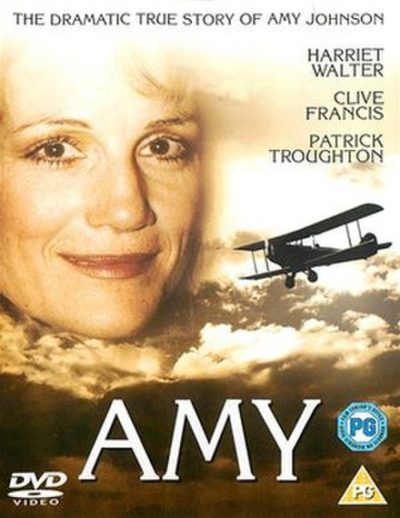 It’s interesting to compare the approach taken in this biopic of aviation heroine Amy Johnson, made in 1984, with the one over 40 years earlier (and shortly after her death) in
  The above rating reflects my deep-held tolerance for low budget cinema. If a film is made with heart, I’m generally prepared to overlook, to some degree, technical shortcomings. Both sides of that equation are present here, in a somewhat revisionist take on the Robin Hood mythos. This takes place after Hood’s original victory over the Sheriff of Nottingham, and he has now gone on crusade to the Holy Lands with King Richard. In their absence, however, the country has not fared well. Marian (Craig) has adopted another identity, and is hiding out as novice nun Matilda, though occasionally sneaks out to help poach from the rich, and give to the poor.
 This is part of the Blood universe, which previously gave us anime series
 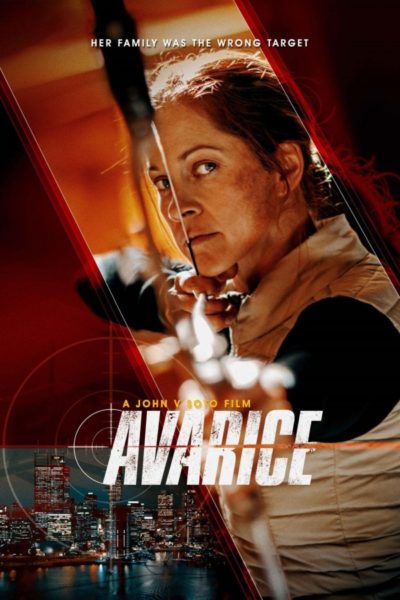 I’m not 100% sure, but I suspect this may be the first film I’ve tagged as both in the “sport” and “home invasion” genres. It’s not a crossover you see every day. However, it is fair comment in this case, even if takes its own sweet time to get there. Kate Matthews (Alexy) has various bits of static in her life. Her husband, Ash (Ford), spends too much time at his Very Important job in high finance, rather than on their relationship. Daughter Susan is being a teenager. Kate just lost an archery tournament. Oh, and their house has been invaded by Reed (Nell) and her band of thugs, who are now intent on forcing Ash to transfer thirty million dollars into their offshore bank-accounts.
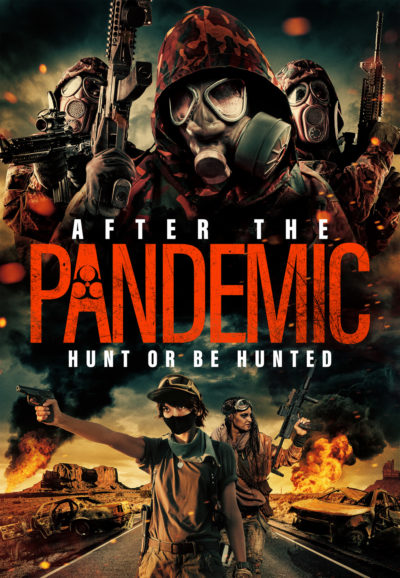 A disease sweeps the planet, killing billions. The only ones with any hope of surviving in the outside world are the young, a small number of whom appear to have a natural immunity. Five years on, and Ellie is one of the few to have endured, scraping for a life among the leftovers of civilization. But she and the other survivors are the targets for the Stalkers: roaming groups of biohazard-suit clad hunters in white vans. They seek to capture the immune, for use in a project to develop a vaccine that can allow the elite to come out of their safe havens. While trying to avoid them, she encounters Quinn (Smith), another survivor with a wealth of knowledge, and a hard-edged approach to life. Initially, Quinn wants nothing to do with Ellie, though eventually realizes two heads can sometimes be better than one, in the never ending struggle to stay alive and free.
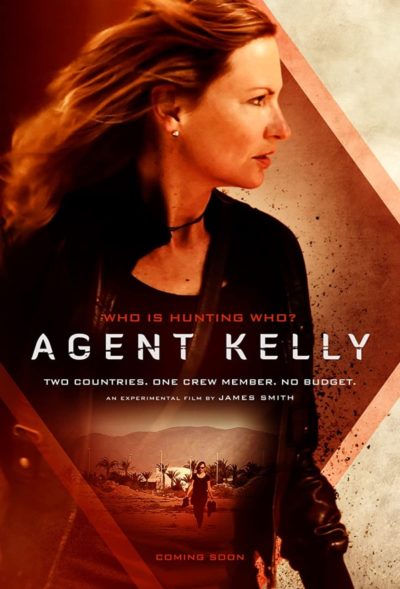 Seeing this described as “an experimental thriller,” set my alarm bells ringing. I’ve seen enough “experimental” film in my time, to realize it’s typically a code-word meaning “incoherent rubbish.” The above rating is thus partially a reflection of my relief that this did not fall into that category. You still, very definitely, have to manage your expectations here. If you go in expecting a slick, Jason Bourne style adventure, you will be sorely disappointed. For this is a no-budget entity, largely guerilla filmed by a one-man crew, and with a lead actress who has no real experience. It has already significantly surpassed all my expectations, simply through not being a total disaster.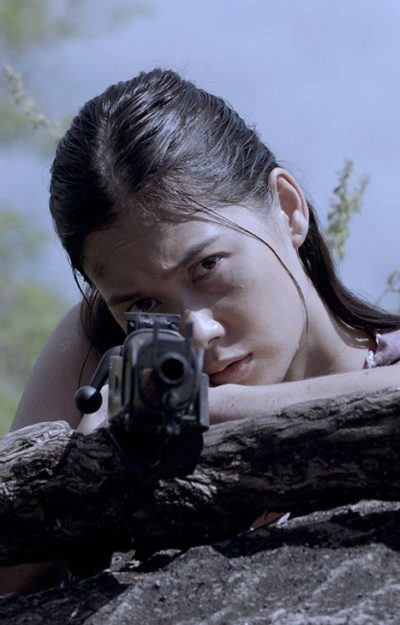
 The heroine here, Mariano (Salvador), has to count as the baddest bitch I’ve seen in quite a long time. In terms of being a sheer, unstoppable force, she’s right up there with Jen from
 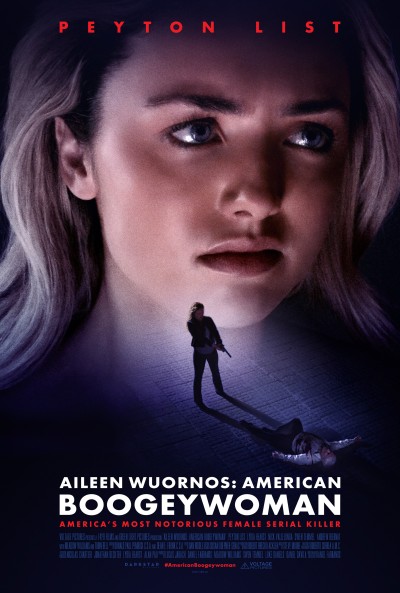 Almost twenty years after her execution, Aileen Wuornos remains a cultural icon. A very rare example of a genuine female serial killer, she was killed by lethal injection in 2002, after being convicted of six murders, and confessing to a seventh. The following year, Charlize Theron won an Oscar for her portrayal of Wuornos in
  As I write this, in December 2021, abortion is again a bit of a hot topic on the American political scene. I am, personally, fairly neutral on the topic. Or, at least, to the point that I’d need to spend the entire review outlining my position. Such nuance tends not to fly on the Internet, where you are either a baby-killer or want to turn America into The Handmaid’s Tale, and moderation is for pussies. On that basis, this film is a bit of a losing proposition, likely destined to satisfy no-one with its relative fair-handedness. These days, it feels like everyone just wants their echo chamber reinforced, rather than challenged, even in the mild way this offers.