
The Cost of Something Priceless

★½
“The Price of Something Worthless”

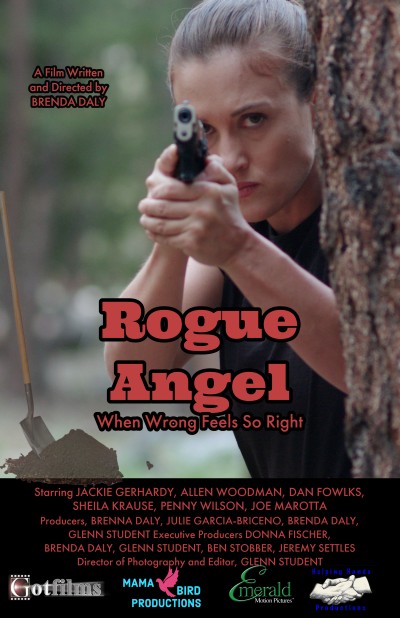
I think it was the start of the closing credits where I realized why I disliked this so intensely. The film describes itself as, “A Flick by Adam ‘Ace’ Silva.” There’s hardly a part of that which does not make me cringe. Having the nickname “Ace” is one thing: it should only apply if you’re a sixties test-pilot. But putting it in your film is… yeah. Then there’s calling your movie a “flick”. No. Just no. It’s an attitude which, in hindsight, infuses the entire production. But what do you expect, when Silva didn’t just direct it. He also wrote it, edited it, did the cinematography and composed the music. All one hundred and eleven minutes of it. 

The story is about as much of a mess as the movie poster, with a lot of ideas, and woefully little idea of how to put them into a coherent structure. The heroine is Carmen (Maya), whom we first meet ripping off a former boyfriend for some drugs and money, leaving him for dead in the street. Key words, “leaving him for”. He’s not actually dead, and nor is he happy about it. Naturally, retribution is on his mind, and from this spirals off a slew of violent incidents and kooky characters, such as a weird, bald assassin with a foot fetish. Meanwhile, Maya attempts to make her way through the carnage and be re-united with her long-lost daughter, alongside somewhat faithful sidekick Tobias Anderson (Swain).

It’s not so much a question of being unable to figure out what’s going on, and more a case of finding myself unable to give a damn. Carmen isn’t a nice person to begin with. Had we, for example, been given an indication of her maternal leanings early on, that would have been something on which we might have been able to hang our empathy. Instead, we are repeatedly told how she doesn’t care for anyone else, although this is painfully apparent from the get-go. Rather than developing other characters, the film flings them at us, quickly getting bored and moving on the next. Some do have potential, such as the double-act who refer to themselves as Jack and Jill. Don’t expect much more.

I will say, there is plenty of the old ultraviolence. But the execution leaves a lot to be desired, with some of the worst digital muzzle-flashes I’ve ever seen. The last 20 minutes are a parade of completely unconvincing gun battles, with no noticeable damage to property at all. The fisticuffs are better, simply because they don’t need to have digital garbage pasted on top. Carmen does kinda look like the sort of person who would kick your butt: both she and Jill (Krueger) seem to do a fair amount of wandering around in their bras, which is not unpleasant. However, it all becomes a chore, long before an ending which came as more a relief than anything else.

Dir: Adam Silva
Star: Lina Maya, Davone Swain, Steven Staine Fernandez, Jessica Krueger

American Woman

★½
“Doctor in the house.”

I guess some credit is due here for going against type, at least. Molly Reese (Stack) is not your typical vigilante. She’s actually a doctor who works in an emergency room, and suffers a debilitating mental blow when her husband and daughter are both killed in an accident. She subsequently goes to a very dark place psychologically, telling her therapist she has thoughts about killing people. This is particularly unfortunate, after she is unable to save a local mob-boss, and his gang decide she is to blame. For Molly gets to put all those murderous impulses into action, under the guise of self-defense, and then proceeds to take the fight to the gangsters, all the while becoming increasingly unstable. 
It’s an interesting concept, and the potential is there: a doctor using her medical skills in ways of which the Hippocratic Oath would not approve. As noted, she doesn’t initially look like a crazed vigilante, and that might have been leveraged to good effect. However, the execution here is flat-out terrible, in a variety of ways. Stack as the protagonist isn’t particularly one of them, though her descent into insanity is largely depicted by Molly pulling increasingly deranged faces, and steadily worse hair-styles. It’s everything else. For example, the gangsters, who could not be a more shallow cliche of Italians if they tried. We know they are gangsters, because the restaurant where they hang out plays Nessun Dorma on a loop, I kid you not. 

Their competence leaves a huge amount to be desired too, perpetually losing fights – both gun and hand-to-hand – against a middle-aged physician with no previous experience. This makes them largely useless as villains, since they’re no threat. Though Mikey (Rosing), the one mostly in charge of hunting Molly, at least looks the part, ponytail and all. However, the actual battles are terribly staged, such as a lengthy gun-battle in a bowling alley, where none of the bullets seems to hit anything at all. There’s another member of the gang, Vito (Zambrano), who seems to have a thing for Molly. Don’t worry, since this proves to be of no significance. It’s all unfocused and poorly structured, up until an ending so abrupt, it suggests everyone involved suddenly realized they’d made a terrible mistake.

Probably the worst thing in the movie though, is Mollie’s neighbour, David (Tyler). I’m not sure if this depiction of a mentally-challenged individual was intended to provide humourous relief. If there’s blackface and brownface, is there such a thing as “retardface”, where someone pretends to be intellectually disabled for comedic purposes? Even if Tyler is genuinely like that (doubtful), it’s horribly exploitative, and would be among the most cringe-inducing portrayals of the year. It sums up a severely misbegotten adventure, that might have worked better as a short. It certainly has “Not ready for first feature” written all the way through it. Although for writer-director Siegel, the only way from here is up. 

Dir: Artie Siegel
Star: Katelin Stack, Joe Rosing, Frank Zambrano, Vic Tyler

Dead of Winter

★★★½
“Old, bold and cold.”

Thompson seems to be having a second wind, making her first appearance on this site at the age of sixty-six. That’s a decade more than Liam Neeson was when he became an action star with Taken, and probably makes Thompson the oldest debutante here. This comes on the heels of series Down Cemetery Road which, while not quite qualifying here, certainly was more brisk than expected. At this rate, I might even have to forgive her for throwing shade at Audrey Hepburn. No question about the credentials of Winter for this site, since it plays like a cross between Fargo and Taken. There’s not a lot of fat here, certainly. Things kick off just a few minutes in, and barely stop thereafter.

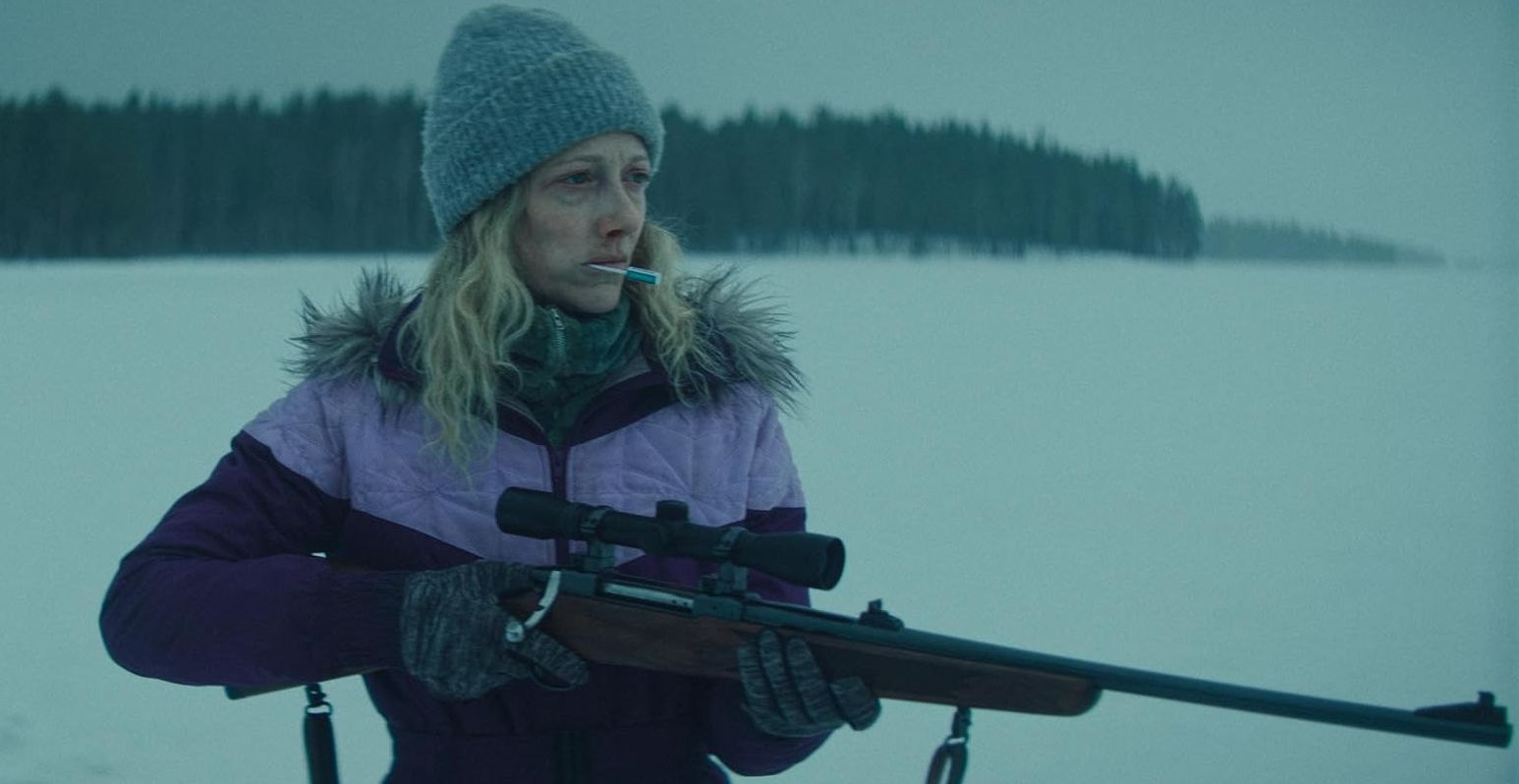
Barb (Thompson) is on the way to a lake in Minnesota – a part played by Finland – for some ice fishing. She gets turned around, and stops at a remote cabin to ask for directions. There she meets an odd man (Menchaca), and notices some blood on the ground. Then, at the lake, she sees the man chasing after and recapturing a young woman (Marsden), so realizes she has stumbled into the middle of a kidnapping plot. After the obligatory “no signal” scene, Barb realizes she is the victim’s only hope. But the man may not be her biggest problem. His wife (Greer) is the real brains behind the operation, very highly motivated, and prepared to go to any lengths to stop Barb from interfering in the grim plan.

I will say, it does take a bit of getting used to, hearing Thompson going full Marge Gunderson, eh? This is no comment on the accuracy of the accent, a topic on which I am not qualified to speak. It’s just odd. However, this is not a particularly dialogue-heavy movie, with Barb spending much of it alone and in the wilderness. We never find out either of the antagonists’ names, incidentally, the end credits just calling them Purple Lady and Camo Jacket. The film focuses increasingly on the two women. Purple has nothing left to lose, generally having the edge in firepower and ruthlessness – as is demonstrated after Barb is able to reach help through a CB radio. But Barb has motivation of her own. 

This comes out in rather clunky flashbacks to the early days of her relationship with her husband. Truth be told, I didn’t feel these added particularly much; the same information could have been provided more efficiently, and in ways which didn’t derail the tension of the current situation. Though I did like how the young Barb is played by Thompson’s real-life daughter, Gaia Wise, I found myself impatient for the film to return to the one-on-one battle, which you know is going to end badly for someone. Or someones. The film doesn’t disappoint there, with a brutal struggle in the middle of a frozen lake, good enough to make me forget the combatants have a combined age of 116. 

Dir: Brian Kirk
Star: Emma Thompson, Judy Greer, Marc Menchaca, Laurel Marsden

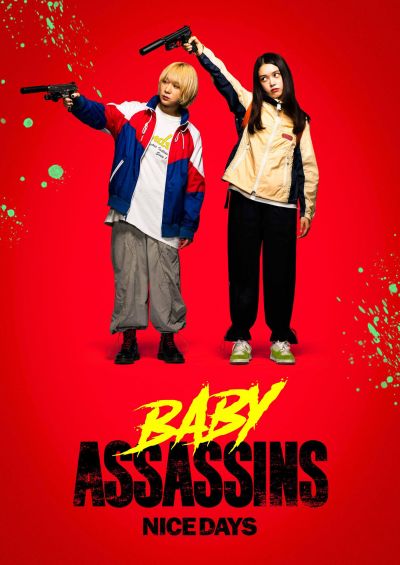
Baby Assassins 3

★★★
“Sorry for laughing.”

I am increasingly coming to the conclusion that the Baby Assassins franchise may be some kind of surrealist joke, being played on me by its makers. I really want to love the series and, as with both Part 1 and Part 2, there are moments where I do. At points, I was genuinely considering this as a Top 10 movie I saw this year – not just among GWG movies either. But then, it’ll grind to a halt, with such dedication to being mind-numbingly tedious, that it feels almost like wilful self-sabotage. In reality, I think it’s more likely to be cultural and societal impenetrability. Some elements here are ones which are relatable to a Western audience. Others? Not so much. 

It takes place in Miyazaki, a seaside city in Japan. Our heroines, Chisato (Takaishi) and Mahiro (Izawa) are on a working holiday there. Or a holiday where work keeps interrupting, it’s hard to say. However, their commission becomes an issue, because another, non-guild assassin, Fuyumura (Ikematsu), is also on the job. The guild are unhappy, and order the pair not just to complete the commission, but also eliminate Fuyumura for cutting in on their turf. This will be easier said than done, even with the largely unwelcome help of guild supervisor, Minami (Maeda). She is less than impressed with the Gen Z approach of Chisato and Mahiro, who would rather be in a restaurant eating the renowned local beef. 

As before, it’s the action which really resonated with me, in particular a stunning series of close-quarters battles. And when I say “close”, I mean fights where the combatants are frequently inches from each other. The early sequence where Chisato goes up against Fuyumura is a good example: while there is a gun involved, there’s not enough space between them, for either to point it effectively at their opponent. [This is when I was thinking, potential top ten movie] It’s also notable that, in this installment, most of the sequences involve professional assassins going up against each other in one-on-one, or two-on-one, action, not the mass brawls of previous films. This exchange of quality for quantity is a better opportunity for the participants to show off actual skills.

But the stuff between the fights? Dear lord, this is mostly terrible. And, in a film which runs an entirely unnecessary one hundred and twelve minutes, it’s terrible at near-excruciating length. There are only so many times you can listen to Mahiro worry about forgetting Chisato’s 20th birthday before it becomes a chore, rather than a pleasure. For me, that limit is “once.” Being charitable, this kind of stuff probably plays better to a local audience, or maybe simply one closer to the protagonists’ ages. My tolerance for Gen Z shit is certainly closer to Minami’s, and may be lower still. I’ve no doubt I’ll be waiting for Baby Assassins 4; I just hope the makers decide that joke isn’t funny any more. 

Dir: Yugo Sakamoto
Star: Akari Takaishi, Saori Izawa, Sôsuke Ikematsu, Atsuko Maeda
a.k.a. Baby Assassins: Nice Days

De La Cruz

★★½
“Proverbs 21:15.”

Which, in case you were wondering, is: “When justice is done, it brings joy to the righteous but terror to evildoers.” Though based on this, I would suggest adding “…eventually” to the end. Because you are going to need a lot of patience here. While this is a rape-revenge movie, the sexual assault in question takes almost an hour to show up. Until that point, there are two threads, and you’ll also be waiting for them to connect. By far the less interesting is the teenage soap opera of the pure and innocent Yoli De La Cruz (Diaz), and her friends, the somewhat annoying Daniella, and the immensely irritating Adriana. Boys, parties, etc. You know the score.
The other is rather more intriguing, being the struggle of former MMA fighter, now a cartel hitman, Lobo (Patiño), to leave the criminal life. This comes after a near-religious experience involving Santa Muerte, who is basically the personification of death in Mexican folklore. Meanwhile, Yoli ends up being raped by Victor (Issac GH). The moral here is, you’re clearly far better off being a slut like Adriana, and going with it. Victor is the son of the local police chief, so justice will not be done. However, this is where – after an hour and twenty minutes – the stories join up. Because Lobo turns out to be Daniella’s cousin, and agrees to teach Yoli a very particular set of skills, so she can administer her own vengeance. 

Things definitely improve in the latter stages, not least because Adriana is almost entirely absent. You will need to be extremely patient to get to the good stuff. Lobo holds the film together, and there’s a great scene where he’s talking to Yoli’s father (Gaviria), and explaining why he can’t do anything himself. The way Santa Muerte gets mixed in isn’t bad, though when she rises up behind Yoli before her first bout, it does look like someone cosplaying as the Grim Reaper. There is a reasonable amount of effort put into the heroine’s transition from shrinking violent to avenging angel, though it is a little montage heavy, writer/director Baez being unable to get out of his own way. 

It certainly needs a good half-hour edited out in the early stages, when there is simply far too much faffing around, to use a good old British phrase. There’s also a weird lack of location: while presumably set in Mexico, going by references to cockfighting arenas, etc. there’s a significant amount of English being spoken. It ends in “To be continued…” having opened, one hundred and thirty minutes earlier, with a “Part 1” caption. I had spent much of the previous two hours bracing for a cliffhanger, which mercifully never appears, this being relatively tidy. Would I mind a part two? That depends largely on whether Baez avoids the faffage which dragged the first half here down like an anchor. Lobo and Yoli going 100% vigilante might be of interest though. 

Dir: Michael Baez
Star: Sofia Diaz, Raul Patiño, Noe Issac GH, Fernando Gaviria

Wildcat

★★★½
“She’s got claws.”

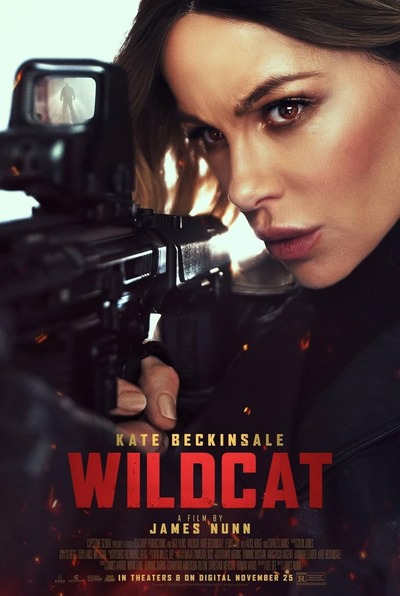
I was quite startled to read some of the scathing reviews this received. For I genuinely enjoyed it, to the point it likely came one element (which I’ll get to) from a seal of approval. Sure, it’s nothing particularly new overall. However, I found it consistently enjoyable, to the level I felt no desire to look at my phone at any point. These days, that’s high praise indeed. It takes place in a slightly alternate London, where gang bosses Frasier Mahoney (Charles Dance) and Mrs. Christina Vine (Krige) are on the edge of a war for control of the city. There’s also a rogue element, in the Mushka Gang, who have turned an East End estate into a no-go area.
Ada (Beckinsale) doesn’t have much to do with this, until her brother Edward (Hardiker) gets deep in debt to Mahoney. He kidnaps her daughter to ensure the money gets paid back. This forces Ada to carry out a heist on a jewellery store run by Vine, which is only the start in a series of problems. She does have assistance, in the shape of former lover Roman (Tan), who can help fence the product. Meanwhile, Ada is trying to get Mahoney blamed for the robbery, to start an inter-factional war that can cover their escape. Meanwhile meanwhile, we discover Ada and Edward’s past, and encounter a number of colourful characters, such as the foul-mouthed Galloway (Tom Bennett, channeling Budget Nick Frost).

There are a lot of moving parts, but Nunn keeps things clear. He has plenty of action experience, including the wonderful Scott Adkins vehicle One Shot, which was my favourite movie of 2021. This isn’t quite as relentlessly kinetic, yet keeps a good pace throughout. Tan actually gets as many action scenes as Beckinsale, and this brings me to the issue mentioned above. While she still looks the part – and very good for 52 – there’s an awful lot of shots from behind, strongly suggesting heavy stunt doubling. And it’s not subtly done. They might as well just have hired Laura Vörtler, Beckinsale’s stunt double, to play the part and been done with it. Still, despite clearly more limited resources, I preferred this to her last couple of actioners, Canary Black and Jolt.

It helps to have the likes of Krige and Dance in the supporting cast. The latter is barely seen until the end, though makes up for lost time with a blistering anecdote about his late wife. I really enjoyed Krige, whose character can go from comforting a grandchild troubled by bad dreams, to torturing an employee for information, without more than a blink. There are some elements which feel underdeveloped, such as a weird club which seems little more than a flimsy excuse to tie Beckinsale up. But overall, I enjoyed this, and particularly appreciated the bone-dry British humour peppered throughout. Although the lead may not have many more action films in her, Nunn continues to prove his credentials. 

Dir: James Nunn
Star: Kate Beckinsale, Lewis Tan, Rasmus Hardiker, Alice Krige

Compulsion

★★★
“Rated R, for raunchy and rough.”

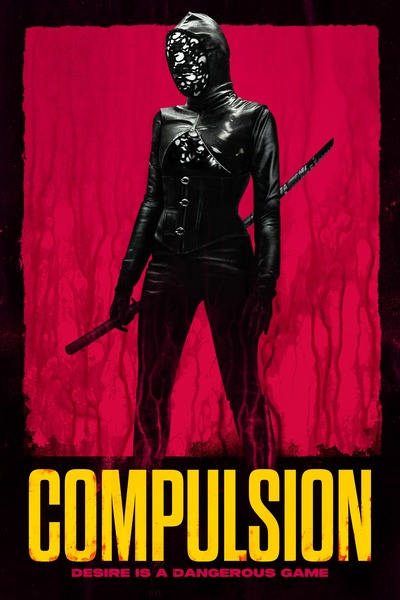
The “erotic thriller” now seems almost as quaint a part of cinema history as beach party films. It feels partly as if the Harvey Weinstein scandal made nudity and sexuality taboo in Hollywood. The rise of the Internet also provides easy access to all the naked flesh anyone could possibly want. Regardless of the cause, there are no longer big budget films like Basic Instinct or Wild Things being made, let alone being #6 at the North American box-office for the year, as Instinct managed [that said, United Artists paid $2 million for the reboot rights earlier this year. We’ll see; I’m not optimistic]. So in some ways, this feels like a throwback, drawing influence from Brian de Palma and Paul Verhoeven.
It’s the fourth, and supposedly final, collaboration between director Marshall and his wife/star Kirk. Two of the previous ones have been covered here, in The Lair and Duchess; I haven’t yet seen the other, witchcraft film The Reckoning. But there can’t be many directors who have worked so often with their spouses. Maybe Paul W.S. Anderson and Milla Jovovich? The results for this couple have certainly fallen short of peak Marshall, such as The Descent, or even Doomsday, both commercially and critically. While this likely won’t change the narrative, I’m not averse to a nostalgic combo of gratuitous nudity and graphic violence. I’ll leave Mr. and Mrs. Marshall to figure out what it means for the relationship, in their couples’ therapy sessions. 

It takes place in Malta where a shapely cat-suit clad serial killer is committing some particularly brutal murders. Investigating the case is local detective Claudia Cavara (Gorietti), with the two main suspects Diana (Kirk), a bisexual thief with a hot boyfriend (McGowan), and her lesbian neighbour, Evie (Sieklucka). Will there be steamy trysts, voyeurism, and a Euro-pudding of accents, from Poland to Yorkshire? Yes, of course! Sieklucka was in those 365 Days films on Netflix, after all. You will also experience what may well be the stabbiest scene in film history, making Psycho look like a Sunday School play. While I felt the victim was certainly deserving (I hated his hair), it showed Marshall has clearly taken influence from Italian giallo films, with their masked killers and hyperviolence. 

It is, however, nowhere near as good as Basic Instinct. Kirk isn’t fit to hold Sharon Stone’s ice-pick, and the whole police side of things is embarrassingly half-baked. It also feels as if Marshall was more into the violence than the sex, and there was a point, probably about two-thirds in, where I realized I didn’t particularly care about anyone. The decision to make it a whodunnit backfires too, because there are an extremely limited number of possible suspects. The end result is therefore quite a mess, and I can understand the critical disdain. However, it’s a mess which had its moments, and was definitely among the most R-rated of movies I saw this year. More of those will always be welcome. 

Dir: Neil Marshall
Star: Charlotte Kirk, Anna-Maria Sieklucka, Zach McGowan, Giulia Gorietti

Killing Mary Sue

★½
“Death becomes her.”

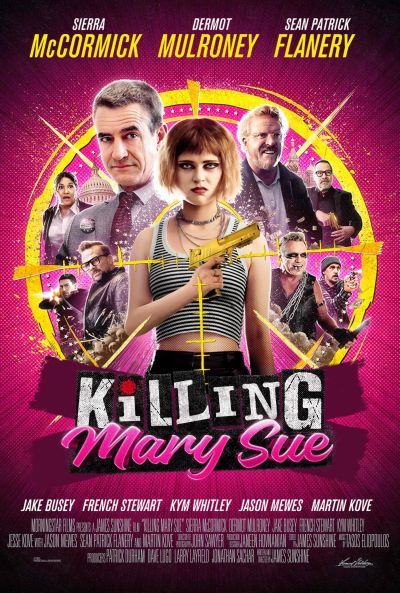
Is there anything worse than a comedy which doesn’t land? I get that humour is subjective, but this action-comedy manages to be spectacularly unfunny, to a degree I have to wonder how it got made. There are some well-known people in the cast: actors who I know have talent (to the list below, you can add Martin Kove and Jake Busey), and whose work I have previously enjoyed. What did they see in the script here, which made them think, “Yes, this is something I want to do”? For this is the cinematic equivalent of nails being dragged across a chalkboard for an hour and a half. You don’t watch this, so much as endure it.  

To be fair, I think the characters being so repellent is a conscious, deliberate choice. You have sleazy politician Bradley Weiner (Mulroney), and his problematic step-daughter, Mary Sue (McCormick). She’s an utter brat, with no interest in anything except partying hard. With a key election looming, and Weiner trailing in the polls, he and his campaign adviser (Busey) decide to bump Mary Sue off, both to end her scandals, and for a sympathy bump in the polls. However, she proves remarkably hard to terminate: there is eventually an explanation for this, though it’s more of the “Wait a minute…” variety, than anything convincing. Still, Mary Sue’s survival forces her father to up the ante, and repeatedly send nastier assassins to try and finish the job. 

The first chunk of this is energetically devoted to demonstrating how terrible everyone is. The problem might be, it’s too damn successful. They never recover: for Weiner, it’s fair enough, since he is the nominal “bad guy.” But for Mary Sue, this is a problem, since you want your heroine to have some redeeming qualities. I genuinely couldn’t find any. Indeed, I was beginning to sympathize with her father, since in her position, putting her down like the mad dog she is, feels almost like responsible parenting. [Our teenage daughter wasn’t exactly a saint; yet she’s Mother freakin’ Teresa beside Mary Sue] This is all lazily blamed on daddy issues, her biological father being murdered in front of her, when he was robbing a convenience store. 

The concept of her being a real-life Mary Sue is potentially amusing, except that’s as far as it goes. Simply repeating a cliché of bad writing, doesn’t stop it from being a cliché, and writer-director Sunshine does nothing more. Have her slowly and gracelessly roll away from a hail of bullets, or mentioning video-game auto-aiming capabilities, simply isn’t enough. Especially when Mary Sue shows no sign of a character arc, and remains resolutely unlikable until her sudden, thoroughly unconvincing and revelatory change at the end. Sort of. I’m not even going to get into the lumpen and turgid whacks at unsubtle political satire: guys, the Russian are interfering in ‘Merican politics! If you find that intrinsically amusing, you know where to find this film. 

Dir: James Sunshine
Star: Sierra McCormick, Dermot Mulroney, Sean Patrick Flanery, Jason Mewes

Inheritance

★★★
“The family that spies together, lies together.”

Or, um, something, I guess. Maya (Dynevor) is at her mother’s funeral, when she gets a surprise, in the appearance of her long estranged father, Sam (Ifans). He wants to reconnect with her, and to this end, offers her a job with his real-estate company in Cairo. Despite qualms, Maya accepts, but not long after her arrival, Sam is kidnapped. To obtain his release, the kidnappers order her to recover a package and deliver it to them. Things turn out to be more complex than that, naturally, and the resulting trail takes Maya first to India, then on to South Korea, with various parties keenly interested in the outcome. She discovers the murky truth about her father’s business activities too.

While that likely won’t surprise anyone who has seen this kind of film, it does a good job of capturing the escalating sense of paranoia felt by the heroine. What is going on? Is her father a good guy or not? Who can she trust? [For the last, it’s unsurprising, and not really a spoiler, if you go with “nobody at all” there] The whole film was shot on an iPhone which is kinda impressive, because it looks surprisingly decent. It does add a hand-held immediacy to proceedings, and this helps in some sequences, such as when she is being pursued through the streets of Mumbai. Or is it Delhi? I’ll admit, it hard to keep track sometimes.

On the other hand, I tend to feel this should only be one trick in the cinematic locker, and because it’s used for the entirety here, its impact does tend to diminish. Fortunately, it’s considerably more stable than I expected, so I presume this wasn’t just the director waving it around by hand. Dynevor has to carry the film with her performance, and I did like the character arc. Maya starts off as a fairly nondescript party girl, who basically flings herself into hedonistic excess after the death of her mother, for whom she had been sole carer of late. But by the end, she has become hard-bitten and cynical, deception now coming as easily as breathing to her.

In its hand-held energy and globe-trotting shenanigans, it feels like it might inhabit a small, extremely cheap corner of the Bourne universe. However, I would definitely not expect any significant action set-pieces commensurate with that. While Maya does qualify here – she’s absolutely left to sink or swim based on her own abilities to escape perilous situations – it’s her instinctual smarts which are key to survival. You may be able to see where this will end up. In particular, there was one line which was absolutely an “Ah-hah!” moment for me in this regard. I wouldn’t say that destroys the film, since this is one where the journey is more interesting than the destination. This iPhone technique isn’t somewhere I’d like to live, yet it was an interesting place to visit. 

Dir: Neil Burger
Star: Phoebe Dynevor, Rhys Ifans, Necar Zadegan, Kersti Bryan

Tornado

★★½
“That’s my father’s sword. Put it down.”

It’s a samurai film. Except, it’s a Western. Only, it’s one which takes place in Scotland. I trust that’s cleared up any confusion here. However, you will still need to manage your expectations, because based on both the poster and the trailer, it would be easy to go in expecting something action-packed. It is not. At all. That element is heavily back-loaded, to the final fifteen minutes. It does include one of the more imaginative and splattery kills I’ve seen this year. Probably a bonus half-star for that alone. However, it’s more a movie about mood, atmosphere and scenery than arterial spray. But I lived in Scotland. I already know it’s pretty.

This unfolds at almost the very end of the 18th century, when Fujin (Hira) and his daughter Tornado (Kōki) are taking their samurai puppet show around the Scottish lowlands. She comes into possession of some gold, which has been stolen from a church by a gang, led by Sugarman (Roth) and his son, Little Sugar (Lowden). They’re not happy, and pursue the caravan in which she’s travelling with her father. This leads to a confrontation in which Fujin is killed, albeit not before badly wounding Sugarman. Tornado flees into the forest, to regroup, and eventually plot her revenge against the robber and his pals, using the skills taught to her, to pick them off one by one on her way to the inevitable final confrontation with Sugarman. 

I respect what this is trying to do, and it’s certainly a combination of genres and settings which I had not seen before. Unfortunately, the execution is plagued with a number of missteps, which hamper the end results and negate many of the positive elements. Right from the start, we are thrown into the middle of things, with Tornado running from Sugarman and his henchmen. The film is curiously reluctant to tell us what is going on – or, more importantly, why we should care – being too leisurely to fill in the blanks. There’s also a cut-out between the gang and Tornado, in the shape of a kid who actually carried out the initial theft. Beyond giving the heroine ‘clean hands’, it’s an unnecessary complication. 

On the performance side, Roth is good value as ever in a villainous role: I was inevitably reminded of Rob Roy, where he previously played the bad guy in 18th-century Scotland. Kōki has rather more experience as a model than an actress, and director MacLean wisely keeps the need for actual dramatics to a minimum, opting to make her the stoic samurai type, so she’s good enough. It all looks quite lovely, so while you are waiting around for something much to happen – which will be the majority of the hour and a half – you can admire the cinematography and picturesque Scottish landscapes. It wasn’t quite enough for me. While possible to admire the intent, this is likely a case of “It’s not you, it’s me.” 

Dir: John Maclean
Star: Kōki, Tim Roth, Takehiro Hira, Jack Lowden