



 Mamoru Hosoda is one of the senior figures in Japanese animation, with thirty-five years of experience since he joined Toei Animation in 1991, after graduating from college. He made his feature debut with One Piece: Baron Omatsuri and the Secret Island in 2006, though this came only after he had almost directed Howl’s Moving Castle for Studio Ghibli. He subsequently left Toei, to go freelance, and his works since have met with both critical and commercial success. Mirai was nominated for an Oscar in 2019 as Best Animated Feature – the first non-Ghibli film to be so honoured. 2021’s Belle , loosely inspired by fairy-tale Beauty and the Beast, was the second-biggest movie at the Japanese box-office that year, domestic or foreign.
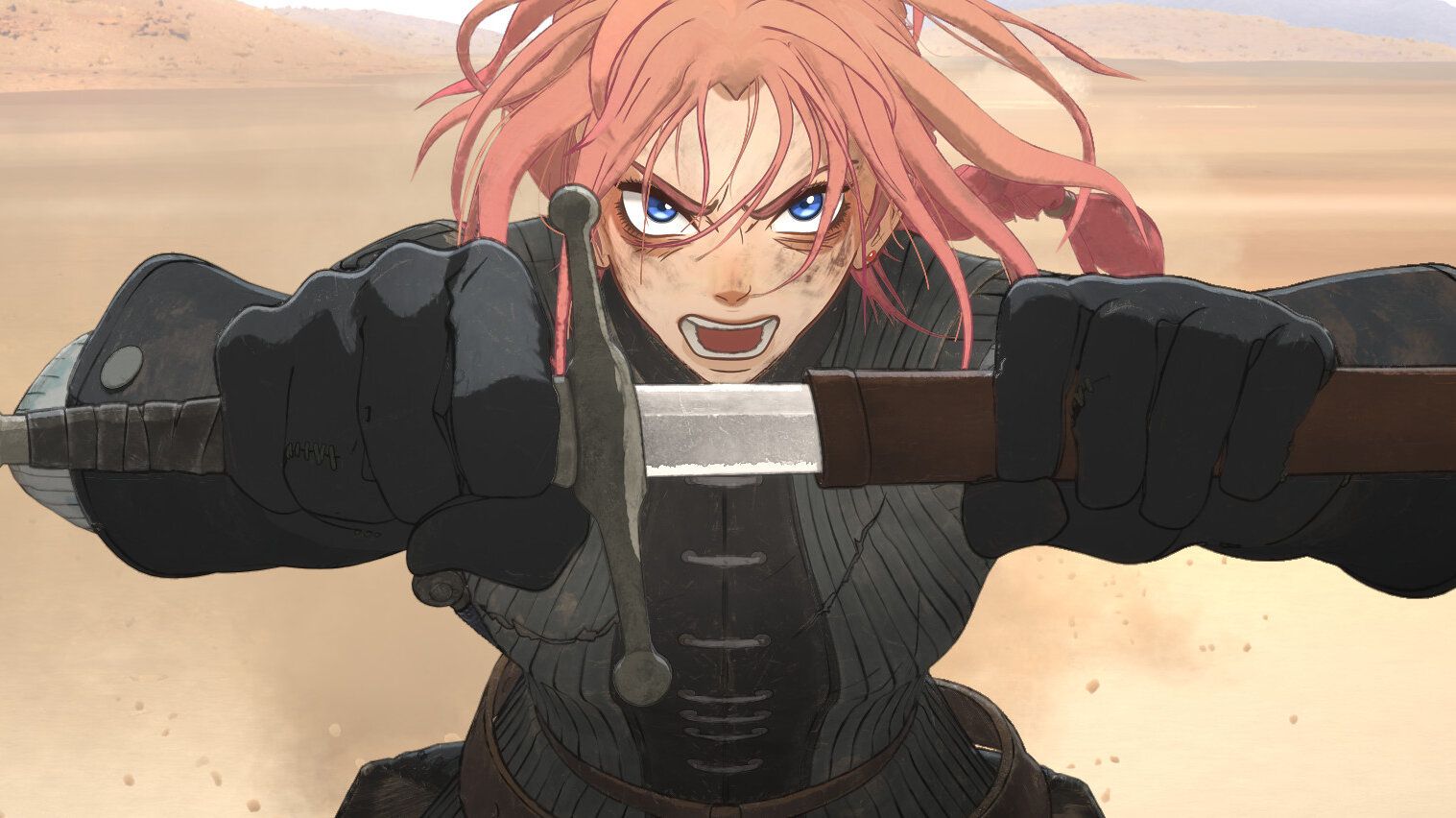
His latest movie and the follow-up to Belle, Scarlet, was a long production, taking four and a half years to complete. It mixes traditional 2D cel animation with computer-generated animation, and is a take on Shakespeare’s story of Hamlet, with its titular heroine seeking vengeance on the people who murdered her father, the monarch of 16th century Denmark. Her first attempt backfires, when she consumes the poison intended for her uncle Claudius, the leader of the plot. Scarlet wakes to find herself in the purgatory of the underworld. She needs to complete her revenge in order to move on to the Infinite Land; otherwise, her spirit will collapse into nothingness. It turns out that Claudius is in the underworld too…
Both Dieter and Jim watched and reviewed this one independently. Below, you’ll find their respective ratings and thoughts, with Dieter going first.
★★★★★
“The undiscovered country from whose bourn no traveler returns”
 On the fourth anniversary of Russia invading the Ukraine a movie like this hits harder, I feel. At the same time, the Berlin Film Festival has ended and while a whole lot of boring message movies got awards, this one was not even in competition. I guess it also won’t win any Oscar awards. For the same reason: it’s just too good. It would blow any competing features out of the water. And yes, this is a strongly subjective review. Watch the movie and judge for yourself, I suggest.
But… I’m already starting with the end. I was honestly blown away by this movie. While neither the idea of a female Hamlet is new (see the 1921 Hamlet: The Drama of Vengeance with Asta Nielsen) nor doing a Shakespeare-inspired anime (there is the anime series Romeo x Juliette from 2007) what director Mamoru Hosoda has done here for Studio Chizu, is fascinating. No idea why he chose the story of Hamlet as an entry point: perhaps because it’s the most universally-known revenge story next to Death Wish? It would have worked just as well with new, fictional characters and other names.
 I didn’t mind. It only serves as a basis on which the director discusses the general but often overlooked and therefore more essential questions of humankind: What defines our humanity? What do we live for? What does death mean? What is love? What can be forgiven? What cannot? How much are we shaped by the environment we grow up in? And if we spread a loving and peaceful attitude can we change the world for future generations?
These are big, important ideas which do not normally form a part of “entertainment culture” or political discussions today, as everyone is too much occupied in serving their own self-interest. Actually, I would locate these questions more in the areas of philosophy and religion. At the same time, the animation style itself is impressive: not just the usual 2D cell animation nor CGI animation. I don’t know how to describe it: while most of it seems classically drawn, many of the backgrounds seem photo-realistic as if they are “real”, including the desert, water, ruins and a jungle. Also overwhelming is the sky of this “other land” which looks like waves, over which a giant dragon flies and occasionally erupts in deadly lightning.
While the visual style takes some time to get used to, this is not necessarily a bad thing. It’s different and new and that’s it. I liked it but I can understand if other people might reject this approach. It’s really a matter of individual taste. Putting all these aspects aside, I found the movie really entertaining. It’s an epic, bombastic movie with a passionate heroine, lots of fights (somehow these medieval Danes seem to have quite some knowledge of martial arts) and – surprisingly – beautiful songs. With Scarlet being shown training hard since her early youth, her fighting larger opponents doesn’t seem that much of an overstatement. She also doesn’t always win, which helps to make the fights look more realistic.
If Mamoru Hosoda might not be as famous or successful as Hayao Miyazaki or Makoto Shinkai (Your Name), so far, he has always delivered excellent and interesting movies. Scarlet is his 8th movie (I challenge the uninitiated to discover his other movies, and especially recommend The Girl Who Leapt Through Time and Summer Wars) and was co-produced by Columbia Pictures. I regret that movies like this only ever run for one day here, and occasionally some more in some tiny cinemas as I think they deserve so much more exposure. Here is hoping, I may have contributed to making this excellent movie more well-known, and create some interest in its potential audience watching it, or at least giving it a chance.
★★★
“Better red than dead.”
Up-front confession: I haven’t seen any of Hosoda’s other work, so am not familiar with the style. Indeed, for a while, I was confusing him with Mamoru Oshii, of Ghost in the Shell and Avalon fame. Which isn’t as much of a stretch as it may seem. Oshii’s work seems to rely a lot on a loose narrative, using the virtual world in Avalon as a convenient loophole through which any plot thread can pass. You could make much the same argument for Scarlet, with the underworld being a realm where stuff simply can happen, because it’s the underworld. I’m not a huge fan of this kind of plot armour, and would likely have been happier if Scarlet had been pursuing her vengeance in the everyday world.
The early stages will feel rather familiar to any fan of Game of Thrones. Scarlet can only watch as her father, a beloved figure, is executed in the name of political machinations. She then vows revenge, and undergoes a rigorous training program to that end. Very Arya Stark. Fortunately (or perhaps not?), it finds its own way after she consumes poison, and Scarlet finds herself in the afterlife. It’s necessarily a shock, but she has the mental fortitude to adapt. She’s joined there by Hijiri, a paramedic from the present day. In effect, he acts as her conscience, continuing to treat the wounded as he had done in life, and questioning the need for her revenge. This becomes especially pertinent after we hear the message Scarlet’s late father had for her.
 I cannot fault the visual side of things here at all. Dieter encouraged me to see this on the largest screen possible. Unfortunately, it did not last long in cinemas here: two weeks after release, it was down to showing in just twenty-four theatres nationwide. But having seen it in my living-room, I would not have minded a much larger viewing experience, and can only imagine the impact. It’s not seamless, in that you can often tell which sequences were old-school, and which were zeroes and ones. But the overall effect is undeniably impressive, and on that basis alone, I’d say it deserved an Oscar nomination more, say, than Zootopia 2.
However, as the above likely suggests, I was not particularly impressed with the plot. The basic elements were there – you can’t go wrong with revenge of the Shakespearean kind – but there are elements which seem not to serve this. For example, there’s a significant chunk where Scarlet and Hijiri are simply hanging out with elderly souls. It feels like John Wick paused his revenge, to spend an afternoon helping out at the local senior centre. I guess the eventual aim is that Important Lessons™ need to be learned by Scarlet about the value of life. But if you compare this to the works of Hayao Miyazaki, the moral lecturing here comes over as less than subtle.
I did like the contrast between Hijiri and Scarlet. Interesting that the “caregiver” character here was male and from the present times, while the vengeance seeking warrior was female and out of the middle ages. This subversion of standard tropes is thought-provoking, without needing to deliver any explicit messaging, and the relationship between the pair works well. If you’re familiar with Hamlet, you’ll also get a kick out of some of the references (the versions here of Rosencrantz and Guildenstern are particularly memorable). But any film which uses a dragon – another Game of Thrones nod? – as a convenient prop for the story-line, needs to be answering questions about its scripting. It’s this which stopped Scarlet from being more, for me, than just a well-crafted, pretty thing at which to look.
Dir: Mamoru Hosoda
Star (voice): Mana Ashida, Masaki Okada, Koji Yakusho, Kōtarō Yoshida
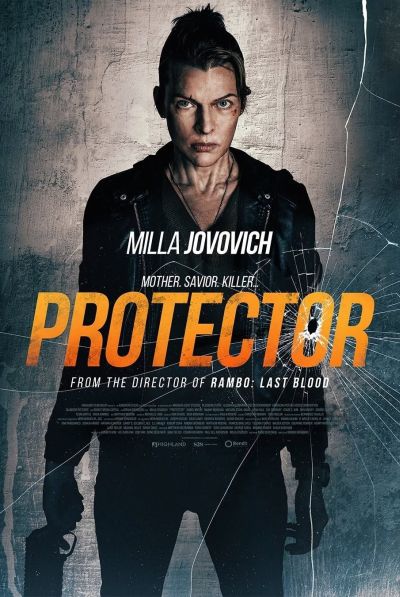 There are certain actors who are capable of elevating the material with which they work. Peter Cushing. Rutger Hauer. Klaus Kinski. They could all appear in B-movies, and make them B-plus films. I’m steadily, increasingly convinced that Milla Jovovich deserves to be thought of similarly. I am pretty sure that, without her in the lead role, its rating would be an entire star lower, if not beyond that. But she compels the viewer’s attention, and the end result is considerably more enjoyable than with almost anyone else. It is, after all, not much apart from a combo platter of elements from Taken and Rambo. Indeed, director Grünberg was responsible for Rambo: Last Blood. He knows disgruntled veterans.
 ★★½
★★½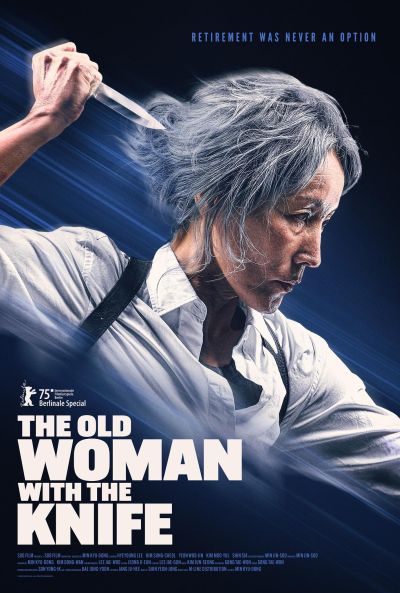 This is certainly something different. It begins in 1975, when a young woman fights off and kills a wannabe rapist. This causes her to be recruited by an underground assassination group, who specialize in what they call “pest control”. This means eliminating, with extreme prejudice, those who are considered detrimental to society. Decades later, she is Hornclaw (Lee), the matriarch of the organization. But times are changing, and not necessarily for the better. Hornclaw is, inevitably, older and age is taking its toll, with her health beginning to fail. The group is wanting to change direction, and be more profit oriented, rather than socially aware. And a new, young recruit, Bullfight (S-c Kim), has little patience for the old mistress.
 ★★½
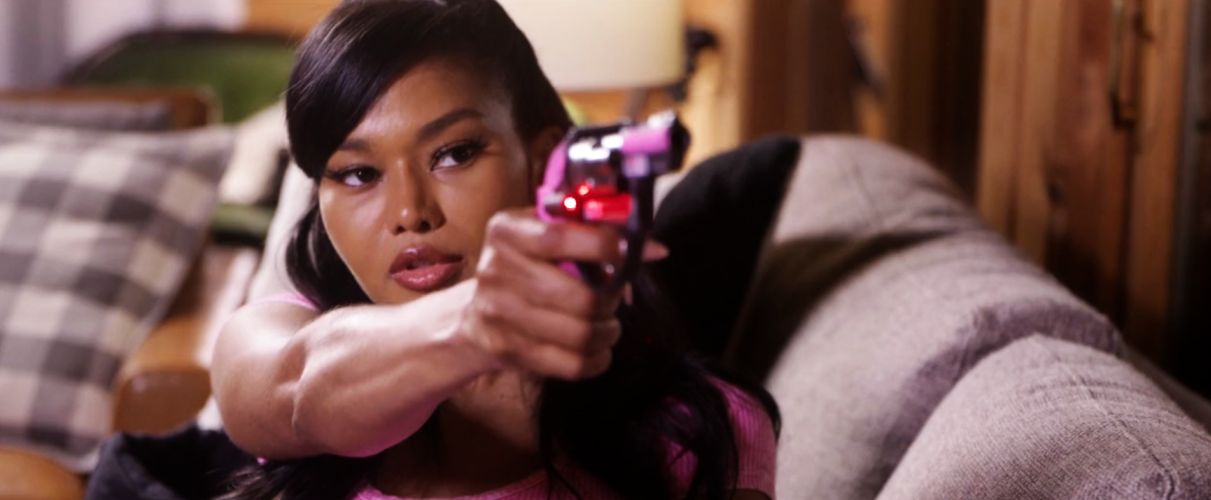
★★½ I don’t think I’ve ever seen an Italian kung-fu movie before. To be fair, the bulk of the lifting in that department is done by Chinese actress Yaxi Liu, who was a stunt double in the live-action
  I am quietly co-opting the title of the recent Netflix documentary, for a more general piece on the topic of Aileen Wuornos – arguably the first, and certainly the most infamous, female serial killers. Firstly, I do have some qualms about including her here. After all, she’s certainly not what you’d call an “action heroine”. But a girl with a gun? Definitely. Representing the dark side of that trope, absolutely. But that doesn’t, and shouldn’t, mean people like her shouldn’t be covered here. Especially when, as with Wuornos, they have inspired any number of cinematic works, ranging from the straight-laced documentary to the luridly sensational. Both directions have their own merits.
 Here are a selection of other women, generally regarded as having killed considerably more than Wuornos’s seven victims – and mostly had cool nicknames bestowed upon them in the media. I’ve not included medical personnel like Jane Toppan, because that would be a whole other list.
 However, it’s stretching credulity to accept this also applied to all of the six other men she shot dead, between May and November the following year. Naturally, such a spree did not go unseen, with an increasing media frenzy, especially after a witness reported it was two women she had seen abandoning a victim’s car. Fingerprint evidence – obviously, her dabs were on file in Florida due to her criminal record – helped the net tighten on Wuornos. After the arrest Moore, who had fled to her family home in Pennsylvania, agreed to turn state’s evidence against her lover, in exchange for immunity from prosecution.
 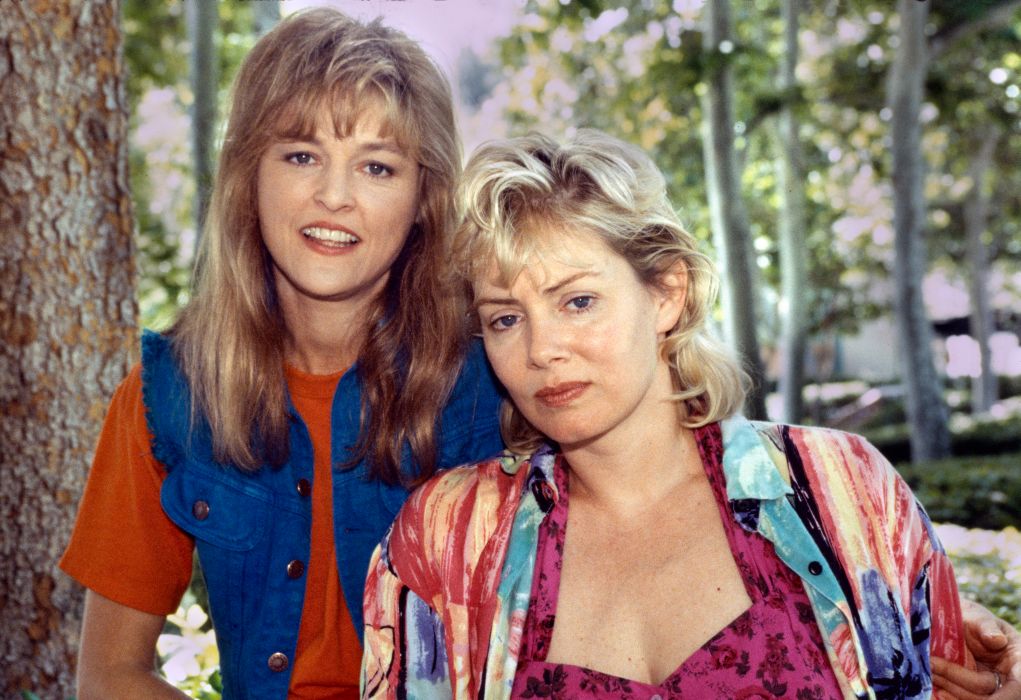 ★★
★★ What I love about Broomfield’s work is, he goes where the story leads him. Some documentarians – and I’m looking at
  This would likely have benefited had I not watched Life and Death the previous night, because any comparison does not work in this documentary’s favour. Titled on the print just Aileen, forgetting that awkward serial killing thing, this is less balanced, and skews heavily towards Wuornos as victim – of the legal system, her clients and life in general. “Actually, she was made, and that’s chilling,”
 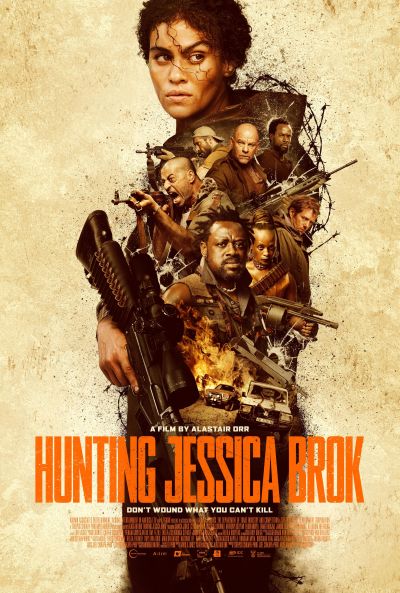 For the leader, Lazar Ipacs (Lukunku), has been harbouring a grudge against Jessica, and has finally tracked her down. With the help of a former colleague, Daniel (Berning), he lures her into a trap and prepares to make her regret… Absolutely everything. But Daniel has second thoughts, throwing Jessica a lifeline which lets her escape. The hunt is on. The only question is, who is the hunter and who is the hunted? After a few lower-tier henchmen are taken out, Lazar’s wife Sherri (Mboya) discovers Jessica has a daughter, and Lazar kidnaps her, intending to use the child as leverage. If you’re thinking that might be a bit of a poor decision, give yourself two points.
 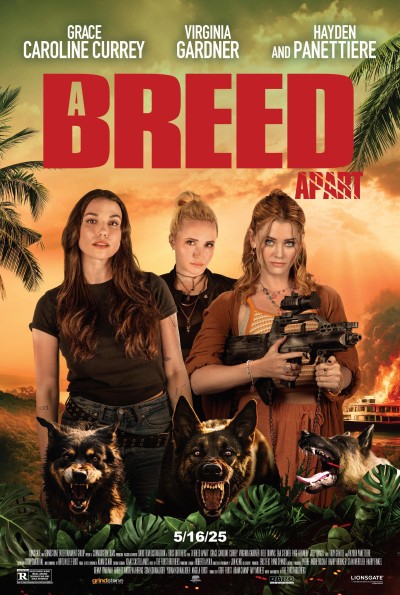 I’ve seen a lot of reviews slagging this off as irredeemably bad, and that’s fair comment. Its execution is often lazy to the point of incompetence, and the talents of the cast are largely wasted. And, yet… Was I not entertained? More than I expected, reading those reviews. Oh, sometimes in the wrong way, certainly. But it’s clear the makers were in on the joke. To a certain degree, as with the likes of Sharknado, that critic-proofs it, because it is intended to be stupid and implausible. When you have a dog running around for half the film with a wine-bottle on its muzzle, or canines which can climb trees and ropes… Yeah, it’s clear the creators aren’t letting reality get in the way.
 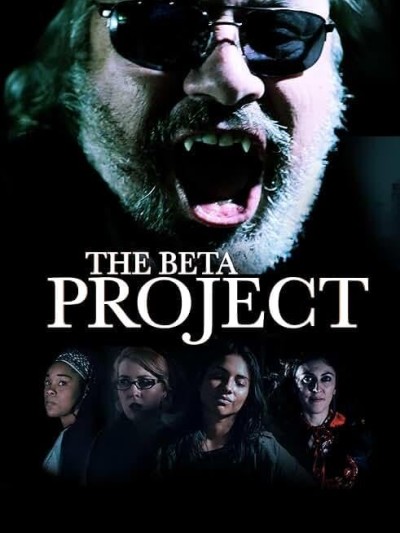 I usually strive to find something nice to say about most low-budget action heroine films. Maybe the soundtrack is cool. Or there’s one performance which stands out. But for this one, I’m really struggling. The good here more or less begins and ends with the synopsis, which is also why it’s here: “Four women are recruited into an organization that hunts the supernatural.” Mauser does appear to be on board with our field, and we’ve covered a couple of his films before, most recently the fairly decent