



★★★★
“Where eagles dare.”
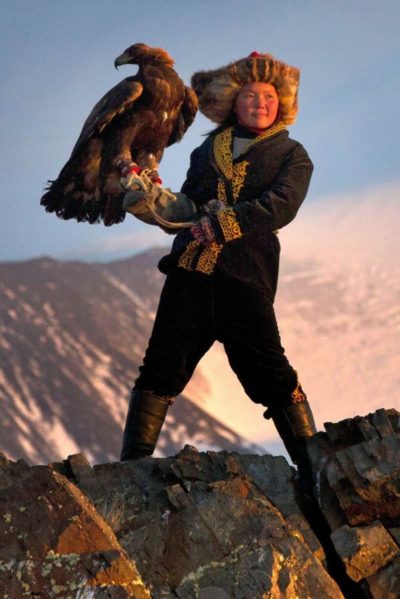
 No matter how bad-ass you are, you’ll never attain “13-year-old Mongolian girl, standing astride a mountain, holding the trained golden eagle she raised from a chick, after climbing down a cliff to get it” levels of bad-ass. That’s what we have here, folks, in this documentary about Aisholpan. She’s a Mongolian teenager who wants to become an eagle huntress, a profession traditionally reserved for the male lineage. Her father Rys learned the skills necessary (and, presumably, inherited the really large, very well-padded glove) from his father, and so on.
In the absence of a suitably-aged son, and given Aisholpan’s interest, Rys is happy to show her the ropes. Literally. As in the ones used to prevent her falling off the steep cliff-face she has to descend to pluck her eaglet from its home. For, as we learn, there’s only a brief period between the chicks being able to survive away from their mother, and them leaving the nest, during which they can be taken. We also discover, there’s apparently no word in Mongolian for “child endangerment.” There’s then the training process, as the bird grows up, for instance to get it to come when called. Though “politely asked” would be wiser than “called”. You don’t order around something like the full-sized and scary creature shown on the right.
The first dramatic moment is Aisholpan’s participation in the annual golden eagle festival, which takes place in a nearby (by Mongolian standards – it’s only a day’s ride away) town. She’s not only the youngest participant, she’s the first woman ever to take part. Some of the veterans and elders are interviewed, and are not exactly happy about it. Though their opposition doesn’t appear to go any further than mild levels of harumphing; it’s not as if there’s any active attempt to stop her participation. This could be because the film does seem to over-state Aisholpan’s uniqueness for the sake of cinematic drama. History actually provides much evidence for her female predecessors.
However, there’s still an enormous amount here to appreciate and enjoy, not least a plethora of panoramas, sweeping across the staggeringly beautiful Mongolian plains. You also get a new respect for eagles, creatures whose size is not apparent in the air, and only when you see one perched on the heroine’s arm, it’s razor-sharp beak inches from her eye. Then there’s Aisholpan herself, who clearly gives not one damn for any constraints “tradition” might want to place on her, and goes about her eagle-training business with an infectious smile. Oh, and she’s studying to be a doctor when she grows up. If she went on her rounds with an eagle on her arm, so much the better, I’d say.
Finally, we get to bask in the gloriously stunned silence of the elders, after Aisholpan has demonstrated her skills (and, admittedly, those of her avian familiar) at the tournament. They then point out that, well, anybody – even a girl – can do well enough in the comfortable setting of a field. She could never withstand the harsh conditions faced by real hunters, in the mountains. Guess where Aisholpan’s next stop is? Yep. She takes her bird and heads off into those mountains, through snowdrifts which reach up to the flank of her horse, to hunt foxes for their fur. In terms of teenage empowerment, it sure beats getting a tattoo and hanging out at the mall.
Dir: Otto Bell
Star: Aisholpan Nurgaiv, Rys Nurgaiv, Daisy Ridley (narrator)
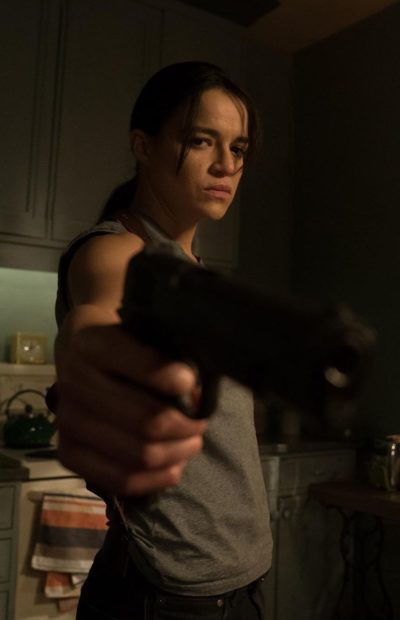 I’m a big fan of any film with an outrageous premise, and this one certainly delivers. Mob hitman Frank Kitchen (Rodriguez) carries out his latest job with no qualms, killing a debtor. What he doesn’t realize is, the victim’s sister is a talented but EXTREMELY twisted surgeon, Dr. Rachel Jane (Weaver). She vows to take revenge on Frank by removing what she feels matters most to him: his masculinity. Kitchen is knocked out, kidnapped, and wakes up in a seedy hotel room, to find herself in possession of a couple of things she didn’t have before, and missing something she used to have. But gender reassignment does not make the (wo)man, and an extremely pissed-off Frank vows revenge of her own, both on Jane and Honest John Hartunian (LaPaglia), the former employer who betrayed Kitchen.
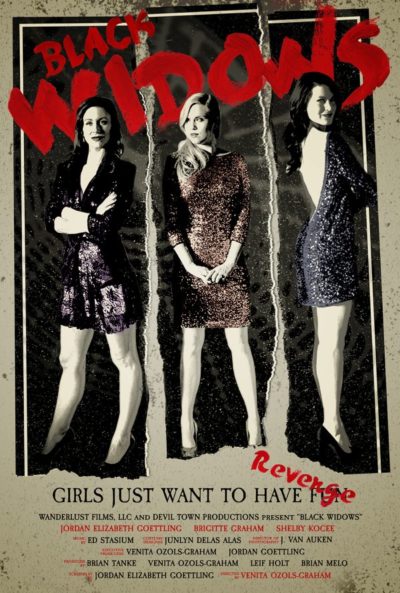 Three women friends – Darcy (Elizabeth), Nora (Graham) and Olivia (Kocee) – are all having shitty luck with their relationships. Olivia is in the middle of an ugly divorce from Adam. Nora’s boyfriend Ryan is a control freak. And while Darcy’s new friend Blair (Brown) initially seems fine, he turns out to be the worst of them all. After he refuses to take no for an answer, the trio decide revenge is a dish best served naked in the middle of the desert. Unfortunately for him, Blair ends up lacking a pulse. Unfortunately for the film, it takes forever to get to this point, and for the vast majority of its running-time the promised “dark comedy” is neither dark nor comedic.
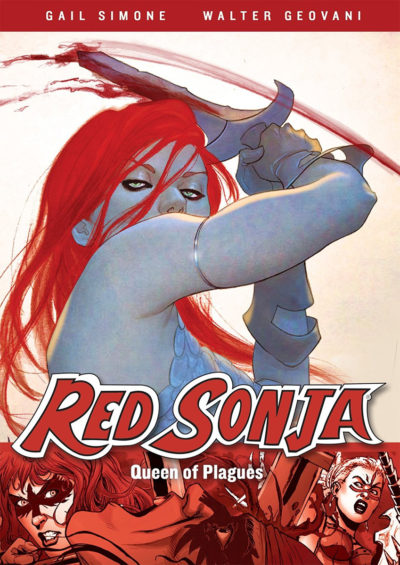 The rating here is largely based on my (I’d say, not unreasonable) expectation going in, that this would be actual animation. It isn’t. This appears to be, what I’ve since learned is called, a “motion comic”: think of it more as an illustrated radio play, with voice actors playing the parts in front of somewhat animated panels. And when I say, “somewhat”, I mean there is typically no more than one thing moving on them e.g. a character’s mouth. I can see comics for which this approach would work; unfortunately, a heavily action-oriented story such as Red Sonja is not among them.
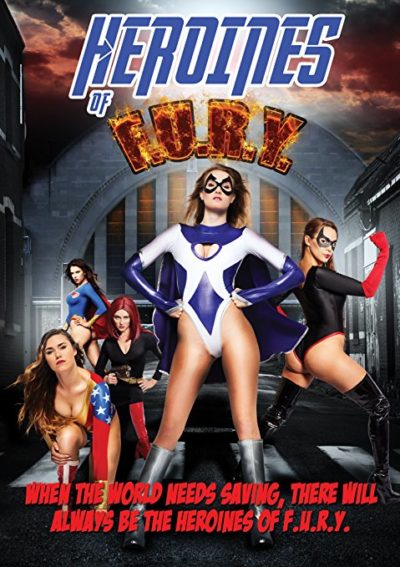 Given the cover, you might reasonably have expected one of the above, but if you saw the rest coming, you’re a better judge of cinematic dreck than I am. It’s hard to work out exactly who would form an overlap between the various potential audience sections here. And even someone not averse to any of the categories (I’d probably qualify) might well be turned off by the poor production values and overall shoddy quality of this.
 I think it was only as the end credits were rolling, that I perhaps appreciated this series fully. Sure, in many ways, these films have been a poor man’s Lord of the Rings knock-off, with a disparate band of hardy adventurers on a quest to stop Ultimate Evil (TM) from taking over. But, dammit, I found myself enjoying them, appreciating their smaller-scale charms and actually liking the characters – possibly even more than Frodo. While this finale doesn’t sustain the non-stop pace of its most recent predecessor, it does a good job of tying up all the loose ends. And if you’ve watched all five, and don’t have a slight moistness around the eyes at the end, you’ve a harder heart than I.
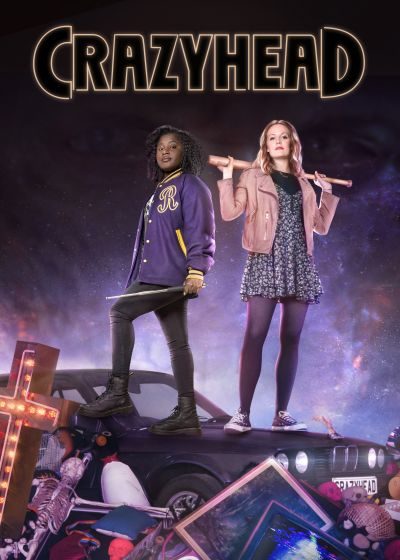 Amy (Theobold) is insane. Or so the rest of society thinks, due to her being able to see things nobody else can. She’s trying to keep her head down, working quietly at a bowling alley. But after being attacked, she is rescued by Raquel (Wokoma), another young woman who can see exactly the same things. Amy learns from her new friend that demons are real, and live among us: Raquel has appointed herself a demon-hunter, and convinces the reluctant Amy to join her. This causes no end of issues, not the least of which is Amy’s room-mate becoming one of the possessed, and the most of which is likely the apocalyptic plan of Callum (Curran). He intends to use Raquel to open the gates of hell on Halloween, allowing thousands more demons to flood into our world and take over humans.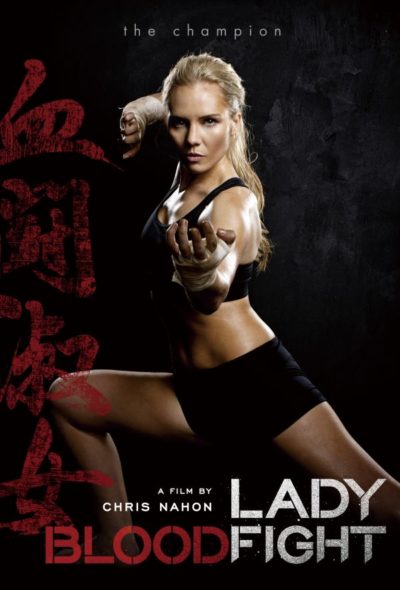

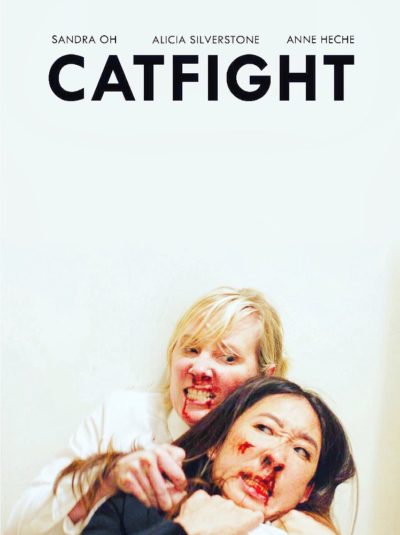 My wife is a big fan of Sandra Oh, for her long-time work on soapy medical drama, Grey’s Anatomy. This is about as far from that as imaginable. It’s a gloriously mean-spirited “comedy” [and I used the quotes out of reverence, not in a bad way], which combines social satire with gleeful hyper-violence, at a level where you would not expect to find serious actresses. Veronica (Oh) and Ashley (Heche) knew each other in college, and have since grown apart. Veronica is now wife to a defense contractor; Ashley a largely unsuccessful artist. They meet at a birthday party, and instantly the hate begins, each representing everything the other finds reprehensible. The night ends in a stairwell brawl, which leaves Veronica in a coma for two years. She awakens, to discover she has lost everything, and Ashley is now on top, enjoying commercial and critical success.
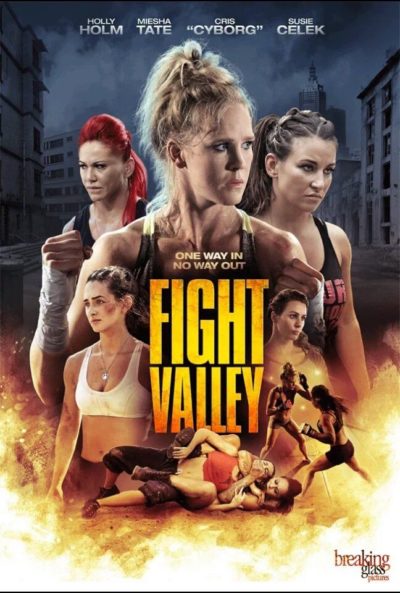 The results of bringing female MMA fighters to the screen have been a bit mixed, shall we say. Gina Carano has looked decent in her films, but Ronda Rousey’s performances have been roundly criticized, and her Mile 22 project appears dead in the water. The performance by the recently retired from MMA Miesha Tate, which is likely the film’s major selling-point, rates… somewhere in the middle. She doesn’t disgrace herself – but that may be partly because there is no shortage of other weaknesses to criticize here. Tate is convincing in her role – yet since she’s playing a mixed martial-artist, it’s hardly proof of any acting ability. But I guess, everyone has to start somewhere, and a thinly-disguised version of yourself is a good place to begin.