




★★★½
“Not so basic instincts.”
 When I told Chris the title of this one, I swear you could hear her eyes rolling at the mere thought of it. But by the end, even she had to admit to having been won over by its dark charms. Most obviously is the sense of black humour which isn’t just dry, it’s as arid as the Atacama Desert. Morgan (Jungermann) and Jean (Carr) are fascinated by female serial killers, running a podcast on the topic which has acquired its own, unique fanbase. Morgan falls for Simone (Vand), a colleague at the food co-operative where she works. But Jean – who is also Morgan’s ex – can’t help thinking there is something seriously off with Simone.
At first, this seems like petty jealousy. But what exactly is Simone keeping in that lock-box of hers? Could she be a candidate for the podcast, more than Morgan’s new soul-mate? As things progress – a mysterious death at the co-operative, the realization that “Simone” may be just the latest in a series of identities, circling back towards one of their podcast subjects – the crunch eventually comes. Jungermann seems to be stressing the difference between chatting vapidly about which serial killer was the most “stylish”, or interviewing one in captivity (O’Toole provides a deliciously twisted cameo as the incarcerated Lila, voted second-most stylish by the podcast’s listeners – she is not at all impressed by the winner), and having to deal with one in the wild. When there’s someone who might or might not present a direct threat to you and your friends, it’s no longer a vicarious thrill.
This is set almost exclusively in the lesbian community – there are very few speaking male roles. But it’s still enormously accessible, and avoids the frequent pitfall of gay cinema, making its characters human first, rather than defined predominately by their sexuality. Morgan’s insecurities, such as the belief Simone is too attractive possibly to be attracted to her, are universal ones. Her reactions, similarly, make sense in the circumstances. These help keep the film grounded, along with dialogue which is all the better for being delivered almost entirely deadpan by everyone involved. [There’s something of Carrie-Anne Moss about Jungermann, both in her look and delivery of lines]
It is definitely a movie for a certain taste. If you’re not fond of acidic wit, this won’t be your cup of herbal tea, and it does occasionally become too wrapped up in itself; I’m sure aspects flew well over our heads. The script also seems to run out of steam, providing an ending that fizzles out into indie indecisiveness. Mind you, given one of the film’s subtexts is the fear of commitment, perhaps its ending is another reflection of the same thing. There was still easily enough to keep us interested, and it proves that good characters and solid dialogue are not limited by cinematic boundaries of genre or setting. I trust Chris learned not necessarily to judge a movie by its title!
Dir: Ingrid Jungermann
Star: Ingrid Jungermann, Ann Carr, Sheila Vand, Annette O’Toole
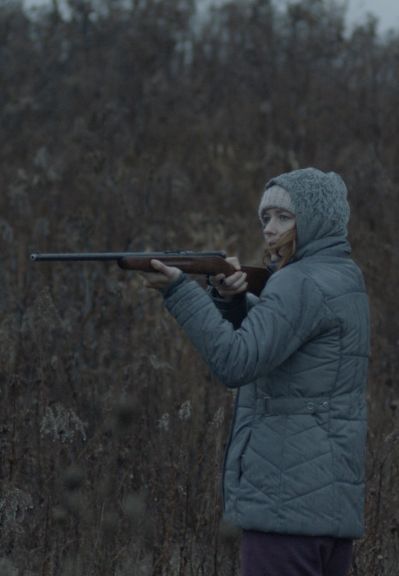 A viral plague has decimated mankind, turning its victims in mindless, flesh-craving ghouls. One of the few to have survived is Ann (Walters), who has taken up residence in the woods, where she has camped out. Ann uses the survival skills she received from her now-absent husband, Jason (West), only occasionally having to emerge and risk the threat of the infected, in order to gather supplies. Her secluded, yet relatively safe existence is disturbed, when she finds an injured man, Chris (Thompson) and his teenage daughter, Liv (Piersanti) on a road. They are supposed to be on their way north, to where the epidemic is reported to be in check. Yet Chris, in particular, seems curiously unwilling to be on his way.
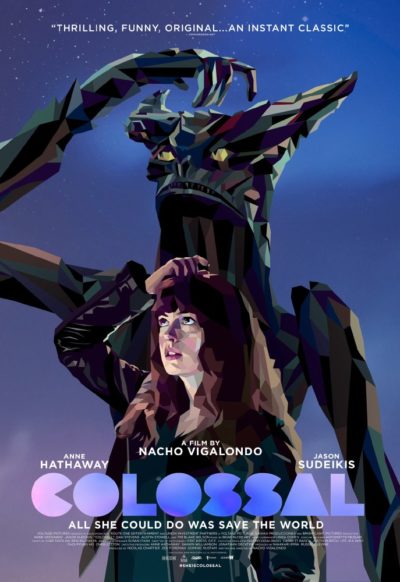 After breaking up with her boyfriend, Gloria (Hathaway) holes up in her middle-American hometown. She gets a job in a bar, run by her childhood pal, Oscar (Sudeikis) – not that this employment does much for Gloria’s burgeoning alcoholism. Meanwhile, over in Korea, the city of Seoul is being plagued by a giant monster, which will appear out of nowhere, behave oddly, and then vanish again. Gloria eventually figures out that when she goes through a particular spot – a local children’s playground – at a specific time, the creature appears in Korea, and its actions reflect hers. Turns out Oscar can do the same, manifesting in Seoul as a giant robot, and he may not be as benign with his new-found powers, as Gloria is attempting to be.
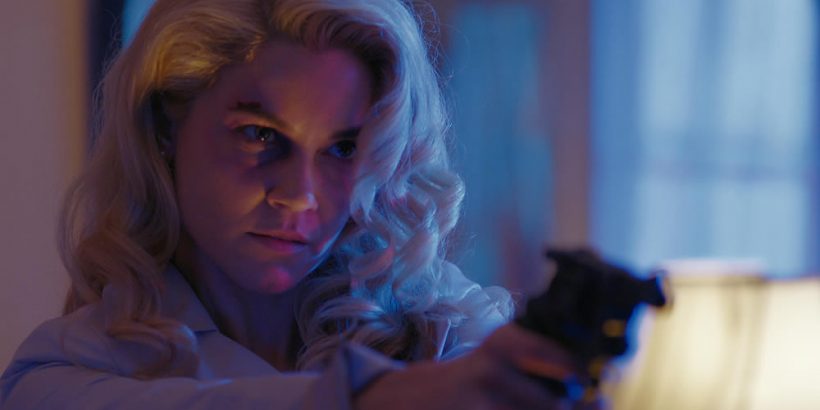 The film never tries to hide the fact that Jessica is nutty as a fruitcake. As a result, its plotting is instead very much concerned just with getting the story from Point A to B, offering few surprises. I’m not exactly convinced by the “Based on a true story” claim here. And let’s not even start with the police procedures depictede: let’s just say, Stillwater PD could use some re-training, and move on. Yet the pleasures outweighed the deficiencies; in particular, as mentioned, watching the mousy Faith and psychotic glam-girl Jessica face off. The latter gets most of the cinematic highlights, vamping it up to great effect. Witness, for example, her hyper-ventilating in order to place a convincingly panicked phone call to her lover. Guess all Jessica’s acting classes finally paid off!
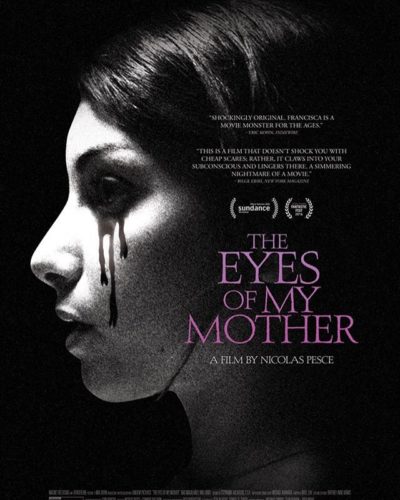 “Post-horror” is now, apparently, A Thing. It refers to horror films that subvert the traditional tropes and style of the genre in some way. Though based on the so-tagged example of it I’ve seen, the main subversion appears to be “not being frightening.” I think there’s a spot of pretension mixed in as well, since horror is generally regarded as marginally above pornography in terms of critical appreciation. By calling it something else, this gives those who turn their nose up at “horror” a chance to appreciate it. But it’s a bit of a double-edged sword for marketing, because you’re as likely to lose fans of “true” horror, who have been burned badly by films riding on the genre’s coat-tails.
 This crisp little Argentinian film clocks in at 70 minutes – not even enough to be considered a feature by the Screen Actors Guild. You’ll understand, therefore, there isn’t much fat on its bones. Virginia (Cardinali) has left her husband, taking daughter, Rebecca (Duranda), with her. But a moment’s inattention at a gas-station proves fatal, as Rebecca is abducted, and Virginia’s car driven off the road during the subsequent pursuit. Brought back (from the dead?) by a mysterious stranger (Ferro), she is told Rebecca has been chosen by a religious cult as a sacrifice. It’s up to Virginia to stop them, and she can let no-one get in her way. Which becomes an issue, for we quickly find out, she is not the only mother looking to recover a child from the cult – and, it appears, only one can succeed.
 Scar (Cole) has anger issues, which we see in the opening scene, where she stabs her boyfriend to death. Scarlett (Kimmel) makes her living by having affairs with married men, then blackmailing them. The two women team up after Scar rescues Scarlett, when one of her extortion targets is beating her up in an alley. The pair subsequently begin an odd relationship, peppered with bursts of brutal violence against men. The police investigation, led by Detective Mike (Wells) passes over them, but Mike begins a relationship with Scarlett, until he begins to suspect that her friend is involved in the string of killings.
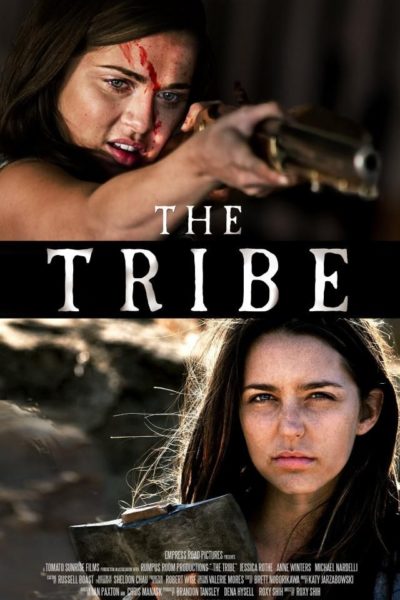 Disease has wiped out most of civilization, and left those who have survived, scrambling to cope. Better equipped than most are sisters Jenny (Rothe), Sarah (Winters) and silent little Danika (Jones). For their father was a doomsday prepper, who created a “bug out” cabin in the desert, stocked with all the necessities to survive. However, neither he nor their mother are around any longer: the former died during the crisis, and the latter went out to seek help and never returned. So it’s all down to the sisters, who have been reminded about the golden rule, time and again, by their Dad: do not let anyone in, under any circumstances.
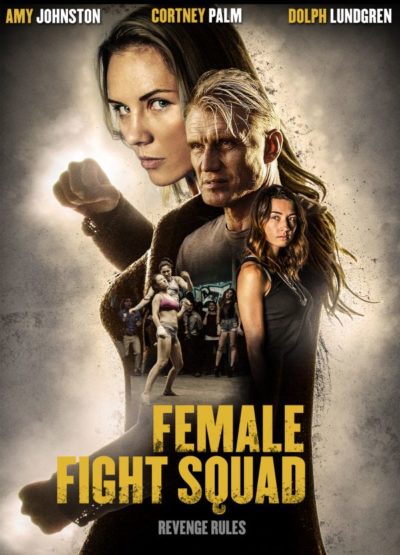 This was originally known as Female Fight Club. I presume the title was changed after a strongly-worded letter from David Fincher’s lawyers, perhaps to evoke thoughts of its star’s stunt work on Suicide Squad. It’s interesting, because Amy Johnston’s previous feature,
  Ann Willis (Robbins) is a single mother, working as a waitress and trying to keep family together after the death of her husband from lung cancer. To help out, son David (Abrahamson) abandons his plans to attend college and gets a job in a local factory. But he falls in with some questionable company there and, lured by the prospect of easy money, starts dealing drugs for the local mobsters, run by Canarsie. Things go from bad to worse after his supposed “friend” Mike (Falahee) frames him for the disappearance of some product, and things end with David’s dead body floating in the river, having been beaten to death by his associates. The cops, and in particular, Detective Frank Hogan (Baldwin), investigate – but to be honest, aren’t particularly interested in one drug-dealer being killed.