




 ★½
★½
“Street-fighting Tears”
 I usually have no problem going on about GWG movies at some length. Hell, I even managed 750 words on DOA: Dead or Alive, and for that one, I had to re-read my review to remember what it was about. But when I got to the end of Street Fighter: The Legend of Chun-Li, my first thought was, “What the hell am I going to write about this?” It seemed likely the only way I’d get to 750 words, would be by repeating the title one hundred and twenty-five times. For the film is ill-conceived, poorly cast, badly written and directed by the man who managed to make Jet Li look bad, not once but twice, in Romeo Must Die and Cradle 2 the Grave.
I am not a difficult man to satisfy, especially in the area of Hollywood action heroine flicks. I’m so pleased they are making the effort at all, that as long as it is in focus, and the dialogue largely audible, I am generally a happy camper. Not so here, because SF:TLoC-L [I trust you appreciate how I am not gratuitously padding my word-count?] commits the cardinal sin for the genre. It’s boring – to the extent that I actually dozed off for a bit about two-thirds of the way in. So, full disclosure: this review is based on only about 90% of the movie. It’s possible the ten minutes I missed were sublimely good, so amazing they redeemed the entire rest of the movie. However, I would be inclined to bet against that outcome, as somewhat unlikely.
I think my major issue is that the movie seems to be aimed at a mentally-challenged eight-year old. There’s way too much voiceover, which is usually the sign of a director who can’t trust the script or his skills to put over the necessary content or emotion. And it also insists on Spelling Out Everything For The Audience, which is equally irritating. Case in point. Chun-Li (Kreuk) helps a guy being beaten up on the subway: he has a mysterious cobweb tattoo. Then, later, when she’s going through Chinatown searching for someone to translate a scroll, she encounters a man in the street with the same tattoo. Not two minutes later, the same design shows up on the scroll, but Bartkowiak insists on flashing back to both the subway and street guys and their tattoos. Well, duh…
The plot starts with Chun-Li growing up, and her father is abducted by Bison (McDonough) to help with his plans for… whatever. World domination, prob’ly. As an adult, Chun-Li is now a pianist, though the scenes of her in concert are incredibly badly-faked. The arrival of the mysterious scroll has her heading off to Bangkok, where she links up with Gen (Shou), who completes her training. Conveniently, Bison has just returned to Bangkok, where he grew up, and is now planning to take over a large swathe of the city, regardless of the views of the inhabitants. Interpol agent Nash (Klein) and local cop Maya (Moon Bloodgood) are out to stop him, and find Chun-Li’s presence as much a distraction as a help.
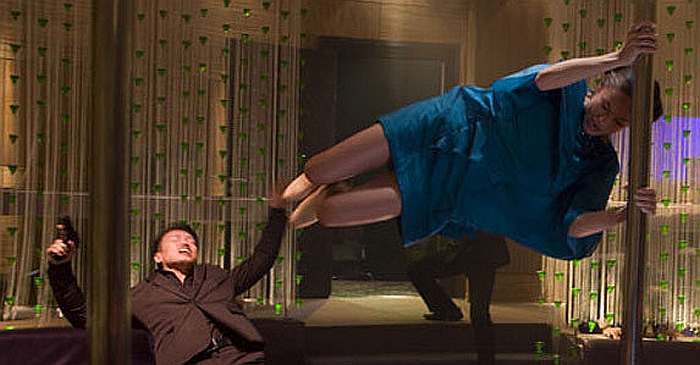
 And I believed Street Fighter II was a fighting game. Silly me. It’s far too talky: all mouth and no trousers, to borrow a good ol’ British phrase. The fights themselves, choreographed by Dion Lam, aren’t bad, though the welding of some of the Street Fighter moves into the game doesn’t work – Chun-Li’s Spinning Bird Kick, for example, just looks silly. But otherwise, they aren’t awful; there’s a nice brawl in a bathroom between our heroine and Bison’s henchwomen. However, particularly in the first hour, there just aren’t enough of them, and what should be a fast-paced slugfest becomes bogged down as Chun-Li meanders her way, with a somewhat concerned expression, around the slums of Bangkok [which actually look surprisingly liveable. You want real slums, try Mumbai].
However, the casting executive who thought a member of the Black-Eyed Peas was suitable to play Vega should be taken out and flogged mercilessly. This is not sarcasm. It’s not someone who looks like a member of the Black-Eyed Peas. It is a member of the Black-Eyed Peas. His martial arts skills are almost as unconvincing as Chun-Li’s piano-playing. Almost. Klein is equally inept as Nash – the witty banter between he and Maya hits the floor with a resounding clunk, due to the complete lack of chemistry between the two actors. Similarly, McDonough has none of the charisma necessary for Bison. Say what you like about the Van Damme Street Fighter movie, and the venom is probably dripping from your lips there, it did at least have Raul Julia.
In fact, this movie pretty much makes the original look Oscar-worthy in most ways. The best depiction of the game still remains the manic sequence in Jackie Chan’s City Hunter where he and Gary Daniels went toe-to-toe in a variety of epically-silly costumes. Chan made a much better Chun-Li than Kreuk could ever hope to, and any future list of “10 Crappiest Video-game Adaptations of All Time” (admittedly, the main issue here is stopping after just ten) will be judged largely on how highly this ranks. Is that 750 words yet?
Dir: Andrzej Bartkowiak
Star: Kristin Kreuk, Chris Klein, Neal McDonough, Robin Shou

 The rise of self-publishing has provided an opportunity for authors to distribute their product directly to the public – it’s no longer necessary to have a contract or even a publishing house. This is, frankly, a double-edged sword: just because you
 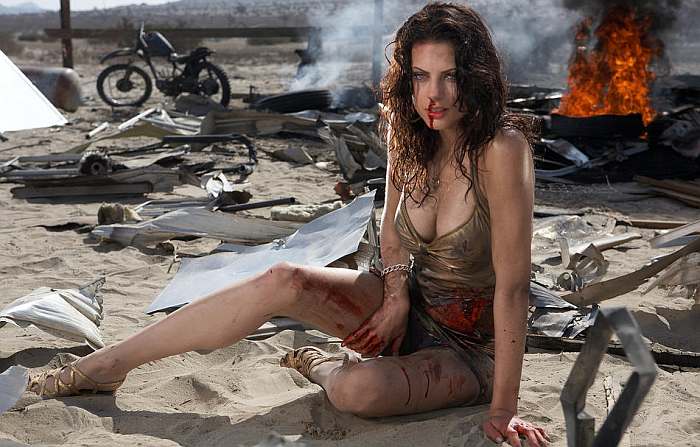 ★★★★
★★★★ Chris has a certain firmness of opinion. When she has made up her mind about something, it’s pretty hard to get her to change it. She will purse her lips, fold her arms and stick to her guns. You could argue whether this strong will is a character quality or a flaw, but it certainly led to her early exit from Bitch Slap. Here’s an approximate timeline of the comments from the seat on the couch next to me:



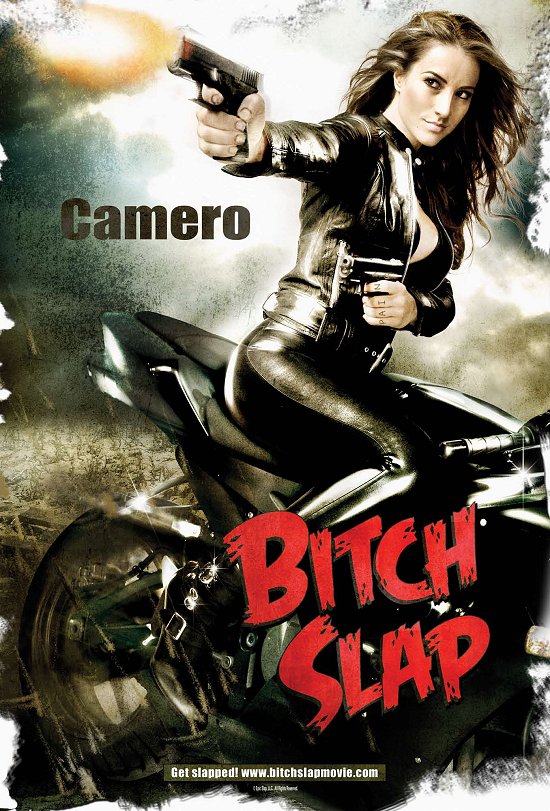
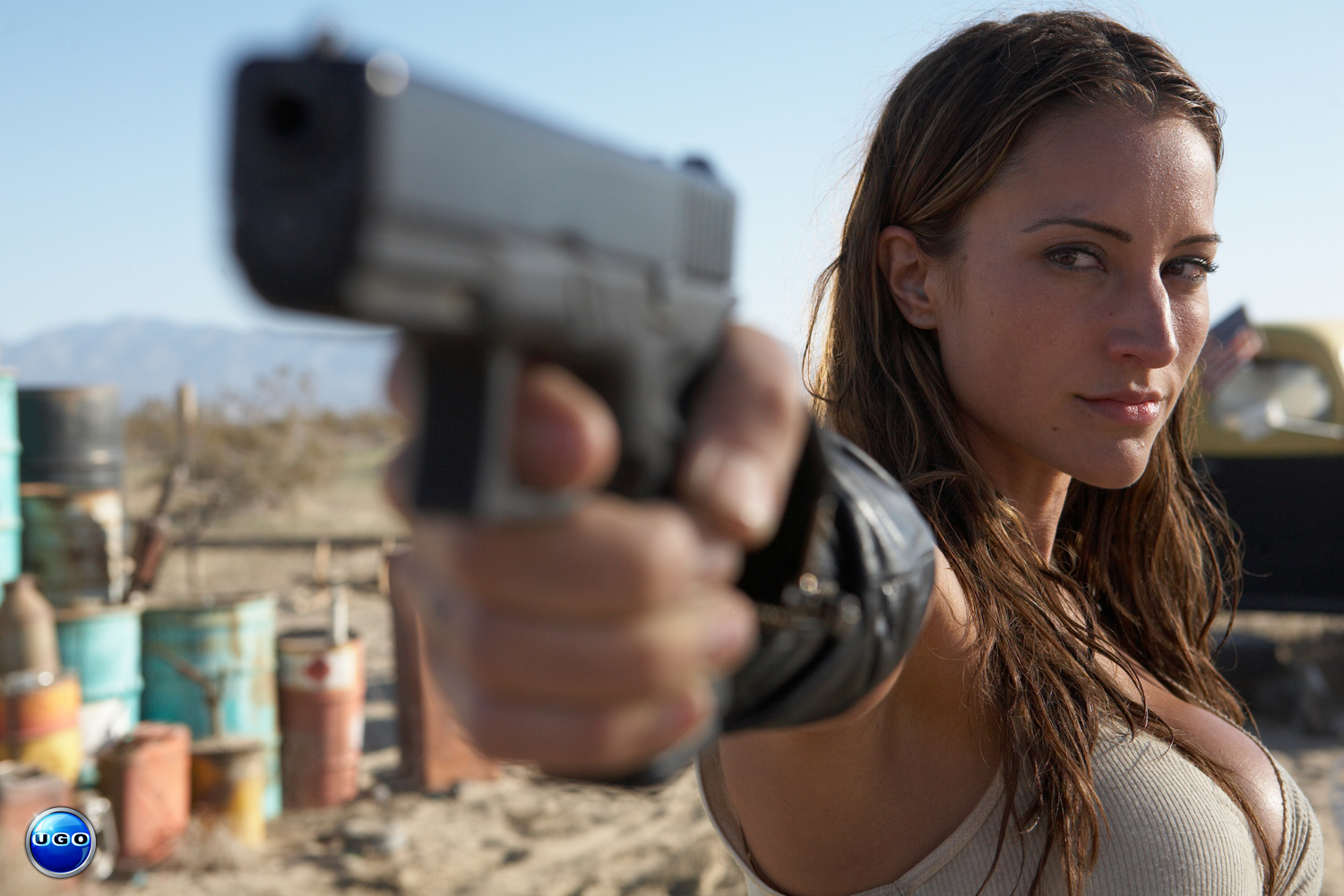
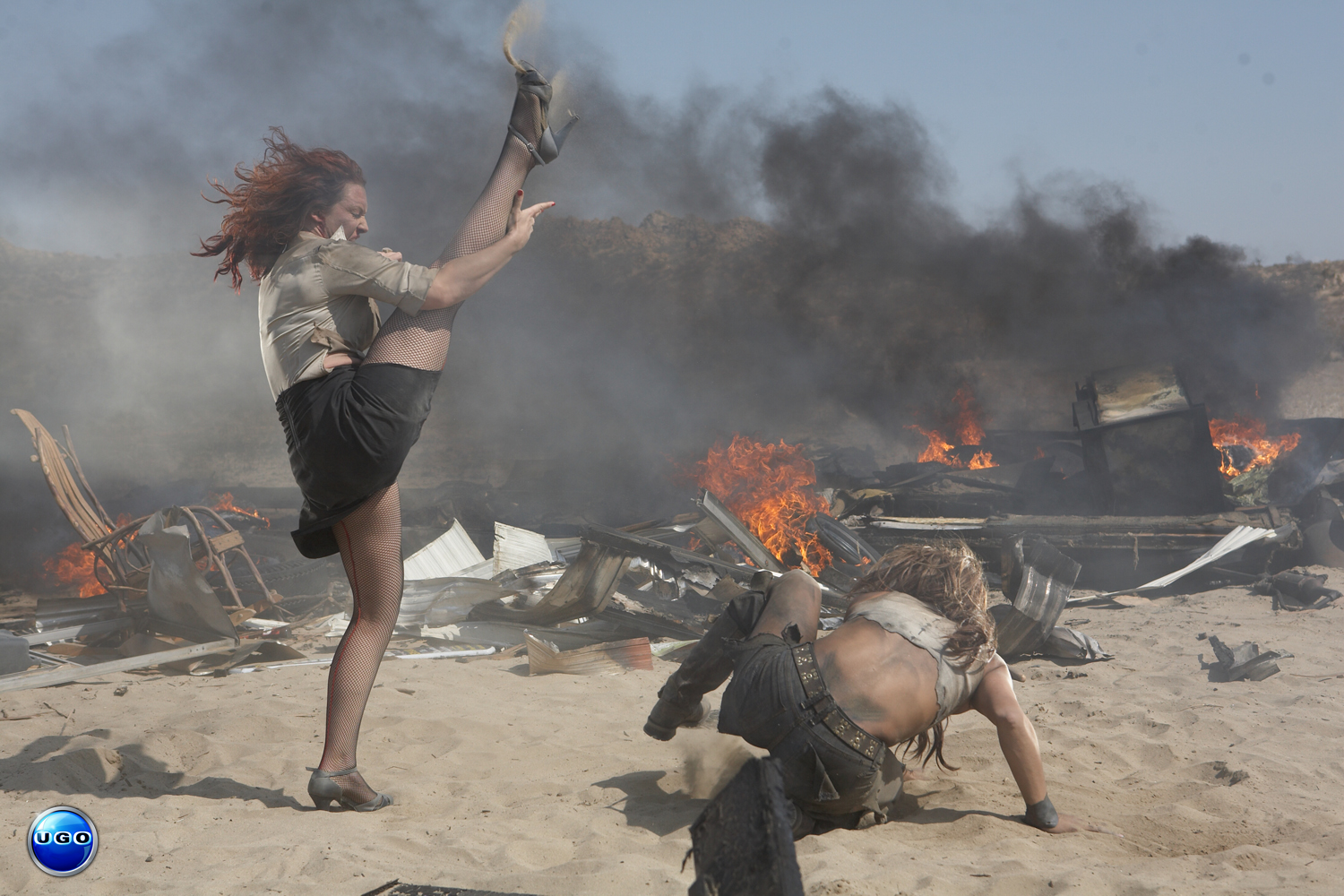
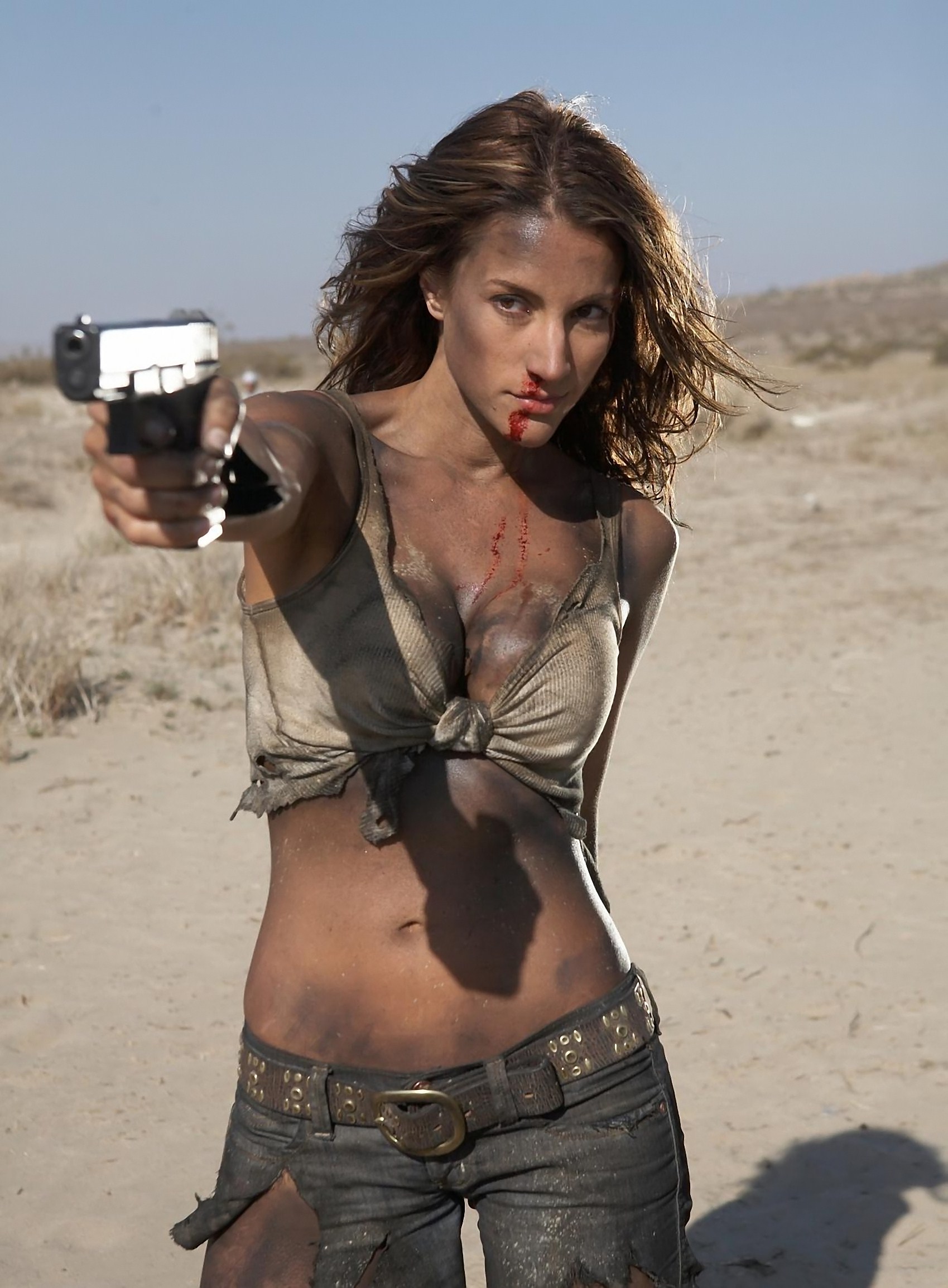
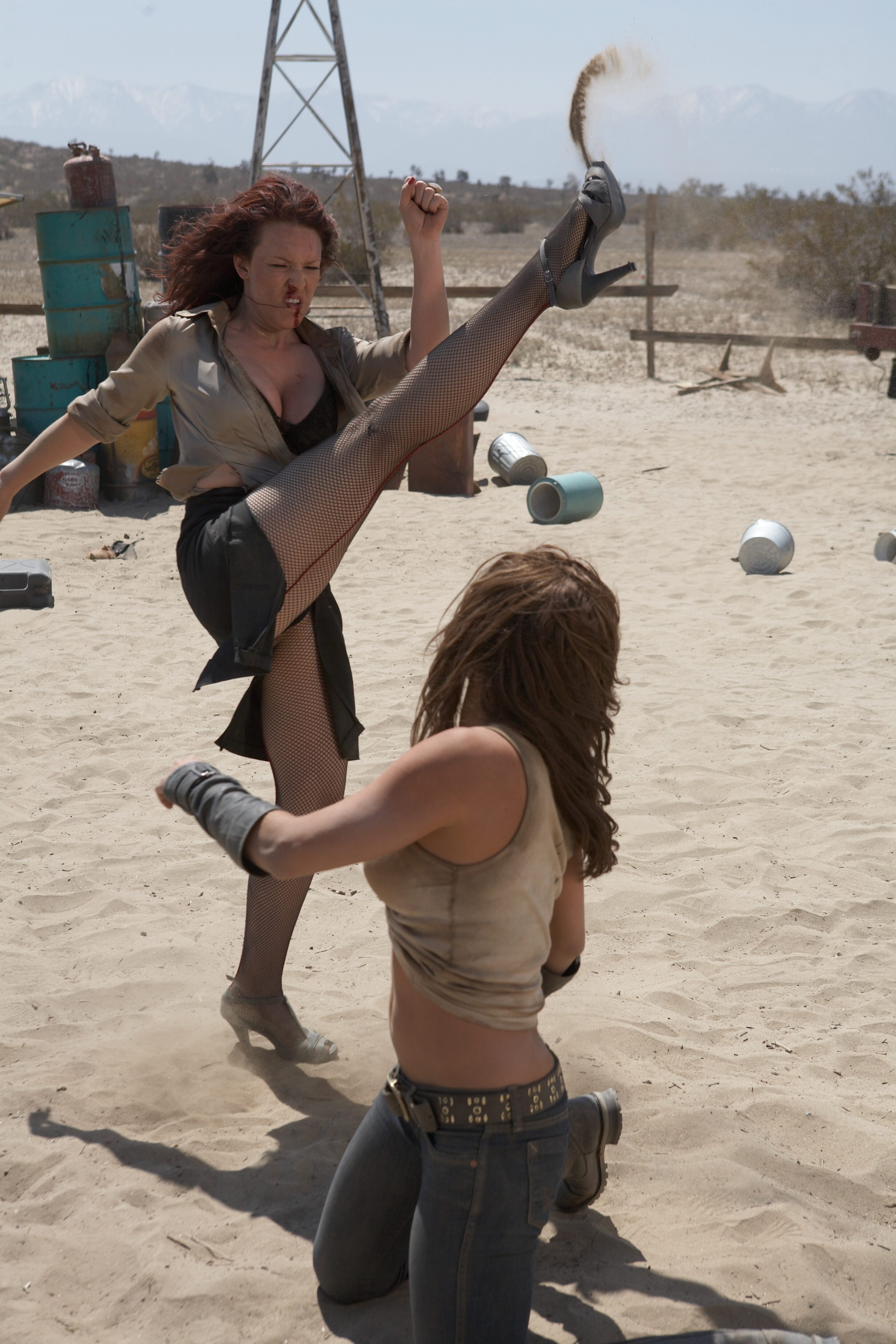
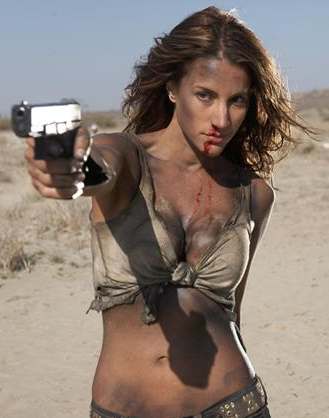 The main weak link is the leads, who don’t have the chops – physical or acting – to pull this off. I to wonder whether it might have been a good deal better if stunt co-ordinator Zoe Bell, Lucy Lawless and Renee O’Connor had been the stars of the film, rather than merely cameos. They have all previously shown the necessary combination of martial ability and screen presence necessary for the parts here. Not that the actresses here are “bad”: however, when you’re spitting out Satana-esque lines like, “Ram this in your clambake, bitch cake!” you’d












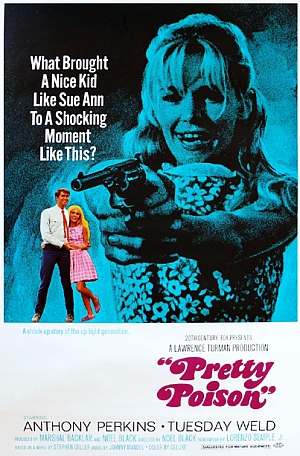 I was expecting more a quirky comedy than a dark thriller from this 1968 film, and only bothered with it because I’m a fan of Perkins (Edge of Sanity is a beautifully-lurid retelling of the Dr. Jekyll story, with the trash quotient cranked up to 11). Imagine my surprise when… Well, let’s start at the beginning, shall we? Juvenile arsonist Dennis Pitt (Perkins) is finally released back into the community as “cured”, though his fondness for fantastic invention appears unchanged. For a while he works at a chemical in the small town of Winslow without apparent issue. But trouble looms in the pretty, 17-year old shape of Sue Ann Stepanek (Weld), even though she appears to be squeaky-clean – an honor-roll student, majorette, etc. To entice her, Pitt spins a tale of being a secret agent, investigating a plan to poison the water supply. Sue Ann seems to swallow it, hook, line and sinker, but after one of their ‘sabotage mission’ goes wrong, it’s apparent that Sue Ann has her boyfriend
 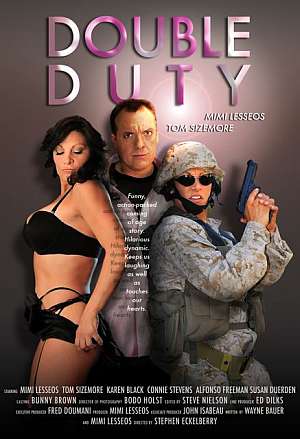 After 20 years in the Marines, MJ (Lesseos) returns to civilian life, but finds it somewhat hard to adapt to life as a civilian. Her old college friend Sophie (Duerden) helps her adjust – somewhat – and introduces her to Craig (Sizemore), a designer who is perhaps rather more feminine than MJ. Sophie is working on a charity auction, not realizing her assistant Carl (Freeman) is planning to steal the top item, a Faberge egg. Meanwhile, hypnosis has given MJ the ability to get in touch with her inner woman – but the problem is, every time someone snaps their fingers, she switches between her two personas. There is that of the rough, tough and gruff Marine, and then there’s the other, a giggling girlie for whom breaking a nail would pose a deep, personal crisis. Which will win out when the chips are down?
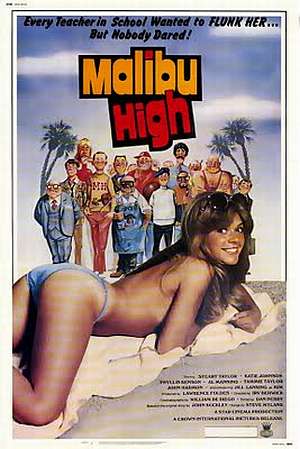 This one popped out of nowhere, on a box-set of discs called Drive-In Cult Classics: most of these were unremarkable double-feature fillers, and this started off looking the same way, Kim (Lansing) is fed up with life: she’s still in high-school at age 18, is about to flunk it, has no money, just lost her boyfriend (Taylor), her father hung himself and her mom’s a total bitch. Finally, she opts to use her natural resources (if you know what I mean, and I think you do) to resolve these issues – though when her mother suggested Kim get a job, I’m not sure she meant as a whore working in the back of a VW van for the ultra-sleazy Tony (Mann). Her ‘popularity’ there lets her move up to work for the slightly-less sleazy Lance (Howard). Which is where the film takes an abrupt right turn, as she discovers a taste for killing – not least on her former pimp – and starts work as, to use one of the movie’s alternate titles, a high-school hit girl.
 It’s nice to see Hong Kong making a decent action heroine film: that’s really where the genre started off, and it’s been responsible for some of the best entries in the field. That said, this doesn’t quite deserve to be placed on the same level, but star Jiang Lui Xia certainly has her potential – my immediate thought is to put her in the same film as Jeeja Yanin, and we might really have something. [Sidenote: Jiang got her big break as the result of a couple of unusual ways. Viral videos she posted on the Internet, which in turn got her a slot on a reality show called The Disciple in Hong Kong, produced by Jackie Chan. The winner – not her – got to star in a feature.] Much like her Thai colleague, Jiang is clearly a martial artist first, and actress…well, probably fifth or sixth, despite her resemblance to Shin Eun Kyung from My Wife is Gangster. She seems to have three expressions, used in strict rotation, and the plot is frankly implausible nonsense too.
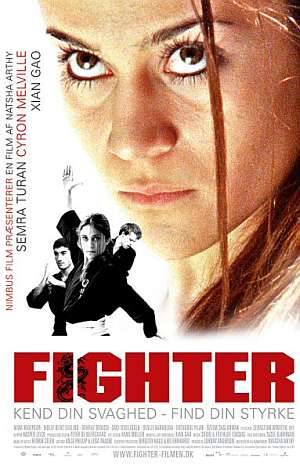 Certainly one of a kind, this coming-of-age film tells the story of Aicha (Turan), a Muslim girl born of Turkish parents, who is obsessed with learning martial arts – the last thing her father wants. This thoroughly unfeminine interest, in the eyes of her community, is carried out in secret, but Omar (Banissi), a friend of her brother’s fiancee’s family finds out, and is thoroughly unimpressed. “I don’t fight girls,” he says dismissively, when ordered to spar with Aicha, and this leads to his ejection from the club by their teacher (Xian). When he confronts Aicha at the engagement party, the resulting argument becomes a brawl, and leads to the breaking off of the engagement – which is doubly unfortunate, as the bride-to-be is discovered to be pregnant. Meanwhile, Aicha has to prepare for an upcoming tournament, alongside her training partner, Emil (Melville) – and for which Omar has also signed up as a contestant.
 If you’ve seen Chocolate – starring the same lead actress, though confusingly billed under a different name here – you’ll know what to expect, and the film delivers much of the same. Which would be stunning, brutal fight scenes combined with moments of mind-numbing tedium. The plan for Yanin’s career seems to be to contrive methods by which she can avoid acting: last time it was autism; here, it’s a drunken style of kung-fu which helps mitigate a voice that might charitably be compared to broken nails on glass. She plays former rock-star(!) Deu, who is on the edge of being kidnapped, when she’s rescued by Sanim (Tang). He and his fellow masters of alcohol-fu have all lost ladies in their life to the kidnappers – who, it turns out, are doing this because… No. You wouldn’t believe me even if I told you – and are trying to locate their lair. Deu joins the team, and agrees to act as bait, to see if the kidnappers will go after her again.