
Assassination

★★★½
“Burning Japanese.”

assassinationNot, in any way, to be confused with The Assassin, despite both being distributed in the United States by Well Go, this is substantially more entertaining, being a nicely put-together period actioner that, in some ways, reminded me of Inglourious Bastards. In 1933, Korea was occupied by Japanese forces, against which a slew of liberation movements fought. As part of the rebellion, plans are afoot to assassinate Kawaguchi Mamoru, the local Japanese governor and Kang In-gook (Lee G-y), a Korean tycoon who has collaborated with the occupiers. Tasked with leading a small group to carry out the mission is Ahn Ok-yun (Jun), a lethal sniper; she’s bailed out of military prison where she has been sent for “accidentally” shooting her superior. Yeom Seok-Jin (Lee J-j) is overseeing the operation, but is actually working for the Japanese, and hires an independent hit-man (Ha), known as “Hawaiian Pistol” to sabotage it. Making things infinitely more complex, it turns out that Kang’s daughter is actually the twin sister of Ahn, the women having been separated and brought up, oblivious of each other’s existence.

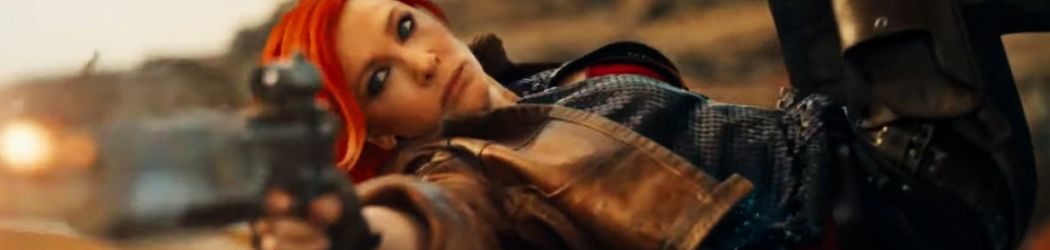
There’s a very good sense of time here, with a lot of money having clearly been spent on sets, costumes, motor vehicles and everything else necessary to create Korea of the time. The action sequences are slickly put-together, without ever devolving into excess; to be honest, they’re probably a bit more plausible than the plot, where the “twin” aspect leads, in the final reel, to some developments that pass beyond incredible to uncredible. It is also more than somewhat relentless in its anti-Japanese message, bordering on the xenophobic, albeit perhaps for understandable reasons, and at 140 minutes, feels a good 20 too long. That said, there’s still an awful lot to enjoy here, in the performances and complex plot, which ends up spanning nearly 40 years from prologue to epilogue, as well as the glorious set-piece battles. The pick of these is probably the group’s first attempt as assassinating their targets, diverting them to a gas station and into a killing zone on their way out of the city, but equally as impressive is a gun-battle when a wedding devolves into a siege situation [which explains the image, above right!]

I was trying to figure out why Jun was familiar, and eventually realized she had starred in the live-action adaptation of Blood: The Last Vampire. While that was largely forgettable, she has become a huge star in her native Korea, both in film and on television. This is certainly more impressive than Blood, and she is certainly the emotional heart of the film, as well as providing some of its most memorable moments, such as when she pauses on the way to begin her mission, to take out a pair of Japanese machine-gun nests, with a grand total of four bullets. This kind of swift characterization demonstrates her character’s competence early, and the film even avoids the obvious desire for a romantic subplot. Despite the obvious issues noted above, the positives are good enough to outweigh them, and overall, this provides an enjoyable couple of hours of wartime derring-do.

Dir: Dong-hoon Choi
Star: Jun Ji-hyun, Lee Jung-jae, Ha Jung-woo, Lee Geung-young

Guns For Hire

★½
“Fires nothing but blanks.”

gunsforhireThe first spectacular misfire of 2016, I was hoping for much more, than a story that could only be claimed to make any sense if it was entirely the ravings of a mentally-deranged idiot. Beatle (Hicks) is a tow-truck driver/assassin – yes, that’s what it says on her business cards – who rescues Athena (Carradine) from her abusive ex-boyfriend, Kyle (Mendelsohn). In revenge, he sets deranged psychopath Bruce (Morgan) on their trail, and he is prepared to stop at nothing to bring them back to his boss. Meanwhile, Athena hires Beatle to kill her, but they have to hang out until the change in Athena’s life-insurance policy, making Beatle the beneficiary, is officially completed. Except, is Beatle actually a killer at all? For her therapist seems convinced otherwise. The entire saga unfolds in flashback, as Beatle is being interrogated by a detective, who has found the videotape of Beatle’s infomercial for her hitwoman business. Certainly sounds like an unusual set-up, and potentially interesting, right?

Wrong. It’s an overly talky and thoroughly unconvincing slab of pretentious nonsense, which is nowhere near as smart as it thinks, and completely fails to provide the “Nonstop action!” proclaimed on the cover. Both Beatle (seriously, what kind of name is that?) and Athena are the kind of characters you would actively seek to avoid if you met either of them in real life, and the film does nothing to make spending 75 minutes in their company any more attractive. Perhaps it might have worked, if the story had done more with the question of whether or not Beatle is an assassin only in her own mind, following the American Psycho approach. That would, at least, have tied in with the final twist, which basically screws up everything you’ve endured to that point, and throws it out the window. Thanks a bunch, for wasting the audience’s time, Ms. Robinson.

There’s a subplot involving Beatle and a stripper, which seems present only to provide some gratuitous lesbian titillation for undemanding male viewers, and – speaking as the apparent target audience – doesn’t even work on that level. Instead, you’re left to cope with performances which range from the passable (Morgan does his best, in limited screen time) through the gratuitously excessive (Tony Shalhoub turns up as a DMV employee, for no reason) to the spectacularly incompetent (I’ll spare the name of the “actor” “playing” the “detective” – all three sets of quotes used advisedly). Add dialogue which, I can only presume, must have sounded an awful lot better in writer-director Robinson’s head than it plays on screen, and you’ve got something that fizzles an enormous amount more than it sizzles. As the first of our “coming in 2016” films to be reviewed, it feels more like a New Year’s Day hangover than any kind of shiny, positive resolution.

Dir: Donna Robinson
Star: Ever Carradine, Michele Hicks, Jeffrey Dean Morgan, Ben Mendelsohn

Wreaths of Empire, by Andrew M. Seddon

Literary rating: ★★★★★
Kick-butt quotient: ☆

wreathsIt’s often frustrating to me that in today’s two-tiered fiction market, in which the big-time tier is practically a closed caste and the tier that admits everybody else is so glutted that gems get easily buried beneath the mountains of slag (and nobody knows where to look for them), it’s really difficult for some first-class authors to get the recognition and readership they deserve, and would have had a generation ago. Andrew M. Seddon is definitely one of these authors. He and I have been Internet friends for over ten years; I had the privilege of beta reading this excellent novel a couple of years ago (and Andrew is kind enough to mention me in the acknowledgments, though he truly didn’t need much if any help from me!) and now, since he’s generously given me a signed copy, I have the added privilege of being one of the first persons to review it anywhere.

Andrew writes high-quality historical and supernatural fiction, but it’s probably fair to say that his literary first love is science fiction. A medical doctor, his training and experience in the life sciences gives him a predilection for the genre’s “hard” tradition, in which science is handled accurately and the speculative element builds on credible extrapolation from actual knowledge. Wreaths of Empire stands in this tradition; it’s also a work of “space opera,” set in a far-future galaxy with far-flung human settlement, against the background of “a clash of civilizations,” humans vs. aliens in a high-stakes interstellar war, with battle scenes, intrigue, and plenty of action. In its roots and for much of its history, this tradition tended to be associated with shallow characterization, a simplistic “us against them” orientation, and heavy concentration on description of hardware and display of technological and scientific speculation to the neglect of the human element. Happily, none of those features have ever characterized Andrew’s work, and don’t here. This is a novel where the key element is people (whether they’re human or alien) and the choices they make –people and choices we come to care about greatly.

Readers of Andrew’s earlier novel Iron Scepter will recall that there we find the malevolent Hegemony, which dominates human space, plotting to gin up a war against another space-faring race, the Gara’nesh, in order to use fear and hatred of an outside enemy to solidify its own control over its hapless subjects. This new novel is set in the same universe, like much of Andrew’s SF. (Despite the broad chronological framework that ties them together, though, these books aren’t a “series;” they can each stand alone and be read independently.) Here, though, our setting is much later; the bloody Gara’nesh war has dragged on for decades, shaping the lives and attitudes of a whole generation that’s never known anything else. When we meet Jade Lafrey in the prologue, she’s an ensign in the Hegemony’s space fleet –an ensign who’s destined to make a crucial choice that will have far-reaching consequences, for the galaxy and for two sentient species.

Eleven years later, as peace negotiations are finally opening, Jade’s a (space) Naval Intelligence officer, called on to deal with a complex behind-the scenes intrigue that may threaten the diplomatic efforts, if not the survival of humanity itself; and it will be very difficult to tell friend from foe. She’ll get her share of fighting action and physical jeopardies and challenge as a result. As an added bonus for action heroine fans, the author actually gives us two action-oriented ladies here; besides our protagonist, one of the secondary female characters, interstellar smuggler Trevarra, can also handle herself well in a fight. (In fact, while the one-star kick-butt quotient above rates Jade’s performance, if I’d rated Trevarra’s it would have been three.)

Earlier this year, I was asked if I could provide a blurb for the cover copy of this book. I can’t think of a better way to finish this review than to quote it. “Top-notch SF author Seddon creates possibly his best novel yet in Wreaths of Empire, bringing a new depth and freshness to the space opera tradition. A wonderful heroine to cheer for; a well-crafted, character-driven plot; some of the genre’s finest writing; excitement, suspense, and food for thought –what more could a reader ask for?”

Author: Andrew M. Seddon
Publisher: Splashdown Books, available through Amazon, both for Kindle and as a printed book.

A version of this review previously appeared on Goodreads.

Kyoko vs. Yuki

★½
“Dead boring. Note: that is not just a critical opinion, it’s a statement of content…”

kyokovsyukiThe ultimate high school girl assassin Kyoko (code name 2029), who was raised by a mysterious underground organization finally became active. Meanwhile, the high school girl Yuki (born in 1983) with a reputation for being the strongest fighter in town, was living carefree every day with her girlfriend. And then, when the two met, a bloody battle for the title of “strongest high school girl” began…

Well, it sounded promising. Unfortunately, even though this lasts 52 minutes, the execution is so woefully inept, that you would be much better off watching half of Half Revenge Milly. The plot sees Kyoko (Fujikawa), having completed her training, sent on a mission to retrieve a suitcase of drugs which has been stolen from the organization that employs her. The Yakuza who stole it is currently living it up with what he thinks is a schoolgirl prostitute, but is actually Yuki (Satomi), who is intent on rolling her “compensated dating” boyfriend. She does so to help her lesbian lover, Miki (Satô), left deep in debt after acting as guarantor for a loan taken out by her sister, who has since vanished. However, when Kyoko finds out the pair now have her employer’s possessions, her revenge is swift and brutal, setting up a subsequent confrontation between her and Yuki.

Director Yamanouchi apparently has a bit of a “reputation” for sleaze, and that certainly seems justified here. Not so much for the lesbian sex, which pretty much par for the course: it’s the subsequent excursion into lesbian necrophilia for which this one will be remembered. It certainly won’t be for the fight scenes, which are feeble in the extreme, poorly-staged and possible even more badly edited. Sure, it’s clear that none of the actresses here were employed for their martial-arts abilities – even if, curiously, Fujikawa keeps her clothes on. Yet given the premise, you’d have thought those involved would at least have made some effort, albeit a token one. Nope. It’s wretched on just about every level, and even the splatter seem unenthusiastic, save for a mildly effective umbrella through the face. Oh, and I did laugh at Yuki taking her bra off and using it to try and choke Kyoko.

Maybe that’s really what this is: a parody of the genre, deliberately made to be piss-poor. However, from what I’ve read about Yamanouchi’s other work, it seems unlikely: satires doesn’t appear to be his bag, and this is described, in more than one place, as relatively restrained by the director’s own standards. That probably isn’t a good thing: if you don’t have production values… Or good actors… Or a script… Then at the very least, you should go full-throttle and embrace the madness, and it’s what the best of these J-film entries do. This one? Not so much.

Dir: Daisuke Yamanouchi
Star: Kyoko Fujikawa, Yôko Satomi, Kinako Satô

Battle of the Amazons

★★★
“This world was made for hate, not love.”

amazonsIt’s startling to think that when this came out, this merited not only a theatrical release in the United States, but a review from perhaps the most respected critic of our time, the late Roger Ebert. Needless to say, it didn’t end well for the film, but Ebert tearing apart a film is still fun to read. I particularly liked the line, “There are spears and bows and arrows and swords, which suggests early times, but then again all of the women on both sides are fresh from the hair dryer. They also exhibit impressive technical advances in the art of brassiere-design.” Yeah, welcome to The Magnificent Seven – only set in a vaguely Greco-Roman era, with a tribe of rather vicious Amazons the antagonists.

They live by raiding and plundering local villages, under Queen Eraglia (Love), but after they kill her father, local lass Valeria (Tedesco) has had enough, and rents the service of conveniently-passing bandit Zeno (Tate), to teach the village farmers how to defend themselves. However, the sexual chemstry that flies between Valeria and Zeno fail to impress her betrothed, who convinces a group of village men, that their best chance of survival is to switch sides, reveal details of the defense plans to Eraglia, and hope she sees fit to give them mercy. It turns out though, that he may not be the only snitch present in the town camp, as things proceed towards the entirely expected finale, a lengthy battle pitting the raiding women against the defending agriculturalists.

It’s actually a little darker and possibly somewhat more well-thought out than I expected: the final line of dialogue being the one atop this review, which sprinkles a nice sense of doom and futility over things, and the multiple levels of betrayal are effectively handled. I started watching this on a plane flight to New York, but I think the second topless torture scene was about where I opted to save it for another day, though there really isn’t much else here worse than PG-13 rated. Tedesco makes a good impression as the feisty heroine, and it’s a nice touch to have women effectively leading both sides, though when it comes to the actual fighting, Valeria obviously steps aside for Zeno. Sadly, the Amazons also step aside when the action kicks off, largely being unconvincingly replaced by male stunt doubles in masks and wigs. Valeria acquits herself best there as well, indeed coming to the rescue of her employee in the final face-off. I can’t honestly say I minded the dubbing as much as Roger, and the time passed briskly enough on its way to an appropriately grandiose finale. Though I’m certainly agree with him on one point: I’m not quite sure why the local men made such a fuss about getting kidnapped…

Dir: Alfonso Brescia
Star: Lincoln Tate, Paola Tedesco, Lucretia Love, Mirta Miller

Petty Treason, by Madeleine E. Robins

Literary rating: ★★★★★
Kick-butt quotient: ☆☆

pettytreasonThis second volume of Robins’ high-quality Sarah Tolerance series has much in common with the first book, (Point of Honour, which I’ve already reviewed here) in style and literary strong points; and of course it shares a protagonist and other continuing characters (and an ethos) with its predecessor, and builds on the premise and events laid out there. While it could be read first and still be enjoyed, IMO the series should be read in order to fully understand the characters and relationships (and Sarah’s unique situation), and appreciate their development here.

Six months have passed since the events of Point of Honor; we’re now in November, 1810. In the background, the Napoleonic Wars still drag on, with widespread dissatisfaction on the home front with the sacrifices the government demands to support and provision the troops abroad; and Queen Charlotte’s poor health fuels the poisonous infighting of Whig and Tory factions as they jockey for the possible appointment of a new regent. The book’s cover copy gives a basically accurate explanation of the case confronting Sarah here –except that this is actually NOT a locked room mystery, classic or otherwise; whoever wrote the description didn’t read the book carefully. It’s not her usual type of investigation, and she undertakes it reluctantly; she’s accustomed to inquire after lost articles, errant spouses, social skeletons in the closet, etc –not to track down murderers. But the events of the previous book have demonstrated that she can do the latter; and since the investigating authorities are inclined to pin this crime on the widow, her brother believes that hiring Sarah might be his desperate last chance to find the real culprit and clear his sister.

Robins has crafted a challenging mystery that will satisfy genre fans, and keep them guessing down to the wire; the deceased had secrets that don’t immediately meet the eye, and he wasn’t the only one with things to hide. The pace of the storytelling and investigating is slow, in keeping with transportation by foot or by horse and communication by written messages; we see investigation conducted as it actually would be in this cultural context and with this kind of technology (or lack of technology). We’re also immersed very much in the daily life of a young woman in the Regency world; the way the author brings the milieu to life is a great strength of the series.

That said, the action component here is significantly greater than it was in the first book, reflected in the kick-butt quotient above, which here goes up a star. There’s also much less in the way of actual sexual situations, though Sarah still lives out back of her aunt’s high-society brothel and is close friends with a prostitute, and though her inquiries here will expose her to the ugly world of sexual sadism, where some brothels called “birching houses” cater to the tastes of males who get sexual satisfaction from beating and brutalizing women. As in the first book, there’s not much bad language here; low-life characters use the f-word three times, but in a context where it’s actually the Anglo-Saxon verb these people would use (rather than as an all-purpose expletive, as we hear it nowadays).

Sound historical research underlies the story here, as Robins makes clear in her appended “History and Appreciation.” The details of English criminal law of that day, as given in the book, are accurate; and the attempt to kill one of the king’s sons, the Duke of Cumberland, by his valet Sallis (who committed suicide when it failed) really did take place in May 1810. (In her alternate world here, Robins took the liberty of moving it to August.) And Cumberland actually was, as here, a scandal-ridden High Tory who wasn’t much loved by the populace. An equalitarian feminist subtext set against the backdrop of a very chauvinistic society (and ours really isn’t much less so, though we’re more hypocritical about it) is another strong point here.

Sarah’s a great heroine, who readily earns this reader’s respect and admiration. The snobbier members of Regency High Society don’t consider her a “lady” (and she doesn’t claim to be), and think an unwise choice made in the passion of teenage love should forever brand her as a moral pariah. But most readers will recognize her as a lady, and a classy one, with a very solid moral compass and integrity. And as the best literature always does, this novel focuses on very real moral choices, that will further temper the precious metal of her integrity in a crucible.

There’s no second-in-the-series slump here; if anything, I actually liked this novel even better than the first one! Next year, I’m hoping to read the third installment of the series, The Sleeping Partner.

Author: Madeleine E. Robins
Publisher: Tor, available through Amazon, both for Kindle and as a printed book.

A version of this review previously appeared on Goodreads.

The Big Bad

★½
“What big eyes you have…”

bigbad1Few things are more irritating than a film where the characters clearly know what’s going on, they just refuse to let the audience in on it, jabbering away to each other in cryptic dialogue that obscures more than it reveals. Not that a movie’s script has to lay everything out from the start, or can’t be subtle. But if you are going to go for an understated approach, this has to be tempered with sufficient well-handled exposition, that the viewer can understand who the players are, and care about them and their role in proceedings as they unfold. It’s here where this falls down, repeatedly. There’s one conversation which ends with the heroine, Frankie Ducane (Gotta), being banged on the head and shoved into the trunk of a car. Who did this? Why? Where is he taking her? None of these questions are ever adequately answered, and I reached the end of the film, with only a vague idea of who Frankie was, or her situation.

As the title hints, and her fondness for swigging shots of liquid silver emphasizes, this is a werewolf movie, with Frankie on the bloody trail of Fenton Bailey (Reynolds), the man responsible for her current situation. There’s an apparent clock running – at one point, we see a notebook with “3 DAYS LEFT” written in important-sized letters, but like so many elements here, its significance is never explained, and there no sense of any particular impetus to the plot resulting from it. Mind you, this is a film which is happy to spend quite a bit of time with Frankie chatting to a girl in a bar – apparently populated entirely through a casting call at the local roller derby bout – in an effort to discover what she knows about Fenton. This probably goes on far longer than necessary, but you have to respect a film which is prepared to let things unfold at their own pace, even if the audience might be tapping pointedly on their wrists and making hurry-up sounds.

What does work, better than the plot, is the atmosphere, feeling like a modern-day version of a Grimm Fairy Tale, with Gotta making a decent enough Red Riding Hood – one more interested in vengeance, than visiting Grandma with a basket of goodies. Frankie’s dagger proves quite an effective equalizer, and proves much needed when she wakes up from her trip in the trunk, to find someone has an eye on her eyes, as it were. This sequence was probably the most effective, in terms of being a modernized legend, even though its relevance is dubious. It’s an infuriating failure as a whole, feeling too much like a short film needlessly stretched to feature length (though at 78 minutes, barely so), without enough thought given to whether it possesses sufficient meat to sustain its running-time.

Dir: Bryan Enk
Star: Jessi Gotta, Jessica Savage, Timothy McCown Reynolds, Alan Rowe Kelly

Alias Ruby Blade

★★½
“Make love, not war.”

alias_ruby_blade_posterI was, I will admit, only vaguely aware of East Timor before watching this documentary, to the extent I could probably not have pointed to it on a globe with any precision. For those in a similar position, it’s a chunk of an island just to the north of Australia, which was occupied by Indonesia in 1975, not long after the Portuguese abandoned their colony. This kicked off a long, bloody period of unrest, which ran for virtually the rest of the century, and pitted those fighting for independence against the Indonesian Army and local militia groups. Leading the independence movement, FRETLIN, was charismatic guerrilla Xanana Gusmão, until his capture in 1992. One of those helping him continue to lead the group from jail was undercover FRETLIN operative “Ruby Blade” a.k.a. Australian teacher Kirsty Sword. The film is the story of how she ended up becoming the First Lady of an independent East Timor.

At the time, she was working in Indonesia’s capital, Djakarta, as an English teacher, and also helping East Timor students there, doing work like translation, from where she gradually drifted into becoming more actively involved in their struggle. Under the guise of trips to East Timor, ostensibly for humanitarian purposes, she acted as a courier, spy, money launderer and international media liaison for FRETLIN, and also helped funnel members who were on the run out of the country, with the help of friendly embassies. Her initial contact with Gusmão was teaching him English by mail, but she eventually met him in 1994, bluffing her way into the prison by saying she was there to visit an Australian who was, at the time, also being held there. Thanks also to bribed guards, Sword set him up with everything needed to keep running things, including eventually a mobile phone and even a computer. Meanwhile, their own relationship was also growing. After Xanana was released in 1999 and East Timor became independent, the pair married, and he was elected as the nation’s first president in May 2002.

This 2012 documentary is infuriatingly vague, since it skips many of the details, for example omitting entirely incidents like an apparent coup attempt in 2008, which saw Sword besieged with their children in her home, while her husband’s motorcade was ambushed. I’d like to have heard more of the nuts & bolts about her clandestine work, and perhaps rather less footage of Gusmão in prison. The film does give a sense of the danger with some disturbing footage of actual dead bodies, and incidents such as the Dili massacre in 1991, when 250 demonstrators were gunned down by Indonesian soldiers. That incident was recorded by a documentary film-crew, whom Sword was helping, and the resulting footage proved a significant catalyst in bringing East Timor’s plight to world attention. But all told, this isn’t the documentary I would have made on the topic, being more concerned with being worthy than enthralling.

Sicario

★★★½
“Not sponsored by the Mexican Tourist Board.”

sicarioThis has no small element of local resonance, kicking off in the Phoenix suburb of Chandler (albeit filmed in New Mexico!), where an FBI raid on a house uncovers dozens of bodies in the wall and a booby-trapped basement, all the results of the Mexican cartels encroaching on the United States. In the aftermath, lead agent Kate Macer (Blunt) is invited to join a group working to take down the mobsters responsible, in particular cartel boss Fausto Alarcón. To that end, she joins a force that heads across the border to Juarez, and extradite one of his associates, and then begins a plan to prod the gang’s leader in America, Manuel Diaz, into returning to Mexico for a meeting with Alarcón. Heading the force are CIA “advisor” Matt Graver (Brolin) and the even more shady Alejandro Gillick (del Toro), who has extremely personal reasons for wanting Alarcón brought to justice. Neither have quite the same attention to… procedural detail, shall we say, as Macer, and she soon discovers her new partners will go to absolutely any ends to achieve their goals.

I’m just glad we saw this before going on holiday to Rocky Point, because between this and the documentary Cartel Land (as well as Backyard), we’ve crossed Mexico off our travel plans for the foreseeable future. Hell, Tucson is now looking a bit dubious. For it doesn’t exactly paint a glowing picture of American’s southern ally: even the cops are as likely to be gangsters as anything, and brutal violence is a casual part of everyday life. It’s a setting where, the film seems to be saying, you have to be every bit as brutal if you’re going to go against the cartels, and Macer’s high belief in “justice” is portrayed as idealistic and innocent to the point of naivety, when contrasted with the unflinching savagery of the opposition. Indeed, for much of the second half, she’s little more than a place-holder, present solely so the CIA and their assets can continue to operate with official sanction. The film becomes much more about Graver and Gillick, and the final mission sees the heroine taken out of action entirely, when her presence is no longer needed.

However, up until then, Villeneuve delivers tension by the truckload, during the opening raid, and in particular during the extradition raid to Mexico, when potential threats lurk absolutely everywhere. It had us growing very familiar with the edge of our seats for a lengthy period, and I’m feeling a bit more optimistic about the upcoming Blade Runner sequel, which Villeneuve is also directing. I’d rather have seen more of a character arc from Macer, perhaps buying further into participating in the grey-area methods of her associates, instead of becoming a bench player in what I was expecting to be her own story, and that’s why it falls short of getting unqualified approval here. However, as a grim action-thriller that pulls no punches in its depiction of the (probably unwinnable) drug war, it checks of all the necessary boxes and achieves its goals.

Dir: Denis Villeneuve
Star: Emily Blunt, Benicio del Toro, Josh Brolin, Daniel Kaluuya

Lila & Eve

★★★★
“Loss + mother love = vengeance.”

lilaandeveDriven by a strong and intense performance from Davis, as Lila, a mother who has lost her son to a drive-by shooting in Atlanta, this offers a more thoughtful take on the “vigilante vengeance” genre. Feeling abandoned by the authorities, and not impressed with the forgiving approach of a support group, she finds companionship in another grieving parent there who feels the same way. Eve (Lopez) urges Lila to take action against those responsible, and together, they work their way up the chain of pushers and street-dealers, to find the man behind it all. However, their actions bring them unwanted attention, both from the detective investigating the resulting murders (Whigham) and the boss at the top of the ladder. It’s entirely possible that Lila’s thirst for revenge could cost her everything, not least her other son, Justin (Caldwell).

It’s a little hard to discuss this, since there’s one aspect which talking about would require a major spoiler, though it’s something I figured out early on: the clues are there, if you look for them. While important, it’s not something on which the film stands or falls, however, and I don’t think figuring it out early hurt my appreciation of this. I was a little concerned early that this was going to be sappy and sentimental, not least because of the presence of Lifetime Films as one of the producers. However, it isn’t that way at all: instead, this is a gritty and entirely credible look at deep personal tragedy, and the reaction to it, even if the final act topples over the edge into implausibility. Davis is key, and is particularly impressive: you can see the pain in her eyes, and how that motivates her to engage in violence which, in some ways, is arguably as senseless as the slaying of her son.

However, the other aspects are mostly solid as well. Lopez provides feisty back-up, egging Lila on whenever her drive falters, and even the cops are portrayed as credible characters, who behave intelligently, as far as their limitations allow them. This makes for a sharp contrast to some similar films I’ve seen, most recently Eye for an Eye, which were little more than a hymn to the joys of vigilante action. Here, you get the negative aspects as well, such as when the mother of one of Lila’s victims turns up to the support group, only to receive a rather mixed reaction. This moral muddying of the water shifts the tone into trickier waters, and as mentioned, I’m not sure Stone negotiates through these successfully to the end credits. However, Davis’s performance is damn near impeccable, and is mesmerizing throughout. If there were any fairness in Hollywood, this would be among the Oscar nominated performances for 2015; if I’m not holding my breath there, you still won’t see much better this year.

Dir: Charles Stone III
Star: Viola Davis, Jennifer Lopez, Ron Caldwell, Shea Whigham