



Literary rating: ★★★★½
Kick-butt quotient: ☆☆☆☆
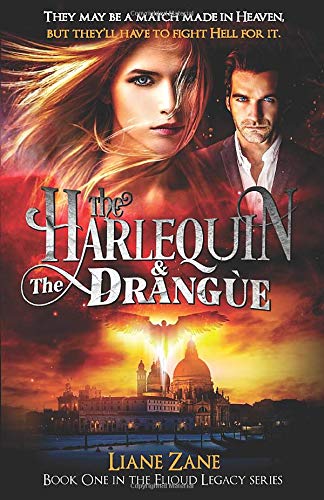
 Goodreads author Liane Zane is a published novelist under her real name, but has adopted this pen name for her new venture into paranormal romance, beginning with this opener for a projected series. She and I are Goodreads friends, so I accepted her offer of a free review copy, with no guarantee of a favorable one. PNR as such isn’t typically my thing (nor is “romance” in general, in the book trade sense); but both supernatural fiction and action adventure are, and I could easily approach this book in those terms. I’m also a sucker for a well-drawn action heroine who kicks butt and takes names –and here we have not just one but three such ladies.
Genesis, the first book of the Old Testament, referring to the time before Noah’s flood, states, “The Nephilim were on the earth in those days –and also afterward– when the sons of God went to the daughters of men and had children by them. They were the heroes of old, men of renown” (6:4). Biblical scholars are not agreed on exactly what the writer meant by this; but one ancient interpretation, articulated for instance in the inter-testamental Book of Enoch {which is not actually by Enoch], held that it refers to matings of rebellious angels and humans, with resulting offspring. Personally, I’m skeptical of that interpretation, but I can accept it as a fictional conceit in a novel; and it’s used as such in a number of modern novels, usually (as here) with the idea that these mixed bloodlines survived to the present day. Zane terms the descendants of these pairings the “Elioud;” her premise is that they may or may not know of their heritage and may have different amounts of angelic genes, but they inherit certain physical/mental powers, to the degree of angelic ancestry they have. Like angels and other humans, they also have free will; those who know their ancestry may ally themselves with God’s cause –or with the Adversary.
This information is the backdrop context for this novel; it’s disclosed more gradually in the book, but IMO it’s not a spoiler, and is actually helpful for the reader to know from the get-go. That understood, our setting is present-day central and eastern Europe, initially Vienna. Protagonist Olivia Markham is a young (I think her age is said to be 24) but very capable CIA agent stationed there, under the cover of graduate study and internship in international business development. But unknown to the Company, she has a side hobby: by night, she sometimes dons a Harlequin mask to take on sexual predators/rapists who use the Internet to line up victims; and she has a couple of female friends (also with backgrounds in covert intelligence) who help her.
Her latest target is a slime-ball who calls himself Asmodeus, the name of a demon in the Book of Tobit from the Apocrypha. What she doesn’t know, however, is that Asmodeus just might be his real name, and that he’s heading up a murderous cult who call themselves bogomili after a medieval Gnostic sect. (The Bogomils were an actual sect which originated in the Balkans, and which I’d read of before in various places, but the medieval Bogomils weren’t into murdering people to “liberate” their souls.) She also doesn’t know that he has another adversary watching him, a wealthy Albanian named Mihail Kastrioti, who has some friends of his own, friends who call him a drangue, which is usually translated as “dragon” in English. A drangue is a being known in actual Albanian folklore, but the concept is really pre-Christian and Zane has reinterpreted it somewhat. The plot takes off from there; and it’ll be quite a ride!
At 517 pages, this is a thick, substantial novel, but it doesn’t feel padded in the least; it flows quickly, with steady development of events, no dull moments, and a lot of action. In between, our heroines and heroes may stop to regroup and compare notes, and Zane may use the interludes to develop characters and impart information; but they’re interesting characters and information which are well worth developing and imparting, and which enhance the story. Characterization here is very adept and three-dimensional, and definitely a strong point. It’s obvious that the author also has done a lot of background research into history, Balkan culture and language (foreign-language phrases are translated for the reader where they need to be) etc.; it shows, but in a good way that masterfully evokes the setting as a seamless part of the narrative, not in the form of info-dumps or displays of erudition. She clearly has a particularly good grasp of the physical geography of Vienna and other cities where events take place. Action scenes are handled realistically and well. There’s a high body count, but no wallowing in gore for its own sake. As a whole, the story is a page-turner with a high tension and suspense factor, especially near the end.
While this is not “Christian fiction” in the commercial sense – it has a small amount of occasional profanity and obscenity, within the bounds of reasonable realism for the characters speaking – it is fiction written by a Christian. We get a picture of angels and demons, and their interaction, here which is morally and theologically consistent with what we’re told in the Bible, not a drastic reinterpretation of it in the manner of some modern writers. We’re solidly in the realm of a serious, high-stakes conflict between clearly defined good and evil, which grounds the novel and gives it substance. There’s no illicit or explicit sexual activity as such, though readers should be warned that there is one scene that could be described as “steamy”. There’s a clear closure to the immediate story arc with no cliffhanger, while the stage is clearly set for the projected sequel, which I want to read!
IMO, Olivia’s vigilante activities are unrealistic for a CIA operative. They’d be far too risky in terms of possible exposure and unwanted publicity: the Harlequin mask would hide her face, but still draw attention, and the consequences of her bosses’ wrath if they found out about it too drastic to risk. It’s also likely that the CIA’s recruiting process would have included psychological profiling which would have red-flagged vigilante tendencies; and there’s also the problem of what to do with offenders if she did catch them –just beat them up? Lethal force isn’t her default option –though she’s not squeamish about using it when she needs to– and she can’t make a citizen’s arrest and turn them in at the police station. The entire plot here unfolds in less than a fortnight, so there’s an insta-love situation with the attendant credibility challenge. If the angels mating with humans before the Flood were said to be disobedient, it renders it dubious to have similar unions going on in post-medieval times, between humans and angels in good standing. And one key aspect of the way a demon-acolyte bond magically works was a bit murky, at least to me. That kept my literary rating from a full five stars this time; but this is nonetheless a very good novel, and highly recommended!
The four-star kick-butt quotient here, for action-heroine action, draws on the activities of all three of our female spies/vigilantes. Olivia contributes her share to the body count I mentioned; but her two friends and sidekicks ably shoulder some serious action as well. My guess is that each of them are very likely to serve as protagonists in their own books in the series, which will make it at least a trilogy!
Author: Liane Zane
Publisher: Self-published; available through Amazon, both for Kindle and as a printed book.
A version of this review previously appeared on Goodreads.
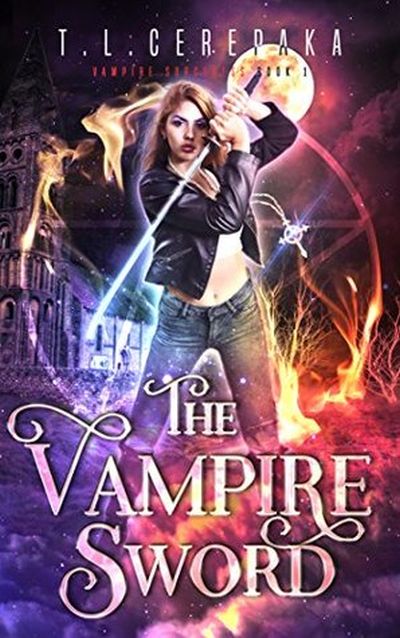 Vampires generally don’t bite their Sorcerer enemies; they just try to kill them. But a rare bitten Sorcerer becomes a half-vampire, with some vampire traits (including a blood thirst –though vampires don’t have to indulge that with human blood, despite the strong temptation) combined with ability to use magic, though just as in the Potter books, that takes training. Unfortunately for Tara, that not only poses theological conundrums for a good Baptist young lady; half-vampires are considered by both the Vampire Council and the Sorcerer’s Parliament as unnatural abominations that need to be killed on sight. And then there’s the added wrinkle that, as Council agent Lucius soon reveals, Tara’s assailant was working for a rogue Vampire Lord who has his own agenda –and it’s an agenda the rest of the world won’t like.
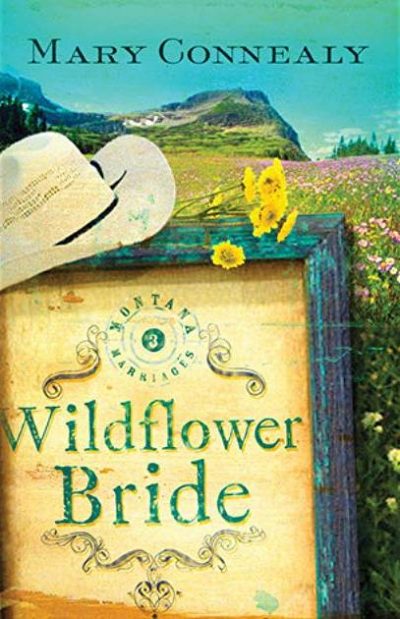 Barb and I discovered evangelical Christian author Mary Connealy through her Sophie’s Daughters trilogy, partially set in Montana in the years from 1878 to 1884. Several characters who figure in her earlier Montana Marriages trilogy, of which this novel is the third, also play important roles in the later one. So we were interested in their back stories; and when I found this book in a thrift store, it was a natural purchase! (We’ve also just started reading the second installment; long story!) This means we’re reading the trilogy in reverse order; so we started with much more knowledge of the characters’ future than the original readers would have (the read was more like a visit with old friends). However, I’ll avoid spoilers in this review. (Obviously, though, it might contain “spoilers” for the earlier Montana Marriages novels.)
 Early 20th-century pulp-fiction author Howard Philips Lovecraft created a substantial corpus of writing, mainly in the short story format and mostly in the form of horrific science fiction which in many ways reads like classic supernatural fiction. The most enduring body of his work has been the novellas and stories making up what has come to be called his Cthulhu Mythos, based on the premise that the prehistoric Earth was dominated by the Great Old Ones, or Elder Gods, malevolent and repulsive, but very powerful and dangerous, alien beings who were ultimately dethroned by another alien race, and whose hidden remnants want to regain their past dominance. A number of Lovecraft works present the idea that these beings have an evil and often murderous cult of human worshipers, handed down from the dawn of mankind, who seek to further their return to power. Numerous later writers have been inspired by HPL’s example to create their own pastiches and spin-offs of the Mythos. Brent Nichols’ self-published Gears of a Mad God novella series (there are six in all), of which this book –set in Canada in May 1921, mainly on Vancouver Island– is the opener, is one of these spin-offs. One of my Goodreads friends gave this one a favorable review; and since I’m a Lovecraft fan and the novella is free for Kindle and relatively short at 98 pages, I downloaded it.
 Some years ago, my Goodreads friend Mary J.L. gave the original novel of the author’s Nadia Stafford trilogy a favorable review, and that put it on my radar. As a rule, I don’t read novels that are only published in electronic format (it does have a audio version, but I don’t listen to audio books either), but I do read short e-stories; electronic publishing provides a forum for those works which no longer exists in print, what with the demise of general-circulation magazines. This tale, as a novella, occupies a middle ground, but commercially novellas are in much the same boat as short stories –a single one wouldn’t sell very well in print format. So I felt it was fair to treat it the same way, and thought it would be a good way to check out the series for myself.
 Earlier this year, because he knew that I’d greatly liked the two previous Sabel Security novels, my Goodreads friend Seeley James gifted me with the e-book editions of all of the remaining five. This was just an act of friendly generosity, with no actual request for reviews; but I’m glad to treat them as review copies, and (as always) to review them fairly on their merits. This book’s merits earn it very high marks, which came as no surprise to me!
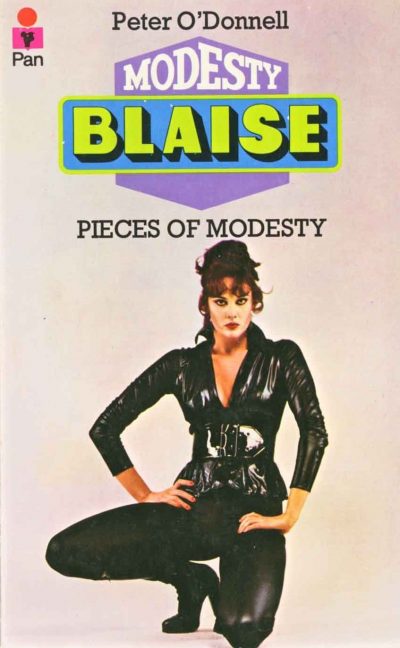 While this is the sixth installment of the series, because the stories are strictly episodic and not connected to each other, and are set at various times in the 60s, they don’t really have to be read after the first five novels to be understood and appreciated. (It would probably be best to read the first novel first, just to provide a foundation.) In a couple of stories, references are made to events, and characters reappear, which are probably drawn from the novels; but any information about past events that we need to know is supplied. Five of them are written in third person; “I Had a Date with Lady Janet” is unique in that Willie narrates it in first person, which helps to develop his character more deeply. The settings are mostly British or continental European, with one tale taking place in South America. All six adventures involve Modesty in a wide variety of situations, which illustrate various aspects of her personality and abilities; that may explain the collection’s odd title. (Don’t worry –Modesty is not dismembered!)
 “Salamander Four” is the only selection here that indicates Modesty’s openness, on occasion, to uncommitted sex (although there’s no explicit sexual content there, or in any of the stories), but the psychology of it is understandable and she comes across to me as misguided rather than callous and selfish –it’s clear that her intention isn’t knowingly to be hurtful or exploitative. Finally, “The Soo Girl Charity” is the most disturbing of the stories, in that (though without being graphic) it provides a look into the dark reality of the exploitation of women by sexual sadists, and into the even darker reality of what pounded-in cultural brainwashing of females to accept patriarchy and male domination actually does to their psyches. (I didn’t feel that the victim here being Asian indicates racism or cultural stereotyping; I think that simply reflects a reality that, at least in the 60s, traditional rural Asian cultures still tended to promote that kind of brainwashing to a greater degree than Occidental ones –even though the sexism of our culture is bad enough.)
 It took me about six years after reading the series opener to get back to the adventures of one of my favorite action heroines, Seeley James’ Pia Sabel; but I only wish I’d done so a lot sooner! Some of my comments in my
  Although I haven’t read much pirate-themed fiction, I find the premise interesting; so I’ve had my eye on this historical novel ever since the BC library (where I work) acquired it. It definitely didn’t disappoint! Set mostly in the early 1720s, with some stage-setting in the years leading up to those, this action-packed tale follows the life and adventures of first-person narrator Nancy Kington (b. ca. 1704), the daughter of a Bristol merchant, who finds herself packed off to the family’s plantation in Jamaica at the age of 15, and is subsequently led by circumstances to voluntarily sign articles on a pirate ship.
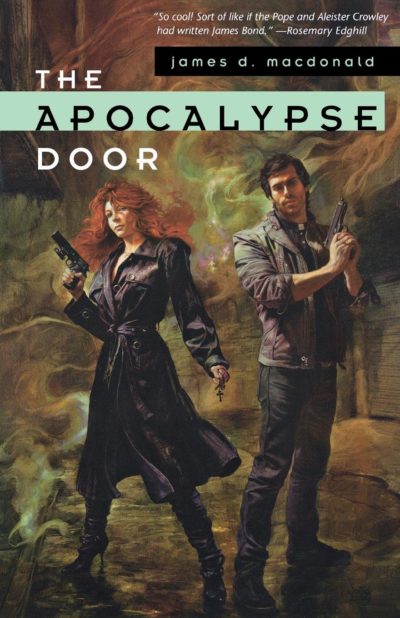 Those criticisms aside, however, this is a very gripping, exciting read, that moves along at a rapid pace right out of the starting gate. We have two distinct narratives here, alternating: a main one set in the author’s present (2002), laid out in the numbered chapters, and an earlier one from 1980, interspersed between each chapter in short sections titled “In-Country.” How the one strand is related to the other isn’t clear until near the end, although one connection comes into focus sooner than that. This is a challenging structure for a novelist to pull off, and to my mind Macdonald does it very well; both strands held my interest, and the rapid cutting between the two made for a constant cliff-hanger effect. I was completely hooked for both of them early on.