 ★★★★½
★★★★½
“Mad (Wo)Men”
 Compared to my normal reviews, this is going to be long, somewhat rambling and by no means limited to the movie itself. Because reactions to it, are in many ways as interesting as the film itself. Often, films that generate a lot of chatter or furore don’t live up to the hype – think 50 Shades of Grey or The Blair Witch Project. So it’s refreshing to find a controversial movie that would be quite capable of standing on its own. It’s also surprising to find myself writing about the film here at all, considering that the original series, to which this is a kinda-sequel, sorta-reboot, is among the most masculine of movie series. The most feminine character of note in the entire trilogy is Tina Turner, which says… Well, let’s just leave it at “something,” shall we? So, much as I was looking forward to seeing the original director revisit his creation – the second film, in particular, is an action classic – I was hardly expecting this to qualify for the site.
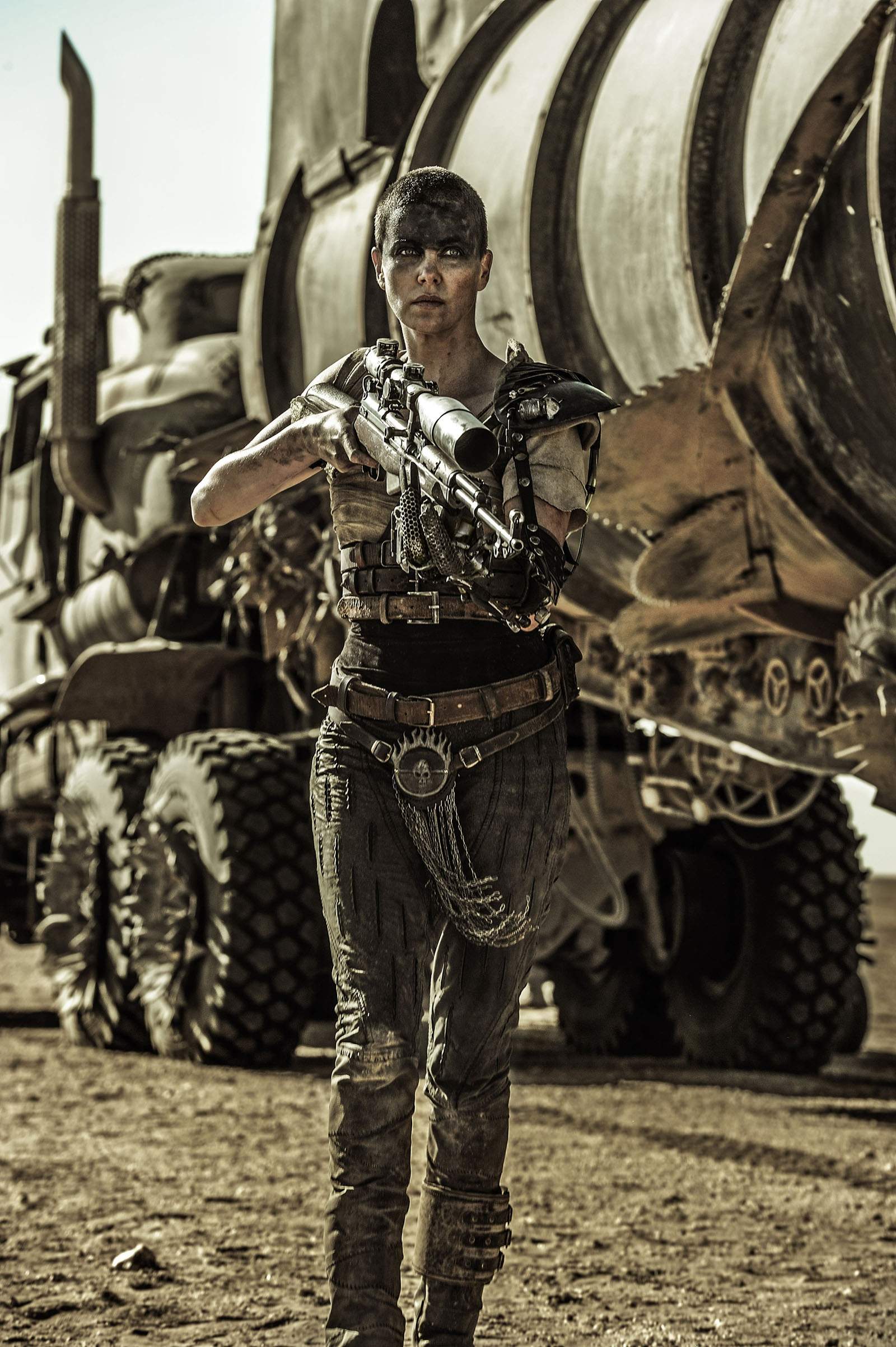
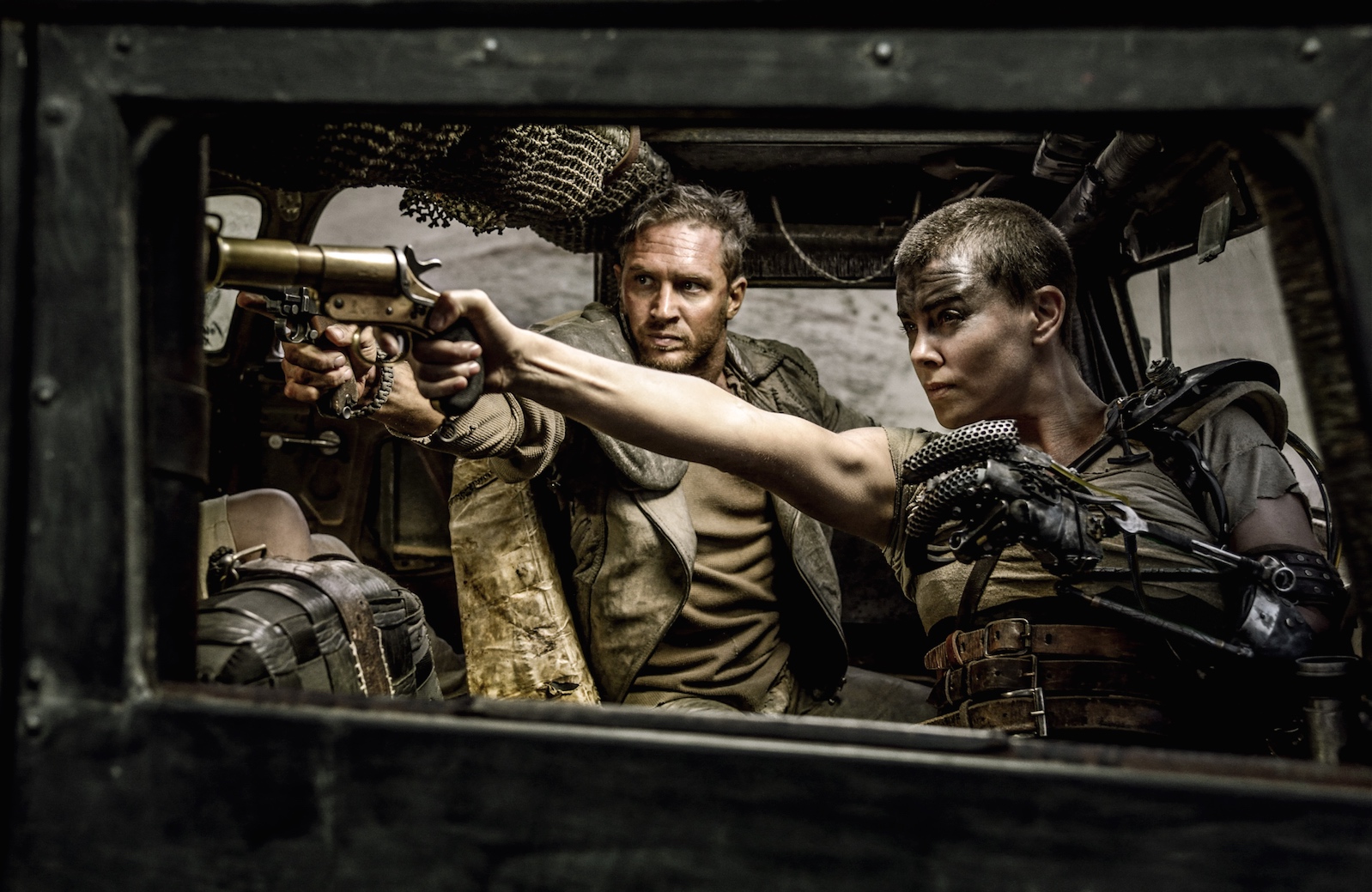
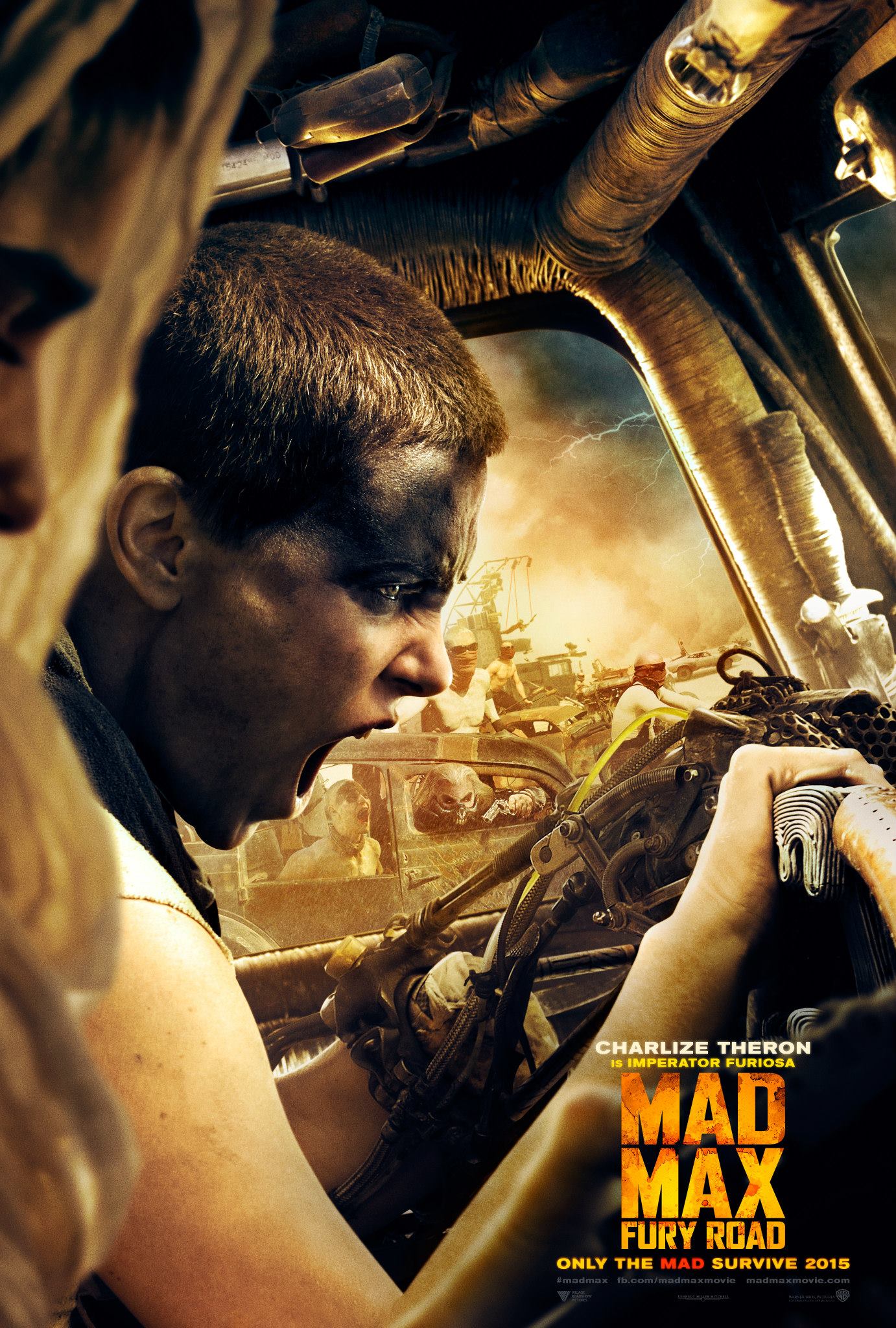
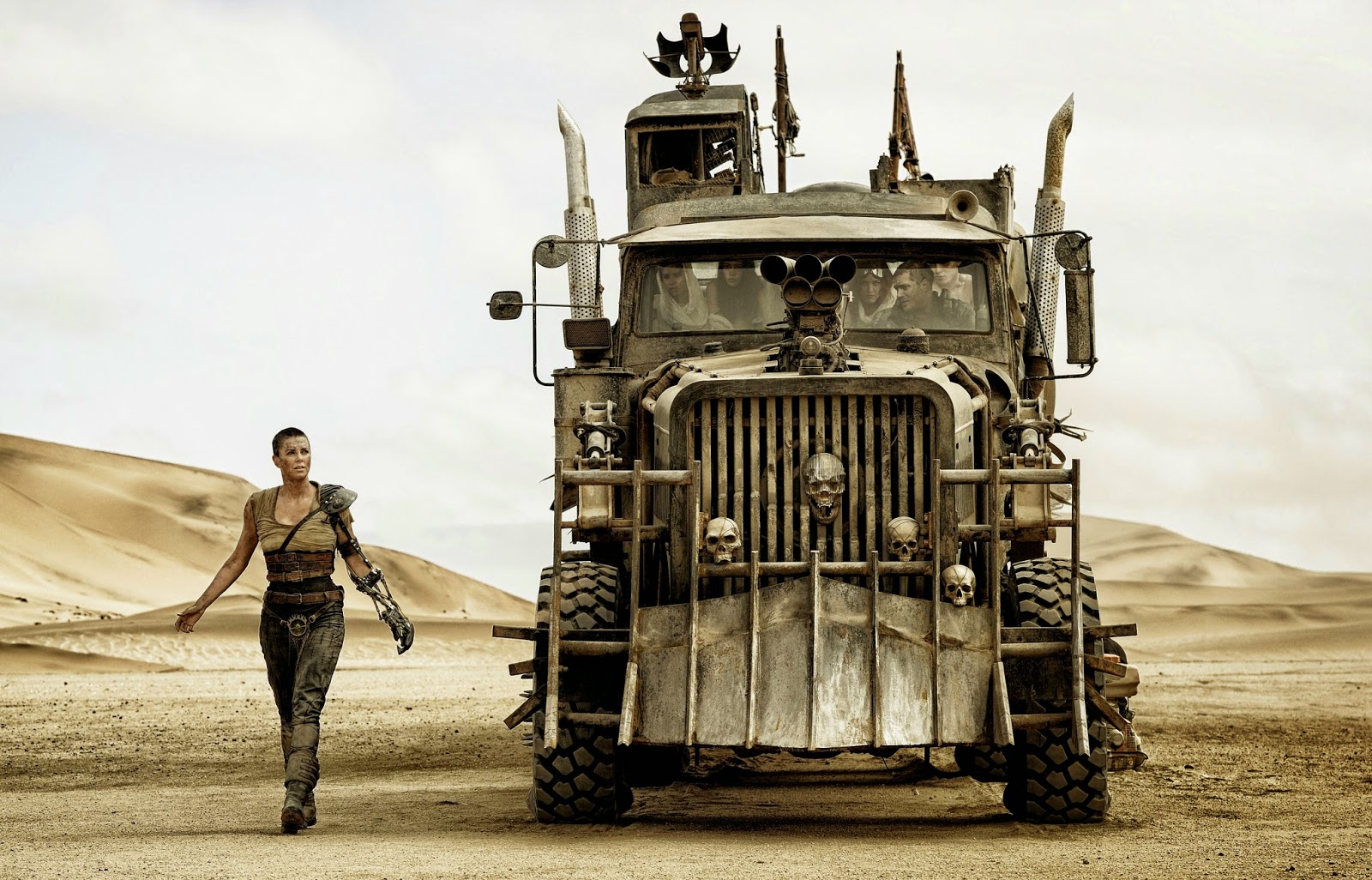
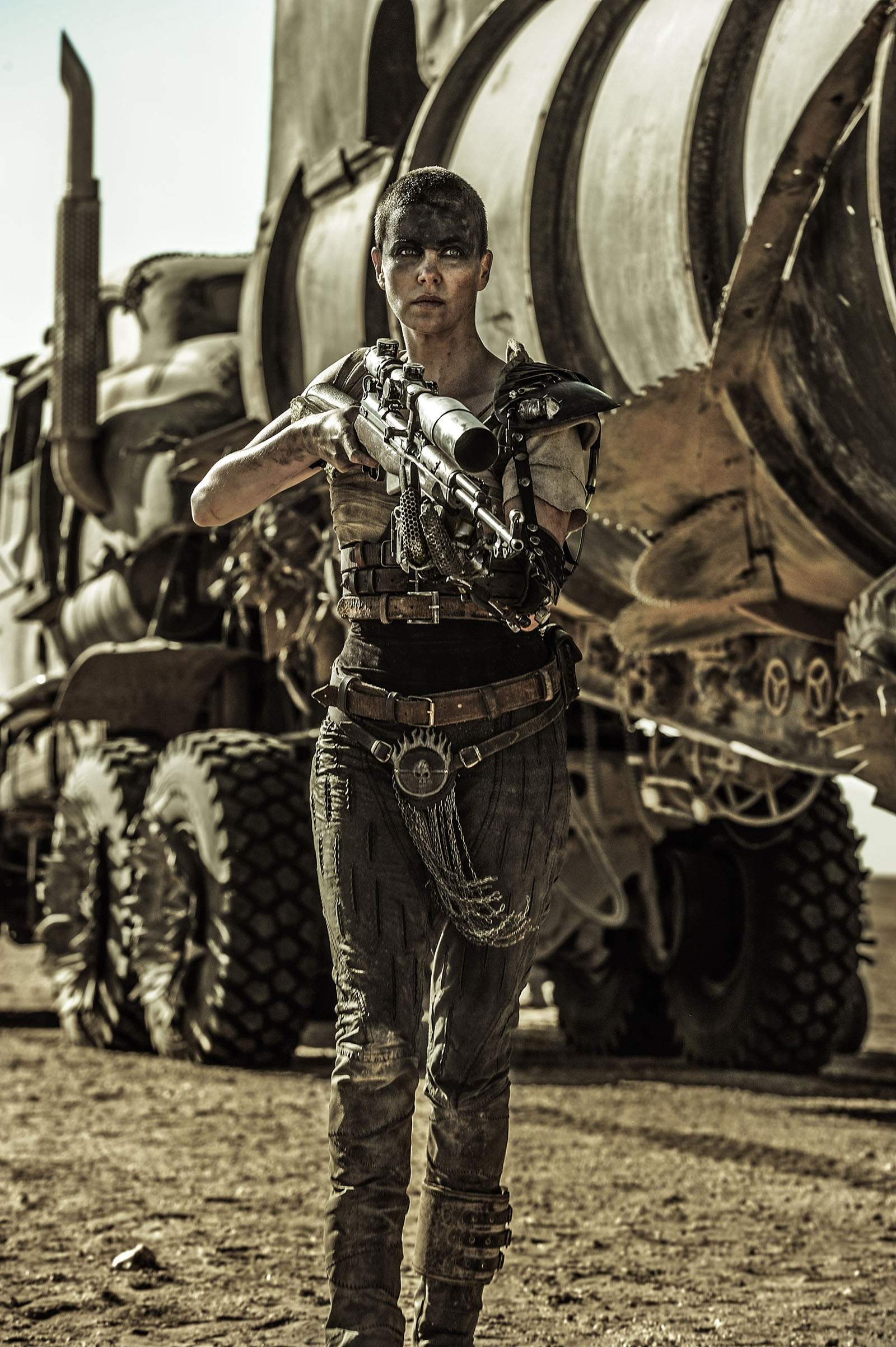
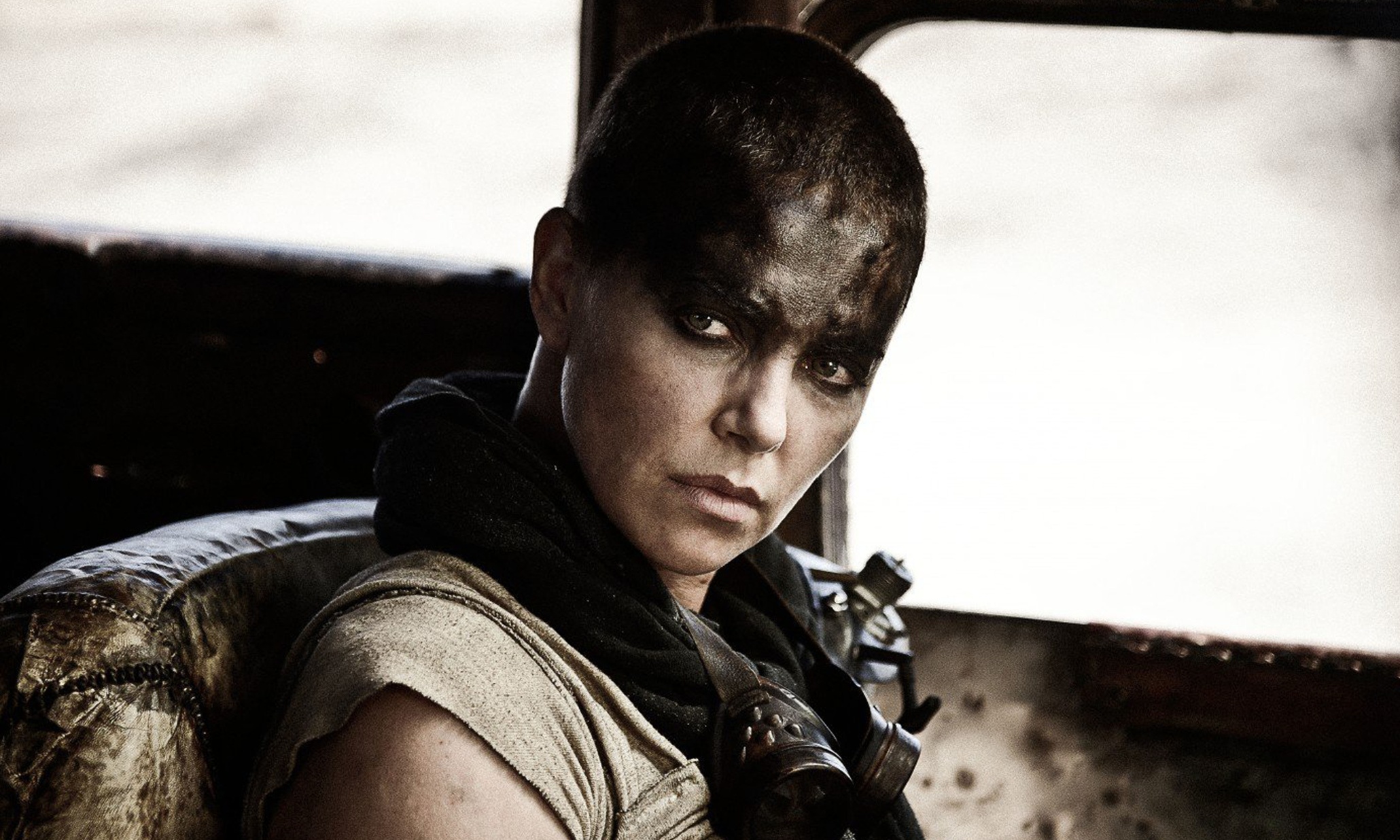
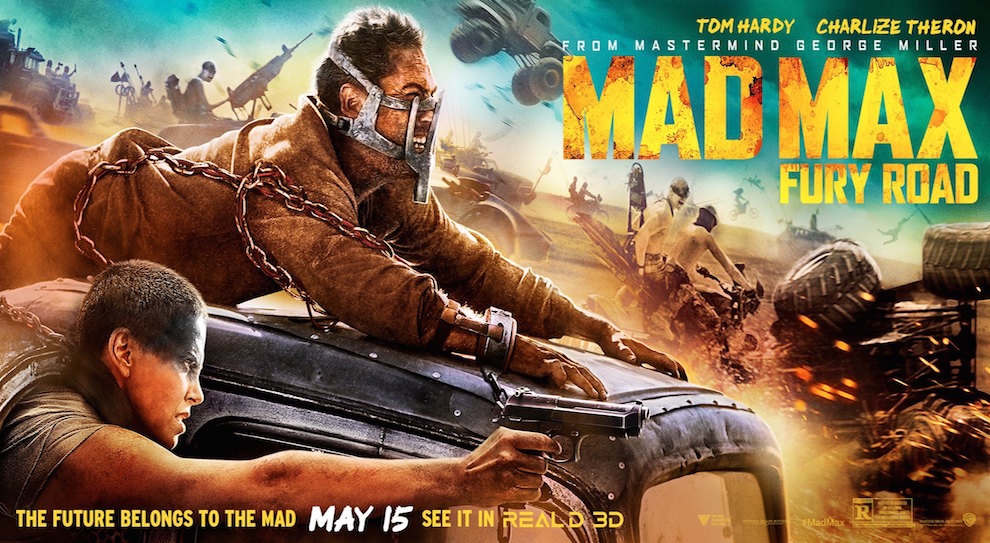
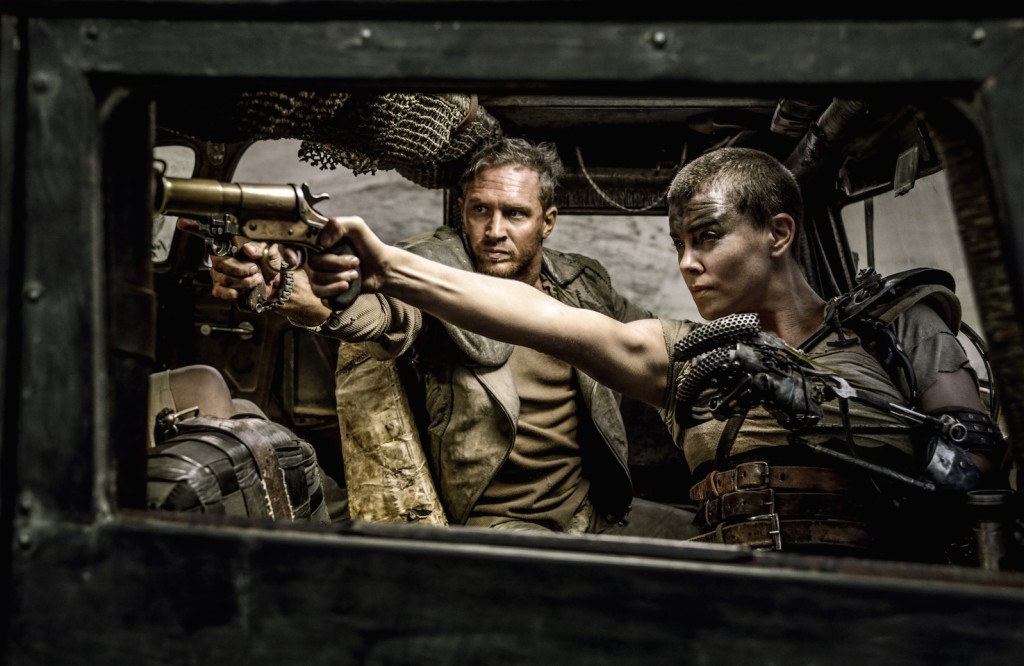
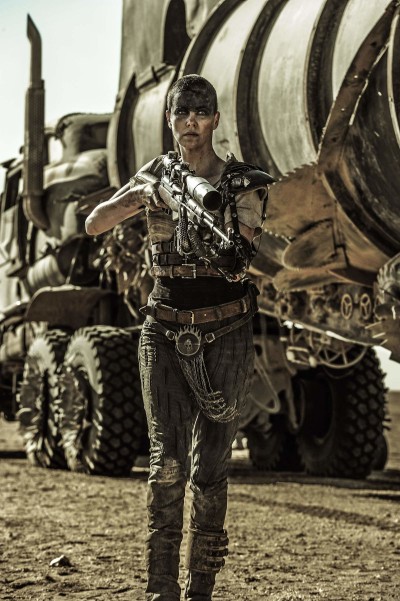 But it does. For, make no mistake, this is the story of Imperator Furiosa (Theron), not Max Rockatansky (Hardy). Sure, Max is significant, and we experience the film from his perspective. But he isn’t the hero. It’s Furiosa who drives – literally – the storyline, by leaving the complex belonging to Immortan Joe (Keays-Byrne) with five of his ‘brides’, seeking the sanctuary of the “Green Place”, an oasis Furiosa remembers from her childhood. Joe, needless to say, is unimpressed with betrayal and sends his minions in pursuit, along with support from nearby settlements, specializing in the production of gasoline and ammunition. Max is part of that chasing group, being used as a living (and now mobile) blood-bank, after having been captured. After Furiosa tries to slip away in a sandstorm – guess she must have seen Star Trek II: The Wrath of Khan – Max escapes, and joins Furiosa’s group, which also grows to include one of Joe’s “War Boys”, Nux (Hoult), who switches sides to help the escapees. Their intended destination, however, proves untenable, and Max suggests their best bet is to head back and take Joe’s mountain citadel, which is now undefended.
To be clear, I don’t give a damn about a movie’s sexual politics (or politics of any kind). The films that have been given our Seal of Approval here run the complete gamut, from feminist classics such as Thelma & Louise through to grindhouse trash like Naked Killer, and even some which are both feminist AND grindhouse: Ms. 45 comes to mind. They all have strengths to be appreciated, and weaknesses that should be acknowledged, but good films are capable of making you see and appreciate the point of view from which they operate, whether or not it’s yours. In short, you don’t have to agree with a film to enjoy it. Indeed, I am inclined to look kindly on those which challenge how I see the world in some way – not taking a polemic approach, shrieking how I am bad and should feel bad, but by making their case for an alternative point of view, and bringing the audience along with them. It’s a bigger challenge than adopting the obvious stance, and is particularly subversive in genres like action movies, not normally known for such thing.
In some way, this is a a masterly piece of bait-and-switch by Miller, because no-one would have given him $150 million to tell Furiosa’s story outside the Maxiverse. Allowing for inflation, that’s about the same price-tag as 1995’s Cutthroat Island, and we all know how well that ended. Taking an established, popular genre franchise and rebooting it for a new generation is a much easier sell in Hollywood, having been done successfully with Bond, Star Trek, Batman, Planet of the Apes, etc. Now, if you were interested only in a Mad Max film, I can see this version being not what you expected. But what matters to me is not whether a movie is what I expected; it’s whether it’s good. And Fury Road certainly delivers on that aspect. The fact it has the best big-budget action heroine since The Bride? Call that a wonderful and pleasant surprise.
The flak aimed at the film has, perhaps surprisingly, come from extremists on both sides – neither of which I care much for, because I’ve found truth is rarely found in extremism of any form. On the one hand, you have Aaron Clarey on Return of Kings, who wrote the problem was, “Whether men in America and around the world are going to be duped by explosions, fire tornadoes, and desert raiders into seeing what is guaranteed to be nothing more than feminist propaganda, while at the same time being insulted AND tricked into viewing a piece of American culture ruined and rewritten right in front of their very eyes.” Firstly, Mad Max was, is and always will be Australian culture. Secondly, yes, give me explosions, fire tornadoes and desert raiders, and I’ll happily take any kind of propaganda with my popcorn. Doesn’t make me a bad person. Oh, and he hadn’t – presumably still hasn’t – seen the movie, basing his opinion on second-hand reports. At the risk of stating the obvious, this is never a good thing.
The other end of the spectrum is little better: I certainly do not care Fury Road passes the shitty, lazy Bechdel test. Or for social media troll/martyr Anita Sarkeesian, who opined sniffily “Mad Max’s villains are caricatures of misogyny which makes overt misogynists angry but does not challenge more prevalent forms of sexism. Viewers get to feel good about hating cartoon misogyny without questioning themselves or examining how sexism actually works in our society.” This would be exactly the kind of polemic approach mentioned above. as massively off-putting. As ever, Sarkeesian proves unable to separate reality from entertainment: “Sometimes violence may be necessary for liberation from oppression, but it’s always tragic. Fury Road frames it as totally fun and awesome.” Why, yes: yes, it does. It’s called escapism, dates back to at least ancient Greece, and is entirely harmless. But, of course, acknowledgment would derail Sarkeesian’s tubthumping agenda, that entertainment content e.g. video-games is the problem, rather than being (as I firmly believe) an exaggerated reflection of society.
 Enough of other people’s opinions! What about mine! Let’s start with a couple of things I really liked. Firstly, Miller does a great job of exposition through action, showing rather than telling us; outside of an opening voice-over. That applies not just the story, but also the setting and the characters, the last-named of which are defined almost entirely by their actions. This avoids the tedious grinding to a halt which might have been required, for example, to explain why Furiosa has one arm. Or how she managed to rise to become one of Joe’s most trusted allies. Or what happened to convert her from that and turn her thoughts towards rebellion and escape. Actually, I might not have minded hearing more about those; maybe they’ll do a prequel? But the ratio between talk and action is likely more heavily tilted toward the latter than any major film I’ve seen in a long while, if ever.
This could become an issue, particularly given the relatively monotonous, in the original sense, content – it is, more or less, a single, two-hour chase sequence. However, there are easily more than enough variations spun on the basic theme to provide for entertainment. I’m not sure these necessarily make a great deal of logical sense, such as the people swaying on poles 20-30 ft off the ground, or wheeling a flamethrowing guitarist around with you as part of your entourage. I guess, after the apocalypse, Rammstein will still be popular. I did have a problem with the use of CGI to enhance the practical stunt work, in what looks like a poor effort to jazz things up and justify the 3D ticket price [we saw it in 2D; Chris has found her inner-ears do not play well with 3D]. One of the great things about the original was, when things blew up, flew through the air and smashed into each other, they were really doing so. Here, while still generally the case, there seems too much stuff added for effect, such as airborne bodies – which I found reduced the sense of reality, and hence, impact.
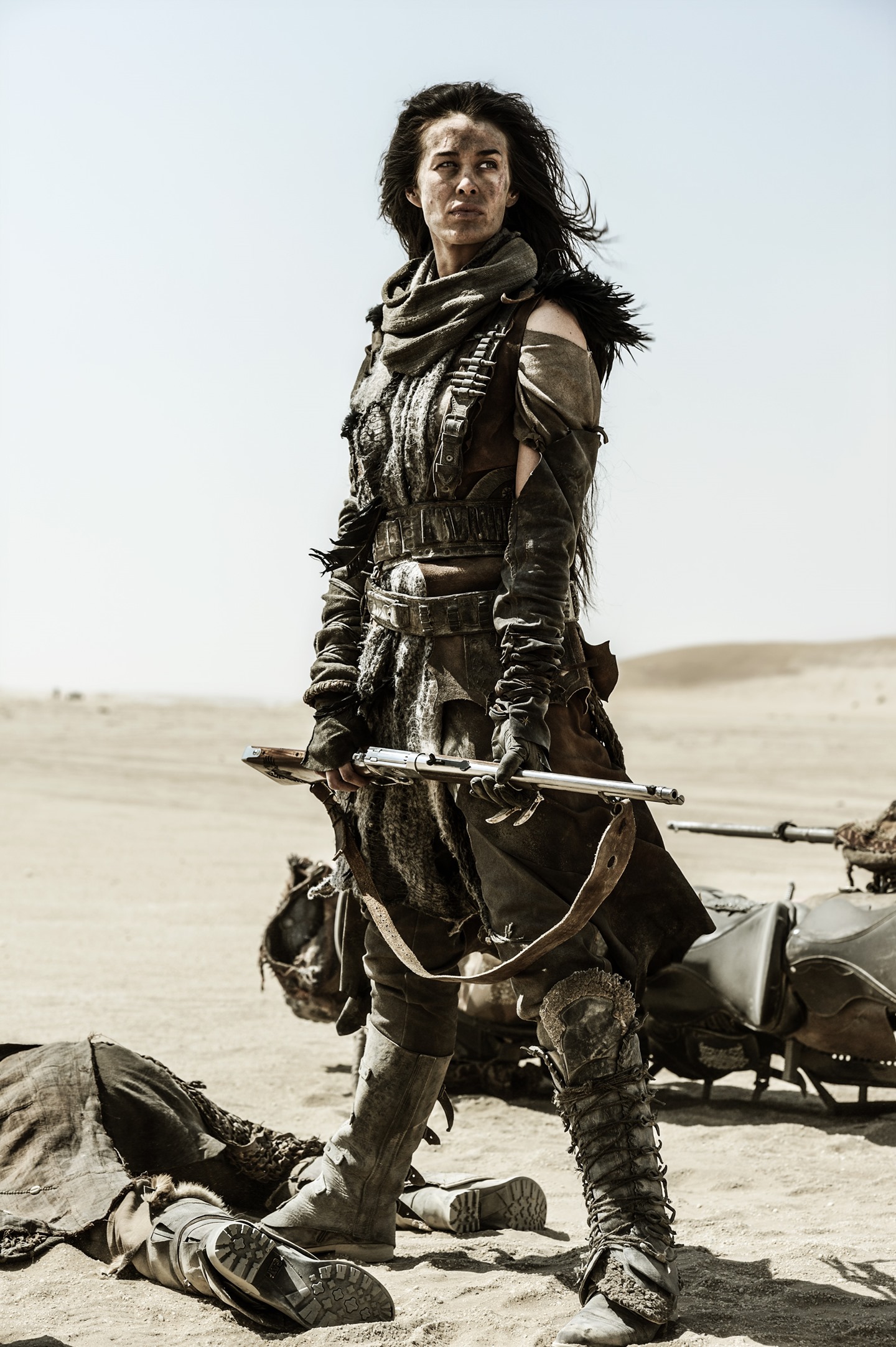
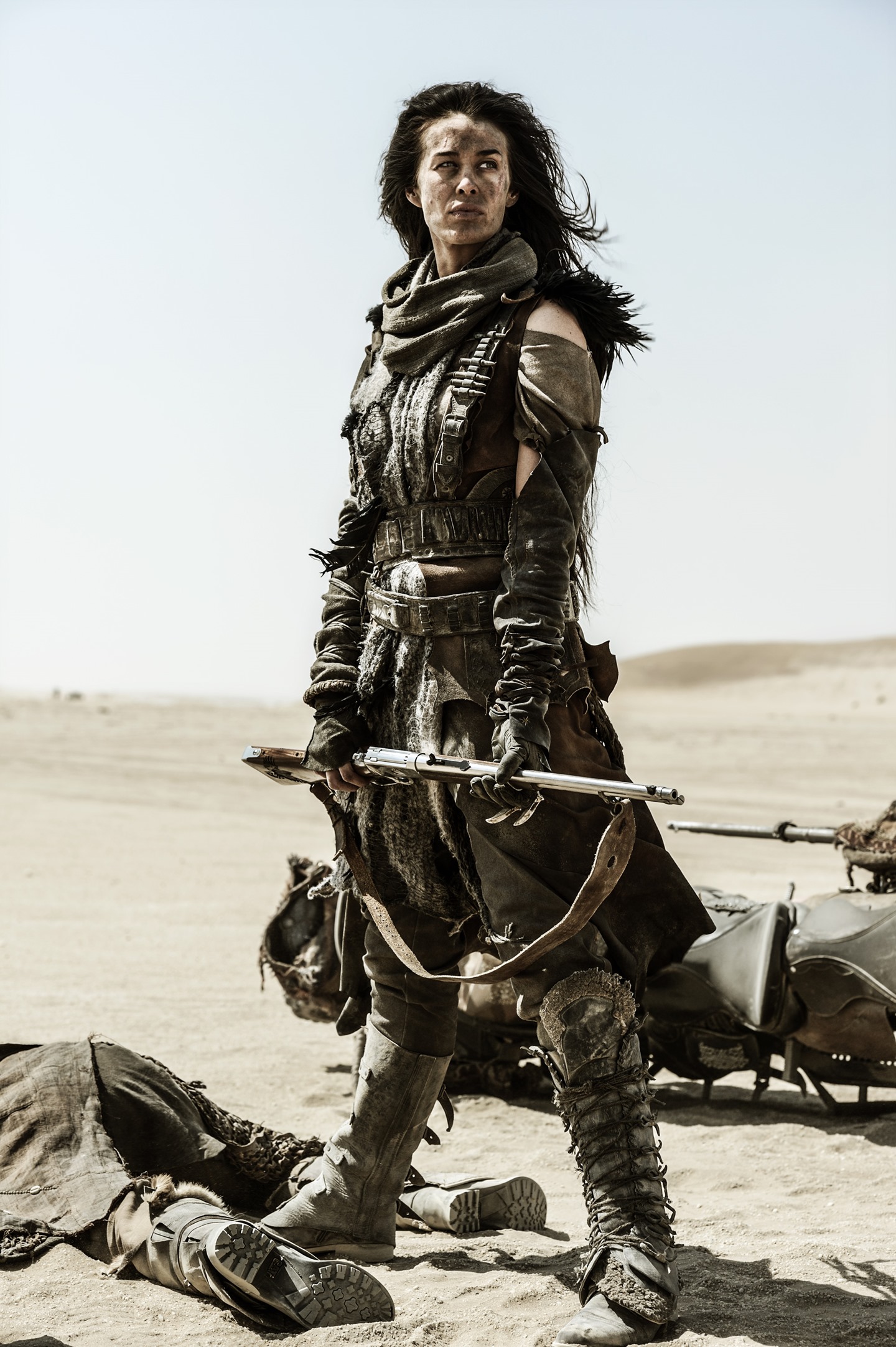
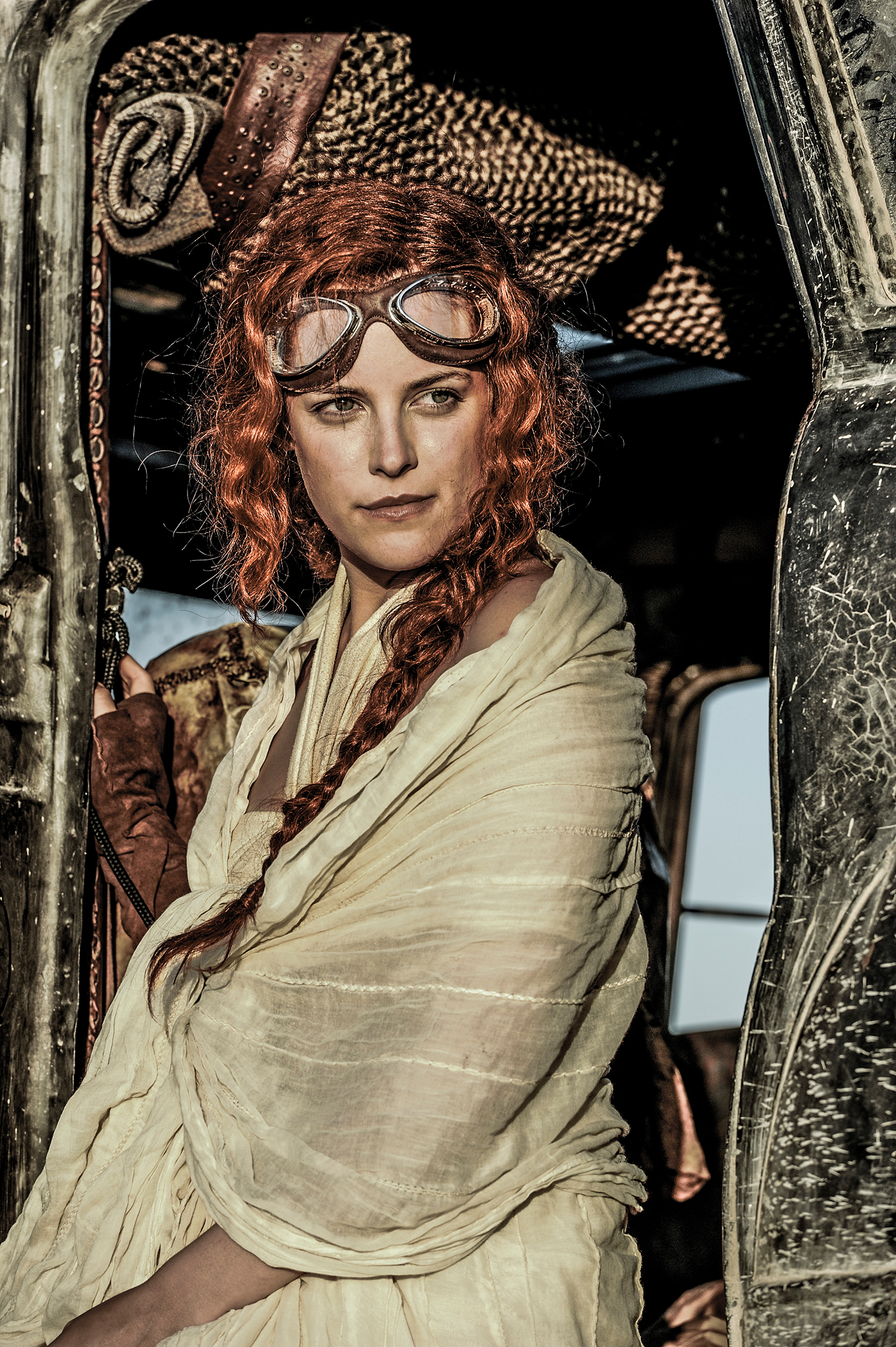
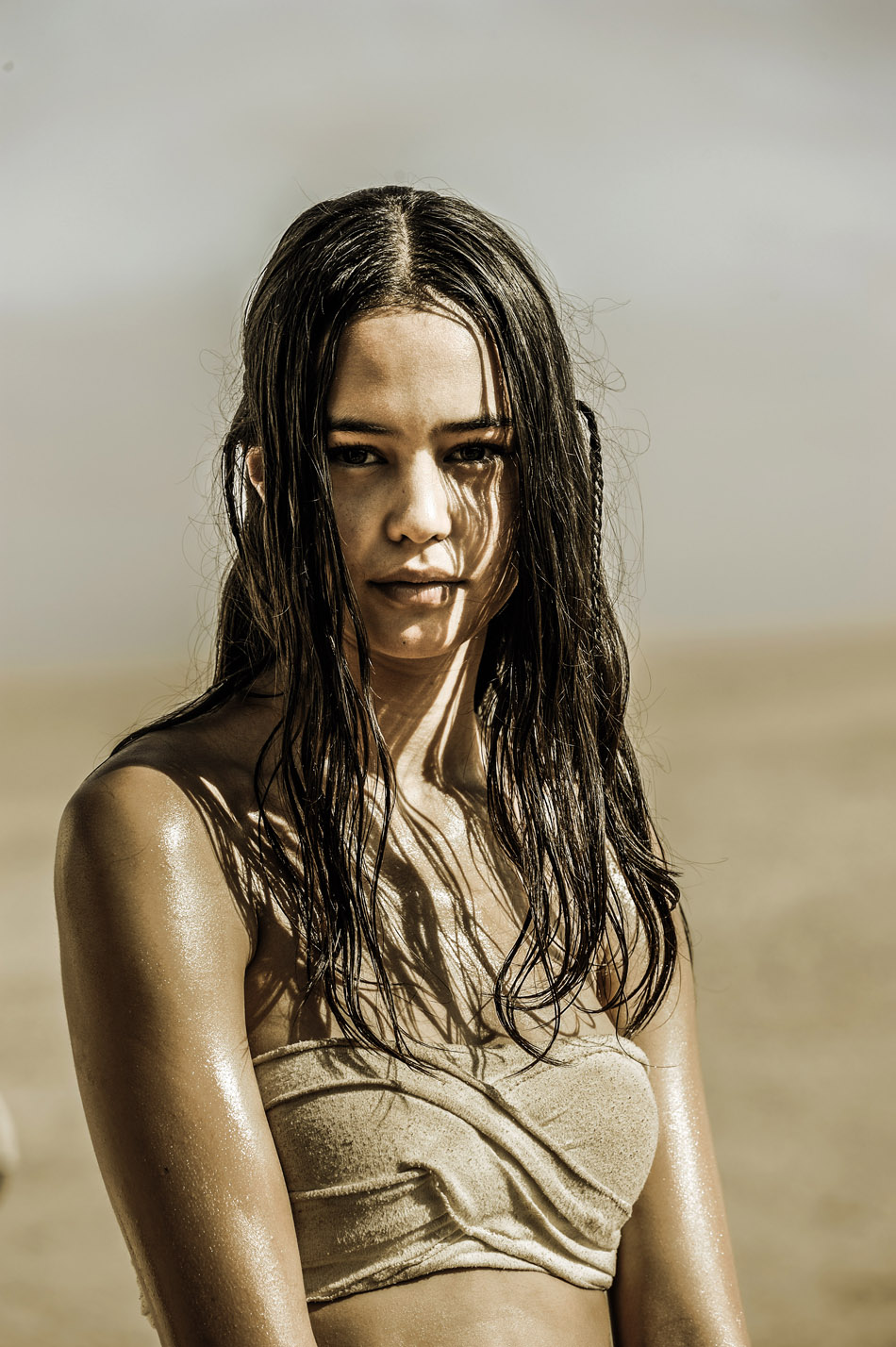
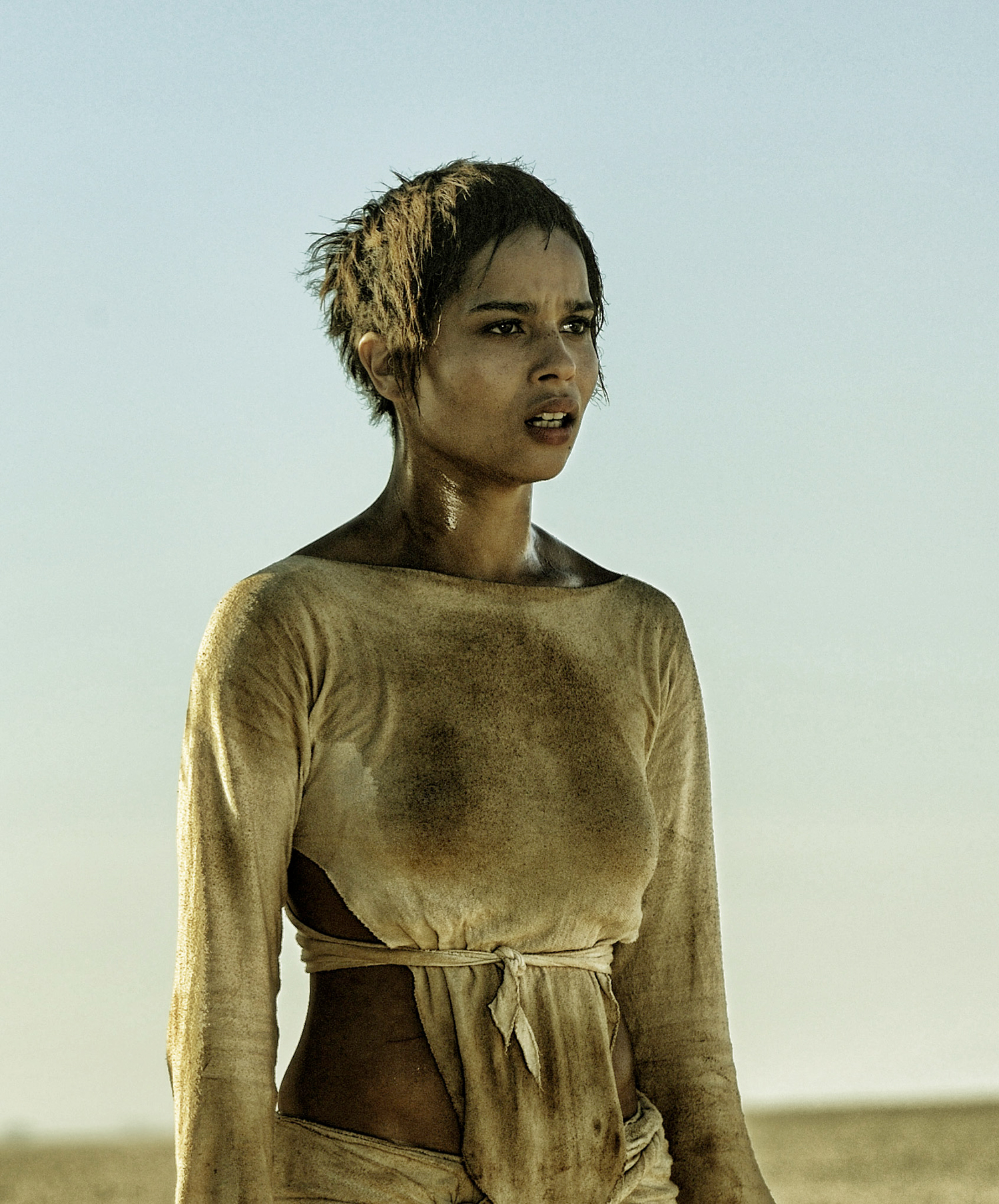
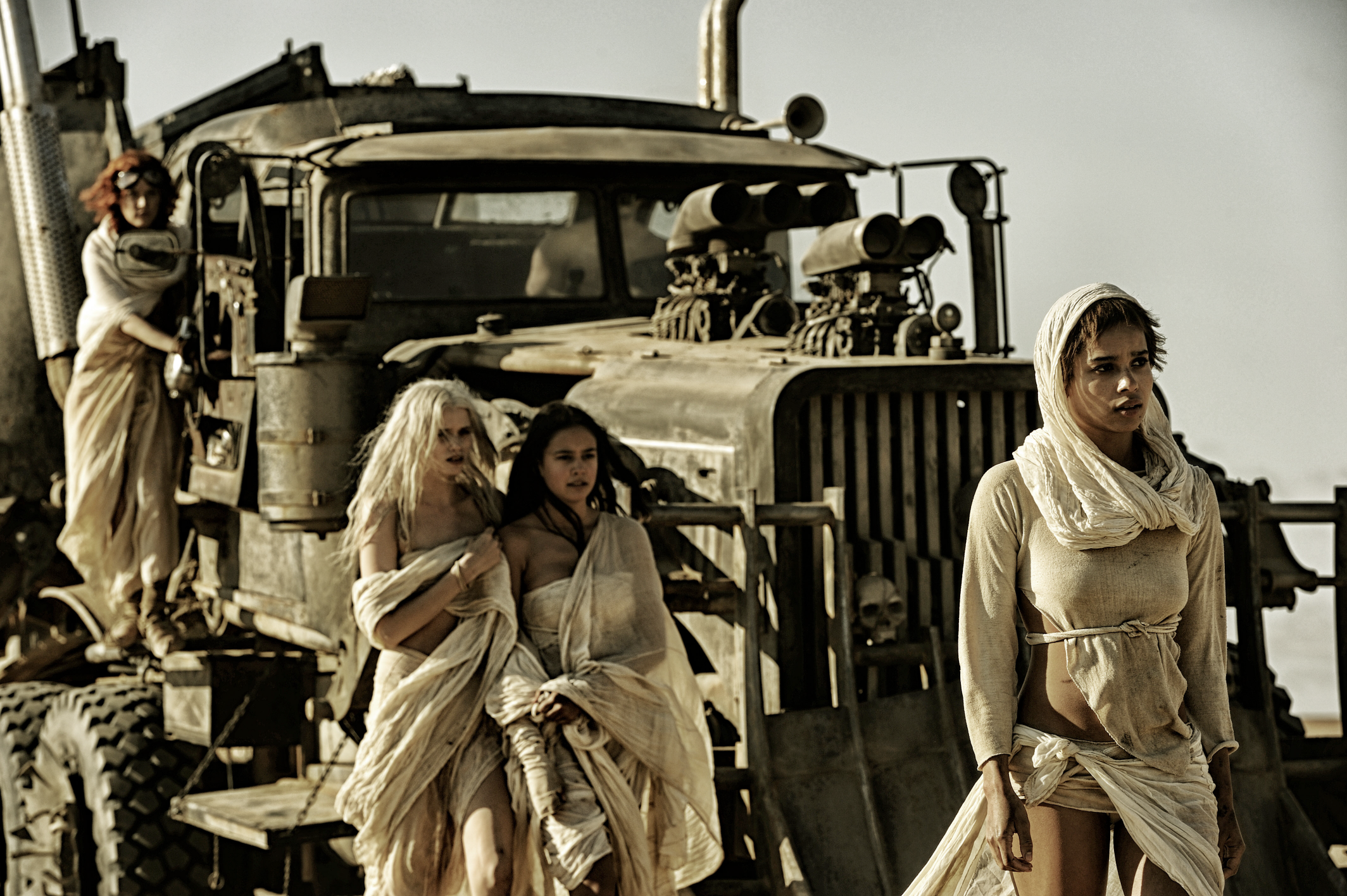
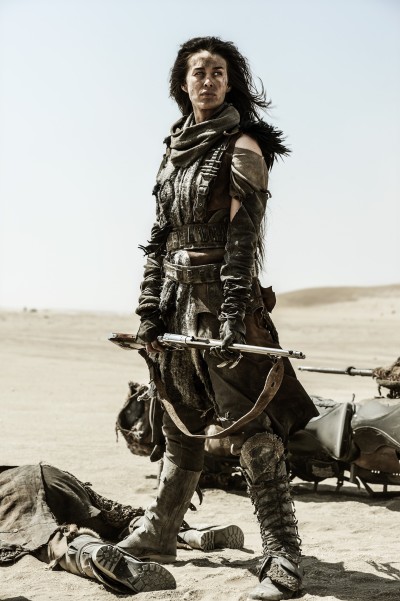 It’s also worth noting the other female characters – even the heavily-pregnant bride! – are pretty decent too. Obviously, they’re no Imperator Furiosa, but on the way to the Green Place, they’re forced to dig deep and find reserves of courage which, one imagines, aren’t required in their everyday lives. As least, judging by the not-particularly feminist scene where Max staggers out of the sandstorm, and up to the truck to find the brides literally hosing each other down, in their garments from the Victoria’s Secret Post-apocalypse collection. More hardened are the all-female collective who brought up Furiosa, met at the midpoint of the journey, who seem to inhabit a strange philosophical territory where they try to lure men in, yet want nothing to do with them. They’re an odd bunch: yet like everyone else who has survived, they’re hard as nails. “One man, one bullet,” yells one as they go into battle. Inexplicably, Miller saw fit to call them the Vulvalini, which is the most wretched name for anything in a big-budget movie, since we got “Unobtainium” in Avatar.
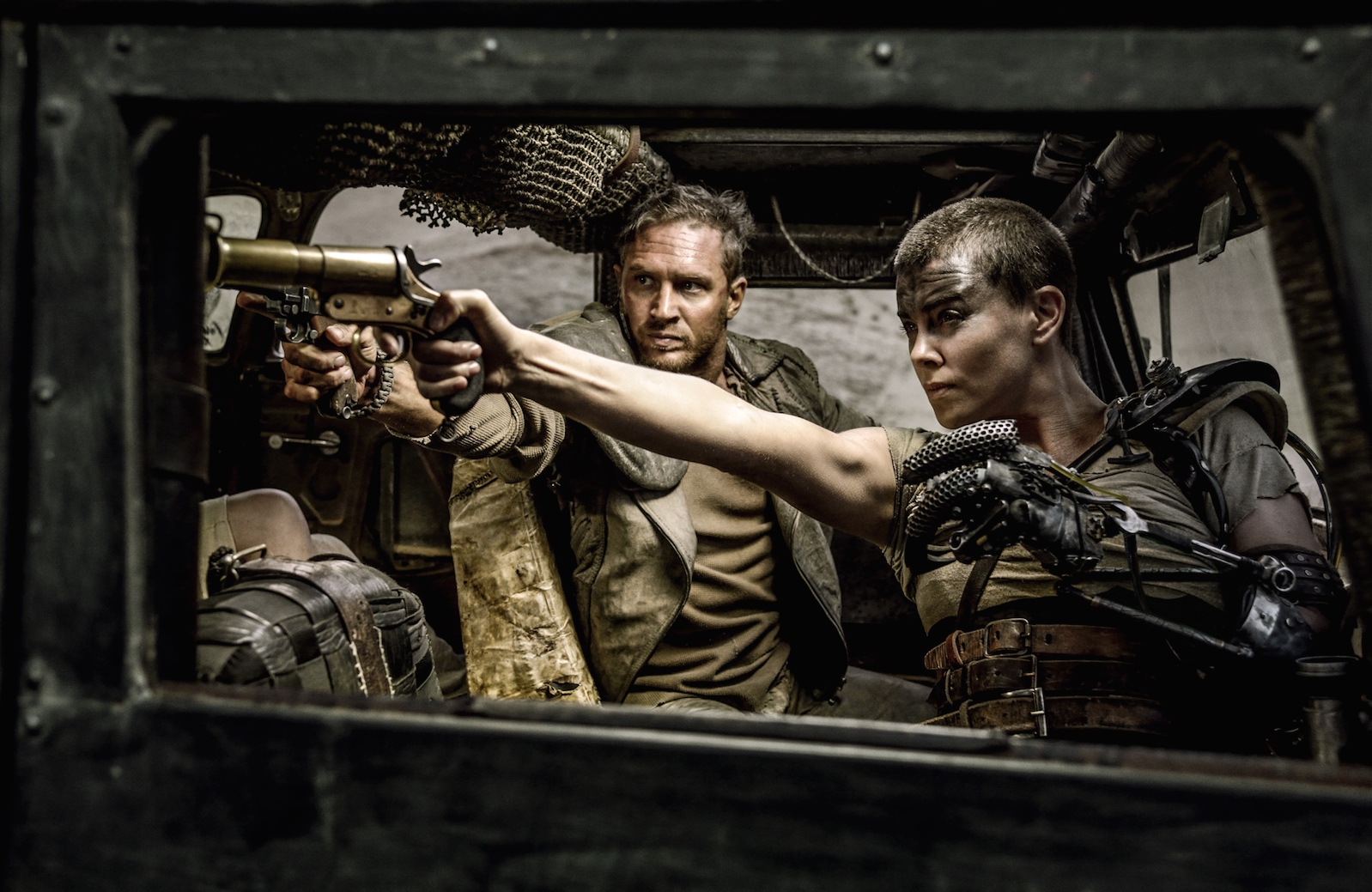
Overall, though, it’s a solid success, and Furiosa is a remarkable bad-ass, with an appearance that is entirely unconventional in every way, yet Theron still manages to have a statuesque presence, as in all her films [well, almost all. Monster is the stuff of nightmares]. She’s actually taller than Hardy. The lack of even the slightest morsel of romantic chemistry between Furiosa and Max is great, not least because it would be hideously inappropriate in every way, given the characters’ situations. It’s still remarkable some studio exec didn’t feel the need to shoehorn it in, or at least provide some moments of unresolved sexual tension. Instead, these are two intense and focused individuals, working together for a common goal. That one of them is a woman is irrelevant – which in many ways, is how I tend to think it should be in the action genre. Does feeling so make me a “feminist”? I’ll leave the nattering nabobs of negativity online to be the judges of that. The rest of us should take in a slick, well-produced, all-you-can-eyeball action buffet, which sets the bar high for Hollywood action heroines this year.
Dir: George Miller
Star: Charlize Theron, Tom Hardy, Nicholas Hoult, Hugh Keays-Byrne



 It was supposed to be a nice weekend of camping for husband and wife, Wit (Schmidt) and Mike (Staton), perhaps allowing them to rekindle a spark which has become lost in Mike’s career, though Wit is trying to pluck up the courage to tell him she’s pregnant. Hopes of either are derailed, when their trip becomes a three-way, as they are joined by Mike’s brother, Sean (Schreiber), recently discharged from the Army under circumstances that he won’t talk about. Unfazed by discovering the camp ground that’s their destination is closed, they proceed, Wit learning the ropes of hunting from the two brothers. But the next morning, the three wake up to find themselves stripped of all supplies, down to their shoes, and with a black X written on each of their foreheads. It’s clear somebody – or somebodies – is out to get them, and Wit is going to have to dig very deep and find a way to overcome her civilized sensibilities if she is to make it out alive.