



Author: Jim McLennan
Memories of the Sword
★★★
“Looks lovely, yet literally loses the plot.”
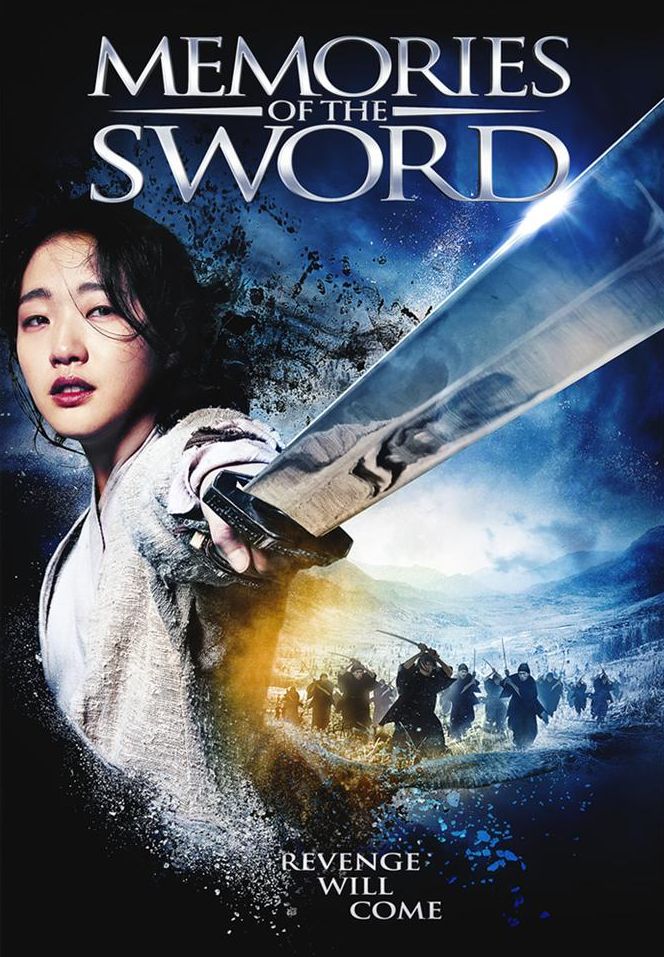 The first 30 minutes of this are truly splendid: it’s got wonderful visuals, along the lines of Hero or House of Flying Daggers. But then, it’s as if the makers completely forgot about the story-line. The remainder of the two hours consists of semi-random scenes, half in flashback, featuring characters who apparently change names at random. While it still looks awesome, unless you have a detailed synopsis printed out in advance, you’re going to be reduced to going “Ooh!” and “Eh?” in roughly equal proportions.
As best as I can tell, the story is this. Hong-ee (Kim), also known as Seoi-hee, is a young martial arts prodigy, trained since birth by her blind foster mother, Seol-rang (Jeon), a.k.a Wallso. After Hong-ee’s talents become public knowledge, Wallso reveals the motive for the training. A long time ago, as Seol-rang, she was one of three rebel group leaders. The group were betrayed to the authorities by another leader, Deok-gi (Lee BH), who was rewarded with a position as the ruler’s right-hand man, and is now known as Yoo-Baek. He once loved Seol-rang, and realizes that Hong-ee is the daughter of the third leader, Poong-Cheon. [Fortunately, he was killed by Deok-gi, so does not complicate the plot further, under that or any other name] She has been brought up to act as an instrument of revenge, driven by the knowledge that Yoo-Baek killed her parents.
There is, it appears, a bit more than that going on, particularly in the middle hour where… other stuff happens. For example, there’s the inevitable romance between Seoi-hee and another young fighter, Yoo-Baek’s champion, Yull (Lee JH). This seems to have been added purely for cynically commercial purposes, though since it largely tanked at the Korean box-office… The action scenes are generally well-staged, though some of the CGI looks more than a little unconvincing. Some moments reminded me of Shaolin Soccer, and there has been close to 15 years of technological advances since then. It’s on more solid footing when using wire-fu, and both female leads are convincing enough in their skills.
The high level of confusion likely generated, however, means this isn’t going to be much more than empty emotional experience. You’re left so busy trying to figure out who’s doing what to whom, and why, you don’t have time to care about the participants. That’s why it falls so significantly short of the films it’s clearly trying to imitate, particularly Crouching Tiger. Instead, what you have here is purely cinema as spectacle. Not that there’s anything inherently wrong with this approach, of course. It’s just that when so much effort has been put into the technical aspects, you’re inevitably left wishing for more. If only the film’s heart and soul had been as diligently worked on as its cinematography.
Dir: Park Heung-sik
Star: Kim Go-eun. Jeon Do-yeon, Lee Byung-hun, Lee Jun-ho
Mythica: The Necromancer
★★★½
“In which Mythica levels up…”
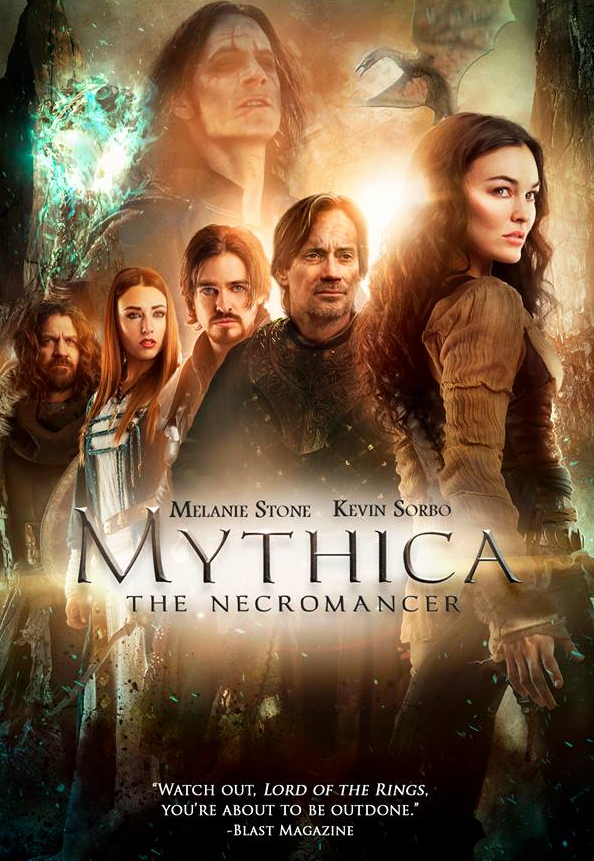 Was it really less than a year ago I watched and reviewed the first two entries in the series? Feels much longer somehow, which probably indicates how little of an impression they made. This is rather better, I think. The special effects have gone from “best not looked at directly” to “actually enhancing the feel of the film,” especially when magic spells start flying. Central character Marek (Stone) is coming into her own, but the increased power poses increasingly difficult moral choices. That’s especially so, because nemesis Szorlok is closing in on his goal, of getting all four fragments of the DarkSpore, which will allow him to unleash an undead army on the world. How far will Marek and her allies be prepared to go, in order to stop him?
Here, however, the quest is somewhat tangential. Fighter Thane is captured by the head of the Thieves’ Guild, and used as leverage, forcing the other three on a mission to retrieve some cargo. To make sure they comply, he sends along his creepy minion, Betylla (Brodie), who uses beetles to communicate with his master. However, Szorlok is lurking in wait, and just when they think they’ve completed their task, and can return to free Thane… We’re back on the main storyline again, and the “Redthorns” (as the team has taken to calling themselves, a homage to the team of mentor Obi-Wan ) may be heading towards a significant reduction in permanent staffing levels. If you know what I mean, and I think you do.
If there is still very much the feel of an AD&D adventure here, the players here seem to be growing into their roles, with a better sense of the relationships between them. Here, the most interesting arc belong to priestess Teela (Posener), who has to decide what matters to her, and where her faith lies on that scale of importance. Particularly toward the end, it’s certainly the darkest in the series, and you get a sense that this is going to be an increasing theme. Shit’s getting real, as I believe they say. Turns out this is now a five-film series, rather than the three I wrote in an earlier review. With one piece of the DarkSpore still left for Szorlok to acquire, I’ve a feeling after this one that I know what the fourth installment is going to involve, setting up a grandstand finale.
I’m not sure if they spent more money here; it does feel more expensive. Either way, I’m a bit more hopeful the film will be able to deliver on what it’s building up to, than after the last installment. New director Smith was cinematographer on those, and brings a suitably epic feel to proceedings, mixing the practical and visual effects into a coherent whole. I found myself sufficiently enthusiastic to head straight into part four, with more anticipation than I’ve felt to this point.
Dir: A. Todd Smith
Star: Melanie Stone, Jake Stormoen, Nicola Posener, Philip Brodie
Rosario Tijeras (TV series)
★★★½
“Scissors cuts… well, just about everything.”
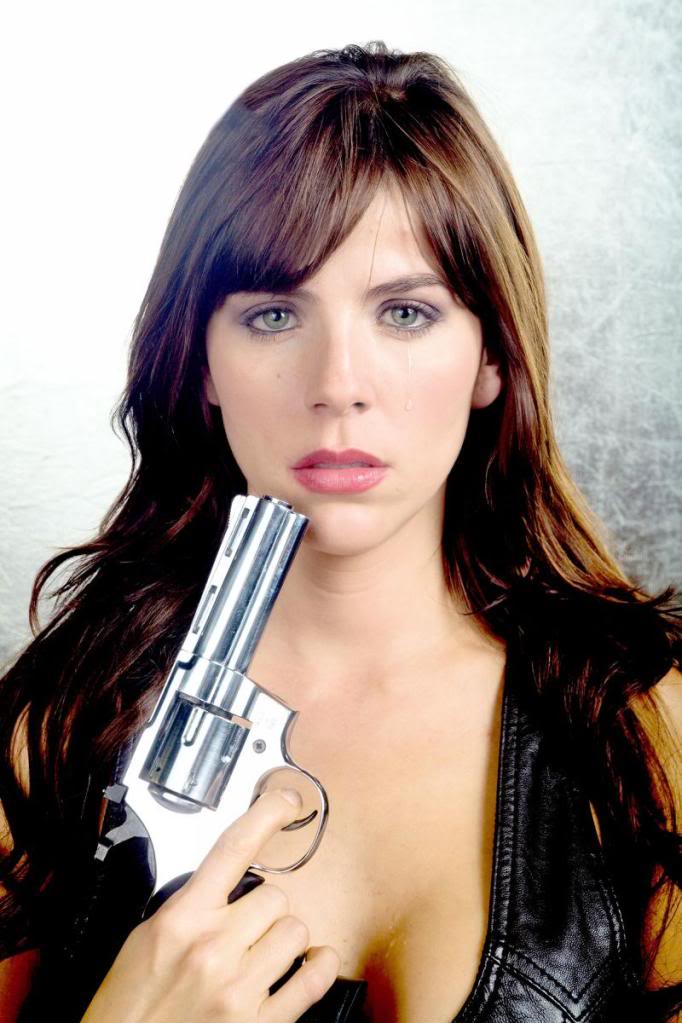
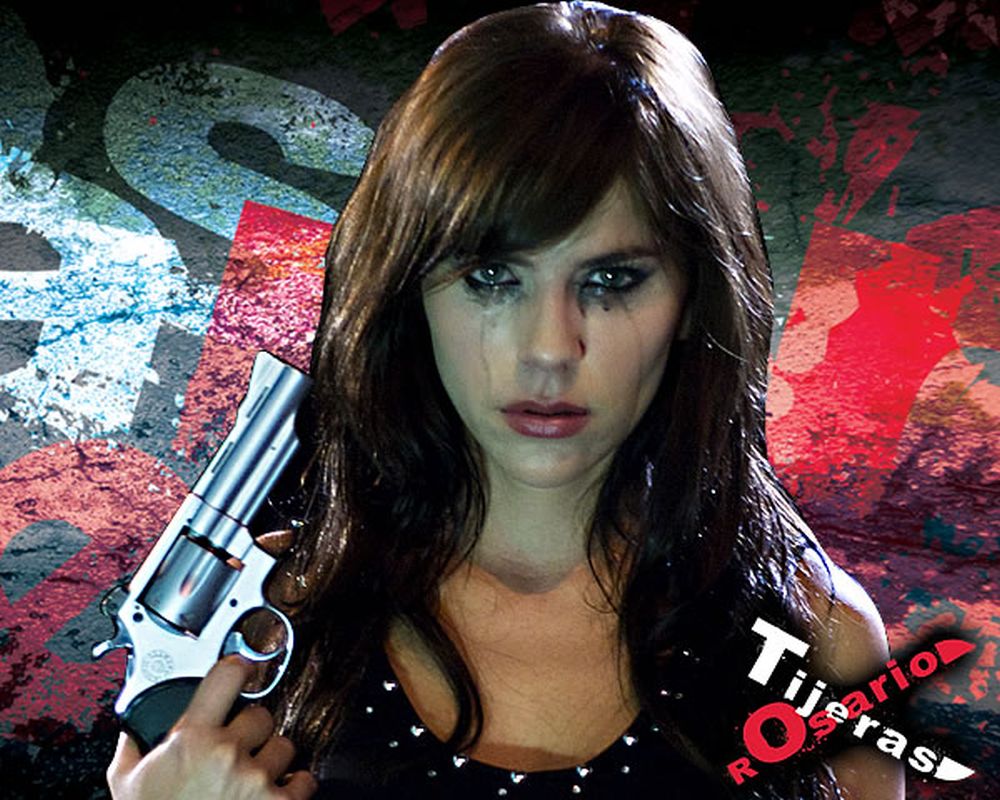
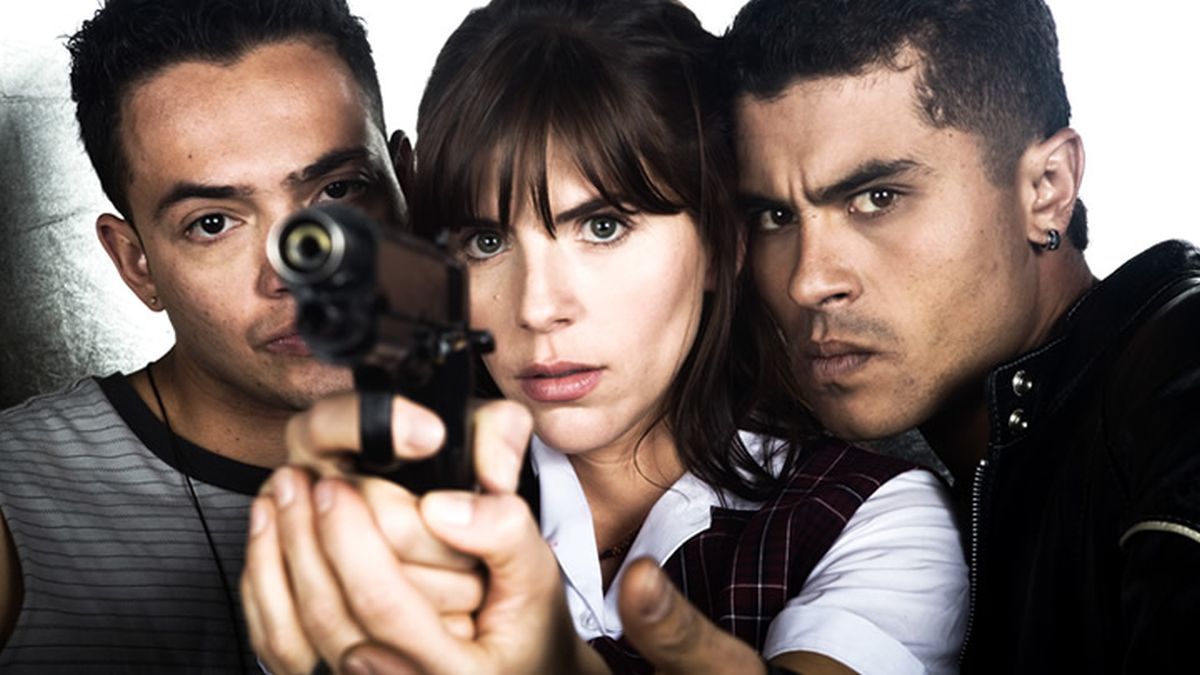
 As previously noted, one of the trademarks of the telenovela is the flashback, and the one we get here is a doozy. For, this begins with Rosario Tijeras (Yepez) being shot and rushed to hospital, prompting frantic phone-calls to her yuppie boyfriend, Emilio (Martinez). It then rewinds some five years, to show the events by which everyone got there, and takes roughly 45 episodes – three-quarters of the series! – to catch up and once more reach the point at which it began. Admittedly, this does reflects the structure of the source novel, and I don’t know if that’s why the final quarter feels like a marked improvement in terms of pacing and energy: the critically-injured Rosario is hunted in the hospital by those who want to finish the job, and has to be rescued by her brother Johnefe (Restrepo) and his crew – along with an unwilling doctor, to tend to Rosario in a workshop. From there, it’s an escalating series of death, betrayal, death, death, tragedy and death, with a body count that makes Hamlet look like Mary Poppins.
This is, however, getting well ahead of ourselves, and you have to trudge through your fair share of soap-opera drama and “love across the class divide” to reach these excellent 15 final episodes. It begins with Rosario still a schoolgirl, albeit a rebellious one: an incident where she gives a teacher an unrequested hair-cut gets her and pal Dayra expelled, but also gets her the “Tijeras” (scissors) nickname, and wins the heart of Antonio de Bedout (Sandoval), a student visiting her school as part of a college project. He is the son of a rich businessman! She is the daughter of a poor but honest beautician! They keep just missing each other, even though her mom does house-calls on his sisters! But, wait! There’s more! His best-friend, Emilio (Martinez), gets to Rosario first, and they begin a torrid romance! But he’s already in a relationship with Paula, a girl from his social level! Okay, enough already. Although I think I probably used up the entire month’s quota of exclamation points there, they did not die in vain – you presumably get the picture.
 Fortunately, that’s not all that’s going on. After their expulsion, Dayra and Rosario work for the latter’s sleazy step-dad in the local market, selling cellphone minutes. Not cellphones. Cellphone minutes. They have a set of mobile phones chained to them, one for each carrier, and rent them out to whoever needs to call – I believe it’s the result of a market where calls between networks is extremely expensive, so if you want to speak to someone whose mobile uses a different carrier, it’s better to pay a small mark-up to a third-party. This demonstrates one of the confusing joys of watching foreign shows; the cultural differences, with things that seem strange to an outside, yet make perfect sense as part of the cultural norm, to locals.
I digress – but given a show telling a single story over 60 episodes, so does the series, so we’re even. Anyway, the girls’ job brings them into contact with their stepfather’s boss, Gonzalo González, whose even sleazier, and has a “thing” for young virgins. Hoping to make her way out of the slums, Dayra sashays into Gonzalo’s ranch, but when he discovers she is not quite as pure as advertised, his revenge is swift and brutal, and her lifeless body is found on a patch of wasteland. Meanwhile, Rosario is having issues of her own, culminating in her abduction and rape at the hands of a local gang led by Cachi. She takes revenge there first, castrating him, and then goes after Gonzalo – although the plan is for Johnefe to help her, she ends up entirely on her own resources, but doesn’t flinch, and he becomes her first victim. Gonzalo’s drug-running rival, Adonai, known as “The King of Heaven” is delighted by her actions, and the first phase of the show ends with her becoming part of his organization.
We then fast forward a few years. Emilio and Antonio encounter Rosario again, in a nightclub, and begin their dalliance anew, unaware that she was there on a job for the King, and is now a feared and notorious assassin for him. The love triangle is more of a love quadrilateral, thanks to barrio boy Ferney, and it’s this which provides the key to the Shakespearean events of the second half. Rosario discovers evidence that the king’s brother, Teo, is deceiving him, having swapped out two tons of cocaine for sugar, blown up the plane on which the cargo was being transported, then sold the real thing off to another buyer. Teo realizes Rosario must be silenced, and convinces Ferney that he has no chance with her, when put beside the rich yuppies, and that she’s going to betray her roots for a future as part of the upper classes to which the pair belong. And that’s how we eventually end up, 45 episodes later, back where we started, with Rosario being rushed to hospital.
The early going is certainly more soap-opera than anything else, it still makes for adequate entertainment, with the good characters appropriately likeable, and the bad ones suitable evil. That said… Damn, the guys in this show appear to be almost entirely driven by their genitalia. In particular, Emilio has absolutely no issue with bedding Rosario, even as he is going out with, then engaged to, and even married to Paula Restrepo, an aspiring model. She shows rather more tolerance for his roaming than I would, and I can’t really blame her for eventually taking steps to remove Rosario from her married life. But Emilio is hardly alone: there’s an entire subplot involving Antonio’s father, Luis Enrique, who has been having a long-time affair with his secretary, including a secret daughter, which may explain his wife’s heavy drinking. Not sure how much of this is in the book, and how much is additional padding: I suspect the latter, since when you’ve got 60 episodes to fill, you’re likely going to need more material than a single novel. Some aspects does appear directly derived, however – or, at least, were also in the film version, made five years previously.
 One such is the funeral of one character: it appears such events, at least in the Medellin slums, are rather less… formal than we’re used to. By which, I mean the corpse is paraded about on a sun-lounger, to loud reggaton, then placed on the back of a motorcycle which pulls wheelies around the neighbourhood. Like I said: these kind of cultural differences, can only be accepted for what they are. Though it might have helped if Netflix had the same person subtitle all the episodes, as there are sometimes confusing inconsistencies. It took me a while to figure out that characters called “Querubin” and “Mago” were the same ones called “Cherub” and “the Magician” elsewhere, depending on whether the subtitler bothered to translate their names. Even more confusing, Netflix managed to list one episode entirely out of order. When watched in the order provided, this led to Luis Enrique’s affair-daughter suddenly being held to ransom, for no apparent reason, then being released, and only finally, getting kidnapped – at which point, it all made sense, rather than being some particularly obscurist structure involving nested flashbacks.
One aspect worthy of note is that the police aren’t shown here as being particularly corrupt or bad, in contrast to some I’ve seen where they are the “bad guys”. Detective Pamela Pulido, played by Jenny Vargas Sepulveda, is both honest and smart, and gets a fair amount of screen-time as she tries to disentangle the increasing mess with her partnet, Isaak – in particular, by turning up the heat on Emilio and Antonio. [During filming, there was an odd incident where Sepulveda was arrested and held for five hours, at the airport on the way to Medellin, after her luggage was inexplicably found to contain a number of live rounds of ammunition!] Rosario’s second step-father, Libardo, is also a member of the police force, though his morality turns out to be considerably more murky, even if some of his actions largely appear to be driven by concern for the welfare of his step-daughter.
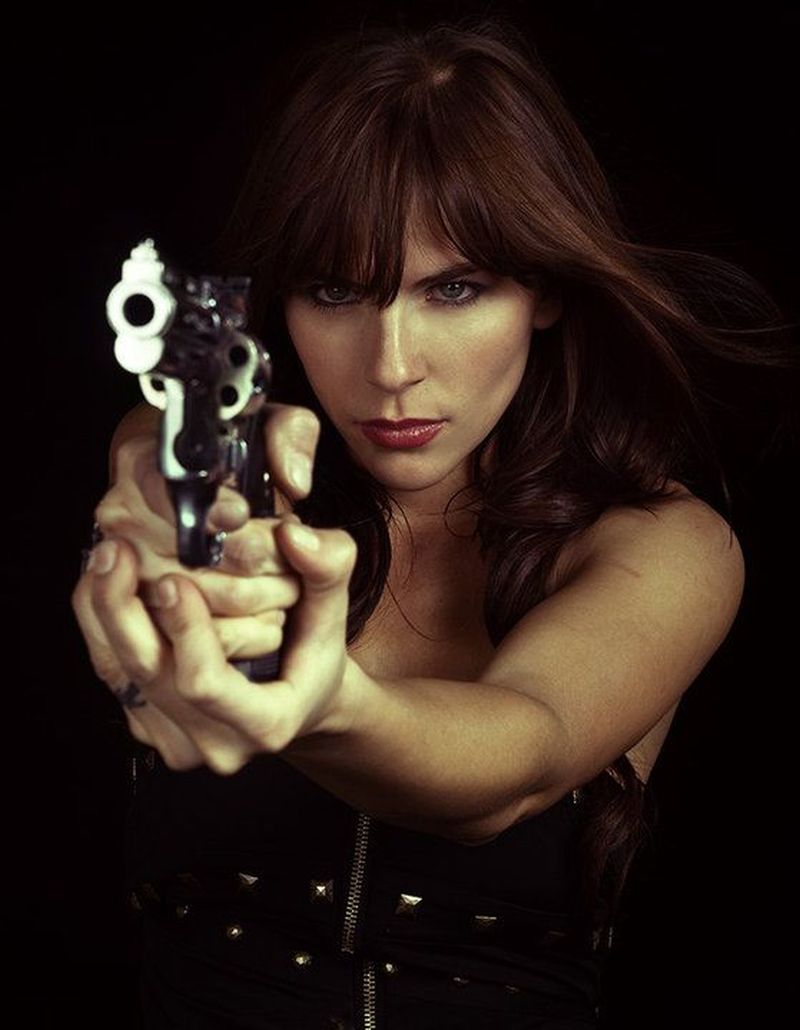
I’d have liked to see more from the period over which the show entirely skips, showing Rosario’s rise to the top of the King’s accomplices, rather than the various subplots involving the business and property dealings of the de Bedout family. The show is called Rosario Tijeras after all, and should be about the heroine and her lethal exploits, not country-club memberships and tennis matches. Still, even during the lengthy periods where it focuses more on the drama than action, the cultural freshness and generally engaging nature of the people depicted, kept this ticking over. Rosario herself makes for a very good and strong heroine, who takes absolutely no shit from anyone, and when life gives her lemons, she makes lemonade – albeit, one imagines, only after repeatedly stabbing the lemons with a pair of scissors.
Star: Maria Fernanda Yepez, Andres Sandoval, Sebastián Martínez, Juan David Restrepo






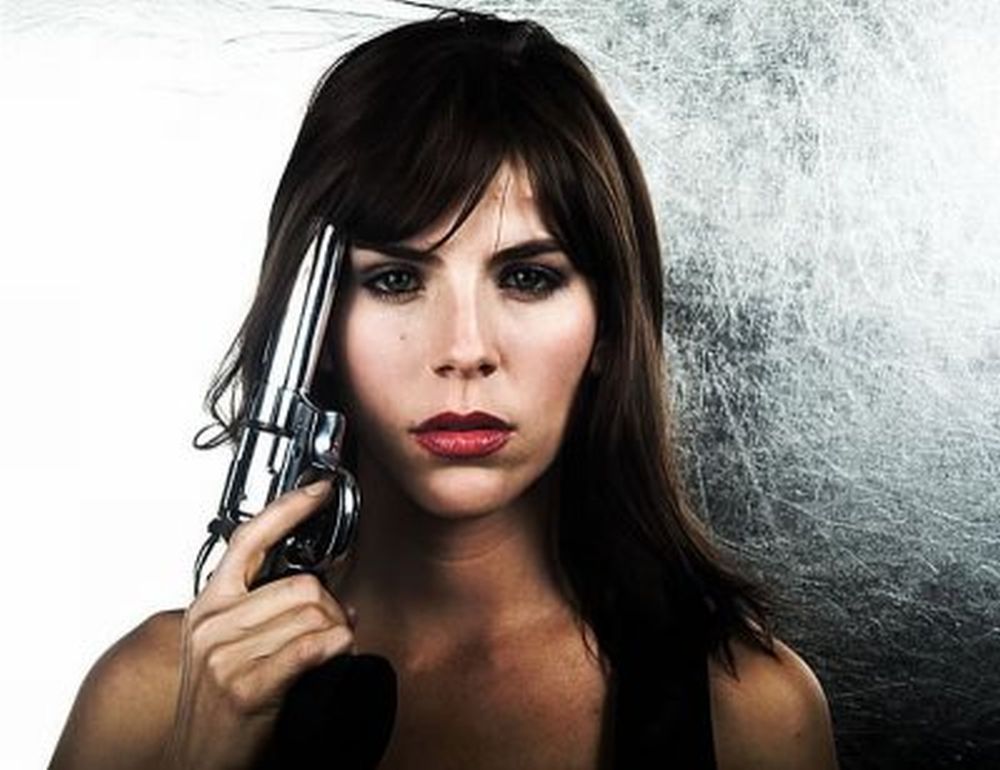
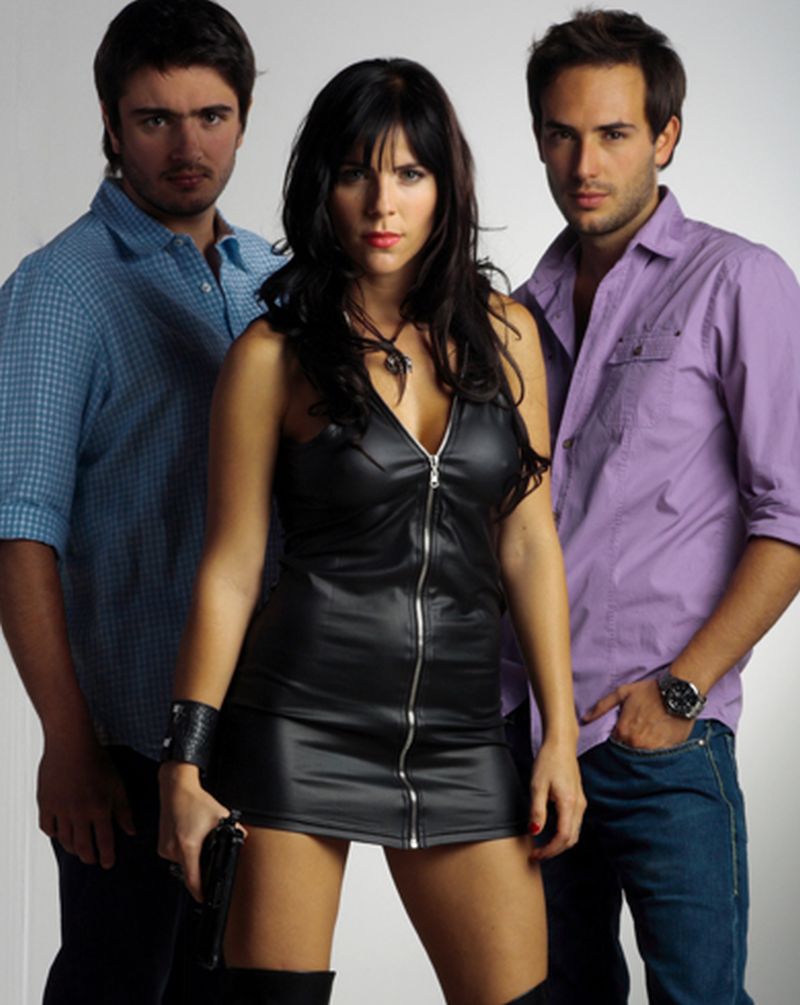
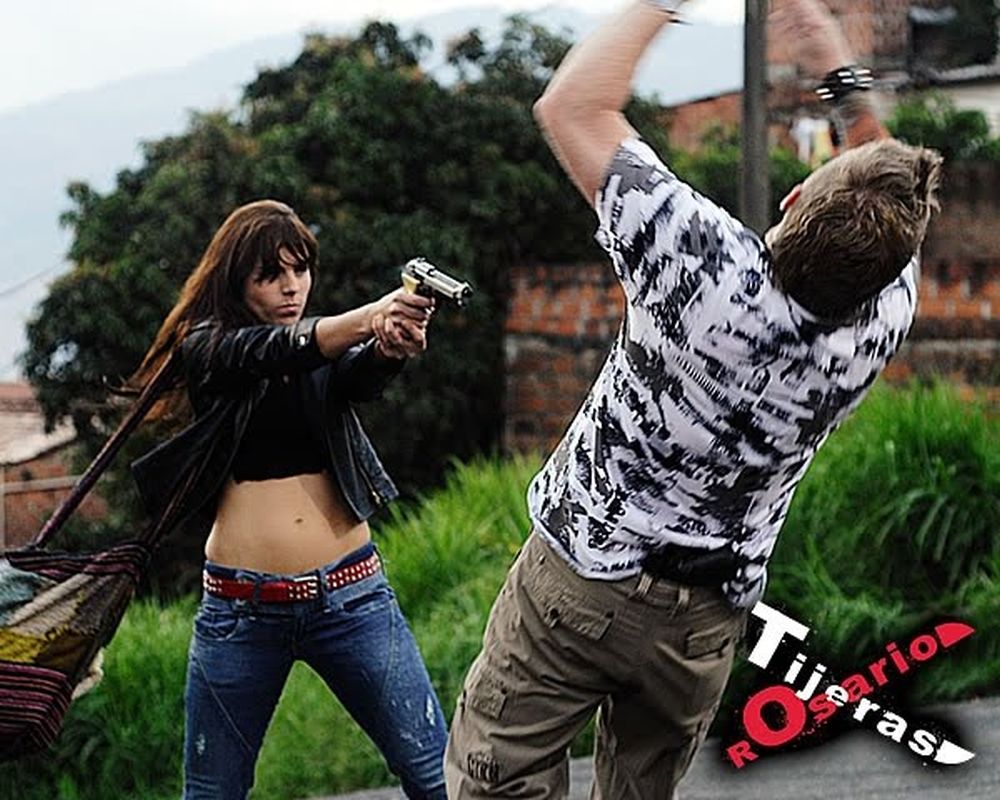


Rosario Tijeras (TV Series)
Survival Instinct
★★
“Gratuitous violins.”
 Stacey and and Thom are on their way to a friend’s wedding, where she’ll also be providing the music, when their car breaks down. Stacey walks back to a garage they passed, but while she’s away. Thom is accidentally shot by father and (unwilling) son hunting duo, Weaver (Coughlan) and Rex (Smith). Realizing their victim was not alone, they wait for Stacey to return, so her presence as a loose end can be tidied up. But Rex’s reluctance to pull the trigger gives her a lifeline, and begins a game of cat-and-mouse through a remote, wooded area of the Derbyshire Peak District.
I guess the aim is something like a British version of Deliverance, but the resources aren’t there – and neither are the performances, direction and script, none of which reach above workmanlike at best. The worst offender is the script, which frequently had me rolling my eyes at the stupidity of the characters, who frequently behaved in ways that made no sense in real-life, purely for cinematic purposes. Not the least of these is the way Stacey suddenly opts to start carrying her precious violin around with her for the final sequence, having not apparently given a damn about it before that point. You don’t have to be a seer to predict why this is needed.
The idea isn’t a bad one, and the cinematography is solid, with the locations used photogenic. However, the action is nothing short of awful, possessing absolutely no impact. While Crevel’s performance as Stacey is okay, she needs to be a much more pro-active heroine, trying to turn the tables on her attacker. Instead, she spends the first hour doing virtually nothing but running away, save for dropping a sign with a nail on it, hoping Weaver will stand on it. [Spoiler alert: inevitably, he does!] Coughlan does exude a nice, unhinged menace as the villain, and the script does attempt to give him both motivation and a back-story. Unfortunately, this isn’t conveyed organically, rather in large gobbets of monologue that tend to bring the film to a halt.
Clocking in at 75 minutes, including credits, is likely a wise decision given the paucity of the material present. It’s clear the budget here was limited – simply because how expensive can four people running around a forest be? Lawson deserves credit for not letting those resources be too obvious. On the other hand, money doesn’t excuse the apparent lack of effort put into a lazy script, apparently worked out on the back of a beer-mat one Friday lunch-time. The fact it had different titles while shooting (Rites of Passage), from its limited cinema run, then a third name for its DVD release, is perhaps another indication more forethought would have been helpful.
Dir: Steve Lawson
Star: Helen Crevel, Andrew Coughlan, Sam Smith, Jay Sutherland
a.k.a. Footsoldier
Pearl: The Assassin
★★
“Fake pearls.”
 I think perhaps the most memorable thing here was that, while doing my usual pre-review Googling, the search results returned with the warning that, “In response to multiple complaints we received under the US Digital Millennium Copyright Act, we have removed 35 results from this page.” I’m not sure whether I’m surprised or concerned that 35 sites apparently deemed this worth their while to rip and upload a bootleg copy of this, because it probably doesn’t deserve it. I may be particularly disgruntled due to the presence on the sleeve both of helicopters that don’t exist, and someone totally different from the heroine; half a star was docked from the grade for this. In reality, the star (Patton, the director’s wife – he plays the florist she’s garotting in the picture, right!) looks more like Marilyn Manson, with a high forehead and close to no eyebrows.
Not that this is necessarily a bad thing – indeed, there’s something to be said for a heroine who challenges conventional notions of beauty, and Pearl does that, even if the distributor chooses to hide this behind a leggy, long-haired model type. She looks like a pissed-off killer, out for vengeance – not any longer on the people who killed her parents, for they were taken care of years ago, as others of that same type. Which would be criminals, drug-dealers, pimps, etc. She kidnaps meth scientist Erik (Morales), using his inside knowledge to work up the chain toward top boss Tre (Brown), while Detective Wyatt (Morafetis) follows the trail of bodies left behind Pearl, from the other end.
Even given my tolerance for independent, low-budget cinema, the action here was particularly poor, barely choreographed and possessing absolutely zero impact. Surprisingly, what worked better than expected were the characters, particularly Erik, who actually possesses something of an arc, going from a meth-head with few redeeming features into something of a tragic hero. By comparison, Pearl doesn’t move the needle very much: she starts off the film as a stone-faced killer, and more or less ends it as a stone-faced killer. You do get to see some of her backstory, but it seems more perfunctory, and it’s also simplistic in the extreme: someone killed her family, now everyone must pay. That might have worked for Charles Bronson forty years ago; now, audiences expect rather more nuance. Still, there was one genuinely shocking moment, demonstrating Tre’s utter ruthlessness, and I actually laughed at one of Erik’s lines. Overall, it’s a case of being able to see where the film-makers are aiming; unfortunately, the results fall significantly short of that target, and you’re probably better off sticking with the obvious sources of inspiration here, instead of this attempt to imitate them.
Dir: Guy Patton
Star: Dana Patton, Scott Michael Morales, Justin Brown, George Morafetis
Sin Dejar Huella
★★★
“The road through Mexico.”
 The title translates as Leaving No Trace, and is entirely appropriate, since it focuses on two women who, each for their own reasons, are very keen to disappear off the grid. There’s MariLu (Sánchez-Gijón), a.k.a. Ana, a.k.a. a bunch of other names – she has three different passports – who works in the murky world of art smuggling, and is first encountered sneaking across the border from Arizona into Mexico [a nicely-ironic reversal of the usual traffic]. She is being pursued doggedly by cop Mendizábal (Ochoa), who is trailing Ana to find out who she works for. Then there’s Aurelia (Scanda), a single mom who is on the run after stealing and selling the stash of drugs her boyfriend Saul (Altomaro) was holding for the cartel, and who is on the run with the resulting cash. The pair meet up and agree to share the drive to Cancun, though neither is willing to reveal the truth about themselves. However, a red car with tinted windows is tailing them: is is Saul or Mendizábal behind the wheel?
This plays a little like a Mexican version of Thelma & Louise, although the women here begin as strangers instead of friends, and their film is as much about the growth of their relationship as the interaction with the outside world. It’s also very much a road movie, with the landscape through which they move almost another character; there are some amazing locations, such as the abandoned and derelict plantation mansion, now taken over and inhabited by the local peasants, or the near-deserted hotel in which the final act unfolds. Novaro does a great job of contrasting the grinding poverty and stunning natural beauty, and there’s an undercurrent of political subtext, with apparent nods toward NAFTA and the female homicides in Juarez. However, it is all kept light enough to teach Callie Khouri a thing or two about the benefits of subtlety and understatement.
Aurelia is likely the more sympathetic character, mainly because we know the truth about her situation – Ana appears almost pathologically incapable of telling the truth to anyone, about anything. However, the motivations and eventual goals of the women are left murky and unclear; this is a film definitely more interested in the journey, both physical and spiritual, than the destination. This is most apparent in an unsatisfactory conclusion, which zigs in one direction before inexplicably zagging back in another, without adequate explanation for either. The two pincers closing on the women do cross, only for one then apparently to meander off, as if distracted. And that’s a shame, as the film had put together a number of compelling elements and memorable sequences, including one of the more brutally realistic crashes I’ve seen [cars don’t fly, they plummet]. You should accept going in, this is much more drama than action; do that, and it’s an enjoyable enough ride, even if the final objective is rather disappointing.
Dir: Maria Novaro
Star: Tiaré Scanda, Aitana Sánchez-Gijón Jesús Ochoa, Martín Altomaro
Hush
★★★★
“What’s ASL for yippee ki-yay?”

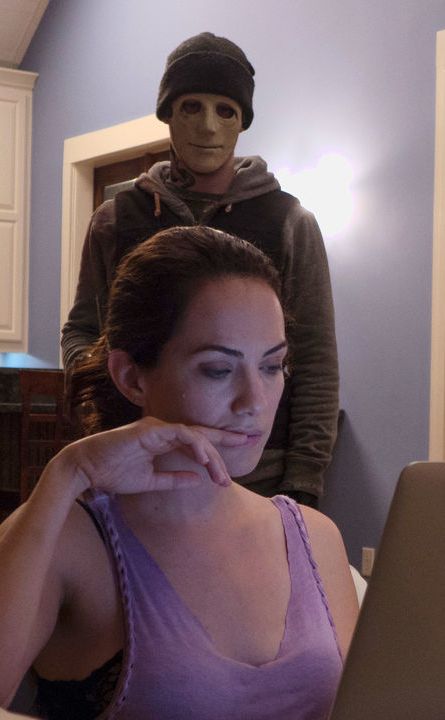 There’s one moment here, where the heroine leaves a final message, certain she’s going to die, that’s poignant to a surprising degree, not often seen in the genre. It’s the moment I really bought into this, which was made for a mere $70,000, and is a very nicely assembled machine for creating tension. Deaf author Maddie Young (Siegel) has moved to a house in the middle of nowhere to try and finish her second novel. But one night, the peace and quiet is interrupted the arrival of a masked man (Gallagher), whose intent is clear, even if his reasons remain obscure: the terrorising, and eventual murder, of Maddie. Cut off from all outside assistance, and after all efforts to escape have proved futile, she eventually realizes there is only one way to survive.
Equal parts Stephen King and Wait Until Dark, the Audrey Hepburn film in which a blind woman is similarly the target, this is an object lesson in doing the most with what you have. A cast numbering only a handful and a single location, are not necessarily a barrier to entertaining and effective cinema. The first section is very much a careful build-up: set the central character in her location, establish her strengths (imagination, self-reliance) and vulnerabilities (obvious). Then, unleash the threat, triggering an escalating series of cat-and-mouse incidents, bringing your heroine to the point of desperation mentioned above. Finally? It’s likely no spoiler to say, the tables get turned – but the less detail I provide there, the more you’ll be able to appreciate it.
If you’re wondering why this stalk ‘n’ slasher is here, consider this quote from Siegel: “We do credit Wait Until Dark for being the driving force, but we always thought this movie is more like Die Hard; we wanted to beat Maddie up, we wanted her to use the whole space. We just think Die Hard is a perfect movie, and I’ve always wanted to be that kind of action hero. One of my all-time career goals is to be Ripley in the next remake of Aliens!” Having watched the film, much of the above makes sense. It’s certainly a punishingly physical role, though since she also co-wrote the script with the director, she has no-one but herself to blame [they’re now married, so it clearly wasn’t too distressing…]
While obviously operating on a much smaller scale, much of it works almost as well, though the absence of any motive for the attacker is a little bit of a cop-out. Even something simple, as in The Strangers (“Because you were home”), might have been better. There’s also one moment where it felt like our deaf heroine reacted when her phone rang, which seemed odd. But the positives here easily outweigh any complaints, with Maddie a great heroine, who refuses to be defined by her disability – even if it puts her at a significant disadvantage in this situation. It’s also an experience thoroughly grounded in reality, where things might play out like this, given the scenario. And if you were considering moving to the country, Hush will probably make you think again.
Dir: Mike Flanagan
Star: Kate Siegel, John Gallagher Jr.
Lady Ninja Kaede 2
★½
“Secret technique, reverse dildo return!”
 I am uncertain whether this is related to the other Lady Ninja series, or if it’s an entirely separate series. I’m leaning towards it being independent, as there appear to be magical overtones here, that weren’t present elsewhere. But just to confuse matters further,while this is on Netflix at the time of writing, there’s no sign of part one. Perhaps, if I’d seen that, this would suddenly become entertaining? Nah. Pretty sure it wouldn’t make a difference. This is slightly elevated over its predecessor by not being a po-faced ninja story with soft-porn sex scenes. It is, in fact, a barking mad ninja story with soft-porn sex scenes. What? You want specifics?
The heroine, Kaede (Akatsuki), is basically a member of the sex police, punishing those who are too lustful. There’s a religious sex cult who have combined the penises of three men into one supercharged dildo, leaving them with an apparent gaping void at the crotch. After fulfilling her first task, or retrieving the hyper-dildo, it’s up to Kaede to fix things, by finding the three donors and having sex with them, which restores their genitals. She is accompanied on her quest by a gay samurai.
Not included in this film. Any significant ninja-ing by Kaede; what action there is, is more carried out by the samurai. And, contrary to the sleeve, nor is she tied up at any point, so any bondage fans will be particularly disappointed. There is, of course, plenty of aardvarking, as Joe-Bob Briggs used to put it, and actually, I can’t say I minded the performances too much. The division of the population into those for whom sex is positive and those for whom it’s negative, reminded me (bizarrely!) of a Japanese medieval take on Cafe Flesh, Kaeda supposedly being on the anti-sex side, but in reality being the most active of anyone.
There are moments of twisted creativity that made this not unwatchable, and there’s a mad aesthetic here that could be appealing if you’re in an undiscerning mood. But if you’re looking for any kind of action beside the horizontal variety, you are going to be extremely disappointed. Finally, I did have to snort derisively at subtitles during the magic ceremony which referred to “Casper Howser”, who is presumably Doogie’s occult-inclined brother. I imagine that should instead have been “Kaspar Hauser”, a 19th-century German figure with mystical significance, about whom Werner Herzog once made a movie. Bit of a toss-up whether distributors Tokyo Shock did not know, or just did not care.
Dir: Takayuki Kagawa
Star: Luna Akatsuki, Kazu Itsuki, Yuka Sakagami