



★★
“Plastic surgery disaster.”
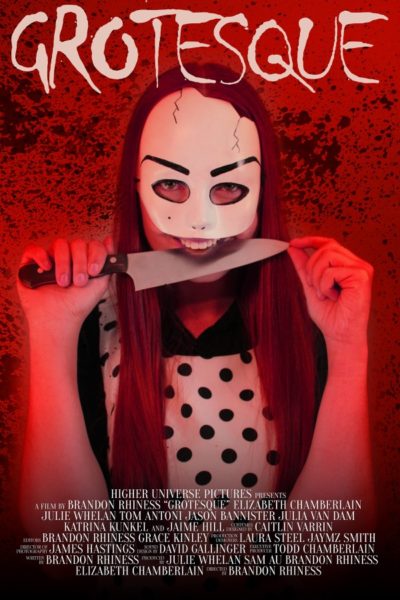 Mildred Moyer (Chamberlain) has a problem, and it’s as plain as the nose on her face. Actually, it is the nose on her face, which would not look out of place – as one callous workmate points out – on a certain wooden boy of fairy-tale renown. Needless to say, her life has been made unpleasant by cruel comments from strangers and acquaintances. Finally, she has had enough and goes to a shady plastic surgeon to get it fixed. Unsurprisingly, this goes wrong – the fact her appointment is at 11 pm in the basement of a strip-club might have been a clue – and she is left horribly disfigured as a result. This drives her over the edge, and she vows savage revenge on all those who had wronged her.
There’s a really weird tone to this. You would think, given the subject matter, that it would be a dark movie, but Rhiness seems to be aiming more for humour as the over-arching atmosphere. Now, there’s obviously an overlap for horror and comedy, but it’s a cross-pollination of genres which is hard to pull off. The likes of Sam Raimi, Peter Jackson and Stuart Gordon can do it. Rhiness… not so much. Indeed, if you told me you didn’t find this either horrific or funny, that would feel like fair comment. Occasional moments do briefly achieve a solid foot in either camp, in my opinion. But not for long, and none manage to combine them effectively.
It is clear that the director is going for parodic excess in many elements: Mildred’s nose is so extreme as to be a clear indicator of that, and a lot of the performances go down similarly broad lines. Her ultimate nemesis, Blanche (Whelan), could not be a more broad depiction of a “mean girl” if she tried, and I strongly suspect she was, indeed, trying for that. But I felt the switch in Mildred from meek and milquetoast to mass-murdering psychopath felt sudden and forced. Perhaps it was having watched Joker the previous night, which took its time to bring the audience along on that transition, rather than just going “Hey, it’s time for her to go berserk.”
The killings are a mixed bag, and that’s being kind. Even allowing for the low-budget some of the effects are simply not good enough. Again, the deaths don’t generate much of anything on the viewer, only occasionally going sufficiently over the top to be amusing. However, Rhiness and team do deserve credit for keeping things simple: the goals here are not exactly lofty, and the lack of ambition and pretension is likely for the best. Chamberlain also helps to keep the project’s head above water, and even when the story isn’t doing enough to sustain your attention, her performance is quirky and engaging. But I can’t help thinking the whole project would have been better off deciding to be either a horror film or a comedy, and sticking with one or the other.
Dir: Brandon Rhiness
Star: Elizabeth Chamberlain, Julie Whelan, Hudsynn Grace Kennedy, Jaime Hill
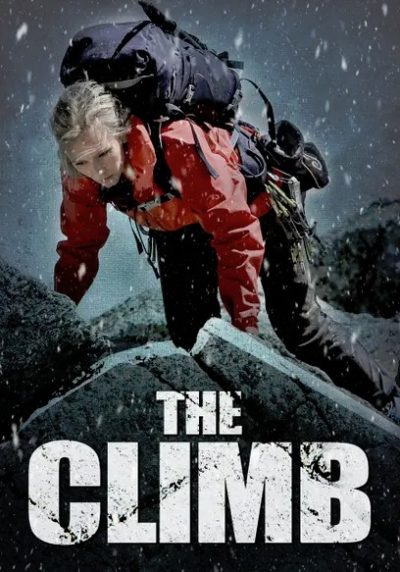 I was really surprised to discover that this French film is actually made for television. It has a certain gravitas and thoughtfulness to it, that you rarely find in a genre which is (often rightfully) derided as being formulaic and cliched. This doesn’t escape those criticisms entirely – in particular, there’s a “Disease of the Week” subplot, which does feel as it it might have strayed in from Lifetime or Hallmark. However, even there, it feels handled in a relatively natural manner, rather than being shoehorned in there to elicit sympathy from the viewer. It definitely looks better than most TVMs out of Hollywood. Whether this is down to Félix von Muralt’s cinematography, or simply the stunning Alpine landscapes, is open to debate.
 Netflix describes this as “Charlie’s Angels meets Lupin, with a dash of Killing Eve.” Um. About that… While I haven’t seen Lupin, I can confidently state any similarity to the others is tangential at best. For example, the only thing this really has in connection with Charlie’s Angels, is that there’s three of them. But here, it’s more like 2.25, since the third member is largely useless. It’s almost entirely the story of Carole (Laurent) and Alex (Exarchopoulos), two thieves who work for the enigmatic Marraine (Adjani). But Carole has discovered she’s pregnant and wants out of the business. Marraine is not happy, but agrees, providing Carole does that hoariest of film clichés: One Last Job.
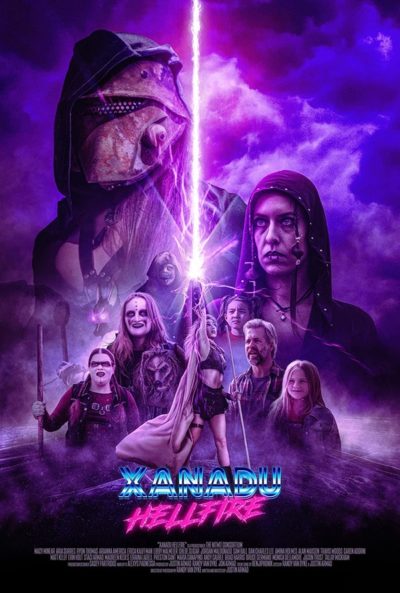 I went into this braced for it to be terrible, having sat through the same film-makers’, largely irredeemable
 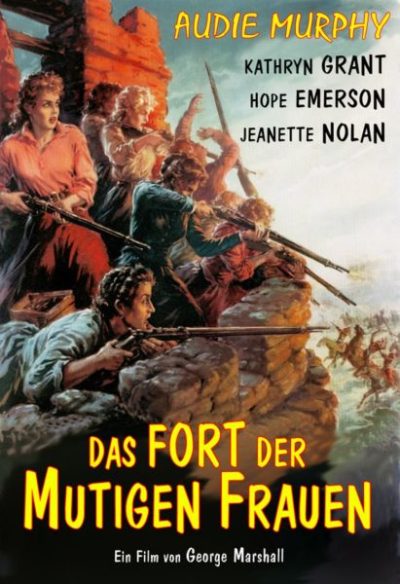 This is one where you need to take the era into account. Made in 1957, this was based on a short story from a couple of years earlier: “Petticoat Brigade” by Chester William Harrison. It’s very much an Audie Murphy movie – and understandably so, since the man was a bona fide hero, being one of the most-decorated American combat soldiers in World War II, before he became an actor. But the fifties was not a decade known for strong, independent female characters in Hollywood Westerns. We’ve covered a few:
  War correspondent
  I should be clear, this is not to be confused with
  We’ve written about Griselda Blanco before. In particular, we reviewed telenovela La Viuda Negra, which was loosely based on her life and
 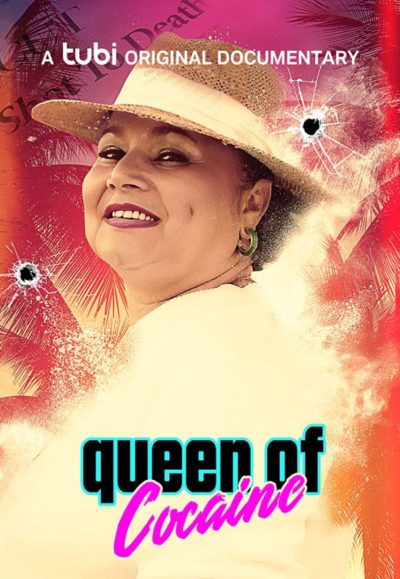 To my pleasant surprise, that’s not the case at all. Obviously, there’s a certain allure here, but it doesn’t needlessly glamourize or condemn its subject, and instead manages to do a good job of painting both sides, and depicting Griselda as a surprisingly complex character. This is particularly clear at the end, when her youngest son – named, amusingly, Michael Corleone – says of his mother, “Yes, it’s a legacy of violence. But she was a woman that had to become savage in a world that wasn’t made for her.” Then Detective Diaz, who headed the Miami task force charged with bringing her down, counters, “We have this bitch from hell who decides she wants to be meaner and more powerful than anybody else… Violence. Arrogance. Greed.
 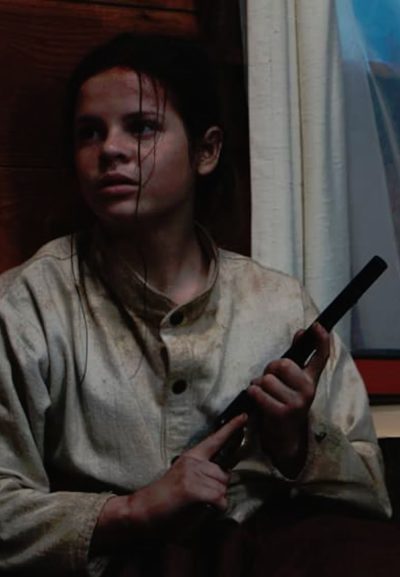 This one does take a while to reach the necessary threshold: probably only truly qualifies for the final twenty minutes or so, though it does talk a good game until that point. Also, it’s a decent enough combination of Western and home-invasion genres to that point, to pass muster. Nothing special, mind you. It just knows its limitations and is careful enough to work within them. It takes place in the Old West. whee Beth (Bernadette) and her twin children, Brian and Irene (Betsy) now live with her new husband, Robert (Krause). The trio appear to have escaped an abusive relationship, and it’s not long after a railroad surveyor pays a visit, before Irene is cheerfully telling him, she’s going to go back and kill her father some day.
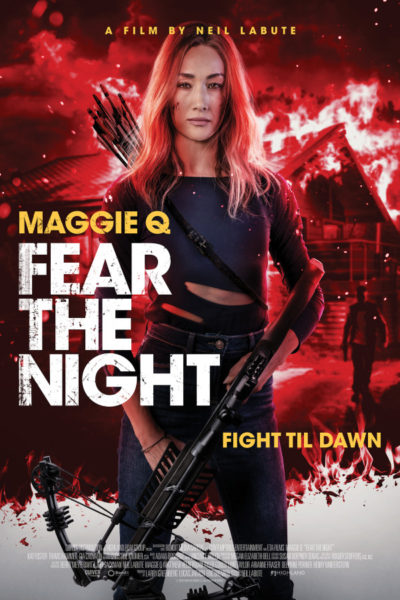 Director LaBute is best known around these parts for his ill-conceived remake of classic horror The Wicker Man, which is generally regarded as spectacularly bad, and is probably best-known for spawning memes involving Nicolas Cage and bees. So expectations going into this were… not high, shall we say. On that basis, the three-star rating is something of a pleasant surprise, though most of the credit for this should got to its star, rather than the director. Tess (Q) is a veteran of the war in Iraq, who is struggling to reconnect to her two sisters. Rose is getting married, and is nice enough that Tess is willing to attend her bachelorette party at the family cabin, deep in the country. But Beth (Foster) is a straight-up bitch.