




★★½
“Spell-ing B-movie”
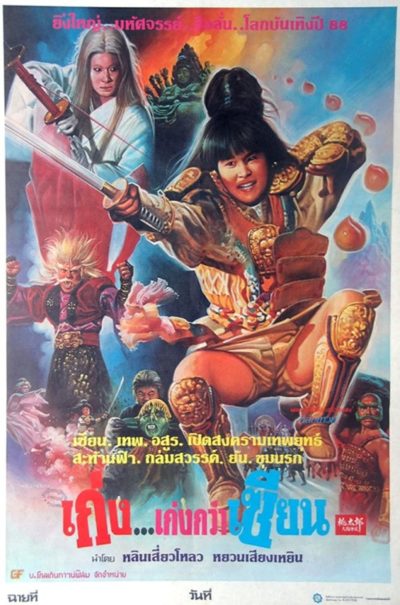 The best way to describe this, is perhaps to say that if I was nine years old, I would think it was the greatest movie I had ever seen. And I would likely be right, at the time. With the benefit of [redacted] more years, and several thousand additional movies under my belt… Not so much. Oh, it’s excessive, insanely imaginative and high energy, to be sure. However, it is also slapdash, incoherent and juvenile. Never mind appealing to nine-year-olds, it often feels like it was made by nine-year-olds. This explanation could be the most logical way to explain how the film manages to misspell its own name in the opening credits, calling itself Magic of Stell.
Let me attempt to summarize the more sane elements of the plot, as best I can. An evil wizard (Chen) seeks to reclaim his youth. This involves bathing in childrens’ blood, and eating the Ginseng King, who is played by a little kid dressed up to look like the herbal root in question. Out to stop him is Peach Boy (Lin, doing her usual unconvincing male character shtick), with the help of a bunch of friends, led by… some randomly wandering dude (Ku). Both sides are populated with bizarre characters, sporting even more bizarre abilities. For example, Peach Boy can summon a giant fruit which he can use like bowling-ball, and that occasionally shoots lasers out at her opponents. Or one of his allies has an arm, which turns into an aggressive chicken on occasion and pecks peoples’ eyes out.
There are moments here which are “I can’t believe I just saw this.” If you saw the Indian film RRR, you’ll know the kind of thing I mean. Except, there is good reason why this has remained an underground item, rather than generating Oscar buzz. For there are also moments in this which appear to have strayed in from your local community theatre pantomime. I mean this in a number of ways: the quality of the performances, the juvenile humour, and the way you have both men playing women and women playing men. Not all of it works, to put it very, very mildly, and I’ve no idea who the target audience might have been.
Matters are likely not helped by the VCD release, which has the Cantonese audio track coming out of one speaker, and the Mandarin out of the other (how they used to do multiple-language media). So you’re listening to two different languages, simultaneously, and they are not in sync either, adding to the overall insanity. I think “exhausted” is the best single word for how the whole endeavour made me feel. It’s the cinematic version of a run-on sentence which lasts for 80 minutes, making copious use of the words “and then…” While I can appreciate the invention on view here, it doesn’t excuse an approach that seems to involve spraying the audience with a fire-hose, and hoping it slakes their thirst.
Dir: Chung-Hsing Chao
Star: Hsiao-Lao Lin, Chen Shan, Pao-Ming Ku, Mei Fang Yu
 There are times when I can look at a failure of a movie, and kinda see how the various elements could have been arranged to better effect. That’s the case here, where a poverty-row, Spanish-language (but made in Texas) production about rape, revenge and narcos, could potentially have worked. Except, it absolutely doesn’t. It’s the story of Carla Mendoza (Verastegui), who happens to be in the wrong place at the wrong time, working for her boss, Pedro Camargo (Palomo), blissfully unaware he is a cartel leader. As a result, she’s arrested, and ends up spending seven years in prison, while daughter Nina is taken care by her grandmother.
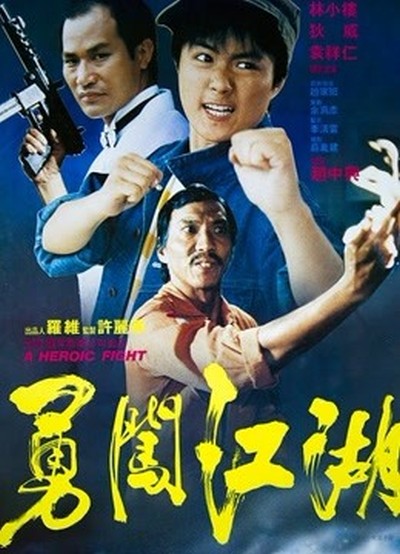 Well, this is certainly… a film. Indeed, of all the movies I’ve seen, it is unquestionably… one of them. Is it good? Bad? I’m still not sure. There are so many shifts in tone here, you’ll get whiplash. It’s clearly intended to be a parody of eighties Hong Kong cinema (even though it was made in Taiwan), yet is equally guilty of committing many of the same sins. I can’t deny the imagination here. A gangster, the unfortunately named Mr. Duh (Chao) is embroiled in a struggle for control of his empire with a lieutenant (Wei) who wants to start dealing drugs. To this end, the boss’s grand-daughter is kidnapped, only to be rescued by conveniently passing martial arts actor Hsiao-Long (Lin). He – and I’ll get back to that – is part of a film studio under his father (Yuen), who specializes in action and special effects. They end up hired by Duh, putting their skills to use to protect the grand-daughter and, at one point, fake the boss’s death.
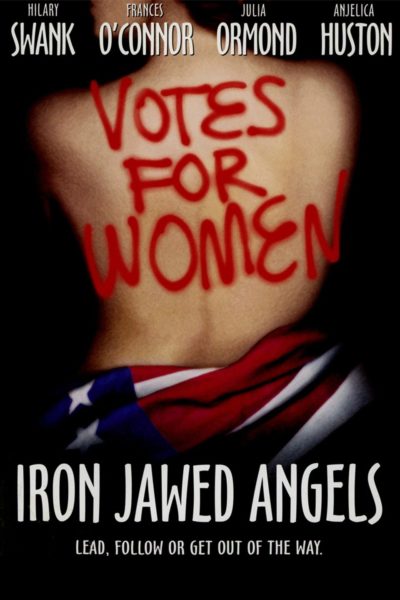 There’s a fascinating story to be told about the struggle by American women to get the vote. Unfortunately, this isn’t it. Rather than being content to tell the story of the battle and those who fought in it, von Garnier (a German director who gave us
  I never thought I’d find a film which would leave me yearning for the subtle and understated pleasures of the original I Spit on Your Grave, but here we are. 35 years on, and this cringeworthy copy was made, transplanting events to the old West. A further decade later: with a couple of re-titlings which jostle each other for inappropriateness, it’s out on a number of free movie streaming platforms. I’m here to tell you, not to bother. Even in the low-rent neighbourhood which is rape-revenge movies, you could close your eyes, pick a random entry, and be almost guaranteed to find something with a better script and general execution.
 Detective Inspector Stella Cole has her life turned upside down when her lawyer husband is killed in a hit-and-run accident, leaving her to bring up daughter Lola on her own, and struggling with an addiction to both booze and painkillers – anything to numb the pain of everyday existence. Though the driver in question is arrested, he receives a paltry sentence of only three years, and Stella begins to plot taking her own revenge. This is brought up short when the perpetrator is killed in prison, and evidence begins to accumulate that her husband’s death may not have been accidental.
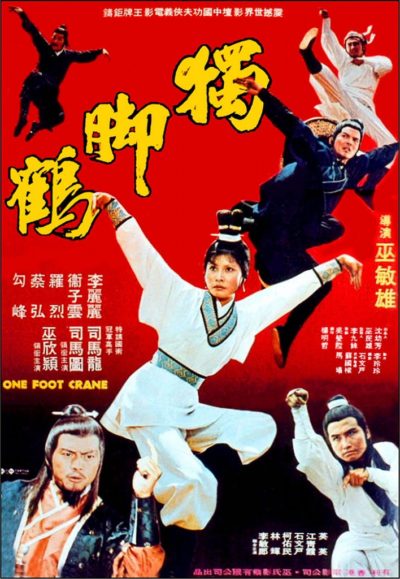 We begin with the murder of a family, with the sole (apparent) survivor being a small child, Fung Lin-yi (Li), who is able to escape. Rescued by – and stop me if you’ve heard this one before – a kung-fu master, she is rigourously trained in the titular style of martial arts. It’s fairly nifty, not least for the dagger hidden in the tip of her shoe which she uses to administer the coup de grace, Rosa Klebb style. Fifteen years later, she’s ready to seek revenge on the quartet of outlaws responsible for killing her family, who unlike our heroine, appear not to have aged a day over the decade and a half since they participated in the slaughter. Matters are complicated by a few factors. Her first victim is the father of one of the outlaws, who then starts tracking down the mysterious “One Foot Crane” responsible. There’s also a police official investigating the situation (Sze), and it turns out Lin-yi may not be the only survivor after all (Wei).
 British television was rather late to the policewoman party. The first such American show, Decoy, had aired in 1957, and been followed in the seventies by Get Christie Love! and Police Woman. But the UK had to wait until the eighties for their first home-grown series. The Gentle Touch just beat Juliet Bravo to the title, beginning its five season run four months earlier, in April 1980. It centered on Maggie Forbes (Gascoine), a Detective Inspector who worked out of the Seven Dials station in central London. The show began with the murder of her husband, also a police officer, leaving her to raise teenage son Steve (Rathbone), despite a strong devotion to her career in law enforcement.
 To be honest, it’s more character- than action-driven overall, yet that’s its strength, since it does a great job of creating people who feel “real”. Nobody here is perfect: everyone has flaws, and struggles to cope with life’s ups and downs. Maggie is the focus, having to operate in an era when casual disregard for a woman’s talents was the norm. Not least by her Scottish colleague, Bob Croft (Gwaspari), though he eventually came to appreciate her many talents, such as Forbes’s fierce devotion to justice. Fortunately, her boss, Detective Chief Inspector Bill Russell (Marlowe) always had her back, even if his approach means cutting her no slack either. But every episode seemed to have one or more great performance, taking advantage of the vast pool of top-tier British character actors.
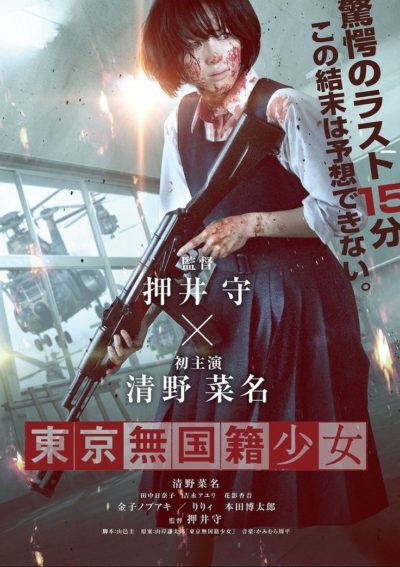 For the first hour, you may be forgiven for wondering if there has been some kind of mistake, because the poster bears almost no resemblance to what happens in the film. Oh, it’s the same actress, to be sure, and she is a schoolgirl. But it appears, rather than the war story promised, you have strayed into a teenage drama. In it, Ai (Seino) is a talented but troubled student, who seems to be suffering from some kind of post-traumatic stress disorder. The special treatment she receives at school brings her enmity as a result, both from her class-mates and the er homeroom teacher (Kaneko). Though she finds solace in art, including a mysterious major project on which she is working, housed in the school auditorium.
 If I were Ella Balinska, I’d be having a word with my agent. After seeing her major Hollywood career begin with the embarrassing failure of the