



★½
“The world’s first microbudget superheroine wrestling soft-porn film.”
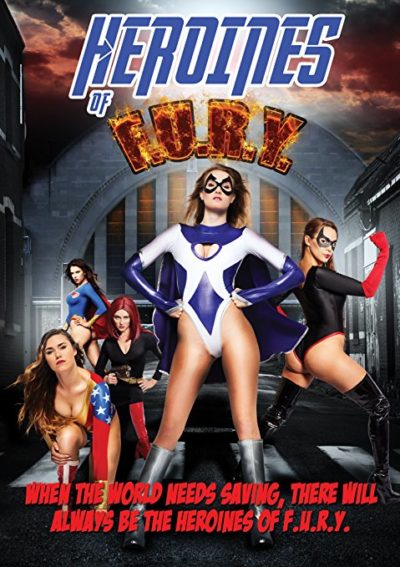 Given the cover, you might reasonably have expected one of the above, but if you saw the rest coming, you’re a better judge of cinematic dreck than I am. It’s hard to work out exactly who would form an overlap between the various potential audience sections here. And even someone not averse to any of the categories (I’d probably qualify) might well be turned off by the poor production values and overall shoddy quality of this.
The film is set in “Metro City”, which was my first surprise, because a lazy reading of the synopsis had me believing this was “Mexico City”. My bad. Turns out Omega is putting together a squad of super-powered heroines, having discovered that someone, somewhere appears to be abducting their colleagues. Nothing good can come of this, naturally. The main focus is Cosmic Girl (Lane), who has only gained her costume and secret identity relatively recently, so is still coming to terms with her situation. But she’s just one of a slew of caped crusaders, including – I’ll pause to take a deep breath, and copy-paste from my notes here – Lady Victory, Sunder, Spyder, Starlet, Dusk and Lilith.
Which wouldn’t necessarily be bad, if it had delivered something along the lines of the wonderful, Electra Woman and Dyna Girl. But the actual tone becomes creepily apparent here almost immediately. In the first scene featuring Lady Victory, we’re treated to close-ups of her feet, cleavage, butt, crotch and cleavage again, before we get to see her face. Sadly, this turns out to be an accurate indication of the movie’s priorities, with the eye of the camera adopting a highly fetishistic approach to its subjects. That’s when the film isn’t toppling over entirely, such as the 10-minute sequence of Cosmic Girl masturbating on her bed, in full costume, which ends up coming – a word used advisedly – about the width of her gusset elastic from being hardcore porn.
Then there are the scenes in a wrestling ring. For it turns out, part of the point of the abductions is to put together a forced “fight club” for these “metahumans”, which is streamed online. The losers also have their powers stolen. Which is an idea with some potential. Or, rather, it might have, if anyone involved could actually fight, or give a credible illusion of fighting: this isn’t exactly Lucha Underground, shall we say. It turns out to be little more than a thinly-disguised excuse for some sub/dom play.
Look, I’m sure there’s a market for this kind of thing, and I’m certainly not one to judge it. But this is masquerading under the illusion of being a real film – it’s on sale at Walmart ‘n’ stuff – and that creates certain expectations, which the movie is woefully ill-equipped to meet. Admittedly, if you had the foresight to Google “Brookland Brothers”, the studio behind it, you would find yourself looking at a page of thoroughly NSFW links. However, the rest of us will probably be looking nervously over our shoulders for fear of a family member showing up, and wishing for an industrial-sized bottle of hand-sanitizer.
Dir: Tyler Benjamin
Star: Halsey Rae, Ashley Lane, Krisa Kouture, Christina Verdon
 This appears to have been filmed somewhere in South America around 1966, then “poorly translated and dubbed by Germans”. The truth? It’s a modern spoof, a loving re-creation of the sixties Eurospy thriller, featuring two gun-toting leggy lovelies, Bridget (supposedly “Jasmine Orosco”, but actually Wedeen) and Sophia (“Paola Apanapal”, Larsen), who are international fashion supermodels by day, and jet-setting bounty hunters and secret agents by night. They acquire a microchip, capable of storing a whole one kilobyte of data – more than all the computers of Interpol and the Pentagon combined! – which embroils them in an evil plot to unleash wholesale devastation on the world’s population. As you do.
 I think it was only as the end credits were rolling, that I perhaps appreciated this series fully. Sure, in many ways, these films have been a poor man’s Lord of the Rings knock-off, with a disparate band of hardy adventurers on a quest to stop Ultimate Evil (TM) from taking over. But, dammit, I found myself enjoying them, appreciating their smaller-scale charms and actually liking the characters – possibly even more than Frodo. While this finale doesn’t sustain the non-stop pace of its most recent predecessor, it does a good job of tying up all the loose ends. And if you’ve watched all five, and don’t have a slight moistness around the eyes at the end, you’ve a harder heart than I.
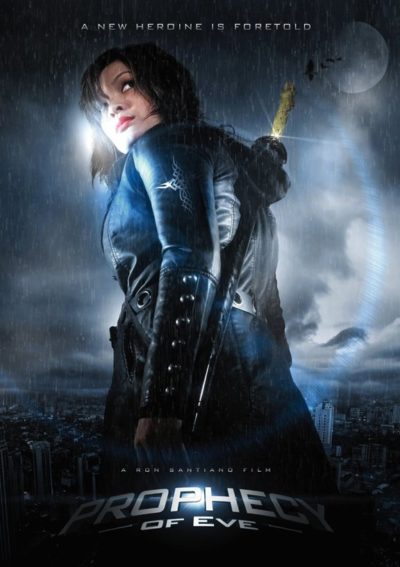 This will be a slightly shorter review than usual. For there’s not much to say about a film which runs only 77 minutes, yet still somehow managed to feels both confused and full of unnecessary padding. “Well done”, maybe? Certainly, as a model of what
  Teetering on the edge of qualifying as false information, this TVM was originally released under the more relevant, yet great deal less salacious (and, let’s be honest, less appealing) title of A Nanny’s Revenge, along with a greatly subdued sleeve. Marketing works, people: for put it this way, I’d never have watched it in that presentation. I can’t feel
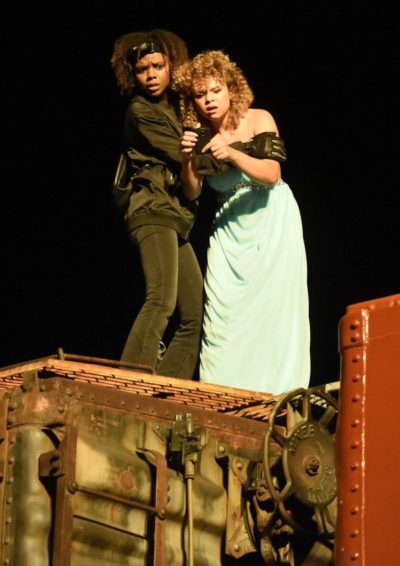 After their mother has a meltdown at her job and ends up in jail: teenage sisters Deidra (Murray) and Laney (Crow, somewhat infamous for her post-elimination meltdown on The X Factor) are left to fend for themselves. With household bills piling up – never mind trying to fund Mom’s bail, or even Deidra’s long dreamed-of college tuition – and Child Protective Services looming, things look bleak. But a visit to deadbeat Dad Chet (Sullivan, channeling David Spade), who works for a railway company, gives Deidra an idea. Hop aboard the freight trains that run by the back of their house, pop open a container to take some goods, and fence them on for cash. Things go surprisingly well, until a disgruntled railroad cop, Truman (Nelson), starts to close in on the pair, intent on rebuilding his reputation after an incident in Arizona.
 My wife is a big fan of Sandra Oh, for her long-time work on soapy medical drama, Grey’s Anatomy. This is about as far from that as imaginable. It’s a gloriously mean-spirited “comedy” [and I used the quotes out of reverence, not in a bad way], which combines social satire with gleeful hyper-violence, at a level where you would not expect to find serious actresses. Veronica (Oh) and Ashley (Heche) knew each other in college, and have since grown apart. Veronica is now wife to a defense contractor; Ashley a largely unsuccessful artist. They meet at a birthday party, and instantly the hate begins, each representing everything the other finds reprehensible. The night ends in a stairwell brawl, which leaves Veronica in a coma for two years. She awakens, to discover she has lost everything, and Ashley is now on top, enjoying commercial and critical success.
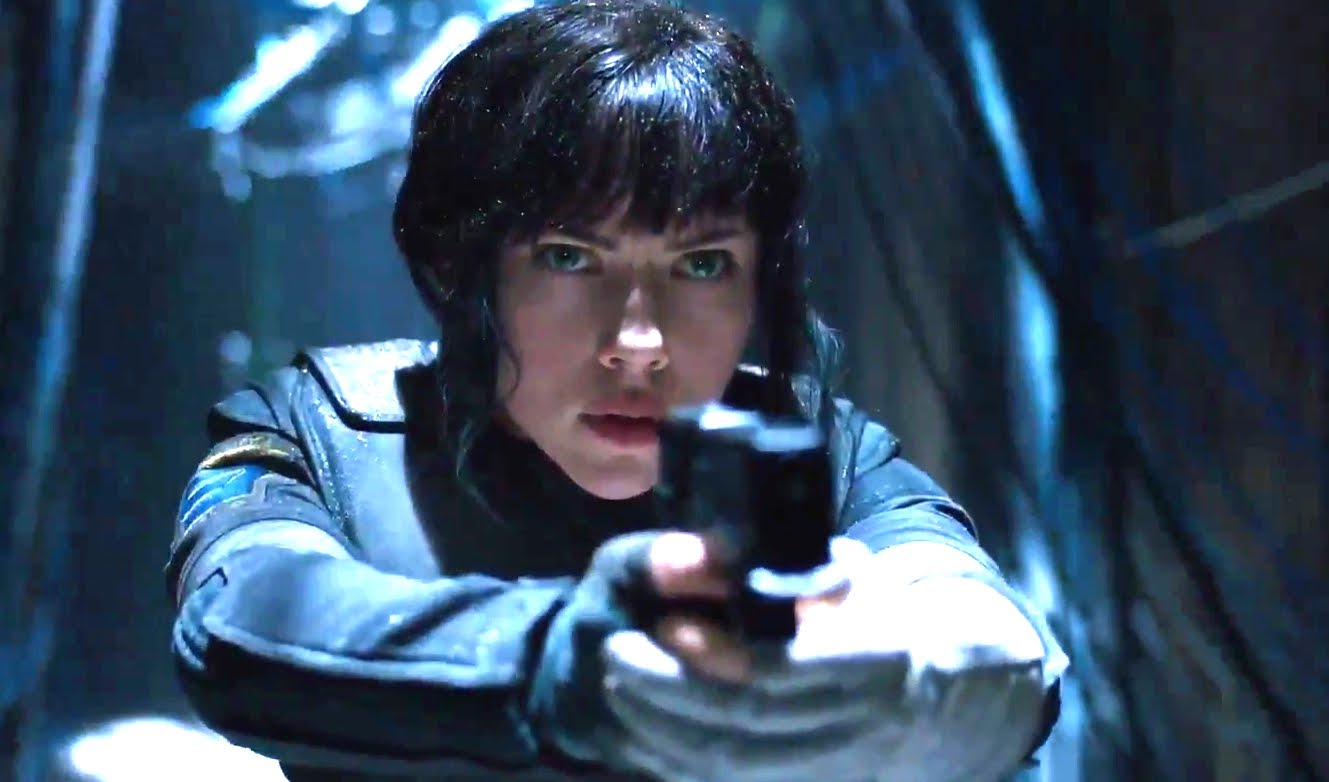 ★★★
★★★ The story has a very clever approach to the whole “whitewashing” controversy: at least initially, rather than Motoko Kusanagi, she has been reinvented by Hanka Robotics as Mira Killian, who give her a whole new set of memories, which may or may not be accurate. It’s this quest for her real identity which drives the plot, containing more than a few echoes of Robocop. And that’s an illustration of the main problem here: it feels less like anything cutting edge, than a conglomeration of elements taken from films which has gone before. That half of these stole from the animated Ghost, doesn’t help the live-action version much.
 Like much horror, the rape-revenge genre is one which overlaps with, rather than being wholly encompassed by, the action-heroine field. Some entries qualify: the awesome glory which is Ms. 45 being the most obvious example. But others appear to focus more on the rape than the revenge, and are far less interesting as a result. Such was the case for the first two entries in this series – and, indeed, the 1978 grindhouse classic which it rebooted. Here, however, in an interesting twist we bypass the assault entirely. This starts instead with the victim in the earlier movies (Butler) having adopted a new identity, that of Angela, and attending both one-on-one therapy as well as group sessions.
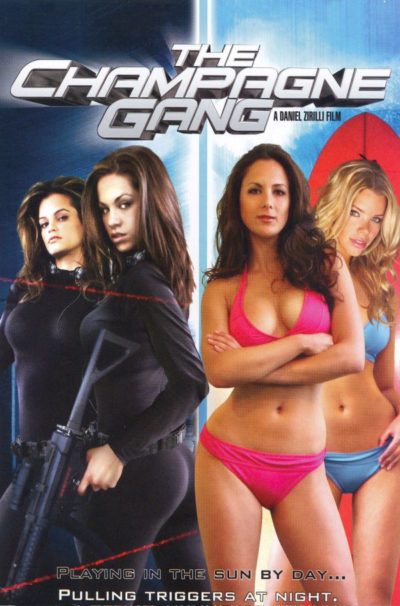 Under the leadership of Bliss (Toups), whose father is serving an extended stretch in jail, four young women stage a series of convenience-store burglaries in the San Diego area, before moving up to larger schemes. This brings them to the attention of local crime-boss, Cal Wertlieb, who makes them an offer they can’t refuse. He’ll train them to carry out more lucrative jobs, by cracking safes, which will give them access to cash and other easily fungible loot, in exchange for a cut of the proceeds – and their absolute silence in the event of them ever being caught by the authorities.