



★★½
“Facebook status: feeling infected.”
Firstly: it’s not a frickin’ virus at all! The threat here is a blood-borne parasite, which is completely different, so I have no idea where the title came from. Glad I got that off my chest. Where were we? Oh, yes… The Drakeford family have just moved in to a suburban community in California. Daughter Emma (Black-D’Elia) is trying to settle in at their new school. something at which her more extrovert older sister Stacey (Tipton) is better. This distraction is why they don’t notice the growing concern about a disease that’s spreading across the globe – until a classmate succumbs to this nasty ailment, which makes the infected highly aggressive.
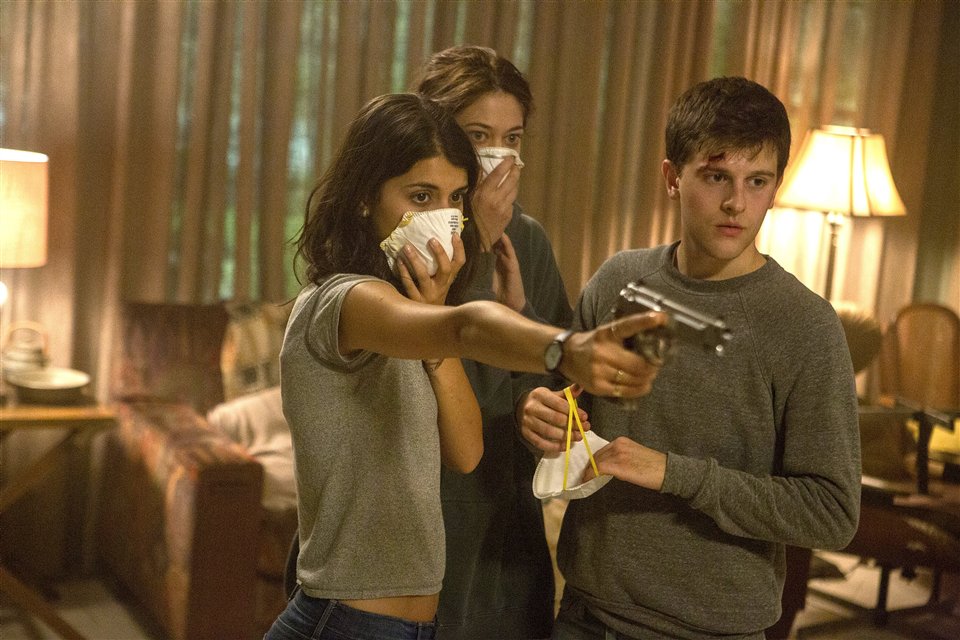 From there, the siblings’ safe, stable world disintegrates rapidly. Mom is stuck at the airport, and when Dad goes to try and find her, he doesn’t come back. Matters escalate after Stacey drags the reluctant Emma to a particularly ill-advised house party [Maybe it’s just me, but in the event of any communicable epidemic breaking out, I would not exactly be attending social gatherings], where they get to see the effects of the illness first hand. Scurrying back to the sanctuary of their home, and hot local kid Evan (Tope), the sisters are thrust back on their own resources, as martial law is declared and the area comes under strict quarantine. This means fending off not only the infected; the military, too, pose a threat to what remains of the family.
Despite its title, the film makes a credible effort to ground its epidemic at least somewhat in real science. Specifically, it references the toxoplasma gondii parasite, which does affect the behaviour of its rat hosts. Of course, this is taken to extremes here, and you end up with something closer to what was seen in 28 Days Later: fast, neo-zombies, driven by hunger. Disappointingly, this is spun into a teen-centric story, which feels as if it might not be out of place on MTV. And, like most MTV shows, anyone older than the target audience will have to suppress a frequent urge to yell at characters for their poor life skills, e.g. the frequent removal of their face-masks (see Evan, above). Stacey fares especially poorly here, to the extent I suspect her brain being controlled by a parasitic worm might increase her IQ significantly.
The effects work is light, yet solid enough, and there is a shudder or two to be had, not least from the creepy parasites. If you can watch Emma hone her amateur surgeon skills – remembering a lesson given by her teacher father – without flinching, you’re tougher than I. Yet such moments are the exception, rather than the rule they need to be, and the lack of any real escalation is surpassed only by the underwhelming ending. Despite the unexpected death of one major character, as apocalypses go, this one feels more a moderate nuisance than life-threatening peril. “OMG, I can’t update my Instagram. This totally sux.” The movie certainly won’t be getting a “like” from me.
Dir: Henry Joost and Ariel Schulman
Star: Sofia Black-D’Elia, Analeigh Tipton, Travis Tope, Colson Baker
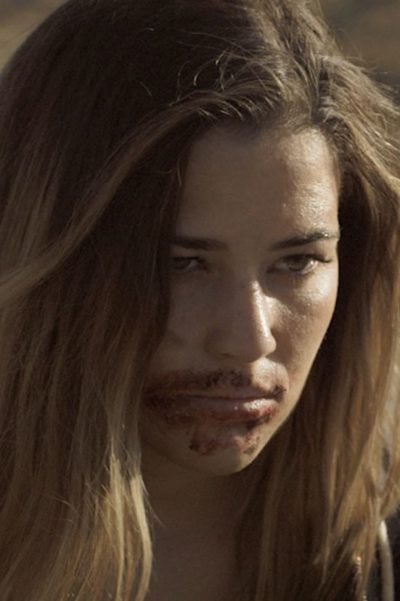 After a brief prelude, we first see the heroine Emilia (Todisco) tied in the back of a car belong to her abductor, Sean (Fenton), who is nearby digging what appears disturbingly like a grave. He is seriously unhinged and driven by his loony religious faith to punish those whom he perceives as deserving the wrath of God. Which in this case would be Emilia and her boyfriend, Michael (Sless). Emilia’s first escape attempt does not end well, and she finds herself in the hole in the ground, handcuffed to the corpse of her boyfriend. Now what?
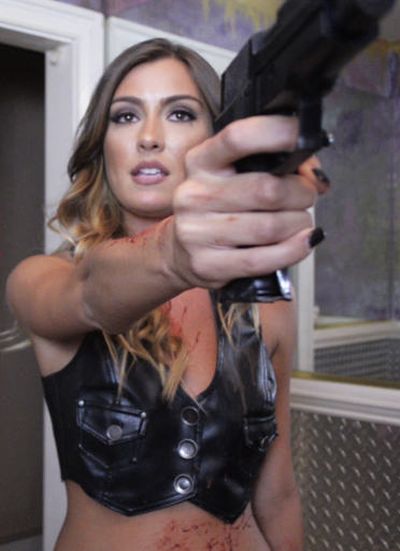 After Megan (Watson) loses her job, boyfriend and the roof over her head in the same day, she decides to head off to Atlanta, where friend Amanda (Riggs) puts her up for a bit. Amanda’s boyfriend (Rollins) is manager at a strip club, and gives Megan a job as a cocktail waitress. But after realizing the gap in earnings between those employees who keep their clothes on, and those who don’t, Megan decides to make the jump into strip-tease. This rapidly brings her into conflict with Jazz (Brown), another stripper who rules the club through terror and intimidation, along with the help of her cronies. She takes it upon herself to make Megan’s life hell. However, she can only be pushed so far, before Megan and Amanda, push back.
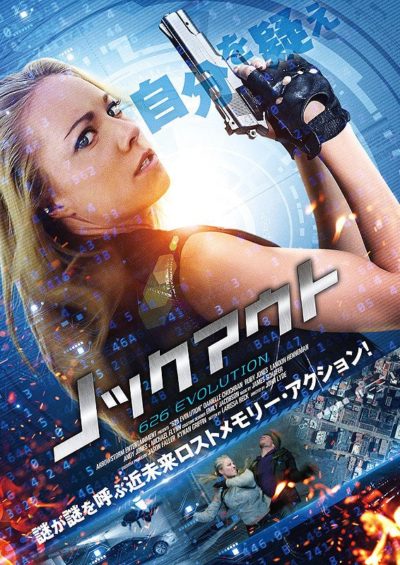 Rarely, if ever, have I seen a film so thoroughly derailed by one bad decision. There’s potential here, and those involved have some decent track records as well. Director Lyde did the last two installments of the Mythica saga, including the best one,
  ★★★★
★★★★ The WWE and women’s wrestling have had a fractious relationship over the years. For every two steps forward, there has been one – or, more often, two – backward. But under Executive Vice President of Talent Paul M. Levesque, better known by his ring-name of Triple H, there have been hopeful signs of progress. Perhaps the biggest of late was WWE staging an all-woman tournament this year, featuring 32 wrestlers from 13 different countries. This was named the Mae Young Classic, in honour of one of the field’s pioneers and longest-serving members; she wrestled from 1939 through 2008, and passed away in 2014.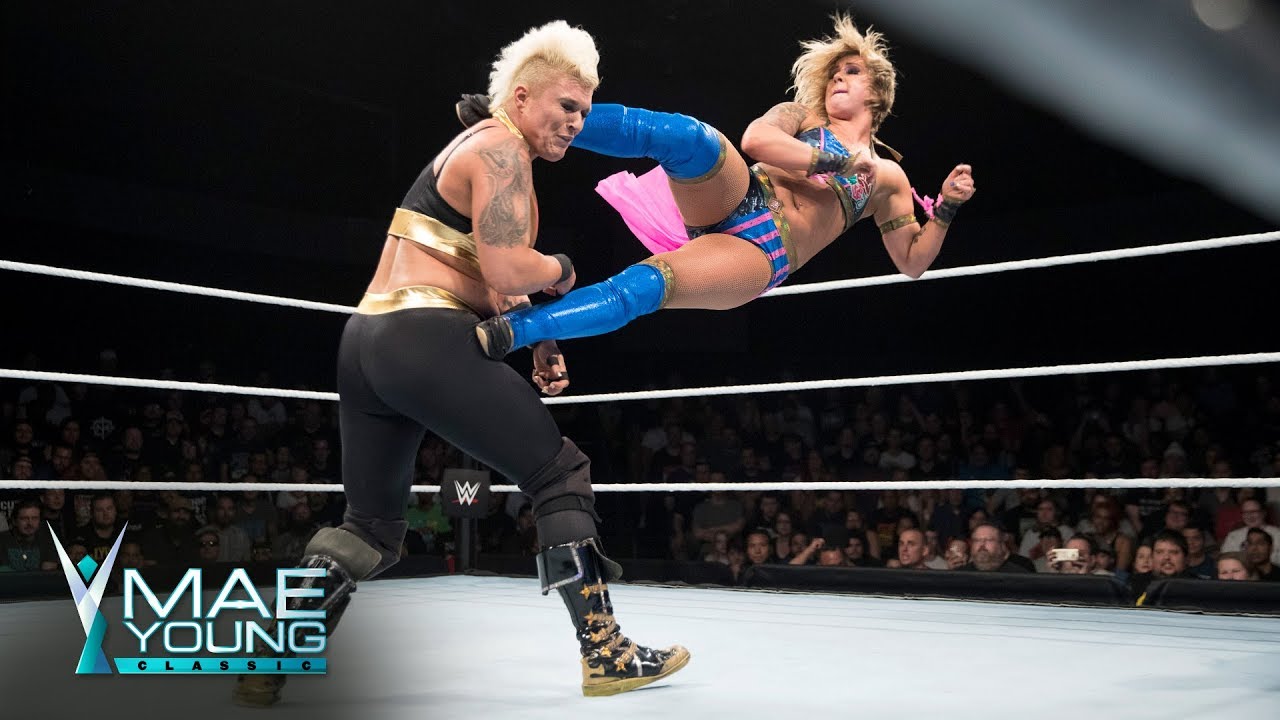
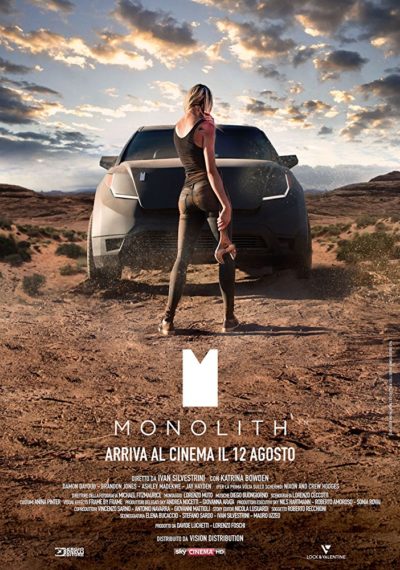 As a joke I saw on Facebook went, “With all these self-driving cars, it won’t be long before there’s a country song about your truck leaving you.” The rise of smart vehicles is inevitable, and likely, so are other films like this, which falls somewhere between Christine and 2001. In this case, mother Sandra (Bowden) is driving to see her husband, whom she suspects of cheating on her, with their young child David (played by the two Hodges brothers, whom I’m assuming are twins!) in the back seat. Her car is the state-of-the-art Monolith, equipped with every safety feature imaginable, and then some. But a series of events – a diversion, an encounter with roadkill on the hoof, and Sandra giving David her smartphone as a distraction – lead to a tricky situation. She is stuck on a remote desert road, outside of a car that has now entered its impenetrable “vault mode”, with David trapped in its interior.
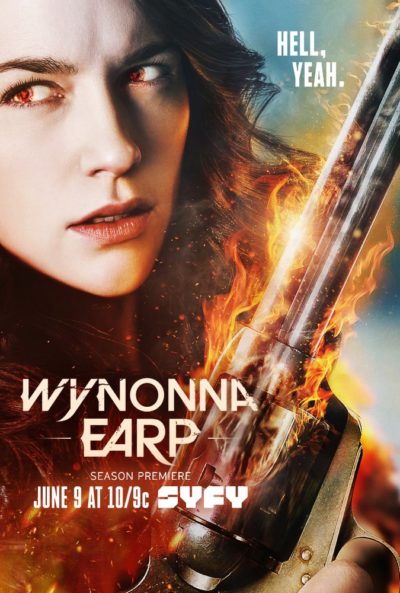 After a long absence, Wynonna Earp (Scrofano) returns to her home town of Purgatory, near the Rockies. There, we discover the truth about the death of her father and disappearance of her sister, events which precipitated Wynonna’s departure. Turns out the great-great-granddaughter of the legendary Wyatt Earp has a supernatural duty to fulfill, using her ancestor’s equally legendary 16-inch barrel “Peacemaker” revolver. Wyatt kept demons known as “revenants” in check, and the mission has been passed down the family line since, with Wynonna the current incumbent. Fortunately, mystical borders keep the revenants within the “Ghost River Triangle,” and she has the help of Deputy Marshal Xavier Dolls (Anderson), an agent in the “Black Badge” division of the US Marshals Service; Doc Holliday (Rozon), the now-immortal former friend of Wyatt; and Wynonna’s kid sister, Waverly (Provost-Chalkley).
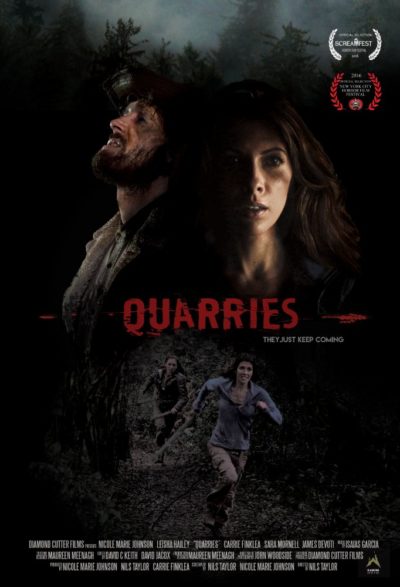 It’s not often a film manages to be under-written AND over-written. Yet this tale of wilderness survival does both. A group of women are out on what’s supposed to be an empowering hike through the forest, designed to boost self-reliance, esteem and all that good stuff. But they come under attack from a group of local men, apparently intent on a hunting expedition, with the woman as the prey. They’ll need to learn survival skills, that’s for sure.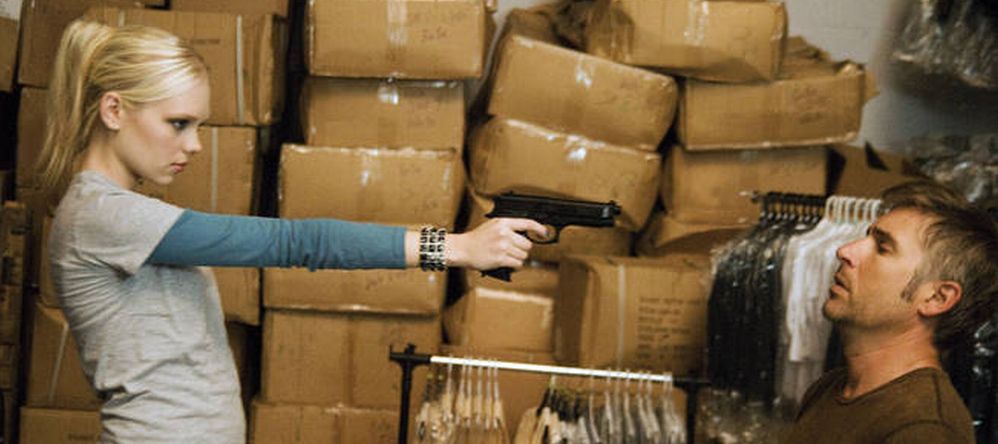
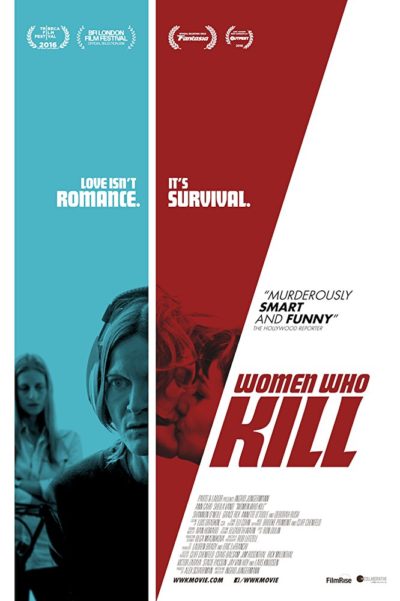 When I told Chris the title of this one, I swear you could hear her eyes rolling at the mere thought of it. But by the end, even she had to admit to having been won over by its dark charms. Most obviously is the sense of black humour which isn’t just dry, it’s as arid as the Atacama Desert. Morgan (Jungermann) and Jean (Carr) are fascinated by female serial killers, running a podcast on the topic which has acquired its own, unique fanbase. Morgan falls for Simone (Vand), a colleague at the food co-operative where she works. But Jean – who is also Morgan’s ex – can’t help thinking there is something seriously off with Simone.