



★★★
“Keeps the pot boiling energetically enough.”
I’ve been a fan of The Asylum studio for a while. They’re famous – or infamous – mainly for two things. Originally, they churned out “mockbusters”, films that rode the advertising coat-tails of larger budget and more famous movies, using titles such as (I kid you not), Snakes on a Train. More recently, they are also creators of the cult Sharknado series for SyFy. However, The Asylum can and will, make more or less anything they think will turn a profit. Their quality of output does vary, shall we say. Yet I was entertained by this slice of Lifetime fluff ‘n’ nonsense more than expected, mostly due to effective performances from the two leads.
There’s Faith Gray (Estes), whose new job as a beat cop has re-united her with Detective Paul Wagner (Kosalka), for whom she has always had a “thing.” But at an incident in a local bar, he meets and ends up beginning a relationship with, Jessica Munroe (Spiro). She’s a drop-dead blonde with aspirations of becoming a movie star – not something easily accomplished in Stillwater, Oklahoma. Before you can say “We’ll be right back after these words from our sponsors,” she’s pregnant and married to Paul. Faith, however, thinks there’s something not quite right about Jessica, though her investigation could be considered more as jealousy-induced stalking. It’s certainly painted as such by its target.
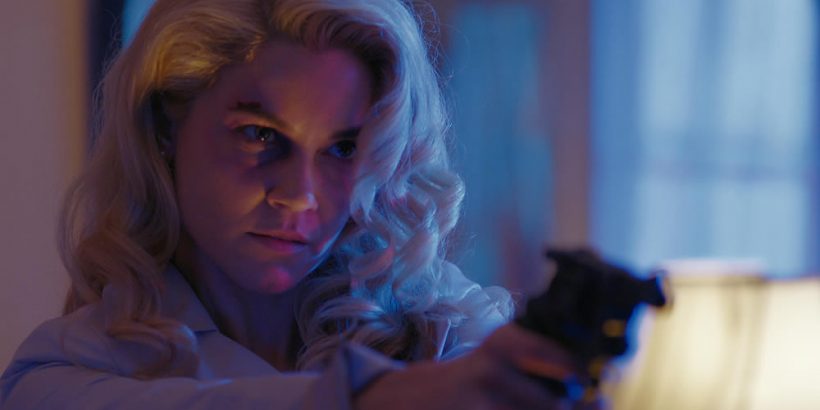 The film never tries to hide the fact that Jessica is nutty as a fruitcake. As a result, its plotting is instead very much concerned just with getting the story from Point A to B, offering few surprises. I’m not exactly convinced by the “Based on a true story” claim here. And let’s not even start with the police procedures depictede: let’s just say, Stillwater PD could use some re-training, and move on. Yet the pleasures outweighed the deficiencies; in particular, as mentioned, watching the mousy Faith and psychotic glam-girl Jessica face off. The latter gets most of the cinematic highlights, vamping it up to great effect. Witness, for example, her hyper-ventilating in order to place a convincingly panicked phone call to her lover. Guess all Jessica’s acting classes finally paid off!
I admit, there’s something fun about watching a manipulative sociopath at work: there’s a reason Dangerous Liaisons is one of the all-time greats. Spiro isn’t quite at Glenn Close standards, yet both she and Estes give it their all, and elevate the material to enjoyable nonsense. Even if we didn’t quite get the hellacious cat-fight climax for which I was hoping, it’s always good to see a film where both protagonist and antagonist are women, and there’s no doubt all the effort went into Faith and Jessica, with the male characters barely registering. Paul, in particular, is so easily deceived you wonder how he ever became a detective. Yet, as pulpy nonsense goes, this hour and a half certainly went by quickly and painlessly enough.
Dir: James Cullen Bressack
Star: Stefanie Estes, Summer Spiro, Tomek Kosalka, Brian Shoop
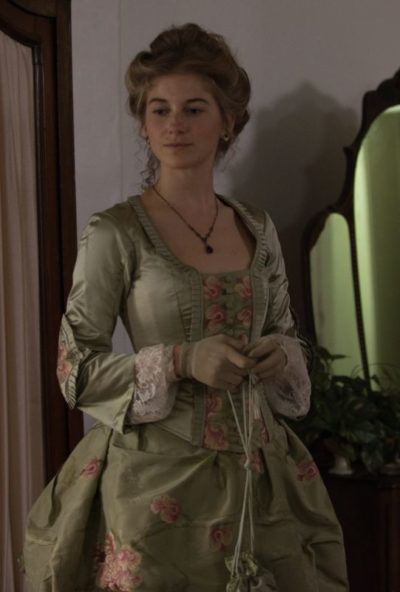 Game of Thrones, this clearly isn’t. But both Chris and I were struck by the similarities between what befalls the main character here, and the re-programming which Anya Stark underwent at the hands of the Faceless Men. Because the first, and arguably key, step in both is to destroy the existing personality, so there is a blank slate – the phrase “tabula rasa” is explicitly used here – on which the new character can be drawn. In this case, the victim is Isabel Porter (Gallerani), a young woman who has sunk into depression after the death of her parents. She opts for a stay at the Rosewood Institute, a highly regard mental sanatorium in Baltimore.
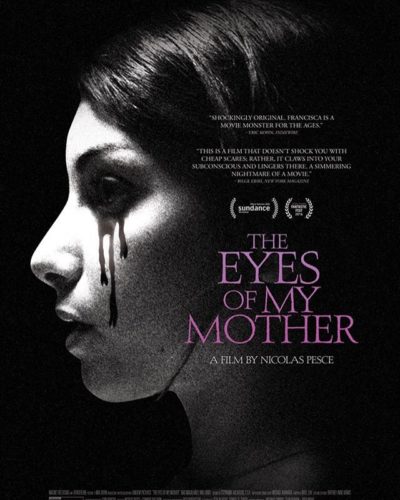 “Post-horror” is now, apparently, A Thing. It refers to horror films that subvert the traditional tropes and style of the genre in some way. Though based on the so-tagged example of it I’ve seen, the main subversion appears to be “not being frightening.” I think there’s a spot of pretension mixed in as well, since horror is generally regarded as marginally above pornography in terms of critical appreciation. By calling it something else, this gives those who turn their nose up at “horror” a chance to appreciate it. But it’s a bit of a double-edged sword for marketing, because you’re as likely to lose fans of “true” horror, who have been burned badly by films riding on the genre’s coat-tails.
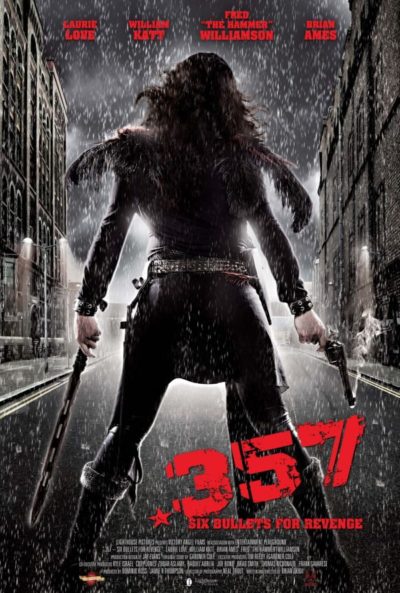 It wasn’t until the end, when the credits ran and I saw someone’s name I knew, that I realized this was actually a local production, shot here in Phoenix. Maybe I should have been paying more attention, or maybe that just speaks to the bland lack of place present in this low-budget Crow knock-off. For, despite the poster which is obviously riffing off another comic-book movie, this one is clearly inspired by Alex Proyas’s cult classic. I am, however, pleased to report that the lead star here did actually make it through the entirety of production with a pulse, so they come out ahead of their inspiration in that department.
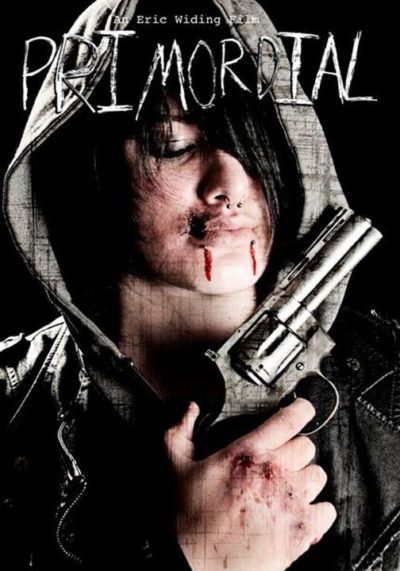 Valerie Graves (Osborne) is a powder-keg in her mid-twenties, barely surviving from job to job, and troubled by violent dreams. At a party, she meets Andy Cheney, who runs a locksmith company, and who offers her an admin job there. She eventually discovers the company is a front for far more questionable business, and eagerly accepts Andy’s offer of working on that side, collecting debts and enforcing his authority on those lower down the food-chain. But when one of her missions ends up hitting too close to home, she decides she’s going to quit. Her boss doesn’t take kindly to that, and stiffs her of the final payment she needs to set up life somewhere else. Which, needless to say, does not sit too well with Valerie.
 Coming out of the micro-budget scene in New Mexico, this is a straightforward tale of vengeful “hell kittens”, to quote the official synopsis. Bella Meurta (Kate) is a hooker, who kills one of her clients after he gets rough with her. In revenge, her little sister is savagely beaten and left dead [note: not left
  There seems to have been a sudden surge of gynocentric takes on Taken (as it were), with first
  Scar (Cole) has anger issues, which we see in the opening scene, where she stabs her boyfriend to death. Scarlett (Kimmel) makes her living by having affairs with married men, then blackmailing them. The two women team up after Scar rescues Scarlett, when one of her extortion targets is beating her up in an alley. The pair subsequently begin an odd relationship, peppered with bursts of brutal violence against men. The police investigation, led by Detective Mike (Wells) passes over them, but Mike begins a relationship with Scarlett, until he begins to suspect that her friend is involved in the string of killings.
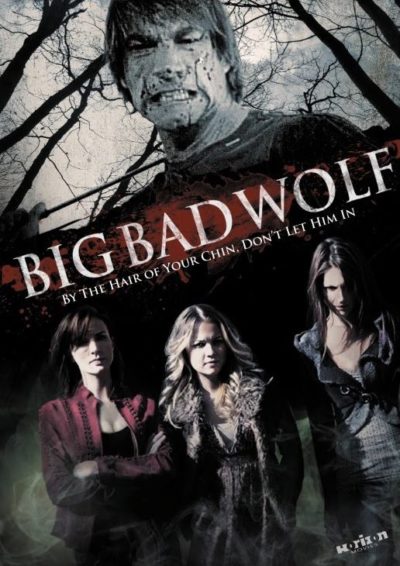 A modern-day update of The Three Little Pigs, this works better than you might think. The wolf is “Huff” (O’Connell), a really warped individual whose interests appear to be religion, drugs and molesting his three step-daughters. Bit of an odd combination. Their mother, Lorelei (Elina Madison), is a largely absent stripper, who seems not to care too much that her boyfriend’s attention have now turned from her oldest daughter, Brixi (Bollinger), to the youngest one, Shay (Stefanko). But when Huff prepares his big score, using cash “borrowed” from his mistress’s ex-husband (or something like that – the relationships here are so complicated, you need a chart to keep track), Lorelei sees her opportunity, sending the three girls away with the money. That leaves Huff in serious trouble, and he’s soon after them, intent on retrieving the cash. Huff is indeed going to puff… on his asthma inhaler.
 Disease has wiped out most of civilization, and left those who have survived, scrambling to cope. Better equipped than most are sisters Jenny (Rothe), Sarah (Winters) and silent little Danika (Jones). For their father was a doomsday prepper, who created a “bug out” cabin in the desert, stocked with all the necessities to survive. However, neither he nor their mother are around any longer: the former died during the crisis, and the latter went out to seek help and never returned. So it’s all down to the sisters, who have been reminded about the golden rule, time and again, by their Dad: do not let anyone in, under any circumstances.