★★½
“The female movie version of Green Arrow“
SPOILER ALERT. The following discusses the plot in some depth, and includes spoilers for it. You have been warned!
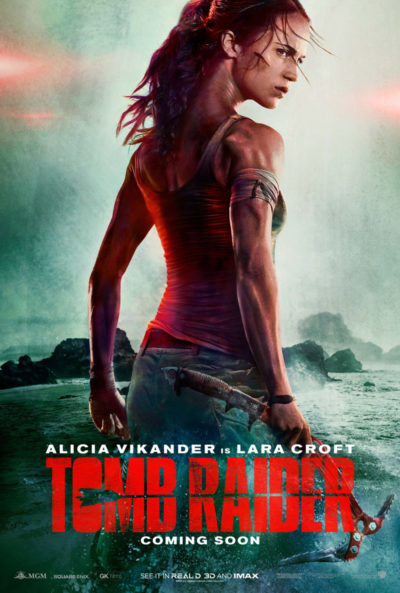 It’s not great. It’s also not terrible. It’s just… average. This doesn’t break the so-called “video-game adaptation curse”, but nor is it a movie that you will passionately regret having seen – unless you paid too much to see it. Though I didn’t see it in 3D, it’s rather two-dimensional, and doesn’t feel like something which requires to be seen in 3D. It’s a rental – or even wait until it is shown for free on TV – more than a movie worth going to the cinema to see. I don’t regret having watched it, but nor would I regret not having watched it.
The above may all seem contradictory, but this belongs in the category of movies that are so mediocre, it’s very difficult to find strong arguments either for or against. It’s simply “there”. Comparable, maybe, to Tarzan or King Arthur. But then, I’d rate it higher than Wonder Woman, which I found more lackluster than this. So who knows, maybe you will love this, and wonder what I’m talking about?
For call me prejudiced, but I still prefer Angelina Jolie in the role. When I saw the original movie in 2001, I liked it very much, and over the years have found myself watching the Jolie films time and again. It may have something to do with the fact that these films are shown about every other month on TV! ;-) But there’s no denying, Jolie left her mark on the character and that Lara Croft was her star-making and maybe even image-shaping role. Vikander, who is being praised in so many online reviews… Well, I do admit that she is really trying, has some charm and was given the chance to display some humor, usually in her responses to serious questions – it seemed like her “defense” against answering those.
Heck, maybe she is even a better actress, though honestly, I think she lacks charisma. I don’t hold it against her that Vikander had hardly anything in common with “my” version of Alice in The Seventh Son – the movie adaptation of Joseph Delaney’s Wardstone Chronicles. But it can be argued that she hardly resembles how most people perceive Lara Croft in general. This is usually then countered by the gamers’ statement that “this Lara Croft is based on the rebooted games”, etc. etc. This one is more “realistic”, “human”, blah-blah-blah. But you know what? I don’t care. I don’t f___g care!
I loved larger-than-life Lara with her four big guns, her cool attitude, humor and cargo pants. I must admit I never played the new games, which were said to be quite grisly, bloody and violent. Honestly, the new Lara, doesn’t knock my socks off at all! And going by both the first reactions (and financial numbers), my feeling is, I’m not the only one seeing things this way. Perhaps the problem started with the new game’s conception (by Square Enix instead of the old Core Design games), to make Lara less a “female combination of James Bond and Indiana Jones” and more some kind of Lisbeth Salander/trauma survivor. Not an approach that meets my approval.
This is not Alicia Vikander’s fault, of course. She plays what she was hired for and does fine in that respect. Doing MMA-training (reminding me of Million Dollar Baby) or biking in London, she probably wins some audience members over, only to be let down by the script, the moment she boards the ship under the guidance of Lu Ren (Wu). He’s tasked with leading her to the last known destination of her father (West): a small island, full of evil white men forcing poor Asian men to do their hard work and open the tomb of – according to legend – an evil empress named Himiko.
Honestly, the MacGuffin of these movies has always been the least interesting aspect for me – that’s why it is a MacGuffin, Hitchcock would say. And it also doesn’t mean much here at all.
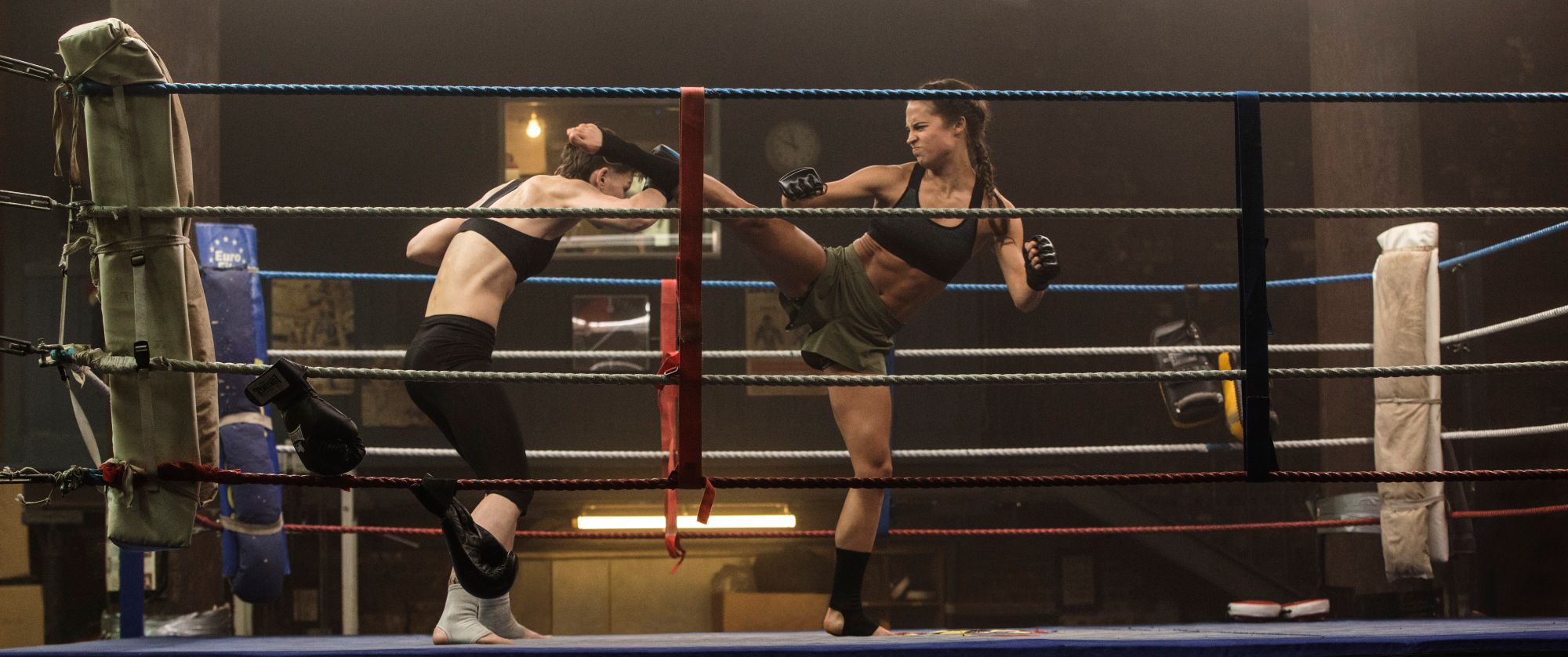 But let me step back. The beginning of the movie, the first 20-25 minutes, seemed fine. They built up an interesting character, a Lara who didn’t allow others to see her weakness, and could be saucy, funny, stubborn and nevertheless kind of likable. But after all these London scenes (which include in minor supporting roles, Kristin Scott Thomas and Derek Jacobi – how did he get into the movie?), the film… hmm… How can I say it..? Became less interesting – at this point, I still want to withhold the evil word “boring”. I liked the interaction with Lu, and the big ship-wreck on the coast, which I know is taken directly from the game. But after Lara arrived on the island, the film for the majority of its subsequent running-time, dropped dead for me.
I don’t know how this happened, and don’t really feel inclined to start a detailed analysis here. It may have had to do something with Vikander insisting that main screenwriter Geneva Robertson-Dworet made this a “serious” heroine story. Though it can be said that the new games, have a strictly serious (and even brutal) tone, too. Originally, the script was supposed to be much more jokey and contain quite a bit of humor. By cutting this element out, the movie may actually have bit into its own flesh.
I mean, we all know these old tropes, mainly established by the Indiana Jones movies in the 1980s. Heck, I still remember having seen Part III, to which this movie is surprisingly often compared, in the cinema. So, I think, this genre had its day a long time ago. But it may have been the hokiness and the fact that the stories were so overdone which resulted in these movies being so funny and enjoyable, like Roger Moore’s James Bond movies. The Jolie movies never took themselves completely seriously. Yes, they may have been campy but they were high-class camp. Going all in, as Jolie did with her over-the-top performance, made them entertaining romps of the genre.
This Tomb Raider doesn’t want that. TR 2018 wants to be taken seriously. It wants us to care for a whiny tween-brat who doesn’t sign the inheritance papers after her father has been lost for years, and suddenly decides (ignoring his strict wishes) to go looking for him. This Lara sometimes does things which seem downright dumb to me. But let’s give her the benefit of the doubt, allowing that she is a beginner – though Vikander is already older than Jolie, when she starred in her first Tomb Raider movie!
So, she lands on this island of evil villain Matthias Vogel (Goggins). To my amusement, even in the German version, they pronounce his name how an American/British person would (for those who care, the right pronunciation in German would be Ma-tee-ahhs Foh-gehl). Despite fine acting on Goggins’ part, there’s nothing special about the role. This bad guy has no attitude, nor any real motivation. If they had given him personal reason – say, hoping to resurrect a dead wife with the powers of the dead empress – he could have been a potentially interesting, maybe even tragic, character. I’m speculating here, but my feeling is that in writing the script something may have fallen off the table. It would be nice to discover something – well, anything – more about this character. in deleted scenes on a future DVD.
 As it stands, the character is like Orson Krennic in Rogue One: doing his job (for almost a decade?), wanting to leave this damn island and return to his daughters. This is disappointing. Heck, the Jolie-villains at least wanted to be masters of time and space, or annihilate the majority of humankind with a toxin so they could govern over the rest. That is what I call a villain, and may be one of the big shortcomings of this movie. Vogel and his minions are also trying to find Himiko’s grave… because that’s what his employer on the other end of the phone tells him to do. Our Lara escapes into the jungle to execute some urgently needed action-scenes that I’m quite sure are taken directly from the computer game. I give Roar Utaug this: they look good. But somehow they didn’t reach me emotionally, because at no time had I built up any identification with the heroine.
One of the most praised things about the game was the heroine being faced with disgusting creeps, absolutely merciless, killing and abusing people, so that young-Lara could then grab her bow and arrow and play Katniss with them. Here, Lara does some kind of mud-wrestling with a man who is larger and bigger than her, before drowning him in a puddle and screaming while fighting him. I guess the female audience is supposed to cheer her for doing so, relieved that the evil attacker got what he deserved. But, honestly, the scene left me as unenthusiastic as when a young Sean Connery stabbed one of Dr. No’s guards in his kidneys in the swamp. Really, I enjoyed it more when Angelina killed off a dozen well-trained mercenaries, who rudely interrupted her bungee-jumping exercises inside Croft Manor.
Lara than finds her father (West) who is wearing an Alan Quatermain/Sean Connery memorial-outfit – maybe not accidentally? That was the emotional climax for me in the movie, and I got a bit moist-eyed, seeing West in his cave, repeatedly mumbling opposite hurt Lara, “It’s not real, if you don’t pay attention, it will vanish again!” and Vikander’s reactions: that’s acting. The fact that they were able to touch me emotionally here – but only here! – proves they are both good actors, when the script gives them something to work with. I liked him sitting on the beach and her cutting his beard, though have to say I was equally touched in the 2001 movie when Lara met her (dead) father, played by Jolie’s real father, Jon Voight.
I still wonder why Matthias has previously claimed to Lara, that he killed her father. What was the intention behind that? And why did he think it was good she was there? He hardly could expect this young girl would have her father’s expertise. There are some real big plot-holes in the film; the best thing is maybe not to think too much about them, otherwise the whole story might fall apart. Just as unbelievable for me, was that this young woman, who last night had a hard time killing, suddenly takes up her bow and arrow and starts shooting men in the camp right and left. But then, this was one of the big selling points of the 2013 game – albeit taken right from The Hunger Games, n’est-ce pas? ;-)
Then it goes directly into the grave with Lara, Daddy, Matthias and some other unfortunate red-shirts replaying the best parts of Indiana Jones and the Last Crusade – only with less originality, suspense and emotional involvement. Honestly, I found this the least interesting part of the movie. I always wonder when reading some great praise for the reboot, if those guys/gals ever saw the original Indys, Tomb Raider 2001 – or at least that Tarzan movie from the late 90s/early 2000s. Because otherwise, I can’t see why anyone at all should think this so great. Really, I don’t understand it; these scenes were yawn-worthy, IMHO. I don’t know the game, but hope it was more exciting there, when we arrive at Himiko’s grave –
We know how a big final climax should look from the Indy-movies, don’t we? Well, there’s probably something to say about going against expectations… But, you know what? There’s the Rule of Cool, cited by Kim Possible director Steve Loter, which says that you can do something because it’s cool, even though it may not be very logical. The original movies understood that. No matter how cheesy or even stupid you may have found them, there’s no denying the endings of both were cool and visually stimulating climaxes.
This, on the other hand… Himiko has no super-powers: Matthias even shows us a mechanism that lets her dead body sit up. She was the highly infectious “patient zero” for some kind of super-deadly virus, and the movie shows its effect on some of the redshirts. Probably, these scenes are meant to disturb but appear so toned down, we are not the slightest shocked. You want to surprise someone with villains who meet a terrible fate? Watch Raiders of the Lost Ark again. Heck, I’d say, all three of the eighties Indys directed by Spielberg. Roar Uthaug… not so much. I personally would have had Himiko call out a horde of zombies, to flood the island and have the living fight the undead army. And I don’t even like zombies! It would have been a (film-)logical, visually fitting climax; what we get here is far less, and terribly unsatisfying.
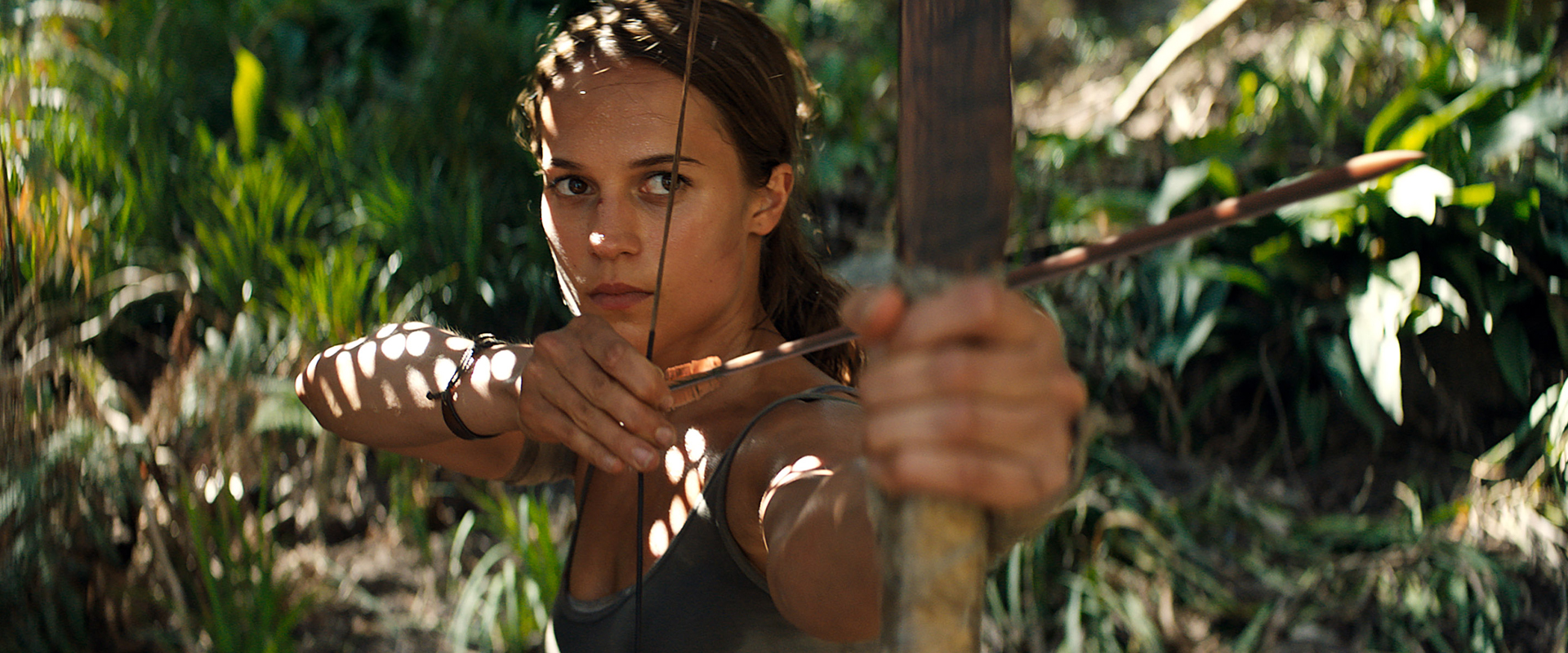 That’s something I feel about so many scenes of the movie. The foundations for something (excitement, humor, suspense) are there – but everything is then either seen before in other movies, or diluted to the point it didn’t trigger any emotional response from me. It’s frustrating. The ingredients for a great meal are there and the cook knows his job. But when it’s all put together in the pot and cooked, the dish at the end is very, very average. It’s not tasteless, you definitely can eat it, but it’s nothing special; you have eaten it before and it tasted better at thise other restaurants. In cinematic terms that’s Tomb Raider 2018 for you.
Daddy Croft ends up sacrificing himself and it doesn’t even touch me a one-hundredth of when Sean Connery survived at the end of Indy III. The villain dies a typical Disney death and I couldn’t care less. I knew nothing about him and he was less charismatic (sorry, Mr. Goggins) than the two villains of the Jolie movies. Maybe Paramount should have kept the film rights for Tomb Raider, instead of letting them fall into the hands of Warner/MGM? But the idea of replacing Jolie had been circulating for some time, when she was becoming a little bit difficult too deal with and the second movie didn’t make as much money as the first. And neither will this, even ignoring 17 years of inflation.
The film ends with Lara back in London, finally signing her inheritance papers, in the presence of Jacobi and Scott Thomas, only to find out that “Trinity”, the terrible organization that Matthias worked for, is tied to Croft Holdings. And for anyone who has not been in cinemas for the last 15 years, nor has seen the first Largo Winch movie, the film makes it clear that the voice on Matthias’s telephone belongs to Scott Thomas. Honestly, it should already be well-known that you do not let this woman occupy an executive position in your multinational conglomerate!
Obviously, this is an attempt to launch a new franchise of Lara fighting the evil minions of Trinity, but it remains to be seen if the returns qualify for a sequel. I think they may have been a bit premature and their efforts in vain. It tries to replace the memory of the old Angelina Jolie-led movies by being an adaptation of the successful computer game of 2013, but fails in this respect. Jolie was too iconic, too charismatic for that. My feeling is that she made Lara and Lara made her. Alicia Vikander – for all her good looks, acting talent and admitted charm – can’t hold a candle to her.
The will is there… but not the ability to do it. Yes, it’s nice to see Vikander pulling out a splinter from her stomach. But honestly, seeing Jolie punching sharks is somehow more impressive. Less is more they say, but sometimes over-the-top trumps everything else, I think! There are good actors here doing their jobs, some nice action scenes that are over too quickly, and a bunch of scenes that don’t work the way they should, because they simply don’t have the required little bit extra, that’s always needed.
Dir: Roar Uthaug
Star: Alicia Vikander, Dominic West, Walton Goggins, Daniel Wu




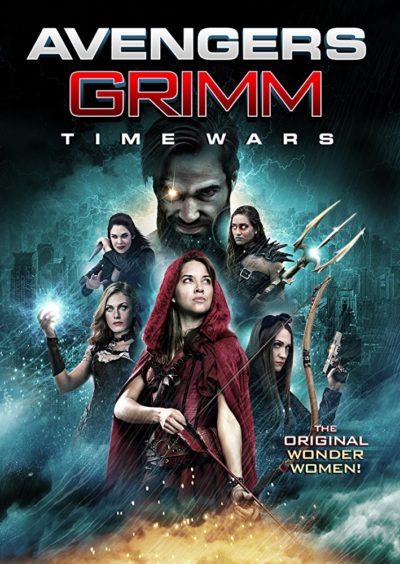 I was one of the few who didn’t mind Avengers Grimm, appreciating its poverty-row energy, while acknowledging it had little or nothing to do with the Marvel Cinematic Universe. With Avengers: Infinity War storming the global box-office, it’s not much of a surprise to find The Asylum going back to the same well. However, despite the same director, and much of the same cast, the script botches the timey-wimey aspects badly enough that the first half, in particular, becomes a slog that’ll test the audience’s endurance.
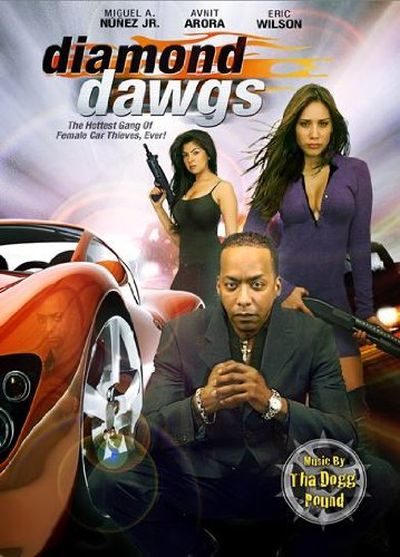 It’s hard to believe a film rated two stars exceeded expectations, but when I saw this had scored just 1.7 out of ten on the IMDb, I was braced for something much worse. I mean, cross off the friends of the cast and crew who scored it a “10”, and 72% of voters have given it the lowest mark possible. Make no mistake, this isn’t great. It’s not even good. But this is not quite as irredeemably bad as that score would imply.
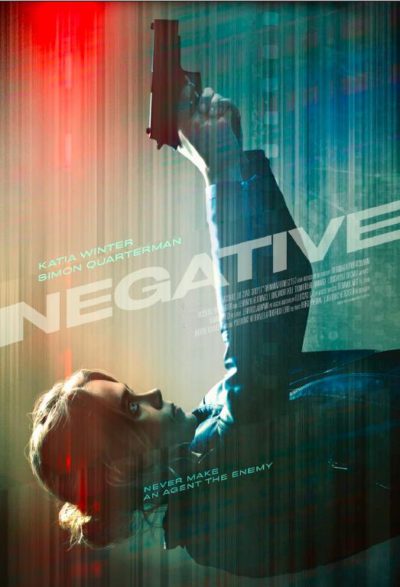 This is a very cunning title. For when you Google “Negative film review”, all you get are a lot of articles about Bright. Hohoho. [In five years time, people will probably have to Google “Bright” to understand this reference] Actually, it refers to a photographic negative, casually taken by Rodney (Roché) in the park. What he doesn’t realize at the time, is that he has accidentally captured the face of Natalie (Winter), a former MI-5 agent who is on the run. She turns up on his doorstep, demanding he turn over the photo to her, but before she can leave, the two Colombian assassins after her, also show up, and she has no choice but to take (the thoroughly confused and largely unwilling) Rodney with her. Together, they head for Phoenix and a safe house owned by Natalie’s former associate, Hollis (Quaterman), with the Colombians in pursuit.
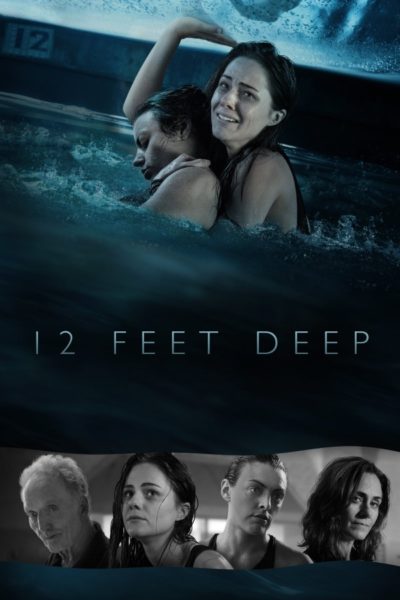 There aren’t many films which will be reviewed both here and on aquaticsintl.com, a site offering “Commercial swimming pool and waterpark industry news” [their opinion: a “woefully inaccurate portrayal of pool technology”]. But then, if you see only one film about sisters trapped underneath a swimming-pool cover this year… Yeah, it’s highly likely to be this one. Eskandari deserves some credit for taking a paper-thin and highly dubious premise and almost stretching it out to feature length. But even he eventually runs out of steam at about the hour mark, and derisive snorting will take over from there.
  As the world goes through the zombie apocalypse, Molly (Allen) and boyfriend Nick (Mondesir) are elsewhere. Specifically, driving through the desert near Las Vegas, heading towards an airfield where they are going to catch a flight to Mexico – and, hopefully, safely. After their car gets stuck in the sand, Nick is attacked by a lone zombie (Riedinger), Molly flees on foot, striking out in the hopes of getting to the airfield, and pursued by the relentless creature. For it turns out the heroine is having her period, which allows the zombie to track her – and also lends a rather different meaning to the film’s title…
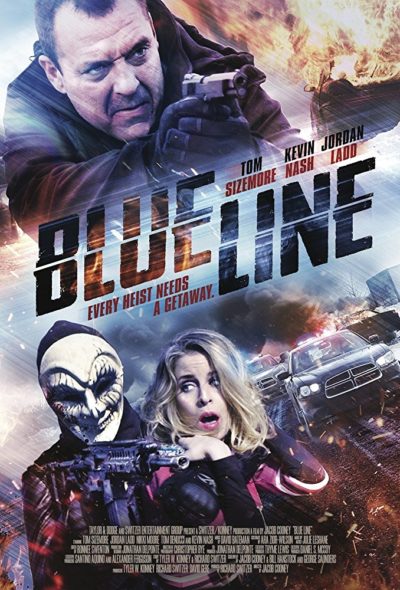 Small world. Well, small-ish. I used to work for the same online media company as one of the scriptwriters of this, though our paths there never crossed in any meaningful sense. That’s probably about as interesting a factoid i.e. “not very”, as this film. Indeed, outside of some gratuitous strip-club breasts, it feels like it could have strayed in from a slow weekend on Hallmark. Battered wife Lindsay (Ladd) teams up with longtime stripper friend Nicole (Moore), and commit a string of armed robberies around their local area in Connecticut, their identities hidden with Halloween masks and voice-changers. They’re building up towards a big score, which will involve relieving Lindsay’s abusive husband, Seth (DeNucci) of a crisp $1.8 million dollars in cash. But increasingly, sniffing around the robberies is Detective Broza (Sizemore), a city cop who has recently been transferred to the town: Nicole starts a relationship with him, ostensibly to see how the investigation is going. But is that her real motive?
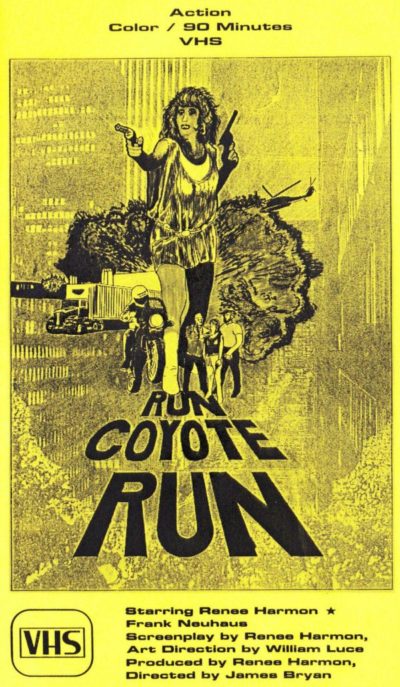 I must have masochistic tendencies. For having seen Bryan’s
  Country singer Chelsea Angel (Christensen) announces to her fanbase that’s she taking a time-out from touring and recording – not least because of her recently-discovered pregnancy. Her flight home crashes in the middle of nowhere, and she wakes up to find herself chained up in a remote cabin, along with another survivor, Evelyn (James). Except, it soon turns out that Evelyn isn’t the innocent air hostess she initially appears. She’s Chelsea’s most obsessive and dedicated fan, who was actually responsible for the plane going down. And now, she has the object of her affection – not to mention, her unborn baby – all to herself, for some quality time, in which she can address Chelsea’s new style, with which Evelyn is not happy. Meanwhile, the singer’s boyfriend, Dillon (Lauren), and the guy in charge of her fan-club, Frank (Kirkpatrick), are trying to figure out where Chelsea has gone, following the online trail Evelyn left behind.
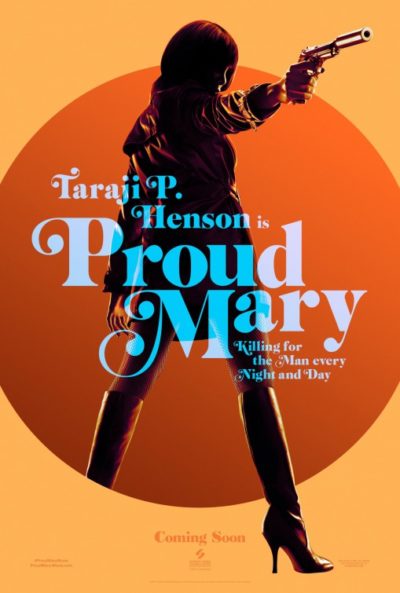 Despite the distinctly retro feel of the poster, intro and much of the music, this is very much a contemporary affair. Mary (Henson) is an enforcer working for Benny (Glover): at one point, she was in a relationship with his son, Tom (Brown), and he still wants to continue it. During one hit on a debtor, she finds the target’s young son, Danny (Winston), obliviously playing video-games in his bedroom. Struck by guilt, she leaves him alone, and keeps an eye on the kid thereafter. A year later, she rescues him from the abusive drug dealer who has “adopted” Danny, but the resulting bloodbath is a big problem. For the dealer in question worked for Benny’s biggest rival, who is not happy about the removal and demands Benny find the culprit. Mary, who was already fed up and wanting out of her career, has to decide exactly where her loyalties lie.