



★★★
“Bad decisions = poor consequences.”
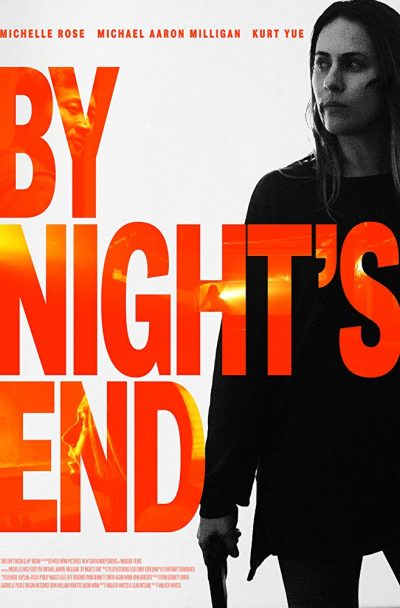 There are lessons to be learned here. In particular: should you gun down a home invader in the middle of the night… just call the cops. Even if they have offered you ten thousand dollars to let them walk away, immediately before their untimely demise… just call the cops. Of course, Heather (Rose) and Kurt (Yue) have issues, which make their decision to do otherwise understandable, if not wise. They’re teetering on the edge of financial carnage, and figure that if the intruder was willing to pay them that much, whatever he was after in their house has got to be worth a lot more. Therefore, they postpone alerting the authorities for a bit, choosing to look for the target of the search.
Have these people never seen Shallow Grave? Do they not know that when valuable property falls into your lap in shady circumstances, its real owner inevitably comes looking for it. And that’s exactly what happens here. Polite, hat-wearing villain Moody (Milligan) soon shows up to establish his property rights, and when the couple finally get round to calling the police, the poor officer who turns up simply doubles the quantity of corpses with which Heather and Kurt have to deal. There’s only one way to get through the night, and that path goes through Moody. Fortunately, there is some good news: it turns out Heather used to be in the military, and still has the skills. Bad news: she’s on shaky emotional turf, due to her PTSD, among other things.
This is on most solid turf when it’s in motion. Rose is a stunt-woman, and gets a number of opportunities to put those skills into good use. There’s one particularly good brawl through the house, where she leaves a literal dent in the wall when her body crashes into it, and it’ll make a similarly lasting impression on the viewer. The film is less successful when it’s digging for emotional depth. For example, knowing they recently lost a young child is probably enough. We don’t really need to see the husband wife and staring at one of their drawings, or clutching a toy, respectively: it’s way too obvious. Similarly, the details of precisely why Heather has PTSD are superfluous, and add little or nothing.
Indeed, they may be counter-productive, as they slow the film down, at just the point when it probably needs to be accelerating towards a final confrontation. It does get there, and proves adequately satisfying; it just feels like some opportunities were left on the table to do more. The movie does a decent job of reversing the obvious roles in the marriage, and also of making its single location work for it, rather than seeming a limitation. The film even takes place at Christmas, which could even be considered a small-scale homage to Die Hard, especially when Rose is roaming the house, trying to stay out of the reach of Moody and his men. It’s nowhere near as good, of course. Then again, very few movies are – so no blame should be attached for that!
Dir: Walker Whited
Star: Michelle Rose, Kurt Yue, Michael Aaron Milligan, Carlos Aviles
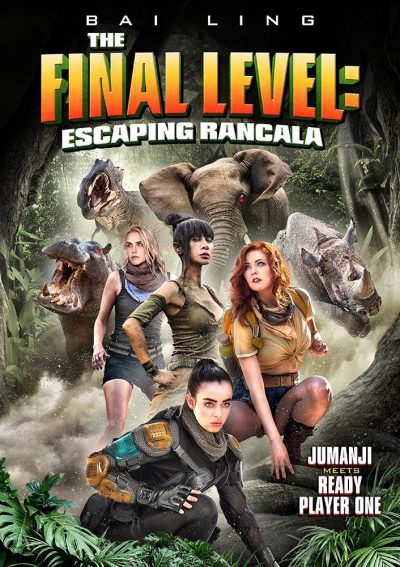 Make no mistake, this is a cheap and unashamed knockoff of Jumanji, made by the company who specializes in these mockbusters, The Asylum. It’s not their first such venture into the action heroine genre. If you remember my evisceration of
  ★★★
★★★ And make no mistake: I love the animated version: to me, it’s the best of the “new wave” of Disney features which began with Beauty and the Beast. It has a huge emotional range, perhaps more than any other Disney film outside Pixar, and can switch on a dime, going from cheerful song to grim destruction without jarring. I will also say, this is the first I’ve seen in Disney’s live-action adaptations of their animated catalog. All the others seemed entirely redundant, but this one seemed to offer scope for a different take on the subject. It does deliver on this expectation, but I can’t help feeling that, overall, more was lost here than gained.
 This is certainly something of a novelty and/or a gimmick. But it’s none the less reasonably effective for it. Templeton – who is a woman, despite her first name, given to her after the character of Christopher Robin in the Winnie The Pooh books – suffered from polio as a young child. This left her with a badly damaged right leg; despite this, she pursued an acting career, and became a regular on soap The Young and the Restless for eight years. While I’ve seen a few disabled action heroes – Daredevil was blind – as far as disabled action heroines go, it’s basically her and Imperator Furiosa from Mad Max. And Charlize Theron wasn’t genuinely short an arm, so advantage Templeten. Though, sadly, she appears to have passed away in 2011.
 It has been twenty years since
  I can’t believe there have been seven X-Men movies now. I think the last I saw was the second, which came out in 2003. Since then, there seems to have been a lot of mutants under the bridge, so to speak – and, it appears, some jiggery-pokery with timelines. That’s the only way to explain the death early on in this origin story, of someone I’m
  It has been a rough year for action heroines at the cinema. Actually, it has been a rough year for everyone everywhere, thanks to COVID-19. But for the purposes of this site, we have been sadly lacking the kind of tentpole releases which we usually write about over the summer. Wonder Woman 1984, for example, was to have come out in June. But with all venues bar the few remaining drive-ins closed, that was moved first to August, then October [and I don’t know about you, but I’m still not comfortable with the concept of cinema going]. Disney’s live-action version of Mulan opted to bypass theatres all together, and will instead be released on their streaming service.
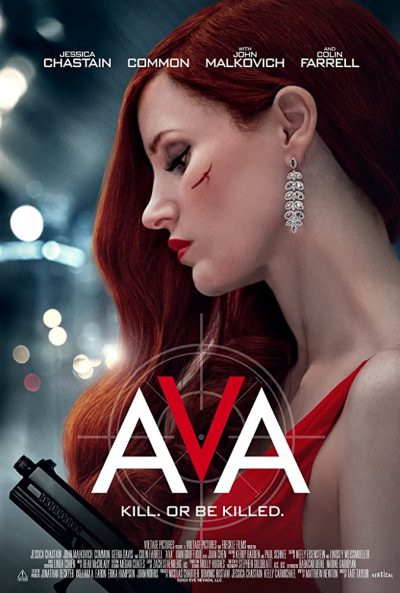 The above paragraph is lean, mean and would have made for a perfectly decent movie. However, the script apparently decides it’s not enough – perhaps Chastain wanted something into which she could sink her dramatic teeth. For we get a whole slew of subplots and conflicts thrown on top. These include, but are not limited, to the following. Ava is a recovering alcoholic. Ava is estranged from her sister (Weixler). Ava had a previous relationship with her sister’s boyfriend, and there are still feelings there. He has a gambling problem. Ava caught her father having an affair, which led to her leaving home. It also caused Ava to break ties with her mother, played by Geena Davis.
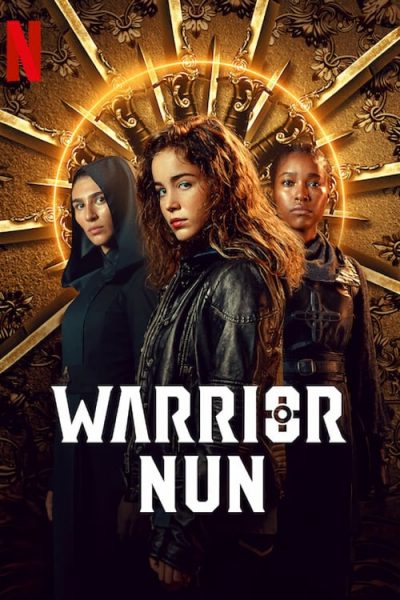 There’s probably a decent movie in here. An interesting premise, occupying the nexus where religion and science cross, and some very effective hand-to-hand action sequences, would potentially have made for a decent 90 minutes of fun. The problem is, this actually runs for 10 x forty-minute episodes, and the result is stuffed so full of padding, that it could be used as a sofa. The nuns of the title are members of the Order of the Cruciform Sword, a group which has been fighting demonic entities for centuries. Chief among them is the bearer of the Halo, a divine relic which bestows its owner with great powers, including rapid healing and the ability to phase through solid objects.
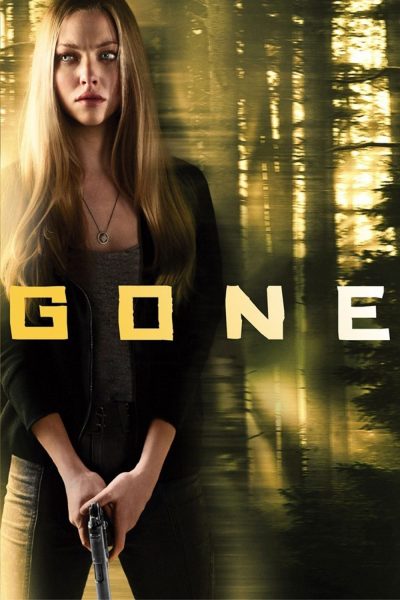 The life of Jill Conway (Seyfried) is slowly returning to somewhat normal, following her abduction by a serial killer in the Pacific Northwest. She was held in a forest pit, and barely managed to escape with her life. However, the lack of physical evidence and a history of mental health problems, helped cause the authorities not to believe her story. When Jill’s sister Molly vanishes, she’s certain the same killer is responsible, and when the police again fail to take her seriously, begins investigating herself. But when the cops find out this former mental patient is packing heat, Jill becomes a fugitive herself.
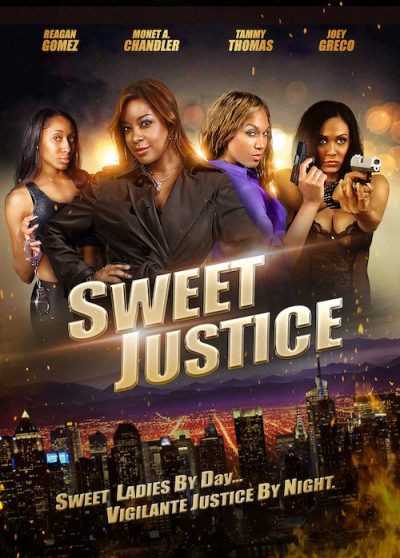 Four women run a charitable agency in Texas, helping single mothers track down and obtain child support payments from deadbeat dads. However, they don’t limit themselves to the simple serving of legal papers. The women adopt a more… hands-on approach, shall we say, first luring their targets in with the promise of sex, then threatening them at gunpoint, to make sure they pay up. For obvious reasons, the cops soon take interest in this string of unusual armed robberies. Meanwhile, the city’s white mayor, is dealing with a domestic crisis of her own, thanks to her daughter having had a child by (gasp!) a black man.