




Originally screened: September 1996
 The defining moment of Xena’s sophomore season didn’t take place in any episode. In fact, it didn’t even take place in New Zealand, but thousands of miles away, During a rehearsal for an appearance on The Tonight show with Jay Leno, Lucy Lawless was thrown off a horse after it lost its footing, and broke her pelvis. It’s interesting to compare the reaction of the producers to what the Tapert/Raimi team did when the star of Spartacus, Andy Whitfield, was similarly a victim of severe misfortune, more than a decade later. There, they put the show entirely on hold and opted instead to film a prequel without him.
Now, it’s not quite identical: Whitfield had cancer, which unfortunately proved fatal, and shooting had not commenced on his second series. Still, one wonders if, in hindsight, it might have been better – for the viewer at least – had the show gone on hiatus, rather than trying to (literally) limp along, with an action star incapable of doing any action for most of its run. Oh, you certainly have to admire the creative way in which everyone worked around it: rewriting an episode here, inserting a body swap there. But having Hudson Leick pretending to be Xena trapped in Callisto’s body, is like having Sir Anthony Hopkins play Clarice Sterling inside Hannibal Lecter. While I’m a huge Callisto mark, even I have to say, it completely negates the whole point.
With Lawless’s limitations, the show was largely forced back on to the supporting characters post-fall, and that’s a bit of a mixed bag. Leick was better at being bad than being good, and Bruce Campbell was reliable as ever. But both Renee O’Connor and Ted Raimi were overexposed, and although they are fine in light comedy, they are just not capable of carrying a show from a dramatic point of view. Still, there were some solid episodes, my personal favorite being a successor to Warrior… Princess, giving Lawless three characters of disparate tone to juggle, and she does so magnificently. Despite general loathing in the fan community, I also enjoyed the Christmas episode, A Solstice Carol, for its loopy inventiveness. I mean… hula-hooping?
There’s no doubt that the subtext between Xena and Gabrielle was more explicitly brought out in this series, with several sequences in various episodes that are clearly there purely to tease the fans. However, by the end of the seasons, there seems to have been a certain feeling, among some creators at least, that this had run its course. For instance, writer Chris Manheim said, “We kind of backpedaled a lot on all that [subtext]. I don’t know whether it’s getting read in no matter what we write. But I think we’ve said “Ah, we’ve had our run at that,” and just concentrate on other aspects of their relationship. Whatever people read into it they do… You can only do that so much before it gets to be old hat and kind of tired.”
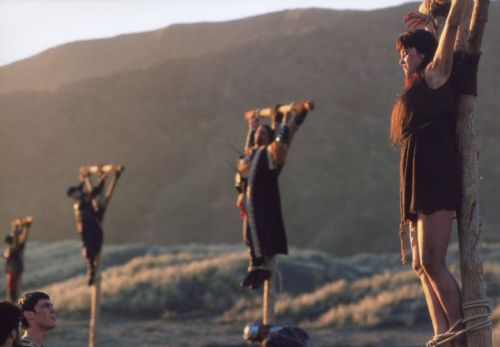
 In terms of style and approach, the show covers even more ground here than the first time, from absolutely froth to grim darkness. Xena even gets crucified by Julius Caesar in one episode [confusingly, the actor responsible also crops up later, playing Cupid, complete with fluffy wings…]. I’m sure I’m not the only one who found themselves whistling Always Look on the Bright Side of Life, during the scene shown above right. Another unwitting Python reference is the wretched Here She Comss, Miss Amphipolis, a dreadful tale of drag-queen empowerment, featuring perhaps the least convincing female impersonator since John Cleese put on a dress – as on the left, watch that Adam’s apple bob….
Having Xena wander round a beauty pageant, defusing tensions between both competitors and organizers, seems to represent both the most desperate and transparent effort by the makers to save her pelvis, and the nadir of the series thus far. [Though producer Steven Sears said that episode was unaffected, it’s hard to believe such a woeful installment was as originally intended, and Manheim said the story “came about partly because…Lucy couldn’t fight much.”] While the underlying cause was unfortunate and certainly outside the makers’ control, their reaction seemed more concerned with contractual obligation than show quality, and it’s hard to deny the resulting, significant drop-off in standards which can be seen post-accident in this series.
Season 2: Top 5 episodes
|
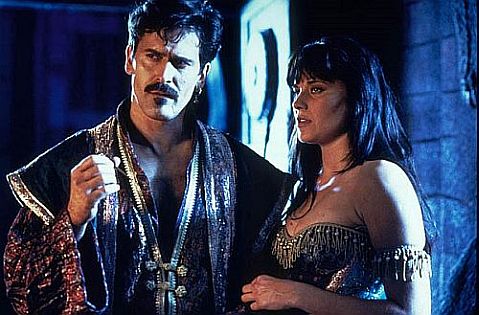 It’s assumed viewers are at least somewhat familiar with Xena’s background, as she is first seen burying her armour in an effort to bury her past. Of course, this is about as successful as it usually is in fiction, and it’s not long before she’s saving villagers, including Gabrielle, from slavery. That includes an aerial battle atop platforms, which is the first sign of the show’s strong influence from Hong Kong action films; it was using wirework, in a way that predated its popular arrival in Hollywood. Similarly, the stunning New Zealand locations foreshadow Lord of the Rings, to the extent that I kept expecting to see hobbits gamboling along in Xena’s wake.
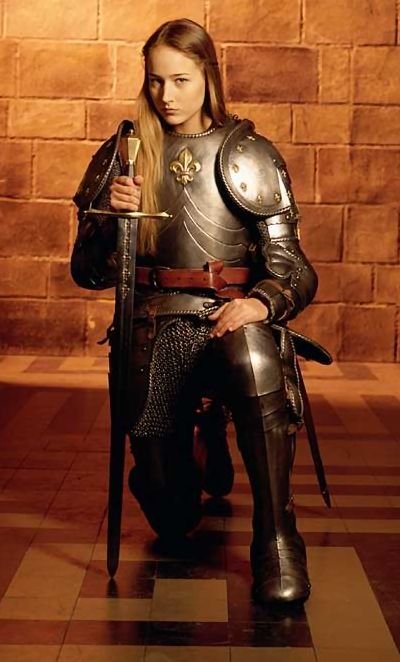
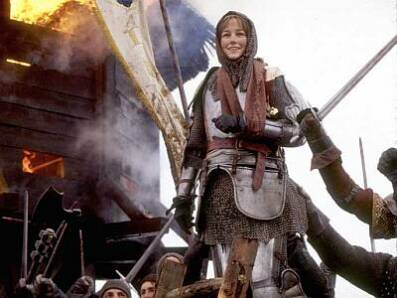 However, the main difference between this and The Messenger is that Joan of Arc is convincing. Perhaps with the advantage of having extra time (the DVD of the miniseries runs 189 minutes), they make the effort to show her interacting with other characters, and Sobieski’s calm, complete assurance is a striking contrast to Jovovich. The viewer can see why people would believe her, and it naturally follows they will too – Sobieski’s Emmy nomination was entirely well-deserved. Despite playing fast and loose with the facts (another example: Joan’s brother was not killed in battle, but lived to see her trial verdict overturned), this strong central performance holds the film together and, with the aid of the other fine actors, makes it eminently watchable. It may not be historically accurate, but it does a fine job of explaining why her myth is still honoured in the third millennium, without coming down in one camp or the other regarding the source of her visions. There are few TV miniseries worth watching, and fewer still worth owning, but this one comes highly recommended.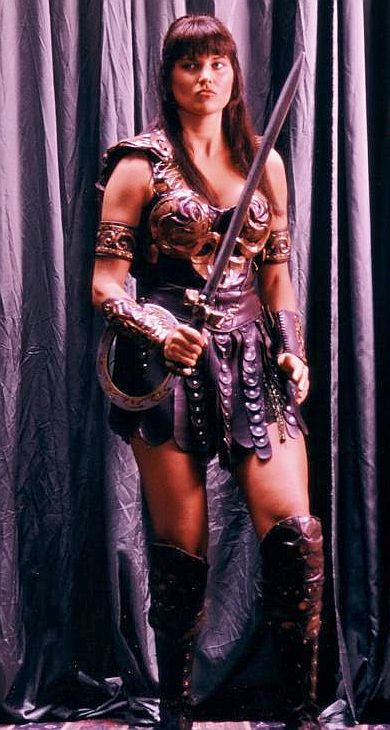
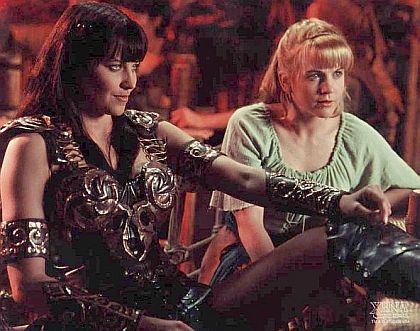 There was enormous, often ferocious debate among fandom over the nature of Xena and Gabrielle’s relationship, some asserting they were a lesbian couple. While both showed plenty of evidence of heterosexuality, there was a lot of content open to interpretation – much of it absolutely deliberate, and known as “subtext” in Xena fandom. I never found it convincing. My issue with it was not one of sexuality, simply compatibility: Xena and Gabrielle were absolute opposites, in background, upbringing, personality and approach. They just didn’t “fit” each other, from what I could see, and there was no chemistry visible. Xena and Hercules: I could see that. Xena and the Queen of the Amazons: no problem there either. But Xena and Gabrielle? Sorry. Not buying this. It also played into the stereotype that any strong woman
  I used to be a Xena fan; for the first couple of series, I was a die-hard, never missed an episode, bought the merchandise, went to the gatherings, etc. I loved (with one exception) the supporting cast – Joxer, Ares, Autolycus – and still reckon Callisto remains one of the great TV villainesses of all time.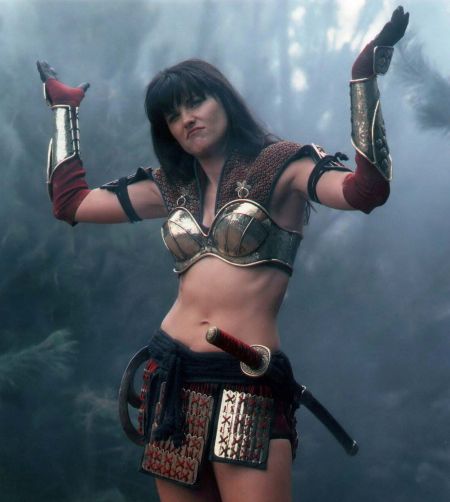
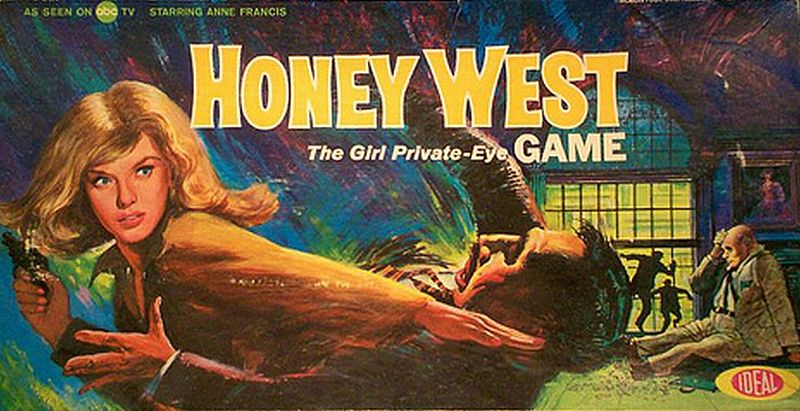 ★★★★
★★★★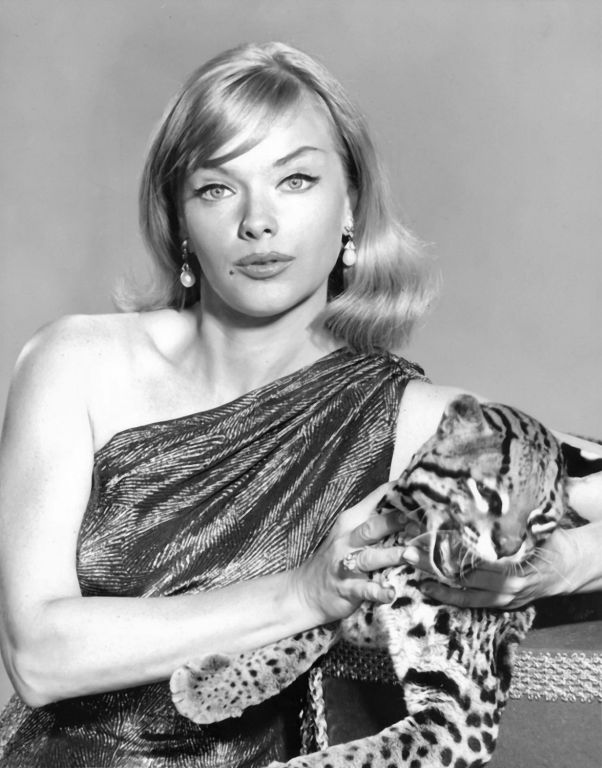 Naturally, this being the mid-sixties, the racier elements of the pulp novels had to be toned down, but the presence of Forbidden Planet star Anne Francis added its own share of potential, especially to boys of the appropriate age, which
 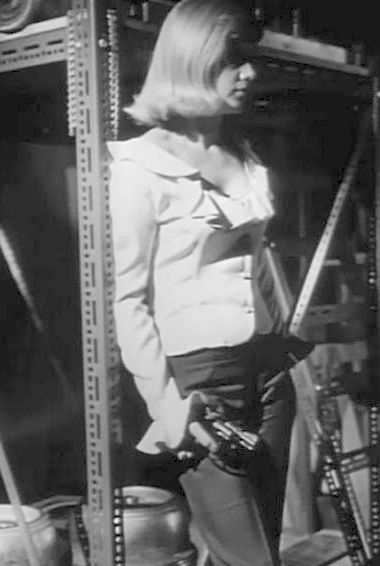 We also appreciated the parade of supporting actors, which include a significant number of familiar names, especially if you watch other shows from the era. Other names should be recognized regardless, including Kevin McCarthy, Michael J. Pollard, Richard Kiel, Joe Don Baker and Dick Clark. The music, by Joseph Mullendore, is an appropriate blast from the past, resulting in much snapping of fingers and shaking of shoulders from the GWG couch by myself and Chris. Indeed, Chris even came up with her own set of lyrics for the theme-tune, which you can find in the sidebar; we were singing lustily along with the opening credits, to the utter bemusement of our son. [The middle section is a bit tricky, and should probably only be attempted by trained professionals. We ended up going, “Raindrops on roses, and whiskers on kittens…” much of the time!]
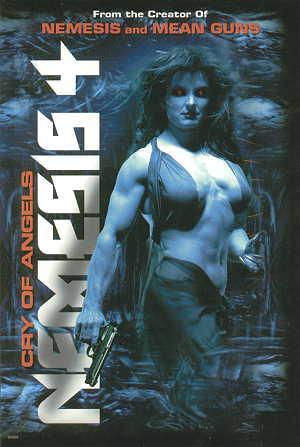 Though the lead actress, body-builder Sue Price, looks nothing like the cover pic (right), credit is due for choosing someone who defies conventional standards of female beauty. However, take all the points away, and then some, for pretending she does; having her spend half the film naked is something both Chris and I could very easily have lived without. She is, frankly, scary. That’s a shame, as while the budget here was obviously tiny, it’s put (mostly) to good use, with an interesting script.