★★★
“For Flux’s sake…”
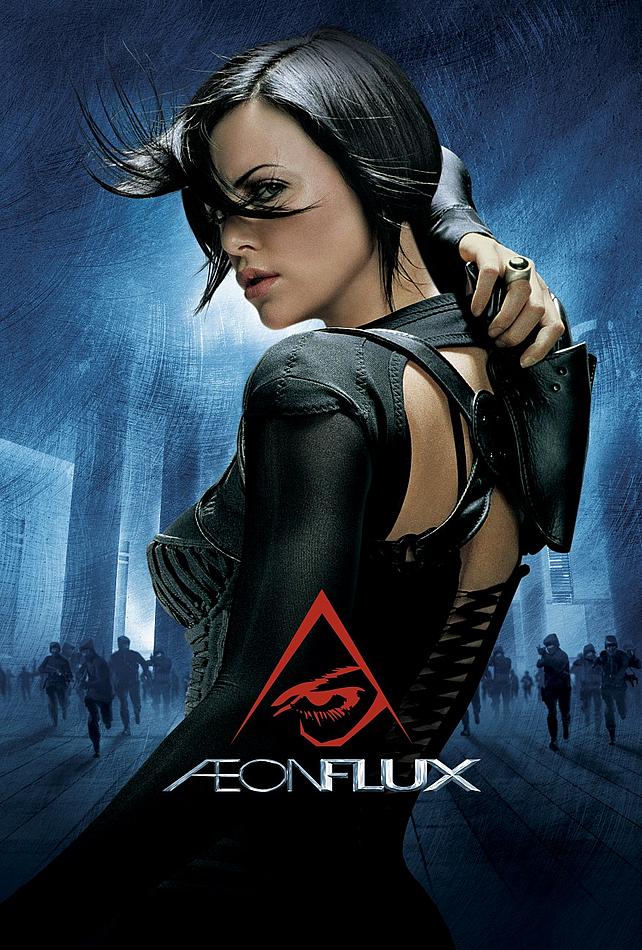 It is too early to start speculating about a girlswithguns.org curse? I mean, we’ve only ever put two banners for movies on our home-page: the first was Catwoman which ended up getting Razzie nominations across the board, and now we have Æon Flux, a film deemed so bad by its studio, they decided not to show it to critics. And given some of the other dreck put out by Paramount this year, with a full promotional push…the results were probably inevitable.
For, y’see, many “proper” critics do not like being deprived of their free screenings with reserved seating, and being made to pay $9 to see the movies with (ugh!) a proper audience. I strongly suspect a significant number phoned in their review without bothering to see see – or, at least, pay attention to – the film, under oh-so-“witty” titles like “Flux Sux”. If the studio basically tells you a movie blows, why argue? [It takes phenomenal guts to go against the tide, but Flux did get some good reviews]
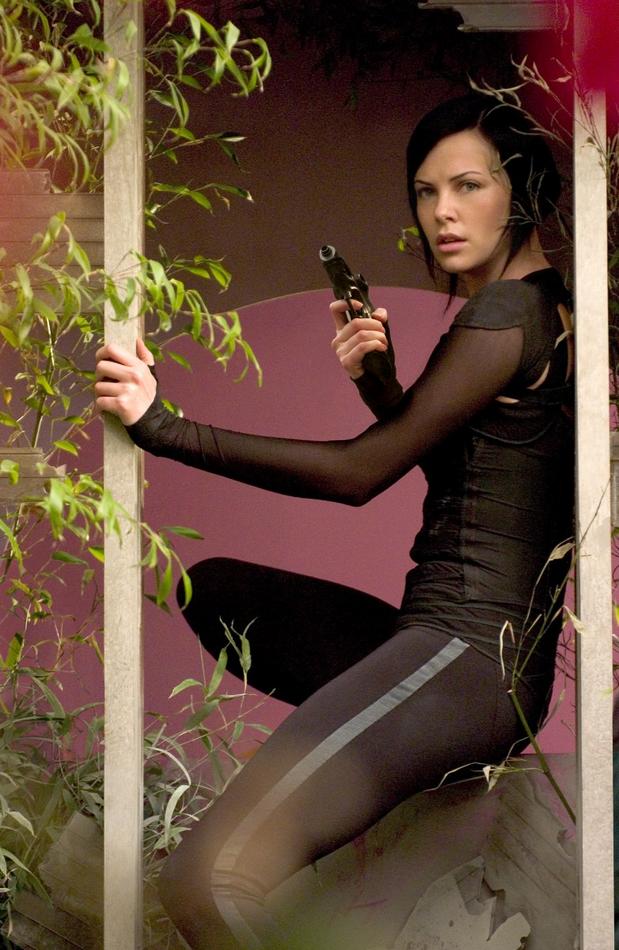
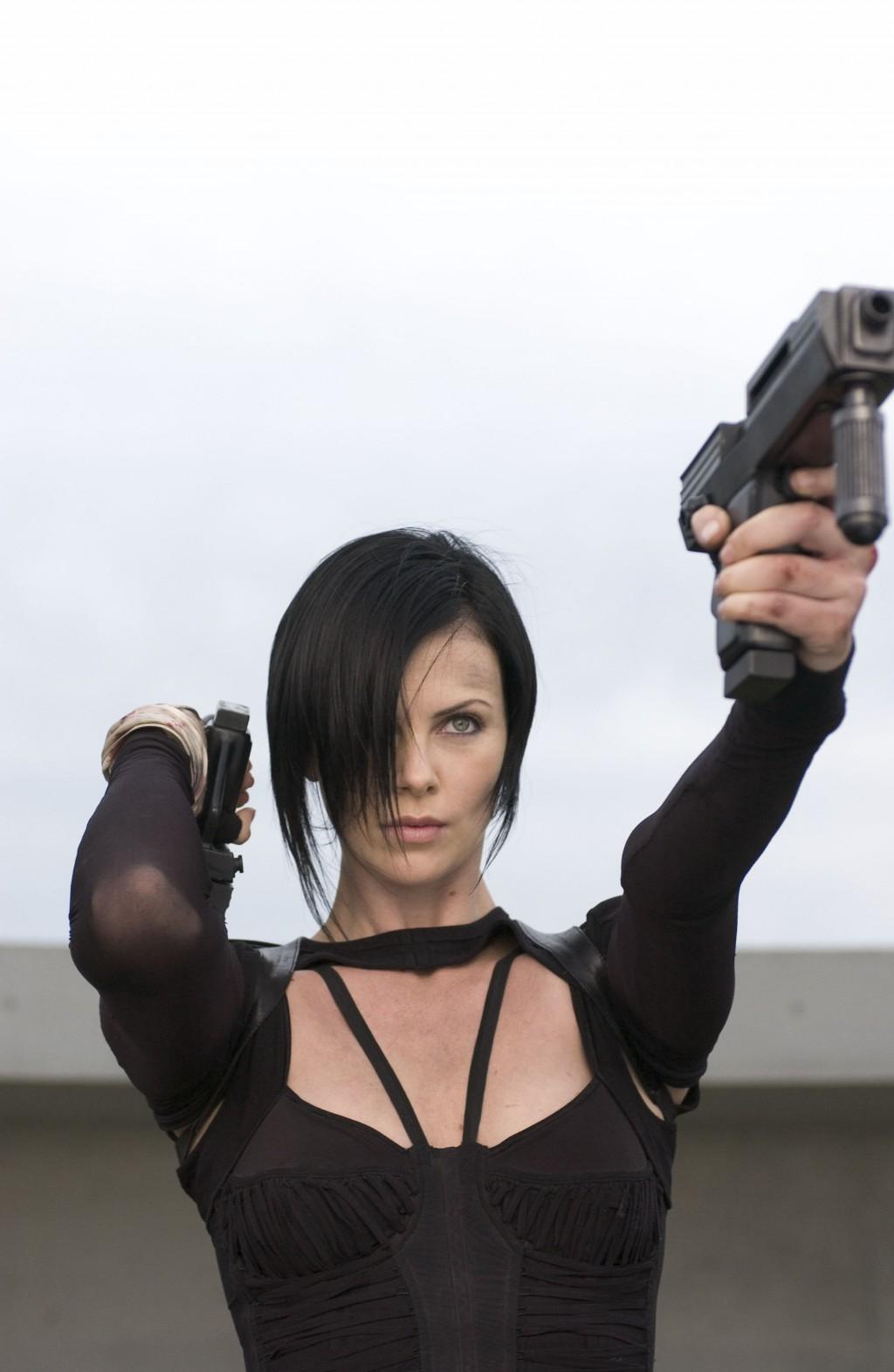
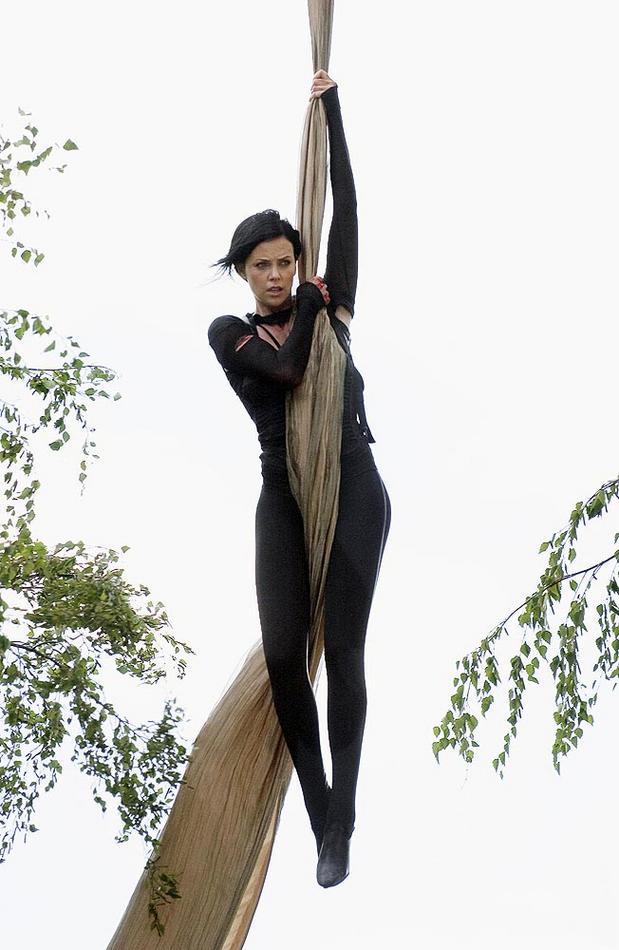
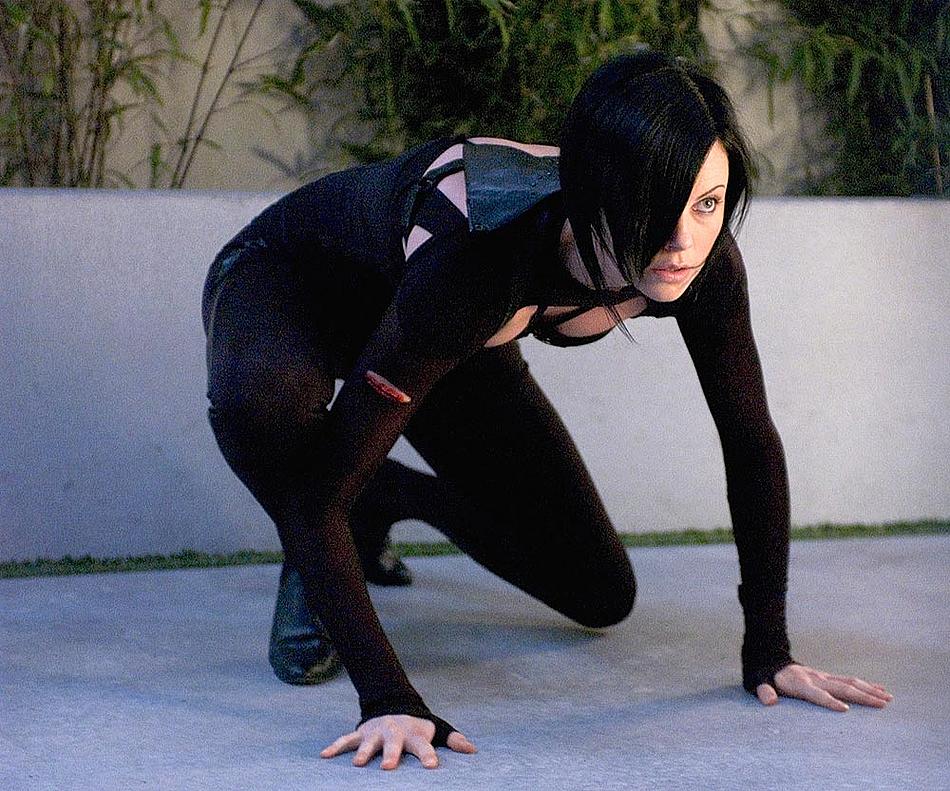
Truth is, of course, it’s not as bad as they’d have you imagine. Not brilliant, sure, but worse films come out, almost any weekend. I’m always happy to see a nicely-detailed take on the shape of things to come, and Flux certainly delivers there, with a Brave New World-like utopia, where everyone is happy…at least on the surface. Of course, if you’re familiar with the excellent Equilibrium, you’ve seen this kind of thing before – but say what you like about the Nazis, they had some great architects, and the same is true here. Particular kudos also to costume designer Beatrix Aruna Pasztor, who deserves an Oscar nomination for her efforts, which have a sleek, futuristic style to them that’s undeniably impressive.
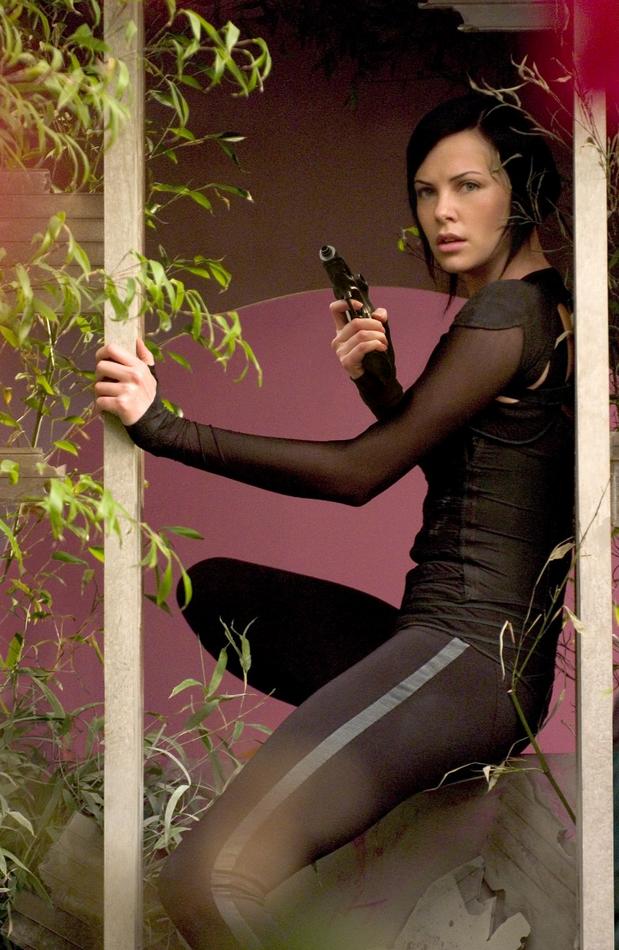
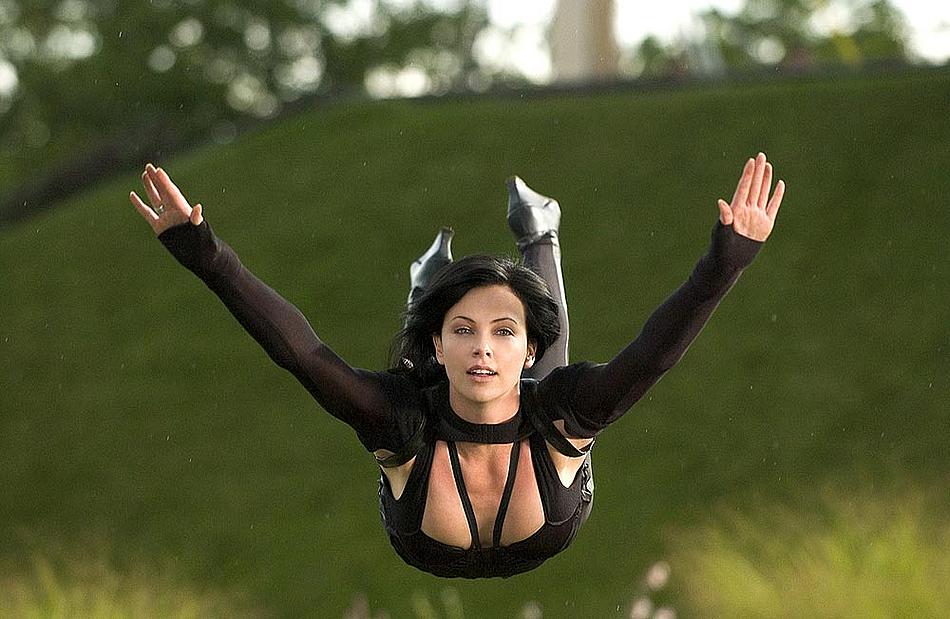
Theron also has the necessary gravitas for the role, and to my ears, even sounded like the character did. She has the tall, spindly appearance too, though the hair is definitely well wide of the mark, and her clothes are – inevitably – toned down from the “fetish wear on amphetamines” depicted in the series. That’s probably a necessity for the PG-13 rating, which also hampers the film in other ways – I’ll say more on that later. But as an adaptation in general, it’s so wide of the mark, you’d be better off ignoring this aspect entirely.
However, it would probably have been foolish to expect otherwise. Given the dense, impenetrable nature of the series, there’s no way a studio was going to spend $60m to make something like that, to open on 2,000+ screens across America. The storyline here is much more linear, logical…and, well, probably less interesting. 400 years after a virus wipes out 99% of the world’s population, Æon is a Monican rebel, fighting the powers-that-be in Bregna, the only city left. However, when her sister is killed by the authorities, it becomes personal, and she takes on a mission to kill Trevor Goodchild (Csokas). However, when she faces him, she finds herself unable to complete her task, and from there she discovers that life is not quite what it seems. Though the revelations are more likely to provoke a shrug than any actual surprise.
 The main problem, however, is Karyn Kusama, whose previous work, Girlfight was very good, but was an up-close and personal character study, about as far from the sprawling SF sensibility require here as imaginable. This, I think, summarizes part of the problem with Hollywood and “girls with guns”: they appear to think all action heroines are the same. Hey, you did a film about an inner-city schoolgirl who uses boxing as an escape valve? You’d be perfect to helm an effects-packed, post-apocalyptic, science-fiction movie starring a supermodel gone berserk! No. No. A thousand times no. They should perhaps have gone with producer Gale Anne Hurd, who does at least have an action/SF background, from her work on the Terminator series, Aliens, Hulk, etc. Kusuma seems out of her depth, sad to say.
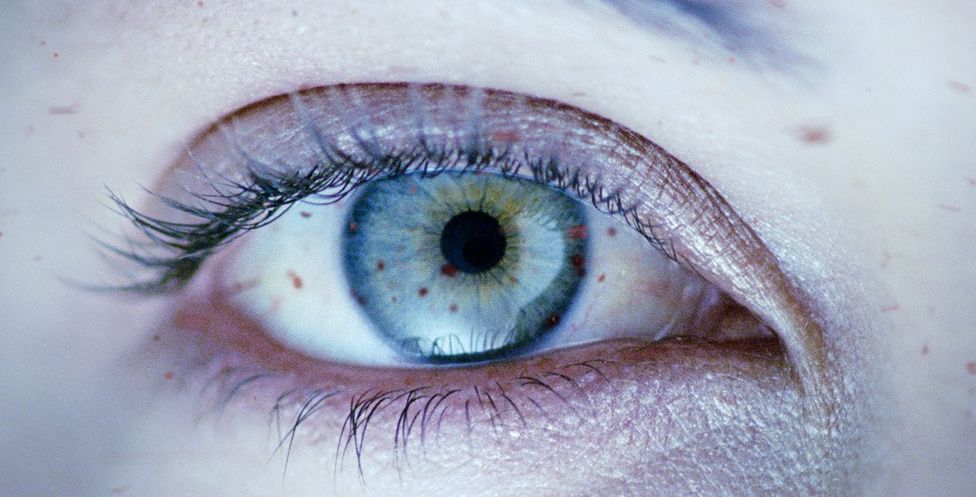
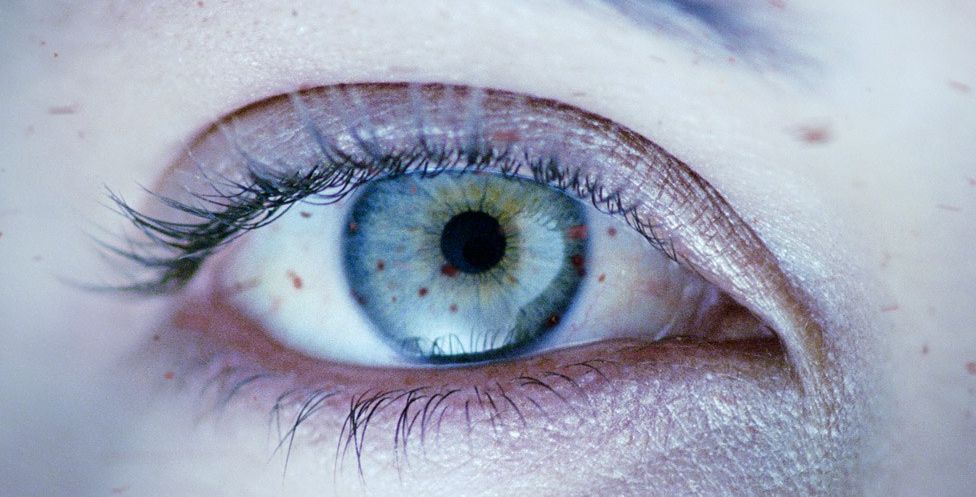
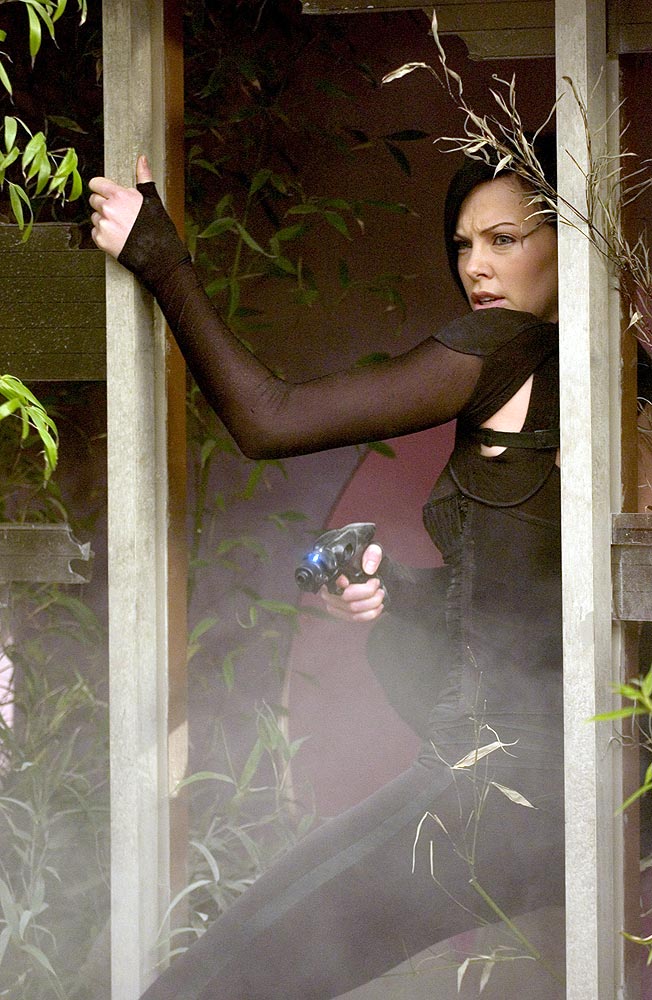
 There is some inspired gadgetry, such as Æon’s little explosive balls, which do tricks on command, and her eye, which can see chemical additives in a glass of water. There is also what is presumably a VR implant, letting her enter the 25th century version of a chat-room to get orders from McDormand. The hair-do on Æon’s boss is from the “through a hedge backwards” school of hairdressing, so it appears that customizable avatars were also wiped out by the pandemic. But like most of the costumes and set design, the futuristic infrastructure is generally well-realised.
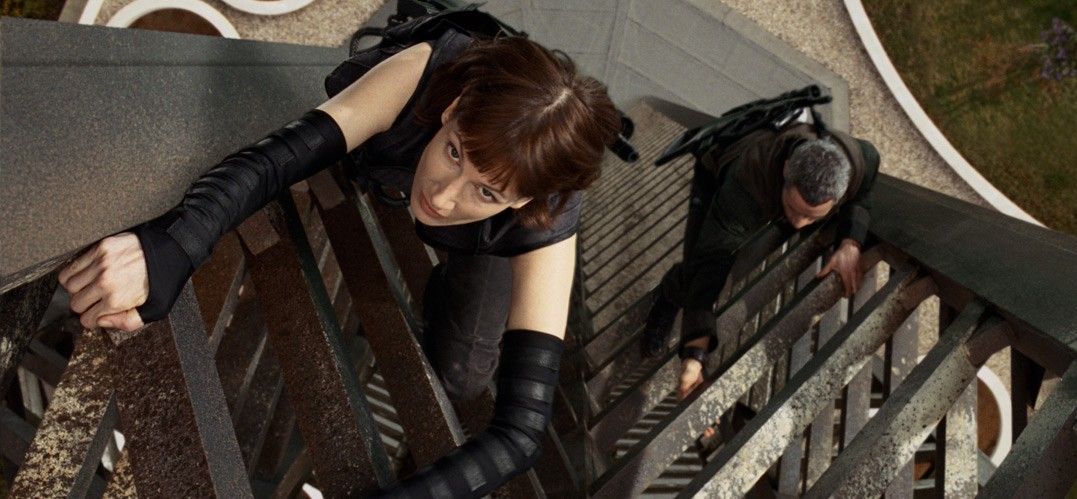
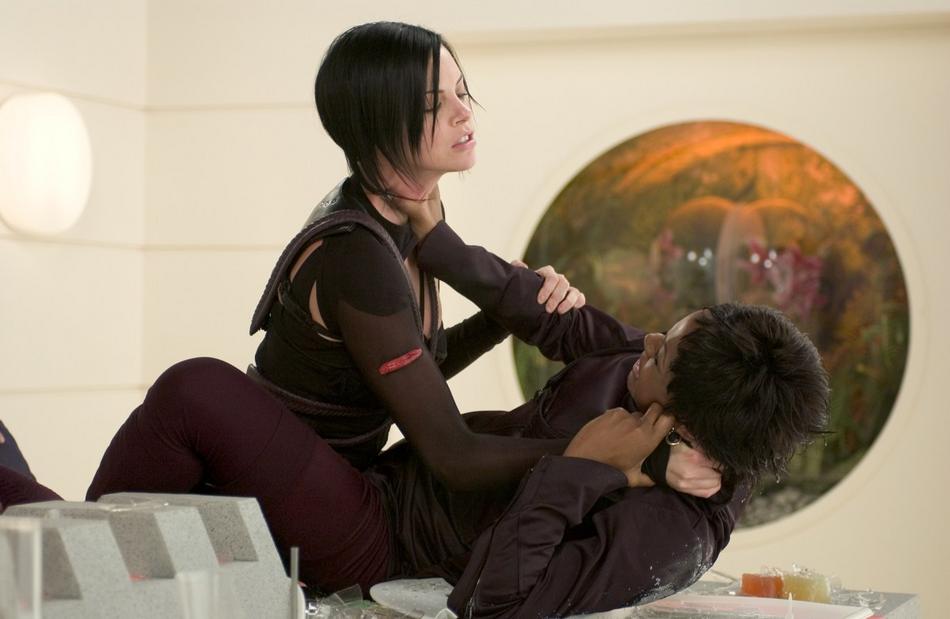
The supporting cast come off variably well. Okenodo (left) plays another rebel, with hands in place of her feet, a nice touch that deserved better exploration. “I like my shoes” is Æon’s response when asked why she doesn’t get the same surgery – that’s the kind of perfect, cool, cast-off line the film needs more of. Csokas, and Miller as his ambitious brother who will do anything to keep the status-quo, are solid; but McDormand and Pete Postlethwaite are both badly wasted in throwaway roles, the latter dressed to look embarrassingly like, as one review put it, a Hot Pocket.
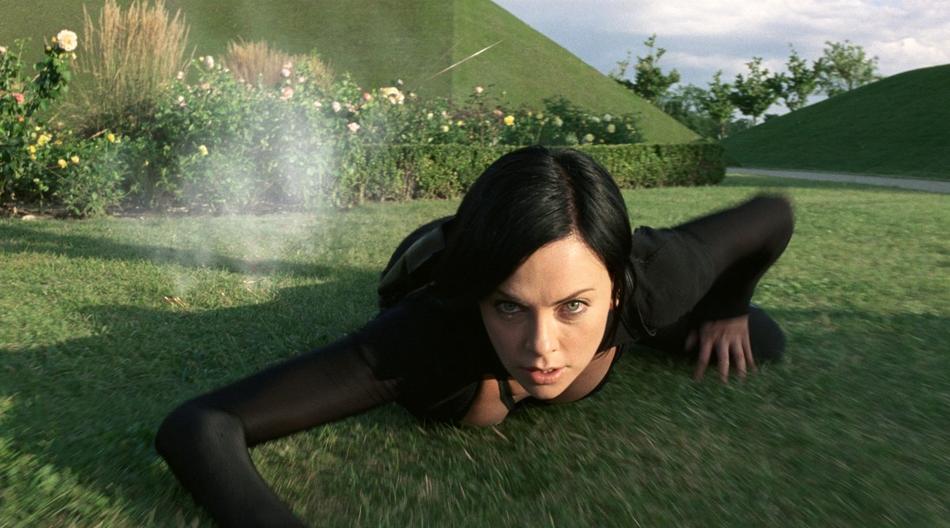
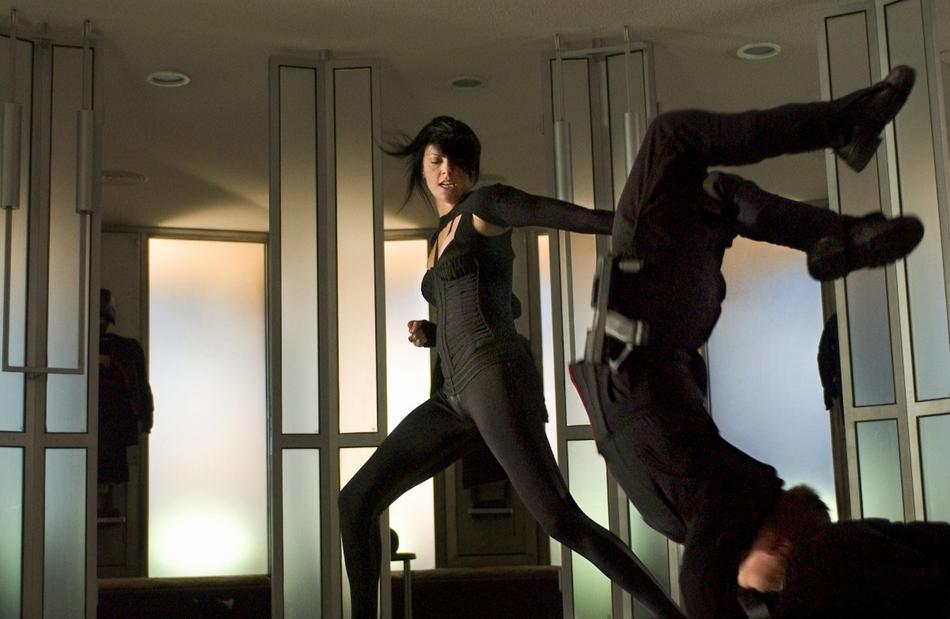
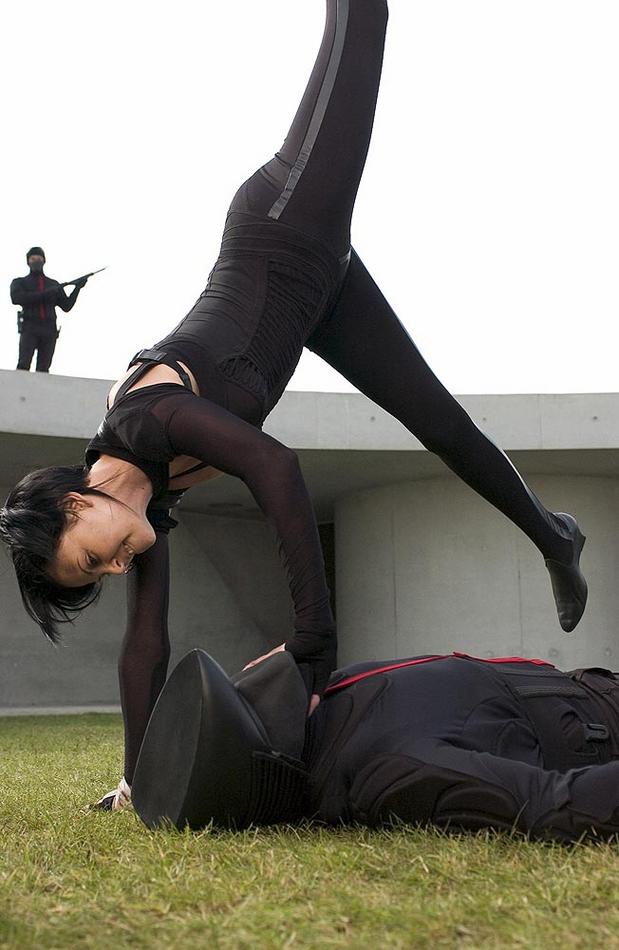
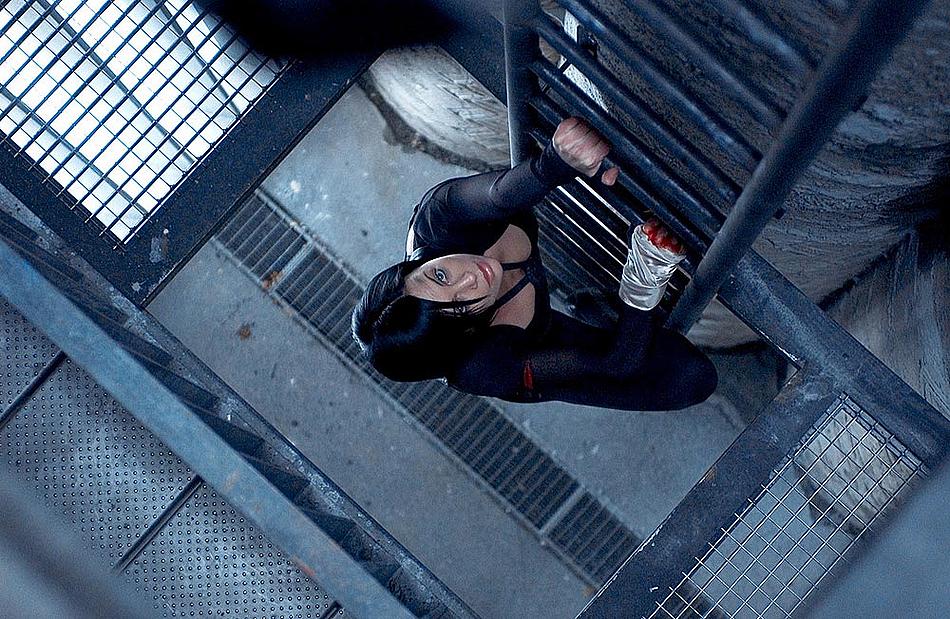
Then there’s the action. Save the final battle, which actually reaches the giddy body-count levels beloved of the animated series, they’re poorly-edited – second-unit director Alexander Witt helmed Resident Evil: Apocalypse, which has exactly the same problem. You’ve got a heroine to whom calm, athletic poise is apparently second nature: why not show her for longer than two frames, without cutting somewhere else? Hell, Theron got injured making this – not that you could tell by the time this went through the MTV blender. As a result, the fights pose no threat to the heroine, since you haven’t got a clue what’s going on: your average video-game causes more concern for the participants.
This brings me back to that PG13-rating, which means the violence doesn’t have any edge to it – at one point, Trevor Goodchild takes two bullets to the torso, and it barely slows him down. In the animated series, death was an ever-present occupational hazard for Æon, and the result had a dark, tough feel that is very much missing here. Instead, the tone is indistinguishable from any other heroic SF. The sexual tension is also much reduced – though keep an eye out for Theron’s real-life squeeze, Stuart Townsend, who cameos in the opening scene, passing a message with his tongue to our heroine. That, and Æon trapping a fly with her eyelash, are about the only moments truly recognisable from the series – and, truth be told, largely prove only that some things work better in animation.
That’s a fitting summary for the film as a whole. This is not the disaster you might expect from some reviews (hell, it’s a million times better than what we watched the next night, the woeful and inept National Treasure, which somehow managed to become a smash-hit). However, there’s no denying that this is a disappointing conversion of a classic series. Its failure at the box-office puts the final nail in a very mediocre year for the action heroine at the box-office, that staggered from bad to worse: Elektra. Domino. Æon Flux. Shudder. We’ll move rapidly on, and raise a glass of Christmas cheer, in the hope that our favourite genre finds some better success in 2006. When’s Underworld: Evolution out?
Dir: Karyn Kusama
Stars: Charlise Theron, Marton Csokas, Johnny Lee Miller, Sophie Okonedo
a.k.a. Aeon Flux




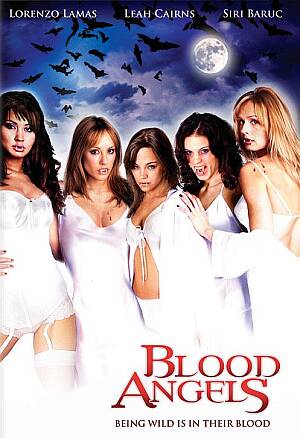 I’ve recently seen movies involving vampires who run a strip-club (Vamps), and witches who run a strip-club (Witches’ Sabbath). Now, we have vampires who’re putting on a rave. It’s nice to see creatures of the night who keep themselves busy. Actually, here, they’re not fully-fledged vampires: indeed, the aim of the rave is a ritual to complete the job, give them shape-shifting powers, etc. – generally, upgrade from the shareware version of vampirism. Of course, one of the vamps has a sister (Baruc) turn up – she looks like Dorothy from The Wizard of Oz, which is fairly appropriate, as she’s definitely not in Kansas any more. And their creator, Mr. Jones (Lamas), from whom they escaped, is keen to reel them back in…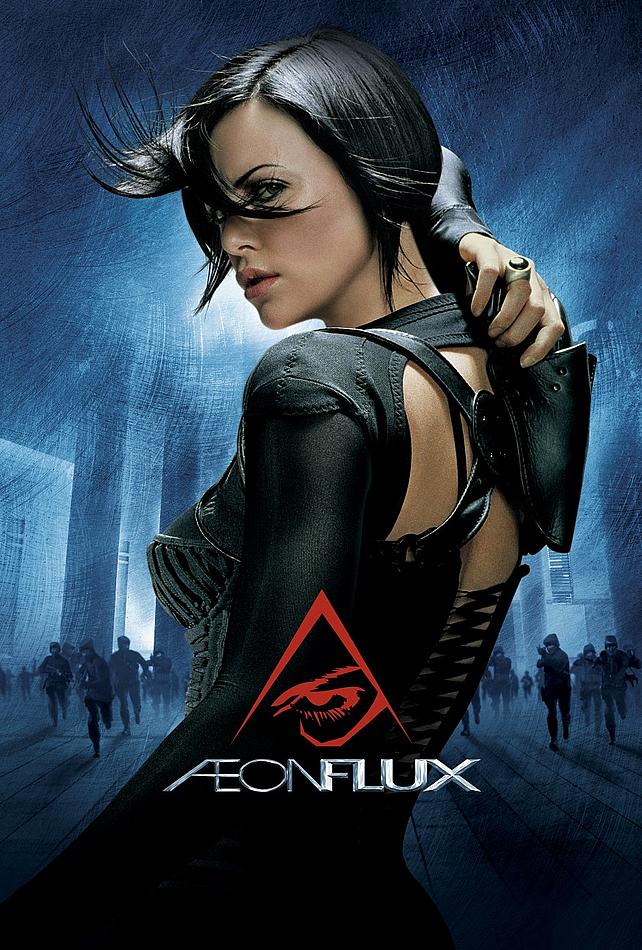
 This dates back to 1986, which is a little odd, as the sport was pretty much in one of its down-turns at the time – the excesses of RollerGames were still a couple of years away at that point. This isn’t probably the best place for a novice to start, as there’s no explanation at all about the sport, since it assumes you know what’s going on, how bouts are staged, scored and what the rules are . There’s a little about the history (including a cute song from the 1940’s), but it’s mostly action featuring the Los Angeles T-Birds.
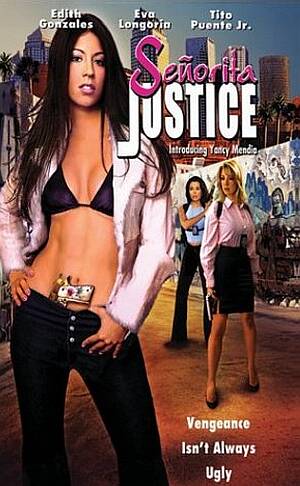 This is an interesting contrast to Sunland Heat which took a woeful script and executed it briskly enough to work. Here, the story isn’t bad – Anna Rios, a Hispanic lawyer (with a special forces background!) goes back to her roots, after her brother is gunned-down, and uncovers a maze of murky deals. It’s the execution which is largely inept, “Kantz” providing further evidence that one-name directors suck at GWG films – see also Charlie’s Angels: Full Throttle (McQ), Catwoman (Pitof), Ecks vs. Sever (Kaos) and Tomb Raider 2 (Jandebont).
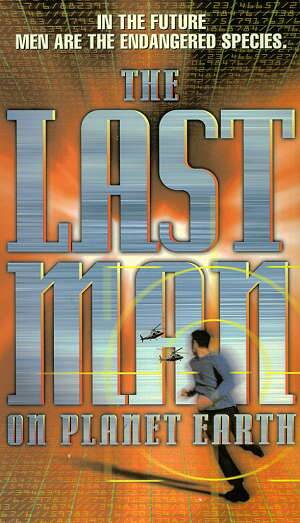 You’ve got to admire any film – particularly a TV movie – that provokes diverse reviews. This, then, not only “
 After civilization’s collapse, men have regressed to the level of Neanderthals, while women live in clans decided by their hair colour, with names like the FayWrays, Satanas and Tempests. Clothing is in short supply: lingerie, it would appear, is not, and nor are large, automatic weapons. Unsurprisingly, this leads perhaps to the finest opening five minutes in girls/guns cinema ever – “My name is Rachel, and I am a blonde. Blondes are extinct” – as our heavily-armed, suspender-and-stiletto clad heroines stagger round a post-apocalyptic landscape. This looks fabulous, and totally belies the fact that it cost $16,000 and was made in sixteen days.
 Poor Alias. Shunted from its Sunday slot to make way for Desperate Housewives – which proved successful beyond SD-6’s wildest dreams – this season felt as if JJ Abrams was more devoted to his second child, Lost (again, the owner of bigger ratings). By the end of the season it was Sydney, Jack, and their associates who found themselves both lost and somewhat desperate in TV-land, despite much-improved viewing figures – largely a result of following Lost, which got about 30% more audience.
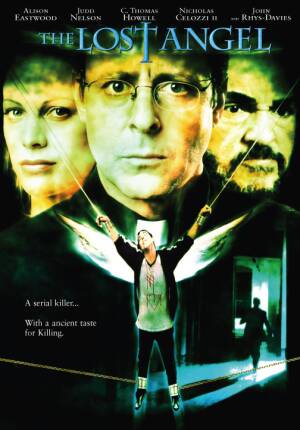 The daughter of Clint does her best in this police thriller but, despite one decent twist, and a couple of half-decent scenes, this collapses under the weight of too familiar a storyline and some rampant overacting. Inspector Billie Palmer (Eastwood) is assigned to catch a killer who has promised a victim a day for 20 days, and is living up to their promise. Events centre around a local deaf priest (Rhys-Davies), but she also must deal with a disgruntled suspect whom she shot, a traumatic incident in her past, and a suspiciously knowledgeable informant. Oh, and a laughably gratuitous sex scene that appears out of nowhere, 80 minutes in.
 The opening shot zooms in on Rodriguez with her head down; slowly, she raises her head, and stares into the camera with ferocious intensity. If this renders the rest of the film largely redundant, it’s not really anyone’s fault. In Michelle Rodriguez, the makers have the perfect person to play Diana, a pissed-off, troubled/troublesome) teen, who finds that violence
 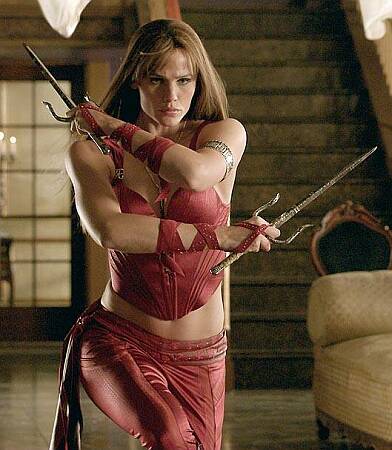 True story. A friend of ours has a job as an intern in Los Angeles, and coming round the corner at work one day, he literally bumped into Jennifer Garner. He immediately started apologising profusely (he’s an uber-nice kid, who wouldn’t say “Boo!” to a fly) but she wouldn’t have any of it and began cursing him out in the nastiest of ways. Garner finally stalked off, while he continued to apologise – just before vanishing, she turned round and gave him the finger. So now we know: Jennifer Garner = bitch.
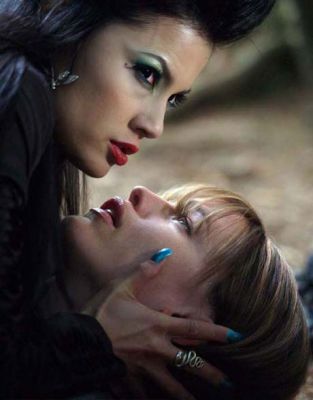 There is entertainment, mostly lurking in the background. A moment with impact sees Typhoid (Natassia Malthe), the girl with the poison touch, kiss Elektra; the pair fall to the ground surrounded by a shower of dying leaves. It feels almost like it could have been inspired by the work of Zhang Yimou (House of Flying Daggers), and is at least less obviously stolen than the “House of Flying Bed-Sheets” battle later on. It’s also interesting to see Mark Houghton as a chief bodyguard in the opening scene: he made his debut against Yukari Oshima in The Outlaw Brothers, back in 1987.