




★★★½
“Wing and a prey-er.”
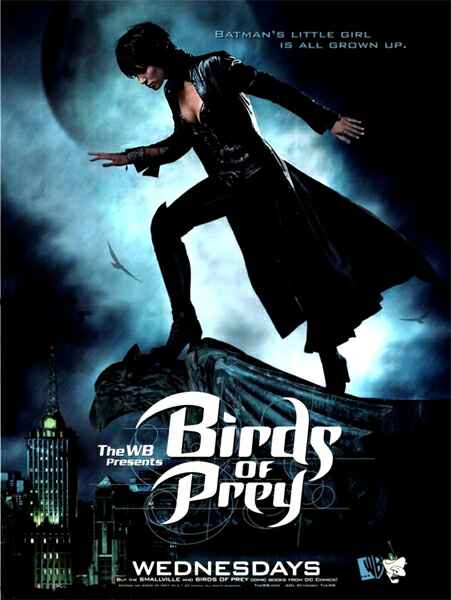 2002 should have been a great time to start a TV series based on a popular comic book – the biggest box-office hit that year was Spiderman, and with a host of other high-profile movies in the pipeline, comics had their highest profile in a long time. So what happened? Why was the show cancelled before Christmas, limping lamely along to the conclusion of its 13-episode run, the finale sacrificed against American Idol and The Bachelorette?
Weak writing, would seem to be the main reason – Jordan Levin, entertainment president of The WB, producers of the show, said, “We really could not find someone who could write that show”, describing its cancellation as the biggest disappointment in eight years. Certainly, the central concept was sound, and appealing, going by the decent ratings for the premiere: 7 1/2 million viewers, twice what the channel had for the same slot in 2001. But by the fourth episode, more than a third of those had been lost, and they kept falling – at the time of its demise, it was ranked 107th out of 118 prime-time shows.
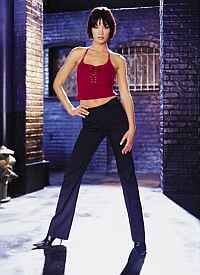
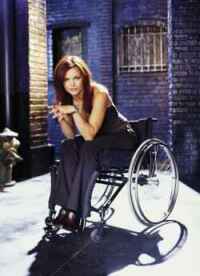
The show did perhaps have an excess of back story to cope with. There’s Barbara Gordon (Meyer), who used to be Batgirl until she was paralysed by the Joker, and now calls herself Oracle. Then there’s Huntress (Scott), a.k.a. Helena Kyle, who was the daughter of Batman and Catwoman. There’s Dinah – no secret identity – the daughter of Black Canary, another character from the comics. Oh, and Huntress’s psychiatrist, played by Mia Sara, is really the chief villainess who runs crime in the town, though this thread was underwritten and never explored as it could have been. She all but vanished from the second half of the series, before an impressive return in the finale.
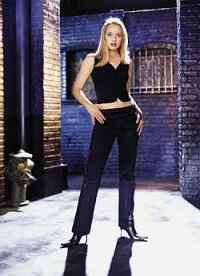
It seems almost the law that any series with action heroines must have three; see Charlie’s Angels and She Spies for further examples. Why this is, I don’t know, but it can cause problems with dynamics. I’d have been happy with just Huntress and Oracle since, personally, I felt the main problem with the series was Dinah. Never felt her role was really necessary as a recurring character (any similarity to Dawn in Buffy is, I’m sure purely coincidental) – in most episodes, she was little more than a spare wheel, with bratty tendencies which were more irritating than endearing.
 |
 |
 |
It’s a shame, as both the other two were interesting and well-rounded characters, portrayed with skill and charm. Meyer, perhaps best known for her role in Starship Troopers does particularly well, given she is confined to a wheelchair for most of the show. Credit must also be given to Scott, who has to handle the majority of the action, and does so fluidly – the fight sequences are certainly well above average for network television, and hopefully those responsible will find work elsewhere.
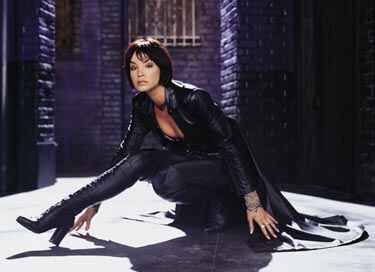 The show was at its best playing with the conventions of superhero TV; I particularly remember a discussion over secret identities and whether you could have one without a mask. But the same episode also featured – like the WWE, just without the chocolate pudding – a fight club where evil men watched as women fought. Given part of the appeal of the series itself was exactly this, it was shooting the audience in the foot, and illustrates the apparent schizophrenia of the show.
It fell uncomfortably between stools, neither camp like the original Batman, nor dark and gothic like the comics, save for the last episode when death revealed its sting. Even if it had gone either way, it was hardly likely to appeal to fans of Dawson’s Creek, the show preceding it. This, and some vicious competition in the time slot, likely doomed it. In the end, though, Birds of Prey never became compelling TV. We’d watch one episode, then forget all about it for a week; there wasn’t the same sense of anticipation that better series create in viewers.
We also hated the shameless plugs for the music, though was thoroughly amused to see infamous Russian teen pseudo-lesbians t.A.T.u. provide the song for the final battle. Still, it deserved a happier fate than effectively being replaced by another one of those cheapjack reality show, High School Reunion. Anybody up for a movie in which a disgruntled actor storms a television station and kills the producers responsible for all this low-quality dreck? Pretty sure Dina Meyer would be interested…
Star: Dina Meyer, Ashley Scott, Rachel Skarsten, Shemar Moore

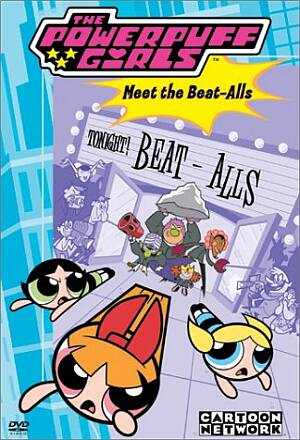 This sprang virtually fully-formed from the twisted mind of McCracken back in 1992, as a student film: even then, he intended it as a series, with most the characters, both heroines and villains, already present. The main change was to the title, the Cartoon Network balking at presenting a show called The Whoop-Ass Girls, and so the “can of whoop-ass” which was originally part of their make-up, was replaced by Chemical X.
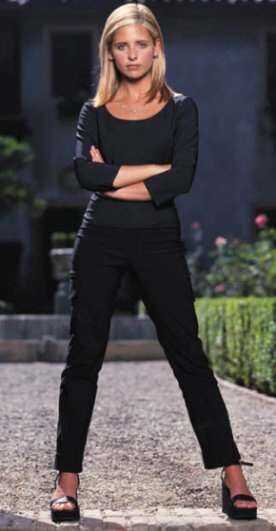 Season Six was in trouble from the start, with the titular heroine (literally) dead and buried. Bringing Buffy back from beyond was a problem always likely to perplex, because once you start resurrecting characters, nothing is a threat any more. Although this was handled moderately well, the show really started to fall apart after the musical episode. This demonstrated one thing beyond all reasonable doubt – why the cast are actors. From then on, most of the stories seemed to have been cribbed from daytime soaps. Buffy has sex with Spike, feels bad about it, then does it again. Xander and Anya’s on-off-off-on-off wedding and relationship. Willow and Tara were no more solidly committed, and the clumsy “magic=drugs” story arc was the sort of thing I’d expect to see on Charmed. In addition, the main bad guys for 90% of the series were a trio of geeks, minor bit players from previous episodes, who were about as threatening as flies, albeit rather more annoying.
 Women-in-prison is not a genre greatly within our remit, since they’re often just an excuse for a bit of soft-core masochism. There are occasional exceptions, however, and this is one, with its origins as a network TV show forcing restraint of the more exploitative aspects, as well as permitting the characters to develop more fully than in a movie.
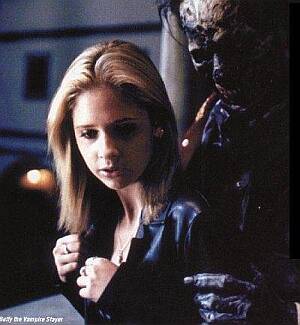 While there have been stand-out Buffy episodes since, season two perhaps ranks as the most consistently high in quality. There’s hardly an episode that ranks as less than excellent, and the writing is sparklingly witty, with more eminently quotable lines than you can shake a stake at.
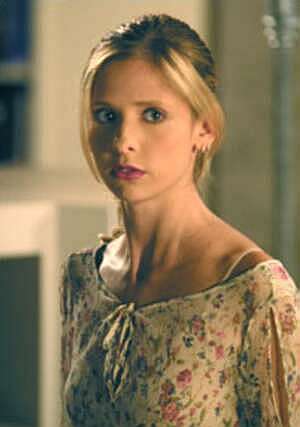 Hannigan and Brendon claim to have learned about the show’s demise in Entertainment Weekly, but it was apparent early on that Gellar in particular was going through the motions. Whedon too, seemed to have lost interest, and you know a show is in trouble when they drag back characters from previous series, who seem ten times more interesting than the regulars. The thrust this season was towards a confrontation with the ultimate evil. Oh, my: an apocalypse – how original. And look! It’s a vampire with a soul! Pushing Buffy back into the school environment was another admission that the show had lost its way when it “graduated”, abandoning the whole concept which had powered it early on. It never found a replacement, floundering around in search of a point.