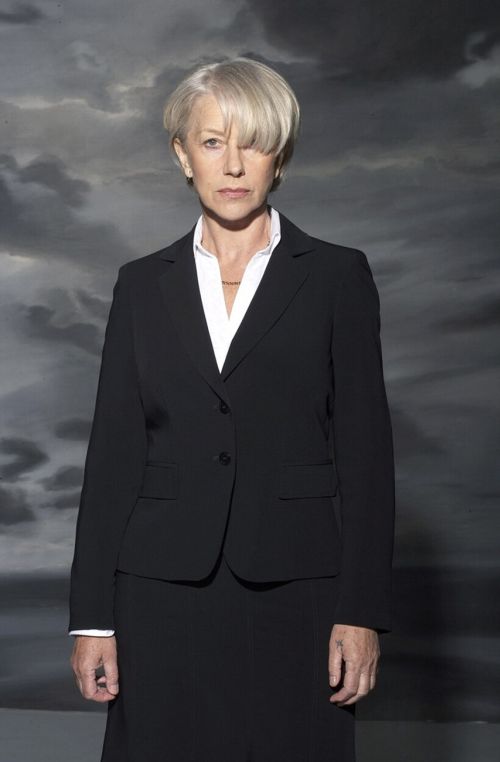
 Before there was The Cooler, before there was either version of The Killing, and obviously before there was Maria Bello’s short-lived Americanized take, there was Dame Helen Mirren as Jane Tennison, one of the canonical figures of action heroine television over the past two decades. Though only fifteen feature-length episodes were aired – that works out at only one a year between the show’s debut in 1991, and its finale in 2006 – it has become an archetype for its portrayal of a female detective, relentless in her pursuit of criminals, but considerably more ill at-ease and abrasive when handling the people with whom she has to work. She’s great at spotting clues, interrogating suspects and putting together the pieces. However, Tennison’s personal life is a complete mess, she screws up any relationships on an almost daily basis, and is completely incapable of striking a balance between work and everything outside it.
Such a complex character requires an actress of the highest talents, and Mirren provides it. Before her film career, she cut here teeth with the Royal Shakespeare Company, though her early cinematic work includes both classic (The Long Good Friday) and entries which one suspects she’d rather forget (Caligula!). But even in the latter, she still carried herself with grace and poise, elevating the material. By the early nineties, she was respwected, yet not quite as renowned as she would become – her first Oscar nomination would not be until 1994, for The Madness of King George. Even now, Mirren acknowledges the show’s importance in her career: “It was an incredibly important part of what’s got me to where I am today. It was intense, many many hours on a set with many different directors, many different writers. I loved it, and that’s the way you learn.” Series creator Lynda LaPlante was also well established, having previously created a similarly iconic female character, on the other side of the law, in Dolly Rawlins, for her crime series, Widows.
While far from the first to portray a British female detective, the new show was a fairly-radical departure from previous entries such as Juliet Bravo or The Gentle Touch which, as the latter’s name suggests, sought to portray a kinder, gentler police force, with heroines comfortable at both home and work. LaPlante was having none of that, placing Jane Tennison in situations which contrasted her skills at police-work with her abject failures elsewhere (the show wisely chooses to focus much more on the former). Right from the start, Tennison has to prove herself in a male-dominated environment against the constant suspicion that she reached her position because of affirmative action, rather than on merit. Finding the right person for the role was crucial, LaPlante told NewsWeek in 1994, “She’s not physically heavy, but she has a strength inside her that is unusual. There’s a stillness to her, a great tension and intelligence in her face.”
One of the fascinating things about the show is the change that Tennison undergoes over the course of the series, which is particularly apparent if you watch them all in relatively short order. It would be hard to imagine an American show sticking with the same character over such a long period, but the infrequency of the production likely helps, and we see Tennison evolve over the length of the show from a somewhat tentative and naive detective, becoming hard-bitten and cynical (for very good cause), eventually ending up an alcoholic, teetering on the edge of complete burn-out and suffering from blackouts and the DTs, who is trying to solve one last case reach retirement through sheer, bloody-minded willpower. It’s a fascinating arc to watch, and I particularly appreciated the way, at the end of the final episode, the writers didn’t provide an obvious or “fluffy” ending, which could have compromised the integrity of the entire show.
“Women are taught to smile, to be pleasant, to be charming, to be attractive. Tennison doesn’t do that. She is driven, obsessive, vulnerable, unpleasantly egotistical, and confused. But she is damn good at what she does and is totally dedicated.”
— Helen Mirren |
Mirren is the sole character to appear in all the episodes. She’s supported by a swathe of faces you’ll recognize if you spend any time watching British television or movies. The first series alone included future Oscar nominees Tom Wilkinson and Ranulph Fiennes, as well as Zoe Wanamaker, and others to be seen include David Thewlis, Ciaran Hinds, Jonny Lee Miller, Mark Strong, Frank Finlay and Peter Capaldi, recently announced as the new Dr. Who [in Suspect, he plays a transvestite, which is certainly… different]. Most of the series are single stories, told over two 100-minute episodes, except for the fourth, which is a trio of individual parts. This extended length, allowing a single crime to be dissected in greater depth, is another difference to American shows, which tend very much to be “crime of the week,” with or without also a longer story arc.
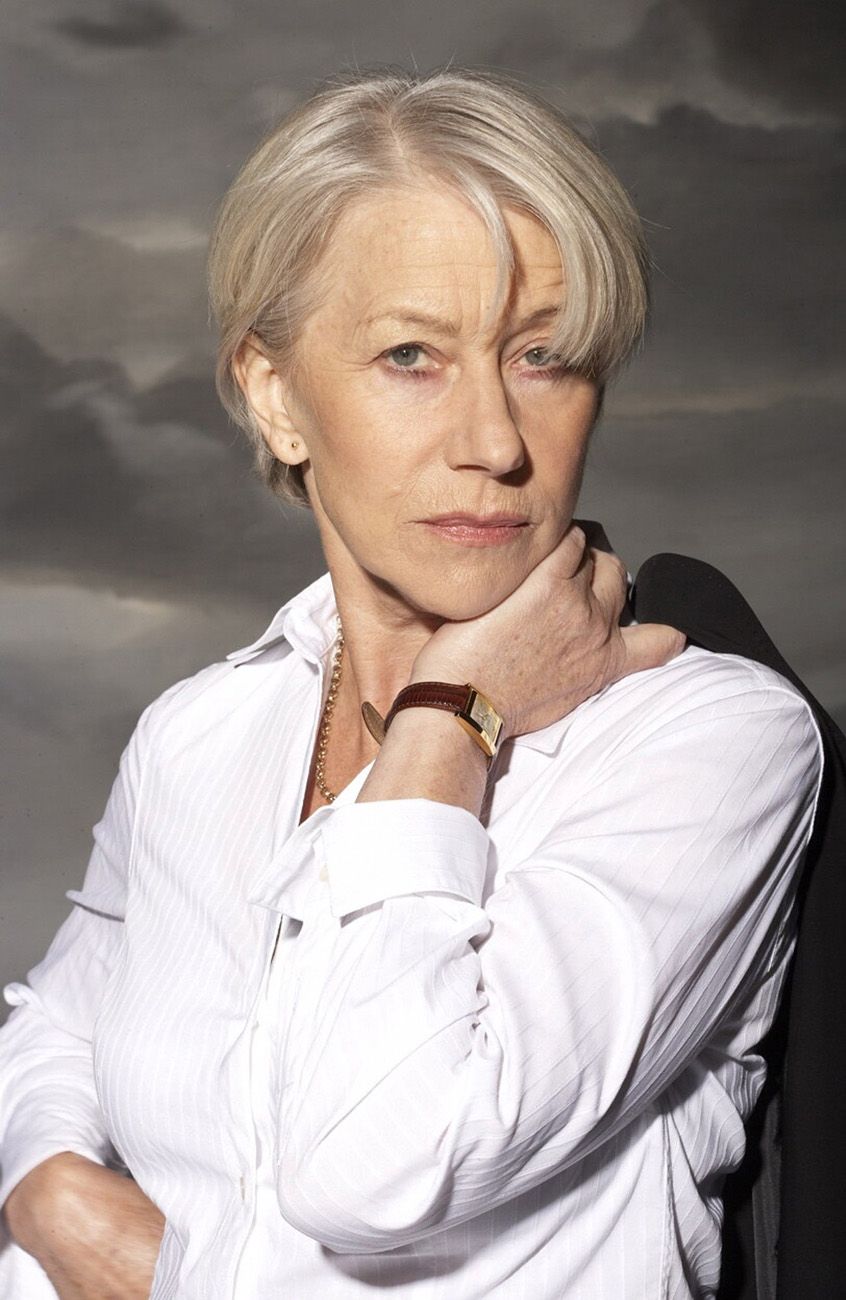 While all the cases are homicides, they cover a wide breadth. After the first season, there tended to be an underlying social issue: this could be racial, political or class-based, and often provide an additional level of difficulty to the investigation. Particularly in the early seasons, Tennison is depicted as having to fight prejudice from her colleagues. The feminist aspects (perhaps thankfully) do fade somewhat, once she becomes more established, though the level of support she gets from her superiors is never something on which she can rely. Throughout, she struggles with self-doubt and loneliness in her position, no-one able to understand the pressures of the job, and help share the burden on her shoulders. But part of her strength is that it never interferes with her dedication to the case, or her pursuit of those responsible for wrong-doing. Unlike a good number of her colleagues, who are sometimes prepared to sacrifice justice for the sake of expediency, Tennison’s morality is absolute, and she won’t compromise it for anything, regardless of the potential personal cost.
Obviously, this isn’t “action” in the “fisticuffs and car-chase” mould of policework (I’ll refer you to Red and its sequel if you want to see Mirren wielding the heavy weaponry!). Virtually the only weapons Tennison wields are her mind and her tongue, but it’s hard to tell which is the sharper, and they are both undeniably effective at getting to the truth, no matter how deeply it may be hidden. Her bravery is undeniable, not just in the perpetual quest for justice mentioned above, but her willingness to put herself into potentially lethal situations when the need arises., such as at the end of the fifth series where she faces an armed suspect, alone and without anything to protect her. While it’s one thing to go into such situations with the physical presence to handle them, doing so when you don’t have such an ability, is probably even more courageous.
Though some episodes are now more than 20 years old, they hardly seem dated at all: the writing is still sharp as a razor, and can stand with anything you’ll find on television today. But it’s Mirren’s performance which makes this work, and is why I just didn’t bother with the US remake; good though Bello might be, she can’t hold a candle to the original. There’s a reason Mirren was nominated for six Emmys, winning two, and six BAFTAs, taking home three. Virtually every cop show with a female lead which has come out since – or, at least, all the good ones – owe something to Prime Suspect, and a central character who embodies the tension between work and home life. Never shying away from the darker side of law-enforcement, or the toll it exerts on those who maintain it, this isn’t just one of the best recent action heroine TV series, it’s among the best TV series of any genre or era.



 ★½
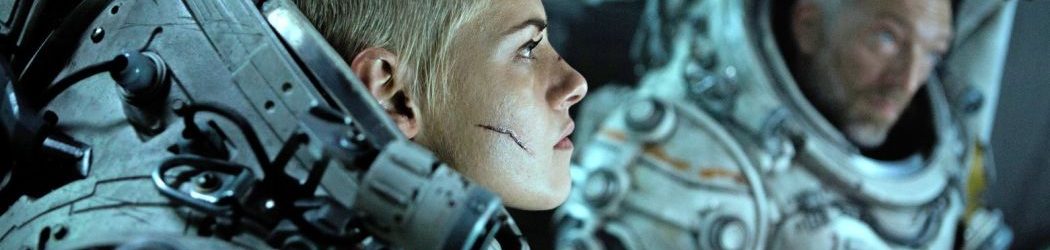
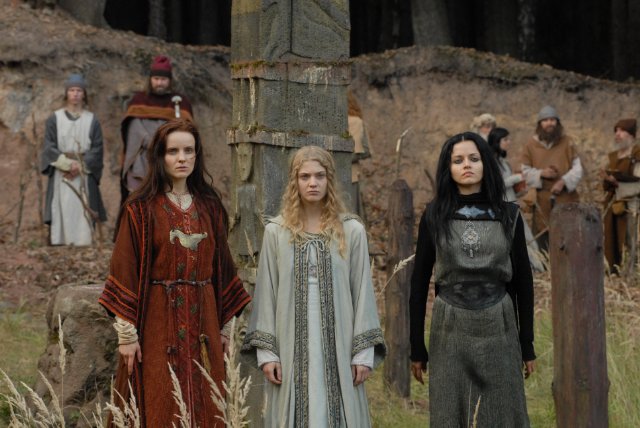
★½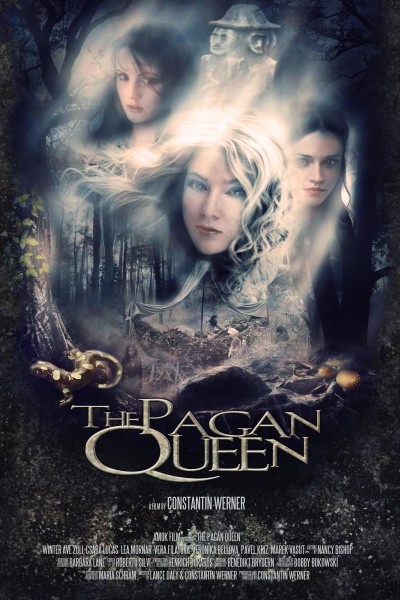 It really is nowhere near as good as this sounds, and the synopsis above is significantly more coherent. I swear, I didn’t fall asleep – but it felt like I did, the story lurching from scene to scene in a disjointed manner that rapidly drained all interest. Outside of the heroine, there was hardly any significant effort at giving the characters motivation or depth, and matters weren’t helped by the fact the entire nation seemed to consist of about 25 people. The scenery is nice, and the soundtrack has a full, orchestral feel which seems to have escaped from a higher-budget movie, but it doesn’t work as a historical piece or as a political one – and, certainly, not as an action film. However, I was amused by what I suspect is likely a realistic, if ruthless, depiction of what would probably happen when a warrior maiden comes up against her male counterpart.
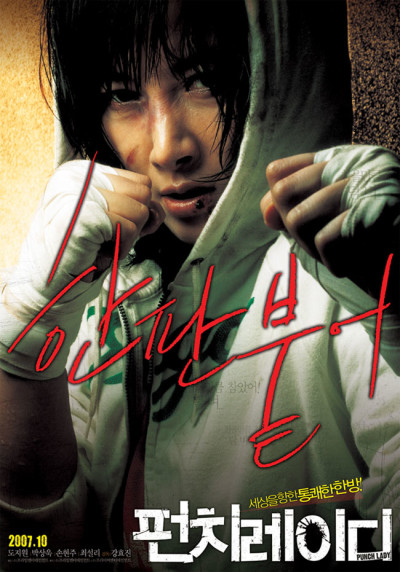 Not unlike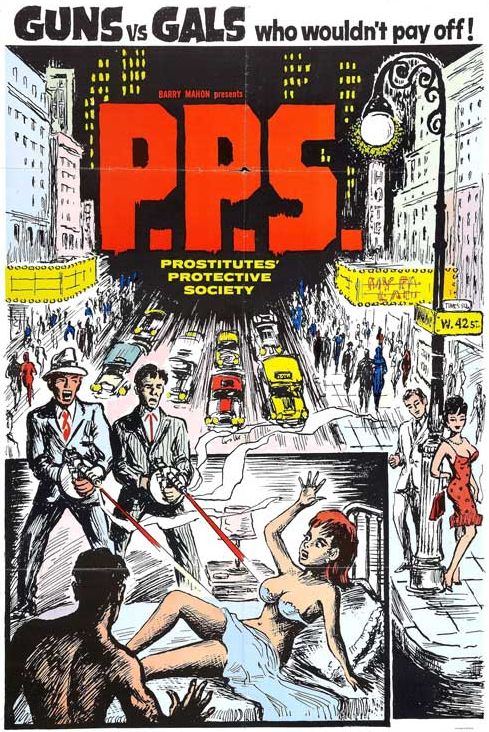
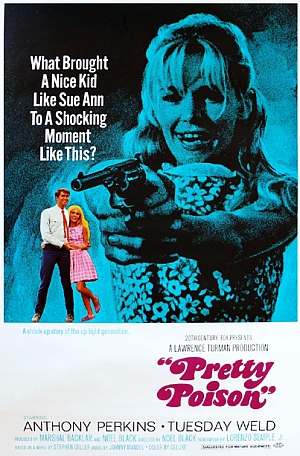 I was expecting more a quirky comedy than a dark thriller from this 1968 film, and only bothered with it because I’m a fan of Perkins (Edge of Sanity is a beautifully-lurid retelling of the Dr. Jekyll story, with the trash quotient cranked up to 11). Imagine my surprise when… Well, let’s start at the beginning, shall we? Juvenile arsonist Dennis Pitt (Perkins) is finally released back into the community as “cured”, though his fondness for fantastic invention appears unchanged. For a while he works at a chemical in the small town of Winslow without apparent issue. But trouble looms in the pretty, 17-year old shape of Sue Ann Stepanek (Weld), even though she appears to be squeaky-clean – an honor-roll student, majorette, etc. To entice her, Pitt spins a tale of being a secret agent, investigating a plan to poison the water supply. Sue Ann seems to swallow it, hook, line and sinker, but after one of their ‘sabotage mission’ goes wrong, it’s apparent that Sue Ann has her boyfriend
  ★★★½
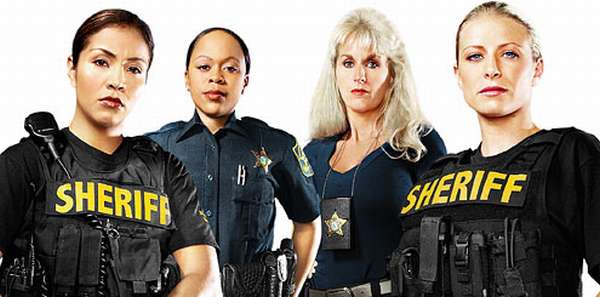
★★★½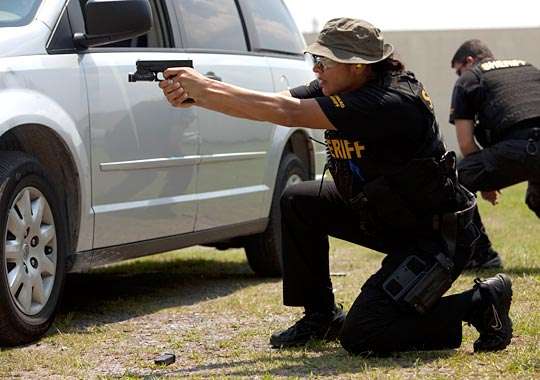 Twenty years ago, Cops debuted on Fox, and has become a part of the cultural landscape, leading to an avalanche of spin-offs, ranging from the serious to the complete spoofs (Reno 911 being the most notable). The very first episode took place in Broward County, Florida and, two decades later, the latest in the field returns there. PoBC, as I’m going to refer to it for obvious reasons, follows four women members of the Sheriff’s Department there, both at home and on duty, as they take down the bad guys and deal with the public.
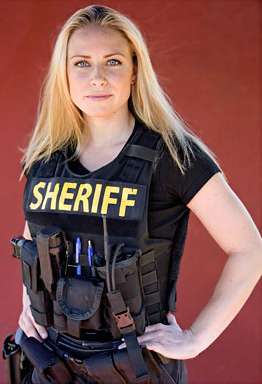 Despite Murillo’s unquestioned position as Empress of Lip-gloss, it’s blonde, blue-eyed Penoyer who is the glamour queen of the show – though the illusion is somewhat damaged when she starts yelling commands at suspects in a voice that’s probably the audio equivalent of getting Tazered. Though as she points out, such an attitude is necessary: “When someone walks in a room and you got a cop who is 6’5″ and 300 pounds, he looks intimidating. So we have to act intimidating: we have to be very, very serious and let people know we’re not playing around.” Well, not all the time, anyway. We also get to see Penoyer and her policewomen friends shopping for guns, and relaxing on the beach. In their bikinis.
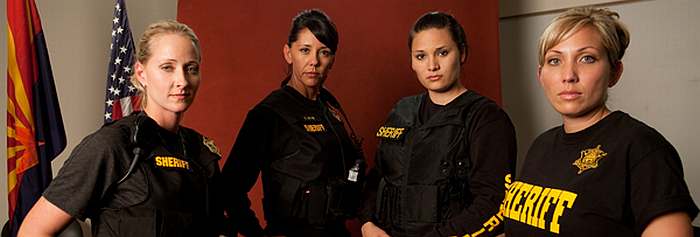 ★★★★
★★★★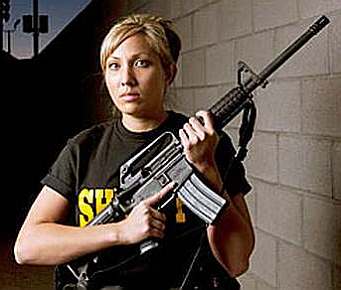 The second series of TLC’s “mommy cops” reality series struck close to home, centered as it was on Phoenix. It didn’t come as much surprise as our local sheriff, Joe Arpaio, is infamous locally as a media whore, who wastes no opportunity for self-promotion, and is a sharply-divisive figure locally, adored and loathed by about equal parts of the population. We wondered how long it would take before Joe slimed his way onto the screen: six minutes into the first episode, we had our answer. Fortunately, this was more of a blip, and our fears of an Arpaio-centered show proved largely unfounded [see the execrable Smile… You’re Under Arrest for how bad this could have been].
 As notable as what is shown, is what was
 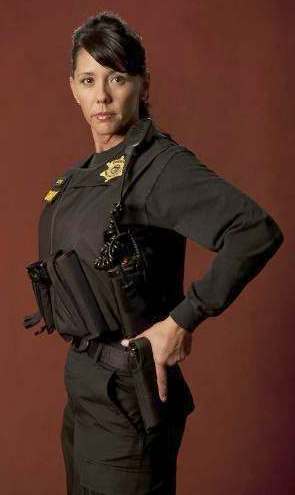 Finally, there’s Detective Deborah Moyer (right), who is completely marvellous, and the main reason to watch the show. A 19-year veteran, we’d be entirely happy if the show was 100% about her. While the other women occasionally seem very scripted when they are talking to the camera, that isn’t the case with Moyer: there’s a definite sense that what you see is what you get with her. While her policing style may not be “by the book” – in one episode, she basically arrests a teenage girl for failing to hug her father – her reactions are entirely natural and certainly had us nodding in approval more often than not. She just comes across as being very normal: when she encounters a young perpetrator, she tends to think about her own kids of the same age.
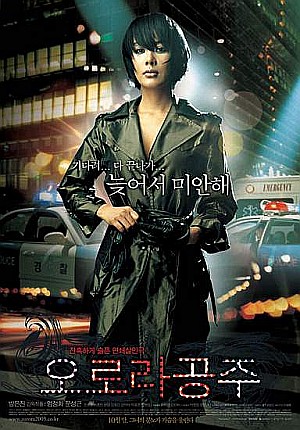 After inflicting Forbidden Warrior on Chris, my stock with her had slumped like Morgan Stanley. Fortunately, this Korean serial-killer flick provided a good measure of redemption. It stars in a department store, where Sun-Jung (Uhm) sees a mother abusing her young daughter, before leaving her and going into a stall. Sun-Jung shepherds the girl outside, breaks into the stall and stabs the mother repeatedly. The case is investigated by Detective Oh (Mun), who spots his ex-wife in the store security video. When bodies keep turning up, though killed in different ways, the police link the cases due to the cartoon stickers found on each scene. Oh gradually comes to suspect his wife is taking revenge on those holds she responsible – directly, or otherwise – for the death of their child, killed in a brutal kidnapping previously. Is that really the case, and if so, does he have the moral fortitude to turn in a woman he still loves as a murderer?
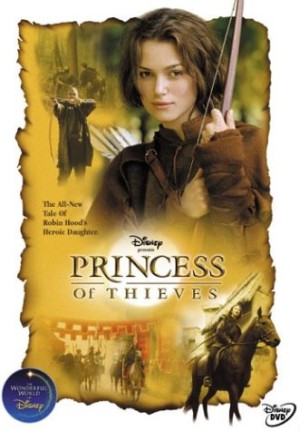 Back before Pirates of the Caribbean made Knightley a household name, and even before Bend It Like Beckham made her an
  I don’t think I have ever been quite so