




★★
“It’ll probably be the audience who need the painkillers to get through this tedious tale.”
 This SciFi Channel original movie is based on a comic-book series, but makes some radical changes to the storyline, though the basic idea is intact: a woman becomes immune to injury after the usual mysterious something happens to her [radioactive spider bite, barrel of toxic waste – the usual graphic novel contrivances, in other words]. In the comic, she was an undercover cop; here, she is a Special Forces soldier in Chechnya who is exposed to an experimental biological agent. Naturally, she subsequently finds herself much sought after, by both good and bad factions, since she’s the first to survive the treatment.
And initially, this isn’t so bad, as she escapes from the military, encounters a gentlemen thief and his posse of sidekicks, and tries to get all her mental ducks in a row, so she knows who to trust. As a set-up, it’s fine, with its share of paranoia. However, the longer this goes on, the less interesting it gets: you’d think having a heroine who is virtually immortal, would lead to almost non-stop mayhem. Not here. The action here is very limited and when it does appear, is simply boring – unfortunately, there’s no other word for it.
Now, I know this was intended as much as a pilot for a project TV series as anything, and they have to keep their powder dry for future episodes. But unlike, say, Chameleon, there’s precious little here to make me want to watch, should they decide to bring it back. Indeed, I fell asleep as the “gripping” scene at a shopping mall unfolded. For any action film, that’s about the kiss of death, and while the performances aren’t bad – Vaugier as our heroine has a nice attitude that reminded me of Yancy Butler in Witchblade – there wasn’t nearly enough meat on these bones to satisfy me…
Dir: Sanford Bookstaver
Star: Emmanuelle Vaugier, Tate Donovan, Richard Roundtree, Eric Dane
 Camelia (Palmer) sees her way out of the ghetto in Ramiro (Saenz), a friend of her father’s who always has more than enough easy money. She convinces him to employ her as an apprentice, but discovers she likes sharing his life of drug-deals and casual slaughter. But they soon find out, they may not be the only ones capable of a good double-cross…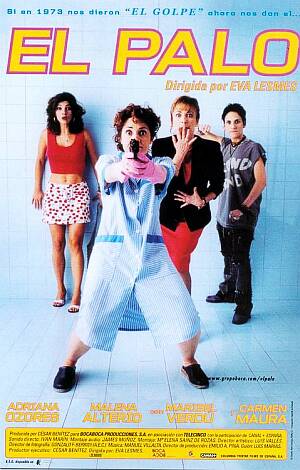
 Four unlikely women team up, for their own but unselfish reasons, in order to rob the bank where one (Ozores) works as a cleaning lady. There’s also a rich bankrupt, out to fund her daughter’s wedding; a slutty hairdresser who’s just found out she’s pregnant; and an antisocial punk orphan, who wants to be reunited with her father in Argentina. What makes this Spanish film work, is less the action, and more the characters – or at least, the women, since the men never become more than two-dimensional. The script is brisk and efficient, moving things along with swift abandon, and sucks the viewer in to a connection with the ladies, their problems, and the solution.
 Pretty much the same cast and crew
 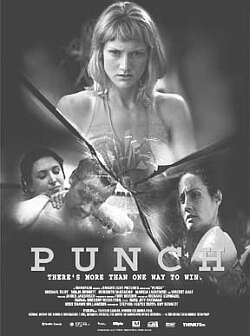 Topless Female Boxing. There. The reader is paying attention. Yet, if the subject has been covered in a less appealing way than here, I probably don’t want to see it. Indeed, as the toplessness is neither vital to the plot, nor visually pleasing, you wonder why they bothered. The main character here is 18-year old Ariel (Bennett), whose relationship with her father (Riley) is disturbingly close, to the point that she punches his date Mary (Laskowski) for using – entirely aptly – the word “creepy”. This pisses-off Mary’s sister, Julie (McGeachie), an even badder-ass than Ariel, who channels anger into the previously mentioned TFB, with a 38-0 record. She confronts father and daughter, aiming to make them fix their mistake. Viewers will likely eagerly anticipate Ariel getting her ass handed to her by Julie…
 Despite its title, Prisoner Maria: The Movie has a different set of influences altogether. First up heroine Maria is only a prisoner for a few minutes; the most obvious reference point is Nikita, and it’s not alone.
  Based on a manga by Shigeru Tsuchiyama and Shintaro Iba, this is cheerfully shallow stuff, although the occasional sequences of abuse may have more liberal viewers twitching — the depiction of the serial killer at work is unlikely to survive any British release. Aota wears a selection of tight dresses and short skirts, and performs her action scenes creditably enough, though the likes of Michelle Yeoh will not be losing any sleep. In addition, some thought has clearly gone into the story, which is perhaps where it wins out most convincingly over Scorpion’s Revenge.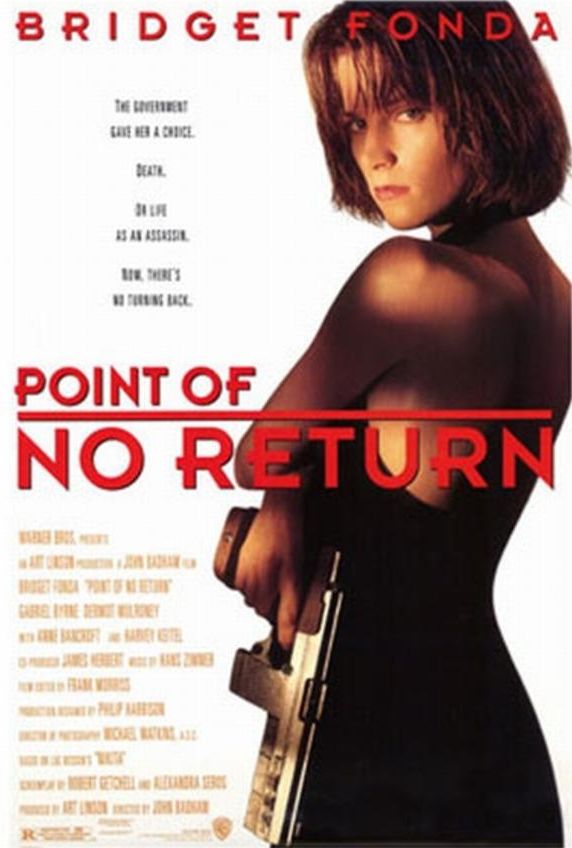
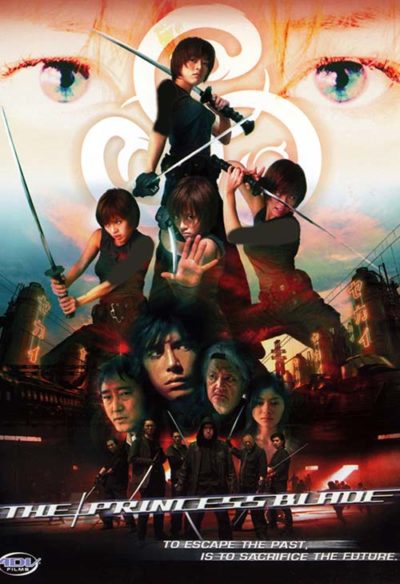 The same source comic inspired Lady Snowblood, but plenty of original thought has also been put into this, set in an interesting alternate present, after 500 years of imposed isolation. A band of fighters, the Takemikazuchi, have been thrown out of work and now roam the country, killing for pay. One of their number, Yuki (Shaku), discovers their leader (Shimoda) killed her mother, and after confronting him, leaves. Except the group’s motto seems to be, “No one here gets out alive”… She finds shelter with Takashi (Ito) – except he is part of a rebel group with a similar philosophy, so a quiet, peaceful life is not on the cards for either of them.
 If I ever become an evil overlord, I will conduct thorough background checks on all entrants to my martial arts tournament, to ensure they are not related to anyone I may previously have had killed. I will also teach my guards that if a prisoner is apparently not in his cell, they will use mirrors to examine all its corners, rather than rushing in and allowing him to drop from the ceiling onto them.