 Bruns and Olson are retired U.S. Navy officers, Olson in particular with a background in naval intelligence –and that background is drawn on heavily in the various self-published series that he and Bruns co-write. This particular 117-page novella exists only in an electronic edition; in keeping with my usual practice, I’d never have read it, but for the fact that it’s a freebie. Supposedly, it’s the fourth in a succession of “Standalone Suspenseful Short Reads.” In fact, although I read it as a standalone, it actually ties directly into The Pandora Deception, the fourth novel in the authors’ WMD Files series. (The first novel of that series is premised on the conceit that former Iraqi dictator Saddam Hussein really did have his infamous “weapons of mass destruction,” but cleverly smuggled them out of Iraq before the Americans closed in – okay, this IS fiction.) Our protagonist in this novella, Mossad agent and top-notch assassin Rachel Jaeger, is an important character in the afore-mentioned fourth novel of that series (and possibly others); and indeed, we can surmise that the reason this work is given away for free is so that it can serve as a teaser to draw readers to the series.
Actually, our heroine’s real name is Makda Moretti; “Rachel Jaeger” is her Mossad code name (jaeger means “hunter” in German, and probably also in Yiddish, which is a Germanic language; and Rachel is a name with definite Old Testament associations). Historically, going back to at least New Testament times and possibly back as far as the reign of Solomon, a certain number of blacks in East Africa have identified with the Jewish faith. Rachel was born in Ethiopia, and her mother was one of these (although her mixed race father was half Italian). But though this subculture is mentioned. the authors don’t develop it at all. Their concentration is very much on providing the character’s “origin story.”
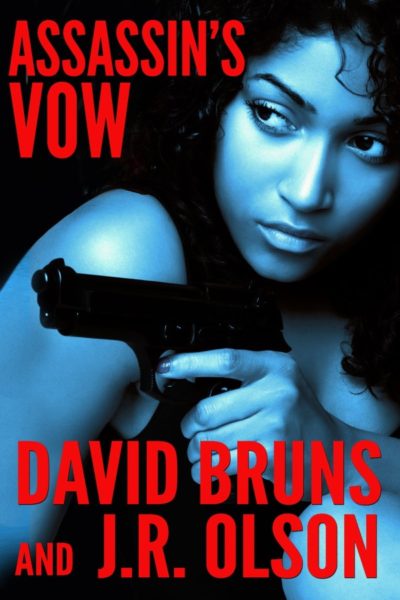 We begin en media res, on her first mission as a fledgling operative in a town on the Egyptian Sinai penninsula, where she’s supposed to provide scouting and lookout functions for a team tasked with taking out a terrorist. (But circumstances will cause her role to morph into something more demanding….) Well positioned flashbacks show us how, as a smart, physically fit and observant Tel Aviv Univ. student with a double major in economics and foreign languages, a solid background of martial arts training, and no close family (her mother had recently died, and her brother had emigrated to the U.S.) she was recruited into Mossad. (Later flashbacks show her family’s harrowing trek to Israel from danger in an unraveling Ethiopia, on which her father was killed, when she was a very small child, and a later formative experience of standing up to two bullies in order to defend another child, which shaped her penchant for defending innocents.)
Levi, the slightly older agent who recruited her, initially used the cover of a dating relationship as a medium to get close to her and check her out; this probably began as a ploy on his part, but quickly became much more serious, and the Makda-Levi relationship plays a very crucial role in the plot here. I don’t recommend reading the Amazon book description (the Goodreads database entry doesn’t have any description) because it divulges a lot of the plot, not just the premise. But suffice it to say that personal tragedy will be a shaping force in Rachel’s career. The time frame of the main tale is apparently about two years.
This is not a deep novel wrestling with moral, psychological, spiritual or political issues. There’s no real exploration of the complex roots and merits of the current Israeli vs. Arab hostility. Both Rachel’s and Levi’s role in Mossad is strictly counter-terrorism, combating and forestalling bad actors who would target and murder innocent civilians for political ends. That these people need to be stopped is a moral no-brainer, regardless of your attitudes towards Zionism or Palestinian statehood. Religion plays no role in the tale; Rachel and Levi are strictly secular and identify with Israel on the basis of peoplehood (which in her case is not exactly ethnic either, but more cultural, in a broad sense). The first time that she has to take a life (in self-defense), Rachel experiences some believable psychological distress at the enormity and finality of it, but is able to work through it and come to terms with it fairly quickly, as an action in successful and needed defense of her people; that kind of issue doesn’t arise elsewhere in the book. Despite the Amazon blurb’s overwrought reference to her “inner demons,” we don’t really meet any of the latter, our authors don’t really psycho-analyze her in depth, beyond the obvious feelings.
What it is instead is a straightforward tale of espionage action-adventure, with no real pretensions beyond offering exciting entertainment for readers who appreciate danger, suspense, physical challenges, and the satisfaction of seeing a good gal kick some bad-guy butt. :-) That’s exactly what the authors set out to deliver, and they make good on their promise admirably. This is a very well-written, fast flowing novel, with believable characters, all of them presented in life-like fashion. The prose is thoroughly serviceable, and free of bad language, with the exception of a couple of s-words in one place. (I appreciated that restraint, which I regard as a hallmark of good, tasteful writing.) There are a variety of locales here –Rome, France and Tunisia, in addition to Israel, the Sinai and East Africa, as already mentioned– and while they’re not necessarily realized with a deep sense of place (remember, this is a 117-page novella!), all of the physical settings are described vividly enough that we can easily visualize them.
Inside knowledge of espionage trade-craft and the inner workings of an intelligence agency is incorporated seamlessly into the narrative, giving it a solid feeling of verisimilitude. Our authors refrain from depicting explicit sex, and they treat sexual matters in general with restraint. It’s mentioned that Makda and Levi began sharing her bed after they’d been dating two weeks, but it’s left at that, and the feelings between the two, in fairness, are much more intense than the short time span suggests. (Normally I’m skeptical of insta-love scenarios in fiction, especially in a modern setting, but it carried complete credibility here.)
One scene had both Rachel and the target of one of her hits naked at one point, because she was posing as a prostitute in order to carry out her mission, but there’s no gratuitous physical description and no sexual activity takes place. (It’s a disgusting scene only because of the repugnant nature of the target’s exploitative and misogynistic attitudes, but he’s meant to be disgusting.) As an action adventure yarn with a government-sanctioned assassin for a main character, it’s going to feature lethal violence directly described, but there’s restraint here too; there’s no wallowing in gore for its own sake, and neither the authors nor Rachel are sadistic. (She’ll deliver certain death to her marks –who inspire no particular pity!– with consummate efficiency, but she”ll deliver it quickly and cleanly.)
My high rating reflects the degree of skill with which the authors deliver on the conventions of their genre, as well as my enjoyment of the tale (I’d easily have read it in one sitting if my time had allowed!). The only negative I felt is that Rachel’s character arc here doesn’t leave her, emotionally, in as good a place at the end as her friends would want her to be. (And by the time you finish the book, if you read it, you’ll probably also count yourself among her friends. :-) ) To be fair, however, that’s because it’s not a complete arc; the authors have at least one more adventure for her, in a full-length novel that will probably allow for much more progress in her personal life journey. Sadly, I don’t plan to witness it; at the age of 70 and with a gargantuan TBR, I don’t choose to get sucked into the welter of Bruns’ and Olsen’s various series, so I read this as a stand-alone. But I wish our heroine well; and can unhesitatingly recommend at least this start of her saga to all fans of espionage thrillers and action heroines!
Author: David Bruns and J. R. Olson
Publisher: Reef Points Media; available through Amazon, currently only as an electronic book.
A version of this review previously appeared on Goodreads.



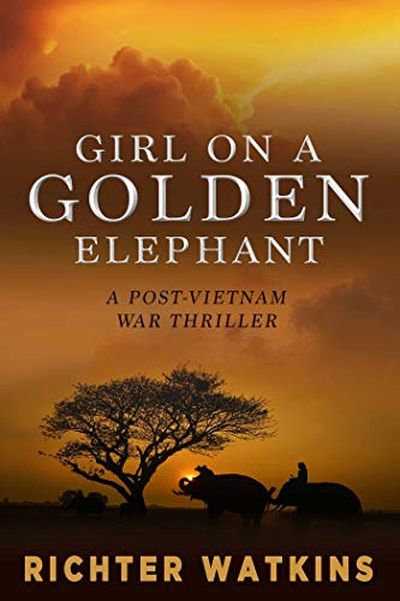 War correspondent Kiera Hunter goes out of her comfort zone, to try and solve a decades-old mystery related to her grandfather. He was a CIA pilot, on one of the last planes to get out of Saigon in 1975, but it crashed deep in the Laotian jungle, carrying a statue of deep iconic significance to the locals. This depicted legendary freedom fighter Trưng Trắc on an elephant, which will be significant later. After the death of her gramps, Kiera finds papers describing the location of the crash, and heads to the area to try and locate it. There she teams up with guide Porter Vale, but there are other, envious eyes after the cargo, and prepared to go to any lengths to obtain it.
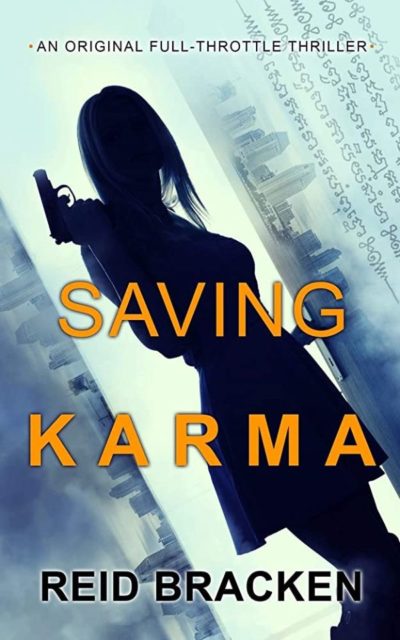 On Amazon, this is subtitled, “A full-throttle Thailand thriller,” but that’s a little bit of a misleading label. The bulk of the story – at least, the bits that matter – actually take place in China. The book itself goes with “A full-throttle thriller throughout Asia,” Except it starts off in the not-exactly Asian setting of San Bernardino, California, where Bree Thomas is just about to graduate. This is despite the problems of her adopted family, who she was sent to live with after her parents were killed in Thailand. She gets a chance to escape it all, in the form of an apprentice program with the Meng Foundation, a charitable group who help refugees around the world.
 I think I can point almost to the exact point where this one jumped the shark. It had started well enough. Jamie Austen works for the CIA, taking down human traffickers across the world, in conjunction with a non-governmental organization called Save the Girls. Now, I have questions here: why exactly would the CIA
  On the surface, Scala City is an idyllic, hi-tech world of prosperity, peace and morality, albeit at the cost of omnipresent surveillance of its residents. But there’s a dirty little secret. The Blind Spot is an area where surveillance is barred, and where the citizens of Scala City go to blow off their sordid steam. Its residents have cybernetically enhanced bodies, something rejected by Scala City, and a zero-tolerance policy for any kind of monitoring. It’s run by Wrench, who has kept his daughter Marcie Hugo under strict control since the death of her mother. However, like all teenagers, the 16-year-old Marcie is seeking to spread her wings, and has been making covert excursions into Scala City, with the aim of moving there some day soon.
 Somebody
  Detective Inspector Stella Cole has her life turned upside down when her lawyer husband is killed in a hit-and-run accident, leaving her to bring up daughter Lola on her own, and struggling with an addiction to both booze and painkillers – anything to numb the pain of everyday existence. Though the driver in question is arrested, he receives a paltry sentence of only three years, and Stella begins to plot taking her own revenge. This is brought up short when the perpetrator is killed in prison, and evidence begins to accumulate that her husband’s death may not have been accidental.
 Liane Zane’s Elioud Legacy trilogy, all three books of which I’ve previously reviewed, is supernatural fiction, written by a Roman Catholic author, and premised on the fictional conceit that matings between angelic beings (both fallen and unfallen) and humans have been going on since before the Flood, producing mixed-race offspring who are physically human but have certain heightened physical or even latent supernatural abilities. That trilogy focused on three strong and courageous young women, who when it opened were completely unaware of their angelic genes, and all of whom were both serving in the intelligence services of their various countries, and collaborating with each other on the side in a covert alliance to provide some special protection for the victims of sexual assault and trafficking. The Covert Guardian is the first volume of a projected prequel trilogy, set a few years before the opening of the previously-published one, which will tell the “origin story” of their friendship and alliance. Here, our protagonist is Olivia Markham, the trio’s unofficial ringleader, and we learn how, as a 20-year-old college pre-med student, she unexpectedly came to join the CIA.
Unlike the first trilogy, this one really has no supernatural elements. Readers who’ve read the former will suspect, from certain subtle clues, that a couple of secondary characters here may also be Elioud, and will remember the St. Michael medal (a gift from her sensei) that Olivia wears, which feels strangely warm at times; and she has a sort of instinctive sixth sense for approaching danger that her then-boyfriend rather snidely dismisses as her “spidey sense.” But none of this is obviously paranormal nor impossible to explain naturalistically. I’ve classified the book as straight-out, descriptive action-adventure and espionage fiction, and it will definitely appeal to fans of those genres whether they have any liking for supernatural fiction or not.
The previously-published books mentioned, as a painful experience in Olivia’s past, the murder of her cousin Emily when the two girls were 16; they were close, and the tragedy was a formative factor in shaping Olivia’s deep desire to protect the innocent victims of brutality. In the modern U.S., the wheels of the justice system grind very slowly, so the killer’s trial was delayed until the summer before Olivia was to become a junior at Brown Univ. (She’s New England born and bred, living with her family in a suburban town outside Boston.) When our tale opens, soon after testifying, Olivia’s been talked by her boyfriend into joining him in a vacation on Ibiza, a real-life Mediterranean island off the coast of Spain which is a popular tourist destination, as a supposed opportunity to rest and heal from the re-lived traumatic experience. Even at this stage in her life, she’s strong, physically fit and athletic, smart, brave and quick-thinking; and since Emily’s murder, she’s been taking serious martial arts training. (And then there’s that “spidey sense” I mentioned….)
These qualities will stand her in good stead when, just four pages into the narrative, a squad of Islamist terrorists hit the beach, bent on slaughtering the revelers. Fortunately, a CIA counter-terrorist strike force is nearby; but by the time the action is over, Olivia’s displayed enough mettle to get their attention. (As they’ll soon learn, it also doesn’t hurt that she’s fluent in several languages, and qualified for the U.S. Olympic team in archery while still in high school.) Before the summer is over, she’s training at a CIA-run camp in North Carolina, and she feels that she’s found her true calling. And as luck would have it, an attractive female college student might just fit the mission profile for getting close to a wealthy young playboy type suspected of funding global terrorist activities. But chicanery, corruption, and betrayal of the U.S. aren’t necessarily things that only go on outside of the CIA, and our heroine’s path to joining the Company may not be an easy cake-walk.
Although the books of the Elioud Legacy trilogy are all thick, at just 155 pages, this one is more novella length, and a quick read. Like the former books, though, it moves around geographically, in this case to locations on three different continents; and the author’s knowledge of the physical geography of all of these settings is impressive. She’s a skilled wordsmith, seasoned in the novelist’s craft and able to immerse the reader in the story, and there are some surprises up her sleeve. For readers who want danger, tension, and well-depicted action scenes, this yarn definitely delivers. It’s not characterized by profound ethical dilemmas or deep spiritual, philosophical or political content, being more straightforward in those areas (in the context of the espionage genre, Zane is more in the tradition of Manning Coles or Alistair MacLean than, say, John LeCarre’), but I don’t view this as is any sense a fault, nor will most genre fans. What readers –genre fans or not– do want in fiction, more than action and danger, is the human element, a central character(s) we can like and feel invested in enough to care about the action and danger in the first place. That test is amply met here. Olivia is a winsome, dynamic protagonist whom we get to know and appreciate, and this is a character-driven tale of her growth and maturation in various ways in the crucible of a testing ordeal.
As I’ve said before in reviewing this author’s work, it’s fiction written by a Christian, rather than the kind of commercially “Christian fiction” the book trade markets as such. Olivia’s a basically kind and ethical-minded person, and cares about right and wrong as she understands them; but by her own statement, here she’s still “not really a believer.” Bad language is a hair more prominent here than in the first trilogy, though it’s actually more prominent in the first few pages here than it is in most of the book. College-age Olivia herself is capable, when she’s angry, of thinking or saying some pretty bad words, including obscenity (in a couple of languages). And though there’s no explicit sex, we know that an unmarried sexual encounter takes place at one point. The author makes us completely understand the psychology behind it; it’s a case of allowing the character to be who she realistically is, and possibly to grow through all of her decisions, both the good and the misguided ones, into the person she’s finally becoming. (That’s what good authors do.)
Finally, a worthwhile question might be, does a reader need to have read the Elioud Lagacy books before reading this one? My answer would be no; having read those books will allow you to better appreciate some adumbrations of the future you can see here, but it’s not essential, and no knowledge of them is presupposed here. You could begin with this book as an appetizer for the corpus as a whole.
Author: Liane Zane
Publisher: Zephon Romance; available
Liane Zane’s Elioud Legacy trilogy, all three books of which I’ve previously reviewed, is supernatural fiction, written by a Roman Catholic author, and premised on the fictional conceit that matings between angelic beings (both fallen and unfallen) and humans have been going on since before the Flood, producing mixed-race offspring who are physically human but have certain heightened physical or even latent supernatural abilities. That trilogy focused on three strong and courageous young women, who when it opened were completely unaware of their angelic genes, and all of whom were both serving in the intelligence services of their various countries, and collaborating with each other on the side in a covert alliance to provide some special protection for the victims of sexual assault and trafficking. The Covert Guardian is the first volume of a projected prequel trilogy, set a few years before the opening of the previously-published one, which will tell the “origin story” of their friendship and alliance. Here, our protagonist is Olivia Markham, the trio’s unofficial ringleader, and we learn how, as a 20-year-old college pre-med student, she unexpectedly came to join the CIA.
Unlike the first trilogy, this one really has no supernatural elements. Readers who’ve read the former will suspect, from certain subtle clues, that a couple of secondary characters here may also be Elioud, and will remember the St. Michael medal (a gift from her sensei) that Olivia wears, which feels strangely warm at times; and she has a sort of instinctive sixth sense for approaching danger that her then-boyfriend rather snidely dismisses as her “spidey sense.” But none of this is obviously paranormal nor impossible to explain naturalistically. I’ve classified the book as straight-out, descriptive action-adventure and espionage fiction, and it will definitely appeal to fans of those genres whether they have any liking for supernatural fiction or not.
The previously-published books mentioned, as a painful experience in Olivia’s past, the murder of her cousin Emily when the two girls were 16; they were close, and the tragedy was a formative factor in shaping Olivia’s deep desire to protect the innocent victims of brutality. In the modern U.S., the wheels of the justice system grind very slowly, so the killer’s trial was delayed until the summer before Olivia was to become a junior at Brown Univ. (She’s New England born and bred, living with her family in a suburban town outside Boston.) When our tale opens, soon after testifying, Olivia’s been talked by her boyfriend into joining him in a vacation on Ibiza, a real-life Mediterranean island off the coast of Spain which is a popular tourist destination, as a supposed opportunity to rest and heal from the re-lived traumatic experience. Even at this stage in her life, she’s strong, physically fit and athletic, smart, brave and quick-thinking; and since Emily’s murder, she’s been taking serious martial arts training. (And then there’s that “spidey sense” I mentioned….)
These qualities will stand her in good stead when, just four pages into the narrative, a squad of Islamist terrorists hit the beach, bent on slaughtering the revelers. Fortunately, a CIA counter-terrorist strike force is nearby; but by the time the action is over, Olivia’s displayed enough mettle to get their attention. (As they’ll soon learn, it also doesn’t hurt that she’s fluent in several languages, and qualified for the U.S. Olympic team in archery while still in high school.) Before the summer is over, she’s training at a CIA-run camp in North Carolina, and she feels that she’s found her true calling. And as luck would have it, an attractive female college student might just fit the mission profile for getting close to a wealthy young playboy type suspected of funding global terrorist activities. But chicanery, corruption, and betrayal of the U.S. aren’t necessarily things that only go on outside of the CIA, and our heroine’s path to joining the Company may not be an easy cake-walk.
Although the books of the Elioud Legacy trilogy are all thick, at just 155 pages, this one is more novella length, and a quick read. Like the former books, though, it moves around geographically, in this case to locations on three different continents; and the author’s knowledge of the physical geography of all of these settings is impressive. She’s a skilled wordsmith, seasoned in the novelist’s craft and able to immerse the reader in the story, and there are some surprises up her sleeve. For readers who want danger, tension, and well-depicted action scenes, this yarn definitely delivers. It’s not characterized by profound ethical dilemmas or deep spiritual, philosophical or political content, being more straightforward in those areas (in the context of the espionage genre, Zane is more in the tradition of Manning Coles or Alistair MacLean than, say, John LeCarre’), but I don’t view this as is any sense a fault, nor will most genre fans. What readers –genre fans or not– do want in fiction, more than action and danger, is the human element, a central character(s) we can like and feel invested in enough to care about the action and danger in the first place. That test is amply met here. Olivia is a winsome, dynamic protagonist whom we get to know and appreciate, and this is a character-driven tale of her growth and maturation in various ways in the crucible of a testing ordeal.
As I’ve said before in reviewing this author’s work, it’s fiction written by a Christian, rather than the kind of commercially “Christian fiction” the book trade markets as such. Olivia’s a basically kind and ethical-minded person, and cares about right and wrong as she understands them; but by her own statement, here she’s still “not really a believer.” Bad language is a hair more prominent here than in the first trilogy, though it’s actually more prominent in the first few pages here than it is in most of the book. College-age Olivia herself is capable, when she’s angry, of thinking or saying some pretty bad words, including obscenity (in a couple of languages). And though there’s no explicit sex, we know that an unmarried sexual encounter takes place at one point. The author makes us completely understand the psychology behind it; it’s a case of allowing the character to be who she realistically is, and possibly to grow through all of her decisions, both the good and the misguided ones, into the person she’s finally becoming. (That’s what good authors do.)
Finally, a worthwhile question might be, does a reader need to have read the Elioud Lagacy books before reading this one? My answer would be no; having read those books will allow you to better appreciate some adumbrations of the future you can see here, but it’s not essential, and no knowledge of them is presupposed here. You could begin with this book as an appetizer for the corpus as a whole.
Author: Liane Zane
Publisher: Zephon Romance; available  This is a fairly classic “rise from nowhere” story, yet is well-executed and done in a world which is interesting for its differences. The heroine is – surprise! – Marilia, whom we first meet on the battlefield, about to face an opponent of superior numbers. We then flash back to her childhood, growing up in a Tyracian brothel. Her mother was one of the “painted ladies,” but after she dies, Marilia and her brother Annuweth are on increasingly thin ice. Their effort to run away is unsuccessful, yet does bring them a chance at a new life. While it’s here that Marilia discovers her tactical savvy through board games, it’s not without its downside, the siblings being split up after Marilia enters an arranged marriage in another territory.
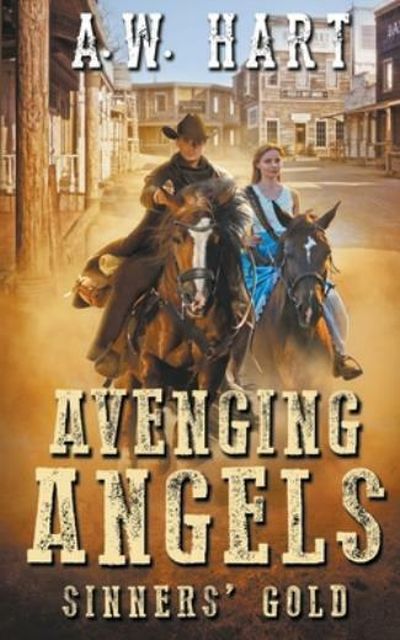 “A. W. Hart,” the nominal author of the Avenging Angels series, is actually a house pen name used by Wolfpack Publishing for the multiple authors of this and one or two of their other series. Where books are marketed or shelved by the author’s name, this device allows a series to be kept together. It also makes it possible for the same main character(s) to be featured in a number of adventures, without being limited to the imagination or time constraints of a single author.