



 ★★★★
★★★★
“Calor blanco”
 This is far from the first time we’ve covered films, series or documentaries about Griselda Blanco, the drug boss who ruled Miami with a lead fist in the eighties. There was Colombia narconovela La Viuda Negra. Lifetime TVM Cocaine Godmother, starring the not exactly Colombian, Catherine Zeta-Jones. And there was factual retelling, Queen of Cocaine. Now, we get the highest-profile version, made by Netflix and starring probably Colombia’s best-known actress. Albeit best-known for her role in long-running sitcom, Modern Family. We saw her here previously in the underwhelming Hot Pursuit, but this is a very different kettle of fish. Concern was understandable. Would she be up to the dramatic lifting required for such a heavy and complex role?
Yes. That’s the short answer. She does a fine job of depicting a character whose defining trait, in this rendition, is single-minded determination. It’s an aspect apparent from the start, where she flees her abusive husband in Medellin. Griselda arrives in Miami with her three kids, and little more than the clothes on her back. Oh, and the kilo of top-shelf cocaine, swiped from her spouse. Through sheer refusal to take no for an answer, she finds a buyer and convinces him to give her a shot [she meets him in Miami’s Mutiny club – Chris was actually a member there back in the day!]. When he stiffs her, she reels in a Colombian supplier, convinces him to front her 100 kilos, then creates her own market and network of dealers.
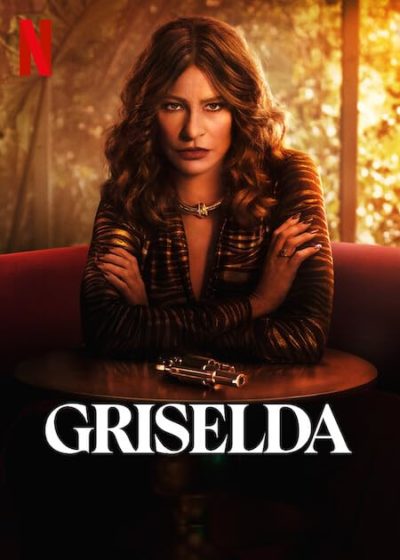 It’s kinda inspiring, weirdly. Early on, the series can be seen a twisted version of the American dream, where an immigrant can come to America, pull themselves up by their bootstraps, and anyone can achieve success if they work hard. The reality is, Blanco didn’t arrive in Miami seeking asylum from domestic abuse, but fleeing increased law-enforcement heat for drug trafficking in New York. Not exactly what Vergara described the show as, depicting “How beyond all odds, a poor uneducated woman from Colombia managed to create a massive, multi-billion dollar empire in a male-dominated industry, in a country that was not her own.” You go, #girlboss! #slay!
Often literally. For her chosen profession here is thoroughly illegal, and the hard work involves ordering brutal violence against your rivals and enemies. This might be a cause for concern. But who are we to quibble? The makers have said they didn’t want to make a hero(ine) out of her. Neither did Brian de Palma, and yet, you can buy Scarface T-shirts. The market decides for you, and the way it depicts the violence for which Blanco is responsible seems more like an attempt at plausible deniability. It’s the usual double standard of Hollywood: making disapproving noises, while also depicting Griselda strutting glamourously out of the Mutiny, blood spattered on her cheek from a recent victim.
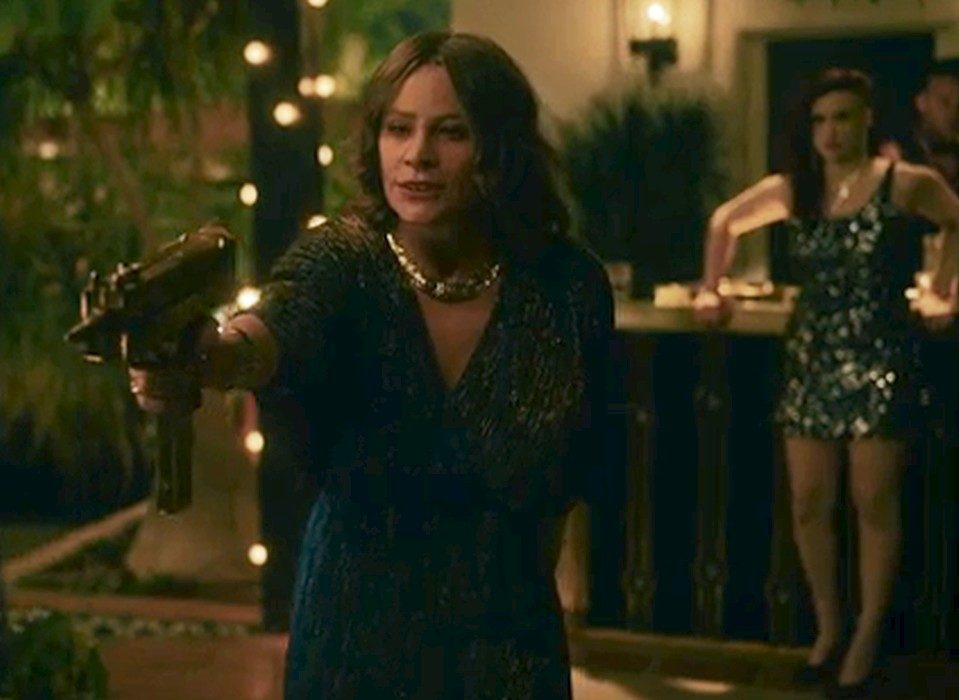
Griselda has a strict zero-tolerance for anyone who thinks she is a soft mark because she’s a woman. Especially in the early part of her career, was quite willing to wield a baseball bat or gun to that end. Later on… well, she had people for that sort of thing. But as we head into the second half, things get progressively darker. Griselda starts to become paranoid, suspecting the people around her – an attitude not helped by her taste for smoking crack. She believes there’s an informant in her circle, and takes brutal action against those who she thinksit might be. Things peak at a birthday party for Dario (Guerra), her third husband. It ends in Griselda letting loose with her gold-plated MAC-10 (top).
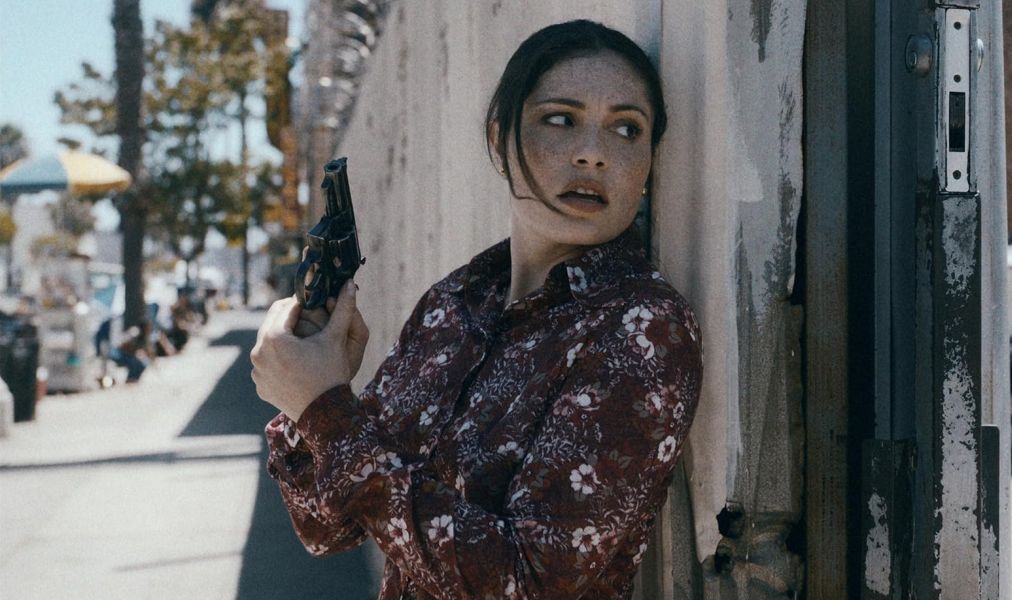
The irony is, there’s no informant: just good police work. For on the other side of the law, the series gives us June Hawkins (Martinez, bottom), intelligence analyst and detective in the local police force. She was also a real person, one who played a significant role in the pursuit and capture of Griselda, being one of the first to realize a woman had taken over the drug trade in Miami. I suspect her role was likely inflated somewhat, in order to act as a counterpoint to her target: co-creator Doug Miro admitted about the character, “There’s a fair amount of artistic license.” That applies to the whole series, though I’m not inclined to complain.
It is a fairly straightforward rise-and-fall, charting first Griselda’s path up to the top, when she was earning $80 million per month. This is followed by the slow but likely inevitable collapse, as her business rivals and law enforcement catch up with her. We know how the story eventually ends – in a pool of blood outside a Medellin butcher’s shop. The series doesn’t bother going all the way to the end. It finishes with Blanco released from jail, sitting on the beach. But it’s not a happy ending, having just been told that she has lost almost everything for which she worked: three of her four sons have been murdered. Conventional morality wins out in the end.
 In terms of production value, this is definitely several slices above the other efforts, even if Los Angeles stood in entirely for Miami (the latter no longer resembling what it was at the time). Of particular note is the make-up work on Vergara. It must have been a challenge, because events unfold over a significant number of years: your lead is, obviously, more or less fixed at a point in time. Initially, there’s little of note, but it gradually builds up, in a way that’s so subtle you might not notice. Until, by the end, you suddenly realize the character no longer looks like the actress. Though still rather prettier than the real Griselda.
I highly doubt this will end up being the final or even the definitive version of the Griselda Blanco story. The last surviving son, Michael Corleone, filed suit against Netflix, and reports indicate he has his own version of the family story he would like to tell. For now, however, this is the best adaptation of her life. If obviously skewed towards a questionable message of feminist “empowerment” which the makers wanted to send, Vargas’s strong performance holds the strands together and makes for a captivating experience.
Dir: Andrés Baiz
Star: Sofía Vergara, Alberto Guerra, Martin Rodriguez, Juliana Aidén Martinez
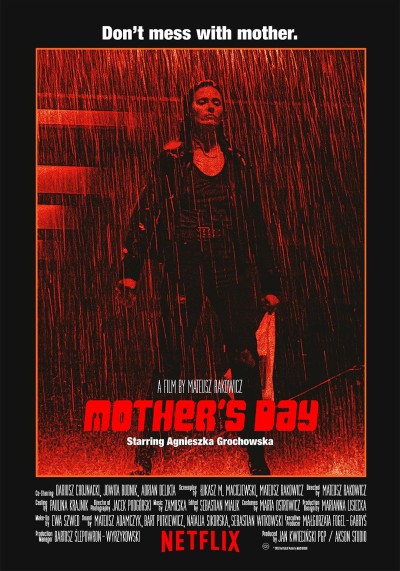 I’d be the first to admit, those issues likely extend beyond the characters in the movie, and probably extend to the script writers, because there are certainly… well, let’s just say, some novel concepts here. The heroine is Nina Nowak (Grochowska), a former Special Ops soldier, who had to fake her own death and give her son Maks up to adoption, for both their security. She’s been keeping an eye on Maks (Delikta) from afar, but after he’s abducted at the request of a gangster Nina took down, she needs to become considerably more hands-on. Rescuing Maks, however, will bring her into contact with a number of rather odd people, on both sides of the law.
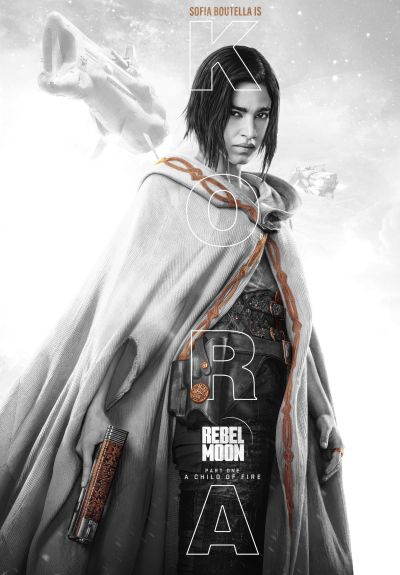 Despite critical derision, this is actually perfectly serviceable pulp SF. Sure, it’s derivative as hell. But the critics getting all huffy about the similarities to Star Wars seem to have forgotten George Lucas only made his film, after failing to acquire the rights to Flash Gordon. This is Snyder’s equivalent to The Fifth Element, in that it’s a long-gestating SF idea, originally conceived well before he became a director. “The Dirty Dozen in space” was the high concept, although there is no denying the SW similarities, especially in the early going. I mean, young orphan on a backwater farming planet gets sucked in to galaxy-hopping adventures, joining a rebellion against an evil empire? Yeah, a little more originality would be welcome.
 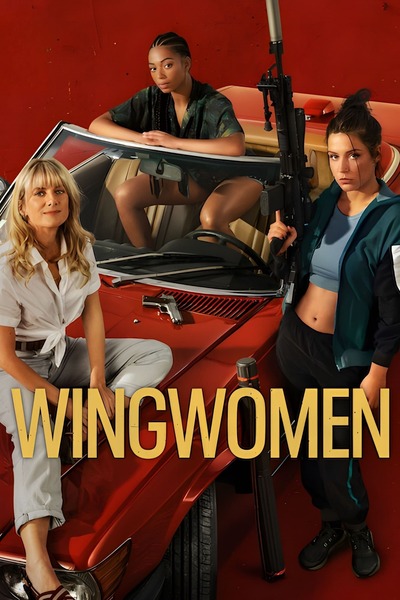 Netflix describes this as “Charlie’s Angels meets Lupin, with a dash of Killing Eve.” Um. About that… While I haven’t seen Lupin, I can confidently state any similarity to the others is tangential at best. For example, the only thing this really has in connection with Charlie’s Angels, is that there’s three of them. But here, it’s more like 2.25, since the third member is largely useless. It’s almost entirely the story of Carole (Laurent) and Alex (Exarchopoulos), two thieves who work for the enigmatic Marraine (Adjani). But Carole has discovered she’s pregnant and wants out of the business. Marraine is not happy, but agrees, providing Carole does that hoariest of film clichés: One Last Job.
 I should be clear, this is not to be confused with
 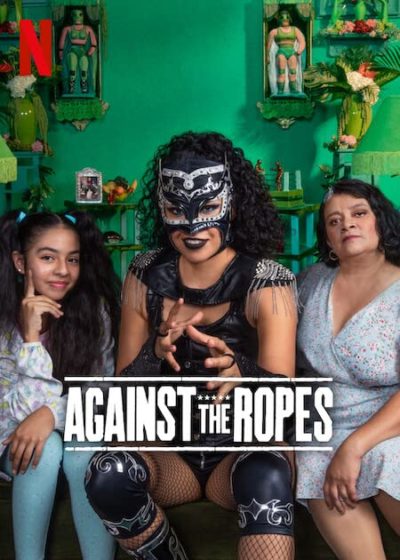 In one of the odder remakes I’ve seen in a while, this is a repurposing of the French 2013 film, Les reines du ring, which translates as “Queens of the Ring”. The core concept is retained, but the location is changed from France to Mexico, and the idea is expanded to a ten-part series. These changes make for a bit of a mixed blessing. Pro wrestling is certainly a more well-established part of the cultural landscape in Mexico, where lucha libre is extremely popular. On the other hand, the multiplication of the running time a factor of about four, leads to the necessary injection of superfluous storylines, which definitely reduced the entertainment value as far as I was concerned. It’s less a wrestling soap-opera, than a soap-opera with wrestling in it.
 Okay, I will admit that this strained credibility on a number of occasions, to the point that buttons were popping off its shirt. But I don’t think the makers were exactly going for gritty realism, and the bottom line is: I enjoyed this a lot. Certainly, more so than
 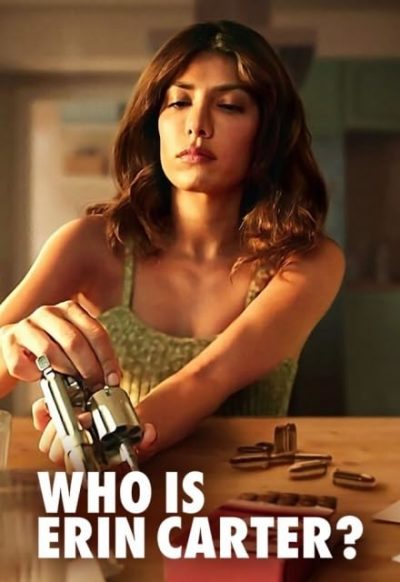 Turns out, Erin has a past, and the publicity resulting from her impromptu heroism brings it to visit. She finds herself embroiled in murder, organized crime and police corruption, as well as more normal familial drama, such as neighbourhood jealousy and whiny pre-teen nonsense. One of the seven 45-minute episodes is entirely in flashback (unexpected Jamie Bamber!), explaining the reason she changed her identity and moved to Spain, as well as why those from her history are keen to catch up with her. Even the spectacularly unobservant Jordi begins to realize that his other half is not quite as claimed. Her original explanation of a relapse into alcoholism doesn’t exactly explain all the sudden absences, injuries and unusual behaviour Erin is now exhibiting, as she tries to manage the escalating situation.
 ★★
★★ This one certainly won’t, barely reaching the level of acceptable entertainment, and sadly, continuing Gal Gadot’s streak of swings and misses. She blazed onto the scene in
  Dear god, I almost lost consciousness merely typing the previous paragraph. Reviewing the previous work of writers Greg Rucka and Allison Schroeder, what stands out is an almost complete lack of action movies. Rucka has worked mostly in comics (including the one which became
 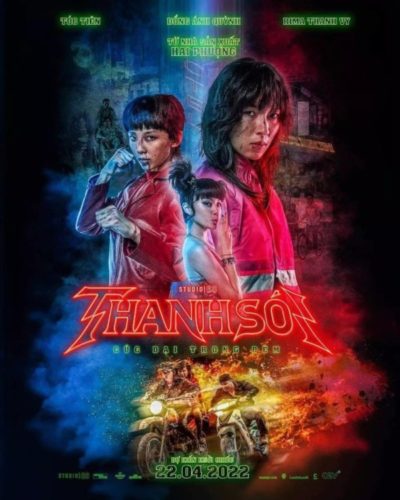 This is a prequel of sorts to
 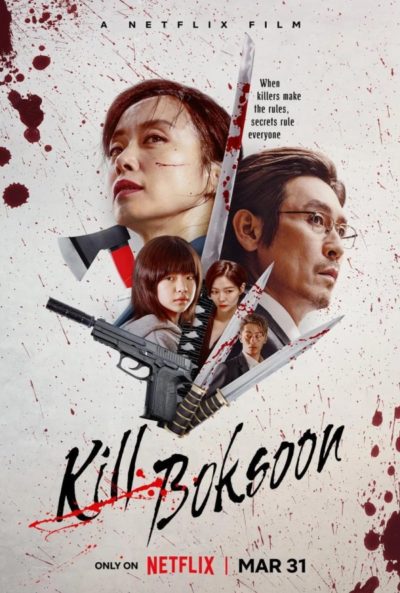 There’s a lot to admire about this South Korean film, though a couple of fumbles stop it from achieving the heights it threatens to do. You’d be forgiven for thinking it’s a knock-off of Kill Bill going by the title. But it’s as much a pun on the name of the heroine, Gil Bok-soon (Jeon). She has been an assassin since she was 17, and has worked her way up to be the top employee of the MK. ENT corporation, run by Cha Min-kyu (Sol). They are one of a number of competing companies offering killers for hire, but to ensure standards, certain common rules have been agreed, e.g. no kids, and are adhered to by all. Well… Kinda…