



★★★
“This world was made for hate, not love.”
 It’s startling to think that when this came out, this merited not only a theatrical release in the United States, but a review from perhaps the most respected critic of our time, the late Roger Ebert. Needless to say, it didn’t end well for the film, but Ebert tearing apart a film is still fun to read. I particularly liked the line, “There are spears and bows and arrows and swords, which suggests early times, but then again all of the women on both sides are fresh from the hair dryer. They also exhibit impressive technical advances in the art of brassiere-design.” Yeah, welcome to The Magnificent Seven – only set in a vaguely Greco-Roman era, with a tribe of rather vicious Amazons the antagonists.
They live by raiding and plundering local villages, under Queen Eraglia (Love), but after they kill her father, local lass Valeria (Tedesco) has had enough, and rents the service of conveniently-passing bandit Zeno (Tate), to teach the village farmers how to defend themselves. However, the sexual chemstry that flies between Valeria and Zeno fail to impress her betrothed, who convinces a group of village men, that their best chance of survival is to switch sides, reveal details of the defense plans to Eraglia, and hope she sees fit to give them mercy. It turns out though, that he may not be the only snitch present in the town camp, as things proceed towards the entirely expected finale, a lengthy battle pitting the raiding women against the defending agriculturalists.
It’s actually a little darker and possibly somewhat more well-thought out than I expected: the final line of dialogue being the one atop this review, which sprinkles a nice sense of doom and futility over things, and the multiple levels of betrayal are effectively handled. I started watching this on a plane flight to New York, but I think the second topless torture scene was about where I opted to save it for another day, though there really isn’t much else here worse than PG-13 rated. Tedesco makes a good impression as the feisty heroine, and it’s a nice touch to have women effectively leading both sides, though when it comes to the actual fighting, Valeria obviously steps aside for Zeno. Sadly, the Amazons also step aside when the action kicks off, largely being unconvincingly replaced by male stunt doubles in masks and wigs. Valeria acquits herself best there as well, indeed coming to the rescue of her employee in the final face-off. I can’t honestly say I minded the dubbing as much as Roger, and the time passed briskly enough on its way to an appropriately grandiose finale. Though I’m certainly agree with him on one point: I’m not quite sure why the local men made such a fuss about getting kidnapped…
Dir: Alfonso Brescia
Star: Lincoln Tate, Paola Tedesco, Lucretia Love, Mirta Miller
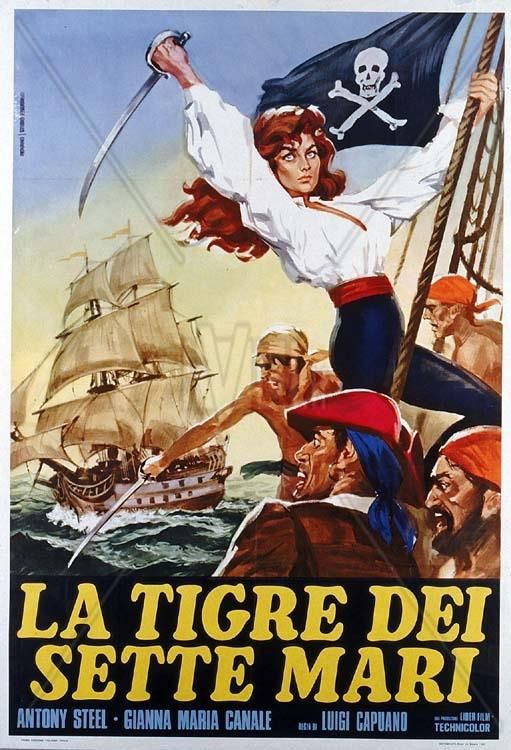
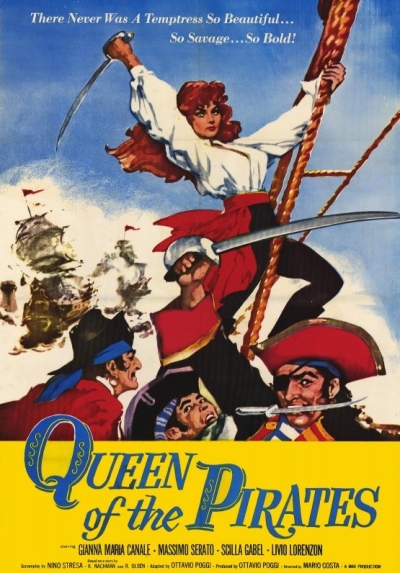 Sandra (Canale) and her father fall foul of the local tyrannical Duke (Muller) after they refuse to pay his excise duty. Arrested, the arrival of the poor but noble Count of Santa Croce, Cesare (Serato), saves them from death – or a fate worse than in Sandra’s case, as the Duke has a profitable sideline, shipping local girls off to the Middle East. After escaping, they join up with a local pirate band, who agree to help target the Duke after Sandra bests their leader in sword-play. To gain the hand of the duke’s daughter, Isabella (Gabel), Cesare agrees to hunt down the “Queen of the Pirates” who has brought trade to a standstill, not knowing that his target is the same woman he helped save, and since then has had a secret longing.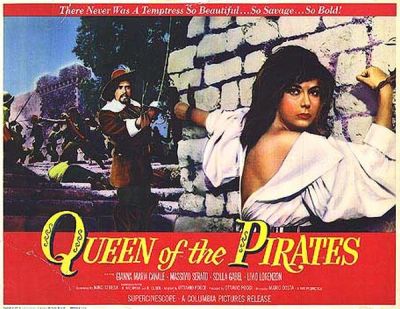
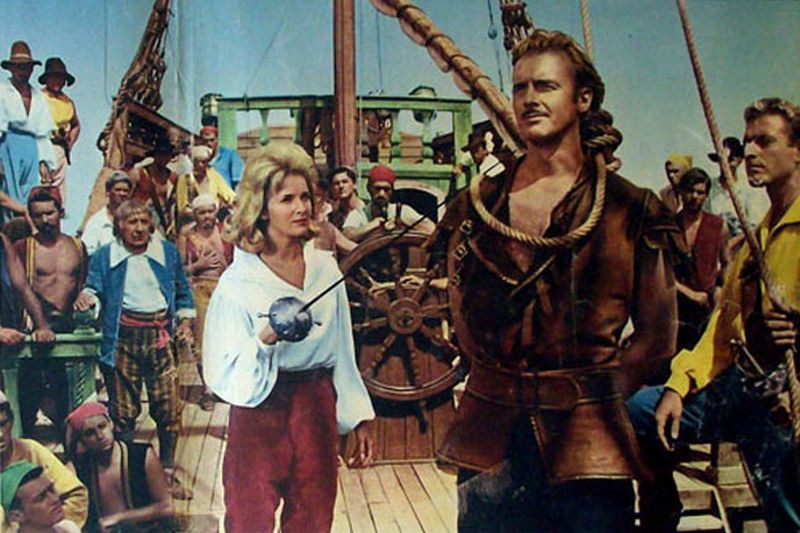
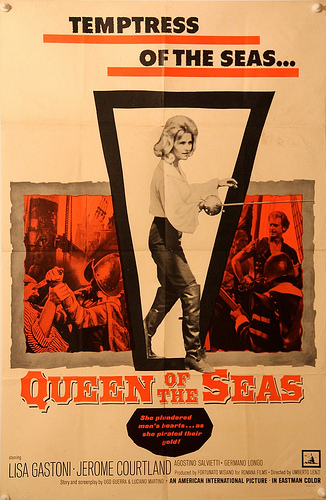 Despite its age – this was made in 1961 – it has stood the test of time fairly well, except for a romantic ending which is both predictable and unfortunate. This turns the heroine into exactly the subservient woman she spent the first 80 minutes
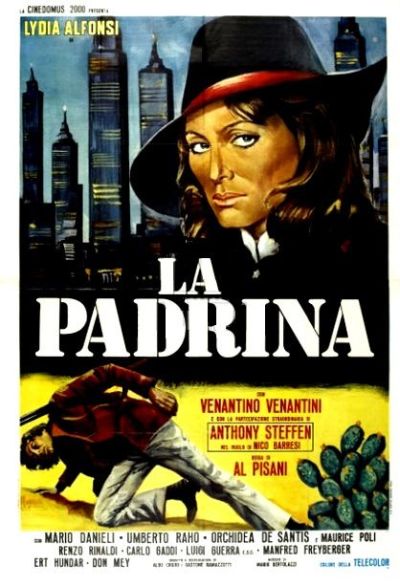 The tenth wedding anniversary of Donna Costanza (Alfonsi) in New Jersey is rudely interrupted when her husband is gunned down during the party. For he was a Mafia boss who, it appears, had crossed the wrong person. Before dying, he whispers to his wife, “Giarratana from Palermo,” apparently fingering the man behind the hit. Seeking revenge, Madam Costanza flies to Sicily, and meets up with a loyal family employee, soliciting his help to plan the death of the local boss fingered by her husband’s last words. But things are considerably more murky than they seem, as Costanza has wandered into the middle of some shenanigans involving a corrupt local official, a police investigation and an arms deal, which are all leaving a trail of corpses in their wake. And someone wants Donna to join the dead bodies, first trying to blow up her plane, then sabotaging the brakes on her car. When a supposedly blind man guns down her contact in the street, it’s getting too warm for comfort.
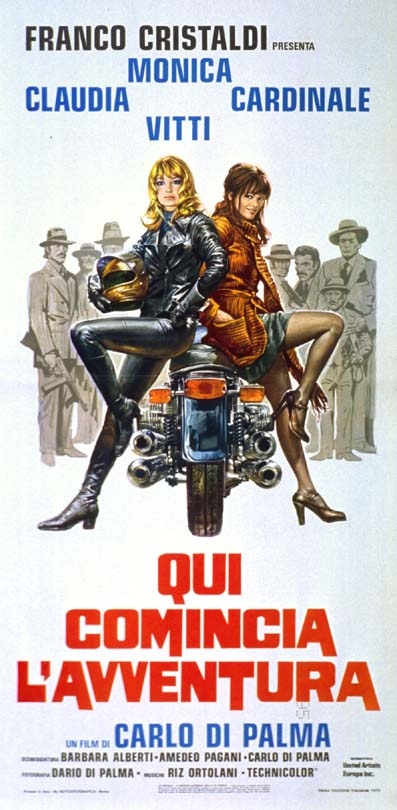 Claudia (Cardinale) has a humdrum life working in a laundrette, with a sleazy husband and no hope of anything more exciting in her future. Into the laundrette storms the titular woman, Miele (Vitti), whose devil-may-care attitude enthralls Claudia, and gives her the courage to throw away her staid existence and follow the blonde on the road. Miele is initially resistant to the idea of a travelling companion, but rides to the rescue, driving her bike through the railway station where Claudia is being harassed. Miele must make a mysterious appointment in Northern Italy with her lover, but that’s okay, as Claudia has a cousin, on the way, in Naples. However, as the two make their way, it gradually becomes clear that Miele could give Baron Munchausen a run for his money, when it comes to spinning tall tales, and both her mouth and impetuous actions, are as likely to get the pair into trouble as out if it.