 ★★★
★★★
“French kissing in the USA”
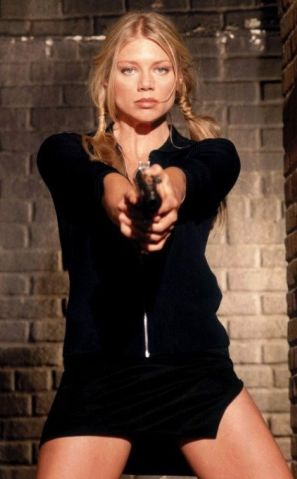
To say I approached this show in a roundabout way would be an understatement. 15 years after its original screening, after three separate movie versions and two seaseons of the largely unrelated version of the story starring Maggie Q, I finally got round to it. So, bearing tht in mind, it’s a different beast from what I expected – mostly because it’s a lot less action-oriented. Peta Wilson, as lost soul turned government operative Nikita, looks like she could potentially kick your arse, but (largely for budgetary reasons, I believe) there’s only token moments of hand-to-hand action: the focus is much more on spycraft, undercover work and deceit, rather than full-on assaults. There are still occasional sequences, but even these tend to involve relatively brief gun-battles, not the martial arts brawls which are one of the new version’s trademarks.
 The other chance is that Section One, their version of Division, is not malicious – at least not in the same way. It’s certainly a heartless organization, which is utterly ruthless, and prepared to dispose of anyone who may interfere with their actions, but it’s more an awareness that when you’re dealing with terrorists, organized crime or other threats to the country and world, you can’t be unwilling to get your hands dirty. It leads to a significant bleaker overall tone, and is amazingly prophetic, given this was screened well before 9/11 led to this attitude become a necessary part of national security. Early on, it’s established that you can never trust Section heads Operation (Glazer) and Madeleine (Watson, who was also part of the remake, playing Senator Pierce – her given name there was also Madeleine), to the extent that their deceit becomes almost a cliché.
There are some direct nods to Besson’s movie: her first assignment is to murder a target in a crowded restaurant, and the bathroom assassination crops up in a later episode. On the other hand, there is one significant difference from the original film, in that Nikita here is genuinely innocent of the crime for which she is sentenced, simply happening to be in the wrong place at the wrong time. Her refusal to engage in the actions Section demands of her is a strong thread of the first season, with a reluctance to compromise her moral code being pitted against Section’s desire to control her for their own ends. Early on, she risks “cancellation” (termination with extreme prejudice) more than once, by disobeying orders, usually to protect others from Section action.
Another area in which this show differs from the current version, is a much more pronounced use of music. There are fairly lengthy sequences, several minutes on occasion, where scenes unfold over almost all of a song. A soundtrack CD was about the only piece of merchandise given any wide-scale release by Warner Bros, including the title track by X-Files composer Mark Snow, as well as songs by Depeche Mode and Morcheeba. Also popping up in the first season, are Morcheeba, P.J. Harvey, Sister Machine Gun and several tracks by neo-classical/industrial band In The Nursery, whom I coincidentally went to see in Hamburg, back around the time these episodes first aired. It’s certainly a trademark of the show, and is an aspect I consistently enjoyed.
 On the other hand, apart from the lack of action, the angle I liked least was the relationship between Nikita and her handler/fellow agent, Michael (Dupuis). I’ll come right out and say it: I hate ‘shippers, and storylines that pander to them are nothing more than an irritant to me, especially in shows which I watch for action, where they do little except interfere with the good stuff, in my humble opinion. [We’ve seen this in the new incarnation, where the show has disintegrated from one of the best shows on TV, into little more than Mr. and Mrs. Smith And Friends.] I’m definitely a “noromo”: If I wanted unresolved sexual tension and relationship nonsense, I’d watch daytime soap operas. Right from the first time Nikita and Michael meet, it’s doe-eyed heaven, even though there is obviously little or no honesty, trust and anything else on which a genuine relationship could ever be founded.
There are also a number of aspects of the show which now seem undeniably dated, which is always going to be an issue when a series is trying to be “cutting edge”. Most obvious is the technology – an early episode has tech wiz Birkoff explaining about IRC, something now so passé, an explanation would probably be needed again! – but the opening credits always get a chuckle, especially the final “morph” at the end, which looks incredibly cheap. Meanwhile, Wilson’s accent drifts in and out without rhyme or reason: at times, she seems straight off Bondi Beach, while at others it’s almost entirely subdued.
The episodic nature of this, with less concentration on an over-riding story arc, is both a strength and a weakness. It frees the creators up for some really good stories, but there’s not much incentive to plug in the next episode – I largely watched them in double-bills, but it took me more than seven months to get through the first season’s 22 shows. I enjoyed the bleakness and emotional chilliness depicted here, which as noted above, is probably more relevant now than then, but the obviously lower production values, and its replacement of high-energy action with dramatic angles that Wilson isn’t quite up to handling, brought its overall entertainment value down significantly. I’m probably just about interested enough to pick up the second season at some point: however, that is not likely to be for a while.
Star: Peta Anderson, Roy Dupuis, Eugene Robert Glazer, Alberta Watson




 I think this really comes down to a question of managing expectations. Hearing this was a film based on the life of Monica Proetti, Canada’s premiere female bank-robber, responsible for 20+ hold-ups before being gunned down by the cops… Well, seems like plenty of potential for action, doesn’t it? The reality is less concerned with the robberies, than the events which lead up to them. Monique Sparvieri (Bonnier) lives in the Montreal slums, working part-time as a hooker, for fun and profit. Her first husband Michael (Schorpion), is a safe-cracker who vanishes after his planned robbery is snatched from under his nose. She then hooks up with Gaston (Huard), another member of the team, and begins her own life of crime. When he is sent to jail in the mid-1960’s, she is left with limited options to provide for her children, and goes full-bore into the banking business, with yet another lover, Gerald (Dupuis).
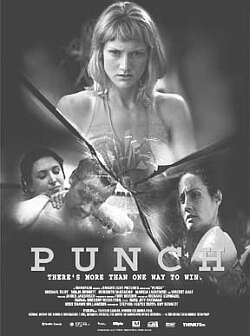 Topless Female Boxing. There. The reader is paying attention. Yet, if the subject has been covered in a less appealing way than here, I probably don’t want to see it. Indeed, as the toplessness is neither vital to the plot, nor visually pleasing, you wonder why they bothered. The main character here is 18-year old Ariel (Bennett), whose relationship with her father (Riley) is disturbingly close, to the point that she punches his date Mary (Laskowski) for using – entirely aptly – the word “creepy”. This pisses-off Mary’s sister, Julie (McGeachie), an even badder-ass than Ariel, who channels anger into the previously mentioned TFB, with a 38-0 record. She confronts father and daughter, aiming to make them fix their mistake. Viewers will likely eagerly anticipate Ariel getting her ass handed to her by Julie…
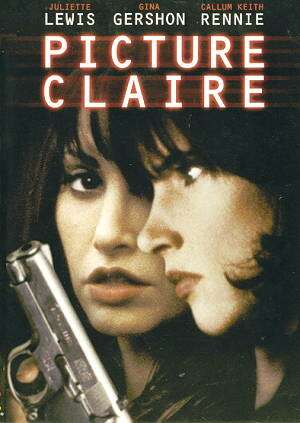 Set over one day, more or less, in Toronto, this can’t make up its mind whether to be a tense thriller, or an art-house drama. The result is an uneasy blend, where most of the elements are fine, yet the overall result falls short of completely satisfying. Quebecois Claire (Lewis, spouting an irritating French accent, and shouting “Beelee!” a lot) travels to Toronto in search of a photographer with whom she had a brief relationship. She doesn’t initially find him, but ends up chief suspect in a murder committed by Lily (Gershon), and also the only person who knows the whereabouts of Lily’s film canister, which is being sought by a psychotic criminal (Rennie).