Well, this is a spectacular mess. Except, the word “spectacular” implies something of interest, and that’s far from anything this delivers in its boring trudge towards a predictable ending. It demonstrates the perils when you, as a film-maker, decide to take your story and fragment the timeline. This only works if the script is able to maintain coherence around the jumps back and forth. This painfully fails on that count, beginning in the middle, but then bouncing back and forth to the point you know little and care less about any of the participants, or what happens to them. How bad is it? It gets the rare honour of me starting on the review, when there’s still half an hour to go.
Loosely, it’s the story of Star (Scout-Compton), who decides to go full vigilante after her best friend, an addict called Karma (Francesca), had enough of life and killed herself. Fortunately for the plot, Karma left a letter behind which explained, in tedious detail, the reasons why she committed suicide. This would largely be the result of abuse at the hands of her boyfriend, BJ (Miller) and various members of his scummy family. Meanwhile, there’s also a connection to a vicious murder that took place forty years ago, and a police investigation, including a homicide detective sporting the most implausible Swedish accent this side of The Muppet Show. What there is not, however, is any reason to give a damn about any of it.
The makers even manage to waste the talents of a triple-bill of horror icons, in Michael Berryman, Kane Hodder and Bill Moseley, all of whom are capable of carrying films on their own. Here, they just kinda… exist, wheeled on screen and then shuffled off again without making any significant impact. Instead, it’s mostly Star yelling at BJ and their relatives, as they are abducted with remarkable ease, and tied up in a shed somewhere. This proves sufficient to reduce them to snivelling wrecks, apologizing for whatever they did. The notion that Karma might – as her name ironically suggests – be in any way responsible for the unpleasant consequences of her own actions, is never breached to significant degree.
I was certainly left asking myself questions. Unfortunately, the questions were along the lines of, “What happened to Taylor Scout-Compton’s once promising career?” or “How many incriminating photos does the writer/director have, in order to get this financed?” Because what you have here is an ugly, uninteresting mess, which fails on the level of basic coherence, and has almost nothing to offer the viewer. It’s startling to see an 86% audience score for this on Rotten Tomatoes; looking at the far more credibly harsh reviews on Letterboxd, I’m certainly leaning shill. Not even going to bother reaching my usual 500 words here. This simply doesn’t deserve it.
I’ve followed director Cummings since we screened her debut feature Berkshire County, at our film festival. Here, we reviewed the impressive She Never Died in 2019. Both films were distinctly horror-tinged, so it was a bit of a surprise to see her attached to what seemed a Western period piece. Having watched it… let’s just say, things make more sense now. For right at the very end, the film takes an abrupt turn into darkness, that may remind the viewer of Bone Tomahawk – albeit nowhere near as graphic. I’ll say no more than that, except: well played. Things unfold in a remote part of the West, where Pandora (Graham) is bringing up her daughter Hester (Robillard) after the death of her husband.
Their isolated life is disrupted when Hester finds a badly injured man near the cabin. This is Calhoun (Nemec), who also has two saddle-bags of money, the proceeds of a bank robbery. Calhoun subsequently had a violent falling-out with his accomplices. However, Bear John (Hopper), the brother of one of the deceased criminals, is growing concerned about his sibling’s disappearance, and is closing in on Pandora’s cabin. It’s going to be up to her, a crippled robber and a teenage girl to withstand an inevitable assault from career criminals, with limited resources in the way of arms and ammunition. On the positive side, it’s clear from the way Pandora deals with Calhoun, that she is not somebody who should be taken lightly or underestimated.
This is definitely a slow burn. The first hour is more concerned with depicting the life of Pandora and Hester, along with how Calhoun’s arrival changes things. Though I have to say, after how the film shifts at the end, you’ll find yourself viewing these early interactions in a very different light. Bear John doesn’t even arrive on screen until well into the movie, in a well-handled scene which does a good job of depicting his gang and their relationships. Thereafter, there’s a looming sense of threat, with a ticking clock of escalating tension as the cabin’s inhabitants try to get ready for the violence to come. Again, without revealing too much, mother and daughter may be more ready for this than they seem.
I do admire movies where you reach the end and are forced to reassess everything that has gone before. Even the title takes on a different meaning by the time the end credits roll. This certainly helps a film which, otherwise, would be a fairly generic Western siege pic. Graham has always tended to be under-rated, and it’s nice to see her get a chance to exercise her acting talent. Nemec is a good foil, and their interplay helped guide my interest through a fairly languid first two-thirds. Once things kick off, the pace ups considerably and by the end there’s little doubt it deserves inclusion here. It may still be a little too horrific for Western fans, and too Western for horror fans. Yet if you like both, this is an interesting combination.
Reading all the vitriol that has been poured over this movie feels a bit like history repeating for me. I recently saw the same reaction to Madame Web and it was just as unjustified as here. What never ceases to astonish me, is how extreme critical assessments are nowadays: reviews seem to be without any kind of balancing the good and the bad. Every movie has its qualities and its weaknesses. I recently saw Alien: Romulus which I found to be pretty good but not without flaws, and many critics were able to see both aspects. Not so with Borderlands. While I wouldn’t call the film really good entertainment, the universal mauling it is receiving is undeserved. I’ve seen so much worse in my life – movies that hardly had any real plot or entertainment value – that in a way I feel I’ve got in a way to protect Borderlands from the unfair, over-the-top criticism. More about that later.
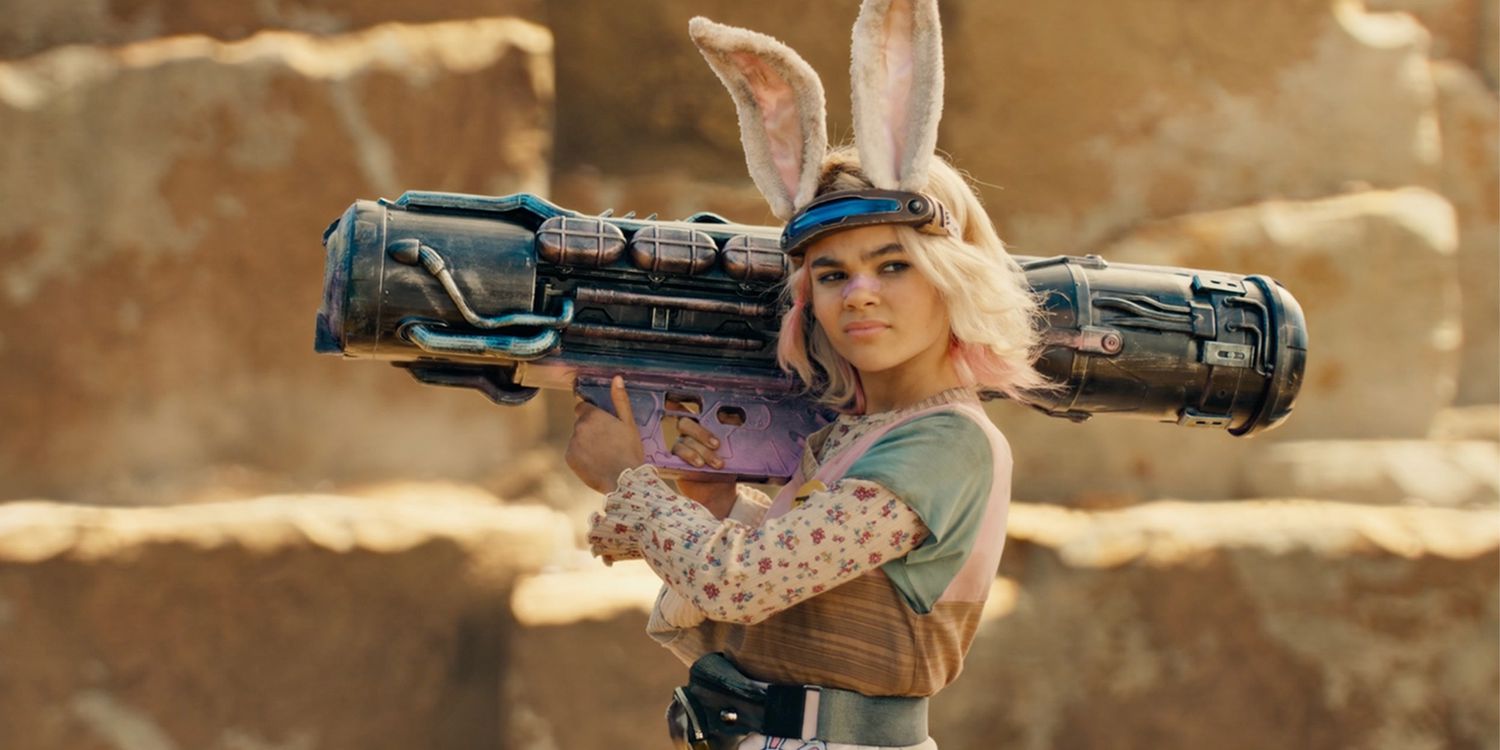
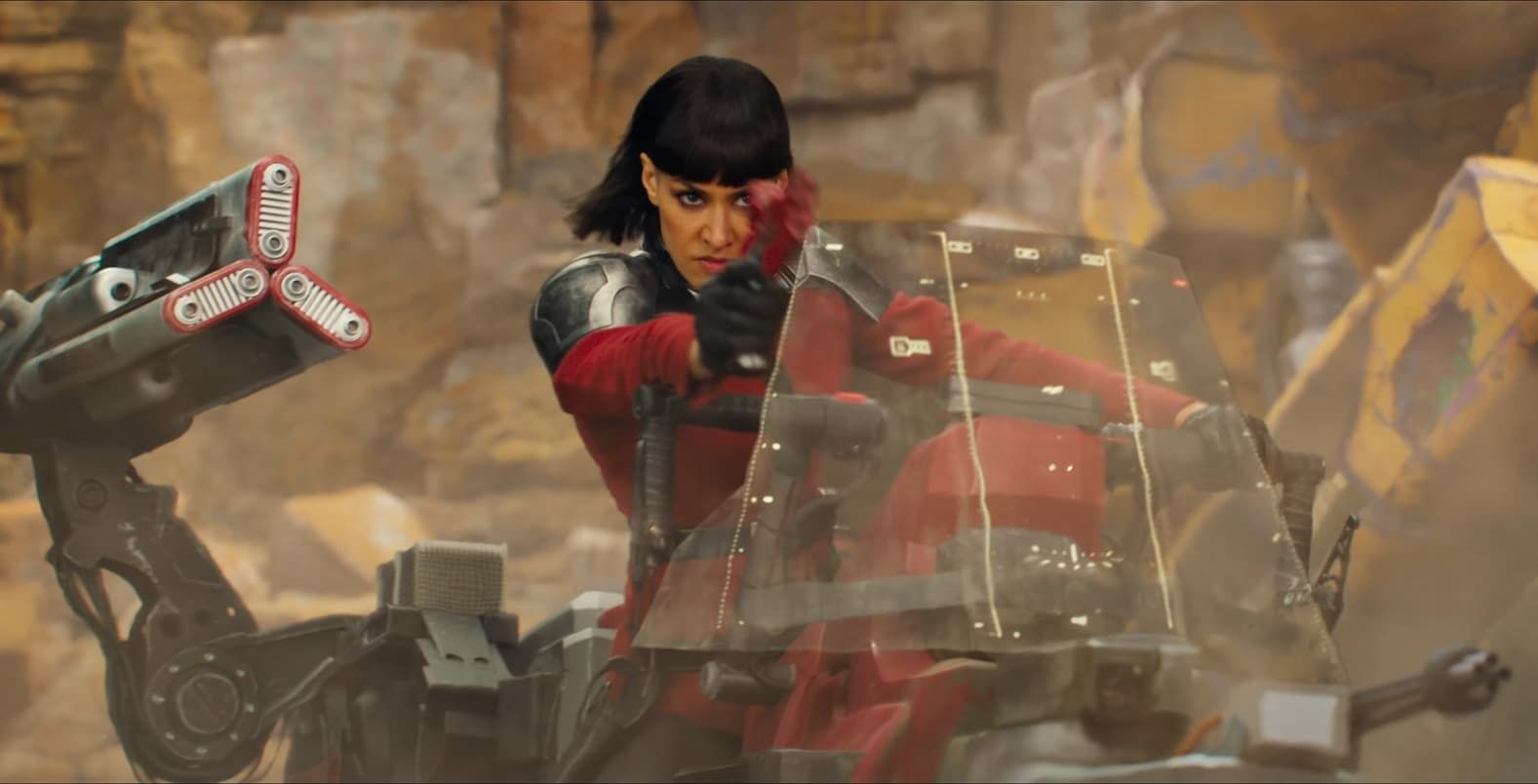
In a not deeply explained Science Fiction scenario. bounty hunter Lilith (Blanchett) is convinced to rescue the daughter of uber-nasty Atlas (Ramirez), Tiny Tina (Ariana Goldblatt), who had been abducted from a prison by soldier turned mercenary Roland (Hart). Atlas doesn’t care for his scientifically-created daughter at all, but Tiny Tina is believed to be the key to a secret cave containing some kind of “treasure” he may use for evil. The rescue party is joined by muscle-bound guardian Krieg (Florian Monteanu), the robot Claptrap (voiced by Jack Black) and weird scientist Tannis (Jamie Lee Curtis), who go on the search pursued by Atlas’ henchwoman Commander Knoxx (Janina Gavankar).
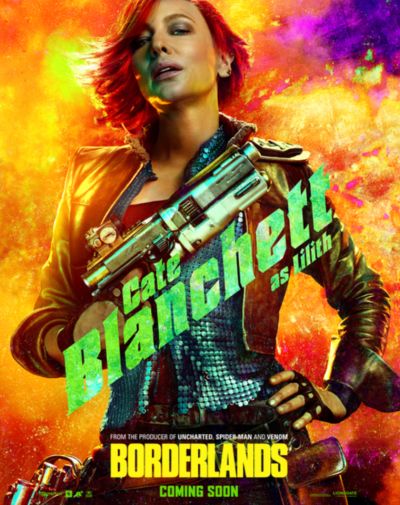
Let’s be clear about one thing: “Borderlands” is not really a good movie, and I will go into more detail on its many flaws shortly. But it also never pretends to be a serious SciFi epic: maybe this was exactly what “broke” it? I was oddly reminded of Tank Girl (1995), a movie that also toned down its spicier template and came along with some failed attempts of humor. On its original release, Tank Girl was also critically reviled, but has since managed to garner a small cult following. I wouldn’t be astonished if that could end up as the future fate of Borderlands, too, despite its many problems. Where to begin? Probably with the main lead. When the news came out that Cate Blanchett was cast as Lilith, fans of the video game on which Borderlands is based were in uproar. She was seen as too old to play the role, and the same went for Curtis, who is now in her sixties.
While that may have bothered the gamers, I had no problem with it at all. Admittedly, I have never played the games, so what do I know? But Cate Blanchett, who is in her mid-fifties, still looks fit and beautiful enough to play an action role – which is, at least for me, something I always wanted to see. I was quite disappointed when her villainous Hela in Thor: Ragnarok (2017) was side-lined in favor of Thor and Hulk battling it out on another planet. Her red hair here, incidentally reminded me of old dystopian SF movie Cherry 2000. Fans will always complain about how their heroes are portrayed. It’s an old story: Hugh Jackman was too large for Wolverine, Tom Cruise too small for Jack Reacher, I tend to file these under “Bond is not blond”: I don’t think these complaints should matter much, if the respective actor can fill out the role in question believably.
That said, maybe this kind of role isn’t really made for Blanchett, who comes across awkwardly as a female trigger-happy bounty hunter – it isn’t her age. It feels as if director Eli Roth may have told her to get into character as a strong, independent, tomboy, action heroine and walk around like John Wayne, always with one hip hanging below the other. It becomes quite distracting after a while, and you feel it is indeed just an outward pose, not stemming from inside. In other words, you feel Blanchett is pretending to be a tough woman, not really “being” her. It’s odd, given she is such an accomplished actress. Considering she received an Oscar nomination for her next movie Tár, (Borderlands was produced during the COVID era and held back a couple of years, which didn’t help opinion), I blame it on Roth’s failure to guide his actors.
Complaints were also directed at how the movie toned down the level of graphic gore and violence the games depicted, becoming a very “tame” affair. Indeed, one of the reasons the movie was delayed was the studio executives deciding, upon seeing Roth’s cut of the movie, that they had to re-work the movie. While this seems to have become almost standard in modern Hollywood (Marvel movies, anyone?), it is never a good sign in my opinion. If a movie script and style was agreed on before production – which you would expect to be the logical order- there should be no need to re-film scenes or film new ones. Yet this is exactly what happened with here, with the director for these new scenes being Tim Miller of Terminator: Dark Fate. So, essentially, it’s difficult to say to what degree the movie in cinemas is the movie Roth originally directed.
No one wants to be connected with an expensive flop. Original writer Craig Mazin (The Last of Us) had his name removed from the film’s credits, claiming he didn’t write the movie. Under Miller, a new screenwriter was brought in, and again, it’s difficult to say who is responsible for what. There’s an old proverb: “Too many cooks spoil the broth”. It seems to be exactly what happened here. You can’t really blame the studio for wanting to get the teenage audience. When I watched it on the day of release in my local cinema, six of the eight people in the audience were teens, plus me and a father accompanying his two sons. This seems to be aimed at the Guardians of the Galaxy audience, movies which have made a lot of money over the years.
But when you do a movie based on something, you could hardly make a bigger mistake than ignoring the wishes of the fan-base. Look where the Star Wars franchise stands now. You need to respect the template, otherwise the fans who made it successful in the first place, will be against you. It’s a lesson to be learned here. That said… the movie has other problems. It feels very fragmented, the characters going from one place to the next like… well… in a video game, daah! It never creates a feeling of any real palpable threat or danger, and if the heroes don’t feel concerned about their own fate, why should the audience? But for that, the characters have to be developed in the first place, since we are expected to invest time into them, right?
Instead, most of the time, these characters feel like cardboard cut-outs. Apart from Lilith no one gets any kind of backstory. There are one or two nuggets about Tiny Tina, Claptrap or Tannis and that’s it. It’s even worse with the male characters, I know literally nothing about Krieg or Roland. Who are they supposed to be? Where do they come from? Don’t get me wrong, I hardly need an extensive biography: a bit more than nothing would have been nice. Also, who are these different groups? What do they stand for? Why are they fighting? Against whom? It feels as if the filmmakers expect me to know all this before I go into the movie.
Well, does at least the humour work? I mean, it’s supposed to be some kind of SF slash Action slash Comedy, right?
Oh, boy. Another German figure of speech is, “Humour is when you laugh anyway”. That’s true: but this movie showers you in bad jokes and stupid “Look how hip my lingo is” phrases, and I laughed exactly twice in the entire movie. Most of these “wanna-be-hip-and-cool” lines fall absolutely flat. They are also fired at you so fast, as if someone was afraid the audience would get bored if a second was left before the answers, that you can hardly digest them. It’s like a stand-up comedian delivering punchlines without giving the audience time to “get it”, instead immediately rushing on to the next joke. As a result, even something that could be funny falls flat. That’s how the humor here is handled most of the time.
Unfortunately, the same is true for important story details. Essential facts and plot-points are thrown away in casual info dumps, so most of the time you hardly understand what is happening and why. Take, for example, Cate Blanchett arriving at her starting point. She gives you a summary in voice-over about what just happened in thirty seconds, and obviously one or more scenes were cut out, including an action scene. I can’t blame an audience for being bewildered and switching off here. Other strange script decisions pop up in the film on multiple occasions. For instance, when the adventurers escape in a quickly moving elevator, they are tossed out high in the air. They all land intact and unhurt, because Tiny Tina used teleportation skills she just discovered that very moment, and were never mentioned previously. Then she doesn’t use them in the finale, when they would have helped.
Or there’s the finale when it is revealed the key to the chamber isn’t who we expected. It seems that everyone, including the movie, wasted our time with that little brat! But that aside, the revelation, which should have been a big surprise, has no impact because we were never told what to expect when our gang reach their destination. No momentum was built towards the twist, and as a result, there is also no feeling of an earned pay-off. Things like poorly thought-out writing and direction that doesn’t give the characters… well, character, as well as the haphazard line delivery grind the movie down continuously. I can actually empathize with people rejecting this in its entirety. At the same time, to employ one last German figure of speech for today: “Leave the church in the village!”, meaning don’t exaggerate.
For, yes: Borderlands disappoints, whether or not you know the games. A simple comparison with James Gunn’s Guardians of the Galaxy movies or his second Suicide Squad shows you that so much more and better could have been possible. Instead of a good movie you get, as with Madame Web recently, a fairly mediocre one. But again: “fairly mediocre” is not the same as “utterly terrible”. That popular interest in action heroines seems to have largely evaporated, for a range of reasons, may be an additional factor in the clear financial failure of the movie. But I guess those in charge expected it would happen, going by the lack of marketing worth mentioning. Just compare the few interviews available online for this movie, with the huge marketing campaign that was launched for Deadpool & Wolverine.
So, what is good in this movie? Well, I like the production design, which is very nicely done. The colourful, outlandish costumes made me smile. The special effects are of a decent standard – no less, no more. I enjoyed the over-the-top action scenes. It was nice to see Gina Gershon again: long time, no see. The choice of songs seemed adequate, though they mostly pop up suddenly without reason. Most of the actors do good work, it’s not their fault the writing and directing failed them. I still like Hart, and think Goldblatt gives a very good performance, although I couldn’t stand her annoying “little brat” character. Curtis, while not having much to do, is still a pro. Only the strange stance and walk of Blanchett constantly derails what she is supposed to portray here. Both she and the hardly threatening Ramirez feel miscast.
Overall, you can enjoy the movie if you keep your expectations low. Very low. Still, this doesn’t make it the worst movie ever, maybe not even the worst of 2024. There are so many smaller, terrible movies no-one ever talks about. Everyone is always focused on the wannabe blockbuster releases, and so, here we are. I would still like to see Blanchett as a convincing action heroine in a better movie. Maybe she will be more successful in the upcoming Alpha Gangwhere she plays the leader of a gang of aliens who disguise themselves as 1950s bikers to invade the earth. All we can do is hope for the best.
Dir: Eli Roth Star: Cate Blanchett, Kevin Hart, Jack Black, Edgar Ramírez
In a trans-continental coincidence, both Dieter and I ended up watching and writing our own, independent reviews of this. At least we agreed on the three-star rating!
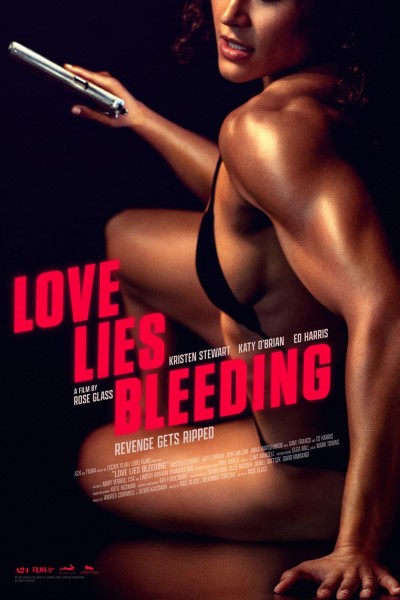
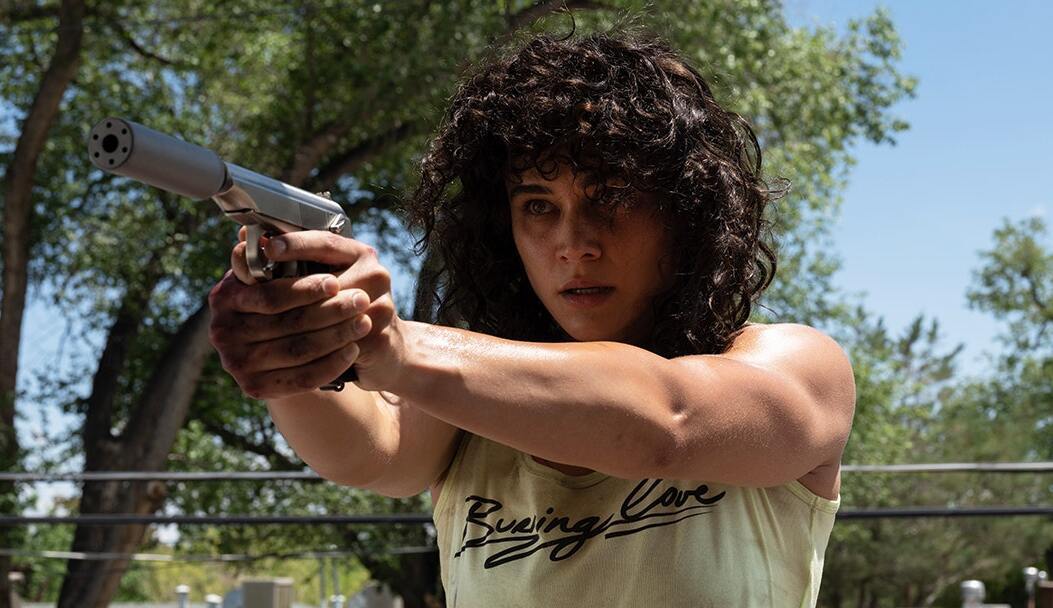
Well, you might or might not like the way this ends… However, you certainly will remember it. Credit director/co-writer Glass for apparently deciding to live (or die) by the mantra, “Go big or go home.” Literally. It’s in line with a general feeling she doesn’t want to take the easy options at any point here. It doesn’t always work. Boy, does it not. However, I respect the approach. It takes place in a small New Mexico town towards the end of the eighties, where Lou (Stewart) is a gym manager, a lesbian and the estranged daughter of Lou Sr. (Harris). He is a gun-range owner with a very shady sideline in arms dealing, and a desert ravine into which his enemies vanish.
Things are upset by the arrival in town of Jackie Cleaver (O’Brien), a bodybuilder on her way to Vegas for a contest. The two begin a passionate affair, in which Lou also introduces Jackie to the dubious joys of steroid use (though I’m fairly certain these do not work in quite the way depicted here). Lou has another situation, in that her sister Beth is trapped in an abusive relationship with her husband. Jackie decides to take care of this problem for Lou. However, doing so causes more issues than it resolves, not least in that it brings down law enforcement heat on Lou Sr. as the most obvious suspect. Dad demands his daughter fix things, causing Lou to threaten to expose her father to authorities.
It’s all a very grubby take on the lesbian-noir genre, whose best-known example is probably Bound. Stewart seems consciously to be trying to break out of her Twilight reputation, though results so far have been mixed. At least this isn’t the Charlie’s Angels reboot, so for that, we thank her. It is not exactly subtle in its gender depictions: every single male depicted here is violent, though it’s interesting how Glass embraces the view that violence is the only solution, too. Though it’s complex: Jackie declines a gun, saying “Anyone can feel strong hiding behind a piece of metal. I prefer to know my own strength.” Let’s say, that’s not a position she maintains throughout.
O’Brian, who was a bodybuilder before turning to acting, and has a black belt in hapkido, certainly has the physical presence needed for the role. I was less convinced by Stewart, feeling as if her character was stuck in a permanent sulk. The failure to establish her as likeable leaves the relationship with Jackie feeling implausible: if Lou has hidden depths of appeal, they’re apparently buried at the bottom of the Marianas Trench. The decision to wander off, on a number of occasions, into territory closer to David Lynch than the Coen Brothers is one I would not have made, personally, and is likely to alienate a significant number of viewers. A straight (pun not intended) telling of the story would have been preferred. But you do you, Rose. You do you.
[Jim McLennan]
Today on the menu: Lesbian thrillers! Somehow this seems to become the new “trend-du-jour” as a new sub-genre. This year already saw the Ethan Coen-directed lesbian crime comedy Drive Away Dolls and the novel adaptation Eileen with Anne Hathaway. Lesbian-themed movies seem to have come a long way since movies such as Desert Hearts (1985), Thelma & Louise (1991; hey, stop, were these two actually lesbians?) or Fried Green Tomatoes (1991). The difference today is that films can be more direct in their depiction of whatever they want to show. Whether this is really an advantage, is up to the individual viewer. Rose Glass (Saint Maud) shows in her second theatrical movie that she can keep up with male directors of bloody thrillers. The film was a co-operation of British TV Channel 4 and American studio A24, which seems to be building a reputation for slow-burn horror movies.
Principally, the movie is a modern film noir (think Coen brother movies minus the humor). But it also could be called a film soleil, like the French 1980s subgenre of film noir, with most of the story playing in broad daylight. O’Brian and Stewart give good performances, which is satisfying because my usual problem with Stewart is that in most of her films, she almost seems like she is sleepwalking. But not here. I don’t have much to say about Ed Harris who is great and convincing in anything he plays. For me the secret star of the movie is Anna Baryshnikov (yes, the daughter of ballet dancer Mikhail) as the ill-fated ex lover of Stewart’s character.
The film has a strong sense of style, though for me it felt more like the mid-80s than the end-80s. A feeling of unhealthiness permeates the whole film, be it Stewart’s constant smoking (while listening to tapes telling her how unhealthy cigarettes are), the use of drugs to build up muscle tissue, or Ed Harris growing caterpillars and beetles. The relationships of the characters here, be they familiar or otherwise, also feel rotten. It’s definitely not the ideal family promoted by the Reagan administration in the 1980s (But then, in 1989 Bush Sr. was president).
It seeks to comment on the abnormal body cult of the eighties, the decade where hypertrophic heroes like Arnie, Sly and Dolph became big stars – though female bodybuilding is still a thing today (Julian Sands’ last movie before his untimely death dealt with the subject). Also, the characters here seem weird and far from sympathetic: everyone is sweating all the time, Harris with his long hair, Stewart looking as if she is permanently on drugs. They all look like people one wouldn’t necessarily want to meet. Then there is Jackie: while never directly said, it’s implied her erratic behavior is the result of the drugs that Lou gave her.
Glass doesn’t shy away from the ugly or disgusting. One of the first scenes show us Stewart cleaning a clogged toilet (remember the scandal when Hitchcock showed us a clean toilet in Psycho!). Later, we see a body whose jaw is broken into pieces, O’Brian vomiting up Stewart in a hallucination scene and Harris eating a horned beetle. If you are a fan of beautiful pictures this movie might not be for you! Some scenes reference typical Hitchcock or classical thriller suspense scenes, like Harris looking for his son-in-law in his flat while Stewart hides in the closet, or FBI agents interrogating Stewart, when there’s a corpse behind her couch
But not everything works: for example, Lou and Jackie hooking up so quickly was not very believable. But what do I know? I’m neither American nor was I out of puberty in 1989. At the same time I never thought that Jackie might be using Lou for her own advantage, as the movie wants me to believe. So, yes: the characters in the script needed more effort to work. Glass uses some interesting techniques to enhance the creepy atmosphere. Some scenes have a distortion effect with slow motion, very bright lights, coloring e.g. Harris filmed with a red light, and disturbing sound effects. Unfortunately, she spoils otherwise competent work with a final scene which feels as if it would fit better in a fifties sci-fi film than a thriller? Whose perspective is it supposed to be? It might have been meant as a feminist or lesbian empowerment message, but logically makes zero sense.
For me the big deal breaker is the end scene: After telling her father she is nothing like him, Lou completes a murder Jackie didn’t finish. In a way, she is indeed like her father: The same way he tried to protect her out of love, she protects her new found love. Not long ago The Marsh King’s Daughter showed a similar “like father like daughter” scenario. Not that I liked Lou much before: she appeared constantly angry, snappy, possessive, vindictive and irrational. But when she kills a virtually innocent person to secure her relationship, she becomes totally unsympathetic. Probably a great role for an actress but you cannot expect an audience to sympathize or even identify with such a character.
In classic Hollywood noirs, dark-hearted anti-heroes would pay for their crimes. Among many examples, Fred MacMurray getting shot for his sins by femme fatale Barbara Stanwyck in Billy Wilder’s classic Double Indemnity (1944). Heck, even Thelma and Louise paid with their lives for a more or less accidental killing. In modern films it seems if evil is done by women, film makers are reluctant to give them the punishment they deserve, and let them off the hook. I find such story-telling hypocritical and highly questionable: what message is being sent to an audience?
It is okay to commit crimes if you don’t get caught? Killing an innocent is justified in the name of love? Female characters should get off for crimes every man in every movie would be killed for? It seems to be a double standard – I just call it inequality. If you want equal treatment, take it all, including the negatives. No, cherry-picking allowed. Please don’t call me morally sour: I had for example no problem with that famed lesbian noir, Bound (1996), a film where “Love Lies Bleeding” stole some of its ideas from, directed by the Wachowskis. There, the two heroines got away with a murder and theft but they had to defend themselves from a mad angry mafioso. This is different and feels different.
Ah, you want to know about the sex scene? Unfortunately, there is hardly anything mentionable to see here. The short scene is quickly cut and over before you can blink. Audiences are better served erotically either with the aforementioned and superior, though less stylized Bound, or Italian giallo films of the 1970s which seemed more open to showing sexuality or nudity than modern American movies. But what can you expect, with the new guidelines in movies which require “intimacy coordinators”, primarily so the production won’t be sued. I now feel a great need to watch Basic Instinct again!
So, what’s my conclusion? Well, the film is definitely watchable, a very stylish modern bloody film noir. And if you want to see a movie with lesbians or involving bodybuilding, you might not want to skip it. But its unsympathetic characters prohibit a second viewing or a whole-hearted recommendation from me.
[Dieter]
Dir: Rose Glass Star: Kristen Stewart, Katy O’Brian, Ed Harris, Anna Baryshnikov
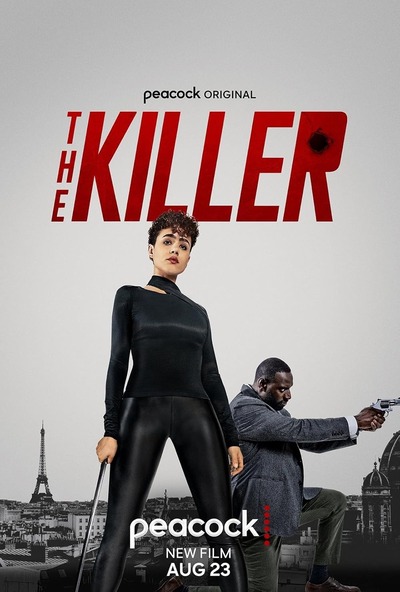
Back in 1990, I saw the original version of The Killer at the ICA in London. I’d never seen anything like it, and didn’t quite know what to think. But it kindled a deep fondness for Hong Kong cinema, and it’s also likely one of the most influential action films of the decade, whose impact is still being felt today. I wasn’t sure what to think about a remake, especially a gender-swapped one. These rarely work – hello, Ghostbusters. But at least this one was going to be done by the original director. Especially after having enjoyed his Violent Night, if there was anyone whom I’d trust not to screw up a John Woo film, it’s probably going to be John Woo.
He doesn’t. Oh, it’s not as good as the original, or even Violent Night. However, it’s perfectly serviceable, especially if you haven’t seen the original. Woo treats his own material with respect. While there are differences, none feel forced for the sake of it. I was quite surprised to see Woo go with a female lead, because his films tend to be pure, undiluted masculinity. I’m hard-pushed to think of a decent, well-written female character in any of them. To be honest, I still am. For Zee (Emmanuel) is just your typical assassin with a conscience, who refuses to kill innocent civilian Jenn (Silvers), after accidentally blinding her during a mission. This brings her the enmity of her handler, Finn (Worthington), but eventually, the support of dogged cop Sey (Sy).
The biggest issue here is simple: Emmanuel isn’t Chow Yun-Fat. Not even close, in terms of charisma, and that renders this a disposable trifle. The rest of the cast fares better, including former football player Eric Cantona as an irascible gangster (he was irascible on the football field too). Quite why Worthington sports an Oirish accent and spouts Oirish phrases escapes me. But I’ll forgive it, given his two-pack of sidekicks. The pick of whom is played by Aurélia Agel, who was Karen Gillan’s stunt double in Gunpowder Milkshake. She gets an impressive fight against the heroine at the end. In a church, naturally. A good drinking game there: take a swig for each Woo cliché: birds, slow-mo diving, guns in each hand, etc.
It runs a good twenty minutes longer than the original and, while it doesn’t often drag, I’d be hard-pushed to say this extra length adds much extra value. Probably best not to think about any of this too much, such as how Zee’s decision to protect Jenn, without knowing the facts, actually leads to far more deaths, of far more innocent victims. Or the dubious, Looney Tunes-like medicine, where a whack on the head can only be remedied by another whack on the head. Mind you, it’s not as if the original stands up to close scrutiny either. Where Woo led thirty-five years ago, many have since followed – and some, gone further. Yet I’d still rather see him at play, than a lot of his successors.
Dir: John Woo Star: Nathalie Emmanuel, Omar Sy, Sam Worthington, Diana Silvers
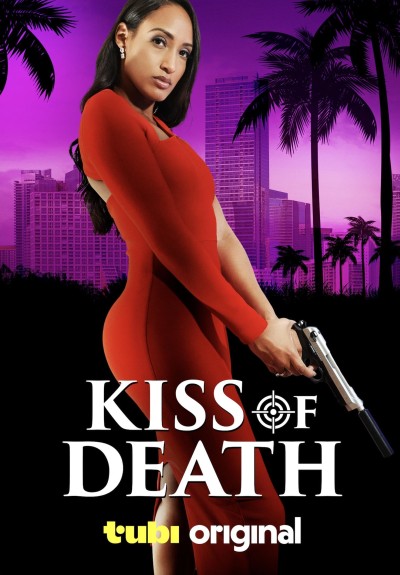
The relationship between Mykah (Leason) and Jameson (Chandler) is quickly heading for the rocks, as the honesty between them has evaporated. He suspects her of lying to him and having an affair: and he’s half-right. For Mykah is misleading him about the reason for her odd hours, though it is work-related as she claims. It’s just that her job is as an assassin, who kills the husbands of battered women, assisted by family friend Lady (Frazier). After successfully offing a prospective politician, Mykah’s next job is Dyson (Jackson), after his wife Chantelle tearfully tells her story of abuse, and offers to pay half a million dollars for a job well done.
Mykah is initially not keen on accepting the offer, partly because she’s trying to fix her marriage, partly because Dyson is a notorious crime boss. But it turns out Chantelle has incriminating footage of Mykah’s last hit, giving the assassin no option. As she gets closer to her target, things begin to get murkier. Dyson reveals he knows about Mykah’s early family life, which ended when her parents died in a murder-suicide. Or was that actually what happened? In addition, are Chantelle’s motives justice and escape, or are they considerably more mercenary? And will Mykah be able to get to the bottom of all this before Jameson stumbles to the entirely wrong conclusion and crashes the situation? It’s a lot of questions, and I did like the script here, which manages to keep a complex story clear.
However, it is fair to say that it does take way too long to get to the interesting stuff, with the first half being populated largely be banal chit-chat between Mykah and either Jameson or Dyson. Throw in a teenage daughter, and the soap-opera elements are in danger of toppling this over before it can get going. There’s definitely a shortage of action, between the opening murder and the final confronatation when the truth gets revealed. Virtually all we get is a brief fight between Mykah and a pair of Dyson’s minions, after he begins to suspects she is not what she seems to be. It’s okay: I liked Mykah pausing to remove her heels before going into battle. It just needs more.
Director Sesma has a fairly long track record of low-budget action, and technically it’s competent enough. That’s particularly true, when compared so some of the other urban genre entries we’ve seen here, and at least he avoids the obvious cliches of drugs and gangs. But if you compare this to, say, the Thai TV movies we’re previously reviewed, such as The Secret Weapon, also about an assassin, the gap in energy and action becomes inescapable. Perhaps it’s a budgetary thing. If this had not apparently been so reliant on the mantra that “talk is cheap,” then it could have been more than just an acceptable time-passer overall, with only the last third measuring up to scratch.
Dir: Christian Sesma Star: Sheila Leason, Kevin Blake Chandler, Dontelle Jackson, Cheryl Frazier
There are times when I end up asking myself deep philosophical questions, like “Why am I doing this?” or “Isn’t there something else on which I can use my time?” In this case it, was “Who thought a sequel to the painful exercise which was Ebony Hustle was necessary?” To be fair though, this is an improvement. A half-star might be pushing it, to the point I did wonder about introducing a ★¾ rating. Or possibly a ★ and 11/16. It’s not good, to be clear. But it’s definitely less aggressively incompetent, with some of the most annoying rough edges smoothed down. For example, the audio this time mostly (although not entirely) lives around the same level, and there’s only one Facetime scene.
We are once more in the world of Ebony Howard (Lamb), a private eye who still doesn’t appear to be much private eye-ing. Of the three strands in this story, just one involves paying work, Ebony seeking to serve papers on a baby daddy to compel him to take a paternity test. There is also her investigation into the unexplained disappearance of Onyx, a friend from her strip-club days. This gets kicked up after she discovers Onyx’s phone with a video on it. Just do not expect closure for this thread, because the film ends in a way suggesting it will be a key element of Ebony Hustle 3: This Time We’re Semi-Competent, no doubt coming soon to a low-rent streaming service near you.
The bulk of it is, again, Ebony’ relationship drama. In this case, it’s with Mac (Howard), a promising basketball prospect who is being pressured to take performance-enhancing drugs by his manager, Bryan Calvin (Polo). This makes him become highly irritable, and causes Ebony so start digging into what’s going on, and Calvin does not take kindly to this interference with his meal ticket. With the help of her former strip-club boss, who is now a health guru, Ebony finds out the truth about what Mac is taking, and confronts Calvin. This is likely the only scene in which the film’s subtitle comes close to being relevant, as it’s the only time where the heroine wields a gun, or even gets physical.
The movie does a reasonably good job of managing the story, though the Onyx plot-line is largely ignored in the second half, until a late text message for sequel purposes. Lamb and Howard are not painful to watch, the latter being quite credible as a baller (though I notice the gender-neutral league he’s trying out for doesn’t appear to extend its equality to white women…). But there are way too many false steps, such as the lengthy scene which feels more like a presentation for a health supplement MLM, and the film remains in desperate need of more action and less dialogue. At least you can now probably see Foxy Brown from here, though you remain in need of a telescope for that.
Dir: John Wayne S. III Star: Michelle l Lamb, Jessica Mitchell, Jahaziel Howard, Polo
Mary (Kessell) has a grudge, and probably with good reason, I’d say. Because the serial killer known as Diablo killed her daughter, Kelly, in a particularly brutal manner – finishing his victim off by burning her alive. With the help of information provided by FBI Agent Selena Wall (Adedeji), Mary puts the pieces of the case together, and eventually lures Diablo (Howard) into attacking her, then brings him back to her house. This has been turned into a hi-tech, maze-like warren designed to force Diablo to confront all his crimes, and in particular his murder of Kelly. Naturally, things don’t quite go as intended. Expecting rational, predictable behaviour from a serial killer was probably a mistake by Mary, despite her technological advantages.
This is certainly a novel take on the themes here: part serial-killer film, part vengeful mother flick. The script generally does a good job of dispensing information at a pace that keeps the viewer’s interest, without revealing everything up front. For example, after Mary gets injected with Diablo’s chosen paralytic drug, there’s a flashback which shows her injecting herself with the same stuff, in order to build up her tolerance, and use this to future advantage. It is a bit of a stretch that she has the perfect set of skills necessary for her task: home improvement, dark web knowledge, twelve years of Brazilian jiu-jitsu, etc. The agent funneling information to Mary is also just a little too convenient.
If you can overlook these speed-bumps though – and I didn’t find them too problematic – there is still a good amount to enjoy. This starts with Kessell, who comes over as a significantly more credible bad-ass than Jessica Alba in Trigger Warning. She has one mission, and is absolutely not going to let anything or anyone (be they Diablo, her husband, a nosy neighbour or the authorities) get in the way of it. In the early stages after capturing Diablo, she becomes somewhat passive, sitting in her control centre and pushing buttons. But once things go off-track, she is forced into more reactive and pro-active behaviour, the film gradually picking up steam until an impressively grim ending (albeit with a rather odd coda, one I don’t quite get).
Bamford showed up here earlier this year with another film, Air Force One Down. Although this is a little lower on the action scale, up until the end where Diablo and Mary go toe-to-toe, it is balanced out by Home Hard working better in terms of plotting. If flashbacks are sometimes used as a crutch for weak writing, here they are well integrated and move the plot forward. Among the cast, in addition to Kessell, praise is also due to Howard. He doesn’t get a single line over the course of the movie, yet still manages to portray a creepy and despicable villain. However, Diablo might not be as frightening as Mary, who feels the very embodiment of irresistible force.
Dir: James Bamford Star: Simone Kessell, Andrew Howard, Rachel Adedeji, Joseph Millson
Republic Pictures will release the film digitally on June 25.
★½
“May contain boredom, stupidity and poor action.”
There’s an old joke about bad movies: “This film wasn’t released, it escaped.” It seems disturbingly appropriate here, however, considering the shooting of this finished in October 2021, and it has been part of our annual previews for 2022, 2023 and 2024. Quite why Netflix sat on the end product close to three years, I don’t know. But having watched it, I can confidently say: it wasn’t long enough. This is the kind of movie that left me feeling actively more stupid by the end of it. Alba plays Parker, a soldier who returns to her hometown in rural New Mexico after her father is killed in a mile accident. Only, of course [and that whirring sound is my eyes rolling], it turns out not to be an accident.
From here spirals off a ludicrous plot in which local ne’er-do-well Elvis (Weary) is selling heavy armaments, include machine guns and RPGs, to domestic terrorists. His family basically runs the town: brother, Jesse (Webber), is the town sheriff, and his father is Senator Ezekiel Swann (Hall), an obviously Republican politician running for re-election. It’s up to Parker to stop the bad guys, who are so evil, they burn down the bar which is Parker’s inheritance from her father. Named after her grandmother, he apparently built it when he wasn’t busy being a miner. Or a Green Beret. It’s all a bit vague. This is as authentic a portrayal of Hispanic culture as you’d expect, given a script written by three white people, which unironically uses the word “Latinx”.
It’s also directed by an Indonesian which, in a nod to the politics criticized by the movie, makes me want to go on a rant about foreigners coming over here and takin’ er jerbs. For, after all, there are plenty of American directors who are perfectly capable of making shitty action films with ham-handed social commentary. We do not need to be outsourcing this work. However, we maybe should look at outsourcing Jessica Alba. Possibly replacing her with a stick insect, since she is among the least convincing soldiers I’ve seen. The action is equally dumb: it’s the kind of movie where a bad guy picks up a chainsaw in a hardware store fight, and it starts, apparently being fully fuelled.
The whole thing is littered with similar elements which had me shaking my head. Parker can waltz into any location at will, such as finding the exact file she needs in the police station within ten seconds. While most recent Netflix action heroine films have been forgettably acceptable ways to pass a couple of hours, this one probably competes with Interceptor over the coveted crown of Worst Netflix Original. It’s amazing to think how far Alba has fallen from the glory days of work like Sin City. For Jessica’s sake, I hope her cosmetics company endeavour is working out. Because she seriously needs to rethink this whole acting thing.
Dir: Mouly Surya Star: Jessica Alba, Mark Webber, Anthony Michael Hall, Jake Weary
It was a good run. There was a point, not long ago, when action heroines could do no wrong. In hindsight, the golden era may have started in 2012 when the Hunger Games franchise began, along with Brave. Summers which followed brought us blockbusters such as Gravity, Maleficent and Lucy. Subsequent years covered the entire run of the Hunger Games and the end of the Resident Evil franchises (or, at least, phase 1 for them), and things probably peaked with Wonder Woman in 2017. Thereafter things began to decline, though I’d say returns remained strong through much of 2019. That’s when Maleficent: Mistress of Evil and Alita: Battle Angel each made over $400 million worldwide, finishing in the top 25 movies of the year.
The cracks began to show with Captain Marvel, odd though it is to say, given it made over a billion. But to a large extent I suspect it mostly surfed on the success of Avengers: Endgame. Thereafter, Wonder Woman: 1984 flopped just before the pandemic hit, Black Widow underperformed, and since then it’s been almost entirely a series of failures, with only the arguable Hunger Games reboot reaching even $250 million worldwide over almost three years since. Instead, we had one of the biggest bombs of all time in the The Marvels, followed up by the disastrous box-office of Madame Web. And now the prequel to Mad Max: Fury Road, managed an opening weekend in North America of only $26.3 million. That’s forty-two percent below its predecessor’s opening, excluding nine years of inflation.
It’s not all action heroines’ fault (though some on social media are claiming so). This year has been dismal in general. With three midweek days left on the month at time of writing, box-office for May is down 36% on May 2023 – and even that was the lowest non-pandemic May since 2001, again without adjusting for inflation. People just aren’t going to the movies in anything like the same numbers. I can’t say I blame them, when films appear on streaming services as little as three weeks after their theatrical release. Going to the pictures is expensive, and especially with the improvements in home theatre, the overall experience can end up being worse than staying at home, between travel, over-priced concessions, idiots talking on their phones, etc. Why not wait?
The counterpoint is experiences like this, a full-on, bombastic, in your face event that made full use of everything IMAX has in its locker, and surpassed anything I could get at home. Now, your mileage may vary. Poor Chris, in particular, found it too overwhelming, triggering motion sickness which forced her to close her eyes any time things got too kinetic – which was a lot of the time. We probably will not be IMAXing again in future. But the only recent comparable experience for me was Godzilla: Minus One. Re-reading my review of Fury Road, I’m a bit surprised I only gave it four stars. I’ve seen it again since, and I’ve just upgraded it an extra half-star. Put another way, Furiosa is every bit its equal. Different, but equal.
It’s a direct prequel, ending at the point when Furiosa (Taylor-Joy) leads the wives to escape from The Citadel. It begins with a much younger Furiosa (Browne) living in the Green Place, a rare place of plenty in the post-apocalyptic hell which Australia has become, along with the rest of the world. She’s kidnapped from there by minions of Dr. Dementus (Hemsworth), leader of the Biker Horde. Her mother is killed trying to rescue her, and Furiosa becomes the little, mute pet of Dementus, until he trades her to Immortan Joe, who runs the Citadel. Over the subsequent years, she becomes a key part of operations, becoming the partner of Praetorian Jack (Burke), who trains Furiosa and falls in love with her.
Dementus, meanwhile, is working to become the wasteland’s supreme ruler by taking over the Citadel, Gastown and the Bullet Farm. In an ambush at the last-named, Jack is captured and tortured to death, while Furiosa escapes only by tearing off her own arm. She returns to the Citadel, providing key advice to Joe in the ensuing war. But she never loses sight of her final goal: to make Dementus pay for what he did to her and her mother. Given she appears in Fury Road and Dementus does not… Well, you can probably figure out how this is going to end. Though the reported final nature of her revenge is not what you might expect, and has a certain poetic resonance, given what happened previously.
It isn’t quite the same relentless stream of action as Fury Road, and at almost half an hour longer, that’s no bad thing. There’s no shortage of action, but it tends to align with the way the story is broken into chapters. So you get a series of Drama-Action-pause segments – or occasionally for variety, Action-Drama-pause. There were concerns regarding the amount of CGI in the trailer, and I will say, it’s not as almost entirely physical as Fury Road either. However, what’s used is integrated very well, with only a couple of moment wheres the action momentarily seems obviously adjusted digitally. I suspect some of the landscapes were also enhanced: they and cinematographer John Seale’s work is so stunning, I don’t care there.
My other concern was having Taylor-Joy replace Charlize Theron, who simply has more presence. That does remain an issue, though to the new actress’s credit, to a lesser degree than I feared. It’s also countered by having much more of a real antagonist here in Dementus. The first film was mostly an extended chase sequence: Furiosa was running from Immortan Joe, after helping his wives escape, and they shared very few scenes together. Here, Dementus gives us a stronger “villain,” and the film as a whole is better for it. Hemsworth brings a charismatic power to his character, to the point where you can see why his henchmen follow him, unto death. Furiosa, in contrast, is really not much of a people person.
It’s difficult to pick out any one action highlight, because they are all very, very good. I think the ambush at the Bullet Farm might me the one which sticks most in my mind for now, though this may change on (the almost certain) re-viewing at home. It’s one which offers the most interesting environment, including buildings and smoke stacks, while the others are somewhat limited by operating in a desert. I mean, it is called “the Wasteland” for a reason. However, when Miller puts Jack and Furiosa in their rig, which is being stormed by almost endless waves of raiders, you really do not need a backdrop. Indeed, you could argue that any such would be at best irrelevant, and at worst a distraction.
You would be hard-pushed to argue that the $168 million budget is not up on screen. I lost count of the times when I wondered whether what I was looking at really existed in the physical world, or was matte paintings and CGI. Part of me wants to peer behind the curtain and watch the behind the scenes videos. However, part of me would prefer to sustain the illusion, which was a factor in the sense of wonder that often washed over me during the screening. It’s the quest for that sense of awe which keeps me going to cinemas, even if most of the time, I end up leaving disappointed [I’m looking at you, Godzilla X Kong…]
I also want to praise one other aspect, which may not transfer as well to my home environment (and I admit it is limited in this area): the audio. There are not many times when I can specifically point to this in particular as significantly enhancing the experience. I’m not an audiophile, and generally put what I see considerably ahead of what I hear. But in this case, Tom Holkenborg’s score and the rest of the sound elements were a notable and impressive component. From the rumblings of the engines through to the wind whipping across the Wasteland, the sonic design really worked, and allowed me to feel like I was being brought into the world of Furiosa. Well played
The problem from a business perspective is, it seems all but certain the makers are not going to recoup their investment, making it less likely you will see investments like this going forward. Fury Road probably just about broke even, so this was always going to be a gamble, especially without your leads. And, indeed, outside of the title, entirely without the character who has powered the franchise since its first installment, all the way back to forty-five years ago. In hindsight, a reaction of “What the hell were they thinking?” is probably understandable. But I am glad less-wise heads prevailed. If this is to be the end of the Mad Max universe, it goes out on another spectacular high, and not many franchises are able to say that.
Dir: George Miller Star: Anya Taylor-Joy, Chris Hemsworth, Tom Burke, Alyla Browne


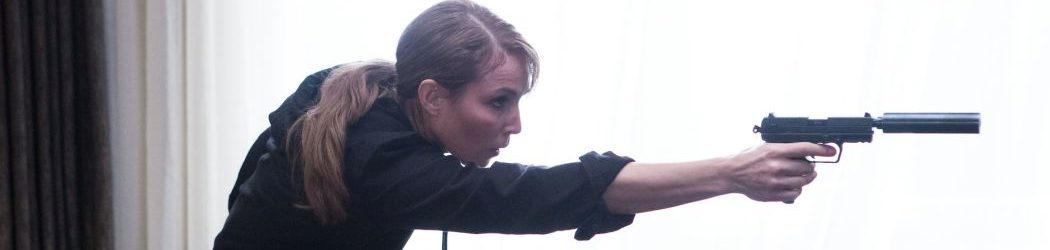

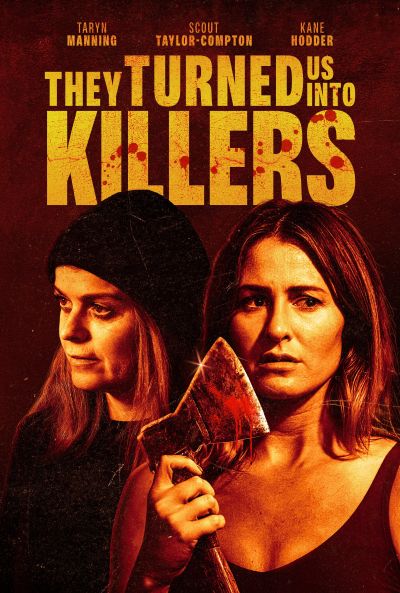 Well, this is a spectacular mess. Except, the word “spectacular” implies something of interest, and that’s far from anything this delivers in its boring trudge towards a predictable ending. It demonstrates the perils when you, as a film-maker, decide to take your story and fragment the timeline. This only works if the script is able to maintain coherence around the jumps back and forth. This painfully fails on that count, beginning in the middle, but then bouncing back and forth to the point you know little and care less about any of the participants, or what happens to them. How bad is it? It gets the rare honour of me starting on the review, when there’s still half an hour to go.
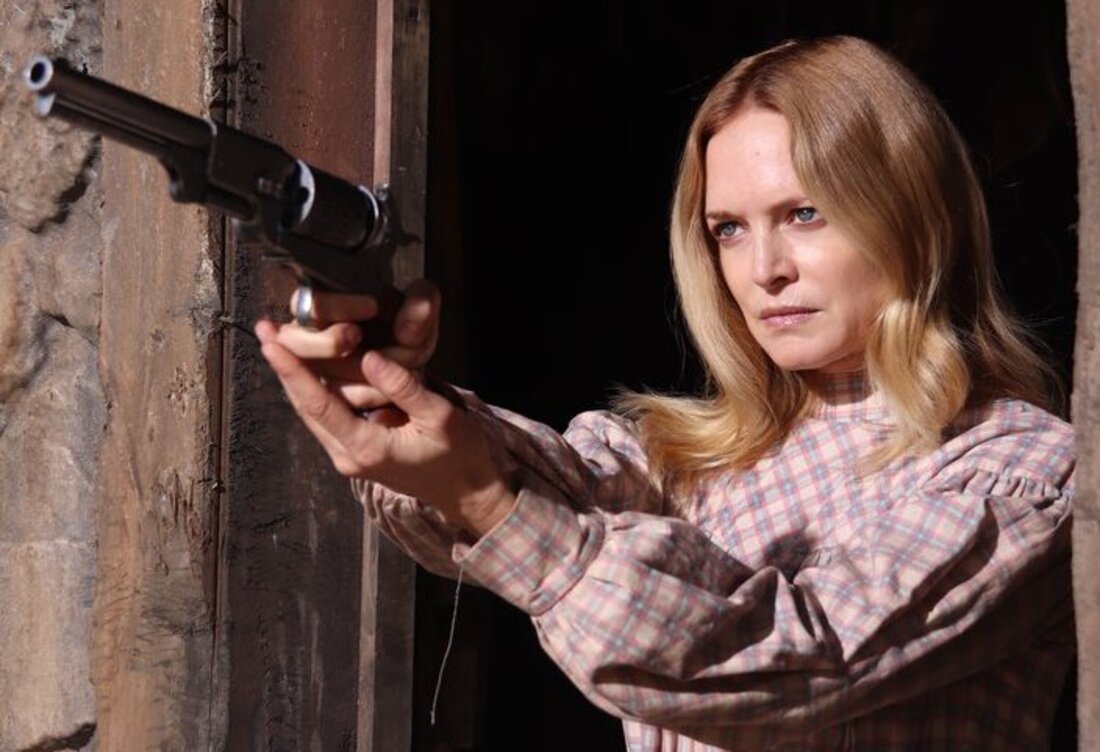 This is definitely a slow burn. The first hour is more concerned with depicting the life of Pandora and Hester, along with how Calhoun’s arrival changes things. Though I have to say, after how the film shifts at the end, you’ll find yourself viewing these early interactions in a very different light. Bear John doesn’t even arrive on screen until well into the movie, in a well-handled scene which does a good job of depicting his gang and their relationships. Thereafter, there’s a looming sense of threat, with a ticking clock of escalating tension as the cabin’s inhabitants try to get ready for the violence to come. Again, without revealing too much, mother and daughter may be more ready for this than they seem.
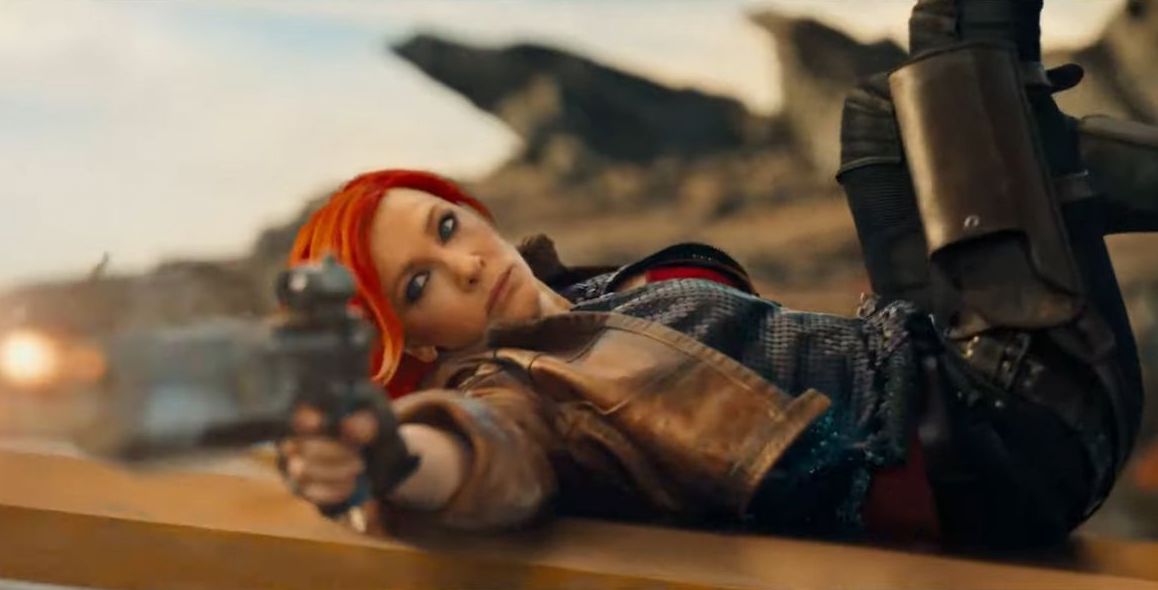 ★★★
★★★ While that may have bothered the gamers, I had no problem with it at all. Admittedly, I have never played the games, so what do I know? But Cate Blanchett, who is in her mid-fifties, still looks fit and beautiful enough to play an action role – which is, at least for me, something I always wanted to see. I was quite disappointed when her villainous Hela in Thor: Ragnarok (2017) was side-lined in favor of Thor and Hulk battling it out on another planet. Her red hair here, incidentally reminded me of old dystopian SF movie Cherry 2000. Fans will always complain about how their heroes are portrayed. It’s an old story: Hugh Jackman was too large for Wolverine, Tom Cruise too small for Jack Reacher, I tend to file these under “Bond is not blond”: I don’t think these complaints should matter much, if the respective actor can fill out the role in question believably.
 Instead, most of the time, these characters feel like cardboard cut-outs. Apart from Lilith no one gets any kind of backstory. There are one or two nuggets about Tiny Tina, Claptrap or Tannis and that’s it. It’s even worse with the male characters, I know literally nothing about Krieg or Roland. Who are they supposed to be? Where do they come from? Don’t get me wrong, I hardly need an extensive biography: a bit more than nothing would have been nice. Also, who are these different groups? What do they stand for? Why are they fighting? Against whom? It feels as if the filmmakers expect me to know all this before I go into the movie.
 For, yes: Borderlands disappoints, whether or not you know the games. A simple comparison with James Gunn’s Guardians of the Galaxy movies or his second Suicide Squad shows you that so much more and better could have been possible. Instead of a good movie you get, as with Madame Web recently, a fairly mediocre one. But again: “fairly mediocre” is not the same as “utterly terrible”. That popular interest in action heroines seems to have largely evaporated, for a range of reasons, may be an additional factor in the clear financial failure of the movie. But I guess those in charge expected it would happen, going by the lack of marketing worth mentioning. Just compare the few interviews available online for this movie, with the huge marketing campaign that was launched for Deadpool & Wolverine.
 It’s all a very grubby take on the lesbian-noir genre, whose best-known example is probably Bound. Stewart seems consciously to be trying to break out of her Twilight reputation, though results so far have been mixed. At least this isn’t the
  Glass doesn’t shy away from the ugly or disgusting. One of the first scenes show us Stewart cleaning a clogged toilet (remember the scandal when Hitchcock showed us a
  In classic Hollywood noirs, dark-hearted anti-heroes would pay for their crimes. Among many examples, Fred MacMurray getting shot for his sins by femme fatale Barbara Stanwyck in Billy Wilder’s classic Double Indemnity (1944). Heck, even Thelma and Louise paid with their lives for a more or less accidental killing. In modern films it seems if evil is done by women, film makers are reluctant to give them the punishment they deserve, and let them off the hook. I find such story-telling hypocritical and highly questionable: what message is being sent to an audience?
 Back in 1990, I saw the original version of The Killer at the ICA in London. I’d never seen anything like it, and didn’t quite know what to think. But it kindled a deep fondness for Hong Kong cinema, and it’s also likely one of the most influential action films of the decade, whose impact is still being felt today. I wasn’t sure what to think about a remake, especially a gender-swapped one. These rarely work – hello, Ghostbusters. But at least this one was going to be done by the original director. Especially after having enjoyed his
  The relationship between Mykah (Leason) and Jameson (Chandler) is quickly heading for the rocks, as the honesty between them has evaporated. He suspects her of lying to him and having an affair: and he’s half-right. For Mykah is misleading him about the reason for her odd hours, though it is work-related as she claims. It’s just that her job is as an assassin, who kills the husbands of battered women, assisted by family friend Lady (Frazier). After successfully offing a prospective politician, Mykah’s next job is Dyson (Jackson), after his wife Chantelle tearfully tells her story of abuse, and offers to pay half a million dollars for a job well done.
 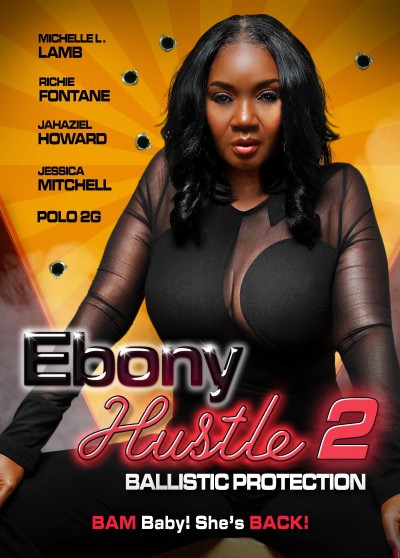 There are times when I end up asking myself deep philosophical questions, like “Why am I doing this?” or “Isn’t there something else on which I can use my time?” In this case it, was “Who thought a sequel to the painful exercise which was
 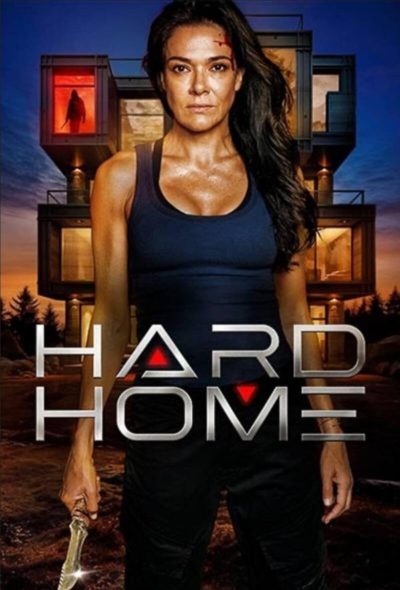 Mary (Kessell) has a grudge, and probably with good reason, I’d say. Because the serial killer known as Diablo killed her daughter, Kelly, in a particularly brutal manner – finishing his victim off by burning her alive. With the help of information provided by FBI Agent Selena Wall (Adedeji), Mary puts the pieces of the case together, and eventually lures Diablo (Howard) into attacking her, then brings him back to her house. This has been turned into a hi-tech, maze-like warren designed to force Diablo to confront all his crimes, and in particular his murder of Kelly. Naturally, things don’t quite go as intended. Expecting rational, predictable behaviour from a serial killer was probably a mistake by Mary, despite her technological advantages.
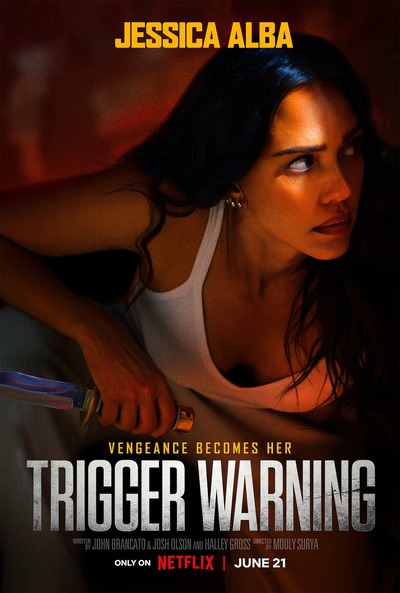 There’s an old joke about bad movies: “This film wasn’t released, it escaped.” It seems disturbingly appropriate here, however, considering the shooting of this finished in October 2021, and it has been part of our annual previews for 2022, 2023 and 2024. Quite why Netflix sat on the end product close to three years, I don’t know. But having watched it, I can confidently say: it wasn’t long enough. This is the kind of movie that left me feeling actively more stupid by the end of it. Alba plays Parker, a soldier who returns to her hometown in rural New Mexico after her father is killed in a mile accident. Only, of course [and that whirring sound is my eyes rolling], it turns out not to be an accident.
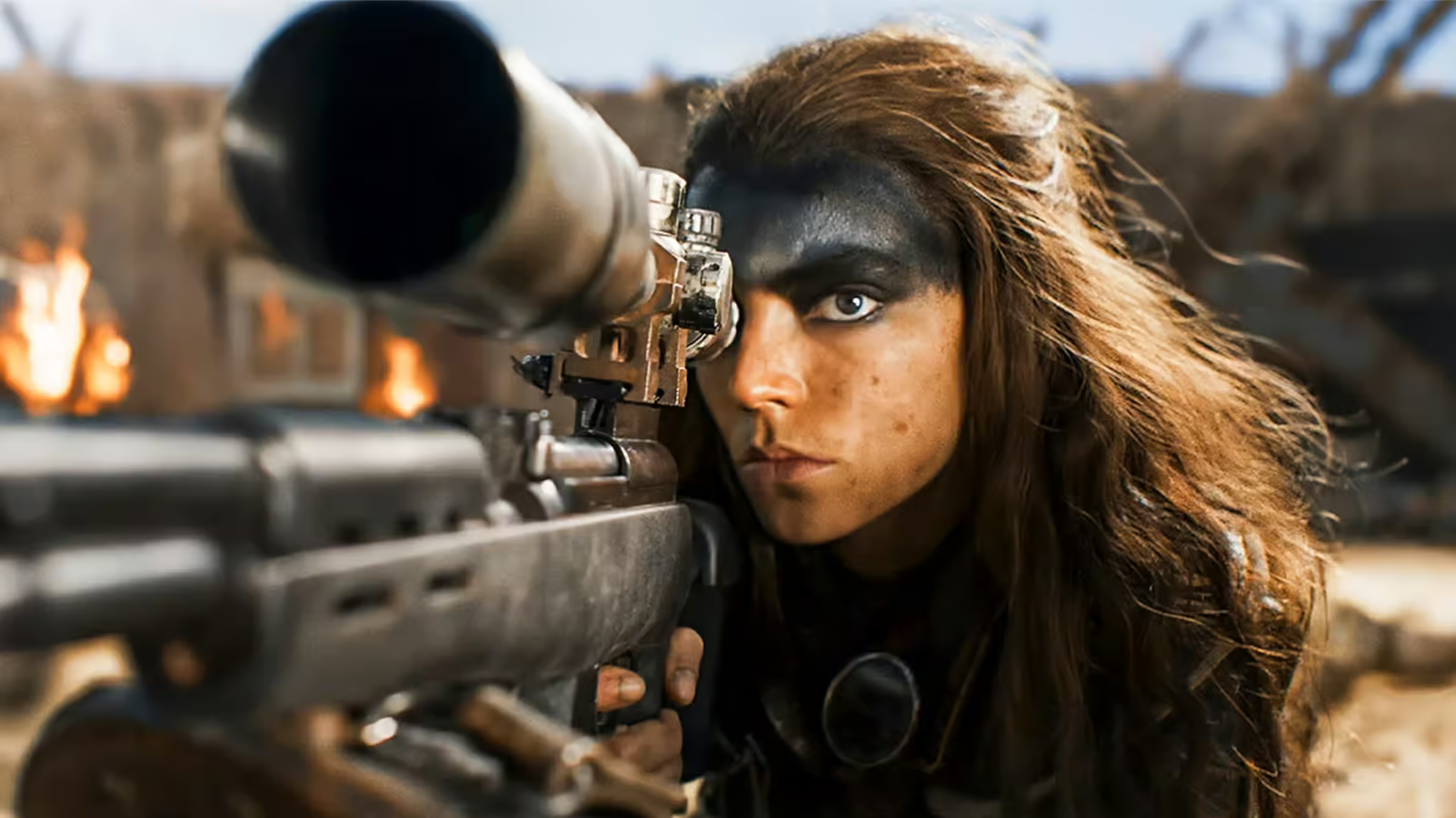 ★★★★½
★★★★½ It was a good run. There was a point, not long ago, when action heroines could do no wrong. In hindsight, the golden era may have started in 2012 when the Hunger Games franchise began, along with
 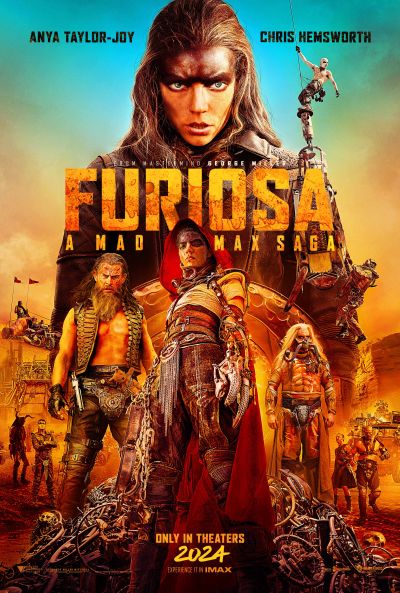 The counterpoint is experiences like this, a full-on, bombastic, in your face event that made full use of everything IMAX has in its locker, and surpassed anything I could get at home. Now, your mileage may vary. Poor Chris, in particular, found it
 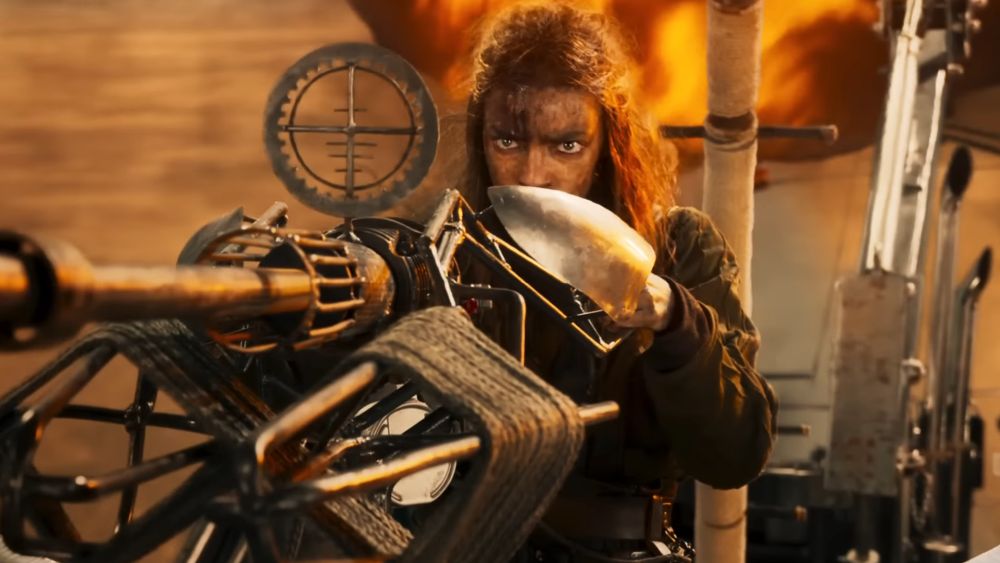 You would be hard-pushed to argue that the $168 million budget is not up on screen. I lost count of the times when I wondered whether what I was looking at really existed in the physical world, or was matte paintings and CGI. Part of me wants to peer behind the curtain and watch the behind the scenes videos. However, part of me would prefer to sustain the illusion, which was a factor in the sense of wonder that often washed over me during the screening. It’s the quest for that sense of awe which keeps me going to cinemas, even if most of the time, I end up leaving disappointed [I’m looking at you, Godzilla X Kong…]