
Queen of the South, season four + five

Season 4: ★★★★
Season 5: ★★½
“There’s only one way to be safe in this business — be powerful enough that no one can touch you.”

I only just realized that I had not reviewed the fourth series of Queen of the South at the time of its broadcast. I’m not 100% sure why that slipped my mind; it may have been a reaction to the rather underwhelming nature of the third season. In some ways, the show did get back on track – it did, at least, stop trying to fake badly Arizona, largely relocating to New Orleans. This brought with it a new slate of rivals and enemies for Teresa Mendoza (Braga). This was a necessity, the show having sent the main antagonist from the early series, Camila Vargas, into exile at the end of season three.

The main replacement was likely Cecil Lafayette, a corrupt local judge who seemed to have his finger in every pie, as well as cooking up a few more of his own. He wants an ever-increasing slice of Teresa’s endeavours, as he comes to realize how large her empire is. There’s also Marcel Dumas, a well-established gang leader in New Orleans, who initially wants to co-operate with her. Their relationship becomes increasingly fractious over the first half of the series, and Judge Lafayette sees the opportunity to pit them against each other, while apparently acting as a mediator.

Meanwhile, inside Teresa’s organization, we see the first inklings of dissension in the ranks. Boaz, who had been running her operations South of the border in Sinalioa, is beginning to show dissatisfaction with Teresa’s approach. But there are new opportunities too. I guess, perhaps to replace Vargas, we get Oksana Volkova (Cherny), who is the public face of the Russian mob in New York, operating on behalf of her extremely reclusive boss, Kostya. She offers a potential pipeline into the lucrative East coast market, from Miami up the coast through Atlanta to the Big Apple, for Teresa and her product. However, there’s opposition to her expansion, in the form of an existing Cuban mob, under El Gordo.

After the weakness of season three, this was a strong return to form. It got back to the basics, of Teresa Mendoza seeking to expand her empire and consolidate her power, despite opposition from existing players. The violence which almost inevitably flows from such a struggle was present in copious quantities, with at least one shocking and unexpected death (well, we only expected it about two seconds before it happened!). In Judge Lafayette, well portrayed by David Andrews,  there was a solid villain, whose cunning, along with his local connections and allies, proved a tough nut for Teresa and her cartel to go up against.

Probably my only complaint was our heroine not quite getting as deeply involved in the action as previously. Outside of an assault on the base of some mercenaries sent to kill her, there hardly seemed to be any significant firearms use for Teresa. Perhaps that was an indication that she was beginning to seek an exit strategy, moving into more legitimate businesses, and away from those where killing is a standard technique of operations. The news that the fifth series would be the show’s swansong, seemed to support this theory.
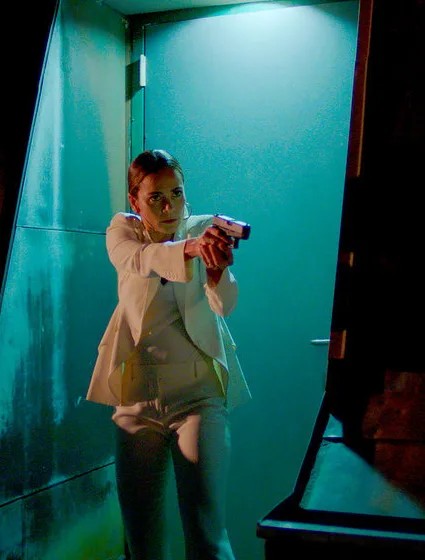
To start at the end of it, however, the grade for this season loses a full star simply on the basis of its chosen ending. While skirting around spoilers, we utterly called almost every aspect, down to the specific beach-side location of the final scenes, as early as end of the previous episode. Maybe we’ve just seen too many telenovelas in which this particular plot twist has been done to death. There was a real lack of any sense of karmic balance, considering the number of dead bodies Teresa had left in her wake. We also kept hoping, right up until the final credits rolled, that we would get closure for Camila Vargas. If the actress playing her, Veronica Falcón, just wanted to leave the series after #3, the character deserved a far better send-off. Meanwhile, Teresa Mendosa barely appeared in the final episode, which instead focused on long-time sidekick, Pote (Madera).

Up until that point, however, the season had not been terrible. It was fairly broad in scope, mostly hopping between New Orleans and New York, though with a side-trip to “Berlin” [quotes used advisedly, since unlike the Maltese excursion in series three, I’m fairly sure the production did not go to Germany, instead throwing in a couple of bits of stock footage and faking the rest]. As expected, Teresa was seeking to diversify into legal business, in particular property development. Though she quickly found out that “legitimate” did not necessarily mean those involved could be trusted. Still, no problem there, that methods from her usual field of work can’t solve.

Particularly effective was her ongoing dealings with the Russian mob. I will admit, I did wonder for a while whether their supposed leader even existed, since Oksana was the only person who ever seemed to talk to Kostya. There were a number of tense moments, as Teresa tries to convince the Russian to turn on her boss, because the Mexican offers a better long-term future. While Oksana was not up to the level of Camila Vargas, she did offer a good foil. She possessed an impenetrable air, reminding me of the famous Churchill quote about Russia being “a riddle, wrapped in a mystery, inside an enigma.” You just never knew what she was planning.

And so, it all ends – not with a bang, but in a considerably more peaceful way than I expected.  I think that. perhaps, after so long, writers tend to fall in love with their characters a bit too much. I’ve lost count of the number of shows, from Buffy through Dexter to Game of Thrones, which have had trouble creating a satisfactory ending, and we can now add Queen to that list. Its departure does still leave a gap on television. In terms of truly bad-ass heroines, prepared to go to any ends to reach their goals, Teresa Mendoza is without parallel. Now, let’s get a US remake of Rosario Tijeras

Star: Alice Braga, Hemky Madera, Peter Gadiot, Vera Cherny
Good Morning, Verônica: season one

★★★½
“Brazil nuts.”

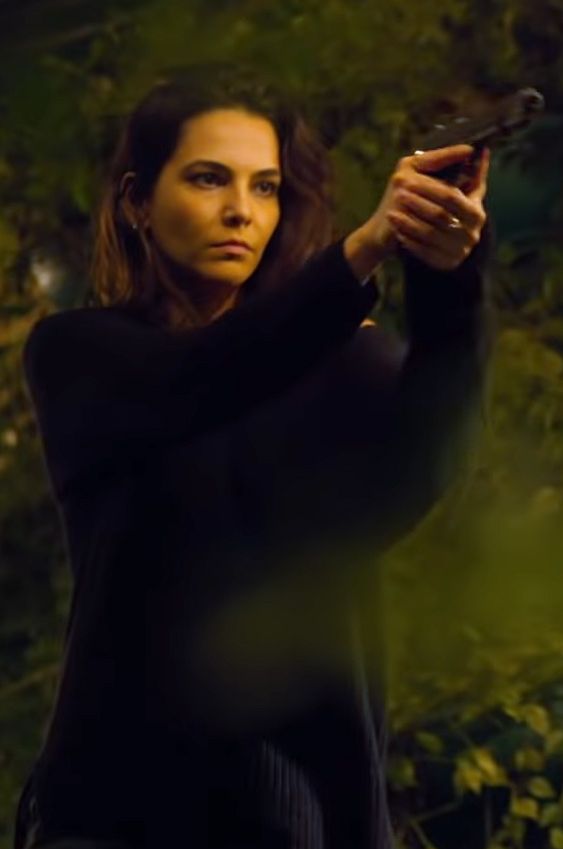
Verônica Torres (Müller) is a second-generation cop in the Sao Paulo, Brazil police force, though her father left there under a cloud, and in circumstances which are unclear. Torres’s job is as a paper-pusher in the homicide division, but when the victim of a date-rapist kills herself right in front of Veronica, she decides to make a stand. She goes public, asking to hear from other victims, or any abused women, and is contacted by Janete Cruz (Morgado). Her common-law husband, Brandão (Moscovism), is very disturbed, a thoroughly nasty piece of work, and may even be a serial killer. However, he is also a member of the military police and has powerful friends, in a shadowy conspiracy which could have ties to Verônica ‘s father. She’s going to have to tread very carefully if she’s going to get the evidence she needs from Janete, to convict Brandão.

The first of the eight x 45-minute episodes was fairly humdrum, once you got past the shock of the opening suicide, The synopsis made it feel somewhat fringey in terms of the site, perhaps sounding not much more intense than a Hallmark TV movie. But the second part focused on Brandão. The gloves well and truly came off, as we discovered exactly the evil he can do. Rather than a dating site predator, it became clear there were bigger fish in need of frying. While the dating site plotline does proceed, it eventually (and this is a very good thing) takes a definite back-seat to the meat of the series, which is Veronica’s pursuit of Brandão. Fortunately, she is not alone, with help from both a forensic pathologist and the department’s tech guy. But there are those in the department who don’t want her to succeed – though whether purely out of professional jealousy, or for more sinister motives, is one of the issues the heroine has to untangle.

There are some very good performances at the heart of this, which faintly echoes Silence of the Lambs in its pursuit of a serial killer by a rookie investigator. To be honest, I probably found Brandão a more chilling and believable killer than Buffalo Bill (though not, of course, Hannibal Lecter!), with Verônica almost as sympathetic as Clarice Starling. You definitely need to stay the course, as I felt it got markedly better as it unfolded. The last couple of episodes have some shocking twists in the narrative; let’s just say, not everyone you expect to survive, will do so. I also appreciated how, at the end, Verônica is entirely forced to rely on her own abilities, with no help from anybody. It’s her vs. Brandão – again, echoing the end of Silence. The script does a particularly good job of tying up its loose ends, while leaving the door very much open to a second series. If that continues the steady improvement this showed over its course, I’m definitely looking forward to it.

Creator: Raphael Montes
Star: Tainá Müller, Camila Morgado, Eduardo Moscovism, Antônio Grassi
a.k.a. Bom Dia, Verônica

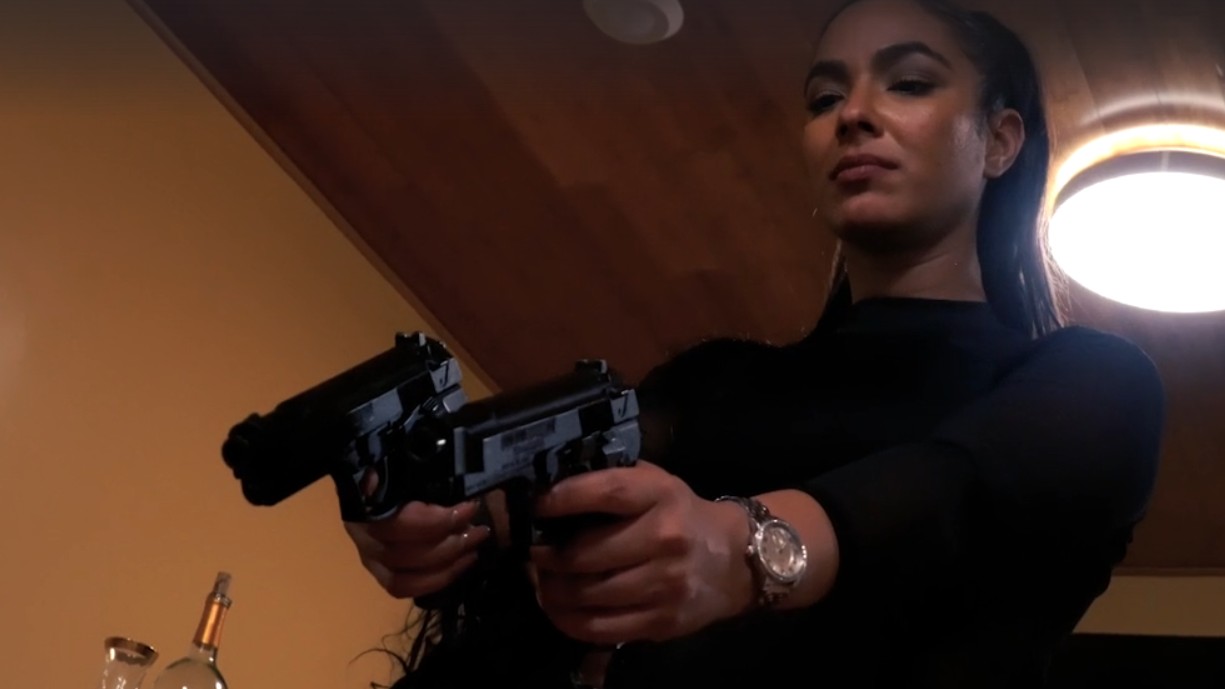
Pistolera

★★
“Fires mostly blanks.”

At the time of writing (year end, 2020), this is sitting at a 1.9 rating on the IMDb. That’s… not good. In fact, if it had more ratings, it would be lower than any qualifying film in the IMDb Bottom 100, currently led by Disaster Movie at a score of 2.0. However, like most things, the hype exceeds the reality (I automatically down-vote any “worst movie ever!” review I see on IMDb; it just demonstrates you really haven’t seen enough movies for your opinion to matter). While this certainly isn’t good, with obvious and glaring flaws… I’ve seen considerably worse. even in the action heroine genre.

It’s a basic story of revenge, and the story/script are okay. The titular heroine (Di Lella, who also wrote it) was the daughter of a crime boss in Spain. She saw her father murdered by a rival, Raffaello (Davi), when she was young, though she was able to escape death. Now a grown woman, she clearly believes in the old proverb about revenge being a dish best eaten cold. She is ready to exact vengeance on Raffaello, his gang, and anyone who stands in the way, so travels to Los Angeles to that end. There, she links up with her cousin, Rico (director Chapa pulling double-duty) and a family friend, reformed hitman Indio (Trejo), who agree to help with her mission.

Let’s start with the positives. These include things like the young Pistolera letting rip with a mini-gun during the attack, a scene which is so excessive I had genuine hope for the movie. I will say that Di Lella looks the part, with a fondness for midriff bearing outfits and pleather halter-tops, which is undeniably easy on the eye. The poster does not sell this short, and delivers on what you see there – given that is not always the case in exploitation cinema, credit must be given where it’s due. Genre veterans Davi and Trejo also provide their usual credible performances.

However, it would be a generous man who would say these are not outweighed by the negatives. Not the least of which is the star’s limited grasp of English. Now, it’s far better than my Spanish, which despite ongoing Duolingo courses and frequent exposure to telenovelas, is still down around the Donde esta la biblioteca? level. However, I’m not being cast as the lead in any Spanish films. Oh, Di Lella gets the individual words out okay: what’s missing is any significant emotion behind them. A text-to-speech generator would have given a better performance.

It’s therefore startling to reveal she isn’t the worst offender in the film. That goes to Marta Blanc as Cherry, an informer whom Pistolera and Rico pump for information. She delivers a big gobbet of exposition which a) utterly violates the “show, don’t tell” rule of cinema, and b) is almost entirely indecipherable. There are other woeful elements too. For example, not one, but two gratuitous flamenco numbers for De Lella. Or the crappy “tattoo” of angel’s wings and crossed pistols, which looks like it was drawn on her back with a marker. Or action scenes which rarely reach even average. All told, while I don’t agree with those who proclaim it the pinnacle of cinematic ineptitude, I have to concede you can probably see it from here.

Dir: Damian Chapa
Star: Romina Di Lella, Damian Chapa, Robert Davi, Danny Trejo

Pocket Full of Game

★★
“Game, in only the loosest sense.”

Porsha (Nunez) – and before you ask, yes, that’s how it’s spelled in the credits – is a small-time hustler, operating in the dodgier neighbourhoods of New York. When getting away from her latest escapade, she bumps into the crew of Fresh (Garcia) and his pals, who are similarly engaged, having just robbed a drug dealer. Due to flakiness on the part of one of the team, they’re looking for a new member, and Porsha successfully convinces Fresh that she is a good fit for the role. However, the rest of the gang are less convinced, and force Porsha to prove her loyalty by committing cold-blooded murder. That does her head in, and she holes up in Atlanta for a bit. Returning, she finds Fresh and her former associated have moved on, and attempts to pull off a job on her own, to get back in their graces. It doesn’t go well, shall we say, and Porsha finds herself on Rikers Island, facing a double-homicide charge.

There are a number of concerns here, of varying levels. The biggest problem is that this is 126 minutes long, and doesn’t have anything like the content to justify such a running tine. Every other scene is unnecessary, or runs to excessive length, and this causes significant issues with pacing. The script frequently seems to forget about its own threads; for example, after one robbery, a survivor vows to take revenge on Porsha, Fresh and their associates, for their actions. This only happens at the very end, and the cinematic amnesia becomes increasingly aggravating as the movie diverts instead into another pointless shit-hop montage, or irrelevant flashback to Porsha’s childhood. Another difficulty is, the resources aren’t able to handle some of the demands of the script: it is extremely obvious that the court-room required by it, isn’t anything like the real thing. The same goes for the prison, and the film only ever reaches close to convincing, or even comfortable, when it’s operating on the streets.

On the positive side, Nunez’s performance is solid enough to work, though a lot of the cast may be better suited for supporting roles than lead ones.  There were also just enough scenes that worked to keep me from hitting the off-button. In particular, the sequence where she’s made to kill, is surprisingly shocking, even in a film that clearly has no qualms about casual violence (and whose morality is about as far from “crime doesn’t pay” as could be imagined – indeed, this seems to be a world where it’s the only employment available). The problem is, the ratio of these scenes to the those which are deficient, for one or more of the reasons explained above, is about 1:10. This is apparently based on a novel, and the trailer for the book [yes, that’s apparently a thing] calls it “A hood soap opera.” I can’t argue with that – though it’s not such a positive thing, as the makers seem to think.

Dir: Deborah Cardona
Star: Katherine Nunez, Carlos Garcia, David L Holley, Joey Ortiz

The Bag Girls

★★
“From bag to worse.”

Firstly, the cast names listed below are copied verbatim from the movie. I can only presume that “Megan Thee Stallion” was unavailable, but seeing those names pop up in the opening credits does make it difficult to take a film seriously. It’s like you’re watching little children playing dress-up, and a whole level of recursive nonsense, with the actors playing roles, apparently playing roles in the their “real” lives. In other news: kids, get off my damn lawn.

The core pair here are Nola (Ms. The Doll) and Dee (Ms. The Boss. Or Maybe Ms. Love the Boss? Who knows). The former is a stripper, the latter her best friend, who catches her husband cheating, only to be punted to the kerb in favour of the mistress. To extract revenge. the pair recruit Daisy (James) and Crystal (Mi’chelle) and rob the husband. Discovering that crime represents an easier source of income than, say, working for a living, they continue their efforts, gradually working their way up to bigger scores. Eventually, they get a tip-off about a big drug-buy about to go down, but are under strict instructions to take only the cash, and leave the dope. Naturally, Daisy doesn’t listen, and the Cuban owners of the drugs are very keen to retrieve their product.

There’s nothing here you haven’t seen in better films. The film-makers even have their characters openly acknowledge some of the most obvious inspirations at one point or other. This is either extremely brave or perilously reckless, since low-budget movies probably don’t want to be encouraging comparisons with their big siblings:
– What the fuck you think this is, Set It Off, Part II?
– Bitch, this ain’t no motherfucking movie.
Well, actually – yes, it is. Even the title of the film is a result of them referring to each other during their robberies, by designer handbag brands: “We can call each other code names like colors, like Ms. Pink, Ms. Yellow, like they did in Reservoir Dogs, the Quentin Tarantino movie.” I don’t know whether or not to be amused that the writer felt the need to explain who made Reservoir Dogs. But I am amused that the reaction to the suggestion is “Fuck Quentin Tarantino!” Truly a sentiment all right-thinking people can get behind, and I’m not ashamed to say that line was worth an extra half-star.

There’s not much sense of progression here, and far too much time spent on the trappings of lifestyle e.g. a Vegas trip that looks like nothing so much as a bad rap music video, rather than giving the characters or the scenario real substance. There’s the inevitable tension between the members of the gang, before the equally inevitable shootout with the Cubans. What there is not, is any sense of plausibility; I don’t know about you, but I’m fairly sure that, unlike Dee’s husband, I’d recognize my own wife if she tried to rob me, mask or not. Hopefully, I’ll never get to test that theory.

Dir: Wil Lewis
Star: Crystal the Doll, LA Love the Boss, Samantha “3D Na’Tee” James, Carmen Mi’chelle

Gripped: Climbing the Killer Pillar

★★★
“Climb every mountain…”

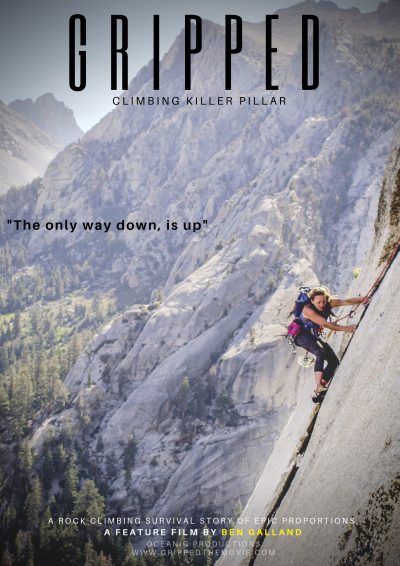
Newbie climber Rose (Maddox) is on her first trip to do some “real” climbing, rather than on a rock wall at her local gym. There, she meets and falls for the insanely rugged good-looking Bret (Lyman, who appears to have strayed right off the cover of a romance novel entitled “Love in the Surf”). After a couple of successfully, but relatively simple climbs, the pair head to take on something more challenging: the infamous “Killer pillar” of the title. Half-way up, a hand-hold used by Bret breaks, sending him tumbling down the cliff-face. Though the rope stops the fall from being fatal, he suffers a torn shoulder and head injury, leaving him unable to lead, and unable to descend. As the poster tagline says, “The only way down is up.” So, it falls on Rose, despite her lack of experience, to take over and forge a route up the near-sheer escarpment, that Bret will be able to navigate in her wake.

The mountaineering stuff here is excellent, and it seems that everyone involved was doing their own climbing. While for much of the time, I suspect they probably weren’t too far off the ground, there are a few shots that should come with a trigger warning for vertigo sufferers. Particular kudos to cinematographer John Garrett, who captures the stunning landscapes of the Sierra Nevada mountains in California – and, I suspect, did his share of climbing to get some of the angles. It just feels like legitimate climbing, in contrast to the Hollywood stuff seen in movies such as Cliffhanger. I note the presence in the supporting cast of notable real climbers, such as Jacki Florine, who in 2006 became the first woman to climb fourteen 14,000-foot peaks in California in 10 days. Another mountaineer, Natalie Duran, whom we recognized from her appearances on American Ninja Warrior, also has a supporting role as a jealous fellow climber.

The main problem is that the dramatic aspects don’t kick in until after the 50-minute mark, and it borders on the tedious to that point. Lovely scenery can only take you so far, when the romantic relationship at the movie’s heart is thoroughly unconvincing. We don’t need to see the banal process of them getting together, or the development of their interactions. This could, and probably should, have saved time by being an existing couple; Rose could still have been a novice climber, making her debut in the big outdoors. That would even have added a personal motivation to her heroics, rather than it being to save some hunk she met two days ago. Whatevs. They made the movie they wanted too, and it’s not on me to list ways to potential improve it! I’d say you can pay attention here when they clip on their gear, and safely ignore just about everything else.

Dir: Benjamin Galland
Star: Amanda Maddox, Kaiwi Lyman, Megan Hensley, Bryce Wissel

Coven

★★★
“The Craft meets Heathers.”

The town of Calvert has had a long association with the dark arts, going back to the founding families in the early 19th century, many of whom were involved in a coven. Now, four of their descendants, led by Ronnie (Cipolla), are seeking to unleash the power of the “goddess witch” Ashura, which has been bound for centuries. They need a fifth to complete the necessary rituals, and their first potential recruit doesn’t quite work out, shall we say, after things get a bit… stabby. However, a quick seeking spell points them in the direction of history student Sophie (Gordon, who also wrote the script).
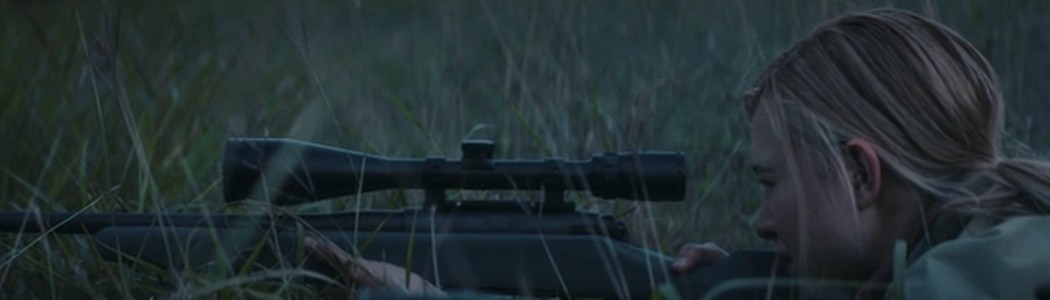

She has been working with local bookstore owner Emily (Skya, whom you may recognize as the heroine of Assassin’s Run), with the aim of achieving contact with her late mother, and the power Ashura will grant her devotees is a tempting lure. Of course, it’s not as simple as that. Indeed, it’s so obvious that it doesn’t even count as a real spoiler for me to tell you that Ronnie has no intention of sharing the power with anyone else, and the other four girls are just a means to that end. Emily needs to find the means to put the goddess witch-shaped genie back into the bottle, before she becomes just another piece of occult roadkill on the highway to hell.

I have to say, for a film both written and directed by women, it doesn’t paint a very positive picture of female relationships. Ronnie is an uber-bitch, perpetually demeaning and tearing down everyone else, and that seems to rub off on most of her coven-mates. The costumes also seem to have been chosen to pander to the male gaze. Which is a polite way of saying, most of them seem to come from the sluttier aisles of Hot Topic. Special credit to Jessica Louise Lamb for her contributions in this area, even if the nudity she provides seems, again, at odds with the usual teen-girl audience for this sort of thing. Though as the possessor of the aforementioned gaze, I’m never going to complain about eye-candy.

There are almost no surprises to be found here, with the story-line proceeding in the expected way to the flood of digital effects that is the finale, e.g. the history professor (played by someone who looks like a low-rent version of Chrissy Teigen) who just happens to have a copy of a founding witch’s diary, key to proceedings. This is also a premise which is hardly novel. However, I low-key enjoyed these bitchy witches being bitchy, and it was all rather less po-faced than I expected. In some ways, it feels like a significantly higher-rent entry in the Witchcraft series. While that is certainly not necessarily a good thing, the franchise had its moments, at least as far as entertainment was concerned. This is much the same: if its quality is arguable, for me, it has enough moments to keep me entertained.

Dir: Margaret Malandruccolo
Star: Lizze Gordon, Jenny Cipolla, Margot Major, Sofya Skya

Run Hide Fight

★★★
“School’s out… forever

My rule of thumb here is, I generally don’t get into politics, beyond what a film itself does. By which I mean, if a movie consciously injects a political theme or agenda, then that’s fair game. But otherwise, I try to review a movie as a movie, rather than seeing it through the lens of any political belief. However, in this case, I can’t ignore the elephant in the room, with Run Hide Fight having acquired an explicitly political subtext, over and about its content, through distribution by right-wing website, The Daily Wire. Yet, just as The Hunt was not calling for the murder of Trump supporters some suggested, neither is this the relentless pro-gun propaganda, you’d think from a few of the more vitriolic reviews. Once again, reality is more moderate than online opinions would have you believe. Who knew?

Director Rankin said (in an interview that’s thoughtful, and definitely worth the read), he wanted the film “to be so that two friends on opposite sides of the political spectrum could go watch this and both feel like it honored them, and they could go out for coffee or a beer, and talk about it.” I’d say he managed to do so, though I’m not certain such equivocation is the best approach, especially when it comes to such a controversial topis as school shootings. I might have had more respect if the film had taken a stance and gone for it. Though that would have taken more bravery – or stupidity! – given some of the reactions to what is a mild, even-handed take. It doesn’t really get more controversial than daring to suggest that sometimes, to stop a bad guy with a gun you need a good guy teenage girl with a gun.

From a moral point of view, my sole qualm was probably that too much time was spent on the chief perpetrator. It plays down the same line as previous entries in the school shooter genre – spending too much time on the killers rather than their victims, which almost regardless of execution, exacerbates the problem. This is something the script does address towards the end, when the heroine says to the ring-leader, “Isn’t it ironic, that after all your goddamn hard work, people aren’t gonna remember you? They are gonna remember me.” This might ring truer, if I wasn’t fairly sure he gets more lines than she does. I don’t care about your motivation. You’re insane. Now, move on.

Otherwise, it is basically Die Hard in a school, and as such, is no more worthy of complaint than any of the many other Die Hard knock-offs we’ve seen. Certainly, saying that educational facilities should be sacrosanct, inviolate and not used as the location for this kind of thing makes no logical sense. To quote Rankin, “There’s an easy answer to, ‘How could you?’ which is also, ‘How could you not?’ This is a major problem in America, so why not make a movie about it?” I would argue it’s in reality perceived as a major problem, largely due to the media hysteria around it. For in 2019, a grand total of just eight people were killed across the whole country on school grounds or during school-sponsored events. [Or, as Chicago calls it, “a quiet weekend.”] For context: lawnmowers kill more than ten times that number annually.

Anyway, let’s move on and discuss the movie, as a movie – because that’s what matters.

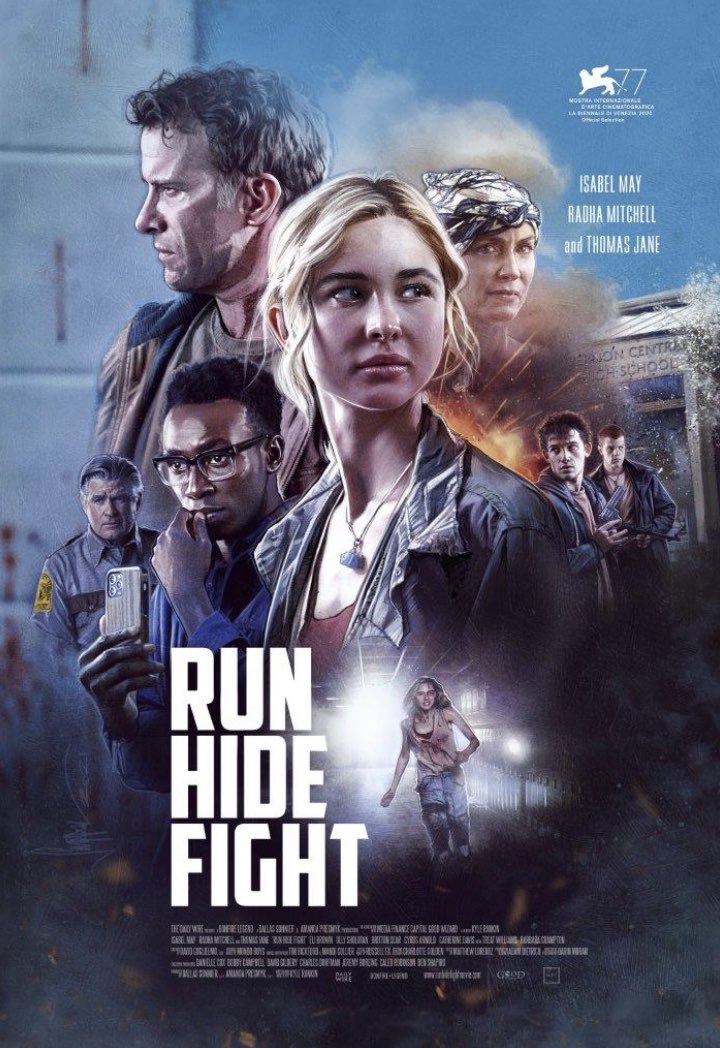
It’s almost the last day of the year, Jennifer Hull (May) is in her school cafeteria bathroom, when Tristan Voy (Brown) and his cohort of Columbine Mafia wannabes crash a van in through the window and take the students hostage. The authorities are slow to react, in part due to diversionary tactics, in part due to bureaucracy and in part… because it’s necessary to the plot, allowing Jennifer to scurry into the air-ducts and discover what being a TV dinner feels like. Having escaped the initial onslaught, her first instinct is to flee the scene, but fortunately for the movie, she decides to go back into the building, alert others to the reality of the situation and, eventually, face down the perpetrators.

You can largely pencil in the obvious plot points as they unfold, and the script offers very little in the way of surprises. Probably the biggest is that, as a Die Hard copy, it’s very restrained, with Jennifer responsible for the demise of only two (2) of the attackers. To put it into oughties video-game terms, it’s considerably more Metal Gear Solid than Goldeneye, with stealth being the order of the day, rather than rushing in with all guns blazing. It helps her that the attackers are streaming their act live on the Internet, which allows her to keep an eye on where they are. There are also some nice  moments where she make use of the school environment to assist her; I’d like to have seen more of that.

What the film does best is likely the set-up of Jennifer’s character. We first see her deer-hunting with her father (Jane), demonstrating a familiarity with and respect for firearms. It’s also established early that she’s still grieving after the loss of her mother, giving her some darkness. But generally, Jennifer is very much a normal girl, somewhat on the fringes of school life, but by no means an outsider. Mom’s ghost pops up now and again during events, a narrative conceit which I didn’t mind, yet can’t say I felt particularly enhanced things either. Still, she’s a heroine for whom I found it very easy to root.

It does feel like the script doesn’t quite know what to do with her after her first hand-to-hand fight, a messily close-combat affair. She turns her hand to a variety of different things, such as alerting other classes to the fact that leaving the premises is the best option, which feels like a diversion from the main plot. Eventually, of course, Tristan realizes there’s a fly in the ointment, and we get the face-off we’ve been expecting, which harks back to the early deer-hunting. It’s a good job too, as the penultimate climax had felt like a cop-out, with Jennifer teetering perilously close to damsel in distress mode. Fortunately, the real finale proved a good deal more satisfactory.

Much as with the political posturing, the film’s quality lies in the middle. It’s neither a new classic, nor the appalling piece of hackwork – both opinions I’ve seen put forward. It is considerably tamer than I expected, certainly not the outrage to common decency some have suggested (not that I’d have necessarily minded!). It is entirely competent and does a reasonable, rather than exceptional, job both as entertainment and in provoking thought. Not worth the hype, to be sure – yet certainly not worth the vitriol either.

Dir: Kyle Rankin
Star: Isabel May, Eli Brown, Thomas Jane, Thomas Jane

Me, You, Madness

★★
“American Psychette.”

I wanted to like this considerably more than I actually did.  The idea of a supremely self-aware female serial killer – not just comfortable in her psychoses, someone who actively revels in them? Colour me intrigued. Throw in any amount of eighties tunes, super-lush production design and photography, and this should have been right up my neon-lit alley. Yet, it very much runs out of steam. When perhaps the most memorable joke is an argument over the difference between a couch and a sofa… Yeah, there are some significant structural problems which need to have been addressed. 

The “heroine” (quotes used ironically) is hedge fund manager Catherine Black (Linton, also the writer), who has risen to the top with ferocious aggression. She has embraced her psychopathy, and in her beautifully appointed mansion, has multiple freezers full of dismembered bodies. Her next intended victim is Tyler Jones (Westwick), a con-man who is posing as an intended house-sitter. However, for the first time, Catherine finds herself unable to go through with her habitual slaughter, instead making an unexpected connection to the thief. Even after he absconds with one of her cars and a slew of her jewellery, part of her is still willing to forgive Tyler his trespasses, and brings him back by threatening to expose his previous crimes to the authorities. Yet will these new feelings of humanity and kindness be enough to overcome Catherine’s deep-seated and long-standing urges towards murder and cannibalism?

It appears this is Linton’s debut as both writer and director, and seems she bit off a bit more than she can chew. I think, in particular, it’s the script which is the issue. Crammed full of breaking the fourth wall and other advanced techniques, there’s no denying its ambition; unfortunately, Linton as writer doesn’t appear up to the task. Instead, she tries to run before she can walk, never managing to establish Catherine as a complex character. Indeed, it never puts enough effort into establishing her even as a murderous psychopath, until well after the point at which she has fallen for Tyler. That’s another problem, because the film doesn’t provide sufficient justification for thus: there’s precious little given to the audience that make us think, “I get what she sees in him,” rendering all that follows contrived and unconvincing.

While I certainly appreciated the nostalgic soundtrack, it does seem an odd choice given the contemporary setting – Linton was aged two when Blue Monday was originally released. Perhaps an older actress, such as a Naomi Watts or Catherine Zeta-Jones, would have been a better fit? But I guess, when you have decided you are going to be an actress, director and writer, and can find financing for it, then it’s full steam ahead. If much credit is due to her for seizing the opportunity, and there’s enough here to suggest a vision, it’s definitely too unpolished. She would likely be better off focusing on one area, rather than attempting to become a Jill of all trades.

Dir: Louise Linton 
Star: Louise Linton, Ed Westwick, Shuya Chang, Tyler Barnes

Monster Hunter

★★★
“Incoming annoyed video-game geeks in 3…”

To be 100% clear, I have never played the video-game on which this movie is based. I honestly could not tell you anything about it. I suspect – and I am going out on a limb here – that it probably involves hunting monsters. That’s all I’ve got. This is probably both a benefit and a detriment to my appreciation of this film. I have absolutely nothing against which to compare it, and so went in with no expectations of how this “should” look or behave. On the other hand, I was left feeling as if some prior knowledge might have helped me get a better idea of what’s going on. Because beyond the broadest of broad strokes, I couldn’t tell you. Fortunately, I do not feel this significantly impacted the entertainment value it provided.

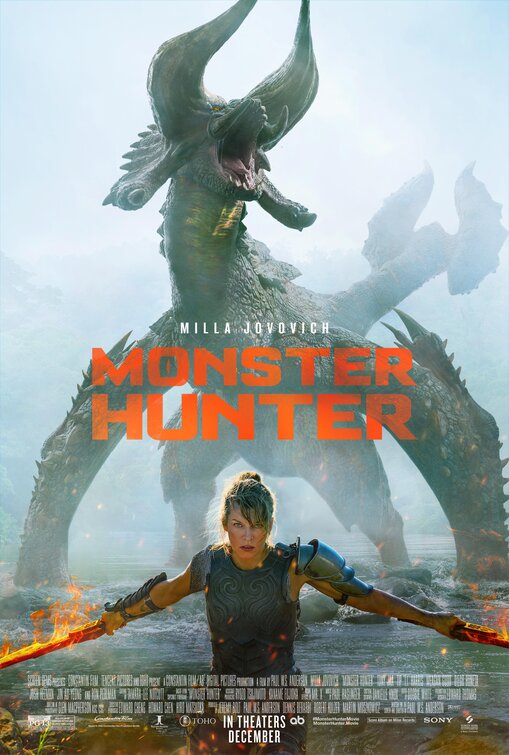
Basically, we have Captain Natalie Artemis (Jovovich) and the rest of her UN patrol, out in the middle of the desert, looking for a previously lost platoon. A massive sandstorm engulfs them, spitting them out into another world, populated largely by large, extremely carnivorous critters. Before you can say “No time to mourn,” Artemis is the sole survivor, and is rescued by Hunter (Jaa), who has managed to survive in the inhospitable terrain, since falling off a ship or something. Despite a lack of common language, the pair team up with the aim being to get Artemis back to the gateway through which she entered this parallel universe. The Admiral (Perlman), leader of a group of other hunters, also shows up, because….

Yeah, I suspect I am supposed to know who there people, monsters and things are – if you don’t, do not expect the script to provide much help. That said, this is absolutely the kind of film I can see myself clicking into whenever it’s on cable, on the basis of there being something cool and/or spectacular happening every five minutes, like clockwork. The sheer scale is where this is at its most effective, with the camera pulled back a really long way, showing the audience just how gigantic the monsters here are, and with the humans reduced to tiny specks – typically high-tailing it in the opposite direction. As a glorious rush of spectacle, it’s very impressive.

As a vehicle for Mrs. Anderson, it’s a bit less successful, simply because she is too often reduced to the edge of the frame. [She does, however, fare a bit better than Jaa, whom you would not know is one of the world’s best cinematic martial artists, between the editing and the staging.] As in the Resident Evil films, her character was created wholesale for the movie, and I imagine that will no doubt trigger the gamers. For obvious reasons, I’m entirely unconcerned, and an quite happy to continue endorsing the Anderson family’s efforts. Please continue to make big, dumb SF/horror flicks in which the missus gets to run around and beat things up, while becoming increasingly smudged.

Dir: Paul W. S. Anderson
Star: Milla Jovovich, Tony Jaa, Ron Perlman, Tip Harris