There used to be a review of Vietnamese movie Clash here, along with the movie’s trailer. However, in what can only be described as a bit of a dick move, Johnny Tri Nguyen, one of the film’s stars, submitted a takedown notice for the trailer. Yes, the trailer: footage specifically created and intended for promotional purposes. We emailed him politely asking how we could resolve this amicably. That was over a week ago. Not even the courtesy of a reply.
So, as a small protest at Nguyen’s high-handed and counter-productive actions, we’re pulling all reviews of films in which he appears from the site. I’m sorry to the rest of the cast and crew – particularly the action heroines whose presence is why the films were reviewed here to begin with. But if he’s going to behave this way, and act to shut down legitimate and reasonable coverage of his films. I’m happy to oblige.
Dir: Le Thanh Son Star: Ngo Thanh Van, Johnny Tri Nguyen, Hoang Phuc, Lam Minh Thang
a.k.a. Bẫy Rồng
Oh, dear. I’m sure those involved with the production and their mates loved this. To anyone on the outside… Much less so. However, the problem is not actually the concept, of an all-female biker gang, which had a long, disreputable B-movie pedigree, going back at least to the sixties, with Herschell Gordon Lewis’s She-Devils on Wheels and similar films. The women here operate under the leadership of “Mother” (Gorlano), and in something apparently inspired by Sons of Anarchy, run a garage/bar that doubles as gang HQ, from where they also deal meth to passing truckers (and midgets), while taking their tops off at random intervals – in particular Baby Doll (Roth). Possible related: there may be a strip-club that’s part of it, but the film is vague on the details of their infrastructure. The movie starts well enough, with them out in the desert torturing a man who had done one of them an unspecified wrong, dousing him in gas and setting him on fire.
If the film had stayed here or hereabouts, things would have been significantly better. But the next time we see them, their numbers are inexplicably reduced to a level where they could have their gang meetings in a phone-box. Worst still, writer-director Redding instead chooses to dilute his material with a bunch of truly dreadful supporting characters, who range from superfluous down to the point that you will be praying for a power outage to save you. In the former category are a passing band, Glam Puss, whose van breaks down on their way to a gig, and who have to hang out at the ladies’ establishment for a couple of days. They do actually provide the only genuine laugh in the film, with their reactions to a story from Mother’s earlier years. Further down the scale, at “gratingly cliched,” are a pair of corrupt cops who spent their time hassling and shaking-down citizens, when not hanging out at a strip-club, whose owner is played by Ted V. Mikels, the infamous director of some god-awful works we’ve covered here before. That the makers think him deserving of a cameo should be seen as a warning of what to expect.
Right at the bottom of the barrel, however, are the “comedic stylings” of Rusty Meyers as Hawksmeir, an Azerbaijani tourist. Within two minutes, you’ll be left with deep appreciation for the comparative subtle understatement that was Borat – indeed, through in a Chinese store-owner who is less convincing than Mickey Rooney in Breakfast at Tiffany’s and you’ve got something which is embarrassingly unfunny at best, and quite possibly offensive [and, don’t forget, I’m someone who loves Ilsa, She-Wolf of the SS, so do not offend easily]. Almost as annoying is the soundtrack, which appears to consist largely of bands who put the director on the guest-list or something, and is rarely less than aggravatingly intrusive. These, together with random acts of motiveless (and, apparently, pointless) violence by Mother and her crew, dominate proceedings until the last quarter, where a drug deal with another biker gang, the Rebel Cocks, goes wrong, leading to the final confrontation.
Great B-movies take interesting central characters, then put them in situations that drive the storyline forward, and possess a consistent style and approach that complements the content. This merits a marginal passing grade on the first category, but fails utterly at the second, and Redding appears to use every special effect available on his camcorder, resulting in a lurid mess. A decent idea ends up chewed into pulp, then vomited out onto your screen.
Dir: Regan Redding Star: Brenna Roth, Sara Plotkin, Sarah French, Rose Gorlano
Call me picky or pedantic, but to me, a movie titled Ninja Girl: Assassin of Darkness, should contain a reasonable amount of girl ninjaing, along with, one would hope, some assassinations. Running through a dark room once with a sword doesn’t cut it. Unfortunately, the makers of this appear to take a different view, feeling that their story, about a ninja girl sitting around feeling sorry for herself and bumping uglies with her Manchurian Candidate boyfriend, is more interesting. They’re wrong.
The setting here is modern Tokyo, apparently now a hotbed of espionage. The Japanese government defends against these by using ninjas, whose skills are passed on, not through years of training, but by heredity. After their father – one such ninja – is killed, sisters Naomi (Shou) and Sayaka are left to fend for themselves, unsure which, if either, of them has received the ninja gene, because it will only be discovered when the recipient is “awoken.” Naomi is by far the less stable of the two. After being dumped, she spends all the time sitting around her apartment, blacking out and occasionally attempting self-harm: seriously, that’s it, she says, “I know my sister and my room.” But her life is changed when she bumps into Mitsuyoshi, who opens a window into her sorry, sad life. Except, every so often, he gets phone-calls which cause him to drop everything – including, amusingly, a naked Naomi – and go out on missions.
Eventually – and I’m talking about 70 minutes into an 80-minute film – things do eventually lead to some activities which at least border on the ninja-esque. However, Shou’s talents in this area are about as feeble as you’d expect from a porn-star whose works, Google informs me, include titles such as Openly-Displayed Squirting Orgasm. Though I suppose you could argue that’s a bit of a ninja skill, in and of itself. There is little or no information about this one, which doesn’t seem to have an IMDb entry: it was made in 2006, according to the copyright, and apparently on a budget consisting of the spare change left over after purchasing a bowl of ramen noodles. The actress who plays Sayaka is not bad, with one scene where she and her sister are talking, that does actually manage to put over some emotion. I also get the sense the next part, now Naomi is “awakened”, might not be so bad. But as is, the bulk of this opener is uninteresting talk, with occasional interruptions for bad action.
This is the story of three sisters – Kazi the healer, Teta the priestess (Filatova) and Libuše (Zoli), who can see both the past and her future. Their father is chieftain of the local tribes, and when he passes away, Libuše is chosen to replace him, due to her supernatural talents. This does not impress some of her male rivals, who seek first to wed her, then when she spurns their advances, to replace her. Libuše’s dream of founding the city of Prague hits problems, and she is forced into marriage, but does at least trick her way into choosing her own husband, the farmer Přemysl (Lucas). However, she soon discovers that he isn’t quite the man he seemed, and he rules the country with an “iron fist,” causing Libuše’s childhood friend, the warrior maiden Vlasta (Mornar) to raise an army of women and rebel against the patriarchy.
It really is nowhere near as good as this sounds, and the synopsis above is significantly more coherent. I swear, I didn’t fall asleep – but it felt like I did, the story lurching from scene to scene in a disjointed manner that rapidly drained all interest. Outside of the heroine, there was hardly any significant effort at giving the characters motivation or depth, and matters weren’t helped by the fact the entire nation seemed to consist of about 25 people. The scenery is nice, and the soundtrack has a full, orchestral feel which seems to have escaped from a higher-budget movie, but it doesn’t work as a historical piece or as a political one – and, certainly, not as an action film. However, I was amused by what I suspect is likely a realistic, if ruthless, depiction of what would probably happen when a warrior maiden comes up against her male counterpart.
I suppose it’s possible this may be more entertaining, or simply coherent, if you’re aware of the legend on which it’s based. However, this would still be a flaw: you don’t need to have read Le Morte D’Arthur to appreciate Excalibur. And, beside, this seems to have been critically skewered in the Czech Republic, so it doesn’t appear background knowledge is that much of a help. I think it’s probably more the case that poorly considered femo-paganism [or paga-feminism, if you prefer] does not make for great cinema, regardless of the language.
Dir: Constantin Werner Star: Winter Ave Zoli. Csaba Lucas, Lea Mornar, Vera Filatova
“I’m a Barbie girl, in a Nazi world…” That’s an equally appropriate summary here, because the heroine in this flick, set in occupied Norway during World War II, was the lead singer of Aqua, famous (or notorious, if you prefer) for a certain catchy pop ditty. She plays – and I know you’ll find this a stretch – a singer, who works in a nightclub, which caters for high-ranking Nazi officers, while she simultaneously works with the local resistance and beds SS Major Kruger (Otto). The Allies are seeking plans of a local aluminium smelting plant, a key cog in the Third Reich’s war machine, so an airstrike can be called down on to it. Local businessman Tor Lindblom (Saheim) partners with Kruger to profit from the industrial operation, and play both sides, until their pet auditor is replaced by one rather less amenable to their embezzlement.
It’s a very shiny, upbeat approach to a thoroughly unpleasant situation, with little or no death for any significant characters until the final reel. The makers seem to want to say something important about Norwegian collaborators of the time – a final caption tells us that even the worst of them received only a light sentence (it doesn’t mention that puppet president Quisling, who is depicted, was executed by firing squad shortly after the end of the war). What exactly that ‘something important’ might be, is largely unclear: that’s in line with the rest of the plot, which could fairly be described as a muddled mess, with the loyalties of the participants apparently fluid and subject to the whims of the storyline.
Which would be tolerable if any of the other aspects were credible, but neither the performances, nor that script, succeed in capturing the interest of the viewer – Nystrom’s lack of acting experience is particularly notable, and she only really comes to life when on the stage at the club, belting out showtunes. There is a nice sense of period atmosphere, which could be described as “neo-Nazi Norwegian noir“, though much like the story, there’s far too much reliance on worn-out stereotypes in lieu of anything else. While slight tension is finally generated at the end, when Eva breaks for the Swedish border, it’s more the last twitch of a dead corpse than anything of significance.
★½
“There’s nothing like a good Western. And this is nothing like a good Western.”
Eryn Cates (Hague) returns home to Texas from finishing school in New York, to find her family farm teetering on the edge of foreclosure [maybe if they hadn’t spent all that money to send her to finishing school in New York…]. In a misguided attempt to help things, her brother tries to rob a stagecoach carrying payroll, but is injured. The attempt fails, but local mogul Mortimer (Harris), who holds the loan on the Cates farm, sees a chance and pockets the loot. Two Texas Rangers, including the young and handsome Flint (Hagenbuch) show up to investigate the robbery, but it’s up to Eryn to save the family property, take on the mantle of the bandit, fend off the unwanted advances of Mortimer and engage in pseudo-romantic banter of the least interesting or convincing sort with Flint.
It’s not very good, and the problems start right from the format: it was shot on low-definition video, which gives everything a harsh, modern look that really doesn’t suit the genre. Hague is equally unsuited for the role, and never succeeds in putting across any significant degree of emotion. And quite why there’s a kung-fu master in an early scene, I have no idea: he crops up once, and then is never seen again. It’s not as if Eryn exactly wields nunchakus against Mortimer’s minions. There are some cheap laughs to be had, not least the town dance where the band appear to play the same eight bars of The Streets of Laredo for six minutes straight, but most of this is just terribly pedestrian.
The DVD cover blurb claims, “The Quick and the Dead tips its cowboy hat to True Grit in this action packed Western gun battle.” Hmm. The tubes of the Internet deny any such phrase, though since Independent Film Quarterly [or “Quartly”, as the blurb has it] appears to be that endangered species, a print magazine, we can’t definitively claim fabrication here. What I can say with certainty, is that the apparent provider of the quote, Stuart Alson, has crafted a far greater work of fiction in that single sentence, than anything the writers here manage to conjure up in their 72, almost entirely tedious minutes.
Dir: Alan Chan Star: Hannah Hague, Adam Hagenbuch, Ron E. Harris, Richard L. Olsen
★★★½
“‘I, too, have an ass-sword.’ That quote about sums this up.”
Having been largely unimpressed by Iguchi’s other work, which seemed to have little to offer except megabytes of digital blood, I likely wouldn’t have watched this except an accident involving beer and my Apple TV remote has stopped me from much of my usual viewing. I could still stream from Netflix, however, though when I saw this was dubbed in English, I almost didn’t bother. But surprisingly, this has easily the best plot of his movies, with a slyly-twisted sense of imagination that’s very effective.
It centres on sisters Yoshie (Kiguchi) and Kikue (Hasebe), the latter a geisha who is cruel and vindictive to her younger sister. They are taken by Hikaru Kageno (Saito), the scion of Kageno Steel, to his castle and inducted as recruits into a geisha army, which he is using to take out opponents to his plans for national domination. Yoshie has an innate skill for assassination, soon surpassing Kikeu, who begs Hikaru to “upgrade” her mechanically, so she can best her sister. Yoshie, to keep up, is similarly enhanced.
The scenario shifts when Yoshie is sent to take out a group of senior citizens and discovers they are the families of other members of the geisha army – far from being willing volunteers, they were abducted and brainwashed by Kageno and his father. After narrowly escaping a suicide mission, Yoshie switches sides and joins the senior citizens, who add further to her artificial armoury. It’s up to her to stop Kageno, before he can drop a massive nuclear weapon into Mount Fuji, completing his plan.
This is certainly out there, but is a good deal lighter in tone than expected, often crossing the border into an outright silliness that is actually endearing. For instance the whose “castle-shaped robot” concept is beautifully ludicrous, not least as the building rampages around, whacking building that then spurt blood, for no readily apparent reason. There’s also shades of 60’s spy thrillers like Dr. Goldfoot and the Girl Bombs in the basic concept of the geisha army, though there’s still a certain ass-fetishism which I could have done without – swords and shuriken both come flying out of there.
Complaining that this is, to quote Monty Python, “too silly,” would be missing the point, and the fight sequences are well put-together, not least when involving Kageno’s lead henchwomen, the Tengu Twins. At over 100 minutes, it is likely a little too long and these are less performances, than hangers, on which to place lurid visuals of questionable taste. However, you will want to keep watching, simply to see what the heck Iguchi will come up with next.
★★★½
“Joan of Arc, without the religion. Or stake.”
Inspired by the same poem as Disney’s much-loved feature, this has the same basic idea – a young woman impersonates a man in order to save her father from being drafted in the army. However, this takes a rather different approach, being much darker in tone, not that’s this is much of a surprise, I guess. It’s also a lot longer in scope, with Mulan (Zhao, whom you may recognize as the heroine/goalkeeper from Shaolin Soccer), rather than fighting a single campaign, becoming a career soldier and rising through the ranks as a result of her bravery in battle, eventually becoming a general, tasked with defending the Wei nation from the villainous Mendu (Hu). He has killed his own father in order to take control, and has united the nomadic tribes of the Rouran, amassing an army of 200,000 to invade Mulan’s home territory. She comes up with a plan to lure him into a trap, but when she is betrayed by a cowardly commander, things look bleak indeed for Mulan and Wentai (Chen), one of the few who know her secret.
Initially, I was rather unconvinced by Zhao who, being in her mid-30s, is a tad old to be playing the dutiful daughter. But given the longer view taken by the movie, the casting makes sense, and she ends up fitting into the role nicely; there’s a steely determination which develops over the course of the film, and by the end, you can see why she has become a commander. That’s one of the themes of the movie: duty, contrasted with the terrible losses war can inflict on a personal level, Mulan being largely powerless to watch as almost all her friends end up dying in battle. “I’ve fought battle after battle,” she says, “Lost one after another of my brothers, I really don’t want to fight any more.” There’s almost a neo-totalitarian implication to the final message, however, which suggests that everyone – even those who have sacrificed everything already – need to put aside their personal interests for the greater good of the state.
There’s a nice balance between the action and emotional aspects, but Zhao doesn’t actually do much in the latter department after the battle which gets her noticed. She’s broken out of army jail to take part, after confessing to stealing a jade pendant, in order to avoid a strip-search [death before dishonour]. After that, she’s more a leader than an actual fighter: heavy is the head that wears the general’s helmet is the moral here, and it’s driven home effectively enough, thanks mostly to Zhao’s solid performance.
Dir: Jingle Ma Star: Zhao Wei, Chen Kun, Hu Jun, Jaycee Chan
★★★
Less a “film” than “fights spliced together, interspersed with cut scenes from a Mortal Kombat knock-off”.
The entertainment value you get from this may depend on your expectations. It undoubtedly works best as a party-tape, show-casing the “no wires, CGI or stunt doubles” approach, but I have to beg to differ with some of the critical savaging it has received. Even on our forums, it divided opinions, with some posters calling it “moronic and offensive” and “complete TRASH”. While I can see its weaknesses, and it’s no classic, at least in the first half, it does deliver pretty much everything you’d expect in the way of teenage ass-kickery.
The plot – such as it is, and I wonder what they did with the rest of the postage-stamp – is as follows. Kei Tsuchiya (Takeda) is a student under master Matsumura (Naka), but fed up with training, goes out to “hunt black belts.” This brings her to the attentions of the Destroyers, a gang of mercenary martial-artists called the Destroyers, extend an invitation to her to join them. Turns out it’s a trap, designed to lure in Matsumura, against whom they have a 15-year old grudge, and with the kidnapped Kei as bait, they await her teacher’s arrival. And that’s the main problem. The first half sets up Kei as fearless and tough, but after the chief villain shows up, spends much of the second-half whimpering on the floor: Matsumura does far more of the heavy lifting, despite his claim, rather questionable on the evidence here, that “karate is not for fighting.”
And that’s a shame, as Kei makes a good impression, right from her first bit of action, which sees her surprise an unsuspecting opponent with a kick to the head from a standing position, as shown on the right. Another standout was the kickfest (below), against another real-life karate star, Yuka Kobayashi. Stylistically, however, the main problem is the director’s repetitive, frequent use of slow-motion: while this is great in the aforementioned “party tape” atmosphere (where, if someone yells, “Wow, look at that,” you can turn around and see it again), it is badly overused and drags the viewer out of the cinematic experience far too often: lob this kind of stuff on as an extra on the DVD, if you must.
The reviews which aren’t writing this off entirely tend to point out that it works better if you regard it as some kind of martial-arts promotional piece, and that would tie in with the heavy emphasis that “Karate is a martial art for protection.” [Personally, I feel a good pair of running shoes would be just as good there] However, there’s little doubting that Takeda is the real deal in terms of fighting ability, and shows a willingness to take punishment as well as dish it out, that is certainly to her credit. However, the inexperience of both her and the creators in the more traditional aspects of film-making – for the final battle, the location appears to be a school gymnasium, on loan to the Destroyers! – do significantly hamper the overall merit.
Dir: Fuyuhiko Nishi Star: Rina Takeda, Tatsuya Naka, and a host of faceless minions
No, seriously. That title was actually used for the movie in Germany, shamelessly evoking the Jolie vehicle. It’s understandable, since they do have a lot in common. Secret agent Ahn Su-Ji (Kim) splits up with her boyfriend Jae-Joon (Kang), who is upset over her deceit, not knowing it’s in the name of national security. Three years later, they meet up again, and it’s clear the spark is still there. However, she doesn’t know that he is now an agent for another branch of the Korean intelligence services. Of course, with the amazing luck that only ever happens in action rom-coms like this, they are working on the same case, and closing in on the same plan to detonate a biological weapon in Korea. Their actions each come to the attention of the other’s organization who both decide they are dealing with a traitor.
As is often the case with movies that stride across such disparate genres, the results are more inoffensive than memorable. As a romance, comedy or action pic, this is okay: solidly made, with decent production values and occasional moments that do work nicely in the context of their particular genre. For instance, a romantic dinner between the pair does show the depth of their feeling, and a nice sequence at a fair sees Jae-Joon take on his opponent in a pile of artificial guns – and one real one – in what is a good combination of fisticuffs and humour. But the usual rule, “Jack of all trades, master of none,” holds true as well, with the movie never diverging much from the expected and well-trodden path, in plot or characterization.
Kim does have decent presence, and there are a couple of good set-pieces, most notably a rousing finale, where the villainous Russian mob boss turns out to be not quite what he seems (ahem!). The sight of her jet-skiing after the bad guys at the start, in a wedding-dress, is also impressive, reminding me of a similar abuse of matrimonial attire in Queen’s High. However, that a costume choice is one of the most memorable moments of the film is probably a fair indication that is no more than a bit of frothy entertainment.
Dir: Shin Tae-Ra Star: Kim Ha-Neul, Kang Ji-hwan, Jang Yeong-Nam, Ryoo Seung-Ryong




 Oh, dear. I’m sure those involved with the production and their mates loved this. To anyone on the outside… Much less so. However, the problem is not actually the concept, of an all-female biker gang, which had a long, disreputable B-movie pedigree, going back at least to the sixties, with Herschell Gordon Lewis’s She-Devils on Wheels and similar films. The women here operate under the leadership of “Mother” (Gorlano), and in something apparently inspired by Sons of Anarchy, run a garage/bar that doubles as gang HQ, from where they also deal meth to passing truckers (and midgets), while taking their tops off at random intervals – in particular Baby Doll (Roth). Possible related: there may be a strip-club that’s part of it, but the film is vague on the details of their infrastructure. The movie starts well enough, with them out in the desert torturing a man who had done one of them an unspecified wrong, dousing him in gas and setting him on fire.
 Call me picky or pedantic, but to me, a movie titled Ninja Girl: Assassin of Darkness,
  ★½
★½ It really is nowhere near as good as this sounds, and the synopsis above is significantly more coherent. I swear, I didn’t fall asleep – but it felt like I did, the story lurching from scene to scene in a disjointed manner that rapidly drained all interest. Outside of the heroine, there was hardly any significant effort at giving the characters motivation or depth, and matters weren’t helped by the fact the entire nation seemed to consist of about 25 people. The scenery is nice, and the soundtrack has a full, orchestral feel which seems to have escaped from a higher-budget movie, but it doesn’t work as a historical piece or as a political one – and, certainly, not as an action film. However, I was amused by what I suspect is likely a realistic, if ruthless, depiction of what would probably happen when a warrior maiden comes up against her male counterpart.
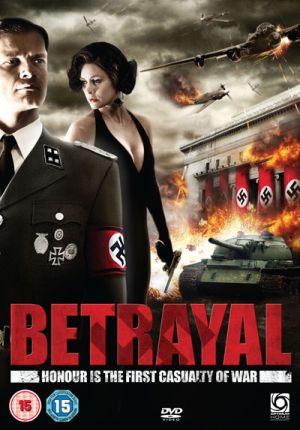 “I’m a Barbie girl, in a Nazi world…” That’s an equally appropriate summary here, because the heroine in this flick, set in occupied Norway during World War II, was the lead singer of Aqua, famous (or notorious, if you prefer) for a certain catchy pop ditty. She plays – and I know you’ll find this a stretch – a singer, who works in a nightclub, which caters for high-ranking Nazi officers, while she simultaneously works with the local resistance and beds SS Major Kruger (Otto). The Allies are seeking plans of a local aluminium smelting plant, a key cog in the Third Reich’s war machine, so an airstrike can be called down on to it. Local businessman Tor Lindblom (Saheim) partners with Kruger to profit from the industrial operation, and play both sides, until their pet auditor is replaced by one rather less amenable to their embezzlement.
 Eryn Cates (Hague) returns home to Texas from finishing school in New York, to find her family farm teetering on the edge of foreclosure [maybe if they hadn’t spent all that money to send her to finishing school in New York…]. In a misguided attempt to help things, her brother tries to rob a stagecoach carrying payroll, but is injured. The attempt fails, but local mogul Mortimer (Harris), who holds the loan on the Cates farm, sees a chance and pockets the loot. Two Texas Rangers, including the young and handsome Flint (Hagenbuch) show up to investigate the robbery, but it’s up to Eryn to save the family property, take on the mantle of the bandit, fend off the unwanted advances of Mortimer and engage in pseudo-romantic banter of the least interesting or convincing sort with Flint.
 Having been largely unimpressed by Iguchi’s other work, which seemed to have little to offer except megabytes of digital blood, I likely wouldn’t have watched this except an accident involving beer and my Apple TV remote has stopped me from much of my usual viewing. I could still stream from Netflix, however, though when I saw this was dubbed in English, I almost didn’t bother. But surprisingly, this has easily the best plot of his movies, with a slyly-twisted sense of imagination that’s very effective.
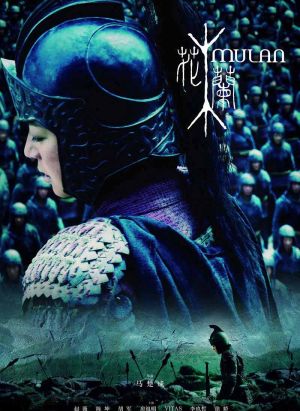 Inspired by the same poem as Disney’s much-loved feature, this has the same basic idea – a young woman impersonates a man in order to save her father from being drafted in the army. However, this takes a rather different approach, being much darker in tone, not that’s this is much of a surprise, I guess. It’s also a lot longer in scope, with Mulan (Zhao, whom you may recognize as the heroine/goalkeeper from Shaolin Soccer), rather than fighting a single campaign, becoming a career soldier and rising through the ranks as a result of her bravery in battle, eventually becoming a general, tasked with defending the Wei nation from the villainous Mendu (Hu). He has killed his own father in order to take control, and has united the nomadic tribes of the Rouran, amassing an army of 200,000 to invade Mulan’s home territory. She comes up with a plan to lure him into a trap, but when she is betrayed by a cowardly commander, things look bleak indeed for Mulan and Wentai (Chen), one of the few who know her secret.
 The entertainment value you get from this may depend on your expectations. It undoubtedly works best as a party-tape, show-casing the “no wires, CGI or stunt doubles” approach, but I have to beg to differ with some of the critical savaging it has received. Even
 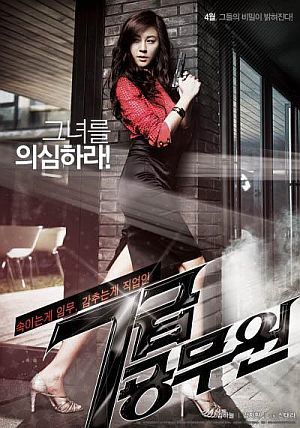 No, seriously. That title was actually used for the movie in Germany, shamelessly evoking the Jolie vehicle. It’s understandable, since they do have a lot in common. Secret agent Ahn Su-Ji (Kim) splits up with her boyfriend Jae-Joon (Kang), who is upset over her deceit, not knowing it’s in the name of national security. Three years later, they meet up again, and it’s clear the spark is still there. However, she doesn’t know that he is now an agent for another branch of the Korean intelligence services. Of course, with the amazing luck that only ever happens in action rom-coms like this, they are working on the same case, and closing in on the same plan to detonate a biological weapon in Korea. Their actions each come to the attention of the other’s organization who both decide they are dealing with a traitor.