




★★★
“Can’t argue with that title.”
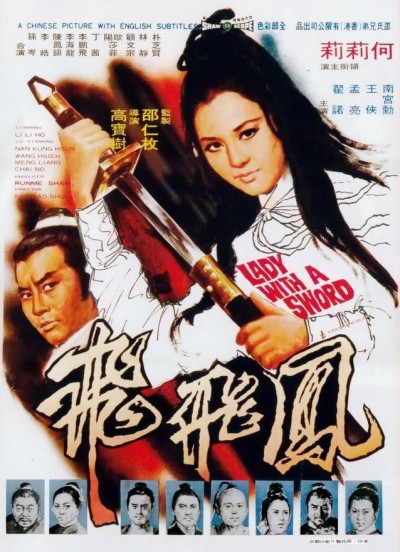 This was originally titled after its heroine, but since that obviously wouldn’t work in the West, it was changed to become about as generic a title as you could get. Behind this is a decent little flick, which is also worthy of note, because it may be the first Shaw Brothers action film to be directed by a woman. Pao-Shu Kao had been an actress with the studio since 1958, but this ended up being her sole movie as director for Shaw, as she started her own company, Park Films, with her husband. But this, her debut, is the highest-rated on the IMDb of the eleven features she helmed, at a respectable 6.8.
The heroine is Feng Fei Fei (Ho), who gets distressing news when her nephew, Hu Tou (Meng) shows up. He narrowly escaped with his young life after he and his mother, Fei Fei’s sister, were set upon by brigands, with Mom being killed. Fei Fei isn’t having that, so immediately sets out to take revenge on those responsible. She tracks down the first one, but this is where things get awkward. Because it turns out he’s Chin Lien Pai (Nam), the scion of a family friend, and worse, is the person to whom Fei Fei has been betrothed since they were young. While it’s a bit vague on the details, I guess vengeance would bring dishonour to her relations. Or, at least, make subsequent family get-togethers more than a little uncomfortable.
The first half-hour of this is really good, likely peaking with a hellacious fight at a brothel, where Fei Fei takes on what appears to be the entire population of China. It’s also notable, because next door, Hu Tou is also fighting, and it’s quite impressive too. East Asian films, be they Chinese, Taiwanese or from Hong Kong tend to use kids as comic relief, and the results tend to be grating and irritating. Not so here, with Hu Tou taken seriously, and allowed to take part in battles that work because he uses quickness and agility, not strength. But it is mostly Ho’s film and she gets a slew of solid fights, including against her fiancé’s mother, defending her son.
Unfortunately, after the brothel brawl, the film does tend to become a bit chatty and, worse, spends too much time on Chin and the other bad guys. It may be an attempt by Kao to deepen the portrayal of the villains beyond the shallow. However, guess what? I don’t care. The original attack firmly cements them as murderous scum-bags who deserve to die, and nothing is going to change my mind on this, thank you very much. The only interesting section sees Chin’s parents sharply differ in reaction to their son’s crimes: Dad thinks it brings shame on the family, Mum (as noted above), not so much. Fortunately, the ending gets back to the fighting, though it’s disappointing how Fei Fei needs help. Entertaining enough, yet after how if began, it seems a lost opportunity.
Dir: Pao-Shu Kao
Star: Lily Ho, Seok-hoon Nam, Hsieh Wang, Yuen-Man Meng
a.k.a. Feng Fei Fei
 ★★
★★ This was among the very last of the “pinky violence” films made by the
 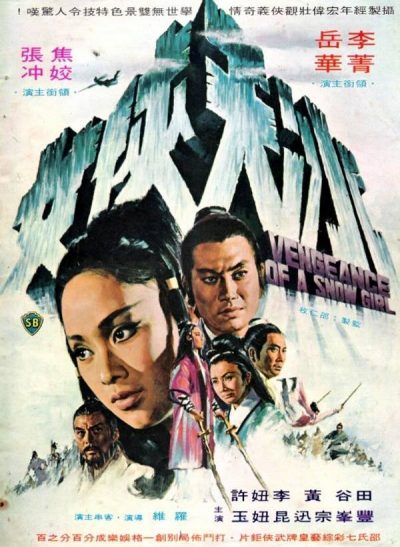 The elevator pitch version of this sounds like a million other kung-fu films: Shen Ping Hong (Li) seeks revenge on the people who killed her parents and left her crippled. But there’s rather more going on beneath the surface, and shades of grey on both sides. One of her targets, Lord Kao Hung, regrets what happened and wants to help Shen regain the use of her legs. But Shen only agrees to let his son Tien-Ying (Yueh) help, in the belief that it will make her mission of vengeance easier. It feels almost like she’s a mad dog, lashing out at anyone who tries to help; keeping the severed heads of her victims in jars is a clue there. Meanwhile, Kao’s associates – and Tien-Ying’s ex-girlfriend (Chiao) – think he’s helping because he wants to get Shen’s jade sword for his own ends, and are intent on getting their revenge in on her first.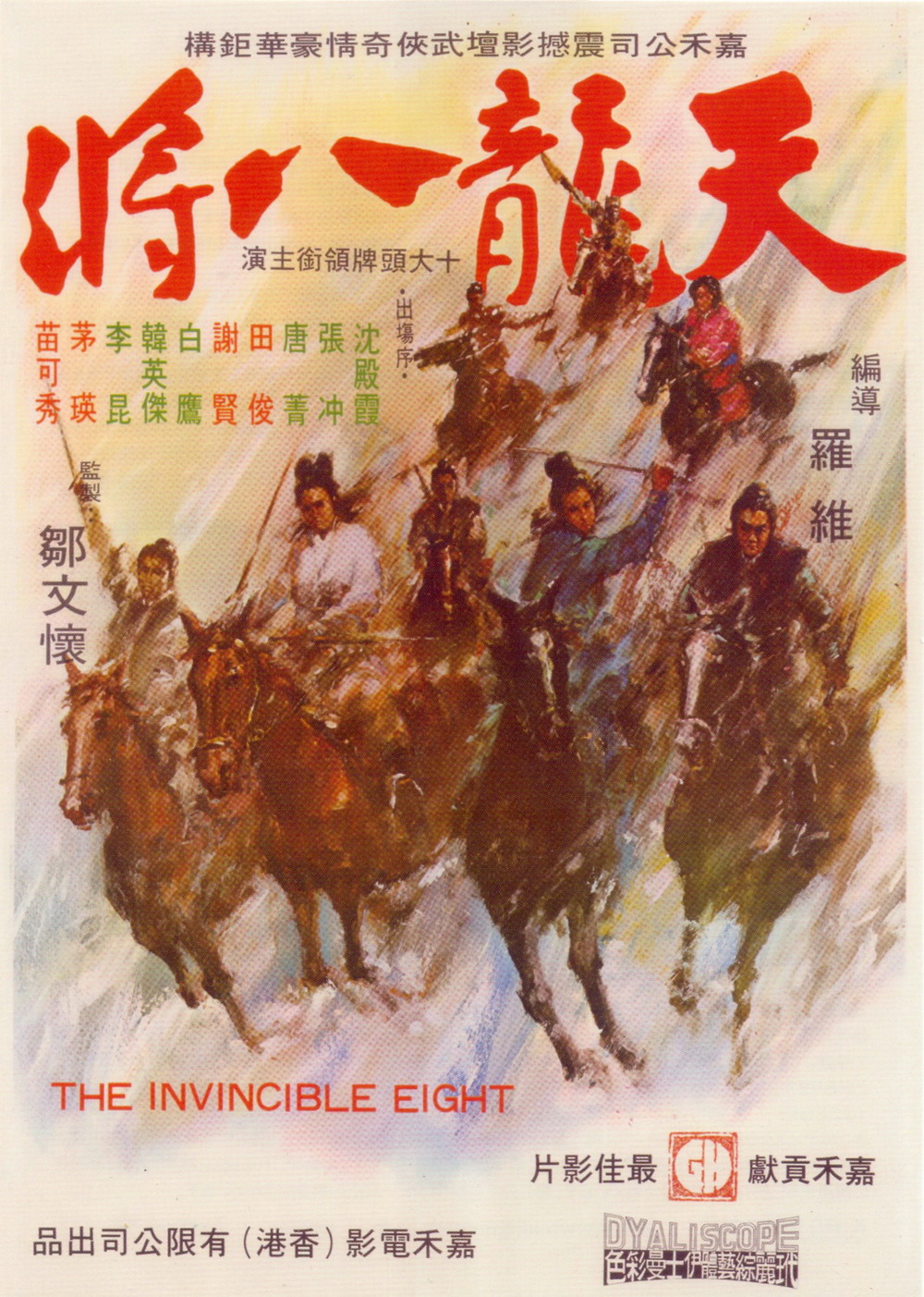
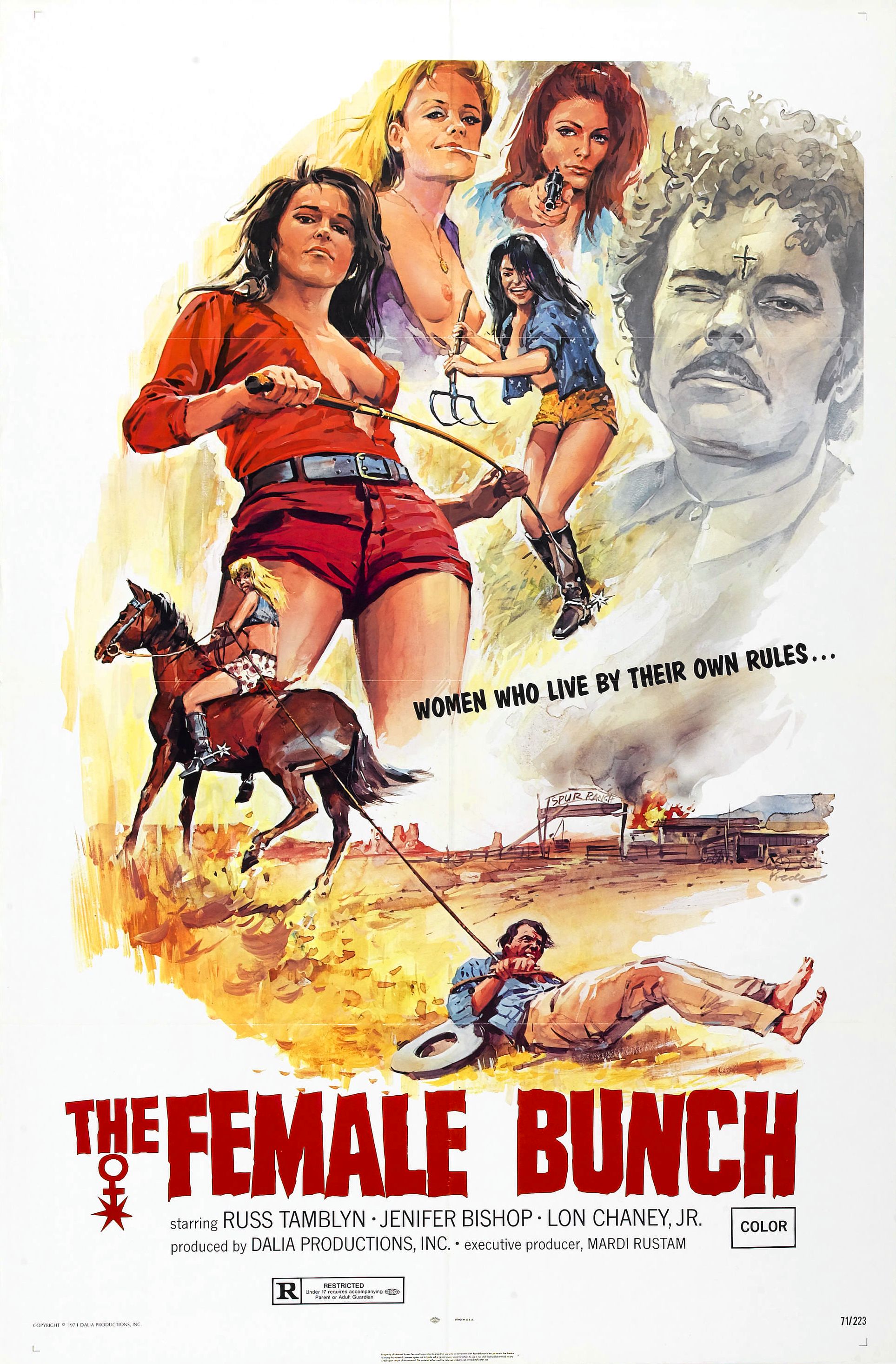
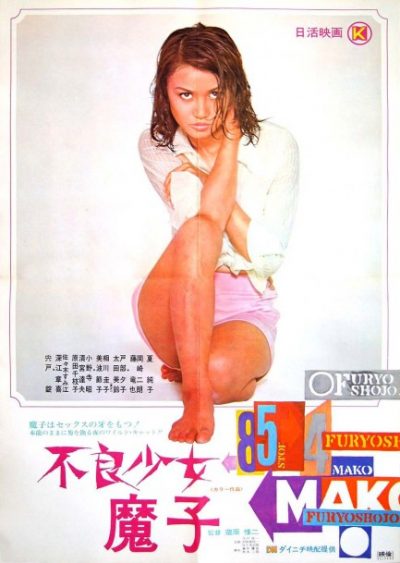
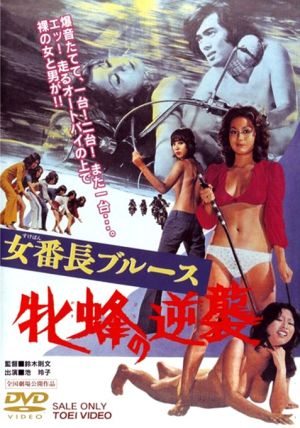 Reiko (Ike) is leader of the Athens Gang, a low-level all-girl gang, who specialize in car thefts and rolling naive salarymen with the lure of hot sex. They’re part of a hierarchy, which includes a male gang under whom they loosely operate, who are in turn on the fringes of a Yakuza group. There’s also a motor-cycle gang and its leader (Taki) who don’t obey anyone, and that independence is really what Reiko wants, even though her group is obliged to follow certain rules, such as not getting attached to any man. Things are disrupted by the return of former leader Jun (Kagawa) from reform school: will Reiko be able to hold on to her position? It’s just one of a large number of plot threads here: you also get the blackmail of a pop star; a hitman agreeing to one last mission; a gangster estranged from his wife and daughter; sex on motorcycles for no apparent reason; a journalist with a nose for scandal; and, of course Reiko failing to follow her own rule about no attachments.
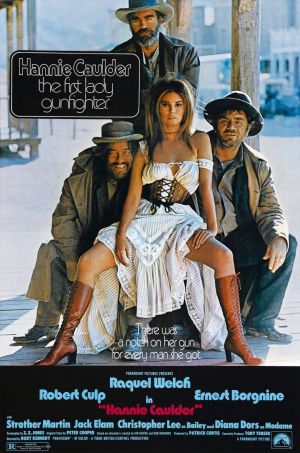 If genre entries produced in Italy are “spaghetti Westerns”, what does that make those produced in Britain? “Fish and chip Westerns?” “Roast beef Westerns?” Shot in Spain, but made by Tigon Film, and including such quintessential Brits as Christopher Lee and Diana Dors in supporting roles, this is nicely-photographed and hits all the right notes. But as the titular character, who seeks revenge after her husband is gunned down, and she herself raped, by the Clemens brothers, Welch perhaps has too much cinematic baggage. While responsible for one of the all-time absolute