The above is the Polish for “seven”, and in the first half-hour, you’ll be forgiven for thinking that’s what you’re watching: a Polish knock-off of David Fincher’s Se7en. Homicide cop Helena Rus (Kożuchowska) is struggling to come to terms with life, after her boyfriend is killed by a drunk-driver and, for political reasons, the criminal is allowed to go free. A welcome distraction comes in the shape of a series of ritualistic murders: every day at 6 pm, a body turns up on the streets of Wroclaw. The victims have been killed in strange and unusual ways – the first, for example, is sewn inside a cow-hide, which shrinks as it dries, crushing the victim to death. Each has a word branded into their flesh, such as “Degenerate”.
To help her, a profiler is sent from the capital, Warsaw: the equally brusque Magda Drewniak (Widawska), who quickly identifies that the perpetrator is replicating the titular incidents – Wroclaw was previously known as Breslau. In those, the ruler cleaned up town by selecting a criminal each day for gruesome public execution. So far, so Se7en. But just as we were settling in comfortably, the film hurls an absolute doozy of a twist at the viewer, and from then on, all bets are off. It becomes less of a whodunnit, and more a whydunnit, with the killer having a very specific agenda, which might be considerably closer to Helena than is comfortable for her.
Director Vega was previously seen here with Pitbull: Tough Women and Women of Mafia, but has stepped up his game a notch with this. Not least, in the spectacularly grisly nature of proceedings, with some disturbingly realistic deaths and corpses: you will need a strong stomach for a number of moments. However, both Helena and Magda make for excellent characters. The former is perpetually soft-spoken, yet takes absolutely no shit from anyone, despite possessing arguably the worst hair-cut in cinema history. And Magda’s impeccable knowledge of subjects from Polish history to coma recovery, makes her a force to be reckoned with as well. However, they’re facing a killer who is always one step ahead of them, and whose plan will come right into police headquarters.
It ends up being a little Se7en and a little Dragon Tattoo, yet has more than enough of its own style and content to stand on its own terms. It does perhaps stretch belief in some of the elements: a couple of the killings feel like they would require a road-crew to assemble, rather than being the work of a single person. However, in Helena Rus, we’ve got one of the most uncompromising heroines to come out of the European noir scene, and I’d love to see more of her cases in future – even if the ending makes that… somewhat uncertain, shall we say. Just be prepared for a film which is short on genuinely likable characters, and long on carnage. In particular, I recommend having a shot of vodka at hand for the guillotine scene.
Dir: Patryk Vega Star: Małgorzata Kożuchowska, Daria Widawska, Tomasz Oświeciński, Maria Dejmek
Revenge, as the saying goes, is a dish best served cold. Or, from another saying, hell hath no fury like a woman scorned. Illustrating both are the story told here. Jasmine Albertson had already gone through the lows and highs of life, before meeting and getting married to Stu. But when Stu’s business partner John Mickelson makes him take the fall for John’s embezzlement, leading to Stu’s suicide, Jasmine vanishes off the grid in Los Angeles. She moves to New York and sets her sights on a long-term plan to make John pay. And not financially: as she tells her gay best friend Tory, “I want him to know he fucked with the wrong people when he fucked over Stu and then me. I want him to suffer. And then I want to send him to hell.”
To this end, she creates an alter ego who will be able to ensnare the notoriously lecherous Mickelson. That’s Grace Huntington, a woman who cares not one whit for John’s (ill-gotten) gains or power, is all the more desirable as a result, and makes him willing to give her complete control. Three years after departing, “Grace” returns to LA, slowly reeling her prey in, and bringing him inexorably towards a bloody rendezvous in a 20th-floor hotel room. The weapon of choice? The high-heels shown on the cover, dating from her time as an exotic dancer; for one of them conceals a switchblade.
This isn’t suspenseful, except in the sense that you’re not certain what will happen in that hotel room. Right from the start, before we flash back to the events which led to Stu’s death, we know Jazz is planning to kill John. As a result, you’re left wondering less what will happen, than how it will unfold, and is almost Shakespearean in the inevitability of it all. Though on the other hand, it’s an unrepentantly shallow potboiler, with more than its share of foul language and a sprinkling of graphic sex. Not that there’s anything wrong with that, of course. However, the fact you know the destination doesn’t hurt too much, since it gives Rowland time to bring you along with Jazz on her journey towards murder.
Make no mistake, this is more or less revenge porn, with the heroine going up against a truly repulsive man in the shape of Mickelson, who has close to no redeeming features. It’s certainly simplistic, with no much in the way of setbacks for Jazz, or problems to overcome, and Tory serves no real purpose, except as a sounding-board for her emotions. As a one-off, I still must admit to being (somewhat guiltily) entertained, even if this isn’t exactly literary haute cuisine. I’m not certain how this can be spun into a multi-book series, though I suspect it’s as much about the shoes as anything – and that’s actually quite an interesting idea. High-heels of death, anyone?
Author: Caddy Rowland Publisher: Amazon Digital Services, available through Amazon, both as a paperback and an e-book Book 1 of 4 in the Avengement series.
★★★½
“Good girls go to hell. Bad girls come from there.”
It’s the first day as a pizza delivery gal for Samantha Craft (Griffith), and things aren’t going well, with no tips being received. When given the chance of a delivery to a rich neighbourhood, she pounces – only to find herself getting stiffed again. This time, she sneaks in to demand her gratuity, which drops her in the middle of a satanic ceremony overseen by coven head, Danica Ross (Romijn). They’re attempting to summon Baphonet, but have hit a snag. Their intended vessel, Danica’s daughter Judy (Modine), no longer qualifies as a virgin, so Sam’s presence is highly convenient. For Sam? Not so much. Though perhaps to her benefit, there’s a bit of a power struggle in the coven, with Gypsy (Myrin) fed up of playing the second satanic banana to Danica.
This is largely anchored by Romijn, from the moment we see her literally up to her elbows in a dead body, groping around for its soul. You might not realize how much she matters, until a moment where it looks like she has abruptly cashed in her chips. The sense of disappointment I felt was palpable, and it was a great relief to find this was a red herring. She hits just the right spot between coolness and insanity, and is a lot of fun to watch. Modine brings the moody teenager to the max, though you can see why finding out your mother intends to sacrifice you would make you a bit grumpy. She gets some deliciously foul-mouthed lines, such as, “They’re not going to stop until you’re strapped naked to a barbed-wire altar with the 15-foot beast of Gehenna and his double-pronged demon dong walking out of your cooch chute like it’s a revolving door of ground beef.” Towards more picturesque speech, as Reader’s Digest used to say.
In comparison to this mother-daughter pairing from (literally) hell, Sam is a little bland: likeable enough, yet needs a better character arc. The Sam we see at the end feels only slightly changed from the one being shaken down for a $5 “security deposit” by her boss at the beginning. Otherwise, it’s definitely a case of the bad girls also having more fun. There are nods toward social commentary: the war here is both class-related and generational i.e. boomer vs. millennial. Much the same goes for the gender depictions, where almost without exception, all the men are incompetent idiots. Yet this is all handled lightly enough to avoid being ham-handed, and any message remains subservient to the entertainment content, as it should.
Not skimping on the red stuff, it skews strongly towards practical rather than CGI, which is always laudable in my book. It builds towards a decent finale, even if not quite delivering the killer rabbit demon god for which I was hoping. There’s still enough here to make for a cheerfully bloody time, even beyond watching Romijn wipe the floor with her younger co-stars.
Spun off from the popular Lucky Stars series, this takes Madam Wu (Hu), who had first appeared in Twinkle, Twinkle Lucky Stars, and branches out into its own saga. After an unfortunate incident involving a sheik’s wife, the local police decide to set up a special group of women officers, who can handle similarly sensitive missions. Wu is given the task of licking the candidates into shape, with the help of Interpol’s Madam Law (Rothrock), and despite the disdain of Inspector Kan (Fung), who is training a similar group of men. Needless to say, the male and female squad members compete, both for success and each other’s attentions, but both are called in to provide security for a showcase featuring priceless jewels. Will the ladies finally be able to prove they are worthy of serving alongside their gentleman colleagues?
If you want an example of the “kitchen sink” school of Hong Kong cinema, look no further, because Chin hurls everything he can think of at the camera. As well as the action – largely concentrated around whenever Madame Law is present – there’s drama (the inevitable cocky bitch among the women learns it’s a team job, misanthropy (two of the recruits discover they share the same boyfriend, and give him a brutal beating) and even a musical number. Oh, yes: and large slabs of broad comedy, particularly in the middle, with a lengthy sequence resulting after the two teams go on a mutual outing to a roller-skating rink. This isn’t subtle, but I’ll admit, I did laugh out loud on at least one occasion. The shifting between these approaches is rarely less than jerky, leaving the viewer with the vague impression they’re channel surfing HK television.
Still, the action, whenever it shows up, is as good as you’d expect from a film produced by Jackie Chan, and on which his world-famous Stunt Team was involved. Rothrock and Hu do much of the heavy lifting, but the rest of the cast don’t seem to get off lightly, Hui in particular. Bizarrely memorable, is the training sequence where Law encourages the recruits to run faster by having them chased by blazing trails of gasoline. [The Chan-esque out-takes at the end show you they clearly needed a couple of takes to get that right…] The final battle, against Western jewel thief Jeffrey Falcon is particularly impressive, and is embedded at the end of this review for your viewing pleasure. If only there’d been rather more of this – rather than, say, quite as much roller-skating – this could have been a classic. Instead, it’s excellent in short bursts, and merely acceptable for long spells.
Dir: Wellson Chin Star: Sibelle Hu, Kara Hui, Shui-Fan Fung, Cynthia Rothrock
a.k.a. Top Squad
★★
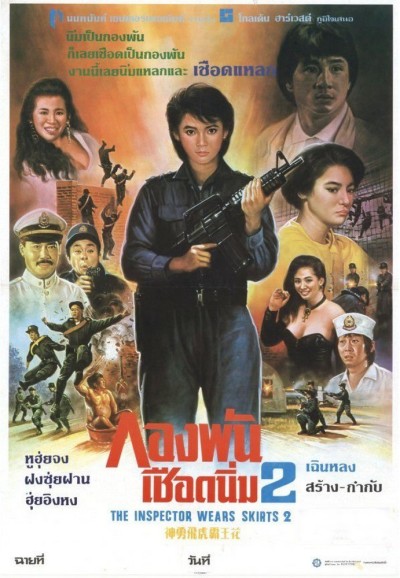
The Inspector Wears Skirts II
For the first hour, this is among the most miserable of action heroine sequels ever to come out of Hong Kong. It’s right down there with Naked Killer II: Raped by an Angel, in terms of the gulf in quality and entertainment value separating it from the original. While Hu and Fung return, as leaders of the male and female squads respectively, outside of a minor battle in the lunch-room, there is almost no significant action to speak of, until the final 20 minutes. It’s almost as if the makers forgot entirely about this side of things until the last week of shooting, and were forced to make up for lost time. It’s certainly brisk and not badly put-together. However, if you’re anything like me, you’ll be ramming your head into the wall and praying for unconsciousness, long before all that shows up.
The main thing you’ll take away is an appreciation for the delicate balance between action and comedy managed in the first film. Where that juggled those two balls with some adroitness, the balance here is tilted heavily towards the latter, and I’m strongly inclined to put comedy in quotes. For the laughs are largely the product of things like new recruit Amy Yip’s large breasts – she cuts holes in her bullet-proof vest, because she doesn’t want it flattening her figure. There’s even a scene which makes heavy use of flaming excrement for comedic effect. Oh, hold my aching sides for I fear they may split. As in the original, there’s a lengthy “date night” sequence, set at a birthday party for Madame Wu, rather than a roller-skating rink, but still complete with a musical number. It manages to be even worse-staged than the original.
Things do improve somewhat in the second half. There’s a contest on an obstacle course, which emphasizes teamwork over individual success, then another rehash from part one, a “best out of three” martial arts match between the Banshee and Tiger squads. These could have been the most badly choreographed fights in the history of kung fu, and they would still have come as a blessed relief from comedic Peeping Tom-foolery and people smearing tofu on their own face. Have to say, the poster above (Vietnamese?) probably had rather more effort put into its creation, than most of the scenes in the actual movie. There’s an almost overpowering feeling this was little more than a hurriedly concocted cash-in on the success of its predecessor.
Dir: Wellson Chin Star: Sibelle Hu, Sandra Ng, Shui-Fan Fung, Billy Lau
★★
The Inspector Wears Skirts III
Just about any effort at meaningful action is abandoned here, in favour of comedy which spoofs other movies, including Friday the 13th, A Nightmare on Elm Street, the Chinese Ghost Story series and, in the second half, Hong Kong classic, God of Gamblers. Actually, as a fan (to varying degrees) of all those, I didn’t mind too much: it’s a damn sight more successful than the dire attempts at humour which sank part II before it had left the harbour. Those boat metaphors are also appropriate, given this carries the sub- or alternative title, Raid On Royal Casino Marine. The main mission here sees the Banshee Squad going undercover on a boat, where Amy (Ng) has to take over as a syndicate’s top gambler, after the real person is unceremoniously dumped overboard. However, robbers have designs on the $200 million pot, and hijack the ship, so it’s up to Madam Wu (Hu) to parachute in to the rescue of Inspector Kan (Fung).
Takes a while to get to that point, as it starts with We and Kan now married, and Wu apparently largely happy to be a home-maker. Kan is tasked with reviving the Banshee Squad, though his training methods are… somewhat different, shall we say. Yay for electrocuting tied-up women! They gain revenge by donning the hockey mask and knife gloves of Jason and Freddy Krueger, to terrorize him, then restaging an entire Chinese Ghost Story sequence. It’s all such a product of its time (1990) – but since that was when I was heavily into both schlock horror and Hong Kong fantasy, I can’t complain too much, and just wallowed in shameless nostalgia for a bit. However, whatever it may have gained on the comedy side, is entirely handed back in a lack of competent or interesting action. Jackie Chan and his team had clearly severed all connections with the series for this entry, and the results are entirely pedestrian, with hardly a single moment, let alone sequence, of note.
While it likely made more sense at the time, I can safely say it certainly hasn’t stood the test of time very well. I think it’s probably best to say no more and move on to the final entry. Otherwise, I’ll probably have spent longer writing this review, than they spent on creating the entire movie…
Dir: Wellson Chin
Star: Shui-Fan Fung, Sandra Ng, Billy Lau, Sibelle Hu
a.k.a. Raid On Royal Casino Marine
★★★
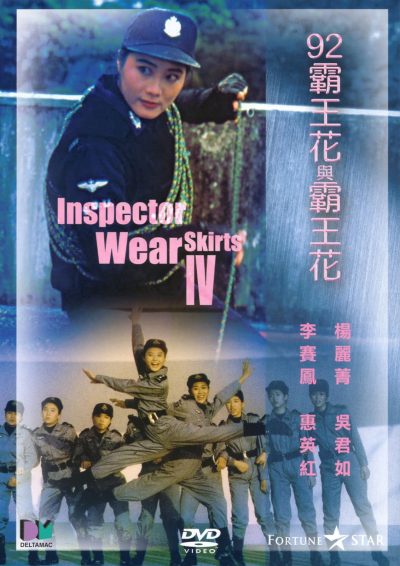
The Inspector Wears Skirts IV
While still packed with crappy humour, this was at least crappy humour that occasionally made me laugh, rather than roll my eyes. The fourth and final installment went out on a relative high. It demonstrates that it helps when making an action-comedy, to have actors who know their way round the action part. Here, that’s Lee and Khan, both of whom were veterans in the Hong Kong GWG field, and the martial arts here are pretty close to the quality we saw in the first installment.
Madam Lee (Lee) is struggling with the latest bunch of female recruits in the Banshee Squad, to the point where her boss Supt. Hu (Fung Woo), might have to close down the group entirely. For another officer, Madam Yang (Khan), has founded a “gilt-edged” women’s task force, which has been getting glowing reports. To try and recover, Lee and her assistant, Ann (Tse) go in search of some of the former members, now in civilian life, to see if they will come back and help restore the Banshee Squad to its former glories. Which is how we get the return of Amy (Ng) and May (Kara Hui), who have become a single mother and nuttier than a fruitcake respectively.
It’s certainly not elevating the wit: mental illness and date-rape jokes, toilet humour and crotch whacks are very much the order of the day here, right up to the final shot, the film freeze-framing on an excrement gag (perhaps literally!). But there are occasions where it works, such as the misfiring of a pair of jet-propelled shoes, which feels like it could have come out of a Wile E. Coyote cartoon. Someone even gets fired from a cannon. There are also things parodying the bus chase from Police Story [remember, Jackie Chan was a producer on the first Skirts film], Once Upon a Time in China, and probably a whole bunch of other stuff which has gone under the bridge of memory over the past 28 years.
Eventually, we get to the action-oriented main course, which sees the bad guys taking the commissioner’s son hostage in his school. Naturally, Madams Lee and Yang have to team up with each other, as part of the anti-terrorist forces. Even though the fights seem more than a little sped-up, they’re entertaining and well-staged, especially the final battle against a superkicker, whom I’ve seen identified as Chui Jing Yat, which goes on for what seems like ever, in and around the school. It likely makes me view this slightly more kindly than it deserves, and this is not going to be a film in either Khan or Lee filmographies that will be ranked near the top. But if you’re going to go out, go out on a high note, I say.
Dir: Wellson Chin
Star:Moon Lee, Wan-Yee Tse, Cynthia Khan, Sandra Ng
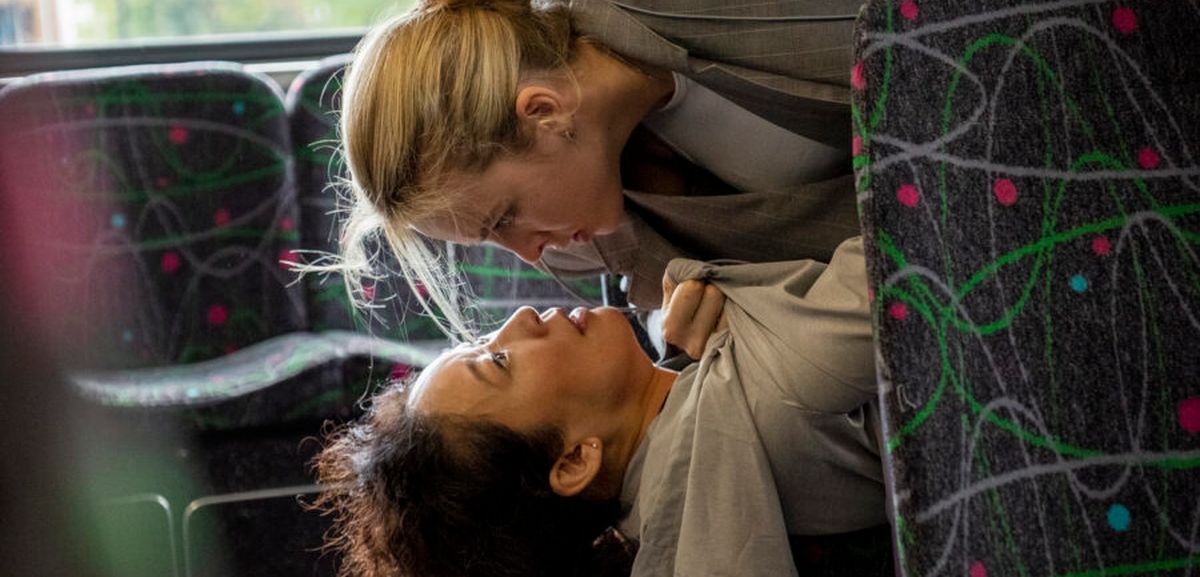
I remember how the first series of Killing Eve blew my socks off, and was completely unlike anything else on television. The second series fell short, but that was unsurprising – how could it be otherwise? – and there was still the chance for it to mount a course correction and recover. This third installment, however, has if anything accelerated the downward trend. What was once must-see television has become something which sits on in the background, typically as I surf the Internet on my phone. I can’t think of another series which has collapsed in such a remarkably brief time-frame.
The problem is, the writers have completely forgotten what made the show work was the dynamic between Russian assassin Villanelle (Comer) and the MI5 agent, Eve (Oh), who is on her tail. I was wary of the frantic, moist fan ‘shipping which went on over this – at a level I haven’t experienced in anything I’ve been part of, since the more rabid elements of Xena fandom in the nineties. Yet I couldn’t deny it was the chemistry between the two characters which defined the show and made it work. Yet, the focus of the second season seemed to drift from this, and in the third, it felt more like I was flicking between two different shows. It felt as if Villanelle and Eve operated in the same universe only barely, and hardly crossed paths at all.
Indeed, it also seemed to forget what Villanelle was: an assassin. We’ve gone far from the glorious spectacle kills we saw previously, Here, she has become so sloppy, she can’t even dispatch Eve’s husband with a pitchfork to the neck properly. Our anti-heroine seemed instead to spend more of this season faffing around Europe, from Spain to Russia. This involved Villanelle either bitching at co-workers with the shadowy organization known as The Twelve, trying to reconnect to her family (an endeavour so clearly doomed from the start, you wonder why they bothered), or grooming the daughter of former handler Konstantin, for reasons which never pay off adequately.
At least Villanelle is getting some stuff to do, even if it’s far from enthralling. Eve, on the other hand, spent much of the season stuck in a holding pattern, when seen in any form – at least one episode went by without her appearing at all. Eve appears little if any closer to tracking down her nemesis than she was at the beginning of the first season, and her investigation into The Twelve has born equally little fruit. It has cost Eve her husband, so there has been an emotional price. However, he was always painted by the show as being a bit of a dick, whose fidelity was questionable, so the impact of this loss feels limited.
Put bluntly, while the two lead actresses are doing their best, I don’t care any longer about the characters or their fates. And probably never will, for as long as the showrunner appears more concerned with shoehorning in Taylor Swift covers than developing the story. Sorry. Just not interested.
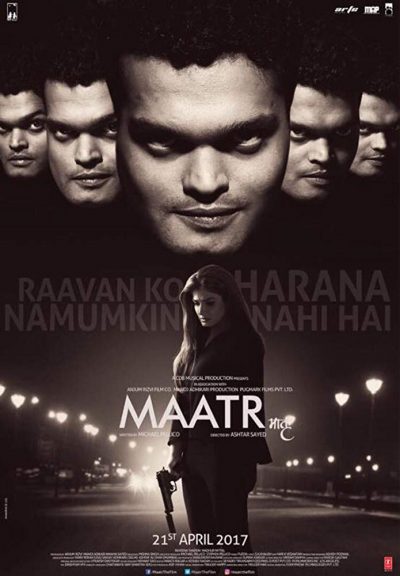
I was clued into this when researching my review of Mom, and found a number of articles which mentioned its similarities to a previously-released film Maatr. Which turned out to be available on Amazon Prime, so here we are. Turns out it in turn was inspired by a Korean movie, Don’t Cry Mommy. Guess you should expect a review of that in due course, as I head further down the rabbit-hole. Anyway, this is acceptable rather than memorable. If definitely falls short of Mom,mostly due to the relatively bland and forgettable lead performance of Tandon as Vidya Chauhan.
She and her daughter are heading home from a school function when their car is run off the road. The injured women are taken to a remote farmhouse, and brutally raped. Dumped by the roadside, the mother survives. The daughter does not. Vidya has the help and support of her best friend, Ritu (Jagdale), who takes her in after the subsequent implosion of her marriage. The authorities? Not so much. For they fail to take action, when they discover one of the men Vidya identifies is the son (Mittal) of a powerful politician. If she wants justice, she is forced to take matters into her own hands.
It’s all handled competently enough, though there are plenty of plot elements which had me raising a quizzical eyebrow. In the middle, we have a montage including the heroine working out, but that implies a physicality that is never fully exploited. For example, she kills the first victim by loosening the wheel of his motor-cycle, and the second by doctoring his cocaine, neither exactly requiring strength or fitness. As an aside, amused to see the film: a) blur out the search-engine results when she’s researching drugs, b) asterisk out bad words in the subtitles, and c) put “Smoking Kills” in the bottom right of the screen, every time someone lights up. Such social responsibility can only be admired.
That the mother was a direct victim does give it a different feel to Mom, though I’m not sure it’s better. This feels more a personal vendetta than a quest for justice on behalf of a wronged innocent. But I’m also uncertain how much of the lesser impact is due to Tandon simply not being anywhere near as good an actress as Sridevi. However, there are some decent moments, such as the casual way her husband declares the end of the marriage, finishing with a request to pass the ketchup. The actual attack is also well-handled; savage without being explicit. However, in contrast to its terseness, the aftermath is drawn out too long, with an excess of moping about, before the heroine gets her butt in gear. The trope of politicians and their relatives being above the law is one which is quickly becoming a cliche, even in my limited experience of Bollywood film. While perhaps a victim of being seen second, there’s just not very much reason to watch this rather than Mom.
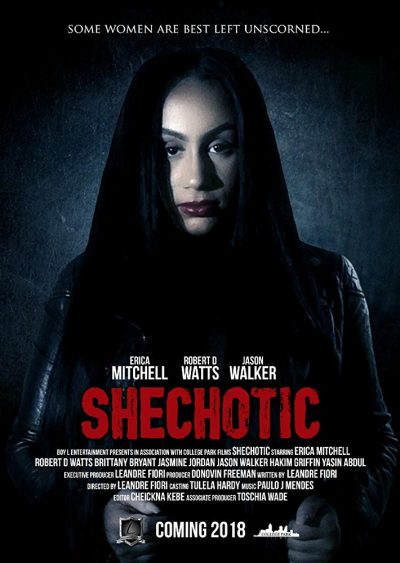
Within about two minutes of starting this, I realized I had made a terrible mistake, and was watching something barely reaching the amateur level of film production. Still, I soldiered on – albeit for some loose definition of “soldiered” – until the bitter end, mostly so I could issue an informed warning about this to any prospective viewers. Maxine (Mitchell) is rather upset when she discovers her boyfriend, music video producer Lance (Watts) has been cheating on her with Lana (Bryant). Mind you, she’s clearly a bit unhinged already: for example, telling him she’s pregnant when she isn’t. So it’s not much of a surprise when her reaction to his two-timing is to kidnap Lance, tie him up in her basement and submit him to various indignities, along with seeking revenge on Lana. Which, apparently, includes sleeping with her father (Walker).
If this all sounds like completely ludicrous and implausible nonsense… I have done my job as a reviewer, because that’s exactly what it is, buttressed by poor audio quality, questionable directorial decisions (the conversation where the camera spins around the participants like a hyperactive house-fly was an especially dubious choice) and a final twist which managed to be both out of left field and entirely predictable at the same time. About the only thing which I did quite like, was the way Maxine’s personality splits into two distinct characters. One is urging her on to do ever more malicious deeds, while the other is trying to take a higher moral path. Surprisingly – considering the ineptness everywhere else – it’s decently handled on both sides of the camera. Even if I doubt anyone ever thought, “I want an erotic thriller which largely avoids actually nudity, with a black, female version of Gollum in it,” this aspect is likely responsible for this avoiding a dreaded and rarely awarded one-star rating.
I was amused by the po-faced disclaimer from the director which opens this: “Due to my strong convictions, I wish to stress that this film in no way endorses support of violence, abuse against women or other subject matter that may be considered offensive.” Several points come to mind. Firstly, if you have to add a disclaimer to your film like that, you’re doing it wrong. Secondly, it’s little more than empty virtue signaling anyway: It’d be far more notable if a director stated “I wholeheartedly endorse violence.” Thirdly, any abuse here is far more by women: what is Mr. Fiori’s stance on that? Sadly, it appears we will never know, save for the unlikely event of there being a SheChotic 2. Fourthly and finally, it’s never a good sign when the text which starts your movie is worthy of deeper analysis and commentary than 95% of what follows it. Though if it had instead simply read, “Abandon hope all ye who enter here,” it would certainly have been equally valid.
Dir: Leandre Fiori Star: Erica Mitchell, Robert D Watts, Brittany Bryant, Jason Walker
It’s nice to be reminded of why I’m generally averse to romance in my reading – particularly poorly written and unconvincing romance, like we get here. An interesting scenario with potential gets bogged down in gooey mush during the second half: let’s just say, there are phrases such as “my tummy goes all tingly again.” Yes: again… If I wasn’t already committed by that stage, being more than half-way through a 500+ page book, that sentence might well have led to this ending up as a Did Not Finish. Instead, I figured I’d at least get a review out of it. You’re welcome.
As noted, the setting isn’t the problem. It takes place in Purgatory, which in this rendition is basically a clearing house for souls with no particular destination. Will that be heaven or hell? One of the ways this can be decided is trial by combat, and on the opposition team responsible for dispatching them in the arena there is Myla Lewis, a quasi-demon 18-year-old, whose combat skills belie her years. It’s supposed to be a neutral location, but is increasingly coming under the thumb of Armageddon, the King of Hell, whose forces staged a velvet glove occupation around the time Myla was born. And speaking of which, who was her father anyway?
It’s populated by a whole host of supernatural tribes. Deoms, quasi-demons, angels, ghouls and the thrax, who are demon hunters, as well as a whole host of cross-breeds between them. This makes for a murky diplomatic situation, in which the various groups struggle – both overtly and covertly – for power. Myla really just wants to kick ass in the arena, but life and the deteriorating political situation have other plans. Not least in the well-muscled shape of Lincoln, a thrax prince. Which, of course, makes things tricky given Myla’s partly demonic ancestry.
And that’s where the whole thing falls apart. We go from mutual disgust to tingly tummies, on both sides, without apparently passing through any of the intervening stages, and is not in the least bit convincing. Meanwhile, Myla is being drip-fed information about her heritage and past events through angel-controlled dreams, even though it seems everyone – not least her mother – knows exactly who her father was, for example. It’s contrived purely for the sake of drama, and isn’t exactly subtle about it. Equally inevitably, we end up discovering that Myla isn’t just a normal teenage girl – or normal teenage part-demon, anyway. It’s likely no spoiler to reveal that her flowering abilities end up with her going toe-to-toe with Armageddon.
Bauer does have a decent handle on the action, and the moments where she gets to let rip in that direction are effective. Some imagery will stick in my mind, such as the torture Armageddon inflicts on Myla’s father just before their final face-off. But this doesn’t come anywhere close to balancing the cringeworthy romance, and I’ve absolutely no interest in going further. Now, if you’ll excuse me, I think my tummy is going a bit tingly too. Just not for the same reasons as Myla’s…
Author: Christina Bauer Publisher: Monster House Books, available through Amazon, both as a paperback and an e-book
1 of 8 in the Angelbound Origins series.
This rating is perhaps influenced by my seriously low expectations here. Having seen my share of generic “female ninja” films, all too often they tend to be thinly-disguised exercises in soft-porn. Any action elements are usually secondary, at best. That’s not the case here. Well, at least, not entirely. You’ll not mistake this for Crouching Tiger, yet there has been some thought put into the plot and characters, and this helps elevate proceedings to the level of satisfactorily watchable. Which is, as noted, considerably more than I was anticipating. It comes as a pleasant surprise, especiallyfor a film so obscurist, the IMDb doesn’t recognize it, director Noto’s sole credits being as an assistant in that role. The Amazon Prime synopsis is also from Kunoichi, and so wildly inaccurate in every way.
The actual story present concerns Benimaru (Asami), a member of a clan of ninjas, who has been tasked with assassinating a feudal lord and stealing a scroll containing the location of his treasure. While she succeeds, this is only the start of her issues. The lord’s family sends out hunters after her; various independent parties are after the scroll as well; and even her own clan seek to dispose of her. For, as we eventually find out, Benimaru only accepted the mission to try and save her girlfriend, Kikyo (Ayana), from execution, after they were caught inflagrante. When they meet up, a happy ending seems possible – yet is far from inevitable.
We’ve covered a number of Asami films before, the most notable ones being Gun Woman, The Machine Girland the Lust of the Dead trilogy, and she provides good value again here. She’s perhaps the modern equivalent of someone like Meiko Kaji, with charisma that elevates almost anything she’s in. There is genuine acting to be seen, such as in her scenes with Kikyo and she also is capable of doing a bit more than simply waving a sword about. It helps that Noto, whether by accident or design, keeps the camera relatively static. The plot provides a constant stream of obstacles to be overcome, such as the brother and sister bounty-hunters. Perhaps there just wasn’t any chance for more than the couple of sexy scenes (one with the lord, the other with her girlfriend) which get squeezed in to the 70-minute running time.
It’s to the film’s credit that it would work as a low-budget actioner, even without the nudity at all. Admittedly, the production values extend to little more than a few costumes, with the bulk of the film spent either running around a forest, or sitting around a cave. Yet the cast and crew manage to keep it more interesting than that might sound, with the heroine quickly realizing that few people are what they seem. Mind you, she gives as good as she gets on that front, with her ninja talents including voice impersonation. And, it seems, hiding underneath an extremely large straw hat. Who knew?
Dir: Hidemi Noto Star: Asami, Rei Ayana, Takashi Irie, Yoshihiro Sato
★★★½
“The Most Dangerous Game (mixed doubles edition)”
There has been a whole slew of films over the year which have been based on the theme of “hunting humans”. Initially, this Australian entry seems to be going straight down the same line. Kayla (Dodds) has an argument in the street with her best friend. After the latter storms off, Kayla hears her shout for help, but while investigating, is herself abducted. She wakes to find herself in a crate in the middle of some very remote woods. She discovers other women in the same situation, and that they are being chased by beweaponed, masked men with very unpleasant intentions. The area is ring-fenced with electronic barriers which block any exit: survival is going to require Kayla to tap into her inner savage.
All of which is largely as standard, save for some eye-poppingly intense gore. This starts early on, with someone losing the front of their face to an ax. Very slowly. [It was at this point I stopped the film until Chris got home, so she and I could watch it together. Yeah: our “date nights” are a little strange!] There were similarly impressive moments throughout, with a preponderance of practical effects, of which I’m always a fan. Anyway, back at the plot, the other twist also becomes apparent, in that the masked attackers are not operating as one. Indeed, the opening sequence makes clear that them attacking each other is also part of the “game”. And, it turns out, the same goes for the supposed victims. Not for nothing are the crates which hold them and the women labelled “Beast #X” and “Beauty #Y” as appropriate…
This is a very smart move, adding a whole skein of twists to proceedings, and giving a set-up where Kayla doesn’t know who she can trust on either side. The resulting paranoia brings so much potential for conflict, it is actually a shame the angle doesn’t really blossom until the final third. It would have been more fun, and certainly more obviously “different”, if the ground rules had been established from the beginning. Perhaps with an induction video given by a hyper-perky presenter, as in Battle Royale. There’s definitely a sense of a bigger picture here, which is only glimpsed occasionally. Knowing more about it would have made for a different, and arguably better, experience. The same goes for the technological beats, which raise more questions than they answer.
Another interesting aspect is that there is not a single speaking role for a man in the film. That’s not something you see often, especially in the horror genre. Given the first time we see the heroine, she and her friend are graffiting “FUCK PATRIARCHY” on a wall, this is presumably not accidental, though the movie never puts the message ahead of its story. While men are seen and not heard, the movie makes it clear that women are hardly saintly creatures, inevitably relegated to the role of victim. It turns out, they can be just as malevolently vicious as men. And that, I feel, is true equality at work.
Dir: Tony D’Aquino Star: Airlie Dodds, Linda Ngo, Taylor Ferguson, Ebony Vagulans




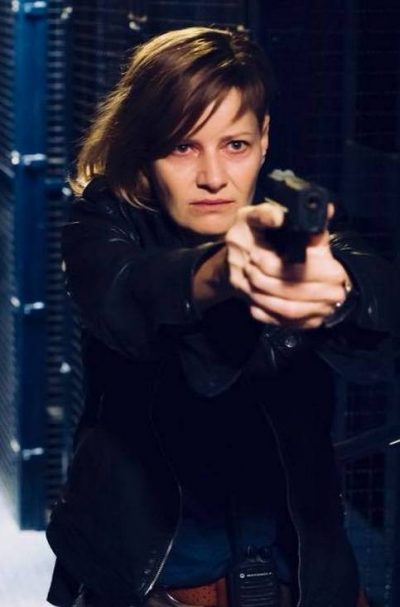
 The above is the Polish for “seven”, and in the first half-hour, you’ll be forgiven for thinking that’s what you’re watching: a Polish knock-off of David Fincher’s Se7en. Homicide cop Helena Rus (Kożuchowska) is struggling to come to terms with life, after her boyfriend is killed by a drunk-driver and, for political reasons, the criminal is allowed to go free. A welcome distraction comes in the shape of a series of ritualistic murders: every day at 6 pm, a body turns up on the streets of Wroclaw. The victims have been killed in strange and unusual ways – the first, for example, is sewn inside a cow-hide, which shrinks as it dries, crushing the victim to death. Each has a word branded into their flesh, such as “Degenerate”.
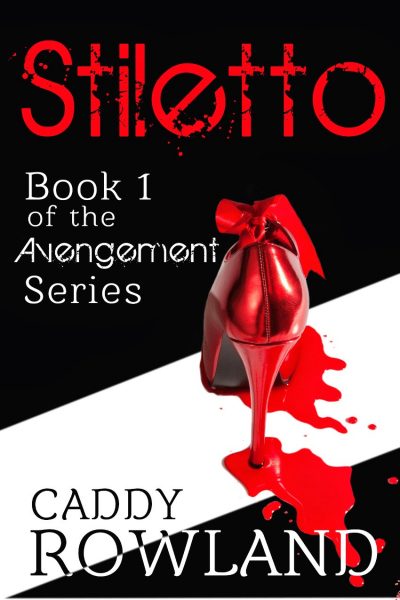 Revenge, as the saying goes, is a dish best served cold. Or, from another saying, hell hath no fury like a woman scorned. Illustrating both are the story told here. Jasmine Albertson had already gone through the lows and highs of life, before meeting and getting married to Stu. But when Stu’s business partner John Mickelson makes him take the fall for John’s embezzlement, leading to Stu’s suicide, Jasmine vanishes off the grid in Los Angeles. She moves to New York and sets her sights on a long-term plan to make John pay. And not financially: as she tells her gay best friend Tory, “I want him to know he fucked with the wrong people when he fucked over Stu and then me. I want him to suffer. And then I want to send him to hell.”
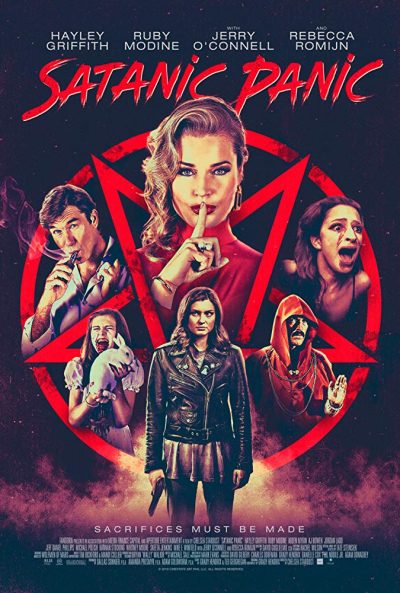 It’s the first day as a pizza delivery gal for Samantha Craft (Griffith), and things aren’t going well, with no tips being received. When given the chance of a delivery to a rich neighbourhood, she pounces – only to find herself getting stiffed again. This time, she sneaks in to demand her gratuity, which drops her in the middle of a satanic ceremony overseen by coven head, Danica Ross (Romijn). They’re attempting to summon Baphonet, but have hit a snag. Their intended vessel, Danica’s daughter Judy (Modine), no longer qualifies as a virgin, so Sam’s presence is highly convenient. For Sam? Not so much. Though perhaps to her benefit, there’s a bit of a power struggle in the coven, with Gypsy (Myrin) fed up of playing the second satanic banana to Danica.
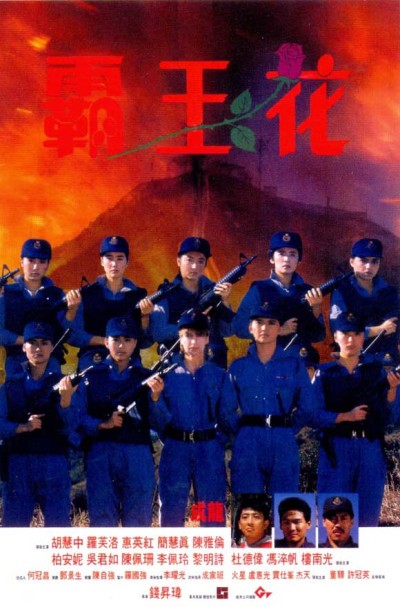 Spun off from the popular Lucky Stars series, this takes Madam Wu (Hu), who had first appeared in Twinkle, Twinkle Lucky Stars, and branches out into its own saga. After an unfortunate incident involving a sheik’s wife, the local police decide to set up a special group of women officers, who can handle similarly sensitive missions. Wu is given the task of licking the candidates into shape, with the help of Interpol’s Madam Law (Rothrock), and despite the disdain of Inspector Kan (Fung), who is training a similar group of men. Needless to say, the male and female squad members compete, both for success and each other’s attentions, but both are called in to provide security for a showcase featuring priceless jewels. Will the ladies finally be able to prove they are worthy of serving alongside their gentleman colleagues?
 For the first hour, this is among the most miserable of action heroine sequels ever to come out of Hong Kong. It’s right down there with Naked Killer II: Raped by an Angel, in terms of the gulf in quality and entertainment value separating it from the original. While Hu and Fung return, as leaders of the male and female squads respectively, outside of a minor battle in the lunch-room, there is almost no significant action to speak of, until the final 20 minutes. It’s almost as if the makers forgot entirely about this side of things until the last week of shooting, and were forced to make up for lost time. It’s certainly brisk and not badly put-together. However, if you’re anything like me, you’ll be ramming your head into the wall and praying for unconsciousness, long before all that shows up.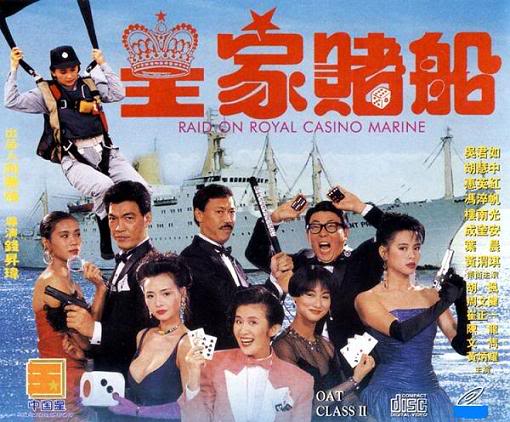
 While still packed with crappy humour, this was at least crappy humour that occasionally made me laugh, rather than roll my eyes. The fourth and final installment went out on a relative high. It demonstrates that it helps when making an action-comedy, to have actors who know their way round the action part. Here, that’s Lee and Khan, both of whom were veterans in the Hong Kong GWG field, and the martial arts here are pretty close to the quality we saw in the first installment.
 I remember how the first series of Killing Eve blew my socks off, and was completely unlike anything else on television. The second series fell short, but that was unsurprising – how could it be otherwise? – and there was still the chance for it to mount a course correction and recover. This third installment, however, has if anything accelerated the downward trend. What was once must-see television has become something which sits on in the background, typically as I surf the Internet on my phone. I can’t think of another series which has collapsed in such a remarkably brief time-frame.
 I was clued into this when researching my review of
  Within about two minutes of starting this, I realized I had made a terrible mistake, and was watching something barely reaching the amateur level of film production. Still, I soldiered on – albeit for some loose definition of “soldiered” – until the bitter end, mostly so I could issue an informed warning about this to any prospective viewers. Maxine (Mitchell) is rather upset when she discovers her boyfriend, music video producer Lance (Watts) has been cheating on her with Lana (Bryant). Mind you, she’s clearly a bit unhinged already: for example, telling him she’s pregnant when she isn’t. So it’s not much of a surprise when her reaction to his two-timing is to kidnap Lance, tie him up in her basement and submit him to various indignities, along with seeking revenge on Lana. Which, apparently, includes sleeping with her father (Walker).
 It’s nice to be reminded of why I’m generally averse to romance in my reading – particularly poorly written and unconvincing romance, like we get here. An interesting scenario with potential gets bogged down in gooey mush during the second half: let’s just say, there are phrases such as “my tummy goes all tingly again.” Yes: again… If I wasn’t already committed by that stage, being more than half-way through a 500+ page book, that sentence might well have led to this ending up as a Did Not Finish. Instead, I figured I’d at least get a review out of it. You’re welcome.
 This rating is perhaps influenced by my seriously low expectations here. Having seen my share of generic “female ninja” films, all too often they tend to be thinly-disguised exercises in soft-porn. Any action elements are usually secondary, at best. That’s not the case here. Well, at least, not entirely. You’ll not mistake this for Crouching Tiger, yet there has been some thought put into the plot and characters, and this helps elevate proceedings to the level of satisfactorily watchable. Which is, as noted, considerably more than I was anticipating. It comes as a pleasant surprise, especiallyfor a film so obscurist, the IMDb doesn’t recognize it, director Noto’s sole credits being as an assistant in that role. The Amazon Prime synopsis is also from
  There has been a whole slew of films over the year which have been based on the theme of “hunting humans”. Initially, this Australian entry seems to be going straight down the same line. Kayla (Dodds) has an argument in the street with her best friend. After the latter storms off, Kayla hears her shout for help, but while investigating, is herself abducted. She wakes to find herself in a crate in the middle of some very remote woods. She discovers other women in the same situation, and that they are being chased by beweaponed, masked men with