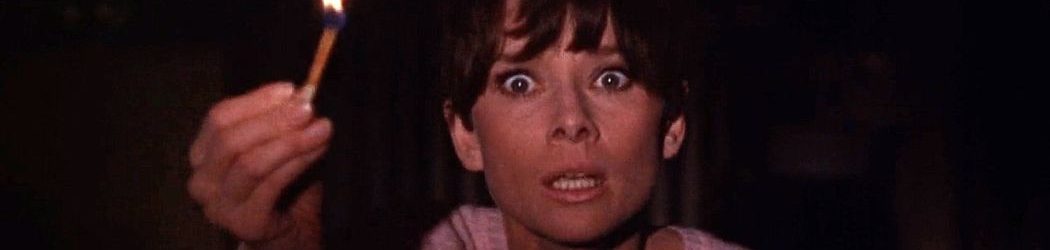

Witchblade: season two

★★★½
“Girls with gauntlets.”

Much as in the first season, the second series of Witchblade brushed against greatness. Unlike the first, where you can point at the final episode as the key weakness, this time round it is a chronic rather than acute malaise that prevents it from getting the seal of approval. When it was great, it was fabulous – it just seemed that for every full, satisfying episode, there was a lame clunker to compensate. Particularly at the start of the season, there seemed to be precious little imagination on view.

Before we get to that, however, there was the little matter of heading forwards once again, Sara having effectively wished the entire first season into a plot-hole. To the writers’ credit, everything went forward in a completely different direction, from the moment Sara and her partner opted not to go into the theatre where, in the first series, everything had begun. Things diverged so rapidly from here that by the end of the double-length first episode, Kenneth Irons was dead, though as previously seen, this is only a minor inconvenience in the Witchblade universe. As Gabriel says in the finale, “Death is a revolving door.” I profess myself quite satisfied with how this was handled – it was the next few episodes which were distinctly ho-hum, with little in the way of memorable moments. Oh, look: there’s a new drug in town; Nottingham hires assassins to kill Sara; multiple personalities. And I had to cheat and look up synopses elsewhere to glean this much information, since they were notable largely for the lack of impression they made on me. I do recall being immensely irritated by the strobe-lit fight scenes, however, the sort of thing you do when you’re trying to hide ineptness.

Things probably reached their nadir in Nailed, in which a stereotypical, drooling paedophile kidnapped Danny’s niece. The Witchblade, with an impressively convenient sense of dramatic timing, revealed his location just in time for them to rush to the rescue, in what was otherwise little more than a lame rip-off of Cape Fear. Fortunately, I missed this episode when it aired (being off getting married!), and only caught up with it during the marathon. Otherwise, I might well have given up on the show. Which would have been a terrible shame, as things started to perk up thereafter. I always enjoy episodes where external mythos enter the show, and Lagrimas mixed the Wandering Jew fable in beautifully, with its cursed immortal, seeking death at the hands of the Witchblade. Hierophant was a little too Keyser Sose-ish for my tastes, but Veritas probably ranks as my favourite episode to date. Oddly, the legend it utilised, while much more recent, didn’t seem out of place in the slightest. We were largely one step ahead of the story, but only in an “Wouldn’t it be cool if…?” way, and I suspect the Powers That Be will rear their ugly heads again in season three.

The finale, Ubique, also has to rate highly, for sheer perversity at the very least – Nottingham reaches new levels of creepiness in his final scenes with Lucrezia. Throw in a kicking soundtrack (Lords of Acid!), some spectacular deaths, and we’ll forgive a central plot device teetering curiously close to the main premise of feardotcom, which opened in cinemas the very same week. Among the interesting themes on view are the way both Pezzini and Nottingham both struggle to come to terms with the loss of their fathers, albeit temporarily in the latter’s case. This may be linked to one of the unresolved issues carried forward; who is the guy with wavy grey hair who always seems to be lurking round Sara? Indeed, the whole Nottingham/Pezzini relationship had perhaps more depth than any other in the show; veering between love, hate and obsession, with never a dull moment.

Season 3 looked like it might have some stiff competition for Sara’s favours, particularly with Concobar (rather less irritating this time round) lurking in a coma. Add in Gabriel’s little kiss in the finale, and it seemed like time for all applicants to take a number and form an orderly queue. On the other hand, couldn’t see why they keep both Jake and Danny in the show, as their roles overlapped far too much. A permanent, irrevocable death would have made people sit up and take notice – my vote in this department goes to Jake… Despite the second season, overall, rating the same as the first, I reached the end of this one with more optimism in Witchblade‘s future. However, TNT didn’t share this confidence, in part perhaps because of Yancy’s inability to keep out of bars, and the series wasn’t renewed. This may have been wise – on January 3rd, 2003, Butler was arrested after allegedly punching her father, punching and attempting to bite her uncle, and head-butting a police officer. For the moment, Sara Pezzini is in limbo, but really, a better fate is deserved for one of the more innovative series to hit the airwaves in the past couple of years.

Star: Yancy Butler, David Chokachi, Eric Etebari,  Will Yun Lee

Lara Croft, Tomb Raider: The Cradle of Life

★★
“Tomb for two, please.”

tomb2aThe first problem with the film is its title, a clunky mess apparently lacking in any punctuation – I’ve taken my best guess at what it should be above, even if it doesn’t line up with the first movie. But hey, new director, new grammar… Interestingly, Steven E. De Souza gets a screenplay credit this time round – he was one of the people who wrote a rejected script before the original film was made, and I wonder how much has been recycled here.

Certainly, a lot of what was said about the first film applies equally to the sequel; despite much affirmation that, this time, they’d really got hold of the character, the potential remains largely unfulfilled. Instead, we get something that (ironically, in the light of previous comments) nicks large chunks from Indiana Jones, adds a flavour of Mission: Impossible 2 and loses most of the more interesting elements from first time round.

The plot here concerns the search for what is, effectively, Pandora’s Box, which turns out to be a genuine artefact containing a deadly plague. Evil overlor…sorry, industrialist Jonathan Reiss (Hinds) wants possession, in order to sell it to the highest bidder as a biological weapon, and use the antidote to control who’ll be allowed to populate the post-plague world.

Though most of the film is concerned more with the struggle for possession of an amber orb, which points to the location of Pandora’s Box. This contest takes the participants from Greece to England to Kazakhstan to China to Hong Kong to Taipei and finally Kenya, though there’s so little local flavour it feels more like an episode of Alias, quickly establishing itself with stock exterior footage, before switching to an obvious sound-stage.

While Barrie and Taylor return as Lara’s sidekicks, they get given very little to do, which is disappointing, since their characters were entertaining elements first time up. Instead, Lara gets a sidekick, Terry Sheridan (Butler), a dubious character who first needs to be taken from a central Asian jail, and who was romantically entangled with Croft in the past. His fate is obvious.

Indeed, so is much of the movie, save the opening sequence, which instead opts to be so ludicrous as to defy belief. Lara lures in a shark with her own blood, then turns it into a jet-ski, before being picked up by her own personal F-sized submarine. Even for a video game, this is stretching it, and the sound you hear, is most of the movie’s credibility, heading shame-faced for the exit as it mumbles something about another appointment. What little is left, gets swamped in an orgy of product placement that rivals recent Bond movies.

tomb2bIt does give you plenty of time to wonder about little things like the wisdom of instigating a shoot-out in a germ warfare laboratory, how many years have passed since someone parachuting off a tall building ceased to be exciting, and the failure to make Sheridan a credible opponent for a fist-fight with Lara Croft. The finale does feature some interesting CGI creatures, though any explanation of their presence, lust for human flesh, or ability to melt into solid rock is notable by its absence. Jolie still is Lara Croft, to an almost uncanny degree, but even her Oscar-winning talents can do little when faced with a script of such limited means.

Director De Bont can direct action, as was shown in Speed – since then it’s been downhill. Twister, Speed 2, The Haunting, and now this, which has almost nothing worth mentioning as far as thrills go. It’s nice to see Hong Kong veteran Simon Yam as a smuggler, and his fight with Croft in a cave full of terracotta warriors is kinda cool, but the rest is distinctly mediocre, relying too much on doubles or CGI. The film desperately needs a tent-pole sequence to make you go “Wow!”, like the training robot or bungee-ballet from part one.

Not the worst big-budget, girls-with-guns pic of the summer (that’d be Charlie’s Angels: Full Throttle), but it’s significantly below the first film, which was flawed enough in itself. The harsh truth is, there is nothing here that justifies keeping the franchise going, and that’s really sad.

Dir: Jan De Bont
Star: Angelina Jolie, Gerard Butler, Ciaran Hinds, Noah Taylor

Alias: season one

★★★★
“Run Sydney Run”

“My name is Sydney Bristow. Seven years ago I was recruited by a secret branch of the CIA called SD-6. I was sworn to secrecy, but I couldn’t keep it from my fiancé. And when the head of SD-6 found out, he had him killed. That’s when I learned the truth: SD-6 is not part of the CIA. I’d been working for the very people I thought I was fighting against. So, I went to the only place that could help me take them down. Now I’m a double agent for the CIA, where my handler is a man named Michael Vaughn. Only one other person knows the truth about what I do: another double agent inside SD-6. Someone I hardly know…my father.”

“It’s everything you want, and more.” That was Chris’s opinion – I was kinda stuck for the right way to start, and as always, she delivered. As, indeed, Alias pretty much delivers, with a crunchy-yet-chewy first series that juggled drama, action and comedy to fine effect, twisting the plot frequently. One problem in TV drama is that you must allow viewers to tune in at any point and rapidly work out what was going on, and former Felicity scribe J.J. Abrams does so in less than 150 words – see above for the heroine’s monologue which opens each show.

The 22 episodes cover a struggle for control of medieval technology, Nostradamus-style prophecy, and other organizations (good and bad), plus Sidney’s missing mother, ongoing relationship with her father, and perpetual struggle to keep her friends from suffering the same fate as her late fiancee. Each episode contains elements of major and minor story arcs, propelling them alone, yet also stands up well on its own.

After a breathless start in which it seemed that Abrams used every conceivable plot device inside three episodes, he wisely moved into new territory. In particular the introduction of Rambaldi, perhaps the show’s most interesting character, who has actually been dead for several centuries. A Da Vinci-esque inventor, he left pieces of his inventions, and clues to their operation, hidden around the globe, and SD-6 are now on a scavenger hunt to find and utilise these, with Sydney their main operative. The CIA are doing exactly the same, also using her to stay one step ahead of SD-6.

alias1Garner is a good choice to play Sydney, a no-nonsense character who is never one to sit back when confronted with problems. She comes across as a well-rounded person with her own fears and doubts, rather than some kind of Bond-esque superspy. But perhaps the show’s greatest strength is the spectrum of supporting actors, who give the show depth when it could easily become a disjointed series of Lara Croft-like escapades. Marshall, SD-6’s “Q”, provides gadgets and geeky humour, while especial kudos are due to Ron Rifkin as SD-6 head Arvin Sloane. The man who orders the death of Sydney’s fiancee could easily have been a two-dimensional bad guy, but by the end of the show, you feel a great deal more sympathetic to his problems.

The influences are plentiful and obvious, most plainly Nikita and the (let’s be honest, rather lame) TV series which subsquently followed. There’s also a helping of Run Lola Run in there; creator Abrams listened to the soundtrack “almost incessantly” while writing the show, and has said, tongue in cheek, that he demands one scene of his heroine running in every episode. He certainly gets it, even if this does become a little predictable. The action quota generally is variable, but usually well-staged, with Garner doing more action than you might expect. And anyone that gets to beat up guest-star Quentin Tarantino wins my approval (at least it took him away from making more dire films!).

Though Sydney occasionally has romantic dalliances, she is somewhat unlucky in love – these men have an unfortunate tendency to die suddenly, and in one case, at Sydney’s own hands. This is probably a good thing, since I’m no fan of Unresolved Sexual Tension, finding it gets in the way of more important elements. Want romance? Go read Mills & Boon! This is an action series, after all, and I’d rather have Sydney kicking ass than going all gooey-eyed over, say, CIA handler Vaughn (Vartan). Their relationship is the subject of much fan fiction, but the ending of the first series would appear to have put the dampers on that department. [If you saw the finale, you’ll appreciate the particular viciousness of this comment]

Season one ended on a dramatic high with four characters potentially biting the big one, though no actual corpses were seen. Given this, and the twisty nature of the show in general, I think it’s safe to say a number of them will find a way to come back in the next series. I’m already looking forward to it.

Star: Jennifer Garner, Victor Garber, Michael Vartan, Ron Rifkin

Witchblade: season one

★★★½
“Witch watch.”

The summer season of TV is usually characterised by repeats and re-runs, with little to stimulate interest beyond speculation over the fall schedule. This year, however, a dark horse emerged, from the surprising source of TNT, with their adaptation of Top Cow’s Witchblade series, with Yancy Butler in the title role. Over thirteen hours of episodes, including the two-hour pilot, it chronicled the adventures of Sara Pezzini, a New York detective who acquires a bracelet with remarkable powers, not the least of which is its ability to transform into an industrial-strength sword. This brings her into conflict with people like mysterious power-broker Kenneth Irons, and her own captain. She loses partners, lovers and friends on the way to what is unfortunately one of the worst twists in any TV series, since Bobby stepped out of the shower in Dallas. Serious spoiler alert for the following, folks, though this may be a good thing, since it’ll let you get your disappointment out of the way early.

Put simply, having killed of most of the cast (a refreshing change from more cowardly shows, which refuse to let any characters die), our heroine decides she doesn’t like what’s happened, and rewinds time back to just before her partner was killed, way back in the pilot episode. The rest of the season is deemed stricken from the record, and not even Pezzini has any recollection of it. It’s a little like Run Lola Run, except that film actually delivered a beautiful elegy on the role of chance in our affairs, something I suspect Witchblade will not come within a million miles of doing.

The main question is where can the show go from here? I can see how they can move the series in another direction now, with her (now-surviving) partner taking on a larger role, but while none of the characters may know anything, the audience’s memory is still intact. We know, for example, that Jake McCarty is an FBI agent, and are aware of the roles of most of the characters and their relationships. Watching the cast rediscover all this again – as they surely must – is going to be like watching a rerun.

However, maybe they can pull it off, since up until that final ten minutes, the writing on the show was actually very impressive. I confess to no familiarity with the comic-book at all – save for a vague awareness of covers featuring improbably-proportioned heroines – and so can’t comment on how accurately it follows them, but on its own merits, it works well. Several overlapping story arcs were contained in the series, but even if you missed some episodes, there was little trouble picking up on them – another mark of good writing. After the pilot, we kinda forgot about the show for two months (it was on TNT, after all!), and only caught up with the ones we’d missed when the channel aired an all-day marathon. There were plenty of potential angles for future exploration – we were particularly intrigued by the Vatican angle exposed by demonic priest Roger Daltrey, where the Catholic church had the Witchblade for centuries before giving it to Hitler.

witchbladeAbout the only angle that didn’t work for us was the love story between Pezzini and Concobar, her Irish bard. Pardon me if we yawn: Irish people are far too often either Guinness-swilling songsters who’ve kissed the Blarney Stone or terrorists, and the series gave us both. Beyond filling in some interesting sidelight on the history of the Witchblade – a concept worthy of a series in itself – there wasn’t much to this beyond Pezzini getting a shag, though even this didn’t seem to improve her humour. Yancy Butler, despite not having much of a pedigree (she’s perhaps best known for playing opposite Jean-Claude Van Damme in John Woo’s American debut, Hard Target), provides a strong central perfomance as Pezzini, striking the right balance between confusion, strength and sarcasm. Could perhaps do with slightly-less use of the sardonic eyebrow though – if she’s not careful, it’ll demand its own spin-off series. She seems to have come on in action terms as the series progressed; early on, the stunt-doubling was painfully obvious, but in later episodes, she appeared to be taking on more of the work herself, which can only be encouraging for the next series.

Most of the subsidiary characters come across as well-rounded, even the likes of Ian Nottingham, Irons’ enforcer, who gradually falls in love with Pezzini and reveals a softer side. This is in sharp contrast to his replacement – Nottingham v2.0, or Nottingham ME, as we call him – who was simply Very Scary. Her first partner, Will, although dead from the pilot on, continued to appear in a nicely-handled fashion, with mostly only Pezzini able to see him. Oddly though, he makes his presence known to McCarty when it proves suitably dramatic, without any explanation of why he can suddenly do so. Maybe it’s normally too straining on his ectoplasm or something. If it wasn’t for the climax, the show would certainly have deserved our Seal of Approval. As it is, any such award is placed on hold pending future episodes, and we see how they resolve the problems posed by the ending of this year’s batch.

Star: Yancy Butler, Anthony Cistaro, David Chokachi, Eric Etebari

Lara Croft: Tomb Raider

★★★
“Tomb with a view.”

tomb12.jpgAfter a tortuous journey (about which, see elsewhere), Lady Croft finally made it. The end result is wholly satisfactory in some ways, yet severely deficient in others. First up, the good news: Angelina Jolie is Lara, so much so that you can’t imagine anyone else in the part. [Other suggestions included Elizabeth Hurley, Catherine Zeta-Jones, Peta Wilson and even – ick! – Anna-Nicole Smith. Paragraph break for shuddering, here.]

Helped by Jolie’s reported willingness to do pretty much any stunt, this is crucial, and allows the film to hit the ground running – as well as jumping, climbing, and swinging around, with a gun in each hand. The first half an hour is everything you could hope for, beginning with a sequence where Lara fights a robotic monster, looking more than slightly like ED-209 from Robocop. It turns out to be just a training device, but there’s an edge to it, and even an almost sexual element as the beast drives between Lara’s open legs. PG-13? Hmmm… Her sidekicks are only slightly less satisfying; tech wiz Bryce (surely a nod to the nerd of the same name in Max Headroom), and stuffy butler Hilary are exactly the sort of people you’d expect Lara to have around.

Unfortunately, the further you go from Croft, the lamer things get, with her chief opponent for much of the movie being mid-level henchmen Manfred Powell (Glen), rather than the Illuminati who are apparently running things. To draw a parallel, it’s as if Austin Powers was taking on Mini Me, rather than Dr. Evil, and Powell falls well short of being an adequate villain. Describing the overall plot as weak would be charitable. It’s the quest for various pieces which, when put together, will create a device allowing the holder to control time, rule the world, and presumably, get pizza delivered before they actually order it. There’s also a deadline, due to an imminent planetary alignment which only happens once every 5,000 years.

 This is more an excuse than anything coherent, almost as if the many writers operated on alternate pages, without being able to communicate with each other. It also suffers from an overdose of meaningless exotic locations, leaping from Venice to SE Asia to Siberia, without any real purpose or sense of location ever being present. The theme, according to director West, is time, but you need this pointed out to you, as it never goes beyond the painfully obvious, for example, time lost between Lara and her father. Ah, yes: Lara’s father. The stunt casting of Jolie’s real father, Jon Voight, deserves points for gall, but doesn’t come off as it should. You’re too busy trying to work out whether anyone in the film is actually using their real accent, what that hairy thing on Voight’s lip is, and whether you have enough time to hit the bathroom before the next action sequence.

tomb1.jpgOnly in motion do you sense what might have been. It’s highlighted by the ‘bungee ballet’, when Croft’s mansion is attacked by minions seeking an artefact in Lara’s hands. She starts, swinging from the ceiling on elastic ropes – contrived, yes, but such fun to watch that we easily forgive it – before moving to the garage and back to the main hall. Croft uses everything to hand, and it’s the closest the movie comes to the game’s inventiveness. Jolie even did the bungee-work herself, allowing West (and action director Simon Crane, who deserves his own movie some day) largely to avoid obvious stunt-doubles. [Red Dwarf fans will also appreciate Rimmer stalking around with a shotgun!]

The previously mentioned opening, and the sequence involving a massive rotating orrery replicating the solar system, also work very nicely. But if the final battle with Powell feels like a tacked-on late addition, that’ll be because it was a tacked-on late addition, according to West’s commentary on the DVD. One wonders if much else was changed on the fly, as this would go some way towards explaining the inadequacies in the film’s storyline and villains. Overall, it still ranks well-above average as a video-game adaptation – albeit largely because there have been so many inept ones. Standing alone, it succeeds to a smaller extent, with some truly great sequences, and an excellent lead performance. But there’s way too much padding in a very weak script, and it’s this which prevents it achieving Indiana Jones-like greatness.

Dir: Simon West
Stars: Angelina Jolie, Ian Glen, Noah Taylor, Daniel Craig

Black Cat 2: The Assassination of President Yeltsin

★★★

blackcat2While neither Nikita nor The Assassin ever resulted in a sequel, the success of Black Cat lead, immediately to a follow-up. This is both good, in that it forced D&B Films into coming up with some new concepts, and bad, because what they came up with is a barely coherent mess. They take Leung – who had won the ‘Best Newcomer’ award – and give her a role where she gets to speak twice. The real star is Robin Shou, well before his Mortal Kombat days, and with a much better haircut too.

He plays a CIA operative – the laserdisk subs say this stands for Central Intelligent Agency, clearly dating this before 9/11 – who is investigating a group out to assassinate President Yeltsin. Their chosen hitman has been beefed up with some kind of ill-explained technological wizardry, but luckily, one person can detect the radiation he gives off: Black Cat, who now has a chip in her head (to match the one on her shoulder, hohoho). This leads to an amusing sequence where Black Cat heads off on her own, charges into a mall, and shoots an old lady because – wouldn’t you know it? – the senior citizen just happens to be giving off the same kind of radiation, courtesy of her medical treatment. Well, I found it amusing, anyway; there’s something about a head-shot which spatters the face of a nearby clown with copious amounts of blood. Er, just me, then? :-)

 Okay, the movie may never be dull, and is certainly not short on action. Yet it doesn’t make any sense. Why would the CIA send operatives into Russia to save their president? And what are they doing operating in America? Isn’t that illegal? Oh, I forgot – it’s the CIA we’re talking about here. Leung’s robotic performance – even though entirely appropriate, since she now comes with an remote-control off switch – also feels like a terrible waste of her talents. There’s a lot of wire-work in the action sequences, but it’s not badly done; the highlight is probably a fight in a steel-works where both Robin and Jade have to take on large numbers of adversaries. The final battle, when Black Cat fights the assassin around the wreckage of a crashed plane, is cool too, with the two antagonists bouncing off the debris.

However, the overall impact is bitty and sporadic. While there are some nice ideas, they are poorly thought-out and developed, and the script doesn’t meld them into any kind of satisfactory structure. The action sequences feel equally bolted-on, though I did like the use of a President Yeltsin lookalike (at least, one presumes it was a lookalike, though I recall the real ex-President Gorbachev did appear in a Wim Wenders film). After the critical acclaim that greeted her debut, Jade Leung could have turned her skills in any direction; unfortunately, this disappointing follow-up is largely symptomatic of the poor choices that seem to have dogged her subsequent career.

Dir: Stephen Shin
Stars: Robin Shou, Jade Leung, Zoltan Buday, Patrick Stark

Honey West

★★★★
“A taste of Honey.”

Honey West’s significance in television history can’t be exaggerated. She was the first ever woman detective to be the central character in an American network series, and was arguably the medium’s first action-heroine. Even though it ran for just one season, it helped open the doors for those who followed, such as The Girl from U.N.C.L.E., Get Christie Love and Police Woman. The show was based on a series of books by husband-and-wife team Gloria and Forrest Fickling, writing as “G.G.Fickling”. Beginning in 1957 with This Girl For Hire, eleven novels were produced over the next half-decade, and noted producer Aaron Spelling bought the rights and turned it into a TV series, originally spinning off from Burke’s Law [Gloria Fickling states they were largely screwed over by Spelling, getting little beyond a credit].

Naturally, this being the mid-sixties, the racier elements of the pulp novels had to be toned down, but the presence of Forbidden Planet star Anne Francis added its own share of potential, especially to boys of the appropriate age, which according to Francis, included Oliver Stone. But she was just as fascinating to young girls. It’s hard to appreciate in a world of Rizzoli and Isles, Prime Suspect, etc, that this presented a character which had never been seen on television. Fans included Chris, who even used to have the Honey West doll – given it now is offered on Ebay for up to $250, she wishes she had kept it, in the original box and with all its accessories.

How does the show stand up, almost fifty years later? Firstly, you have to appreciate that…well, it’s fifty years later. Most obviously, this shows in that the action is basically woeful, by modern standards. Honey’s karate skills extend little beyond flipping people on to their back, with the odd chop – and, it appears, in the sixties, everyone had a spot on their neck which would trigger immediate unconsciousness when touched. The doubling, is often painfully obviously a man in a blonde wig, though frequent stand-in (and early MMA practitioner) Gene LeBell does have decent legs. Credit in this area for the later episodes to Sharon Lucas, another stunt-double, and we should be fair and point out that no show from the time could stand against modern era in terms of action.


The unofficial lyrics
“Honey West, she’s a P.I. – for real…
Karate and judo, amazing contraptions,
gadgets, a sports car, and the latest fashions.
Plus… She… Has… Got… An… Oh… Ce… Lot!
But she’s smart, and she’s sexy,
Though her partner’s a little bit bitchy.
So that’s why we love Honey West!
(For real).

In contrast, the show was ahead of its time in terms of gadgetry, with Honey using on an everyday basis tools that have become part of everyday life now, e.g. mobile phones, GPS, etc. Ok, the phone in question was still the size of a normal phone and attached to the car (a really neat Cobra sports model), but this was 1965. One could even argue that the sunglasses used as a two-way communication device, was the first appearance of a Bluetooth headset. Though the illusion of secrecy for these is somewhat damaged, shall we say, by the fact that, in order to communicate, you have to take the glasses off, raise the antenna, and speak directly in to the corner of the frame…

Fortunately, what works really well, and still seems as fresh and entertaining as the day the show first aired, are the characters. Honey is a delightfully feisty character, who wouldn’t seem out of place at all in the 21st century, refusing to be the “little woman” that was expected of her sex at the time. The show feels like it was an ancestor of Burn Notice, with the trio of West, partner Sam Bolt and Aunt Meg more than a little reminscent of Michael Weston, Fiona and his mother. Here, Sam has a bit of a temper, and is always trying to control Honey – despite being very clearly the junior partner [it appears the private detective agency was started by her father] But she blithely ignores him, and does exactly what she thinks best.

There is hardly ever any fat on the storylines, a necessity when you have only 25 minutes or so for the entire episode. The results are plots that are crisp, to the point and miniature models of well-done storytelling. As with the characters, they could largely be transplanted forward 45 years and used, almost without significant adjustment. Admittedly, this seemed to change towards the end of the series, with the last five or six episodes apparently written by eleven-year olds. These include such elements as Mexican gypsies with a pet gorilla in the basement, a killer robot and a bizarre, extended dream sequence where Honey imagines herself to be a movie star in a range of films. It’s a dubious contrast with the well-grounded approach to Honey’s character.

We also appreciated the parade of supporting actors, which include a significant number of familiar names, especially if you watch other shows from the era. Other names should be recognized regardless, including Kevin McCarthy, Michael J. Pollard, Richard Kiel, Joe Don Baker and Dick Clark. The music, by Joseph Mullendore, is an appropriate blast from the past, resulting in much snapping of fingers and shaking of shoulders from the GWG couch by myself and Chris. Indeed, Chris even came up with her own set of lyrics for the theme-tune, which you can find in the sidebar; we were singing lustily along with the opening credits, to the utter bemusement of our son. [The middle section is a bit tricky, and should probably only be attempted by trained professionals. We ended up going, “Raindrops on roses, and whiskers on kittens…” much of the time!]

 We have to mention Bruce, Honey’s pet ocelot. If you’re not sure what one of those is, think 30 pounds of wild feline. And, by most accounts, “wild” was the word. As Francis put it, “If a cat is happy, it bites and scratches; and if it is unhappy, it bites and scratches.” She was left bruised and in need of a tetanus shot by the end of some scenes, though Anne bore it with grace, as in the publicity pic (top left). It’s undeniably impressive to see a heroine deliver lines with impeccable aplomb, while a sizable carnivorous animal attempts to gnaw off her face. This, however, has not stopped Chris from wanting an ocelot for Christmas, I think our two geriatric dogs would object; something plush might be better for all concerned.

It’s the kind of show that, on a casual glance, is more laughable than anything – the first couple of episodes watched, we were mostly sniggering at the anachronisms and sixties stylings. But as the series wore on, that aspect ceased to be notable, and we found ourselves enjoying the relationships, snappy repartee and characters present in the show, without any ‘ironic’ overtones. It wasn’t long before we found ourselves looking forward to watching an episode with our morning coffee, and were genuinely sorry to come to the end of the final installment.

The show initially did well enough in the ratings, making the top twenty programs, while Francis won a Golden Globe and was nominated for an Emmy, losing out to Barbara Stanwyck in The Big Valley. However, neither that nor the merchandising returns could save the show. its viewing figures were clobbered toward the end of its run by Gomer Pyle, though the decision not to renew the show for a second season was largely the result of network stinginess. As Francis remembers it, “ABC said, We can buy The Avengers cheaper than we can make Honey West. And that’s exactly what happened.” It was an ironic replacement, West being effectively “killed off” by her Transaatlantic cousin, Emma Peel.

There has been subsequent talk of a movie version, with Reese Witherspoon attached in 2001 and again in 2007, but nothing came of either project. Most recently, 7th Voyage Productions apparently bought the rights, but that was more than two years ago now, with little or no progress since. There have been a series of comics, but in a world where ABC will hand out a lot of money to botch a Charlie’s Angels remake, it’s a shame no-one has made a serious effort to reboot Honey, which in many ways is a property intrinsically better suited to the modern era.

Star: Anne Francis, John Ericson, Irene Hervey

Naked Killer

★★★★

Take a large helping of Basic Instinct, toss in some Nikita, and just a pinch of obscurer works such as Intimate Confessions of a Chinese Courtesan. Toss into the blender, and crank up to 11. The story concerns Kitty (Yau); when she goes to take revenge on the gangsters who killed her family, she crosses paths with Sister Cindy (Yao), a hitwoman who only takes out male scum. She saves Kitty and trains her as a new apprentice, despite the close attentions of cop Tinam (Yam), besotted with Kitty. He has a murky past, and throws up every time he holds a gun, since he accidentally shot his brother. Which isn’t good, especially when Cindy’s last apprentice, Princess (Ng) and her sidekick Baby (Svenvara Madoka) come back for tea and revenge…

It’s a script by Wong Jing, about whom opinion is sharply split. Some HK cinema fans regard him as a talentless hack, leaping on trends and churning out dreck purely for the money – the IMDB currently gives him 85 directorial credits. However, he’s had a hand in more of my favourites than any other film-maker: God of Gamblers, City Hunter, The Magic Crystal, Tricky Brains, New Legend of Shaolin, so I’m a big fan. Here, though not officially in the chair, I sense his hand was not limited to a writing role, not least because, at the time he was, ah, “seeing” Chingmy Yau.

Whoever the auteur, the result is one of the more delirious and mad entries in the girls-with-guns genre: much as Suspiria nails a dreamlike quality in the horror field, so does Killer for action heroines. It’s a nightmarish version of the war between the sexes: murder isn’t enough for our assassinettes, castration also seems to be required, while Cindy keeps a basement full of drooling rapists for training purposes and, I sense, doesn’t really feel the rest of mankind are much better. Much the same depth (or lack thereof) applies to all the characters: the women are largely man-hating lesbians; the men, bumbling idiots.

It all looks superbly stylish, thanks in part to cinematography by Peter Pau (Crouching Tiger) – though no-one seems certain whether he shot the movie, or just the supercool trailer, which has a whole bunch of stuff that never appears in the actual film. But regardless, the action (even though the starlets lacked much of a martial arts background, they’re pretty impressive), costumes, dialogue, characters and storyline all mesh elegantly into a whole that is undeniably exploitation cinema at its finest.

Ng, in particular, nails her part with a relish that’s just fabulous, but Kelly Yao also does surprisingly well – her role is perhaps the most pivotal in the plot, and she’s required to do more than look pretty, which she does with a maturity and confident poise that borders on the balletic. Yau is about the closest to a sympathetic character the film has, being largely the victim of unfortunate circumstances, while Yam has pretty much made a career out of playing the troubled cop, and could do this kind of job with his eyes shut. Indeed, given the vomiting required, he largely does.

But in this film, there’s no doubt: this is a women’s world, and any men in it are barely tolerated, as long as they behave themselves and cause no trouble. You could debate the gender politics on view here almost endlessly, but one seriously doubts Wong Jing had the slightest interest in this angle, any more than the late Russ Meyer viewed Faster Pussycat as a stirring tale of female empowerment. The viewer is, naturally, free to take whatever party favours away they want; just don’t seek to impose such high moral thoughts on those of us who are simply after a head-spinning dose of dubious entertainment.

This one is best enjoyed – indeed, perhaps only truly enjoyable – after a 16-oz steak and several alcoholic drinks of choice. Sprawl on the couch with your head gently spinning, and enjoy the heady excesses as they unspool. The term “Cat. III cinema” (the HK version of an R-rating) means many things, and covers much territory, both good and bad; this is firmly at the upper end of the spectrum, and combines sex and violence in a giddy way rarely seen in Western cinema.

[A couple of caveats: be careful of the version you buy: the Fortune Star version released in the US through Fox is heavily cut, both for sex and violence. Oddly though, some parts that have been removed (such as bits from Baby’s pool assassination) turn up as background in the interviews. Go figure. It’s hard to work out why they were removed, especially when they left in the “hilarious” scene in which a severed penis is mistaken for an undercooked sausage. The Region 2 DVD from Hong Kong Legends is probably the best way to go, if you have a multi-region DVD player. Also avoid any dubbed version; even by the usual low standards of such things, the English track is awful.

And don’t get reeled in by the sequels in name only, which redefine suck to almost unexplored depths. You’d think that with a title like Naked Killer 2: Raped by an Angel and a cover like this, you could hardly go wrong. You will learn, very quickly, exactly how it’s possible: in my other incarnation, I wrote, “I can forgive many things in a Cat. III film; but boredom is not one of them,” which should be sufficient warning to stay well clear.]

Dir: Clarence Fok
Stars: Chingmy Yau, Simon Yam, Kelly Yao (Wai Yiu), Carrie Ng

Black Cat

★★★½

blackcatBefore the official remake of Nikita came out, Hong Kong had already delivered its take on the matter. The film starts in New York, and a large part of this is in English, though the acting there is so woeful as to make you lean towards the Chinese dubbed version. The heroine, Erica, is made more sympathetic: while she still kills a cop, she’s not a junkie, and is “shot” while trying to escape. She wakes up under the watchful eye of Simon Yam, in the “Uncle Bob” role (though here, he’s a ‘cousin’).

From here, the plot is similar to Nikita – missions, qualms, romance, escape attempt, etc – and interestingly, her boyfriend (Thomas Lam) is a photographer, an idea also used in the later Point. There are, however, significant differences in the details. For example, Erica has a chip implanted in her brain, supposedly, to help her achieve her full potential, but all it seems to do is give her raging headaches [admittedly, a potentially useful control mechanism]. They also skip the etiquette lessons, which seemed irrelevant to me anyway – how do good table manners help, when your mission solely involves the use of a sniper rifle?

The specifics of her missions are also altered. The final test, rather than an assassination in a restaurant, is to kill the bride at a Jewish wedding, for reasons left unexplained – but given the heavy weaponry carried by a lot of guests, it’s perhaps no bad thing! Others involve shooting an executive of the WWF (the nature group, not the wrestling federation!), a throat-slitting at a Japanese hot spring resort, and, in the best-staged sequence, dropping a lot of metal from a great height onto the roof of her target.

However, the movie’s main strength is Jade Leung, who fully deserved the Best Newcomer award she won at the 11th Hong Kong Film Awards. Every facet of her character is consistent and believable, certainly more so than Bridget Fonda – it’s at least the equal of Anne Parillaud, and arguably may be even better. Yam is perhaps a kinder, gentler handler: he doesn’t shoot his protege in the leg, for example, yet the relationship between them is missing the romantic spark which lurked in the original. As for Thomas Lam, he’s not Dermot Mulroney, and that alone is an improvement.

The film is undeniably flawed, not least in a soundtrack that is often wildly inappropriate, and seems to have been pulled at random from easy-listening CDs. But its core is solid, and in a lot of ways, this is a more justifiable movie than Point of No Return. While the story remains the same, Black Cat does at least bring a bottle to the party, adding enough new twists to make it interesting (and avoid a lawsuit). Leung’s fine performance is an unexpected bonus.

Dir: Stephen Shin
Star: Jade Leung, Simon Yam, Thomas Lam