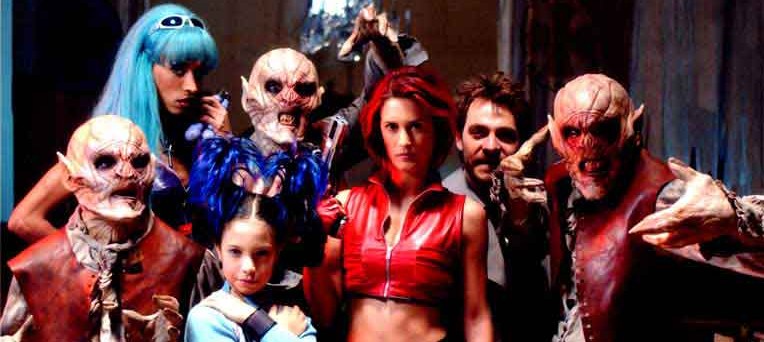
 First, some background. This interview was originally conducted by email all the way back in April 2006, with the director of Bloody Mallory. I sent him a whole bunch of questions, and he replied with the the first half – however, I didn’t get the second batch, then all hell broke loose with the Serial Shooters, which took down the site, etc. and I never did get a chance to follow up. The other day, a workmate of Chris’s borrowed the Mallory DVD, and I suddenly remembered the interview. I managed to resurrect the first set of responses [dredged off the hard disk of the computer before my current one] and found them still fascinating to read, with some really great answers; so, here you go…
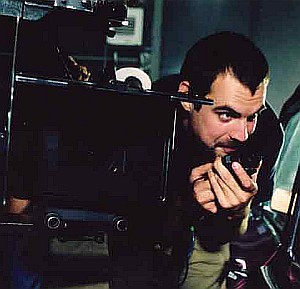 Were you a big movie-fan when you were young? What was the first film to make an impression on you?
Definitely. The movie that brought some kind of ‘epiphany’ on me was Indiana Jones and the Temple of Doom. I know Raiders is a better film, blah, I don’t care: I could watch and rewatch Temple of Doom every day till I die and not get bored of it. I was also really into Nightmare on Elm street movies as a teen, I actually think of this series of movies as my ‘filmschool’. So many talents emerged through these films – Angelo Badalamenti, Johnny Depp, Wes Craven, Renny Harlin and Lisa Wilcox, my all-time favourite actress and muse, whom I had the pleasure to work with on my final studies film called Chastity Blade. Definitely a ‘girl with guns’ movie! That short film got me an academy award nomination in 2001 and I cherish that film above everything else because Lisa’s in it and it’s like my childhood inspiration paid in the end…
Did you try your hand at making films while growing up?
I never owned a Super 8 camera, nor a video one. I think I was more of a reader/writer and I guess I kinda fell in love with storytelling while reading Ray Bradbury, Richard Matheson, Edgar Allan Poe, Frederic Brown (best short stories)… I was also really into Marvel Comics and action figures. I still collect superheroines nowadays, and they do come handy whenever I’m struggling with a storyboard.
You went to school in Wales and Reading – how did you end up across the Channel?
I got a two year scholarship to study an international baccalaureate in Atlantic College. This school is part of the United World Colleges. Their aim is to bring together students from all over the world so that they learn how to live together and hopefully make the world a better place. It was such a crazy, wonderful experience filled with idealism and stuff which may sound like a sect but wasn’t. I met my best friends there and learned how to speak english. Sort of, anyway…
The school was located inside the St Donat’s Castle, it was like Harry Potter but for real. I shot my first movie there, it was called In the Gaze of the Beasts and edited over the soundtrack of Freddy movies… I was 17 at the time. I went back to France the following year, flunked the examination for the Belgian national Film school, waisted a year and decided to cross the channel again and study film & Drama at Reading University. Reading is the most fucking depressing town ever built, and I cannot believe I stayed there for 3 years. Yikes. But the degree was interesting, I did some TV reviews on a TV channel, met Kelly Smith, with whom I like to co-write stuff, and I escaped to London as often as I could.
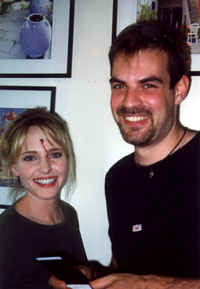 Your first film was the short, The All New Adventures of Chastity Blade. How did this come about?
Well, after I finally got my degree and fled from Reading, I managed to get in the French National Film school. It was quite weird because I only applied there to please my parents. This school (La Fémis) is incredibly arty-fartsy and I thought they’d never take someone like me. But they did and as much as it was great to be able to do this school, it was actually really hard for me. I had no friends there, no-one remotedly interested in what I liked (action heroines and genre films). The other students were all into Bresson and Godard and Nouvelle Vague stuff and I was like, hell-low, it’s been 50 years now, get over it… You see, in Reading, we studied world cinema, from avant-garde american stuff to silent cinema, it was a broad spectrum of things, from Hitchcock to Maya Deren, etc. Whereas in France, it’s all centered on French cinema. Very self-centered.
So when I finally wrote the script of what would become my final studies film – with the help of my friend Kelly from Reading – it was like a manifesto of what I liked and what I wanted to vomit at all these people who were all so intellectual and anal about everything. That’s how Chastity Blade came about. The story was about a quirky american housewife walking into the Pulp, fictive 1930’s Paris of her favourite books, Chastity Blade. It was Indiana Jones meets Freddy meets The Neverending Story in 30 minutes. I sent the script to my muse Lisa Wilcox for the hell of it, and she loved it so much that she agreed to come all over to Paris from LA to act in it, for free. When I went to pick her up at the airport, it was like the best day of my life and I still grin now when I recall this moment. Of course my school freaked out when they realized I was gonna shoot a genre movie in english. In In-GLICH!!! In a French film school!!! They tried their utmost to stop me, to cancel this film, to force me to give up. Anyway, then the Academy Award thing happened and from that moment, I was like, their best student, and when the Prime Minister or anyone else important came to the school, they were showing him Chastity Blade. How absolutely laughable but hey, that’s how school works I guess but it amused me a lot at the time.
There always seemed to be a good genre ‘scene’ in France (I fondly remember magazines like Mad Movies from my teenage years!) but is that still the case?
Yes. And L’Ecran Fantastique too. Great magazines. I have written for L’Ecran Fantastique in the past and still do occasionally. I used to love Mad Movies but the team changed and now it’s just not the same anymore. When they came on the shoot of Bloody Mallory, I was so happy cause I used to read Mad Movies from front to end cover, I used to love that stuff. Anyway the journalist’s first question was not on my film, it was: “What subject did you pick at the National Film School’s entrance examination because I didn’t get in and I wanted to know why you got in…” He was totally bitter and aggressive and I was, really, really disappointed. And of course, 2 months later, they totally thrashed my movie. I can live with Cahiers du Cinema thrashing my first feature, but when it’s your favourite magazine from your childhood, it kinda hurts a lot.
It totally devastated me, out of all the crap reviews that I got in France for that film. So I don’t read Mad Movies anymore, not out of a grudge, just because it kinda spoiled the fun for me. Thank god, I had a much better coverage abroad and a great article in Fangoria. There’s a saying in France that goes, “You’re never a prophet in your own country”. I don’t think Bloody Mallory is an unforgettable masterpiece, but I certainly don’t think it deserved all the evil critics it got here in France. Then again, the very same magazines who used to thrash the early films of Sam Raimi or Peter Jackson are now saying how they always knew his talent from earlier on. I’m not comparing myself to these two geniuses, I’m just pointing out at how things usually work here.
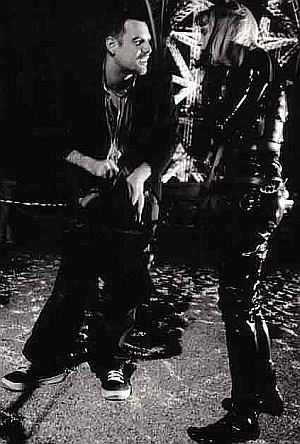 Where did the core idea for Bloody Mallory come from?
I was meant to do another movie instead, a French take on Scream, a very 1980’s slasher movie with ugly, suburban teenagers stalked by a mirror-masked killer, but that wasn’t going very well. Anyway, I had to come up with about 10 different pitchs before the production company that had signed me on agreed on something. And it was Bloody Mallory. I have no idea how I came to write that one, it just came out like this, zap. I had the name ‘Bloody Mallory’ in my mind for a couple of years. I have a lot of action heroine names floating in my mind and it’s funny how the plot usually come afterwards. Chastity Blade was just like that, a name, and then I created a story around it. All I remember is that I was pretty angry at the time because I just had my heart broken by someone, so Bloody Mallory herself was pretty unlucky in love and truly pissed off at the whole world.
Many reviews compare it to ‘Buffy’ – ass-kicking heroine, fighting supernatural evil, backed by her friends and their different skills. Do you think that’s fair?
I was a Buffy fan but to be honest, Bloody Mallory owed much more to Xena than than Buffy in my mind. I loved Xena, I loved the zany scripts mixing seriousness with uber camp stuff, I loved the lesbian angle, and I think Josh Whedon used a lot of Xena stuff in Buffy. I was worried by that Buffy comparison, and purposedly wrote Mallory herself as a more experienced woman, who had already gotten married, i.e. I didn’t see her as a teenager. Unfortunately, the producers wanted me to work with younger actors, and I couldn’t convince them otherwise. I think it might have been quite a different film with let’s say, a 35 year old Mallory. When I agreed to work with younger actors, I kept telling everyone “Everybody’s gonna call this ‘Ze French Buffy’…”
What other films, series, books, etc. influenced you?
Well Manga and Japanese characters like Cutie Honey, but also X-men. When you don’t have a fifth of a quarter of the budget of ‘X-men’, you’ve got to find a different way to make a movie work so I opted for a ‘Manga’ look, with flashy colors and kitsh elements, such as the pink convertible hearse. I’m so proud of that one, I just love the idea of a pink convertible hearse! I liked the idea of a super brigade. Talking Tina, the psychic girl, was named after that great Twilight Zone episode. Vena Cava, as you pointed out in your review of my film, is a homage to singer Diamanda Galas whom I love and whose sense of humour and philosophy definitely inspired me for the character. Vena Cava’s line to the Pope that goes ‘Give me sodomy or Give me death’ is actually a song by Diamanda Galas. I’m not crazy about using too many references but it was my first feature so I guess it’s the moment when you want to show what ‘school’ you’re from, i.e. , what movie inspired you. There are a couple references to Ringu and of course, the trap scene with the crushing wall is a total rip off/wink to the trap room of Indiana Jones and the Temple of Doom.
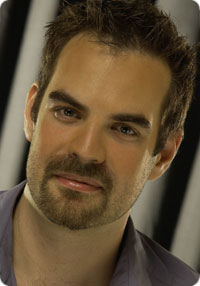 Organized religion doesn’t exactly come out of this looking good – not least the Pope! How much does this reflect your own feelings?
How many lives would have been saved had Religion never existed? I can’t believe people think that the Pope or anyone else for that matter has a right to tell them that they can do or can’t do. Jesus certainly never mentioned a Pope in the Bible, did he, and even if he had, he didn’t write the bloody thing himself so… I personally think that if there’s a heaven and hell, the previous Pope isn’t listening to angels singing right now. His condemning of contraception in these times of epidemic Aids was genocidal . Thousands of people died in Africa just because of this position he took. And now people want him to become a Saint? I’m quite amazed and appalled at was Bush is doing too in America, funding aids-related organizations only if they promote abstinence and christian principles of faithfulness, while printing in sex education books for teenagers that ‘condoms’ don’t protect you from Aids. Bloody Mallory is just a B-movie, but I think B-movies allow you to say a couple of controversial things that you wouldn’t be able to say in a normal movie. I mean, in the movie, the Pope is basically an evil bastard and the reincarnation of the Devil! I wish we could have done a proper fight with him and the Drag Queen…
It’s also definitely a script that puts women to the front. Was this a conscious decision?
Yes. I always envisioned Bloody Mallory and her team as a slightly male-bashing, independent women who might have sex with men just for sport, but who would never attach themselves to anyone. Had the movie been more successful and fuelled a bunch of sequels, Bloody Mallory would never stay with the same guy. Just like James Bond and his girls. I also like the haunting romance with her dead husband, that gives her something to look at, so that she doesn’t need anyone else, maybe. I don’t know… Again, I love Wonder Woman and Xena and I feel super-heroines really don’t need men anymore to survive dangerous situations.
[To be continued? Maybe, if Julien sees this – the email address I had for him no longer works – perhaps we can get this completed…as long as he still has the questions, because I don’t!]


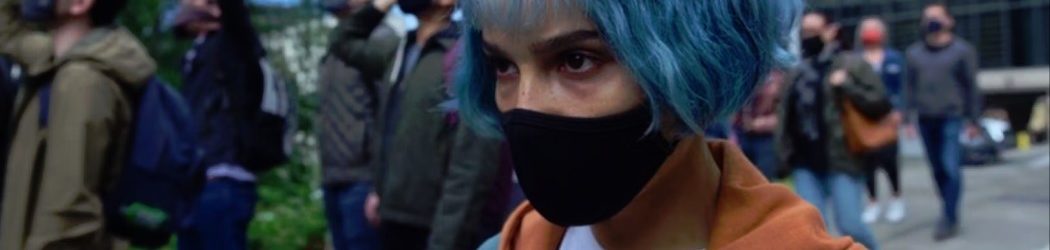

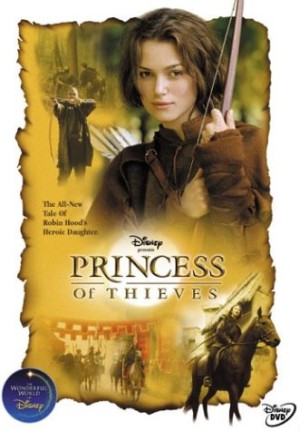 Back before Pirates of the Caribbean made Knightley a household name, and even before Bend It Like Beckham made her an obscure name, as a fifteen-year old she shot this Disney TVM, which rewrites history wholesale from the very start. It begins in 1184, claiming this is the reign of Richard the Lionheart – this must come as a surprise to Henry II, since he didn’t die until 1189. It also introduces Philip, Richard’s supposed illegitimate son, out to replace the evil King John; in reality, Philip may not have existed and certainly left no mark on history. However, the film needs a romantic lead, so there you go. Of course, the whole Robin Hood mythology is more a block of clay, that writers and film-makers have seen fit to mould as they wish.
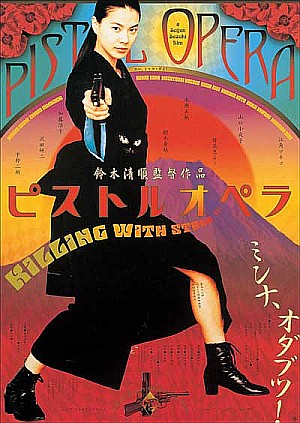 I don’t think I have ever been quite so
 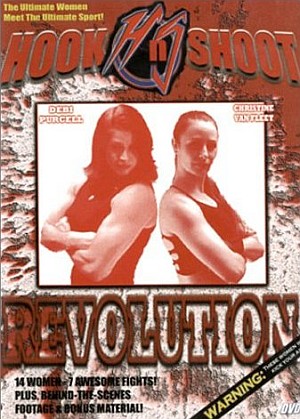 These days, the notion of women participating in mixed martial-arts is no longer seen as particularly outlandish, with names like Tara LaRosa, Yuka Tsuji and Megumi Fujii among the top fighters [as with pro wrestling, the best fighters are out of Japan]. However, this wasn’t always the case: In April 2002, in Evansville, Indiana, one of the first all-women events in America took place. The fights took place under
 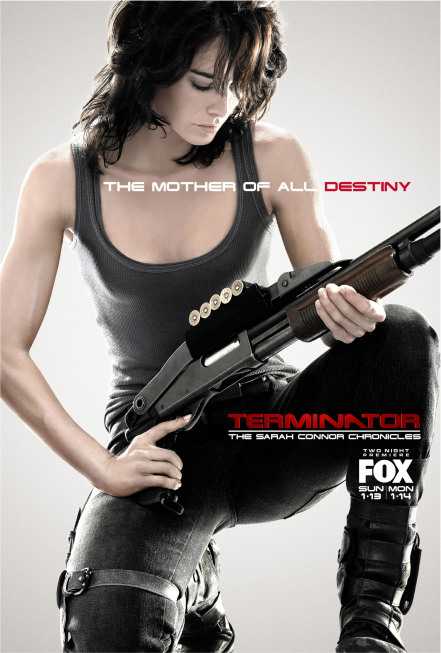 The double-pilot. Probably deserving of a place on the FAQ is, “Why don’t you include Sarah Connor?” The reason is simply that she was a supporting character in the first two Terminator films; one essential to the plot, that’s for sure, but clearly over-shadowed by her male counterparts in both movies. The TV series finally moves Connor (Headey) front and center, and also adds an additional action-heroine dimension, in the shape of Cameron Phillips (Glau), a schoolmate of John Connor’s who turns out to be a new model of Terminator, sent back to watch over him. The show starts in 1999, a couple of years after the events of Terminator 2, but soon shifts to the present day; it thus largely ignores the timeline of Terminator 3, in which Sarah Connor was reported to have died of leukemia in 1997.
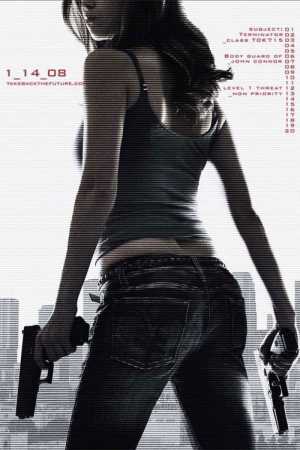 The rest of the series If there’s an unfinished feel to the show, that would be because it was. Thanks to the writer’s strike, the final four episodes never made it to the screen, and the storylines will be incorporated into the upcoming second series, confirmed by Fox in April. While not perhaps the makers’ fault, it undeniably had an effect, basically leaving us to turn to each other at the end [which involved a car-bomb] and go, “Is that it?” The rest of the series, however, wasn’t so terrible, though it did feel somewhat stretched. The main plot threads were extensions of the pilot: a) the Connors trying to stop Skynet from becoming active, in particular through locating a chess computer called The Turk, and b) evil Terminator Cromartie trying to stop them. There’s also c) an FBI agent (Jones) who is trying to piece together the pieces, trailing both parties, and d) the arrival of Derek Reese, the brother of Kyle and therefore John Connor’s uncle.
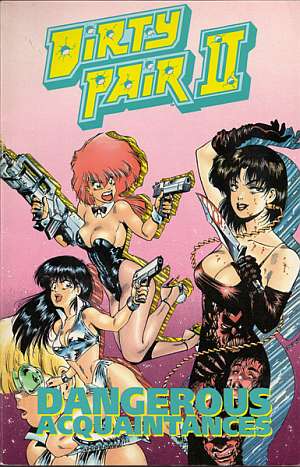 It’s been at least a decade since I read this – probably more – but it is still a thoroughly-enjoyable read, and a major improvement in just about every way (plotting, art, pacing, imagination and characterization) over the first stab. Of particular note is the solid way in which the two separate threads of the story are woven together. While on holiday, Kei and Yuri bump into Shasti, a former colleague of theirs in the WWWA. She was actually an android, who went rogue after a criminal’s personality was implanted into her, part of a (failed) experiment to see if it would help with his capture to have her think like him. She’s now apparently leading a group of “freedom fighters” who are planning to hijack a luxurious space-liner, crammed with VIPs and new technology. Has Shasti gone all political? Or, if not, what is she up to?
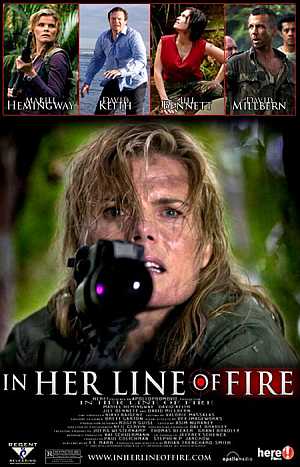 This is a competently-made but ultimately forgettable film – it feels very much like a TVM, albeit for one of the slightly-more liberal channels. Hemingway plays Secret Service agent Lynn Delaney, who has to look after the Vice-President, when their place crashes in the Pacific. Of course, in the way things only happen in Hollywood movies, the island to which the struggle is a rebel outpost, and the VP is a former soldier, with more-than adequate combat skills of his own. Which extend to more than shooting people in the face, Dick Cheney please note. Meanwhile, there’s a lot of tension with female journalist Sharon Serrano (Bennett), who is also among the survivors; this includes tension of a sexual kind, if you know what I mean, and I think you do. Like I said: one of the slightly-more liberal channels. However, it’s nice that no big thing is made of this; you’re not whacked over the head with anyone’s sexual orientiation, as in D.E.B.S. [Curiously, even the nods in this direction are edited out from some releases]
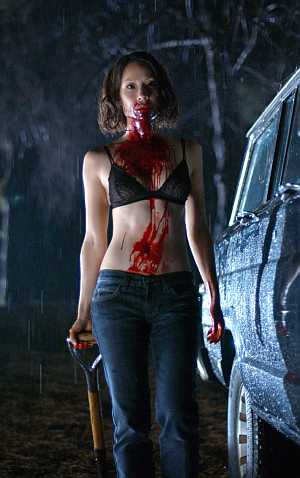 The main obstacle to this even reaching average is probably a first-half structure that is, for no readily apparent season, entirely fractured. Scenes appear entirely out of order, with no explanation: why is our heroine now waking up in a morgue? And the problem is, what the film has to offer is so pedestrian, you can’t be bothered to start putting the pieces together. Liu plays Sadie Blake, a journalist investigating the shady underground side of goth culture, who ends up finding a clan of vampires are on top of the food chain, just before becoming one of their victims. However, instead of taking her undeath lying down, she vows revenge and, accompanied by a rogue cop (Chiklis, you’ll not be surprised to learn), begins working her way up said food-chain.
 ★★★½
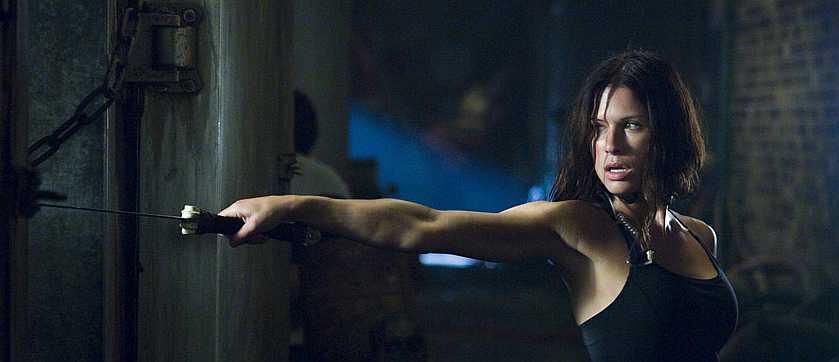
★★★½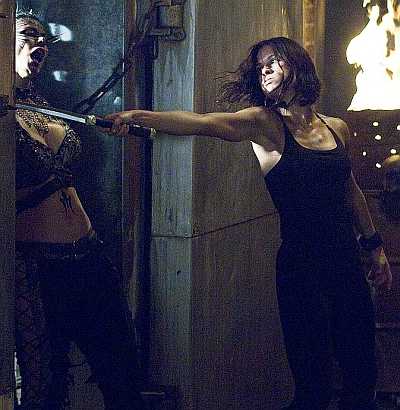 In the near future (next week, actually at the time of going to press), Glasgow falls prey to the Reaper virus, which is exactly what it sounds like. The government in London deal with the problem by building a 30-foot wall along the border and sealing off Scotland – which is basically the approach taken by the government to problems in Scotland since, oh, about 1707. [Hello, born there!] 30 years later, however, the virus breaks out in London, and all of a sudden, the information that people are still alive in Scotland, suggesting they found a cure, is now of more than academic interest. To get the cure, they send Eden (Mitra) up North, to find Kane (McDowell, appearing in about two scenes, then taking his salary and leaving), who might just have the solution. However, things do not go as planned, needless to say, not least because Glasgow is inhabited by nothing but psychopathic thugs with poor dress sense and bad skin, stuck in the past. So, no change, then. [Hello,
 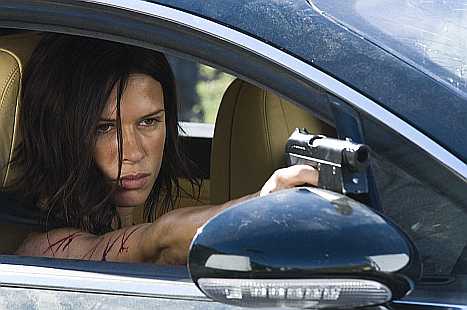 It all builds to a monumental car-chase, though you have to suspend disbelief there, as apparently Bentley cars will start right out of the crate, even if they’ve been sitting there for thirty years. You can also plough them through an exploding bus, amongst a litany of other torments, and they’ll come out the other side with barely a scratch. Again, if you’re going to ground your film in the ‘real world’, admittedly a questionable concept given the plot synopsis above (and I haven’t even got to the more outrageous elements yet!), then mis-steps such as these should be avoided. They’ll just give the more moronic end of the critical fraternity – paging Jeff Otto – blunt objects with which to whack your film about the head, as they ride off on their high horse. They only bothered me slightly, since I was already in full-on disbelief suspension, and since the resulting car-chase was cheerfully destructive, I’m inclined to give it some slack.