
★★½
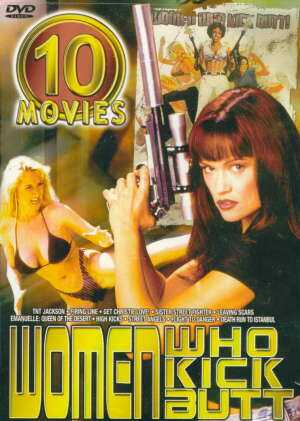 Ten movies in a box for $17.99 – how can you possibly go wrong? And yet…I have this nagging feeling that there’s a reason you’re paying $1.80 per flick. But, hey: if there are two good films in the set, I’ll have got my money’s worth. Any more, and I’ll be delirious happy. So, we’ll be temporarily abandoning our usual ratings for a more financial one as we attempt to discover, are these films worth $1.80? Looking at the titles on the back, I’m not overly optimistic. There’s only about three I’ve heard of, and they seem to be ordered like a baseball line-up, with the strongest at the top, right down to total obscurities. Not to be coerced by such a transparent ploy, we naturally started off with #10.
Death Run to Istanbul
Dir: Rachel Gordon.
Stars: Fallon, Bill Ballis, Dean Thomas
Now at the plate…batting 0-for-13…a 1993 film so obscure it doesn’t even have an Internet Movie Database entry. This may be because it is utterly dreadful; my 14-year old stepdaughter makes films with her friends on weekends, and they are far superior. Doesn’t help that the synopsis given is almost entirely fictional:
- Fantasy: “When ‘The Committee’ kidnaps a former cop’s sister, they didn’t stop to think about the big brother factor! A former police lieutenant and marine, Gary calls on his old kickboxing buddy Jason to go deep into the underworld with him…”
- Reality: A junkie (Thomas) loses a suitcase of drugs belonging to a crime boss, so gets snatched off the street by the villains. His sister (Fallon) goes in to rescue him.
Sheesh. Woefully inept in every way. Example #1: the heroine’s blonde sidekick escapes from captivity…yet is next seen being interrogated by the chief villain (Ballis)…before vanishing from the movie entirely. It’s as if someone put the reels together in the wrong order – except it’s shot on video. Example #2: right at the climax, the heroine’s martial arts teacher is shot dead. The movie cuts to her laying flowers on his grave, presumably after the police investigation, autopsy and funeral. Did every other character take those days off? Example #3: they forget to add sound effects to one fight.
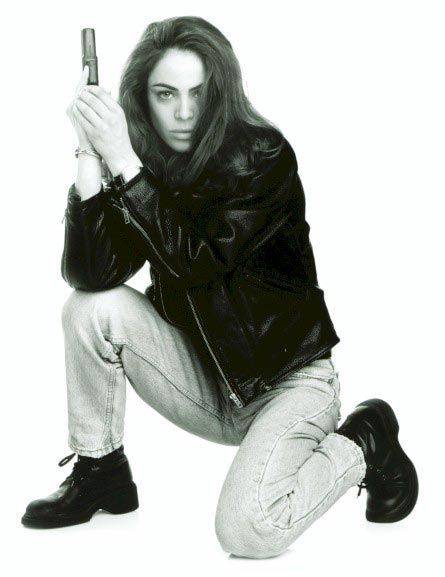
I could go on, and fill the entire page with precise details of how appalling this is. The fights are largely tedious, the cast can’t act (or overact horribly) and have no charisma, and there are huge chunks where nothing is happening at all. As for Istanbul? It gets mentioned once; the film never leaves Venice Beach. The only slightly interesting character is a very scary evil henchwoman, who turns up briefly. She is the sole reason this possesses any value at all, and we’re only talking about $0.10.
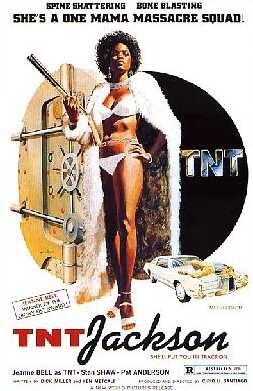
T.N.T. Jackson
 Dir: Cirio Santiago.
Stars: Jeannie Bell, Stan Shaw, Ken Metcalf, Pat Anderson
Feeling in need of escape, we sprinted to the front of the DVD-box for the top-billed movie. Getting the bad news in first: the sound and vision suck. The print looks like it’s 70 years old, and we had to fiddle to get any audio at all – and that came from the back speakers only. It’s also horribly dated, in every way, from the fashions through to the dialogue.
…and yet, curiously, it’s fun. Chris remembers seeing this in Times Square on a double bill with Superfly, and that would have been a real hoot. Bell has attitude in abundance as the titular heroine (best line, “Yeah, and I’m Snow White with a case of sunburn”) who goes to “Hong Kong” i.e. the Phillipines, to look for her missing brother, only to fall in with bad drug dealers. “Titular” is perhaps appropriate given the gratuitous topless-fu scene involving the former Playboy playmate, yet it’s less exploitative than you might expect. The ethnically diverse cast generally acquit themselves well, with a script co-written by cult actor Dick Miller, a regular for both Roger Corman and Joe Dante.
Action-wise, the doubling for Bell is a little too obvious, but she has a nice line in gory arm-snapping which we wanted to see more of. Pat Anderson also makes an impression as an undercover cop, and has a good battle with the heroine in a graveyard. The end result is schlock entertainment with hardly a dull moment in its 73 minutes, that leaves us not averse to getting a better copy (and as I write, Chris is surfing Ebay for Super Fly!). Several marks off for print quality, yet still a solid $4.00.
Flight to Danger
Dir: Sara Matthews and Gina Jourard.
Star: Sara Matthews, Gina Jourard, Barbara Minardi, Lynn Eglash Reynaud
Knew we were in trouble when I saw ‘Vista Street Entertainment’; yes, it’s from the same company that brought us Death Ride to Istanbul. It’s supposed to be about an “all-women’s martial arts team” in Paris, but when sod-all had happened after twenty minutes, I cut my losses and hit the ‘Eject’ button. If it seemed perhaps a little more technically competent than DRtI, it was even more astonishingly tedious. While I might have been slightly amused to see how the sub-poverty row Vista Street tried to fake Paris, life’s too short. I do this for fun, not my living. Value: $0.00.
Street Angels. ‘A Vista Str…’ Not tonight, thank you. We’re running to the front of the box, in the hope of finding something not shot on video.
The Firing Line
 Dir: John Gale.
Stars Reb Brown, Shannon Tweed, Kahlena Marie
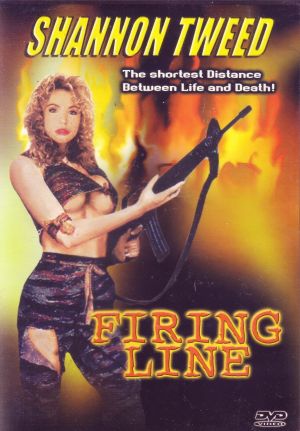
Supposedly set in South America, Brown is a ‘military adviser’ (read, CIA spook) who swaps sides and signs up with the opposition after the rebel leader he brought in for trial is executed. Tweed plays the exercise equipment saleswoman (!) who gets involved, and gradually becomes a gun-toting revolutionary (!!) – though let’s get one thing straight, the DVD cover on the right below bears no relationship to her character, or indeed the movie at all. Indeed, Tweed is surprisingly chaste, with one skinny-dip and a love scene with Brown, both PG-rated.
There are some interesting ideas here, such as the good guys being Communists (or at least, described as such by the ruling party); in a Hollywood movie, this counts as amazingly radical. It’s also laudable that the rebel’s leader is a woman (played effectively by Kahlena Marie). However, the action sequences are over-long and, frankly, extremely boring, with perhaps only the last one having any significance in the larger scheme of things.
Tweed’s transition to a gung-ho fighter is glossed over with a bit of target practice; it’d have been far more interesting if she’d really been an undercover CIA operative. Or a government agent, sent to discover the rebel’s hideout. Or…well, make up your own improvements here, as there’s plenty of room. It’s not worthless, certainly – after Vista Street Entertainment, I’ve revising my definition of the term – but not particularly worthful, either. Call it $1.50.
Street Angels
Dir: George Phillip Saunders.
Stars: George Phillip Saunders, Dee Hengotler, Gwen Somers, Honey Lauren
Well, get out the crayolas and colour me surprised. Vista Street Entertainment in competent film shock. We’re not talking Oscars, but it isn’t fifteen minutes of plot extended to 90 minutes through gratuitous dancing, the actors have a clue, it’s directed and shot with some ability, and the fight scenes are decently staged. This is a lot more than I expected, and after the previous two atrocities, is a breath of only slightly stale air. A cop loses his partner to The Phantom, and frees three women from jail to act as an extra-judicial counterforce against this mysterious villain and his henchmen. It’s pretty cliched – the women, one dark-haired, one blonde and a redhead, used to be [yawn!] a cop, a marine and a gang girl – but is done with enough energy to pass muster. The hero comes across somewhere between Kurt Russell and a foul-mouthed version of Philip Marlowe, though the heroines do less butt-kicking than I hoped.
It’s all serviceable enough, though it still isn’t wise to try lines like, “Street Angels? It sounds like a really bad, no-budget B-movie!”, when it’s painfully obvious that you are a moderately bad, no-budget B-movie. Witness the scene right at the start, where a villain tries to break a bottle for use as a weapon: it takes four attempts, and he’s left with something half an inch long and entirely unthreatening. There’s also an odd homoerotic subtext – the villain is blatantly bi, while at the end the hero goes off with his arm around, not the girls, but a young boy rescued from the Phantom. Kinda dubious, but this is still adequate, and I’d be happy to have paid $2.50 for this.
Get Christie Love
Dir: Willam A. Graham.
Star: Teresa Graves, Harry Guardino, Louise Sorel, Paul Stevens
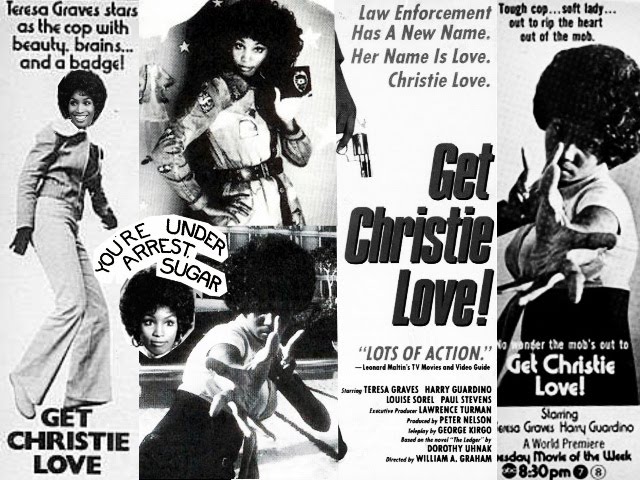
Based on a novel by Dorothy Uhnak, Graves (like Goldie Hawn, an alumni of Rowan and Martin’s Laugh-In), is the titular black policewoman, trying to track down the ledger of a drug importer. She knows his girlfriend is the key, and has to find a lever to use on her, in order to find the information she wants.
Due to the TV-pilot origins, this movie is rather more restrained in its sex and violence than ‘proper’ blaxploitation films, but what it lacks in grit and realistic urban feel is largely made up for in plot and character. Love comes across as a detective more than a fighter, though isn’t averse to necessary roughness. There’s also an inter-racial romantic angle hinted at, between the heroine and her boss, which was probably hugely daring for the time, but more is made of Love being a female cop than a black one, though she still possesses a certain style and a hot VW convertible. In contrast, check out the Amish-giant looking dude, in possession of what is perhaps the worst jacket in cinema history.
The TV show, also starring Graves, ran for one season on ABC in 1974-5; in April 1997, there were reports that Whitney Houston had signed up to do a remake for Danny DeVito’s Jersey Films but – perhaps fortunately – nothing ever came of it (Quentin Tarantino would have wanted to direct, having been a fan as a kid). The movie, while certainly dated, is a little more thoughtful than most entries in the genre, and if the print here has seen better decades (several of them!), you can peer through the tinting to find a decent effort, worth $3.00 of anyone’s money.
High Kicks
Dir: Ruta K. Aras.
Star: Tara Lee-Anne Roth, Dennis Swarthout, Sandy Kay, Kevin Knotts
Think this might have strayed in from the Women Who Work Their Butts collection by accident, as this has more gratuitous aerobics than any film since that Travolta/Curtis “classic”, Perfect – the presence of an ‘aerobics choreographer’ in the end credits is relevant here. The heroine (Roth) owns an aerobics studio, and when she gets raped by the local street gang, turns to a passing sailor (Swarthout) and his mates for help.
Thereby hangs the problem with this film, in that it’s the sailor who kicks most butt. Only in the last five minutes does the heroine stop standing at the side; up until then, she’s been largely in need of rescuing. There are a couple of potentially interesting angles; her revenge becomes almost gleeful, but neither this, nor the rivalry between her and one of her customers for the sailor’s affections, go anywhere. The film could have shed interesting light on the psychology of retaliation and the cycle of violence. Alternatively, she could have used her new martial-arts skills to kick her rival’s ass from here to Hollywood. Instead, it does nothing but roll out the cliches.
Right from the interminable opening credits – three minutes of sod-all happening – there is hardly a scene which isn’t twice as long as necessary. Some of the fights aren’t bad, even if one of the good guys bears a disturbing resemblance to Jean-Claude Van Damme. But much like the rest of the film, they offer nothing new or interesting. You could probably burn up a few calories doing aerobics along with the cast; for the more sloth-like among us, it has very little to interest. You’d probably be hoping for change from $1.00.
Emanuelle, Queen of the Desert
Dir: Bruno Fontana.
Star: Laura Gemser, Angelo Infanti, Gabrielle Tinti, Giovanni Brusadori
You might be asking, what’s an Emmanuelle film doing, in a Women Who Kick Butt box-set? Good question, partly answered by the spelling: check it out, there’s only one M in this Emanuelle, to avoid copyright suits. This one is played by Laura Gemser, who appeared in a slew of 70’s/80’s Italian soft- and hard-porn films, chiefly for Joe D’Amato.
This one, also known as La Belva dalle calda pelle and Dirty Seven, is based on a novel by director Fontana. It starts promisingly enough, with Gemser as a mysterious avenging angel who sets about destroying a troop of soldiers, using her womanly wiles to turn them against each other in revenge for… Well, this is where the film falls down, in an amazingly lengthy flashback sequence which documents every detail of the events leading up to… something that most viewers will already have worked out, making the whole process tiresomely redundant.
This is a shame, as Gemser makes a great predatory femme fatale (see also another porn star, Brigitte Lahaie, in Jean Rollin’s Fascination) and the destruction of the troop from the inside is a potentially great idea. The wild landscape, in which urban man is clearly out of his depth, is also reminiscent of Walkabout. In the end, however, it’s largely a tedious flick about a bunch of soldiers – most of them possess few redeeming features, and in the main, neither really does the film. Call it $2.00, most of it for Gemser.
Sister Streetfighter
Dir: K.Yamaguchi.
Star: Sue Shiomi, Sonny Chiba, May Hayakawa, Sanae Obori
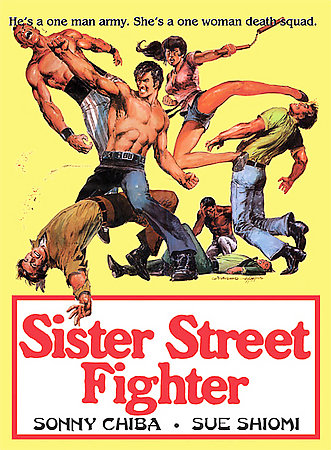 Jackpot! Finally – nine movies in – we hit one which stands a good chance of being watched again. Having recently endured the awfulness which is Dragon Princess, I wasn’t expecting much, but was delightfully impressed by the imagination on view here – not to mention the non-stop violence. The plot is similar to TNT Jackson, with Shiomi seeking her brother who has vanished into the Japanese underworld, adding a large dose of Enter the Dragon for good measure. The film is totally berserk, to the point where I suspect half an hour has been randomly edited out. At one point, the heroine is thrown hundreds of feet down from a bridge; when she returns, no explanation of her miraculous survival is forthcoming.
At another point, we get a catalogue of the bad guy’s collection of killers (some people collect stamps – others, psychotic assassins with interesting weaponry); one teasingly described as “Eva Parrish – Karate champion of Australia”, vanishes from the movie, never to be seen again. This is a pity, because we were eagerly anticipating a full-on east-meets-west catfight. What’s left is still fabulous – not least because it’s a good print, and even letterboxed. The villain, who keeps his dark glasses on during sex, and decries cop shows as being “too violent”, before smacking his bitch up. The henchmen, wearing what appear to be black wicker waste-paper baskets on their head. The guy who fires a blow-dart into a caged bird – here at GWG, we welcome any excuse for a recreation of Monty Python’s Parrot Sketch. Then there’s Shiomi herself, who is great, killing flies to make her point, and equally good wielding sai, nunchakus or simply her fists. It’s grand entertainment for a Friday night, and even $9.99 would be well worth it.
Leaving Scars
Dir: Brad Jacques.
Stars: Lisa Boyle, Robin Downs, Jonathan Slater
Sister Streetfighter had taken the tension away, as if your team had scored a couple of late goals to break open a close game. And a good thing too, since Scars, despite the presence of star Lisa Boyle large on the cover of the box set, fits least in with the theme, and really shouldn’t be here at all. It’s a sleazy (and perhaps accurate) portrayal of Hollywood life, with slimebags, scumballs, scuzz-buckets and much drug-taking, centred around a floppy disk which the heroine, an aspiring actress, has given to her by a soon-to-be-murdered friend. The usual seeking activities ensue.
Apart from convincing me I do not want my step-daughter to pursue an acting career, there’s very little to recommend this. Certainly, Boyle does almost none of the promised butt-kicking, save one spray from an automatic weapon – very careless of those gun-runners to leave the merchandise around like that, fully loaded ‘n’ all… There’s a fair bit of nudity, though I should warn you the silicone is obvious, and the production values are obviously low-rent.
What gives this any value at all is the commentary track – yep, a commentary track – in which the producers talk about making the film, and as an insight into low-budget cinema, it’s rather more interesting than the product itself. A total surprise to find this, since there is no mention of it anywhere on the box, it roughly triples the value if we were talking about the movie alone, to $1.50.
Adding up all the above figures, we get a total of $25.59 for the box set as a whole, which should label it as a hit. However, Sister Streetfigher alone is responsible for almost 40%; adding in TNT Jackson and Get Christie Love and you’ve got virtually two-thirds of the value, because there is just way too much filler in this box. Better to buy the four film Savage Sisters set, which includes the three above and (the admittedly worthless) High Kicks, but can be found for $8.98 or less and will take up half the space on your shelves.

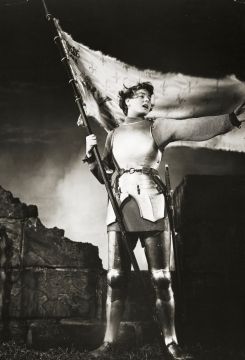


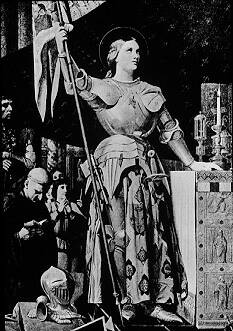 Born in the French province of Champagne in 1412, to a peasant farmer, Joan (or Jeanne – I’ll largely stick to the Anglicization) never learned to read or write, but was regarded by her contemporaries as a highly pious child. It was at the age of 13 that she first heard voices, but it took several years before they convinced her to leave home and help the French king, who was engaged in a battle to liberate the country from England. She presented herself to the local commander, who was skeptical at first, but was eventually convinced after Joan reported news of an English defeat before official confirmation arrived. Joan, clad in male attire to protect her modesty, travelled to see the king, and convinced him of the legitimacy of his claim to the throne, despite a faction of the court strongly opposing her influence. Her faith, simplicity and honesty won the day, and she acquired her sword, found buried behind an altar, in the exact spot she said it would be.
 This was nothing more than a show trial, despite the efforts of those in charge to find support: according to biographer Jules Michelet, one jurist said “that everything about the trial was wrong; that it failed to respect the proper forms; that the assessors were not free; that the sessions were held in secrecy; that the accused…could not be expected to argue with learned doctors” and finished by declaring that it “was a trial to impugn the honour of the prince whose cause this girl is supporting; you should frankly say so.” Perhaps wisely, the holder of these opinions opted to leave France immediately for the safety of Rome.
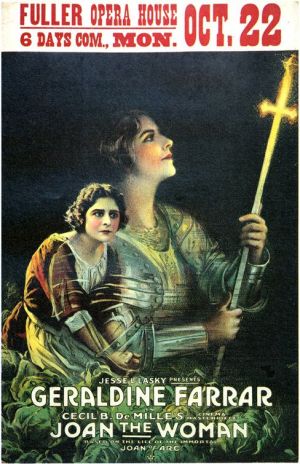 I don’t watch many silent films: it’s such an entirely different experience, obviously, much less driven by dialogue and more by gestures, leading to a style that can look extremely over-theatrical to the modern viewer. My efforts to enjoy the likes of Nosferatu, for example, have usually ended in my providing an accompaniment of snoring, to be honest. This was much better. Despite a running time of over two hours, this 1916 DeMille epic successfully held my interest, as it told the story of Joan of Arc. The framing device uses the then-contemporary World War I, and an English soldier (Reid) finds Joan’s sword in the trenches, the night before a dangerous mission [Interesting how the English are the enemy in the back-story, but the good guys “now” – at the time of release, America was still several months from entering the war, on the British side]. He then experiences a flashback vision, taking him to medieval France, where he is an English soldier saved by Joan (Farrar) in her milkmaid days. We follow her for the story you know, becoming the inspiration for the French army to defeat the English, before her capture, trial for heresy and – I trust I’m not spoiling this – burning at the stake.
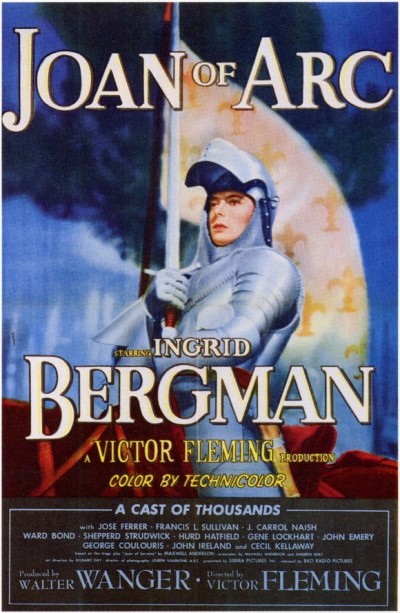 This film’s origins as a stage play are painfully apparent, and you can also see why the distributor’s felt it needed to have 45 minutes cut out before it could be released, as frankly, it’s a bit of a bore. The battle to recapture Orleans is the only action of note here, even though that represented the start of the Maid’s campaign to restore France to its proper ruler (Ferrer), rather than the end. After that, this more or less skips forward to his coronation, then Joan’s capture, spending the rest of the movie – and there’s a lot of it – going through the trial, and the railroading of the heroine into, first throwing herself on the church’s mercy, then recanting her recantation and returning to wearing men’s clothes, thereby sealing her fate. There’s not much here which you won’t have seen before, if you’ve seen any of the other versions of the story, touching the usual bases from Joan’s revelations that she’s going to be the saviour of France, through her trip to see the Dauphin, and so on. It does downplay the “voices” aspect, especially early on, perhaps a wise move since it’s difficult to depict, without making her seem like a religious fruitcake.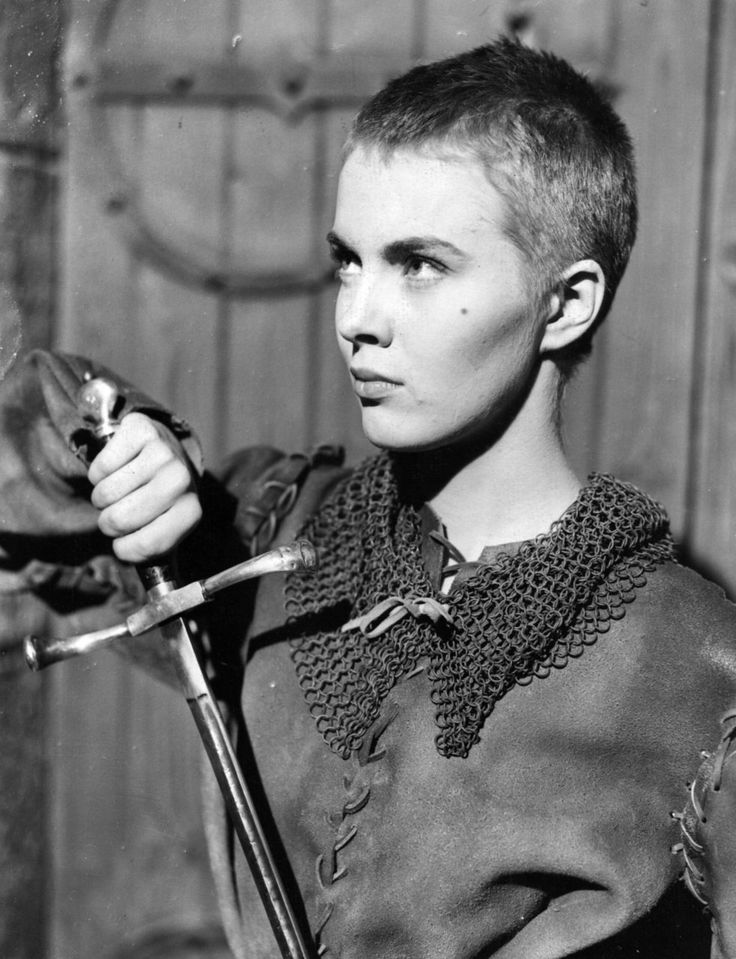
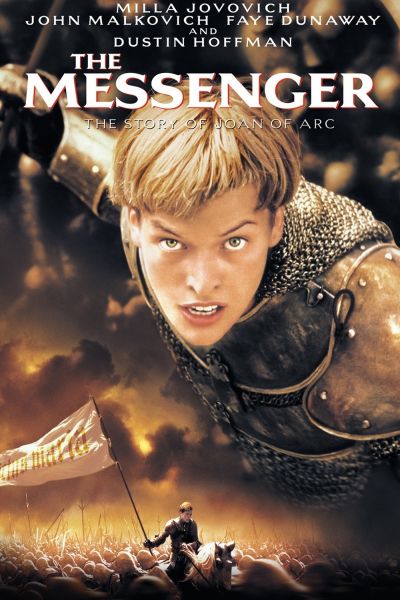
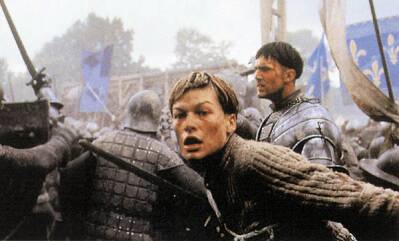 Joan’s capture, trial and execution are fairly close to the truth, though in reality, the King was less involved and more concerned for Joan than shown. It certainly is reasonable to suggest that a naive innocent such as Joan would have been used for political ends. Once she’d outlasted her usefulness – and with the king on the throne, she quickly became more a hindrance than a help – she would have needed to be disposed of. Must confess, I quite like the concept of Joan as a medieval version of Lee Harvey Oswald. Dustin Hoffman’s appearance as Joan’s conscience is another neat touch, and his sarcasm works well. Indeed, the film is one good performance from being excellent. The bad news is, it’s Jovovich who is the culprit (a messenger who deserves to be shot?), though Besson and co-writer Andrew Birkin perhaps warrant most of the criticism for twisting facts and characters in order to fit a predetermined goal. Their Joan is so far from the historical record, they’d have been better off placing their character in an entirely fictitious setting.
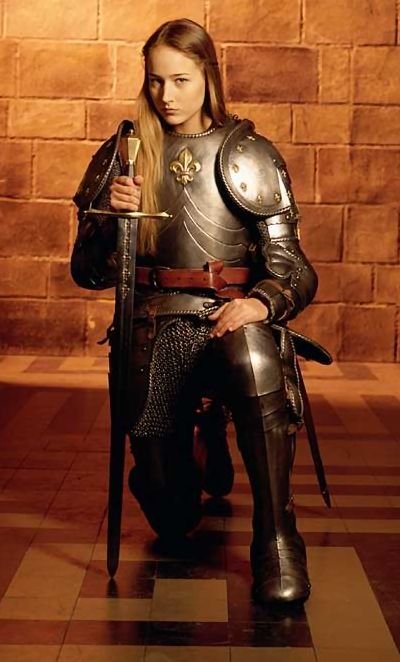
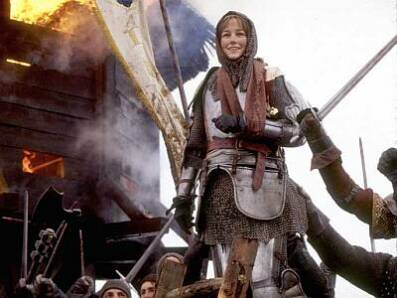 However, the main difference between this and The Messenger is that Joan of Arc is convincing. Perhaps with the advantage of having extra time (the DVD of the miniseries runs 189 minutes), they make the effort to show her interacting with other characters, and Sobieski’s calm, complete assurance is a striking contrast to Jovovich. The viewer can see why people would believe her, and it naturally follows they will too – Sobieski’s Emmy nomination was entirely well-deserved. Despite playing fast and loose with the facts (another example: Joan’s brother was not killed in battle, but lived to see her trial verdict overturned), this strong central performance holds the film together and, with the aid of the other fine actors, makes it eminently watchable. It may not be historically accurate, but it does a fine job of explaining why her myth is still honoured in the third millennium, without coming down in one camp or the other regarding the source of her visions. There are few TV miniseries worth watching, and fewer still worth owning, but this one comes highly recommended.
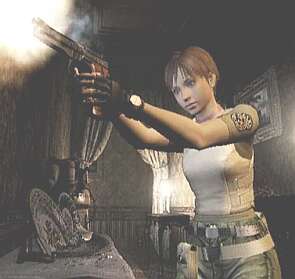 Romero is most – indeed, almost
 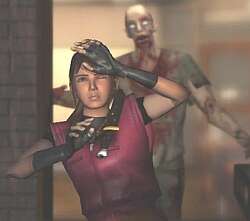 Romero’s problems are, as ever, plot and dialogue. Chris literally stumbles into a secret entrance, yet apparently played there as a child. Chris and Jill get one brief scene, are separated for 30 pages, then come perilously close to having a quickie between kills. Then there are speeches like, “They made you believe you were doing a good thing when it wasn’t good at all. It was evil! The kind of evil that resides in all of us. Makes us greedy, uncaring. The kind of evil that will wipe us out, in the end. Unless we stand up against it.”
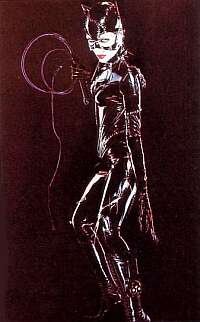 Daniel Waters’ career has been one of ups and downs. For every brilliantly-observed piece of satire, such as Heathers, there has been…well, Hudson Hawk. However, also on his resume is perhaps the best Dark Knight movie yet made, Batman Returns – though, let’s face it, with a supporting cast including Christopher Walken, Michelle Pfeiffer and Danny DeVito, a telephone directory would likely have made compelling viewing.
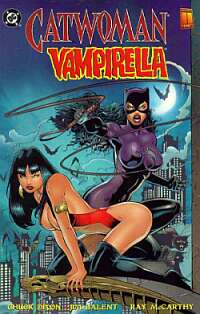 This is, very clearly, a parody of the superhero genre, playing with the conventions of secret identities, powers, merchandising and so on. The part of Spooky, one of the CoG members who is a woman masquerading as a male superhero, looks to have been written for Michelle Yeoh – one move is described as “a famous maneuver of renowned Hong Kong actress Michelle Khan — hint, hint” which puts Waters several years ahead of Hollywood in recognising her talents.
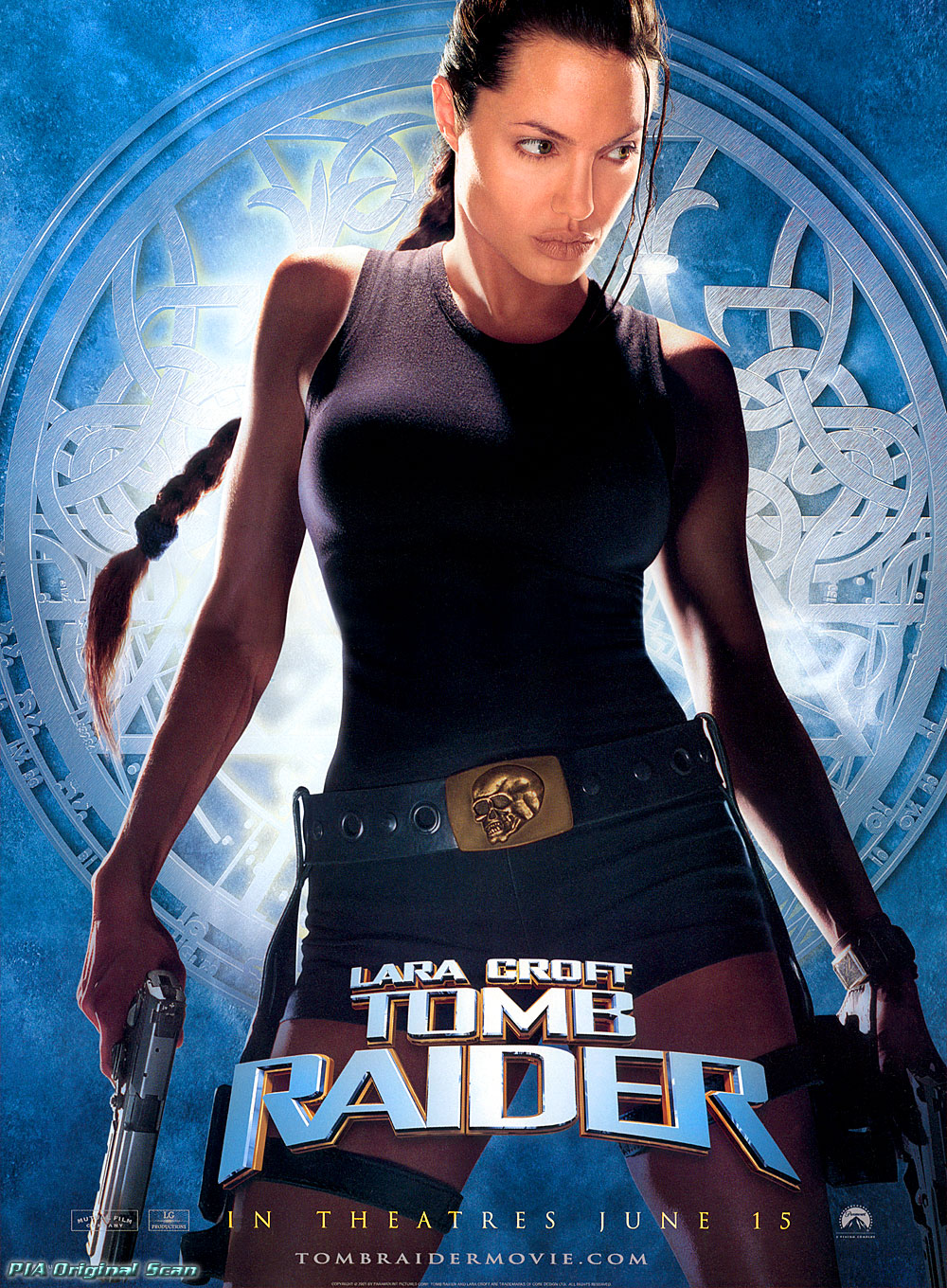
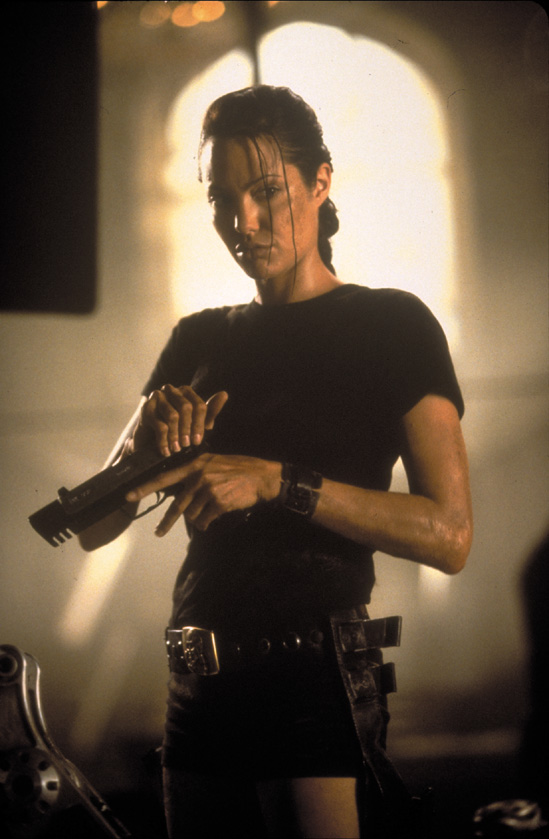
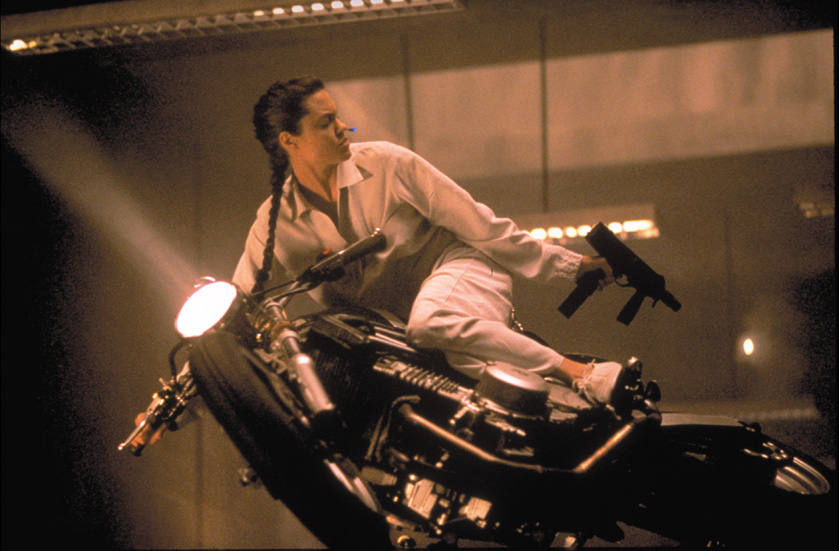
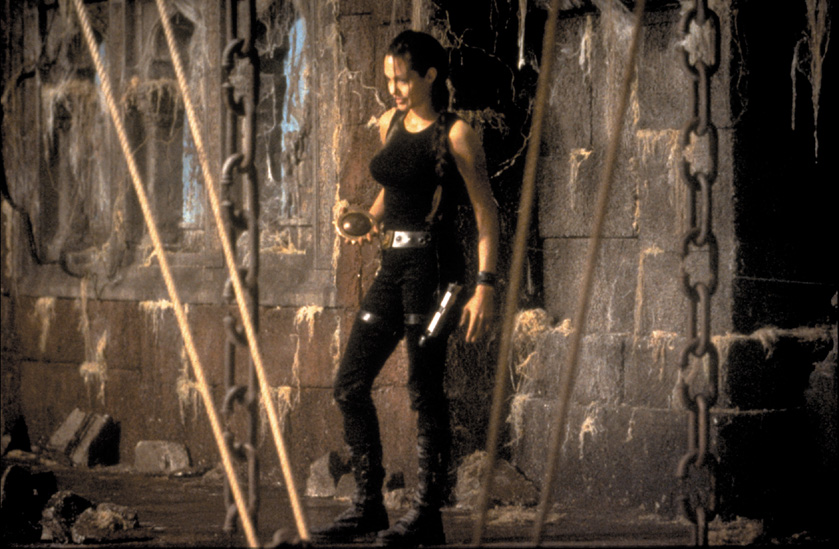
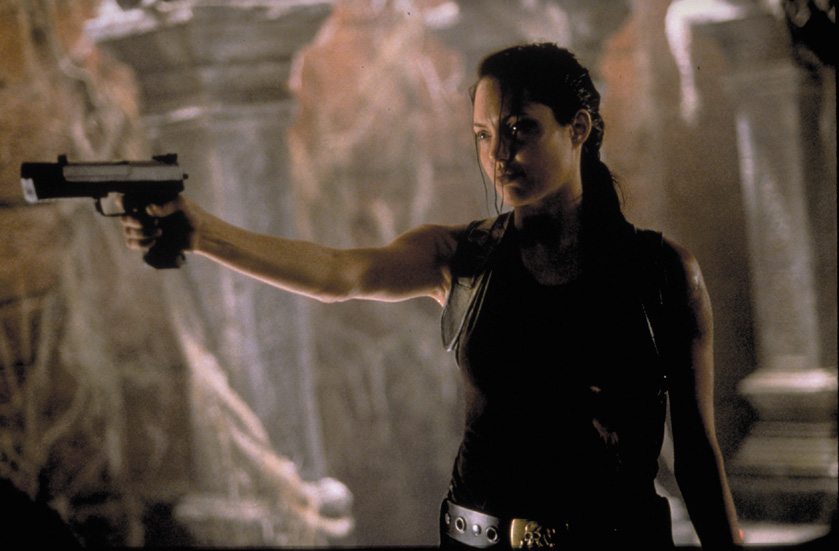
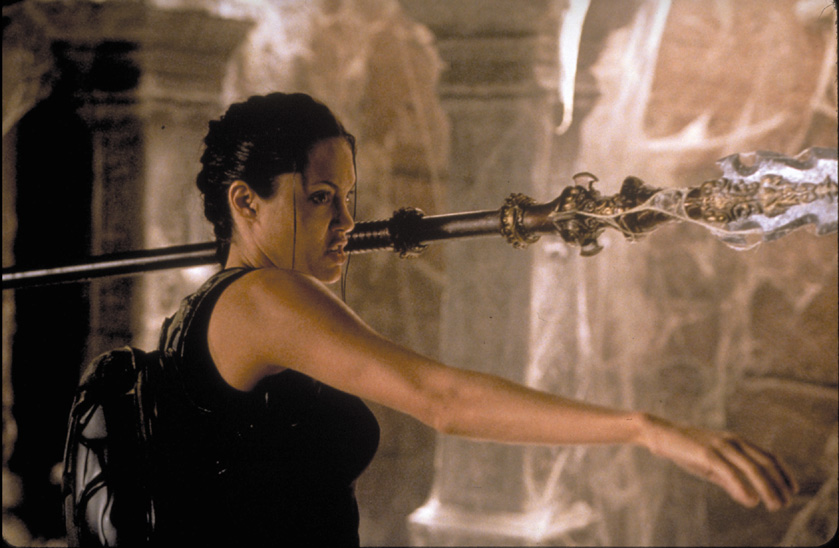
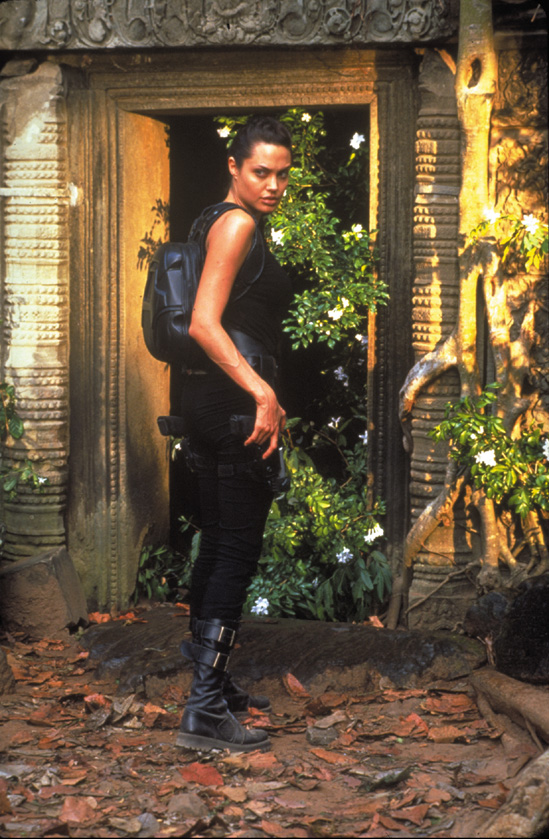
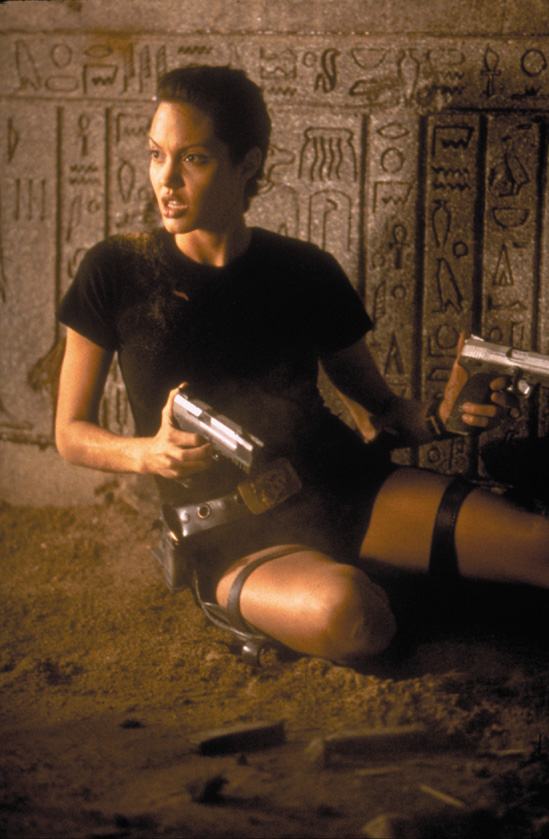
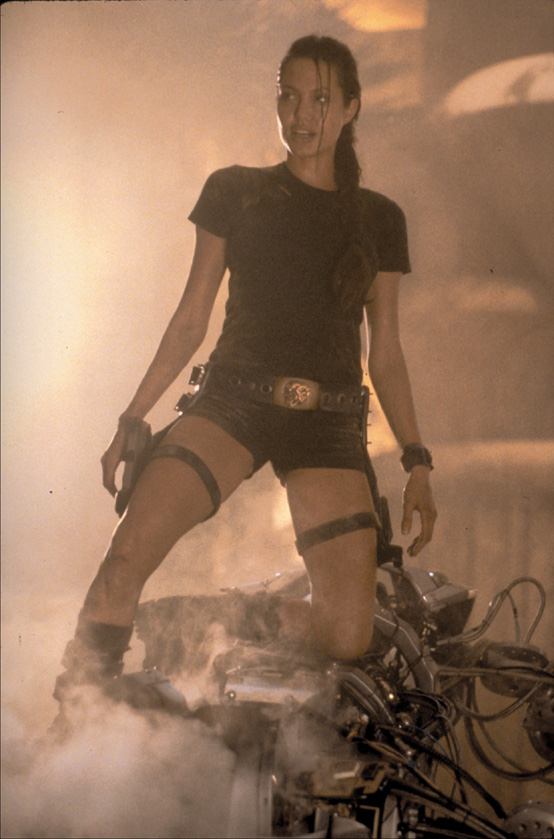
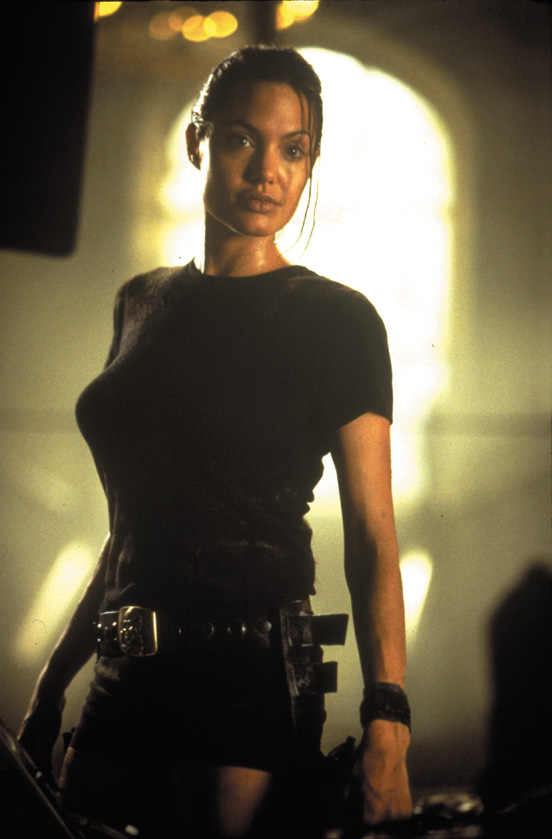
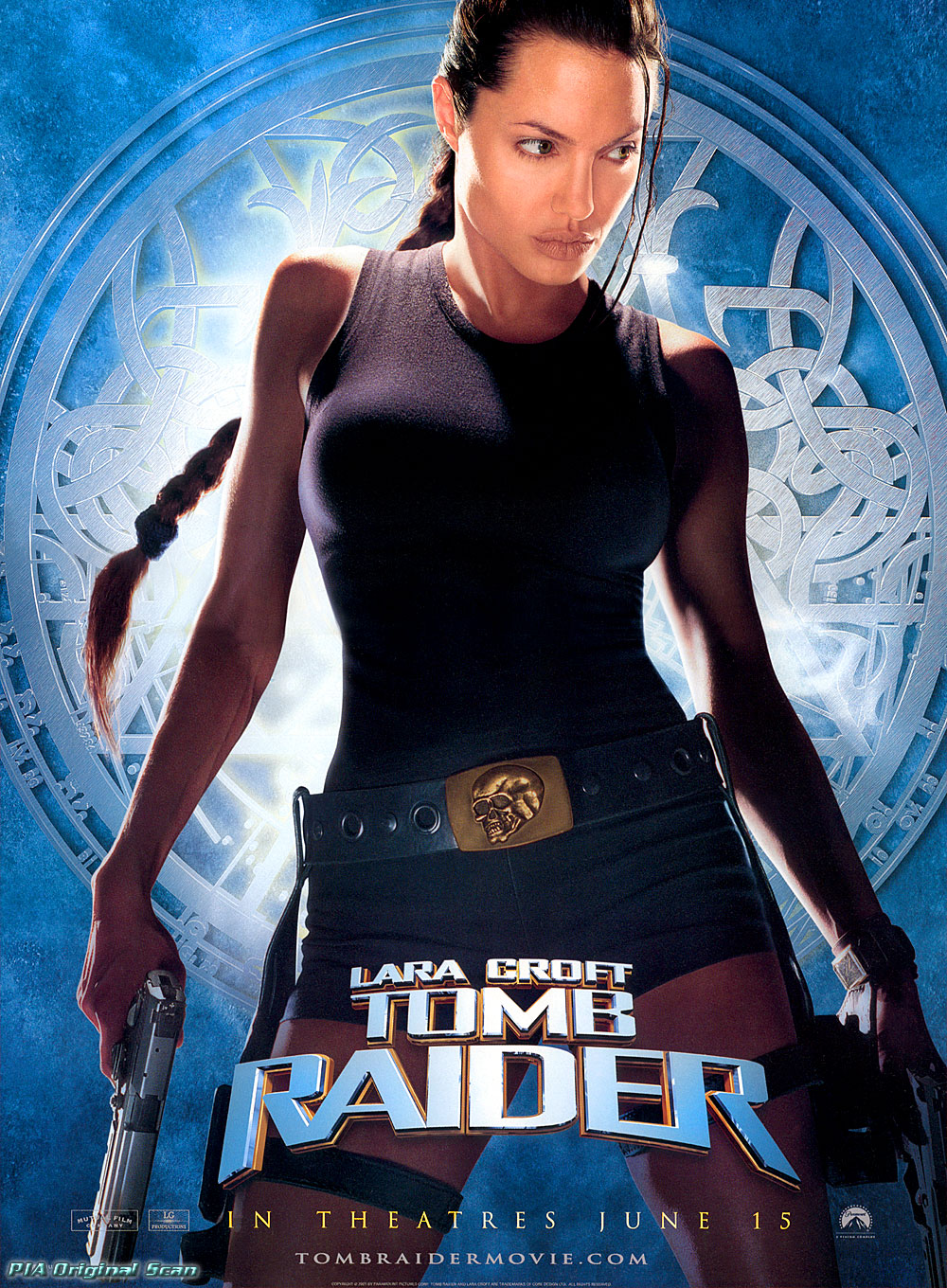
 Few films had as twisted a path to the screen as Tomb Raider. [For a three-part history of some of the rumours since August 1997, see
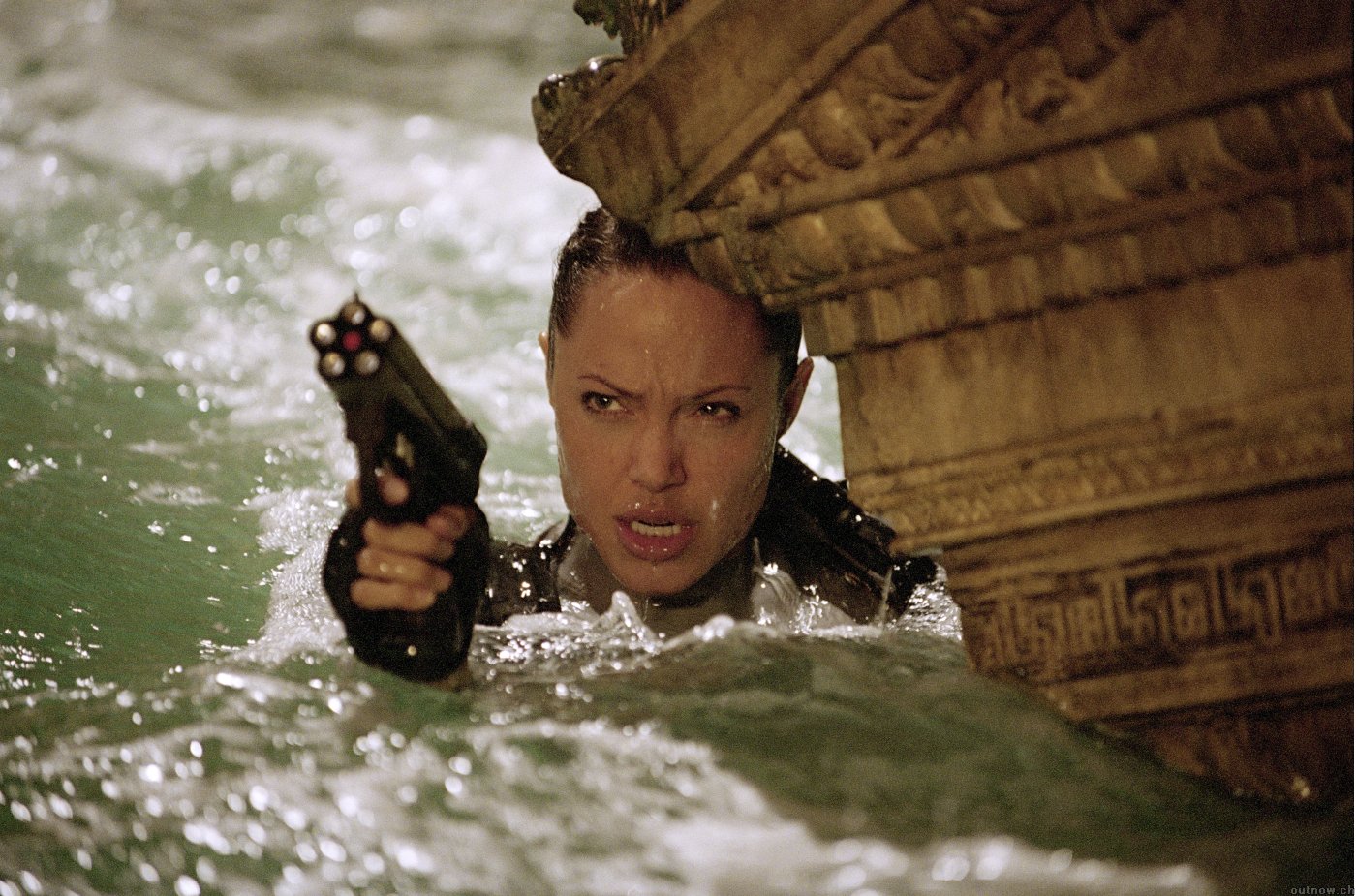
  Once they enter the El Dorado complexes, the script reads like a description of levels from the game, with levers to pull, gaps to jump, tunnels to swim through, and keys to rooms located in other places. It’s hard to see how this could have been brought to the screen without feeling like you were watching someone playing the game. In addition, the trick used to locate an entrance is a painfully direct steal from the textbook of Dr. Jones – as is the massive, rolling boulder that forms one of the traps inside.
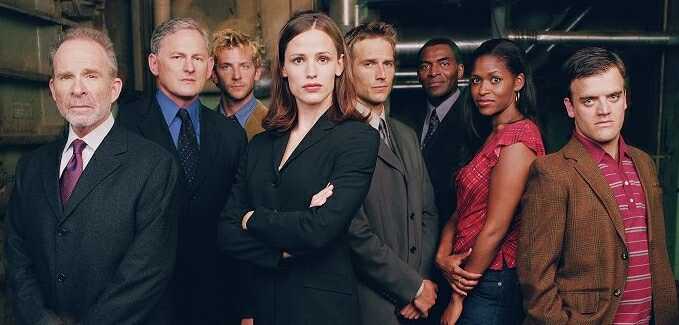
 Much as in the first season, the second series of Witchblade brushed against greatness. Unlike the first, where you can point at the final episode as the key weakness, this time round it is a chronic rather than acute malaise that prevents it from getting the seal of approval. When it was great, it was fabulous – it just seemed that for every full, satisfying episode, there was a lame clunker to compensate. Particularly at the start of the season, there seemed to be precious little imagination on view.
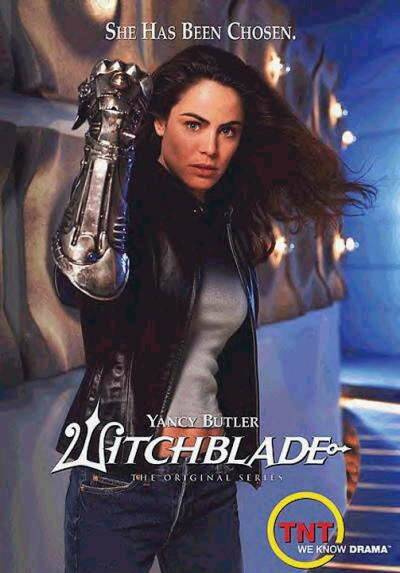 The finale, Ubique, also has to rate highly, for sheer perversity at the very least – Nottingham reaches new levels of creepiness in his final scenes with Lucrezia. Throw in a kicking soundtrack (Lords of Acid!), some spectacular deaths, and we’ll forgive a central plot device teetering curiously close to the main premise of feardotcom, which opened in cinemas the very same week. Among the interesting themes on view are the way both Pezzini and Nottingham both struggle to come to terms with the loss of their fathers, albeit temporarily in the latter’s case. This may be linked to one of the unresolved issues carried forward; who is the guy with wavy grey hair who always seems to be lurking round Sara? Indeed, the whole Nottingham/Pezzini relationship had perhaps more depth than any other in the show; veering between love, hate and obsession, with never a dull moment.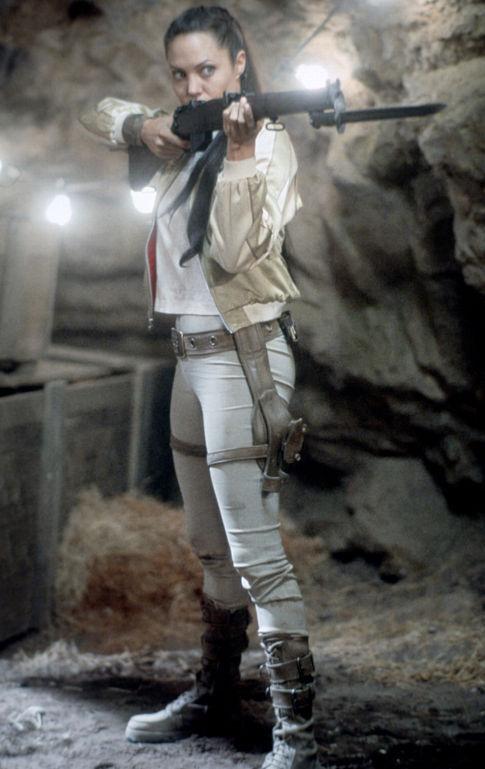

 ★★★½
★★★½ Put simply, having killed of most of the cast (a refreshing change from more cowardly shows, which refuse to let