★★★★

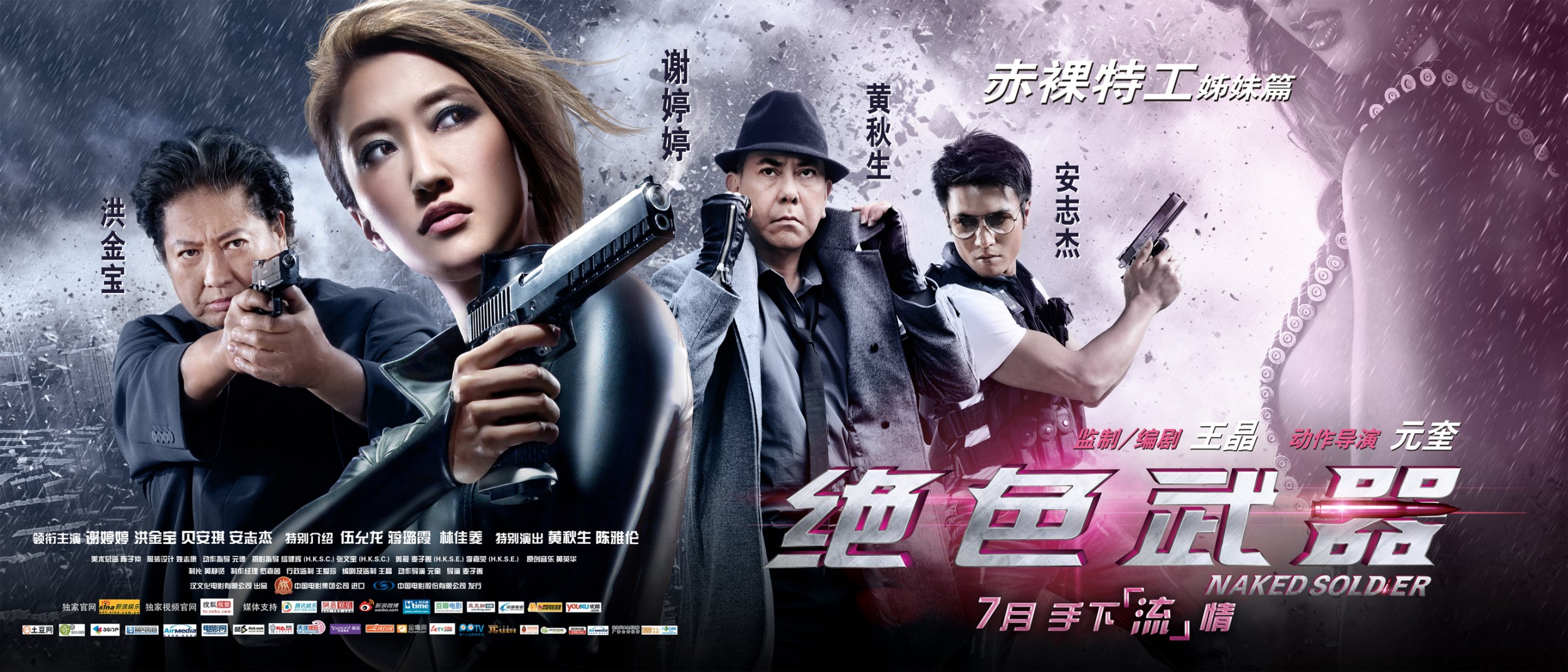
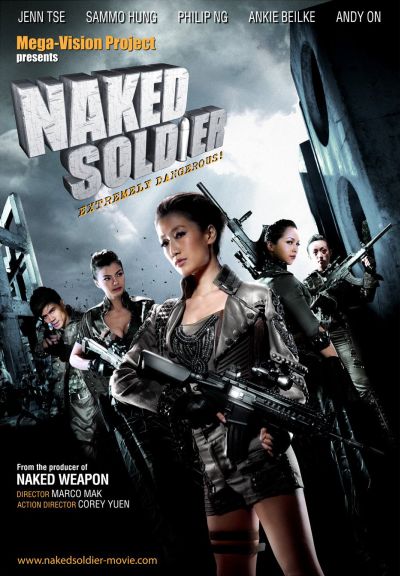 Ten years after Maggie Q got her career as an action heroine kickstarted with Weapon, and twenty after Killer rampaged its way into cult status, Jennifer Tse takes over – bearing more than a passing resemblance to her predecessor, I think. I think it’s kinda cool how the series gets revisited every decade, regular as clockwork: maybe famed producer Wong Jing has a house payment to make or something? Admittedly, there’s not much more than a tangential connection between the entries; three different directors, three different stars, and not much overlap in terms of plot. However, they still share a common approach, fetishising the female form and the act of assassination, with no shortage of style, and are the longest-running (in terms of years) GWG series around.
The story of this third installment opens with a prologue from 15 years ago, when Interpol agent CK Long (Sammo Hung) intercepts a $35 million shipment of drugs. As punishment, its owners unleash Madam Rosa and her killers on him, as he enjoys a nice family Christmas in Florida: most of his relations are killed, Long barely escapes with his life as his house is blown up, but watches as his daugher is whisked away by Rosa, to be brainwashed and trained as one of her army of assassins. Back in the present, Rosa is now sending our her minions to kill the five leaders of a proposed international drugs cartel. Long is assigned to the cases, because of his familiarity with the way Rosa operates, and is startled, to say the least, when DNA testing shows one of the killers appears to be his long-lost daughter. Not as startled as he will be, when she turns up in his apartment, with murder in mind. Naturally, his investigating partner (On) meets Phoenix in her undercover role as a student, and falls in love with her, at a speed only ever seen in movies more concerned about action than relationships.
There’s a lot to enjoy here, not least the presence of Hung, who has always been an under-rated talent in my eyes. He’s pretty damn sprightly for a 60-year old: a step slower perhaps, but there are still moments to treasure here, such as the chopstick duel with his other daughter. He served another important purpose here: for my wife, his early presence legitimized watching a film called Naked Soldier, which I suspect might otherwise have led to some dripping sarcasm – even though she remembered and enjoyed Weapon, and as in its immediate predecessor, the actual nudity in this is confined to the title. There’s another veteran of HK cinema who shows up at the end. While I’ll avoid spoilers, it was someone whom we were equally delighted to see – even though he was single-handedly responsible for putting Chris off Chinese food for a year!
However, these are supporting roles and here, we’re more interested in how Tse and the other ladies acquit themselves. And there are a number on both sides, even if, early on, things do move relatively slowly into gear. Despite token male killer, Black Dragon, Madam Rosa still has her admirable fondness for female assassins, and we see them in action early on as Ivy, Selina (Beilke) and Phoenix carry out their missions in a Vegas hotel, boxing gym and at a funeral respectively. [Selina’s viciousness is quite belied by her final haircut, which appears to have come straight from a Flock of Seagulls fan convention!] One of their targets is an ass-kicking Thai gangsteress, who teams up with a gay Dutch guy against one of the assassins, in a nice handicap brawl at a boutique.
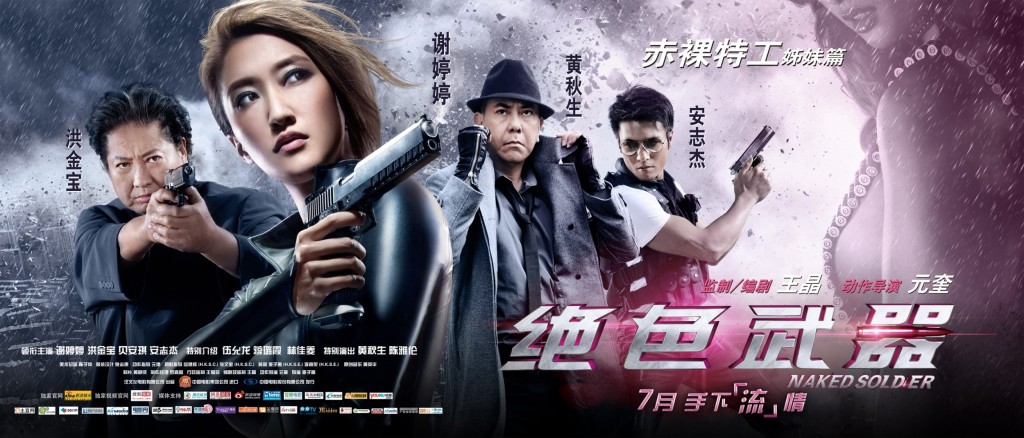 It’s mostly the end, when Long, his daughter and Phoenix head off to Madam Rosa’s island, that things really kick in, as it turns out that betrayal is a two-headed beast. There, we get an excellent series of battles: one-on-one, two-on-one, many-on-one, that mor than make up for the relatively relaxed pace over the first hour or so, and feel like a throwback (not least becauge of Hung’s presence). Corey Yuen does the action: his track record speaks for itself, with solid action heroine entries such as So Close and D.O.A. on his resume, and this would be another. There’s plenty of variety and invention on view, up to and including the climactic battle between Phoenix and her nemesis, on one of the lethal training apparatus in Rosa’s lair.
There are some negatives, not least Long’s daughter, who serves little or no purpose beyond unfunny comedy, and appears to be played by an actress significantly older than she needs to be. And certainly, aspects of this don’t make much sense. For instance, why did Rosa’s efforts at revenge take a sabbatical for 15 years, after having killed everyone but her intended target? Or why are proceedings supposedly set in 1995, when it obviously isn’t 1995, for example, the tech everyone uses? However, there’s nothing a genre fan won’t be able to overlook, and plenty they’ll be able to appreciate, making this a worthy entry in the series: I wouldn’t mind if they skipped the 10-year waiting period for the next entry. Failing that: roll on, 2022!
Dir: Marco Mak
Stars: Jennifer Tse, Sammo Hung, Andy On, Ankie Beilke




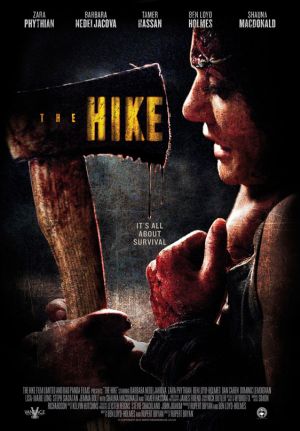 Five young women head out into the country for a camping trip, led by Kate (Phythian), a former soldier who is stil traumatized by seeing her boyfriend killed in front of her while on a mission in the Middle East. She’s about the only member of the party who seems genuinely keen on the trip, and it’s not long before the others start to whine, demanding rest stops, and the hike is curtailed before the intended destination. At least the country is not entirely deserted, though the creepy East European guy and his two women isn’t exactly sociable. But at least there are the three nice guys, out for a spot of rock-climbing, led by Ethan (Loyd Holmes), so there’s always that. And if things end up getting dicey – say, if one of the women vanishes mysteriously, while out gathering firewood, the others can turn to Ethan and his chums for help. Right? Right?
 Having been largely unimpressed by Iguchi’s other work, which seemed to have little to offer except megabytes of digital blood, I likely wouldn’t have watched this except an accident involving beer and my Apple TV remote has stopped me from much of my usual viewing. I could still stream from Netflix, however, though when I saw this was dubbed in English, I almost didn’t bother. But surprisingly, this has easily the best plot of his movies, with a slyly-twisted sense of imagination that’s very effective.
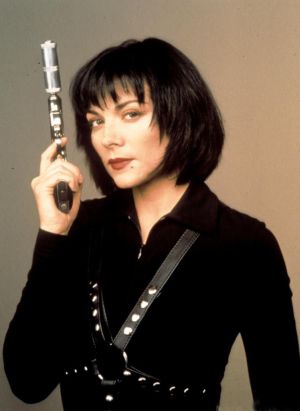 Agent Delilah (Cattrall) is undercover investigating arms dealer Alec Kasharian (Voyagis), and his connection to Palestinian terrorists [this was 1993, when people were concerned about such things]. At the behest of her handler Paul (Zane), she copies a floppy-disk containing vital information [I repeat, this was 1993, when an entire arms dealer’s business would apparently fit on a floppy!], but she’s discovered, shot multiple times, and left for dead. Paul drags her Swiss cheese-like body back to a secret government lab, where she is repaired, upgraded and generally enhanced in terms of speed, power and other abilities.
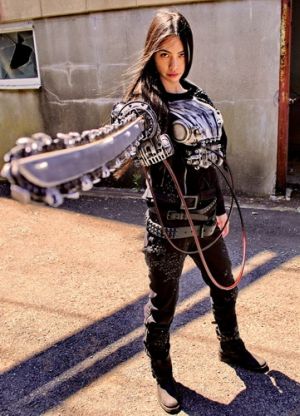 I think I am officially over the whole Japanese uber-splatter thing. Either that, or I just don’t like Nishimura’s approach. He has been behind the last couple of examples I’ve seen (this and Tokyo Gore Police) and neither have reached the heights of te better genre entries. At 117 minutes, this is even more overlong than TGP and, to be blunt, I fell asleep before the end. Oh, there’s no lack of stuff going on, as we’ll shortly see, and certainly no shortage of arterial spray. However, neither of them make any significant impression, on either the emotional or visceral levels.
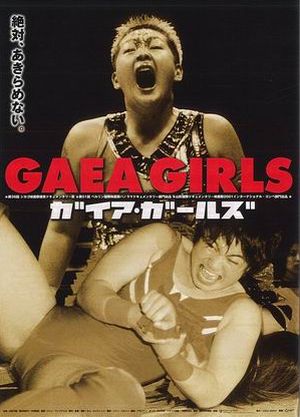 Out in the middle of the Japanese countryside is a square, unremarkable building that is the headquarters and training center for GAEA, one of the country’s leading women’s wrestling federations. Into this comes Takeuchi, making her second attempt to become a pro wrestler – the brutal training, under the glare of GAEA’s top wrestler Nagaua, caused her to give up last time. Will her second attempt prove any more successful? Can she get through to the final exam, and pass it to become a full member of GAEA?
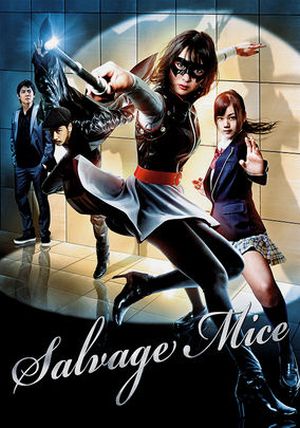 Mai (Tanimura) and her partner (Sato) form a team – the titular rodents – who recover art and artifacts, and return them to their “rightful” owners – quotes used advisedly, it’s vague on the details. However, Mai is betrayed, and framed for the robberies actually being committed by the gang operating under the Evil Western Dude (Heselton, who was also the main villain in Karate Girl). Mai encounters Mio (Nagano), part of ‘Hiroshima Cleans’, a group of volunteers who help keep the city tidy. Initially, Mio thinks Mai is the villain, but is eventually convinced that the real bad guy is elsewhere, and the pair team up to take on the villains, including both Mai’s ex and Evil Western Dude.
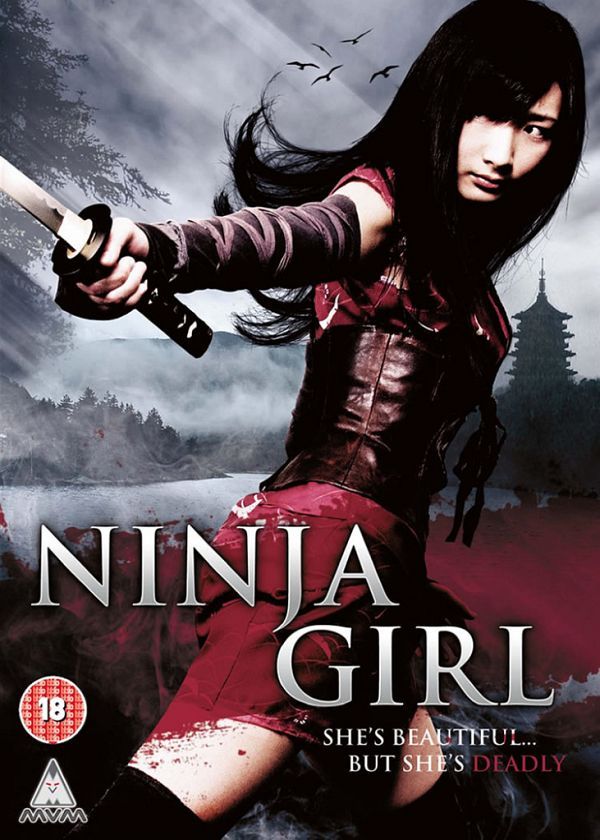 From the director of Alien vs. Ninja, the story here centres on a pair of ninjas, Shimotsuki and Hyotsuki, who are carrying on what appears to be a family tradition, kidnapping women from other clans’ villages, and taking them back to their own for nefarious purposes – let’s just say, the phrase “tools of pleasure” crops up on more than one occasion. They ar returning with their latest batch of four, including Kisaragi (Takeda), who is a ninja in her own right. With the help of a mysterious man (Sato), Kisuragi and her colleagues in imprisonment are released from their bondage – but that is only the first obstacle between them and their freedom. Of course, it turns out the heroine is not quite as innocent as she appears, and has an agenda of her own, because her mother was kidnapped by the same sleazy ninjas, when Kisuragi was just a baby.
 There seem to have been a spate of these recently. Not just zombie flicks – though there’s been no shortage of those – but zombie flicks set in or around strip clubs. This is the Japanese take, and follows more or less the expected pattern of such things, combining nudity, violence and self-awareness in varying degrees. At least initially, this is definitely leaning towards a 70’s, grindhouse aesthetic, but after a few minutes, that aspect vanishes, and never really returns. Instead, it’s a fairly straight-forward tale of a motley crew of stereotypical strippers, e.g. the money-hungry one, the intellectual one (who quotes George Bataille), who work at a pretty crap club in a spa town, but who find a tunnel leading across the street, which brings them to a book of dark magic and a well containing an apparently infinite supply of zombies.