



★★★★½
“Pre-school superheroines kick serious tongue-in-cheek butt.”

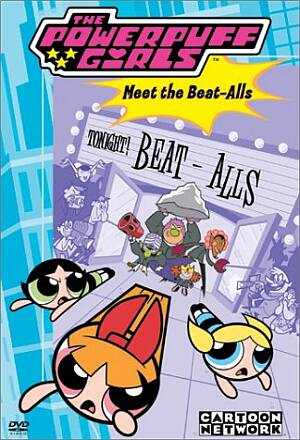 This sprang virtually fully-formed from the twisted mind of McCracken back in 1992, as a student film: even then, he intended it as a series, with most the characters, both heroines and villains, already present. The main change was to the title, the Cartoon Network balking at presenting a show called The Whoop-Ass Girls, and so the “can of whoop-ass” which was originally part of their make-up, was replaced by Chemical X.
The heroines number three: Blossom, Bubbles and Buttercup, attendees at Pokey Oaks Kindergarten who just happen to have amazing superpowers – flying, laser-eye beams, incredible strength, you know the sort of thing. Each episode sees them take on a monster which threatens to destroy their home city of Townsville, or a diabolical plot by the likes of Mojo Jojo, super-intelligent simian who is perhaps their most common foe. There’s never any doubt over the outcome; the PPGs will win, and (no matter what the title says) there will be large quantities of animated whoop-ass.
Yet despite this predictability in the plot, the series continues to amaze and delight, with great characters on both sides of the law, fantastic imagination, and fabulous lines like, “The Bubbles you know is dead – I’m HARDCORE now…”. Plus there’s a whole series of riffs on pop-culture – what cartoon show would do a shot-for-shot remake of a scene from The Big Lebowski…just because? It also manages to be moral without being overly preachy, and has retained its sense of the absurd throughout. If there’s a weakness, it’s the same as any episodic show: some eps work better than others, and there are certainly dull moments. But when on-form – which is more often than not – there isn’t a more enjoyable 22 minutes of television to be seen.
Creator: Craig McCracken
Star: Cathy Cavadini, Tara Strong, E.G.Daily, Roger L. Jackson
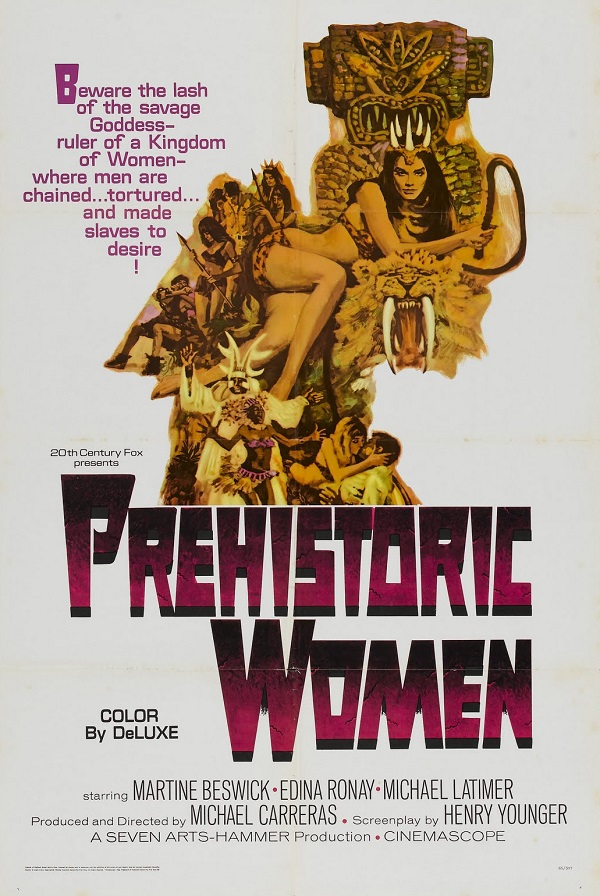
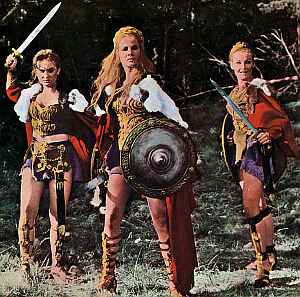 Hammer were best known for their horror movies, but tried virtually every genre save Westerns at one time or another. This Roman “epic” is loosely based on the life of Boadicea, who led a revolt against the Romans in the first century A.D. They get the name of her tribe right (the Iceni), and some basic facts, such as her suicide after capture, but change her name to Salina and sprinkle in some wild inaccuracies. Despite the title, there are no actual Vikings to be found, and we also get the Druids worshipping Zeus, a Greek god!
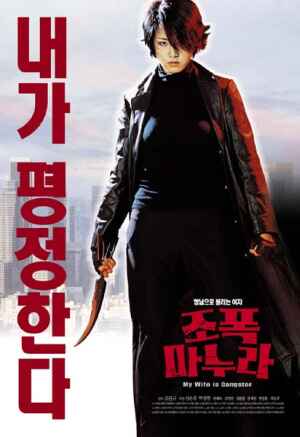 Another slightly clunky Korean title (see also Guns & Talks), but the first forty minutes or so of this are about the driest comedy/action you could ever hope to see. In order to fulfill the wish of her terminally-ill sister, mob boss Eu-jin (Shin), or “Mantis” as she is known, decides she to get married. Of course, she needs an especially stupid husband who won’t realise her true occupation, and finds one in Soo-il (Park), a civil servant with a 0% success rate on his blind dates. Their courtship, pre-nuptials and wedding (the last interrupted by a rival gang – a “martial arts demonstration”, as a fast-thinking sidekick calls it) are executed perfectly, largely thanks to Shin and her expressions of shock and horror at the mating game.
 “It was a nightmare to shoot: the producer and director were constantly fighting… It was completely unorganised. Alexis [Denisof] was also in it and he and I would go into each other’s trailers and go, “We’ve made a huge mistake, this is the worst thing ever!” It just went terribly, terribly wrong.” So says Hannigan: wouldn’t say it was
 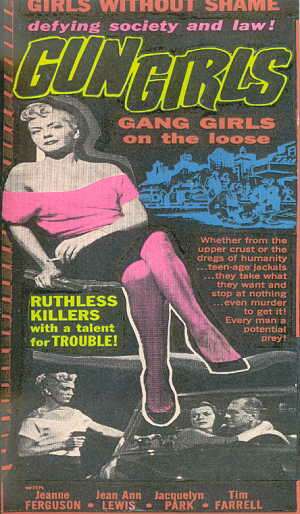 Based on the director’s novel, Girls on Parole, this prime slice of Juvenile Delinquent nonsense remains endlessly fascinating for students of “bad” movies, not least for its schizophrenic approach. It manages to combine moralistic doctrine – most notably from a parole officer who speaks Entirely In Headlines – and exploitation, with the heroines stripping down to their foundation garments (hey, this was 1956, whaddya expect?) about every ten minutes.
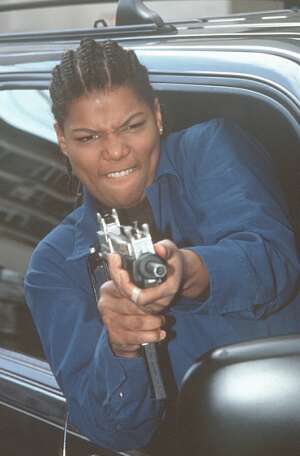 After a couple of less-than-perfect entries in the ‘robbery girls’ subgenre, this came as a refreshing blast, with decent characterisation and a storyline that goes past the painfully obvious. Mind you, the moral remains the same – crime doesn’t pay – but at least the road taken to get there is interesting and complex. These women all have their own reasons for wanting to rob banks: getting back at society for perceived injustice, supporting a child, or simply for kicks. Interestingly, you can see both their point of view and society’s, the latter most clearly in a surprisingly sympathetic cop, Strode (John C. McGinley). The results are more a product of tragic circumstance than anything else.
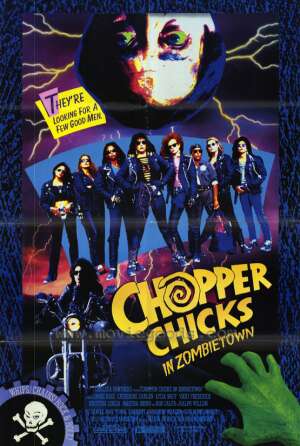 The Cycle Sluts motorcycle gang roar into town, to the consternation and distaste of locals, who drive them off. This decision is regretted soon afterwards, when they come under siege from the walking dead, raised to work in the local mine – a plot stolen from Hammer’s Plague of the Zombies – by the local mortician (Calfa) and his midget assistant. Luckily, the girls are still near, and can assist the townsfolk, including Billy Bob Thornton, who plays a redneck hick, proving it’s possible to be stereotyped
 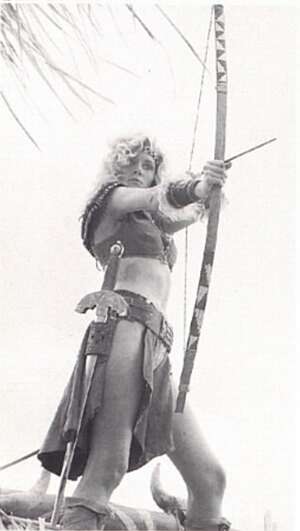 With the untimely death of Lana Clarkson (legal advisers suggested we not use “murder by a crazed record producer”), this takes on a certain poignant quality, especially when she uses lines like, “I’ll be no man’s slave and no man’s whore.” Clarkson pioneered sword-swinging feminism well before Xena, and while no-one is going to mistake this for high art, it gallops along at a fine pace – lasting barely 70 minutes, it could hardly do otherwise.