




★★★½
“When a fire burns itself out, all you have left is ashes.”
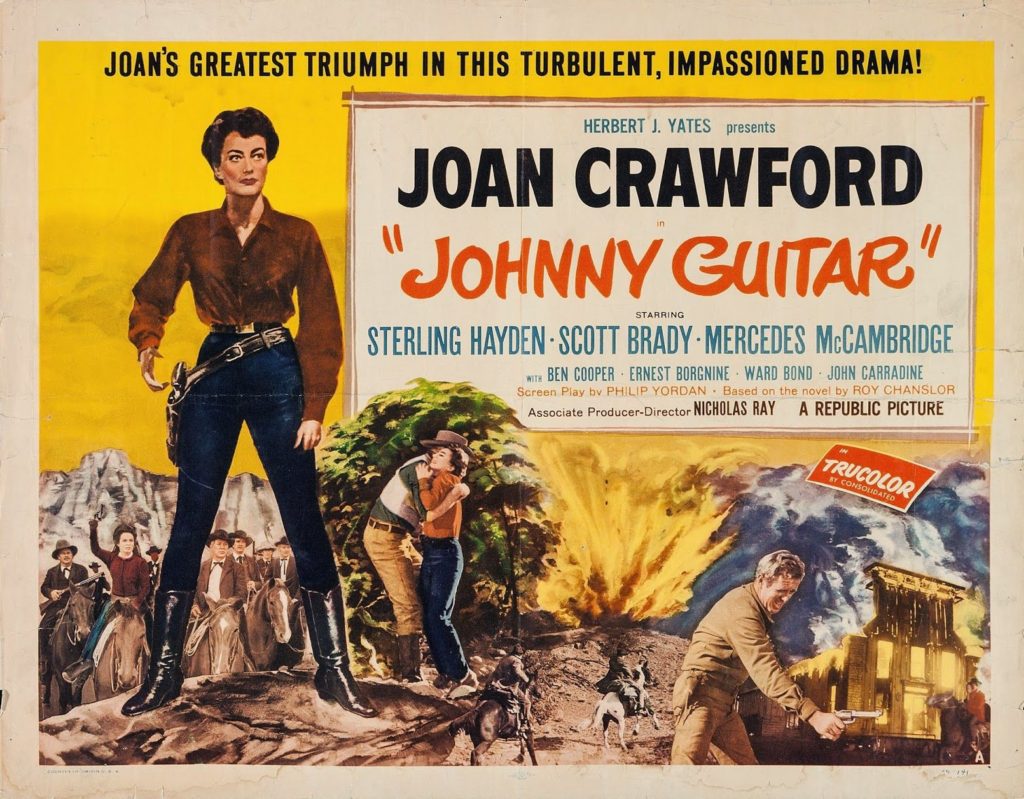
 Despite the male-oriented title, there’s no doubt who the star is: Vienna (Crawford), a former saloon girl who has clawed her way up to owning her own place, on the outskirts of an Arizona mining town. She has inside knowledge of the route the railroad is going to take, and chose her location with that in mind. But there’s stiff local opposition, from those who don’t want the railroad, or who object to her allowing the Dancing Kid (Brady) and his gang, suspects in a stagecoach robbery, to frequent her establishment. Leading those with a dim view of Vienna, is Emma Small (McCambridge), whose brother was killed in the robbery.
Vienna hires her former lover, who goes by the name of “Johnny Guitar” (Hayden) as security, only to be given 24 hours to get out of town by Emma and the disgruntled townsfolk. Matters aren’t helped when the Dancing Kid and his crew raid a local bank. A posse sets out to track them down, and Emma convinces the town-folk that Vienna – unfortunately in the bank at that point – was complicit in the Kid’s crime. The presence of Turkey, a wounded member of the gang who is hiding out in the saloon, doesn’t improve Vienna’s situation.
Crawford is magnificent, utterly commanding the screen with a blistering performance, despite off-screen issues between Crawford and other cast members – a situation not helped by McCambridge’s alcoholism at the time. But she wasn’t alone, Hayden infamously saying afterward, “There is not enough money in Hollywood to lure me into making another picture with Joan Crawford. And I like money.” However, it could perhaps have been worse: the director originally wanted Bette Davis for the role of Emma, but couldn’t afford her. Given subsequent events when Davis and Crawford starred together in What Ever Happened to Baby Jane?, Ray probably dodged a bullet.
Made in 1954, this is a not very disguised parable about McCarthyism and mob psychology: credited writer Philip Yordan often lent his name out to blacklisted colleagues, reportedly Ben Maddow in this case. For example, the Dancing Kid is innocent of the crime of which he’s accused, and driven to commit one as a result – he needs funds to get out of town and escape the lynch-mob. But it’s the scene where Turkey is interrogated by the mob and forced to implicate Vienna, which is the most obvious jab at the then-contemporary political situation. Perhaps the resistance to the railroad is also a metaphor for reactionary conservatism?
This is all largely secondary in terms of modern entertainment, especially when you can watch Vienna spitting out lines like, “Down there I sell whiskey and cards. All you can buy up these stairs is a bullet in the head. Now, which do you want?” In less confident hands, these could easily seem cheesy: in Crawford’s, they become an entirely credible threat. Vienna is a rare character, not only for the genre or the era, but also for her age. The tired veteran gunfighter who simply wants a peaceful life is a common Western trope; it’s just rarely if ever a middle-aged woman. Crawford was 49 at the time of its release, and there’s little or no attempt to play her as younger.
She’s so good, everyone else pales in comparison – and that’s a cast which includes the likes of Ernest Borgnine and John Carradine. Hayden and, particularly, Brady come over as bland, and their subplots are nowhere near as interesting. It’s possible they may simply have been necessary for the fifties, which could have been more than slightly unwilling to tolerate a film with a gun-toting fallen woman as the heroine. As she says, in another great speech, “A man can lie, steal and even kill. But as long as he hangs on to his pride, he’s still a man. All a woman has to do is slip – once. And she’s a tramp!” Tramp or not, she’s still capable of being the most fascinating character in a compelling tale which has, largely, stood the test of time well.
Dir: Nicholas Ray
Star: Joan Crawford, Sterling Hayden, Mercedes McCambridge, Scott Brady
 If you think children are of one mind with regard to the gun debate, thanks to the zealots of Marjory Stoneman, the alternative view portrayed by this movie will feel amazingly transgressive and almost alien. The world it depicts is one where schools will actually teach kids how to use guns safely, handing out gun permits, and a teenage girl can receive a treasured family heirloom, in the shape of a .30-30 rifle, passed down the generations. Hunting is a way of life, and an important resource, with a particularly strong matriarchal tradition, in which three generations of women will be going into the woods together. For 12-year-old Florence (Abas), it’ll be her first excursion: in a not-too-subtle parallel, she also gets her first period.
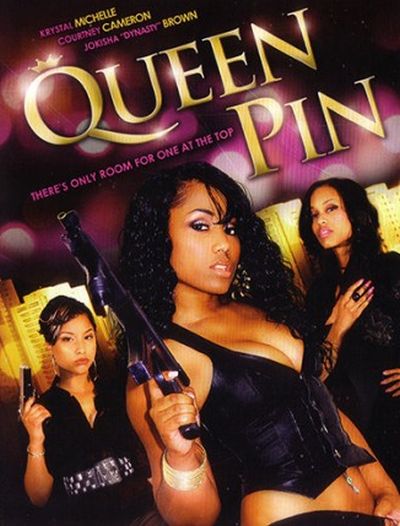 Rhanni (Brown) falls for the notorious Florida drug-dealer Seven (Bird) hard – to the extent she’s prepared to overlook the fact he’s married. Instead, she becomes his best friend, and works alongside him in the pharmaceutical business. When he is gunned down by his rivals, Rhanni decides to take what she has learned and put it into practice. She assembles her team of loyal but brutal associates, and sets out to take over the town. This brings her unwanted attention from two groups. Firstly, the authorities, who are always seeking to snare one of her underlings, and get him to snitch on his boss. More lethally, there’s the mysterious “Genie”, the current top dog, whose face no-one has seen. Genie sends Lil’ Miller (Michele) to take out Rhanni, only for the hitwoman to throw her lot in with the intended target.
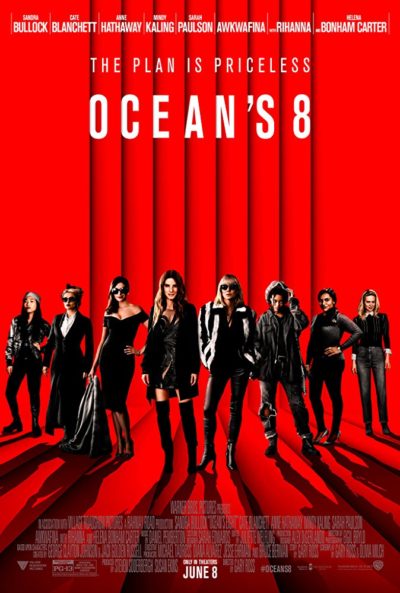 I have not seen any of the entries on the male side of the Ocean’s franchise, so can’t say how this compares. Maybe it would have helped – I sense there were efforts to tie them together, with a pic of George Clooney (whom I assume played the late brother of Bullock’s character). Maybe it would have hindered – even with my ignorance of the series, the heist movie we get here seems more than slightly familiar. The obvious touchstone here is the gender reversal of Ghostbusters, though while that was a reboot of the franchise, this is just another entry. Female-led, to be sure, but part of the universe, rather than writing over it. Perhaps that explains why this didn’t receive a fraction of the backlash; the lack of any significant, pre-existing rabid Ocean’s fanbase is perhaps also a factor.
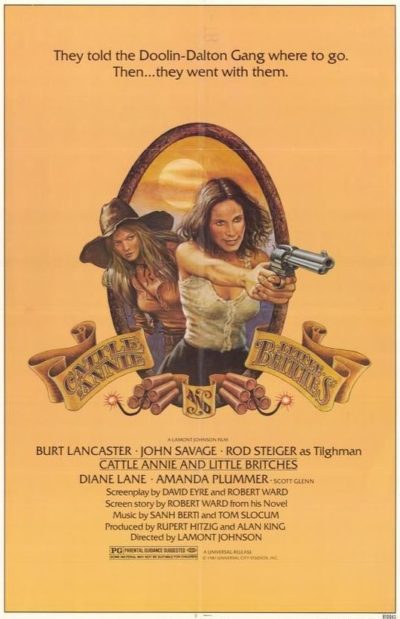 For example, rather than being born and brought up in Oklahoma, the duo are portrayed as making their way out to California to seek their fortune, when they’re forcibly detoured to Guthrie, OK, There, they encounter Bill Doolin (Lancaster) when he and his gang visit the town. Annie falls for gang member Bittercreek Newcomb (John Savage) and they end up being taken by him to the gang’s hideout. Their knowledge of the Doolin Gang is entirely based on the embellished stories they’ve heard about them, and they’re disappointing to find reality comes up short.
 McCarthy appears to be Feig’s muse, having starred in his last four movies, from Bridesmaids through this, and then on to
 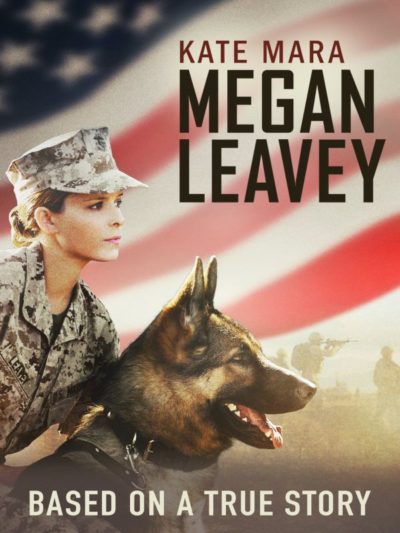 The crossing of war and animal genres of film isn’t one with much precedent, and you can see why: it would be difficult to balance those disparate elements. While this does a laudable effort, and manages to avoid sliding too far into the slippery road of sentimentality, it offers few surprises, even if you don’t know the true story on which it’s based.
 It would, certainly, be easy to look at the poverty-row production values here, and dismiss this contemptuously as a bad film. I mean, the very first shot supposedly sets the scene at the infamous New England house in 1892, where Lizzie Borden took an axe and gave her mother forty whacks. But
  This feels like a low-budget project in many ways, but manages to punch above its weight, in part due to an impressive supporting cast. While Lou Diamond Phillips, Danny Trejo and Steven Bauer are nowhere near as important as their names on the cover might suggest, their presence provide a solid foundation on which the less well-known members of the cast can build. In particular, Danay García as Loca; having bailed on Fear the Walking Dead after about two episodes, I wasn’t aware of her, but on the basis of this, she’s a name on whom we’ll be keeping an eye.
 An initial twist on the zombie apocalypse and an appealing heroine aren’t enough to save this. By the end, while said heroine has transformed into a mayhem-dealing machine, any fresh elements have been discarded, for a low-budget rehash of ones which we’ve seen far too often already. It starts intriguingly, with Kirby Lane (Moore) “ambushed” by a woman in a camper with a sick man at a gas station, while on the way to meet her boyfriend (Cushing). When her car breaks down in the middle of absolutely nowhere, the only connection to the outside world is Max (Howell), the agent for her on-board emergency help provider. But things in the outside world are deteriorating rapidly, and the tow-truck Max dispatches… well, let’s just say, it might be a while. Meanwhile, Kirby has to handle the perils which threaten her, including humans both infected and cannibalistic, as she tries to fulfill her promise to link up with Max.