




 ★★★★½
★★★★½
“Suckers for punishment?”
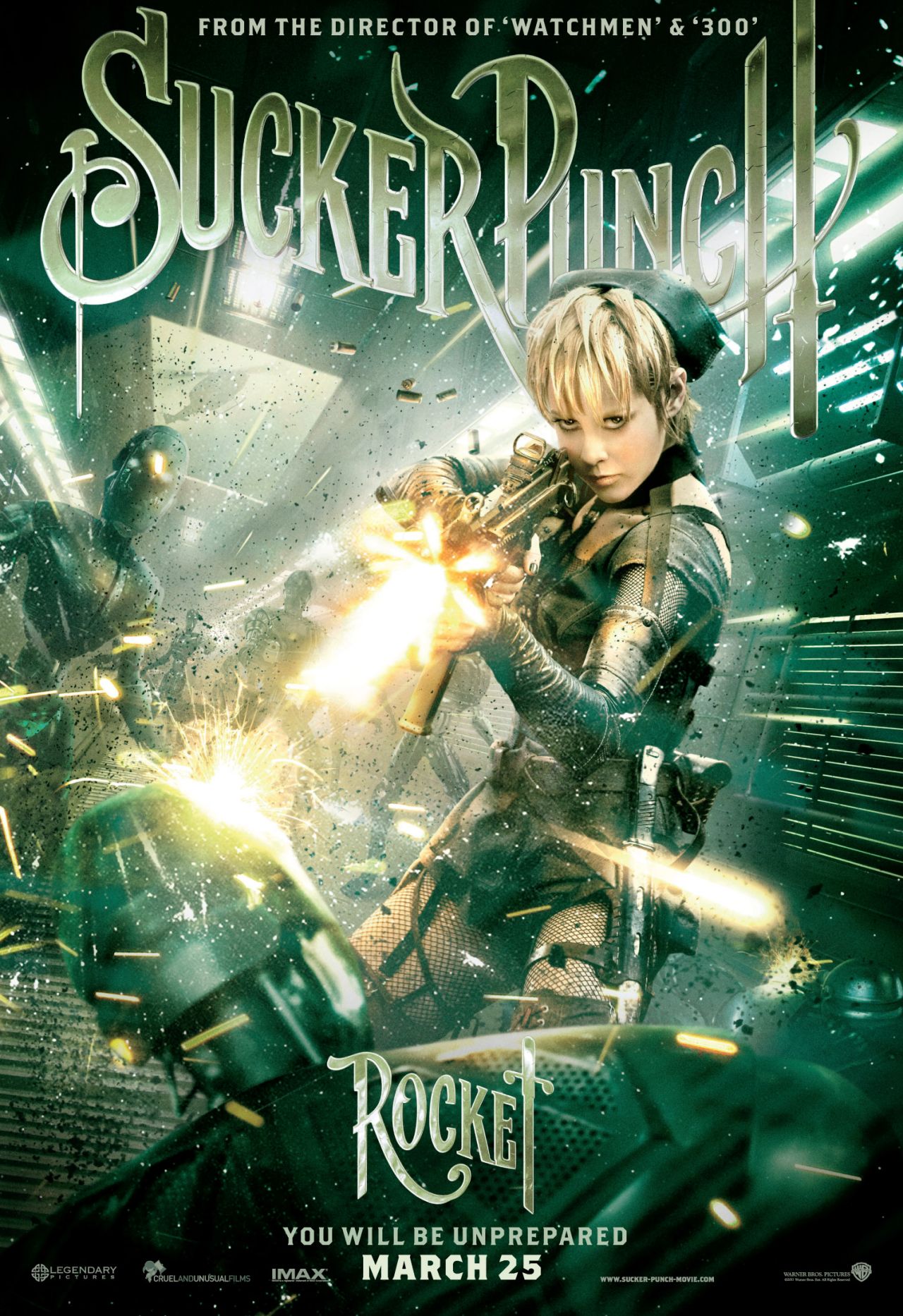
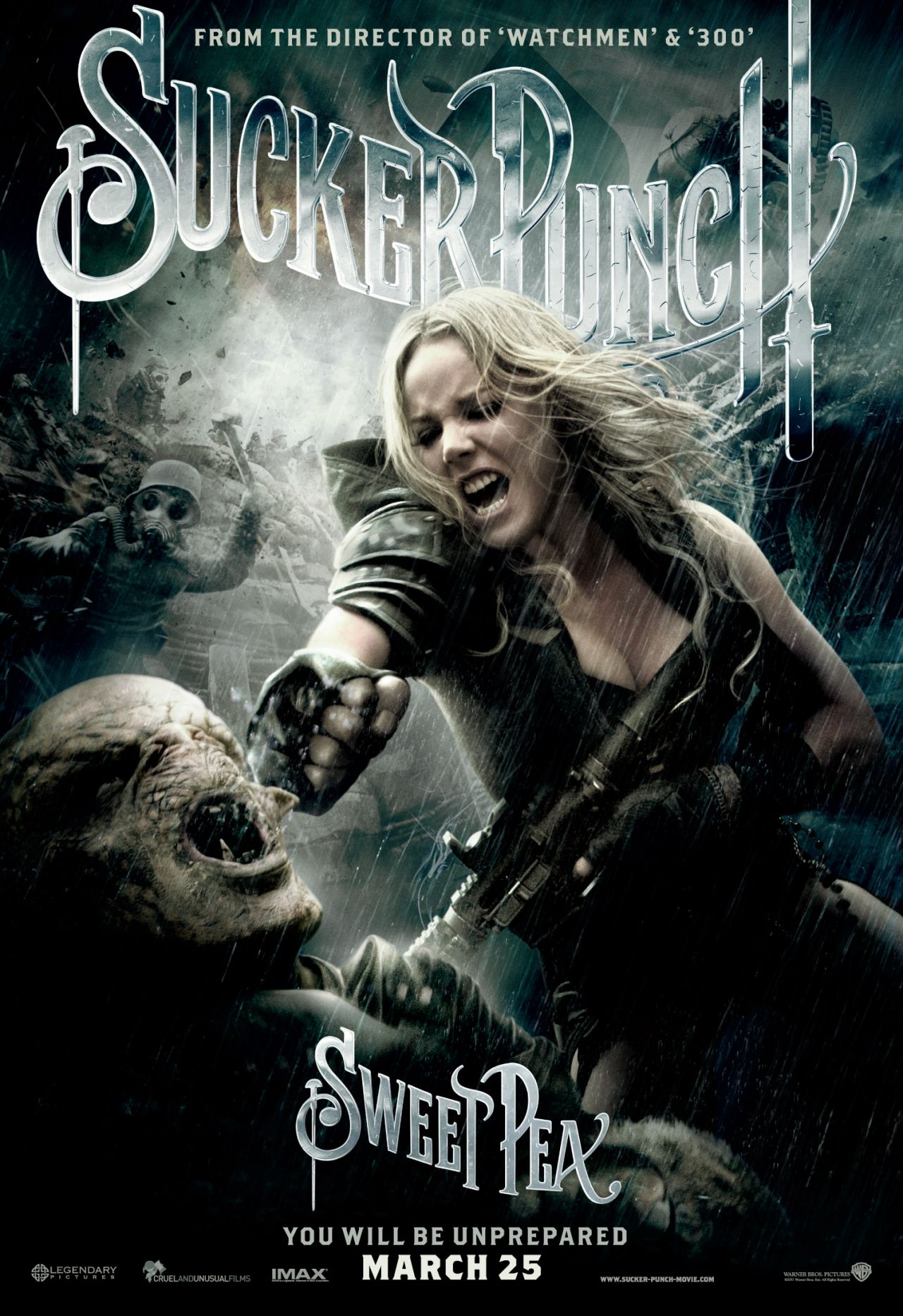
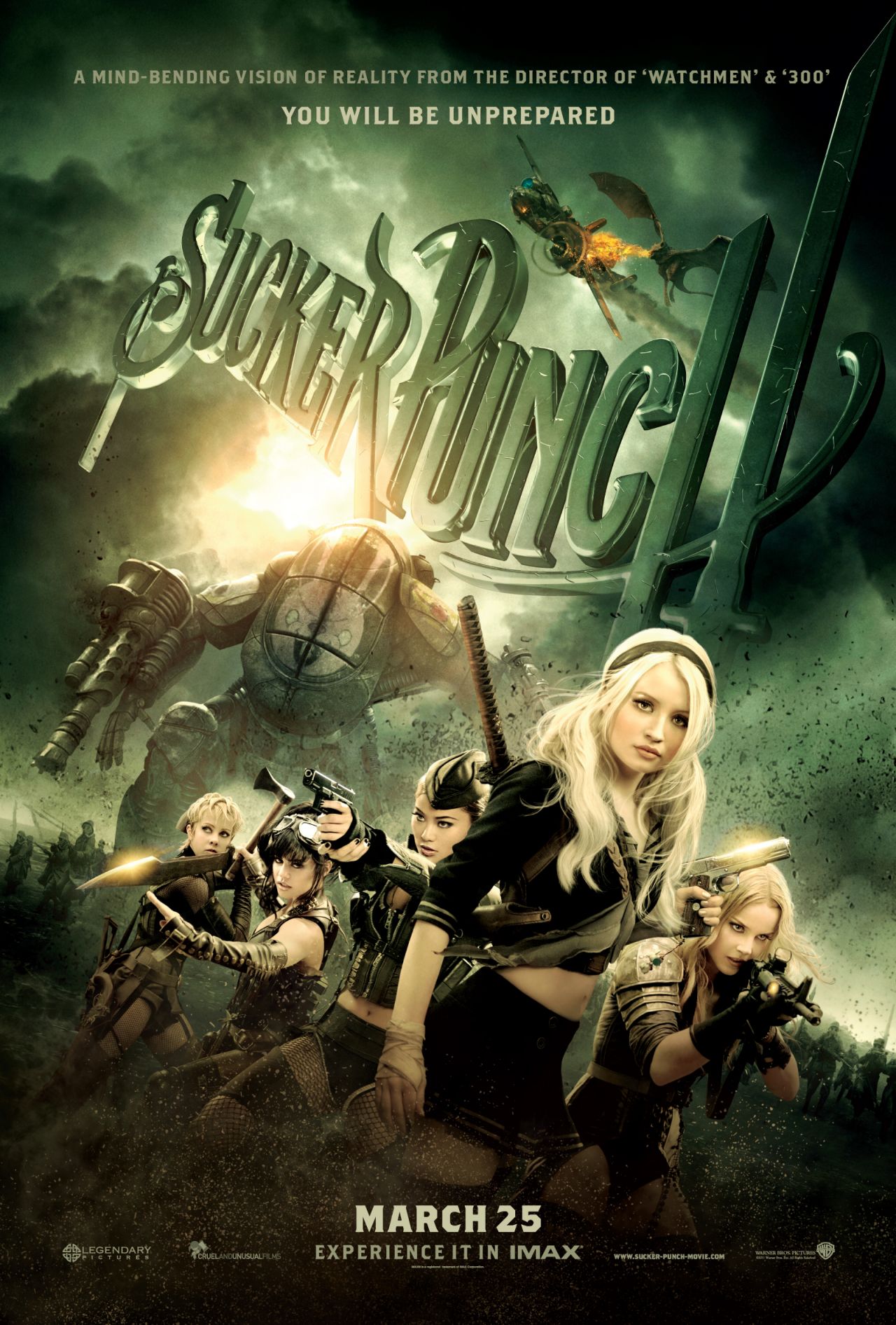
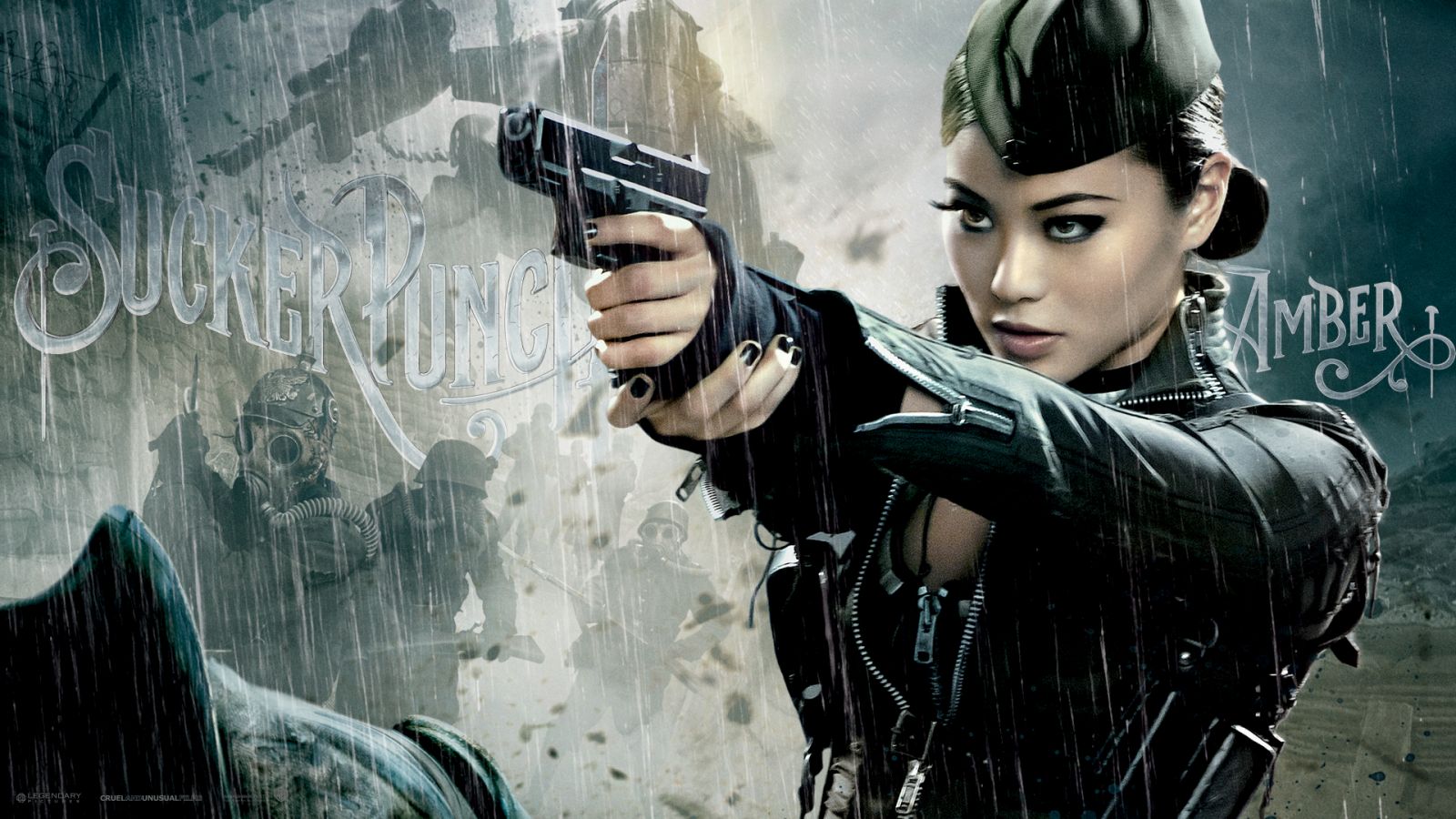
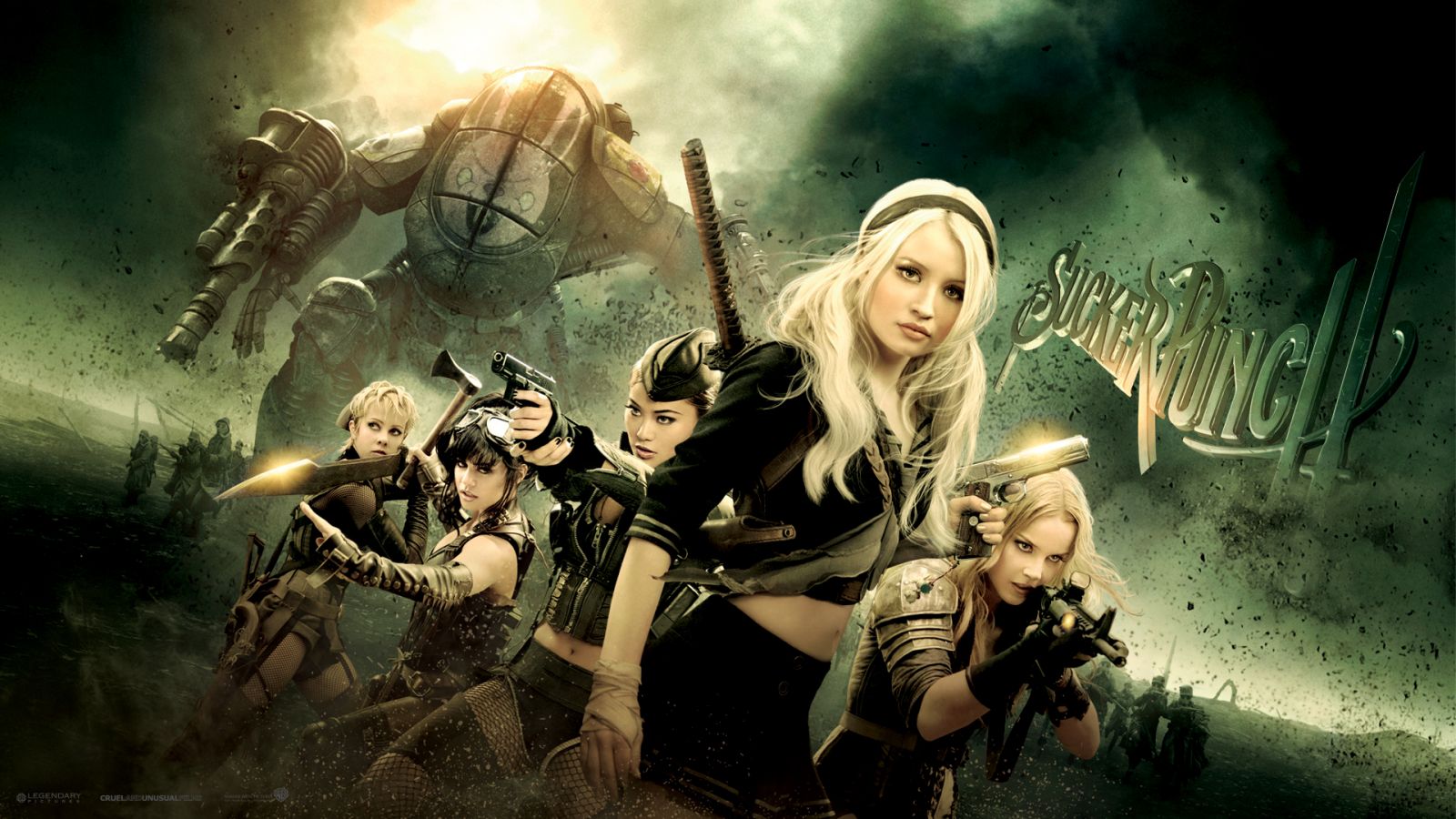
 Before getting to the film, what’s perhaps even more interesting is the critical reaction: it has been a long time since I’ve seen a film provoke such savagery, e.g. the Chicago Tribune’s Michael Phillips, who wrote: “The film abdicates so many basic responsibilities of coherent storytelling, even coherent stupid-action-movie storytelling, director/co-writer/co-producer Zack Snyder must have known in preproduction that his greasy collection of near-rape fantasies and violent revenge scenarios disguised as a female-empowerment fairy tale wasn’t going to satisfy anyone but himself.” Ouch. That’s far from the only example, and covers the common planks used to whack Snyder: incoherence, faux-feminism and dubious sexual politics.
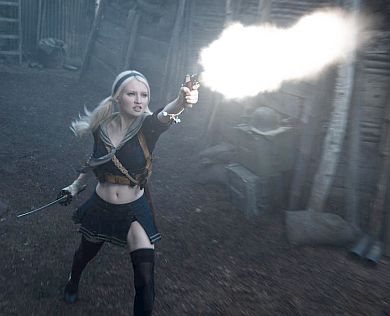 There’s not even any genre love lost. Joe Wright, director of the somewhat similarly-themed Hanna, which came out two weeks after Sucker, tore into it: “I probably shouldn’t say this but the posters for recent films with girls kicking arse – there’s one out at the moment – there’s girls in the poster in bikinis and crop-tops, and they’ve got pigtails and they’re dressed up as schoolgirls. They’re being sexualised, this is supposedly ‘Girl Power’ female empowerment and that’s bullshit. Female empowerment is not about sex, that is the point of female empowerment. It’s about brains and not objectifying women.”
It’s worth pointing out Wright hadn’t seen the film, but I can’t say I support his position of laying down canon law on what does or does not constitute “the point of female empowerment”, or accept that sex is incompatible with it, as he states. There’s multiple routes to the goal, just as the Camille Paglia approach to feminism differs from the Andrea Dworkin one. It’s not a Spandex leotard – one size fits all – and to denigrate another piece of entertainment (which is, after all, what both Hanna and Sucker Punch are) for an alternative approach seems petty and mean-spirited. There’s room in the playground for both. Of course, I’m not someone who relies upon Hollywood to provide any kind of moral compass: if you do, I’d say you have far bigger problems than Sucker Punch.
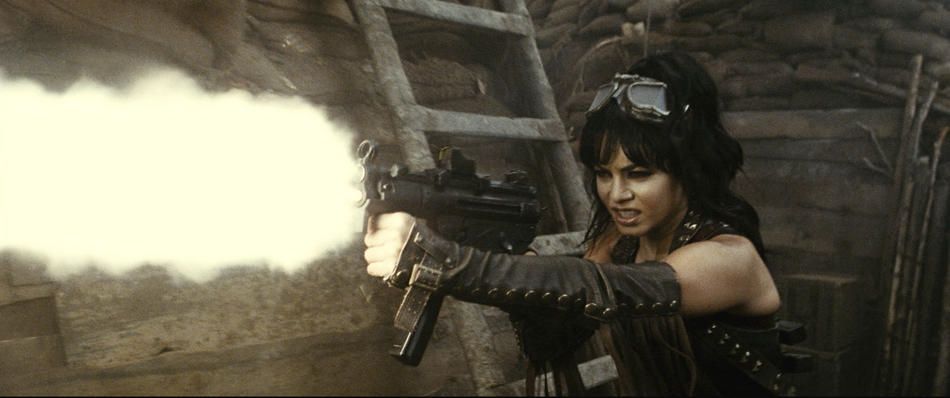 But those who like it, really like it. It’s rated at 6.6 on the IMDB, from over 25,000 votes, so it’s not just studio shills. Compare other critically-savaged and commercial genre “failures”: Barb Wire (3.1), Catwoman (3.2), Ultraviolet (4.0). Sucker is more in line with something like Underworld (6.8), and the reaction on Twitter is also far more positive. Star Cornish may have a point when she said, “It’s so stylised, so specific; there’s no other film like it at all. When you have something totally new, it’s going to be judged to the 10th degree… When you’ve got a totally new concept, it’s a love or hate relationship.”
That’s not necessarily a bad thing. Even if it fails, I’d rather have a film with ambitions, that tries something different, rather than another Judd Apatow/Seth Rogen “comedy”. There’s some parallel to be drawn between Snyder and Dutch maverick Paul Verhoeven. You could link Snyder’s Dawn of the Dead remake to Robocop, while 300 and Starship Troopers are both pseudo-fascistic tributes to the glory of war – and Sucker Punch would be Snyder’s Showgirls, a critically-reviled flop, damaged by its rating. Except here, it’s the PG-13 which hurts, but we’ll get more into that a little later.



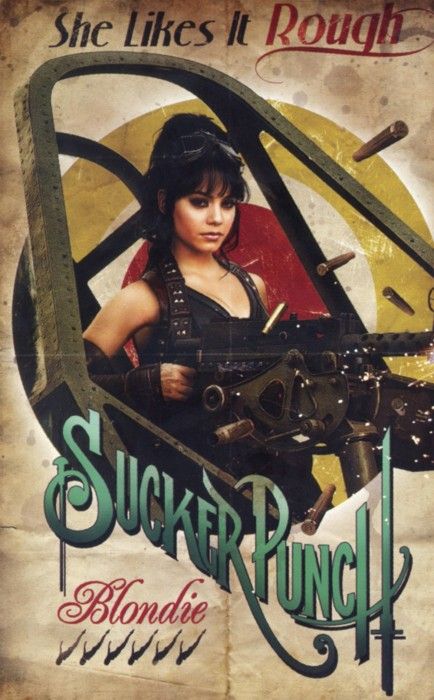
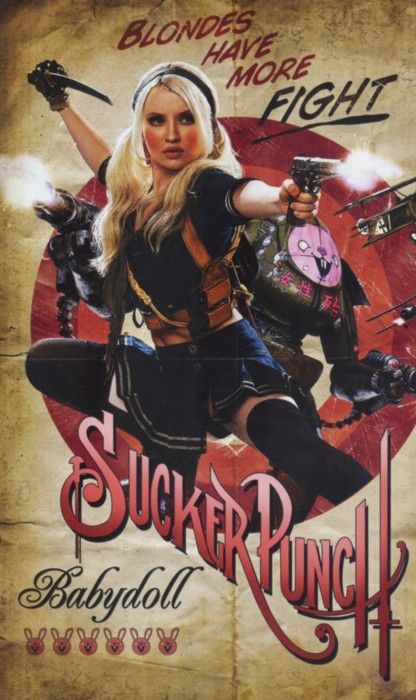
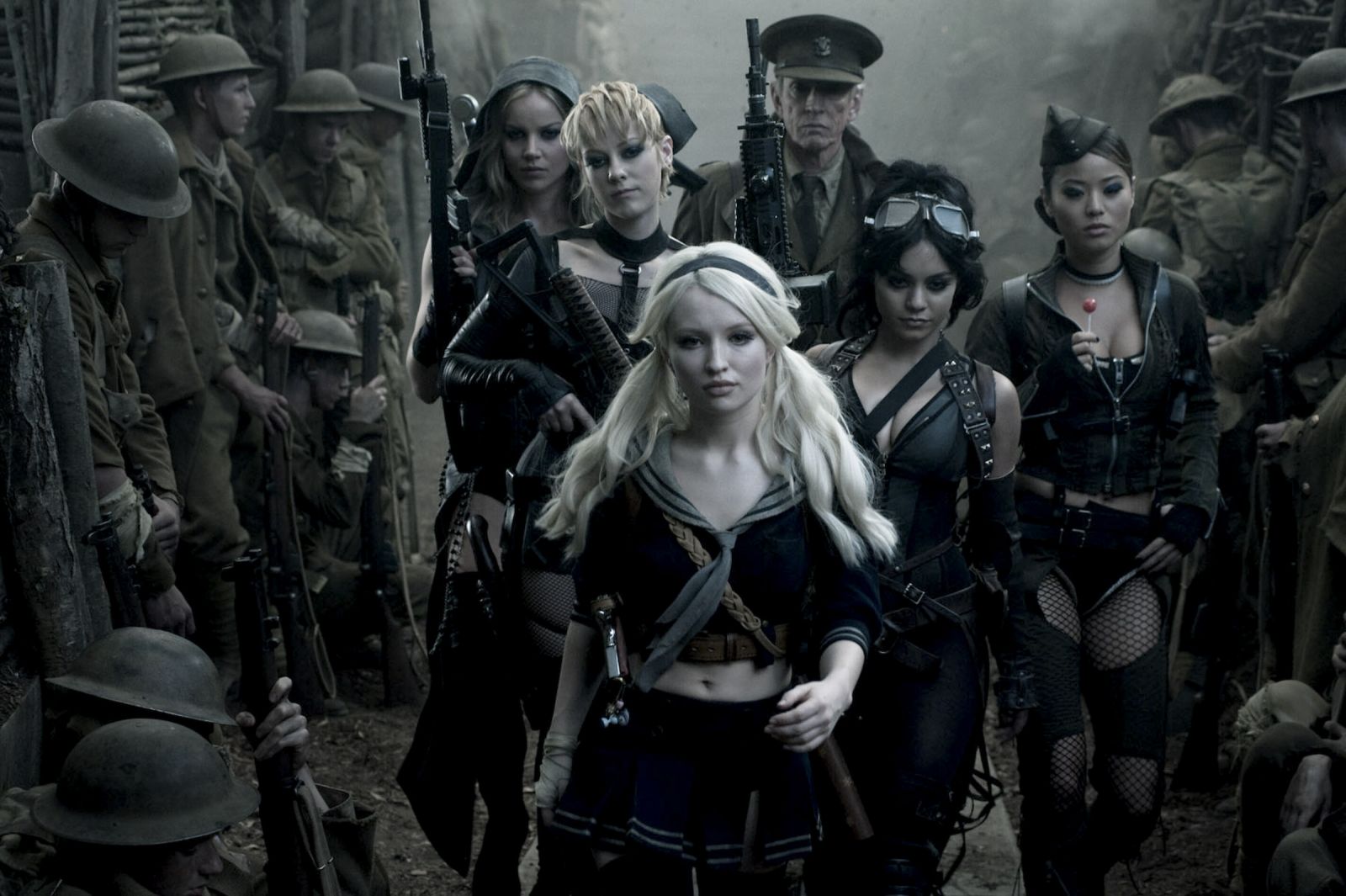
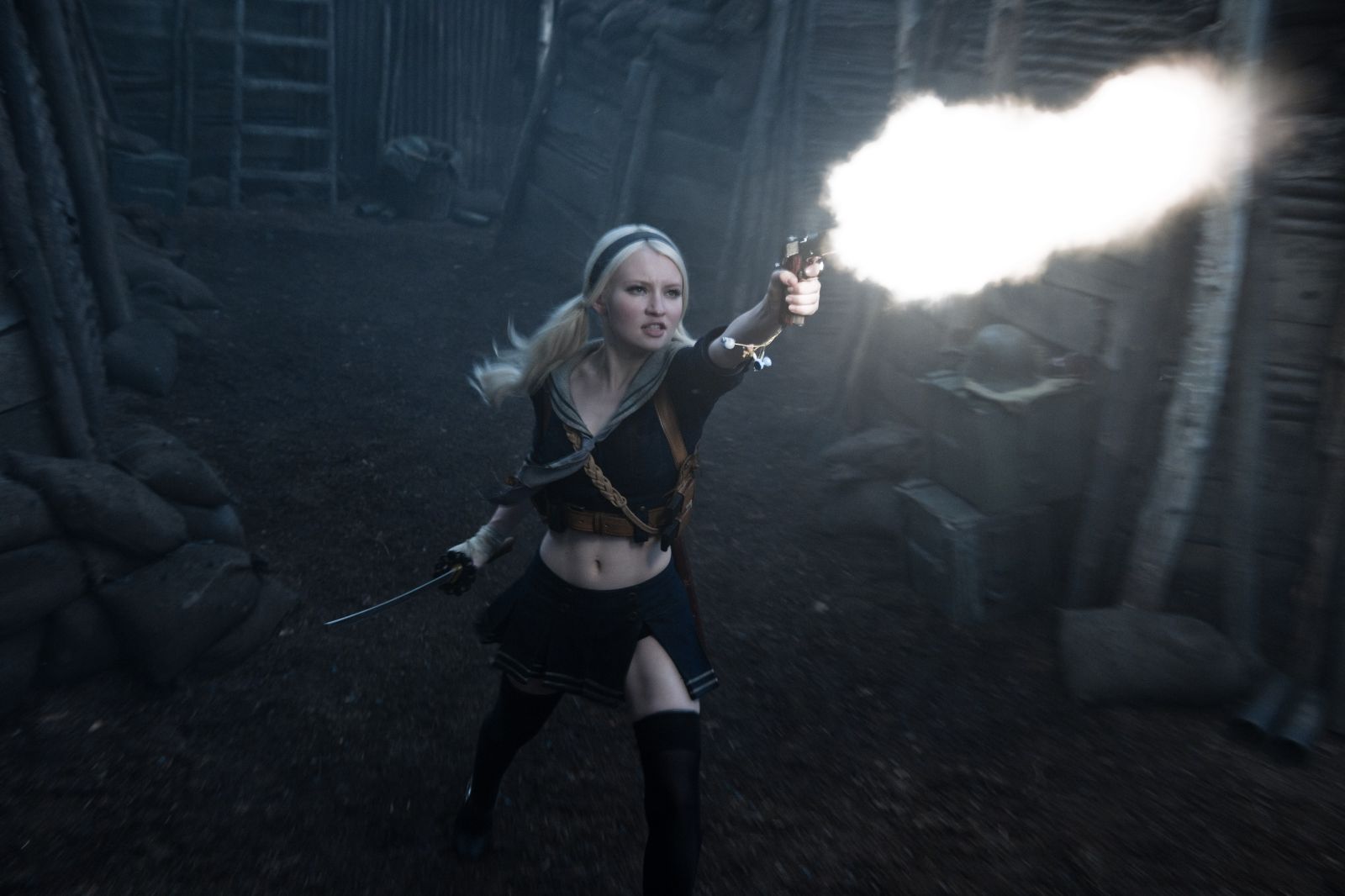
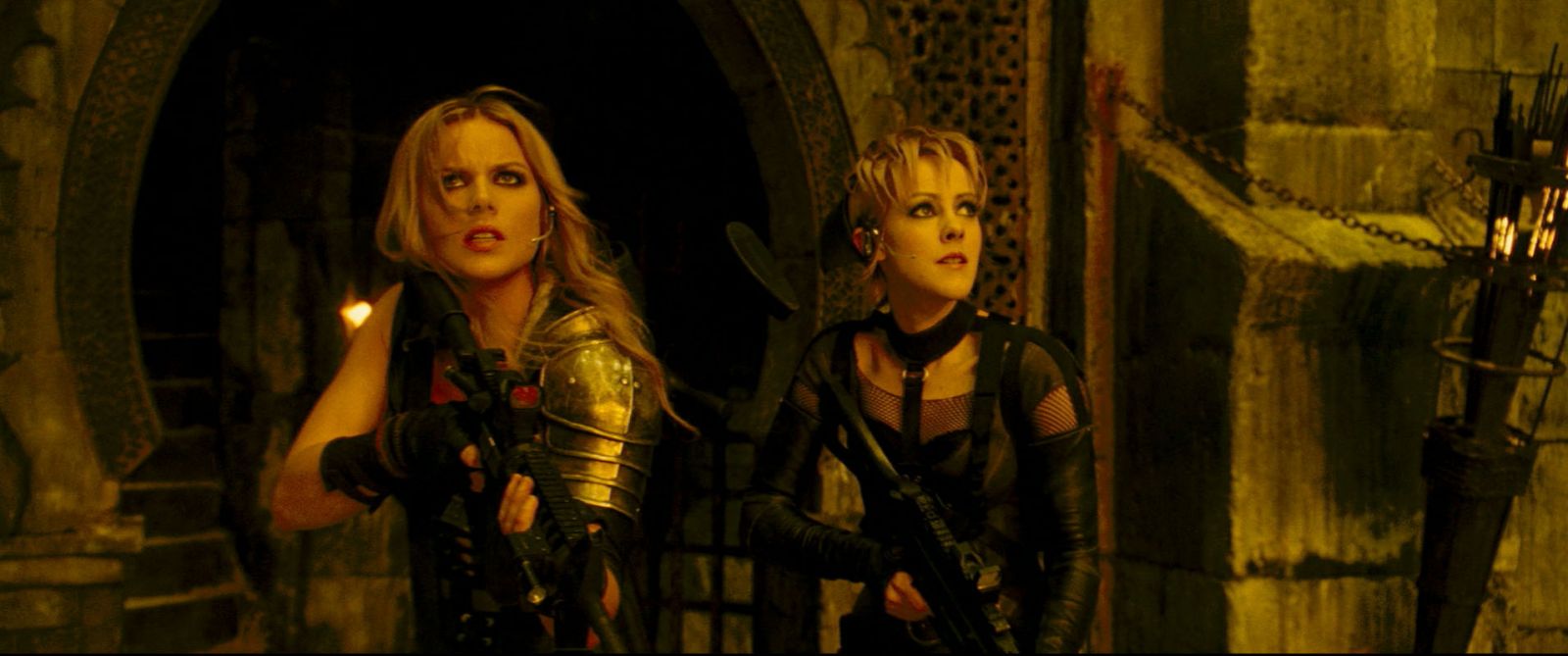
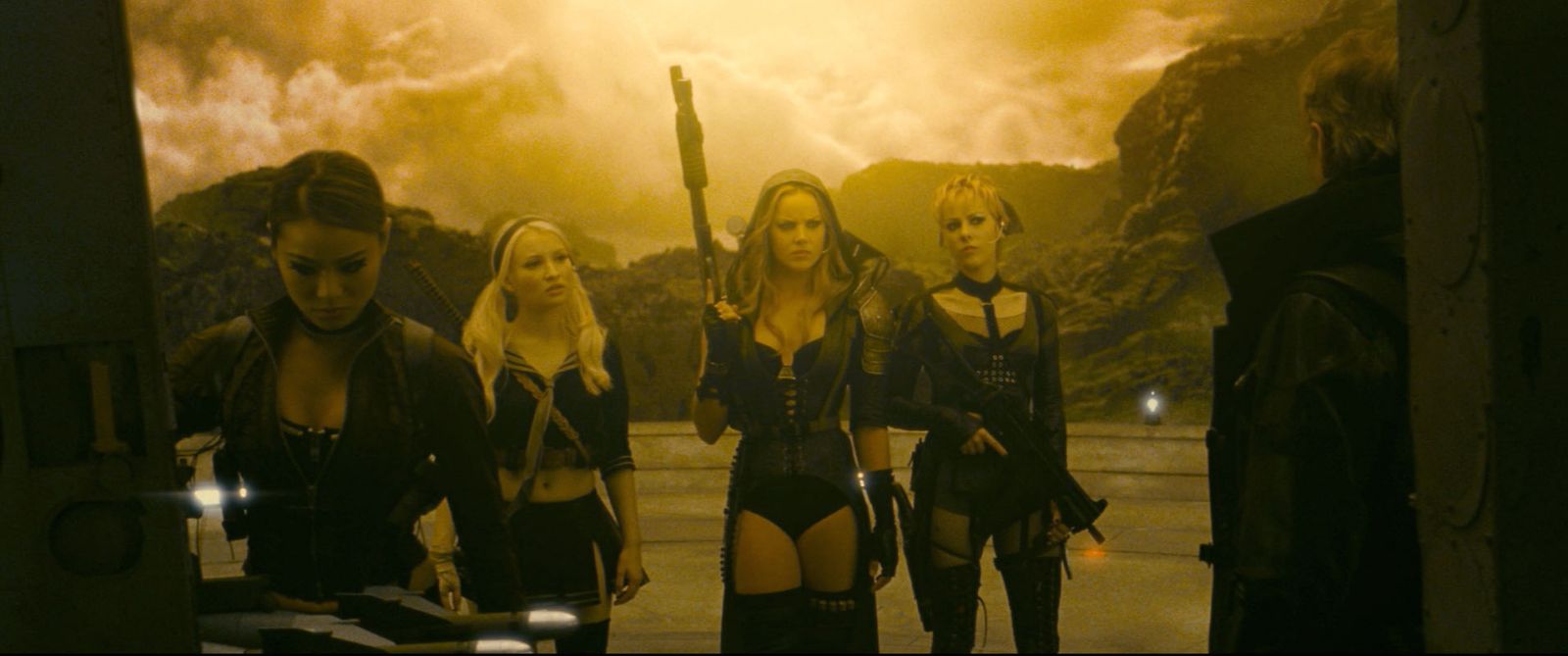
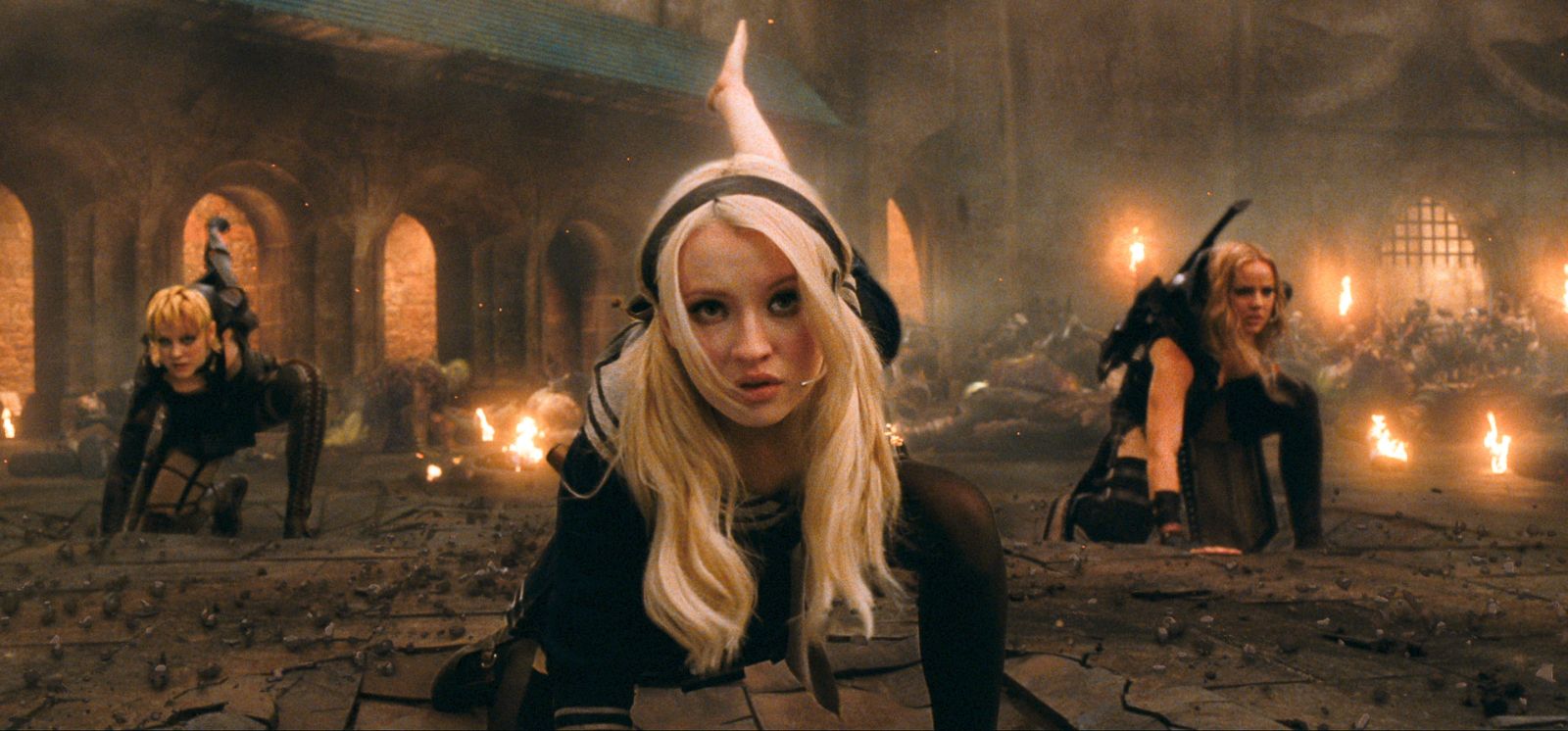
 The movie itself is imperfect; by some measures perhaps not even the “best” GWG film I’ve seen at the cinema this month. However, it is thoroughly cinematic and can only be admired as such – I’m far more likely to pick up the Blu-Ray DVD of this than Hanna. An un-named 20-year old (Browning) is sent to a lunatic asylum by her stepfather, after rejecting his attentions and being made the scapegoat for the death of her younger sister; her lobotomy is scheduled for five days time. Turns out the asylum is a high-end brothel where our heroine – nick-named “Baby Doll” – and the other girls are kept to perform for the pleasure of various high-rollers. Baby Doll plots an escape, the tools necessary lifted by her accomplices while she entrances the staff and customers with her dancing. During these, Baby Doll retreats even further, to fantasy worlds to do battle against dragons, robots, samurai warriors, etc. But which “reality” is real?
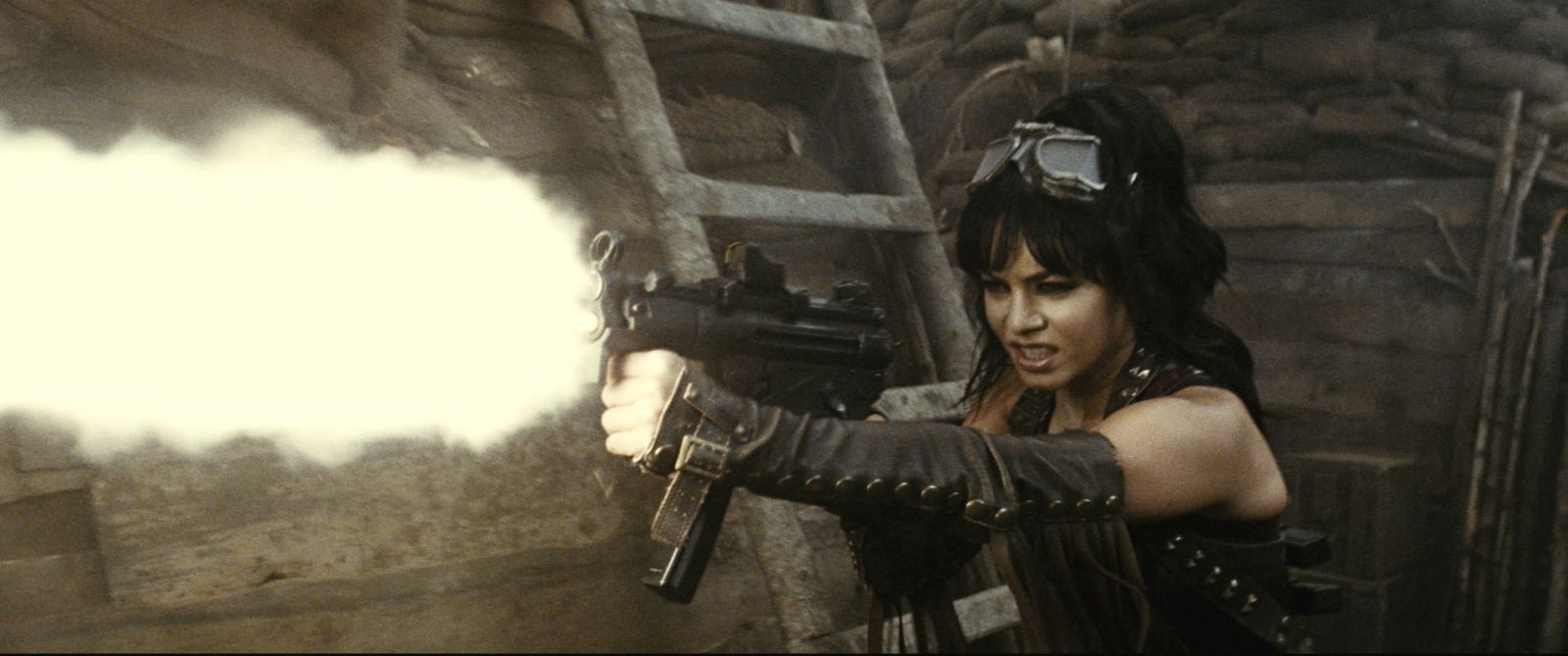
There’s more doubt over that, than which reality Snyder likes: hands-down, it’s the one filled with carnage, and his love for it shows. It’s only April, you could nominate these as the best four action sequences of the year, and I wouldn’t argue. My personal favourite sees the five girls storm the trenches in World War I, taking on steampunk-powered German zombies, with the aid of a rocket-powered walking tank. Remarkably, as cool as that sounds on the page, seeing it on screen is even better. Yes, all bear more than a passing resemblance to video games: they still work, possessing an elegant flow to them. And while none of the heroines will make Zhang Ziyi lose sleep, nor are they left looking horribly out of their depth, a major fear on hearing a High School Musical star was involved.
 Since Baby Doll is explicitly stated to be 20, this doesn’t strictly fall into the category of “teenage action heroines,” but her hair, clothes, make-up, etc. all are designed to evoke the spirit of what Chris disparagingly called, “schoolgirl porn” – but the PG-13 rating means it can get absolutely no closer, so really, what’s the point? At least Showgirls delivered the goods: Baby Doll’s fantasy world might as well have been an office, college dorm or, frankly, convent, instead of the world’s most demure brothel. Reports indicate it took seven submissions and the removal of 18 minutes to get past the MPAA, so I have to ask. Should a film that, on one level, is about an abused girl forced into prostitution by her step-father, share a rating with Harry Potter And The Goblet Of Fire?
However, I do like a little more plot and better characterization with my action sequences. I think Baby Doll probably sings more than she speaks in the film. Browning is responsible for the cover of Sweet Dreams, which backs the immensely creepy opening that paints, in swift efficient brush strokes, the lead-up to her arrival at the asylum. It’s almost as if Snyder says, “Well, that’s that out of the way,” and there’s nothing anywhere near as effective the rest of the way. The rest of Baby’s posse don’t even get the benefit of that, and remain little more than lingerie-clad chess pieces, to be moved around the board of Snyder’s (undeniably impressive) imagination. Same goes for the plot, which has the action sequences more grafted on, than flowing naturally from the plot.
Overall, however, for all its undeniable flaws, this is a rare beast: an action film where women [rather than a singular woman] take center-stage. I’m hard pushed to think of anything like it out of Hollywood since, perhaps, The Descent, and this is clearly on a much bigger scale. Unfortunately, the luke-warm box-office probably makes it unlikely anyone else will follow suit, though I get the feeling it will do very nicely on DVD. It’s certainly close to a unique movie, for its combination of style, content and execution, and I tend to think/hope that the passage of time will be kinder to it, than most contemporary critics.
Dir: Zack Snyder
Stars: Emily Browning, Abbie Cornish, Jena Malone, Vanessa Hudgens
















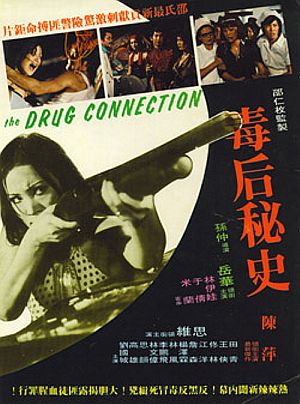 Not to be confused, in any way with SexyKiller, this 1976 Shaw Brothers film is more of an unofficial remake of Coffy. Wanfei (Ping), a nurse by day, decides to go vigilante by night, after her sister falls victim to druglords and ends up brain-damaged and drooling. With most of the police force in the pockets of the dealers, Wanfei opts to go undercover as a drug-addict of loose morals, so she can make her way up the chain of command, to deliver justice on behalf of her sister to the sinister Boss (Hsia). This finds her an ally in Weipin (Hua), a childhood friend and honest cop whose hands are tied by pesky bureaucratic niceties, like “needing a search warrant”; she’s also encouraged by her pundit boyfriend (Wei), who has long taken a strong anti-drug stance.
 Miike has provided some of our favorite Japanese films of all-time, including Audition, Ichi the Killer and The Bird People of China, but this entry in his prolific output has to count as a misfire, being nowhere near as interesting as it sounds. Heroine Jun (Sakuraba) is abroad when her entire family is killed by Yakuza: three years later, after working as an FBI agent (!) and continuing her karate education, she returns home, to track down those responsible. She does this by going undercover in a pro wrestling promotion (!!), on the basis they can tour the country without suspicion, letting her investigate as her wrestling alter-ego, Silver. However, she’s not the only one on the hunt, with a dart-using assassin contracted to stop Jun.
 Ok, “dull” is perhaps not quite the word, but Chris voted on this one with her closed eyelids and heavy breathing, and I was struggling to avoid joining her, despite some impressive ideas. It’s set in the Forest of Infinity, a strange locale where past, present and future all seem to merge. Hence, you’ve got renegades with samurai swords and Buddhist nuns and a party of a dozen young women whose paths cross with the former, resulting in the rape and death of 11. The un-named survivor (Kishi) is rescued by a scientist who creates mecha – cyborgs – and he uses the organs of her friends as a core to rebuild her, with the nun adding their 11 souls. The new super-powered samurai princess goes after the killers, and then Red Dragon and Butterfly, who instigated the murders in the name of what they call “art.”
 ★★★½
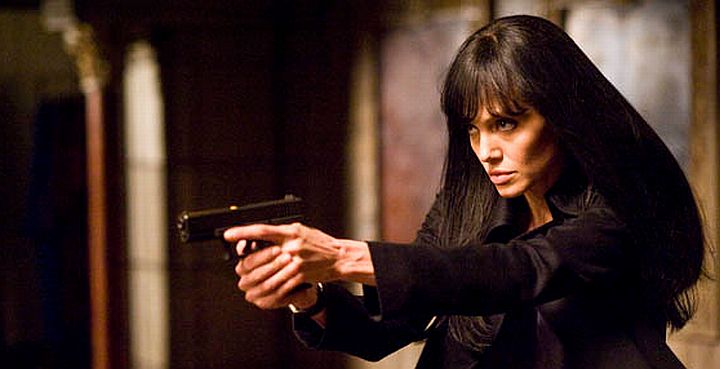
★★★½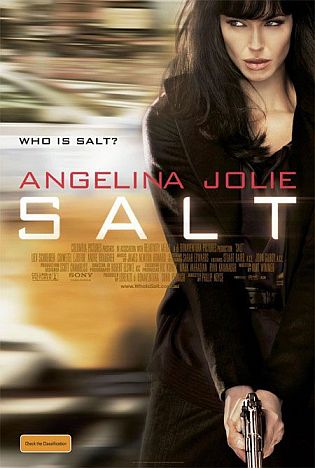 Angelina Jolie is the undisputed US box-office queen of action heroines. With
  Still, it’s entertaining and keeps moving. Credit for clocking in at a brisk 100 minutes, rather than stretching things out beyong what’s necessary: there’s isn’t much unnecessary fat on its scriptual bones, and a refreshing lack of romantic chit-chat. There are a couple of solid action set-pieces, most notably an early, frenetic chase through the streets, and Salt overall has an ability to withstand falls that Wile E. Coyote would envy. Towards the end, she descends a lift-shaft leading to the presidential bunker, without bothering to wait for the elevator, and can also turn a few common cleaning supplies into an impromptu rocket-launcher. These are talents I’m sure we all could use occasionally.
 ★½
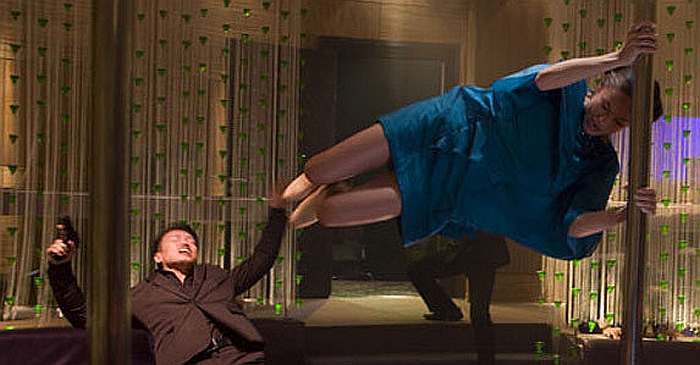
★½ I usually have no problem going on about GWG movies at some length. Hell, I even managed 750 words on DOA: Dead or Alive, and for that one, I had to re-read my review to remember what it was about. But when I got to the end of Street Fighter: The Legend of Chun-Li, my first thought was, “What the hell am I going to write about this?” It seemed likely the only way I’d get to 750 words, would be by repeating the title one hundred and twenty-five times. For the film is ill-conceived, poorly cast, badly written and directed by the man who managed to make Jet Li look bad, not once but twice, in Romeo Must Die and Cradle 2 the Grave.
 And I believed Street Fighter II was a fighting game. Silly me. It’s far too talky: all mouth and no trousers, to borrow a good ol’ British phrase. The fights themselves, choreographed by Dion Lam, aren’t bad, though the welding of some of the Street Fighter moves into the game doesn’t work – Chun-Li’s Spinning Bird Kick, for example, just looks silly. But otherwise, they aren’t awful; there’s a nice brawl in a bathroom between our heroine and Bison’s henchwomen. However, particularly in the first hour, there just aren’t enough of them, and what should be a fast-paced slugfest becomes bogged down as Chun-Li meanders her way, with a somewhat concerned expression, around the slums of Bangkok [which actually look surprisingly liveable. You want real slums, try Mumbai].

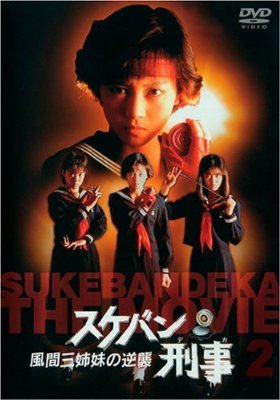 Perhaps the most startling thing here is the amount of political subtext, albeit likely somewhat unintentional. Saki Asamiya (Asaka) is part of the student police force, but feels they are overly brutal, beating anyone who “isn’t a straight arrow”, to quote Asamiya. This leads her to quit, heading off for a spot of slow-motion horse-riding more befitting a feminine hygiene commercial. However, she returns, teaming up with her sisters, when she discovers that her erstwhile colleagues are staging terrorist attacks, and blaming them on a group called the Outcast League, a with the aim of strengthening their position and gaining even greater powers. Asamiya joins the League, only to find the full force of the law now turned on her.
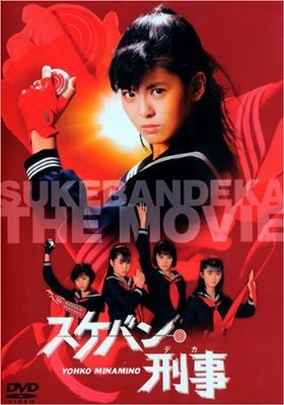 This film was made between season two and season three of the television series, and represents a passing of the torch from Saki, SD #2 (Minamino) to SD #3 (Asaka), in preparation for the upcoming TV show. Saki has just about given up her life as a detective, but finds herself dragged in when she, literally, bumps into someone on the street. He turns out to be an escapee from Hell Castle, a reform school for wayward kids on an island near Tokyo, and she discovers that Principal Hattori (Ibu) is training the pupils to be a brainwashed army for an upcoming coup d’etat [the word is exactly the same in Japanese, incidentally]. She goes to her bosses with the information, but the investigation is quickly killed from above, for reasons I’m sure you can guess. So, it’s up to Saki to put together a team, sneak onto the island, rescue the inmates and stop Hattori. He turns out to be a nemesis from the TV show, though that back-story will, for obvious reasons, be lost on the vast majority of Western viewers.