



Literary rating: ★★★
Kick-butt quotient: ☆½
 The main theme of this book appears to be, “How far will a mother go, to protect her daughter?” Based on what we read here, the answer to that question appears to be, “Very, very far.” The heroine is Sherica Daniels, who initially appears to have somewhat lucked out and escaped a nasty and abusive relationship. Her husband, drug addict Roy, has just died following a pair of botched armed robberies. That should leave her and teenage daughter Ashlynn to get on with their lives. Not so fast. For it’s only a short while before Roy’s drug dealer, Tokie, shows up. He’s demanding Sherica pays her husband’s debt – and more, because he believes she knows where the unrecovered loot from Roy’s robberies was hidden. When she fails to convince Tokie otherwise, he abducts Ashlynn.
The police are limited in what they can do, for Ashlynn has substance abuse issues of her own, and tells the authorities she wasn’t kidnapped. Sherica knows otherwise. She sets out to track down and rescue her daughter, from a man who turns out to be not just a drug dealer, but also a pimp. Though how do you rescue somebody who doesn’t want to be rescued? Especially when you have no experience, few resources – though Sherica does have her late husband’s .357 Magnum – and your only ally is a gas station clerk, a refugee from the Yemen. The answer is mostly tenacity: the heroine simply won’t sit back and accept any other outcome, except for getting Ashlynn back.
The style here is occasionally a tad clunky. I found myself having to reread some sentences several times to figure out their meaning, such as, “After all, you can’t live your life thinking back about what you should have done if only you’d known something you could never have known in the first place. You just can’t.” Uh… Sure, I guess? Despite the cover, it is also very restrained on the action front. There is only one such sequence, and most of its content unfolds over little more than a minute in real-time. Though it is spectacularly gory, and partly makes up for in intensity, what it might lack in duration.
The book’s main plus point is probably the character of Sherica, who is not your typical heroine. Her situation largely sucks, mainly as a result of poor choices, yet Halpin still manages to make her sympathetic. The fierce devotion to her daughter, and desire to give Ashlynn a better life, goes a long way in this regard. While told in flashback, there are hints at the downbeat way things will turn out throughout and the significance – indeed, even the meaning – of the title only becomes clear at the end. I’m not entirely convinced a situation like this would [and I’m skirting spoilers here!] conclude in the manner described. Yet it’s just plausible enough, and this is more about the journey than the destination.
Author: James Halpin
Publisher: Amazon Digital Services, available through Amazon, both as a paperback and an e-book
Standalone novel
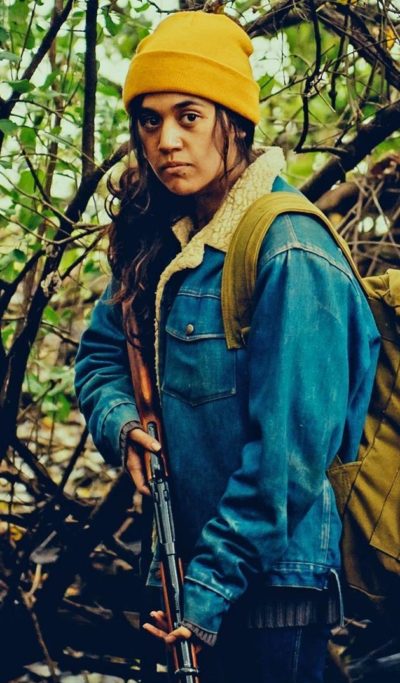 Margo Crane (DelaCerna) has been brought up by her native American father, since her mother walked out on them several years ago. Under his guidance, they have become self-sufficient, and Margo has become a crack shot. However, her creepy uncle ends up having sex with the teenager, an incident for which she gets blamed, ruining her life. She resolves to apply her shooting skills on him, only for the resulting incident to become a tragedy. Margo strikes out on her own up the Stark river, in search of her absent mother. Doing so, she meets a variety of people, then has to try and reconnect with a woman who now has her own life, one not necessarily helped by the unexpected arrival of a teenager.
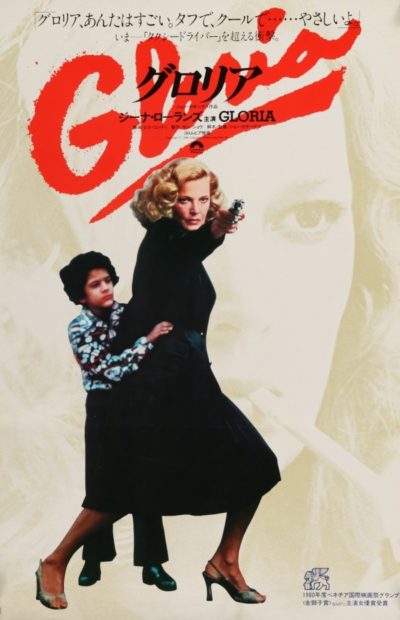 Yeah, I’ll confess to having Laura Branigan’s eighties hit running through my head on repeat almost the entire movie, even if its lyrics can only be tangentially tied to it. What also struck me is how strong of an influence this was on Luc Besson’s Leon, especially at the beginning. I mean: a criminal gang takes out an entire family in a New York tenement, except for one child, as punishment for the father having tried to steal from them. That survivor takes refuge with a very reluctant neighbour with mob ties, who then has to protect the child as they move about the city. There’s even a scene where one of the gang fires his gun at a nosy resident.
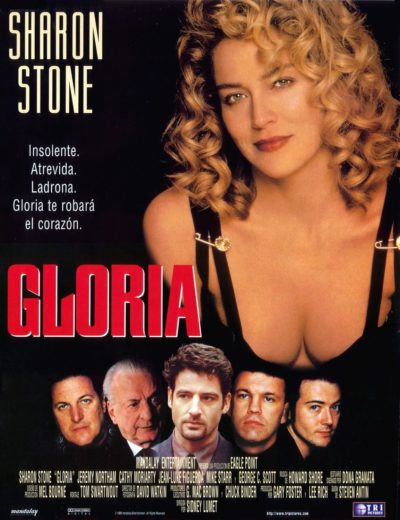 Nineteen years after the original, four-time Oscar nominated director Lumet opted to remake Cassavetes’s movie. Though by some accounts, it was more a case of him wanting to work, rather than being particularly attracted to the project. If the results are anything to go by, he should have stayed at home. For the film was a bomb, and leading lady Stone received a Razzie nomination for her efforts. I wouldn’t have said she was that bad, though she’s clearly not at the same level as Gina Rowlands in the original. It does also address some of what I felt were its’ predecessor’s weaknesses. However, it tones down the central character, and this helps lead to what you’d be hard-pressed to argue is other than an inferior product overall.
 I guess, at its heart, this is the story of two mothers. There’s Jo (Campbell-Hughes), an anaesthetist who has been struck off the medical register, for reasons that are left murky. She’s now practicing her healing arts on the underground market, from patching up dubious stabbing victims, to carrying out unlicensed abortions. Jo lost her daughter to meningitis, and has split from her husband. Then there’s Bernadette (Brady), a wealthy but no less murky character. Her daughter is dying, and in desperate need of a transplant. To that end, Bernadette has kidnapped a young woman, Aine (McNulty), with the intention of using her as an unwilling organ donor, and needs Jo’s help for the operation. But when Aine – who would be about the age of Jo’s daughter had she lived – escapes and hides in the back of the physician’s car, Jo is left with a series of difficult decisions.
 After
After 
 This feels like a Canadian version of
 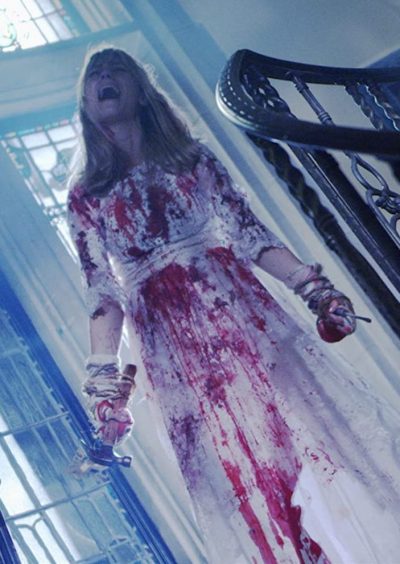 For the first, perhaps, three-quarters, this feels almost more like a Lifetime Original Movie. Then, at the end… Hoo-boy. But let’s not get ahead of ourselves, shall we? It begins with Nina (Orlan), seeking to escape a fraught life in Russia, for her and her young daughter, Dasha (Pimenova). Through an online dating service, she meets Karl Frederick (Bernsen), and they eventually move to America to be with him. While he’s an older gentleman, initially they seem to have struck it lucky, for he’s a rich, retired surgeon, who owns a massive estate in the country. In fact, you could say it seems almost too good to be true…