

Naam Shabana

★★★½
“Four for the price of one?”
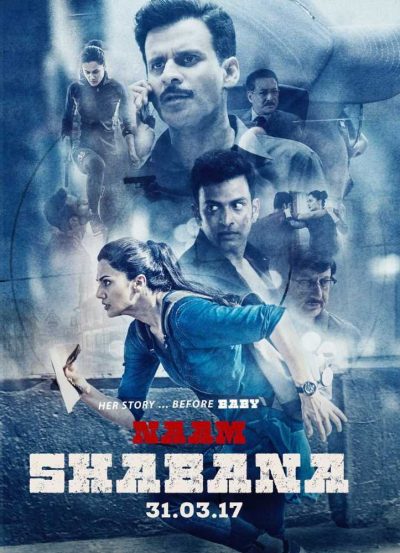
If you took four different films, by four different directors, and edited them together into a single entity, you might end up something similar to this. Oh, make no mistake: I still enjoyed most of this. It just doesn’t feel like a coherent whole, perhaps because it is a spin-off involving some of the same characters from an earlier film, Baby. For at least three-quarters of it, however, not having seen its predecessor shouldn’t be too much of a problem.

The first chunk is perhaps the weakest, introducing us to the heroine, Shabana Khan (Pannu), a college student and judo expert, with something of a quick temper. She has just started going out with a new boyfriend, when they get into an altercation with some cat-calling men, which ends with him dead in the street. It’s all rather unconvincing, not least the early incident which does a very poor attempt to establish Shabana’s zero tolerance for harassment.

Things do improve significantly thereafter, for it turns out she was under observation by a shadowy arm of the Indian government as a possible agent. She’s contacted by Ranvir Singh (Bajpayee), who offers to help her take revenge on her boyfriend’s killers, if she comes to work for him. With the authorities apparently uninterested in the case, Shabana accepts, and the next section covers her vengeance, and subsequent training under Singh. This is likely when the film is at its best, taking an interesting concept and executing it with some energy and flair.

Shabana then vanishes from her own movie in the third quarter, as we return to the topic of international arms dealer Mikhail (Sukumaran) he was briefly glimpsed at the beginning, making short work of two Indian agents in Vienna. Authorities have tracked down his ally, Tony, and apply pressure, hoping to discover Mikhail’s location. However, it turns out Mikhail has been using the services of a doctor to change his appearance, making the task of locating him that harder, and it becomes a race against time before he changes again, and the trail is lost.

Which brings us to another switch in direction for the final section, in which Shabana is sent into the hospital where Mikhail is about to get plastic surgery, in order to assassinate him. Here, she’s teamed up with Ajay Singh (Kumar), who was apparently the hero of Baby. There was a point where it looked like he was going to take over – not that we’d have minded too much, as we’ve always enjoyed seeing Kumar in action (despite his creepy mustache here), but this is supposed to be an action heroine film. Fortunately, that’s where it ends up.

Despite feeling a bit like Nikita, a bit like Peppermint, a bit like Alias and a bit like a Jason Bourne movie, there’s plenty going on, and the running time feels considerably shorter than its 147 minutes. It helps that its heroine is made to look relatively plain, rather than the typically stunning Bollywood actress. 

Dir: Shivam Nair
Star: Taapsee Pannu, Akshay Kumar, Prithviraj Sukumaran, Manoj Bajpayee
Raazi

★★★★
“The Spy Who Loved Me”

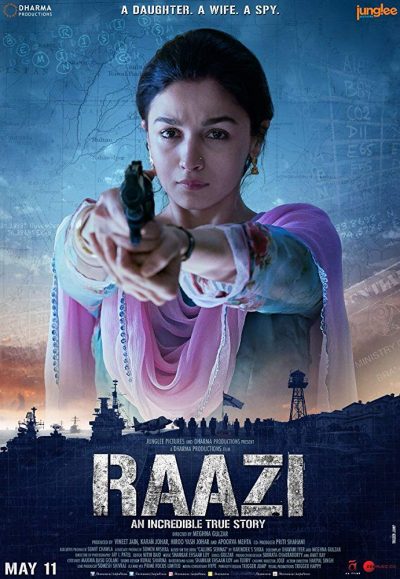
This Indian spy thriller manages to be both remarkably restrained and human, avoiding a potentially jingoistic approach, and going for something considerably more measured. It takes place just before the war between India and Pakistan in 1971, when Indian agent Hidayat Khan is pretending to give information to Pakistan. In order to get close to their top brass, he convinces his daughter, Sehmat (Bhatt), to enter an arranged marriage to Iqbal Syed (Ahlawat), an officer whose father (Sharma) is a Brigadier in the Pakistani army. After being trained by senior intelligence officer Khalid Mir (Kaushal), she goes to join her new husband, and begins operations as a spy inside the Brigadier’s household.
From there, it’s a series of tense incidents, with a servant becoming increasingly suspicious of Sehmat, but her also falling for Iqbal, and realizing that the enemy are not so different. These conflicting loyalties create emotional carnage, not least when she has to kill multiple people in order to protect her mission. [One of whom is killed using an umbrella laden with a ricin pellet, which is odd, since this was seven years before the KGB used exactly this method to assassinate a dissident, Georgi Markov] She does succeed in sending back vital information to Mir, but he has great difficulty in getting the Indian military to take the data seriously, being uncorroborated evidence from a rookie agent. When the Pakistanis start rolling up Sehmat’s local support cell, it becomes a race against time to extract her before she is caught in the net.

What I particularly liked about this was Sehmat’s “ordinariness”: she has no amazing abilities or combat skills. She is brave, smart and very committed, yet far from immune to the hellish toll a mission like this takes, especially on the psyche of someone thoroughly unprepared for it. The film does a much better job of depicting this than, say, Red Sparrow, in particular with an ending which is genuinely poignant, and a far cry from the black and white depiction which I was expecting. There’s as much ground to criticize the Indian side – not least for their cynical exploitation of a young girl’s desire to satisfy the wishes of her father – as the Pakistani one.

This was one of the highest-grossing Bollywood movies with a female lead ever, trailing only romantic comedy sequel Tanu Weds Manu Returns, and it’s easy to understand why. About the only misstep I can think of, was giving Sehmat’s father lung cancer, as if relying on her daughter’s sense of filial obligation and patriotism wasn’t sufficient moral blackmail. It’s a sloppy and unnecessary bit of early melodrama, whose lack of subtlety is severely at odds with the rest of the film. In a world where most spy movies treat death as a throwaway trifle, this goes a long way to remind us that the taking of another human’s life is absolutely not a trivial matter, regardless of the reason.

Dir: Meghna Gulzar
Star: Alia Bhatt, Jaideep Ahlawat, Vicky Kaushal, Shishir Sharma

Saala Khadoos

★★★
“A maniac training a rebel.”

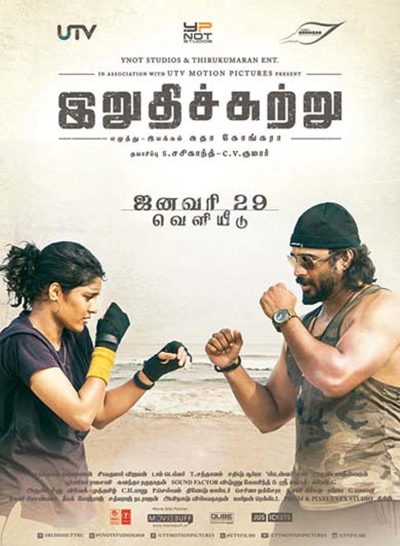
Despite thrashing virtually every sports cliché under the sun into the ground, this just about manages to skate by on the energy of its two central performances. Adi Tomar (Madhavan) is a boxing coach who gets hit with a trumped-up #MeToo charge by the head of the boxing association Dev Khatri (Hussain), and punted off to the backwoods of Chennai. There, however, he finds a raw jewel in Madhi (Singh), a fish-seller whose sister, Lakshmi (Sorcar), has been training as boxer with an eye to joining the police. But it’s Madhi’s aggression which attracts Adi’s attention, and he eventually convinces her to strap on the gloves.

From here unfolds, pretty much, exactly everything you would expect. Parental disapproval. Sibling rivalry. Madhi mistaking Adi’s devotion to her for something romantic. And, especially inevitably, Dev seeking to sabotage Adi’s hard work and claim the credit of Madhi’s success for himself. It all builds to the finals of the world championships – apparently a team sport – where Madhi goes up against Russian nemesis Natalia Riker, who battered her to a pulp in an earlier match [albeit with various extenuating circumstances]. If the Russki doesn’t quite snarl, “I must break you” before the contest, she might as well do. And if at least avoiding full-blown musical numbers, the songs all but required by Bollywood show up in the form of so many montages, they could form the basis for a drinking game.

I suspect this was inspired by the success of Mary Kom, and has much the same strengths and weaknesses. The makers seem to think that making a woman the central character is enough to offset the hackneyed story. Do not, however, take this as meaning the film is devoid of entertainment. For as mentioned, both leads crackle, and the tag-line on top accurately sums their relationship; it’s a lot of fun to watch develop, as they spar, both verbally and physically. Madhavan certainly looks the part of a former boxer, and although Singh could do with some more definition on her arms, makes up for in pure, undiluted Attitood (spelling and capital letter entirely deliberate) what she may lack in musculature.

That said, the boxing scenes are effectively enough staged that I could overlook the heroine’s wispiness, and this is considerably slicker all-round than the last Bollywood film I stumbled across on Netflix, Warrior Savitri. The cinematography is particularly effective, helping to generate a good volume of raw emotion, and this in turn helps distract from the thoroughly generic “underdog makes good” level of the story. It may even manage to catch an unwary viewer with the occasionally effective shot, such as when Madhi says to her coach, after he has just had to make a very difficult, personal decision: “You gave up everything, just for me. If that isn’t love, what is?” Ouch. If perhaps a low blow, it’s still a line that packs a wallop.

Dir: Sudha Kongara
Star: Ritika Singh, R. Madhavan, Zakir Hussain, Mumtaz Sorcar
a.k.a. Irudhi Suttru

Warrior Savitri

★★½
“BollyNotVeryGood”

This is a modern update of the story of Savitri and Satyavan, originally found in Indian epic saga the Mahabharata [and when I say, “epic saga”, it’s 1.8 million words long!]. The tale has been an immensely popular topic for Bollywood, Wikipedia saying there have been thirty-four different film versions, dating back over a century to 1914’s Satyavan Savitri. The basic story is of a woman, Savitri, who defies a prediction that her chosen husband, Satyavan, will die in a year, and marries him anyway. She then has to talk the god of death out of collecting him.

The director’s day job is as a California dentist, which may explain why a good chunk of this is set in Vegas, and this was his first foray into Bollywood. It was a bit of a jarring introduction, since Gill apparently received death threats as a result of this film and was burned in effigy. Hey, everyone’s a critic… But it was actually religious fundamentalists who were responsible, sending him an email which said, “Self ban your film Warrior Savitri. It shows Goddess Savitri in poor light. If this film is released, you will be beheaded in public.” He still appears to have his head: perhaps the fundamentalists saw the film and realized it wasn’t worth a fuss. While I can see what it’s trying to do, the bulk of it doesn’t work.

That’s largely down to poor execution, though the plot has enough of its own problems. For example, the scene setting has Savitri (Raizada) learning martial arts after nearly being abducted as a child. However, this is then all but forgotten in the particularly tedious middle portion, as she meets Satya (Barmecha) and elopes with him to Vegas after a poor astrological prognosis of imminent doom causes her father to nix the marriage. After some more messing around – and, of course, the inevitable (and not very good) musical numbers – the predicted doom occurs, with Satya critically injured in a poorly-staged car-crash. Savitri gets involved with the evil Money John (Smoorenburg) and his sidekick, Candy (British page 3 girl, Lucy Pinder), to whom Satya owes money, while also having to bargain with Yama (Puri) for her husband’s soul.

Raizada isn’t actually the issue here; indeed, most of the performances are fairly serviceable and occasionally good. Puri is particularly impressive, his portrayal of the Grim Reaper as a world-weary, avuncular type being both against the obvious approach, and almost endearing. The scenes with the god of death chatting to Savitri are the best in the movie. The problems are more technical: most notable are some really bad digital effects, from green screen work to CGI explosions, and horrendously awful foley work during the martial arts fights. Really, when you’ve got a lengthy cat-fight between two women like Savitri and Candy, and all that sticks in your mind is how bad the sound effects were… something has clearly gone horribly wrong somewhere.

Dir: Param Gill
Star: Niharica Raizada, Rajat Barmecha, Om Puri, Ron Smoorenburg
a.k.a. Waarrior Savitri [yes, with two a’s!]

Hate Story

★★★
“Hate trumps love.”

After exposing construction company Cementec as involved in corruption, journalist Kavya Krishna (Dam) is surprised to get a call from Siddharth Dhanrajgir (Devaiya), son of the company’s owner. He ends up offering her a job at far above her previous salary, and the two eventually grow into a relationship. However, it’s all a ruse: Siddharth dumps and firing Kayva, saying, “I fuck those who fuck with me.” When she tries to strike back by telling him she’s pregnant, he has her kidnapped and forced to have an abortion, which leaves Kavya permanently unable to have children. She vows to destroy Siddharth and his company, by any means necessary, using her investigative skills – and no shortage of feminine wiles – to get the information required.
An enjoyable pot-boiler, this has some of the traditional aspects of Bollywood cinema, not least a lengthy running-time of 139 minutes. It is, likely fortunately, light on the musical numbers; though the songs clearly play a significant part, there’s only one scene in a night-club which comes close to what you’d expect from Indian cinema. It’s also an odd mix, which I can best describe as “chaste raunchiness”. This is a film, after all, about a woman prepared to go to absolutely any length for vengeance, crammed chock full of sexual situations… Yet the movie contains no nudity beyond the PG-13 level, and not so much as a kiss. Even Siddharth’s trademark line, frequently repeated in English, is far more politely (and inaccurately!) rendered in the subtitles as “I ruin the people who mess with me.”

I largely tracked this down, because I saw that Hate Story 2 was on Netflix at the time, and not the original.  I feel it’s perhaps the kind of story which would be better served by a Western remake, which wouldn’t have to abide by the strict censorship rules of India. [I’m reminded there is apparently a Bollywood version of Basic Instinct, which I can only imagine!] There may not be anything quite like the poster present in the film, and some of the plot contrivances are, frankly, incredible. For instance, Kayva ends up on the board of Cementec, a position obtained almost solely by making doe-eyes at a cabinet minister for an extended period.

However, it’s still a thoroughly satisfying tale of a woman, abused by a powerful man, turning to strike back at him; a tale of sexual harassment and its reversal like has more resonance now, than when released in 2012. Dam cuts a striking figure, and I thoroughly enjoyed the scheming interplay between Kayva and Siddharth. For example, he sends his investigator to bug her house, only for her to find the audio-visual devices and use them to send disinformation back at him. Then he releases the steamy tapes to the media, framing her for the murder of her lover. I was impressed with the ending, too – it’s moral and grim at the same time. Despite the extended duration, the time sped by: while the sequel is no longer on Netflix, you should still expect a review, sooner rather than later.

Dir: Vivek Agnihotri
Star: Paoli Dam, Gulshan Devaiya, Nikhil Dwivedi, Joy Sengupta

Naam Hai Akira

★★★½
“Finally, a 21st-century successor to Fearless Nadia.”

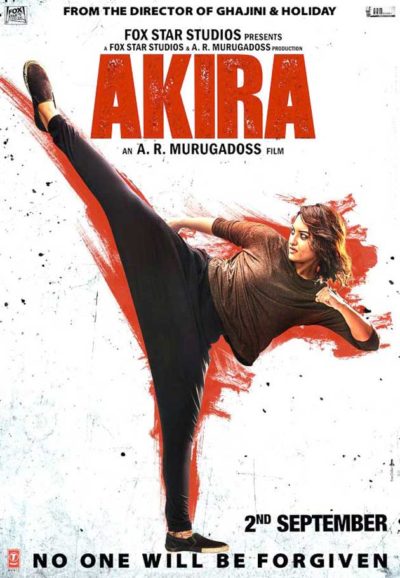
akiraThis is the first “true” modern Bollywood action heroine film I’ve seen, and has to be appreciated as such. While we’ve covered a couple of Indian films before, these have either been from outside the mainstream e.g. Bandit Queen, or have carefully corralled the action into socially-acceptable avenues, such as sport in Mary Kom. Neither is the case here, though the ending certainly has its share of hypocrisy, with the heroine being more or less sidelined, “for the greater good”.

Akira (Sinha) establishes her “take no shit” attitude early, stopping a local bully – unfortunately, his influential family mean she spends three years in juvenile correction while the wheels of justice grind on. After her release, she moves to Mumbai and starts college, only to bump heads with the local mean girl, after refusing to take part in a school protest. Meanwhile, corrupt cop Govind Rane (Kashyap) is tidying up after finding a suitcase full of cash at a car accident – and by that, I mean killing off the driver. However, it kicks off a convoluted series of plot twists, in which evidence of his crimes is used to extort him, then is stolen, and ends up in Akira’s possession. Rane will do anything to ensure she won’t be able to use it, including framing her as a delusional paranoid and having her committed to an insane asylum, courtesy of a friendly doctor.

That’s a slimmed-down synopsis, and there’s a lot more going on here; probably too much, to be honest, and I think half an hour less than the actual 137-minute running time would have been a good thing all round. However, it goes with the territory: two hours is close to a minimum for Bollywood. One pleasant surprise was the lack of musical numbers; I’ve seen these shoehorned into just about every genre, including horror, and sometimes they just don’t fit. Here would likely have been one such case, so we were grateful for their absence. Also worth mentioning: this is a remake of a 2011 Tamil film, Mouna Guru, with the sex of its lead character changed.

Sinha is definitely better than expected in the action scenes: the standout sequences are a full-on brawl in the student cafeteria, after she absolutely destroys her tormentor with a potted plant [you can see a fragment in the trailer below; no subs, but if you’ve read the above, it’ll be clear enough], and her escape from the asylum through a series of unfortunate and ill-prepared guards. Again, given the running time, the action is perhaps a little on the infrequent side, yet there’s enough going on between times to keep you entertained. Particularly notable among the supporting cart was SP Rabia (Sharma), the honest cop trying to piece together the truth; both heavily pregnant and smartly competent, she reminded me to a large degree of Marge Gunderson from Fargo.

All told, this was surprisingly accessible to our Western eyes, though some cultural aspects had to be taken on trust: for example, acid attacks are, apparently, an everyday thing in Akira’s hometown. Bollywood still has some catching up to do; while decent enough, no-one will exactly mistake Sinha for Milla Jovovich or Zoë Bell. However, this is a solid step in the right direction, and will hopefully pave the way for others to follow.

Dir: AR Murugadoss
Star: Sonakshi Sinha, Anurag Kashyap, Konkona Sen Sharma, Ankita Karan Patel 

Neerja

★★★★
“Sticks to the plane truth.”

Time to set up GirlsWithoutGuns.org, perhaps. For this film brings home that among the most courageous of heroines are the unarmed ones – especially when facing people who are not. Such is the case with Neerja Bhanot, the 22-year-old head purser on Pan Am Flight 73 from Mumbai to New York in 1986. Just before takeoff after a stop in Karachi, the plane was taken over by hijackers from the Palestinian Abu Nidal Organization, who intended to divert it to Cyprus. Bhanot alerted the pilots, allowing them to escape and thwarting that plan. She then discarded the passports of American passengers, stopping the terrorists from targeting them. When they believed Pakistani forces were about to storm the plane, she opened the emergency exits, help shepherd passengers out, and sheltered children from the terrorists’ bullets.
Yep, there are good reasons she became the first female recipient of India’s highest decoration for bravery in peacetime, the Ashok Chakra Award, and the youngest ever. Wisely, the film opts for a largely straightforward retelling of the events of those 24 hours, beginning with Neerja’s exuberant attendance at a birthday party the previous evening, through her trip to the airport and the mundane processes of the early, peaceful leg of the flight, before all hell comes storming up the stairs into her aircraft. Against a solid background, the only element which rings significantly false is the note given to her by a friend at the airport: its clichéd contents perhaps explain the disclaimer before the movie, about “Any resemblance to persons living or dead…”

Otherwise, however, it seems to stick to the truth, as far as my post-film Googling has been able to tell. Yes, Neerja was a part-time model as well as an air hostess. She also had already been through an arranged marriage which failed, to an apparently abusive husband (though here again: “Any resemblance…”). But it’s her amazingly calm, yet smart approach in the face of the four hijackers that is most incredible, with death never more than a hair-trigger’s breadth away. This hellish and escalating claustrophobia of the incident is the film’s strongest suit. Madhvani plays it expertly to a crescendo, as the hijackers become increasingly irritated by what they perceive (not incorrectly) as stalling tactics by the authorities in response to demands for new pilots.

It’s likely one of those cases where less knowledge may be useful in appreciating it. For I’m sure most of the original Indian audience was already well aware of the story here; in contrast, as someone who hadn’t heard about it before, I found myself holding my breath on more than one occasion, with no clue of how it would end. As we enter the New Year of 2017, it certainly qualifies as one of the strongest entries of 2016, even if – or perhaps because? – the movie goes in a different direction from the more-traditional kind of action heroines, which we usually cover on this site.

Dir: Ram Madhvani
Star: Sonam Kapoor, Shabana Azmi, Yogendra Tiku, Abrar Zahoor

Miss Frontier Mail

★★★
“Unquestionably dated, yet still a pioneer,”

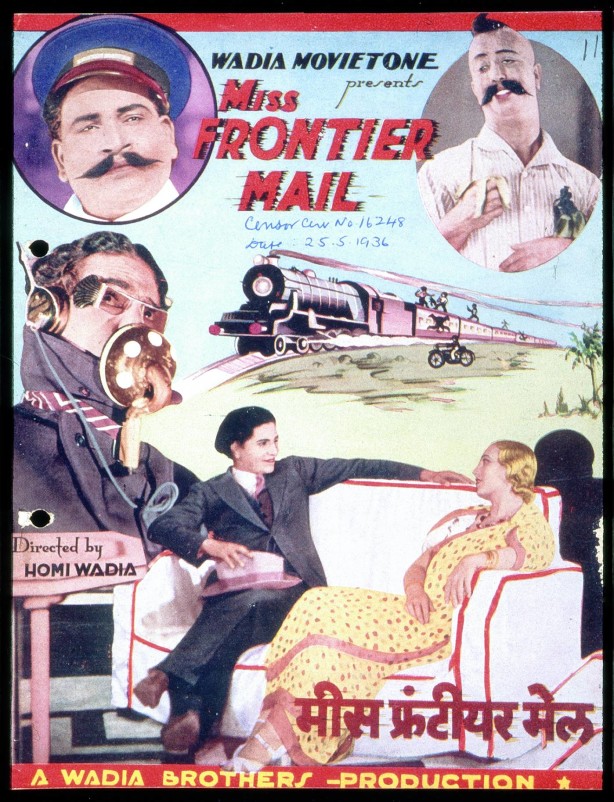
frontiermailIt has now been more than eighty years since this was released. It’s important to bear this in mind, because what you have here, is very much a product of its time and place – 1936 and Bollywood, respectively. That said, it possesses a far feistier heroine than anything coming out of Hollywood at that point. Indeed, you’d probably have to wait over 35 years, until Pam Grier showed up in the seventies, to find someone comparable to the characters portrayed by an Australian actress, known in India as “Fearless Nadia”. There’s more info on Fearless Nadia elsewhere, and you might want to start there, since background is likely near-essential to appreciating her movies.

This entry has her playing Savita, the daughter of a station master who is accused of murdering his deputy, a crime actually carried out by a gang of railway robbers that have been terrorizing the area, under their anonymous master, “Signal X”. Savita seeks to clear her father’s name, initially with the help of an informant inside the gang, who had been helped by the station master. But even after Signal X kills the informant, she continues to investigate them, seeking to expose his identity. Turns out the plan is to destroy the railway network’s reputation on behalf of an airline company. This involves a terrorist campaign, including blowing up bridges and deliberately causing train crashes, and Savita is the only person who can stop him.

Let’s be clear. The fights here are awful. My daughter and her friend used to make little films in our garage when they were early teenagers. They had better brawls. It appears the sole guidance offered by the director was, “Okay, look like you’re fighting. Action!” The results resemble a drunken shoving match at a wedding more than anything. Still… For there’s one sequence where Nadia and the rest of the cast are doing it on top of a moving train, and you know it’s not doubles, green-screen or CGI. There, I don’t care what you’re doing, because I would be desperately clinging onto any relatively-fixed point. There might also be whimpering involved. This cheerful and complete disregard for personal safety, along with some of the slapstick elements, feels inspired by the silent works of Harold Lloyd, etc.

This is a real hodge-podge with no consistent tone. Action rubs shoulders with romance, and drama with juvenile comedy. There’s a reason one supporting character is listed in the credits as “champion banana eater”, and I didn’t even mention the entirely gratuitous sequence of Savita weightlifting. At 143 minutes, it’s likely a good half-hour too long; interesting to see, both in that and the shoehorning in of musical numbers, elements that remain common to many contemporary Bollywood films. Yet, once your modern eyes adapt a bit to the approach, it remains entertaining, and remarkably forward-thinking. Virtually the only competent member of Signal X’s gang, Gulab (Gulshan), is also a woman, and while Savita does have a romantic interest, it’s handled well; she’s clearly more than his equal.

You could well argue that portrayals of women in Indian cinema have significantly regressed since this. Although the action elements do leave something to be desired for 21st-century viewers, and it all looks rather naive nowadays, that doesn’t detract from being decades ahead of its time.

Dir: Homi Wadia
Star: “Fearless Nadia”, Sayani Atish, Sardar Mansur, Gulshan

Revolver Rani

★★
“More bemusing than amusing.”

revolverraniThe problem with satire, is you have to know what’s being satirized in order to appreciate it. In this case, the twin targets are Indian politics and Bollywood – the local movie industry. I am better informed about the latter than the former, though this is as much because I know virtually nothing about their politics, as because I have the soundtrack to Singh is Kiing [and, yes, that is how it’s spelled]. So it’s possible the satire here went over my head; however, given it was a box-office flop in its home territory, it’s perhaps more likely, this just isn’t very good.

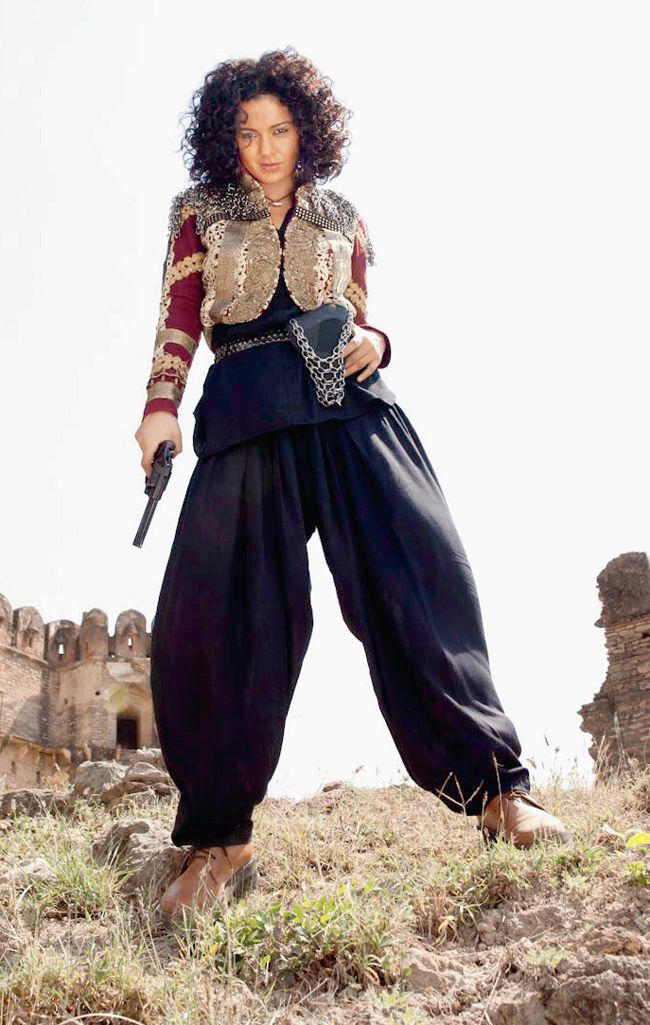
I do get that the heroine appears based on Phoolan Devi, the subject of Bandit Queen. who transitioned from outlaw to politics. Here, Alka Singh, a.k.a. “Revolver Rani” (Ranaut), has just seen her group toppled in elections by her opponents in the Tomar party, led by her nemesis Udaybhan Singh (Hussain) – there is also a blood feud there, as Rani killed one of his relatives in her outlaw days. Her political career is further derailed by Alka falling for wannabe Bollywood actor, Rohan Mehra (Das), and the Tomars decided to take some of their revenge on her by kidnapping him. While she rides to the rescue and succeeds in liberating him, their relationship grows increasingly complicated: not only does she have to deal with the Tomars, her uncle (Mishra), who has been carefully plotting her rise to power and influence over the preceding years, is also unimpressed with what he sees as Rohan’s distraction. So he drugs his protege, and forces Rohan to marry in order to get him out of the picture, even though alka is, by now, pregnant with his child.

It is, presumably, deliberate that the songs here are quite extraordinarily crappy, featuring lyrics like “I am not bad, I am brutal, my baby/I will eat you like noodle, my baby.” And do not even get me started on the band of Michael Jackson impersonators, hired to perform at an event. The main issue is that, after a fun, animated opening credit sequence and Alka’s rescue of her boyfriend, we see virtually nothing of her bad-assishness until the very end of the film. Despite her fondness for metallic lingerie, “Revolver Rani” spends most of the intervening time – and, in keeping with Bollywood tradition, that is a lot of time (this runs 132 minutes in total) – either unconscious or wanting to be little more than a mother and housewife. She eventually does rebel against her uncle and his scheming betrayal, just as the Tomars send their forces to take her out, and the resulting gun-battle is impressively-staged; the very end also suggests Kabir has more than a passing acquaintance with Kill Bill. It is, unfortunately, very much a case of “too little, too late,” and while I admit this may play better to a native audience, any unprepared Westerner picking it up off Netflix is going to be very, very confused.

Dir: Sai Kabir
Star: Kangana Ranaut, Vir Das, Zakir Hussain, Piyush Mishra