
Vengeance of a Snowgirl

★★★½
“Revenge, truly served cold.”
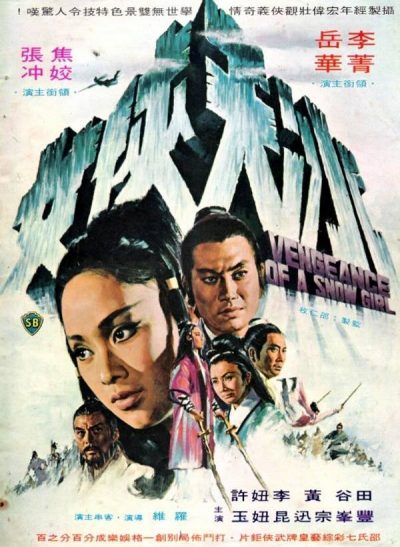
The elevator pitch version of this sounds like a million other kung-fu films: Shen Ping Hong (Li) seeks revenge on the people who killed her parents and left her crippled. But there’s rather more going on beneath the surface, and shades of grey on both sides. One of her targets, Lord Kao Hung, regrets what happened and wants to help Shen regain the use of her legs. But Shen only agrees to let his son Tien-Ying (Yueh) help, in the belief that it will make her mission of vengeance easier. It feels almost like she’s a mad dog, lashing out at anyone who tries to help; keeping the severed heads of her victims in jars is a clue there. Meanwhile, Kao’s associates – and Tien-Ying’s ex-girlfriend (Chiao) – think he’s helping because he wants to get Shen’s jade sword for his own ends, and are intent on getting their revenge in on her first.

Let the record show, Chris wandered in half-way through this, glanced at the screen and said, “Is that Sammo Hung?” Knock me down with a feather if it wasn’t Sammo, in a minor supporting role as a villainous henchmen. This is why I love my wife: her ability to spot martial arts legends in 1971 cameos. Er, well… Not just that. Anyway, this would be massively overshadowed by the release, just two days later, of another Lo Wei film, his first for fledgling studio Golden Harvest. The Big Boss would put both studio and its star, one Bruce Lee, on the map, and Snowgirl would be all but forgotten.

In particular, the way it twists the usual “You killed my _____ and must die!” tropes are what makes this stand out, along with a second half which turns into something resembling a series of video-game side quests. Because the spring where Shen can heal her legs is so frigid, you need a magic pearl to survive near it for more than a few seconds… The pearl is in the belly of a volcano, reaching which requires a suit of flame-resistant armour (looking remarkably like a fireman’s uniform)… This is held in the treasure house of a remote prince, who will only agree to lend it out, if Shen can beat his champion… And there’s not a save point in sight.

The fights are decent, rather than spectacular, and we never get the hoped-for face-off between Shen and the disgruntled ex-girlfriend, who has skills of her own. On the other hand, Li does a good job of working round her character’s disability – though her ability to fly, makes me wonder why she bothers walking anywhere! Lo, who also makes a brief appearance as the heroine’s father, shoots good, long takes which help enhance his lead actress’s talents, and if nothing else, the ending will likely stick in your mind for its unexpectedly downbeat example of altruism and self-sacrifice. It mostly looks very nice, except for a thoroughly unconvincing “volcano”, and all told, it’s a shame this isn’t more well-known.

Dir: Lo Wei
Star: Li Ching, Yueh Hua, Ku Feng, Lisa Chiao
Operation Lipstick

★★★
“I have a knack for stealing hearts, just like the way I steal your wallet.”

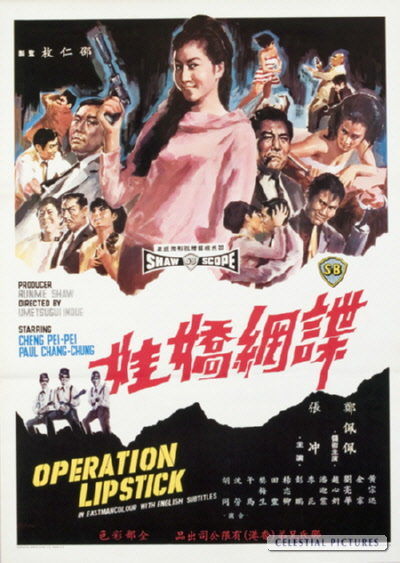
So warbles Li Bing (Cheng), a second-generation thief who has abandoned the criminal life and now performs a cabaret turn which is part song-and-dance, part magic act. These efforts to go straight are derailed when her former partner (Lee) shows up, demanding shelter due to being pursued for a wallet he lifted. She agrees to help, only if he returns the stolen property: when they try to do so, they find the owner now lacking a pulse.
It’s all part of a convoluted caper involving a dead nuclear scientist, and the microfilm containing the secrets of the atomic engine on which he was working. Various parties want said data, including: a Triad gang specializing in espionage, who operate out of a rival nightclub; the local counter-intelligence authorities, who recruit Li to their cause; and freelance operative Zhang Yee (Chung), who reluctantly partners up with Li and provides the romantic interest. The trail involves the key to a locker in a Turkish bath-house, which in turn leads to a hollow statue that does NOT contain the microfilm. So, where is it?

I would likely have appreciated some kind of scorecard, to help me figure out who was part of which faction, and perhaps with a chart indicating the McGuffin in play at this particular point. The key? The statue? The fake copy of the key, which I may have forgotten to mention earlier? It’s all rather confusing, a cinematic version of three-card monte, in which the elements are swirled around at a dizzying speed, apparently designed to perplex, rather than enlighten. Yet, it remains entertaining, in the way only a Cantonese cover-version of James Bond could be.

Depite the poster, the talents  of Cheng that are put to use here are more towards the musical end, rather than the martial side. Indeed, save for a battle around the bath-house against a pair of enemy agents, and a roof-top face-off against the head of the Triad gang, it’s light on the meaningful action for her. Despite this, it certainly qualifies for inclusion, with Li demonstrating a persistent level of smart feistiness that is not out of line with her more fisticuff-oriented roles. [I’d love to have seen a prequel depicting her thieving days, and explaining how she ended up becoming a nightclub act!]

The best parts are when the film is at its most inventive, such as the trio of singing assassins with their lethal musical instruments, also a nightclub act. Bit of a giveaway that the lyrics to their song go, “We are world-famous for assassination, a few notes and you’re dead”! And if I ever become an evil overlord, who has access to a fiendish death machine, I will always check who is in said machine before I activate it, even if I am sure I placed my prisoner in there a few minutes earlier… Although sporadic, I found those fun moments did provide enough entertainment to repay my investment of time.

Dir: Umetsugu Inouye
Star: Cheng Pei Pei, Paul Chang Chung, Pang Pang, Lee Kwan

The Tournament (1974)

★★½
“Face off.”

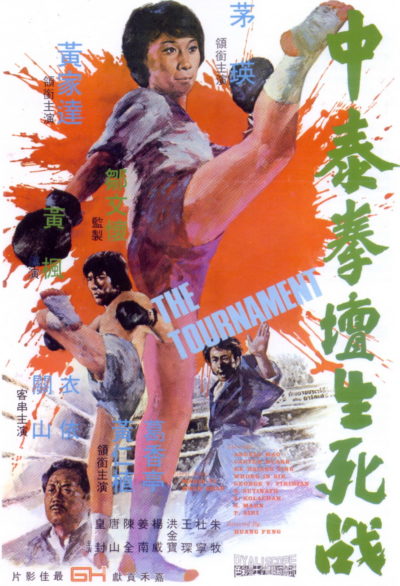
There’s a lot of chit-chat about face, honour and respect here. It begins when the master of a kung-fu school, Lau, has his daughter kidnapped by local hoodlums, after he won’t cough up protection money. Perhaps surprisingly, rather than using his skills to kick their arses, he sends two students to Thailand, including his son, Hong (Wong) in an effort to win the necessary funds. Hong loses, the other student is killed, and Lau is drummed out of the local Kung-Fu Association for having disgraced the name of Chinese martial arts by losing to foreigners. He’s so devastated, he hangs himself, leaving it up to his daughter, Siu Fung (Mao) to restore the family name, learn how to mesh Chinese kung-fu with Thai boxing, and rescue her sister. Quite the “to-do” list, I’d say.
There are 10 extremely good minutes in the middle of this, beginning when Siu Fung has to fend off a predatory takeover bid from a Japanese karate school, and their top fighter, played by Korean kicker Whang In Sik. This is immediately followed by a visit from the Kung-Fu Association, who are intent on testing her skills. Repeatedly. And against a range of opponents, including a particularly impressive battle against a young, fairly long-haired Sammo Hung. It’s glorious, and probably just about justifies the rest of the film. Because the remainder is likely only of interest if you are really into Thai boxing bouts, and since the great majority of these do not involve Mao, I was severely unimpressed.

The story is particularly poorly-written, to the extent I still couldn’t tell you with any degree of confidence what the competition proclaimed in the title actually was. Similarly, the kidnapping with which the film opens, is entirely forgotten about, for what seems like forever. Even by the low standards of plotting for the time, this is particularly weak sauce. Not least, because it’s clear that Mao is a better fighter than Wong, both in storyline and cinematic martial-arts terms – and that’s even before heading off to learn Thai boxing. For example, the sequence described above starts when Siu Fung has to rescue her brother from the Japanese, after their master has beaten Hong up. So why is she stuck on the sidelines for so much of the film? It’s immensely frustrating.

Random trivia note: the home of the Kung-Fu Association is located at 41 Cumberland Road, which in reality, was the last house Bruce Lee bought. He purchased it in July 1972, and lived there until his death a year later. Barely 12 months further on, this movie came out in Hong Kong: seems a little tastelessly quick by Golden Harvest to turn Lee’s home into a location. This nugget is likely more interesting than a good 80% of the film – specifically, the 80% which does not feature Angela Mao kicking ass. But as my gift to you, the YouTube video below is paused to start at the beginning of the best bit. You’re welcome!

Dir: Wong Fung
Star: Angela Mao, Carter Wong, Wilson Tong, Sammo Hung

Angel With the Iron Fists

★★½
“From Hong Kong With Love.”

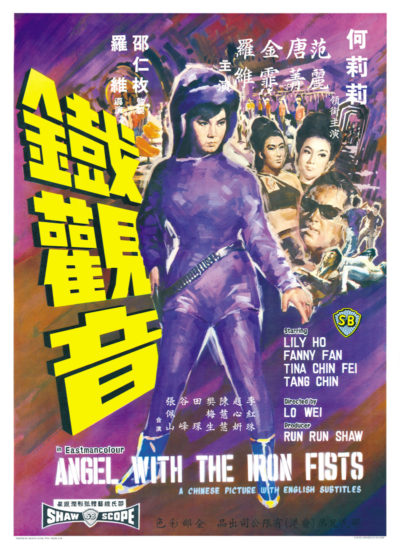
Swinging wildly between the surprisingly smart and the brain-numbingly stupid, this 1967 Hong Kong film is, in the end, not much more than a bad James Bond knock-off, despite its female lead. The heroine, Luo Na (Ho), is unsubtly named Agent 009, and goes to Hong Kong, posing as the mistress of an imprisoned gangster, who supposedly knows where he hid his ill-gotten gains. This brings her to the attention of the Dark Angels, whose leader is played by Tina Chin-Fei. This is a surprisingly gynocentric organization, owning both a vast, sprawling, underground lair and fetching two-piece uniforms. Keen to find out what Lona knows, they recruit her – which was 009’s cunning plan all along.
As well as straight out lifting some Bond musical cues, the makers go with the same kind of gadgets, Luo Na being given an entire arsenal of lethal purses, perfume and jewels before entering the Dark Angels’ lair. She also has some nifty sunglasses which allow her to tell when someone has been in her room, and Ho plays her as smartly competent, not relying on her sex appeal to get the job done. Or, at least, not relying entirely on her sex appeal, for she has to lure in high-level minion, Tieh Hu (Ching), which doesn’t sit well with his girlfriend, nightclub singer Dolly (Fan). If you can detect the faint whiff of Eau de Imminent Catfight, you’re not wrong.

The problem is mostly the villains, who appear to have strayed in from Austin Powers. For instance, there’s one scene where Luo Na is on a reconnaissance mission. Surprised by three guards, she engages in fisticuffs with them for while, and only then pulls a gun on them. They simply slouch off, shame-faced, and she continues reconnaissancing. Perhaps they were too embarrassed at being beaten by a woman to, oh, RAISE THE GODDAMN ALARM? And if ever I become an Evil Overlord, I will be sure not to discuss specific details, down to the flight numbers, of my top-secret plan to flood the world with a new, powerful drug, in front of the most recent recruit, immediately following her initiation.

But there’s one thing I have to say: in terms of dealing with any treachery, the Dark Angels get the full 10/10 for style. Here’s what happens after the leader discovers one of her “branch managers” skimmed $100,000 off the takings. I laughed like a drain, at this hip sixties update to the staple of classical kung-fu film, the flying guillotine. Just a shame this kind of goofy invention is rarely found outside the lair of Evil, Inc., such as the leader’s Rosa Klebb-inspired footwear. It doesn’t help that Ho’s action talents are clearly limited – the lengthy “swimsuit show” of no purpose was particularly aggravating. The movie did prove successful enough to merit a sequel the following year, Angel Strikes Again. I’ll be tracking that down because, for all its flaws, if it contains one moment like the flying guillotine one here, it’ll be worth the investment.

Dir: Lo Wei
Star: Lily Ho, Tang Ching, Tina Chin Fei, Fanny Fan

Stoner

★★½
“On Her Mao-jesty’s Secret Service”

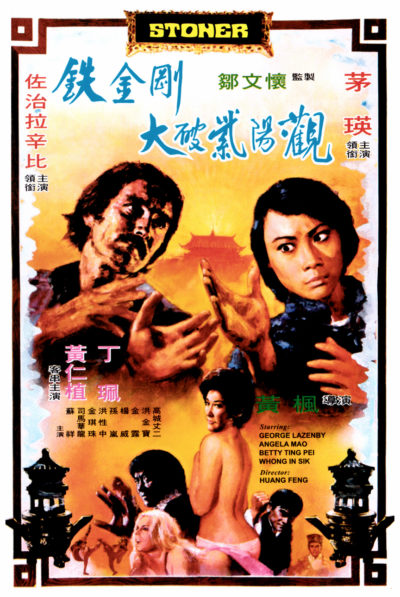
This production had a long, convoluted and quite interesting path to the screen. While Lazenby was always on board, the original plan was for him to be a Western bad guy, going up against Bruce Lee and Sonny Chiba. But Lee’s death – oddly, he was supposed to have had dinner with Lazenby that night – resulted in Chiba quitting, and Warner Bros then also backed out of their worldwide distribution deal. It was reworked as a much smaller film, at less than one-tenth the original budget (although at around $850,000, was still very expensive for the time, location and genre), with Lazenby now teaming up with Angela Mao.

He plays rough, tough Australian cop, Joseph Stoner, who heads for Hong Kong after his sister gets hooked on the new, super-powerful aphrodisiac “happy pills” created in the laboratory of evil drug kingpin, Mr Big (Hwang). She’s Taiwanese cop Angela Li, sent undercover to bring him down. Eventually, they join forces, but this isn’t until well over an hour into the film. To that point, they are each investigating in their own way Mr Big’s activities. Stoner’s approach appears to involve doing an impression of a bull in a china shop, while Li uses a smarter approach, to infiltrate the temple which is the distribution hub, posing as an innocent vendor of soft drinks. Both eventually end up in the same place – a cage in Mr Big’s lair – leading to a creepy scene where she has to fend off a happy pill-crazed Stoner.

It’s interesting that, in both the dubbed and subbed versions, Mao gets top billing ahead of Lazenby, despite the latter’s fame for having played 007 a few years previously. It is very much a two-hander, with each getting their own share of screen time. Lazenby does a surprisingly impressive job with the more physical aspects, and apparently put in a great deal of training. The problem is – as with his portrayal of James Bond – the actor’s inability to convey any emotions with the slightest degree of conviction. Even when talking about his sister, he might as well be reciting sports scores. Still, there’s plenty of funky seventies style to appreciate, such as the rotating desk apparently bought by Mr. Big from a yard sale at a local TV news-room.

Mao is, for our purposes, the true star, and I’d be hard pushed to say this would have been improved by the presence of Sonny Chiba. You have to wait quite a while for any significant action from her though, coming when she sneaks into Mr. Big’s headquarters. This unfolds in a way which suggests Bruce Lee’s foray from Enter the Dragon, and you wonder if this was part of the original script, intended for him before his untimely demise. On the whole though, I’d rather have dispensed entirely with Lazenby, and given the entire film to Mao, for this demonstrates that brains is often more interesting to watch than brawn.

Dir: Huang Feng
Star: Angela Mao, George Lazenby, Betty Ting, Hwang In-shik
a.k.a. The Shrine of Ultimate Bliss

Angel Force

★★★
“In the jungle, the Lee-on sleeps tonight…”

This is confusing. For the IMDb lists a completely different film by the same title – also made in 1991 and starring Moon Lee. That one stars Simon Yam: this one doesn’t. Meanwhile, Amazon has Yukari Oshima in the cast – I may have blinked and missed her, but more likely she was in the other one. It is also, despite the title, entirely unrelated to the Angel series, though did remind me I’ve not yet got round to reviewing parts two and three of that. If you see it referred to as Mission Kill and Mission of Condor too, I think that’s the “other” Angel Force as well; one site even refers to this movie as Lethal Blood 2, although it bears no relation to the first movie there either. I hope this helps…

Regardless, I wondered early on if this would even qualify, as May (Lee) takes a back seat, playing second banana to her boss, Peter (Lam). He has been tasked with rescuing kidnapped Westerner Harrison, stashed away after his capture, deep in the Burmese jungle by local drug lord, Khun Sa [who appears to have been a real person]. After putting together a team, on virtually the eve of the recovery mission, Peter is gunned down in an attempted hit, and it’s up to May to lead things. There are problems both outside and inside the team. A mole is leaking information on the mission to the people they are after, and the first guy Peter recruits, Benny (Ng), turns out to be a borderline psycho, who gets a bit rapey with a captured enemy. It’s up to May to complete the mission, get out alive, and then figure out who is the informant.

Right from the start here, there’s no shortage of action. Though a bit too much of it consists of two group spraying automatic gunfire at each other, through thick jungle foliage and with all the accuracy of Imperial Stormtroopers. While I am never averse to seeing a guard-tower explode in a good, giant fireball, there is a limit to the appeal of such things, and it is certainly reached here, well before the arrival of what may be the first deus ex helicopter in cinema history. I was also amused by the painfully early nineties approach to both mobile phones the size of bricks,  and high-tech searches represented by a computer screen where the text largely consists of word-processor installation instructions. No wonder the team ended up with Psycho Benny.

Fortunately, the guns here jam or run out of ammo with regularity which could be concerning if I were a weapons manufacturer. As a viewer though, the film is on far more solid ground when dealing with the hand-to-hand action. Lee leads from the front with some fights that showcase her speed and agility to good effect. The most notable of these is a battle against Fujimi Nadeki after the near-assassination of Peter, in which May chases the killer through the streets on a motorcycle, to a half-demolished building. A savage gun-battle follows, notable not least for May’s point-blank execution of one man, ending with her going up against Nadeki. While it forms the high point, more or less any time Lee puts the gun down is a good indication you should start paying greater attention here.

Dir: Shan Hua
Star: Moon Lee, Wilson Lam, Hugo Ng, Fong Lung
a.k.a. Tian shi te jing

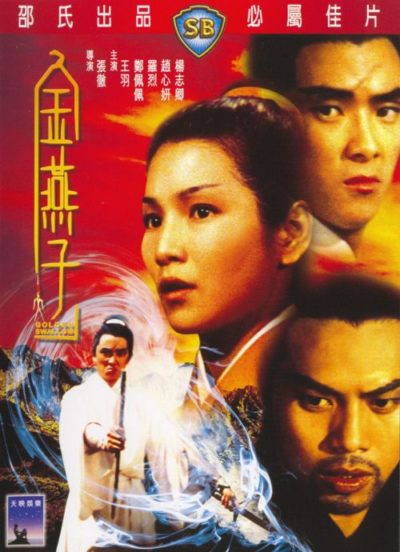
Golden Swallow

★★
“Roc beats Swallow”

If this seems somewhat familiar, it’s because it is not dissimilar to Iron Swallow, reviewed just a couple of weeks back. However, this is the official sequel to Come Drink With Me, in which Cheng reprises her character of Golden Swallow, rather than being the Taiwanese knock-off. Ms. Swallow is living a fairly quiet life, fighting for the rights of the underdog, etc. along with the aid of Golden Whip (Lo). Their peace is disturbed by the actions of Silver Roc (Wang Yu), who is carrying out various massacres, and leaving Swallow’s trademark darts at the scene, in order that she gets blamed for the crimes.
Turns out this is Roc’s idea of courtship, figuring it’ll force Swallow to track him down – and not with the aim of serving a restraining order, as I’d have said was more likely. Odder still, this “massive body count in lieu of a bouquet of flowers” concept actually appears to work, at least piquing Swallow’s interest, and thus  setting up a love triangle between Swallow, Roc and Whip. It’s only interrupted by the arrival on the scene of Poison Dragon (Yeung), and the two suitors put aside their scheduled duel to the death on top of a mountain, in order to take care of the real villain.

Despite the title – particularly the alternate one, which promises a whole level of action the film isn’t interested in delivering – and lead billing, this is significantly less about Swallow than Roc. And that’s a shame – Wang Yu would get plenty of his own opportunities to shine, he didn’t need to be hijacking the limited chances given to Cheng. Took me a little while to work out, too, that his character is named after a mythical giant bird, not a boulder. The references to “soaring rocks” were quite confusing for a while, until I figured this out.

The fights are okay, rather than impressive. They’re certainly not helped by Chang’s style, apparently an early ancestor of the MTV style of shooting action. This involves the camera being pushed too close in to capture the skills of the participants, and a primitive version of steadicam, which is certainly not steady in the slightest. I didn’t like it. I had high hopes for a scene which began with Swallow sitting quietly in a tea-house, which seemed to be echoing one of the most memorable sequences from Come Drink With Me, but it was little more than a nod, and was over before it had properly begun.

I wasn’t all that impressed with Drink, finding it more influential than entertaining. But it is still considerably better than this, which never gets off the ground thanks to a laughable plot, and carries out something perilously close to a bait and switch, with the heroine of its title reduced to a supporting role. What a waste of Cheng’s talents.

Dir: Chang Cheh
Star: Cheng Pei-pei, Jimmy Wang Yu, Lo Lieh, Yeung Chi-hing
a.k.a. The Girl with the Thunderbolt Kick

Angels With Golden Guns

★½
“Virgin on the ridiculous.”

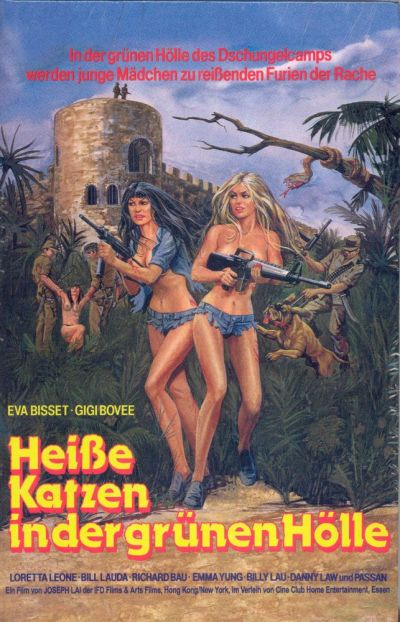
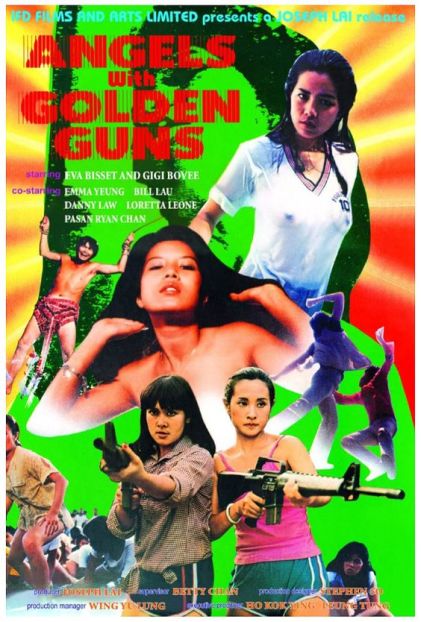
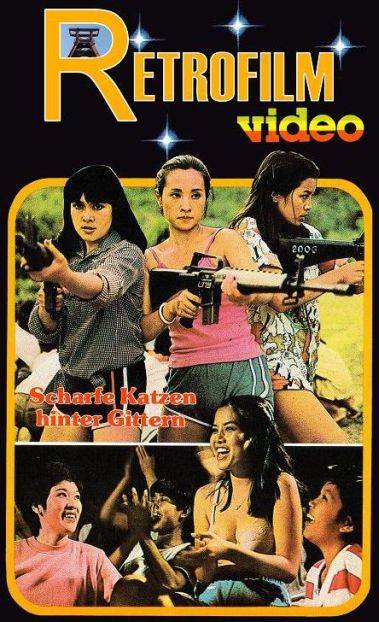
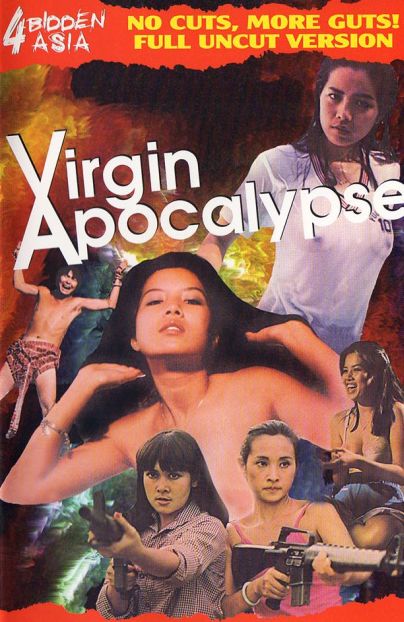
The beautifully lurid sleeves above and below probably give you some idea of why this one fell across my TV. They probably also explain the sarcasm dripping from Chris’s lips, during the three minutes she remained in the room. I can’t really argue with her on this one: it’s an entirely incoherent mess, though I have to say, I was entertained somewhat more than the one and a half star rating above would imply. The latter is a reflection of quality, and that I could only recommend this, even in the loosest of terms, to fans of bad movies who are feeling significantly masochistic.

The plot, and I used the term loosely, focuses on a white slavery ring, that seems to specialize in the bulk abduction of models who, in between being rented out to sleazy individuals. are then held in a remote jungle compound, from which there is no escape. We know there is no escape, because they try – quite why the captives don’t wait until the rather more escape-friendly location of their renting-out, is never clear. But, hey, this gives the warden who oversees them the chance to yell a lot, and there is also the opportunity for what may well be the biggest cat-fight in cinema history, so that’s nice. Meanwhile, a detective is also investigating the gang from the other direction – when not pretending to be gay, in a disco sequence which is either extremely tolerant or very homophobic, I’m not sure which.

According to what I’ve read, producer Joseph Lai inherited a film studio which had a lot of abandoned movies in various states of completion, and made his career out of finishing them – usually with little regard for continuity or logic – and marketing the results by focusing heavily on the sizzle. I can’t vouch for the veracity of this, yet it certainly goes a long way towards explaining the results here, which includes a strip version of Play Your Cards Right (Wikipedia advises me that US visitors should read that as Card Sharks). Matters are not helped by English dubbing that seems to have assigned accents at random, and music stolen from other, much better movies – I’m fairly certain Goblin didn’t give Lai permission to use chunks of their score from Suspiria, anyway.

Not that it’s an inappropriate choice, for this does capture a similarly incoherent, dreamlike quality – I suspect less through artistic vision, more a result of scenes that appear completely out of nowhere, bear exactly no relation to anything that has happened, then vanish without any further reference to them or their participants. If Andy Sidaris was Chinese, and entirely out of his gourd on magic mushrooms, this might be the sort of thing which would result. Just do not take that as any kind of recommendation.

Dir: “Pasha” (Shan Pa)
Star: Eva Bisset, Gigi Bovee, Emma Yeung, Hok Nin Lau
a.k.a. Virgin Apocalypse
or Terror in a Woman’s Prison
or, entirely inexplicably, Anger

Full Strike

★½
“Shaolin Shuttlecocks”

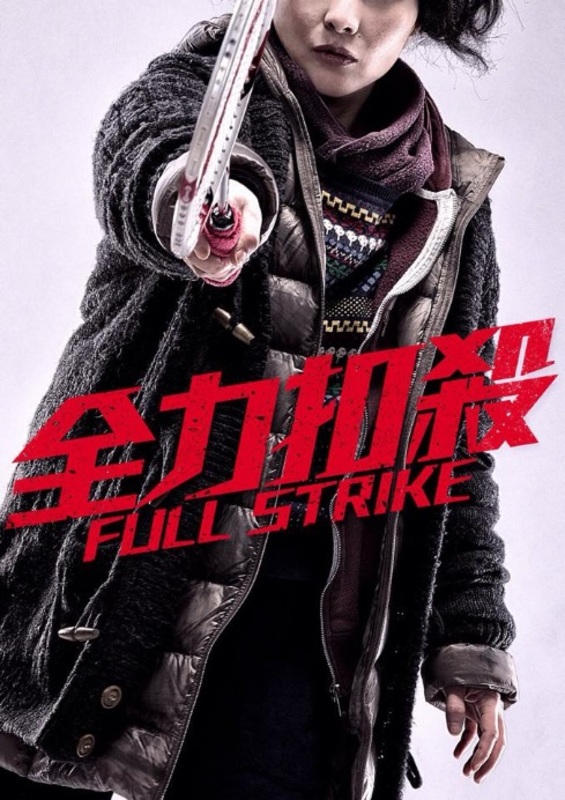
fullstrikeThis mediocre sports comedy seems to want to do for badminton what Shaolin Soccer did for the beautiful game. However, it falls short on just about every level, delivering little more than a shallow series of cliches. Former champion Ng Kau-sau (Ho), a.k.a. “Beast”, was drummed out of the sport ten years ago for anger management issues. However, her love of the game never died, and is rekindled when she bumps into a trio of former armed robbers, led by Lau Dan (Cheng). They have reformed and taken up the sport, under the tuition of an alcoholic former star, Master Champion Chik.

This is much to the consternation of the locals, who believe “Once a thief, always a thief.” They set up an opposing team, with their own coach, and both sign up for the Fantastic Five Asia-Pacific Badminton Tournament in Macau. Meanwhile, Lau Dan’s old buddies are trying to lure him back into a life of crime, and are plotting a raid on the Macau casinos the same night. What are the odds? About the same as both teams making it to the tournament final and facing off in a climactic showdown. Which, in this kind of film, is probably close to 100%.

There are a bunch of problems here, starting with the lead character, who isn’t exactly sympathetic. Let’s just say, her nickname is justified. The film then diverts into a middle section which seems almost to forget about her, being more concerned with Lau Dan. The height of the comedic stylings on view is when Master Champion Chik throws up, delivering the longest and grossest projectile vomit scene since The Meaning of Life. I will admit, I actually laughed. Still, it gives you a new appreciation for the true genius of Stephen Chow, who makes this kind of “plucky under-dog” comedy look easy. He combines plot, characters and, yes, jokes with grace into a consistent whole.

This never achieves anything like the same degree of cohesiveness, lurching uneasily from broad comedy to heartfelt drama. Then we reach the tournament, which covers most of the film’s second half. This involves a contrived version of badminton, requiring teams to substitute personnel half-way through the game. Why? The sole reason is, because the plot demands it. There’s no sense of escalation here either, unlike Shaolin Soccer. If you’ve seen one slow-motion shot of a shuttlecock crossing marginally above the net, or landing just inside the line, you’ve seen… The last 20 minutes of the movie to be honest.  The idea here isn’t without potential, and most of the personnel involved here have proven their talent elsewhere. The actual end product, unfortunately, falls well short of delivering.

Dir: Derek Kwok and Henri Wong
Star: Josie Ho, Ekin Cheng, Ronald Cheng, Tse Kwan-ho

Woman Avenger

★★★½
“A simple tale of vengeance, vigorously told.”

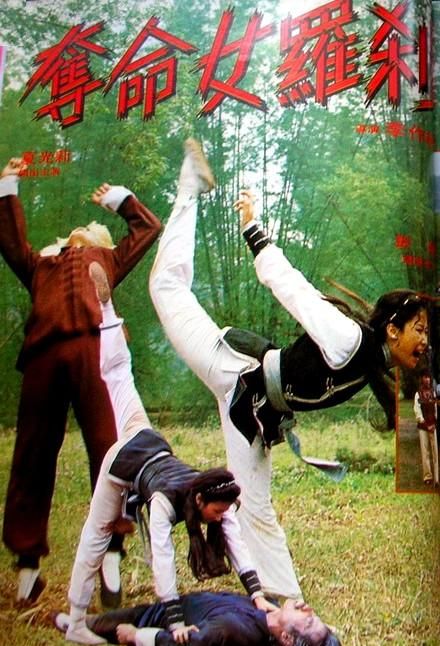
womanavengerThis appears to have been virtually the sole starring role for leading lady Shen, and that’s a shame. While, unfortunately, the only way you can see this is a badly cropped, English language version, her martial arts talents are undeniable. Chris caught the last 15 minutes on her lunch-break, and once she saw the skills on display, went from mocking the dubbing to yelling “Kick him in the balls!” at the TV. Repeatedly.

She plays Lu Ling Chi, who is delivering goods with her husband in the countryside when they’re attacked by a band of robbers. He is killed; she raped and left for dead. She’s rescued by a conveniently passing Buddhist priestess (Tai), who nurses our heroine back to health and, after some doubts as to the nature of her mission, teaches her kung-fu. Three years of training later, Lu goes undercover to infiltrate the gang, in the process, setting a new record for “least convincing male impersonator”, even by the low standards of martial arts films. She works her way up the chain, yet still lacks the skills necessary to best their leader, Kwong Wu Chi (Peng). However, she meets a woman (Yeung, I believe, though she’s not in the IMDb listing), crippled by Kwong and reduced to working as a prostitute. Her father used to be Kwong’s kung-fu master, and she offers to give Lu that techniques which will take him down.

The stuff between the fights is mostly blandly inoffensive, following the standard tropes of the genre, such as training montages, while Lu perfects her skills, under both her teachers. Though it is certainly unusual that both those are martial arts mistresses, rather than masters, making this an almost literal war of the sexes. But the presentation, in particularly the ludicrously inappropriate dubbing, reduces the film to something you might find at 3am in the morning on the El Rey network. [It’s not all the dubbing: Kwong’s blond wig doesn’t exactly encourage solemnity] Similarly, the reduction of the frame to a strict 4:3 ratio does the abilities of the stars absolutely no service at all.

It still isn’t enough to conceal the expertise of the participants though, with even the training montages showcasing Shen’s extraordinary flexibility. There’s a genuine sense of progression over the course of the film, with Lu learning new techniques and building them into her arsenal. For example, she learns how to attack her enemy’s joints from the priestess, and that’s seen a lot against the lower minions. However, it proves ineffectual against Kwong, and she needs to adopt different tactics, radically different from her early bouts. This allows Shen to demonstrate a number of styles, and if some are better than others, the overall impact remains impressive. Below, find a sample of her skills: I love, in particular, the way she disarms the gym owner, then discards the weapons obtained! I have to wonder why she never received any further chances to shine as a lead; whatever the reason, it’s probably our loss.

Dir: Lee Tso Nam
Star: Shen Kwan Li, Peng Gang, Tai Chi-Hsia, Sharon Yeung Pan-Pan