
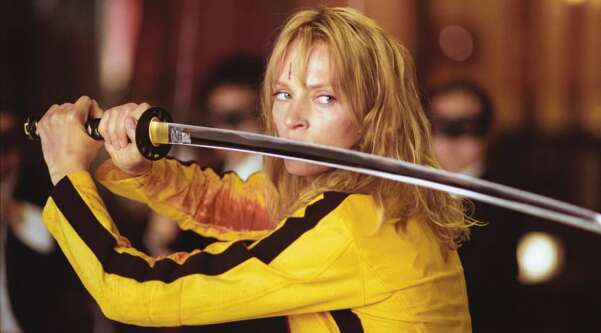
Kill Bill, Volume 1

★★★★½
“Here Comes ‘The Bride’…”

I don’t like Quentin Tarantino. In fact, every time I see his smug little face, I have to resist the urge to hit something. I do admire his talents as a scriptwriter, but think he needs someone else to rein in the pop-culture references and other self-indulgent excesses which pepper his work. That’s why I prefer From Dusk Till Dawn, Natural Born Killers and True Romance, and find Reservoir Dogs, and especially Pulp Fiction, very over-rated. I have no interest in hearing about the meaning of Madonna songs, or knowing what they call quarter-pounders in France. And don’t even get me started on his lack of ability as an actor…
There is also the nasty question of how much of what is praiseworthy, is actually Quentin’s own work. If you’ve seen the infamous Who Do You Think You’re Fooling?, which intercuts clips from Reservoir Dogs with very similar scenes from a Hong Kong movie made several years previously, City on Fire, you’ll know what I mean. I’d rather praise film-makers such as David Cronenberg, who do more than cobble together pieces “borrowed” from other people, no matter how amusingly post-modern the results may be.

 I say this, so you know I am no drooling fanboy, and am probably inclined to be more critical than most. But I have to say, the first part of Kill Bill is almost entirely satisfactory, recovering after a shaky start. When it opened with a quote from Star Trek (of questionable relevance), I feared this was a Kevin Smith movie, rather than the brutal action pic I wanted. But such tendencies were largely kept under control, perhaps because there wasn’t much dialogue in which to work smug references.

Instead, it’s the soundtrack which slides into self-indulgence. You can tell Tarantino grew up in the 70’s: he has rifled his CD collection yet again, mixing everything from the theme to The Green Hornet to spaghetti western music, with the overall effect leaden-footed and rarely more than painfully obvious. Yet there are more than enough wonderful moments to compensate for the odd bit of weakness.
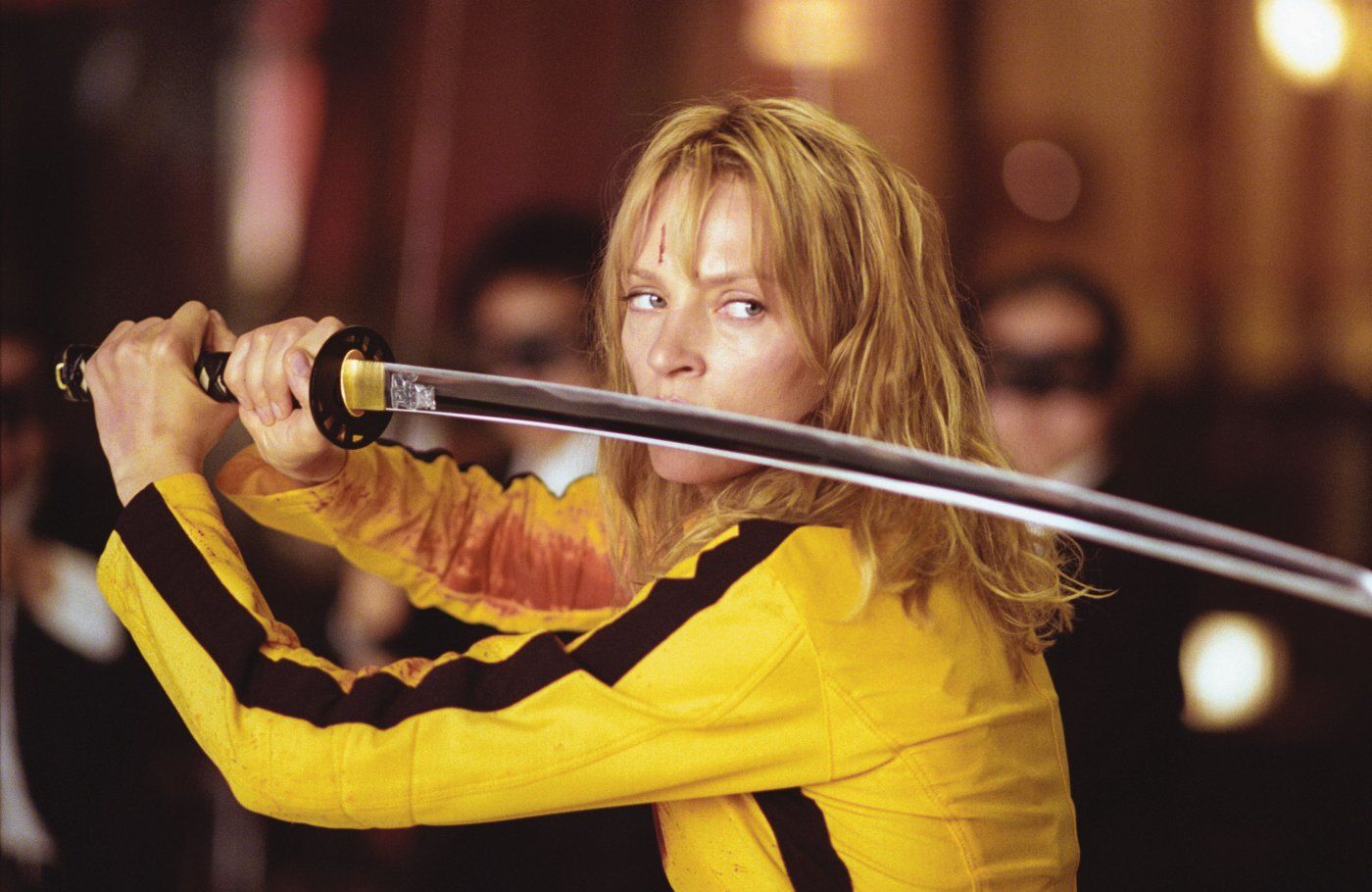
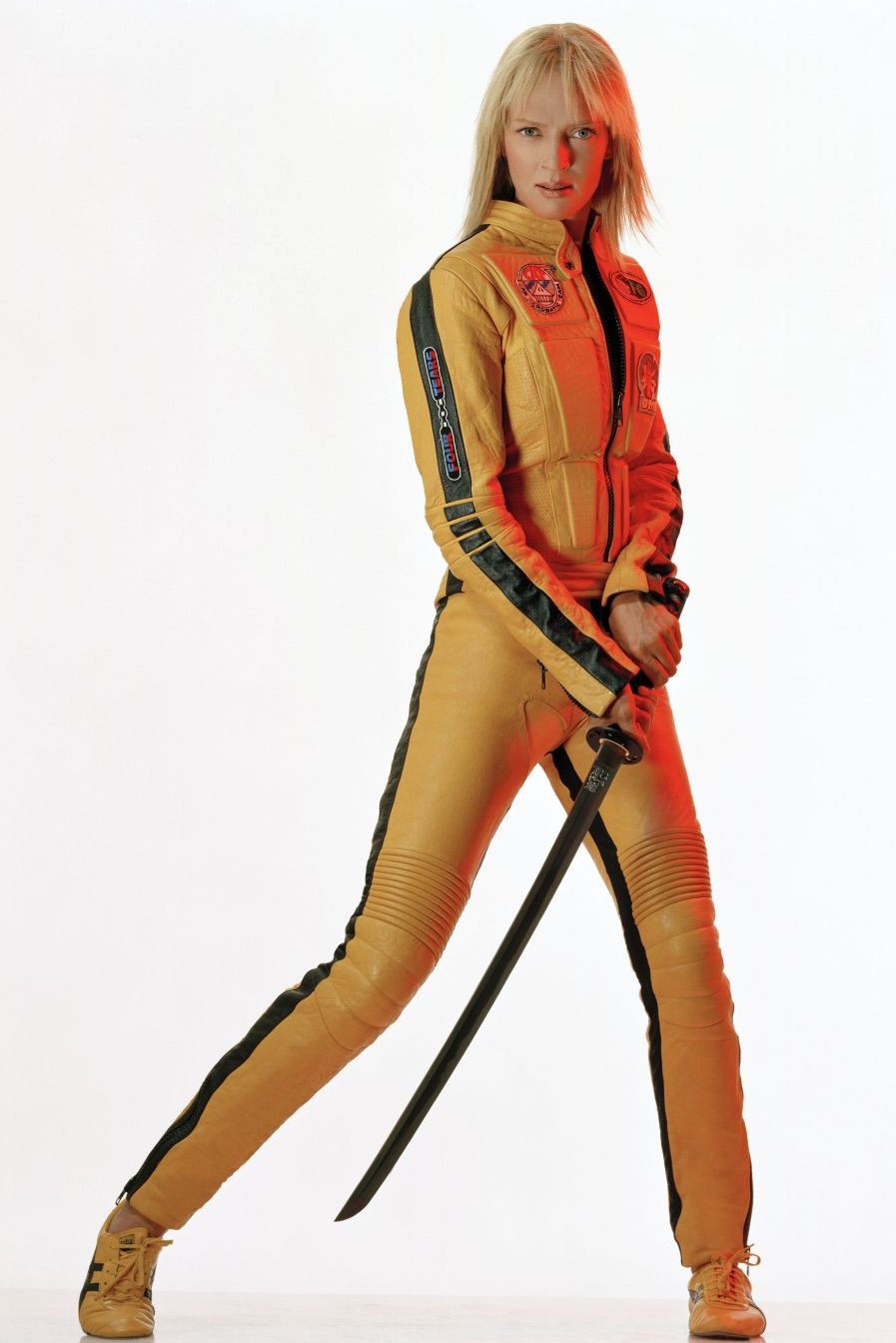
Uma Thurman is The Bride – her character is never named (it’s given a couple of times, but beeped out) – a member of the Deadly Vipers Assassination squad operating under the eye of Bill (David Carradine, not yet seen). When she tries to quit, her marriage is interrupted by the rest of the team, who kill the groom, the priest and even the guy playing the organ. They think they’ve killed the pregnant bride. They’re wrong.

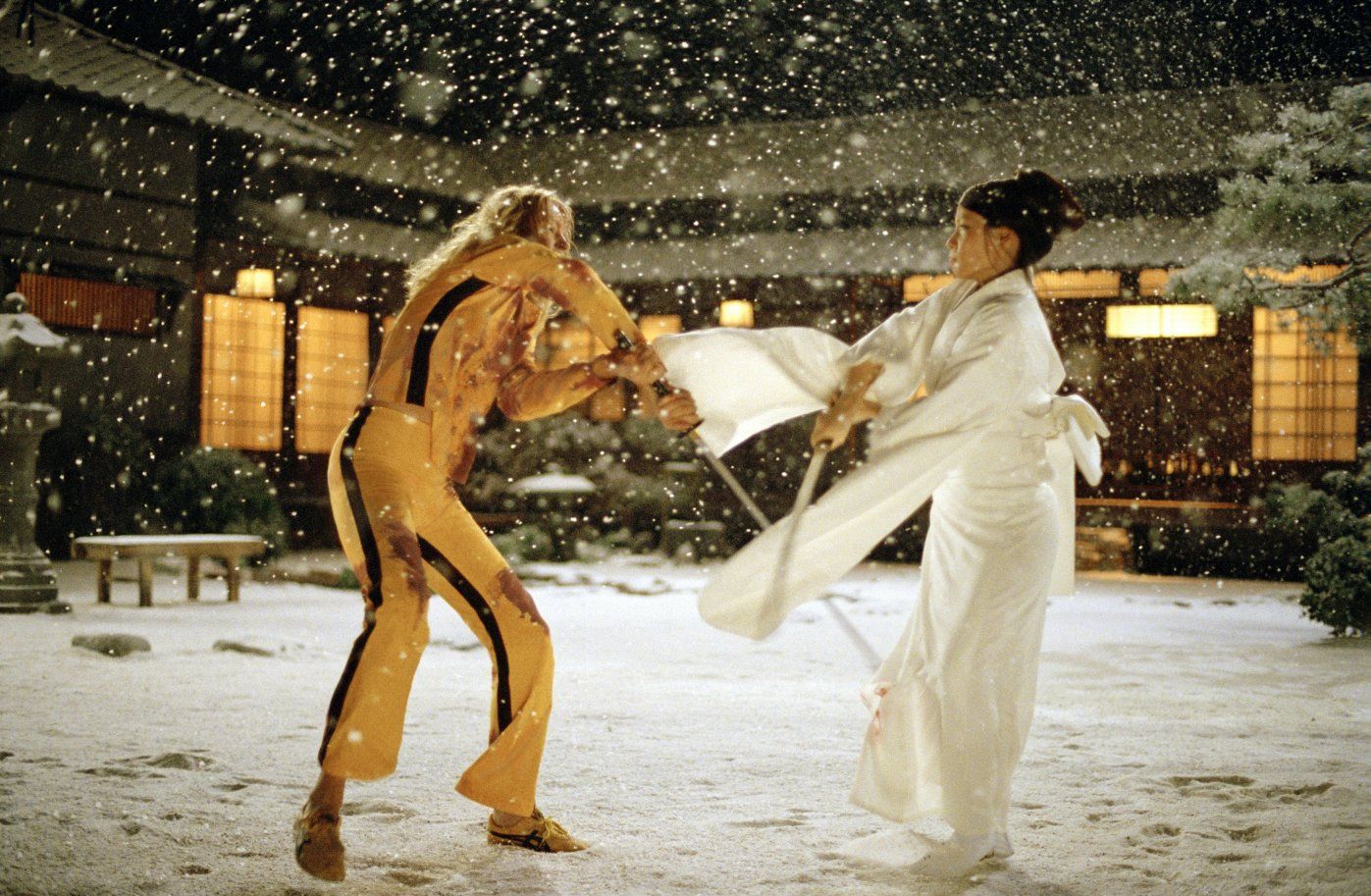
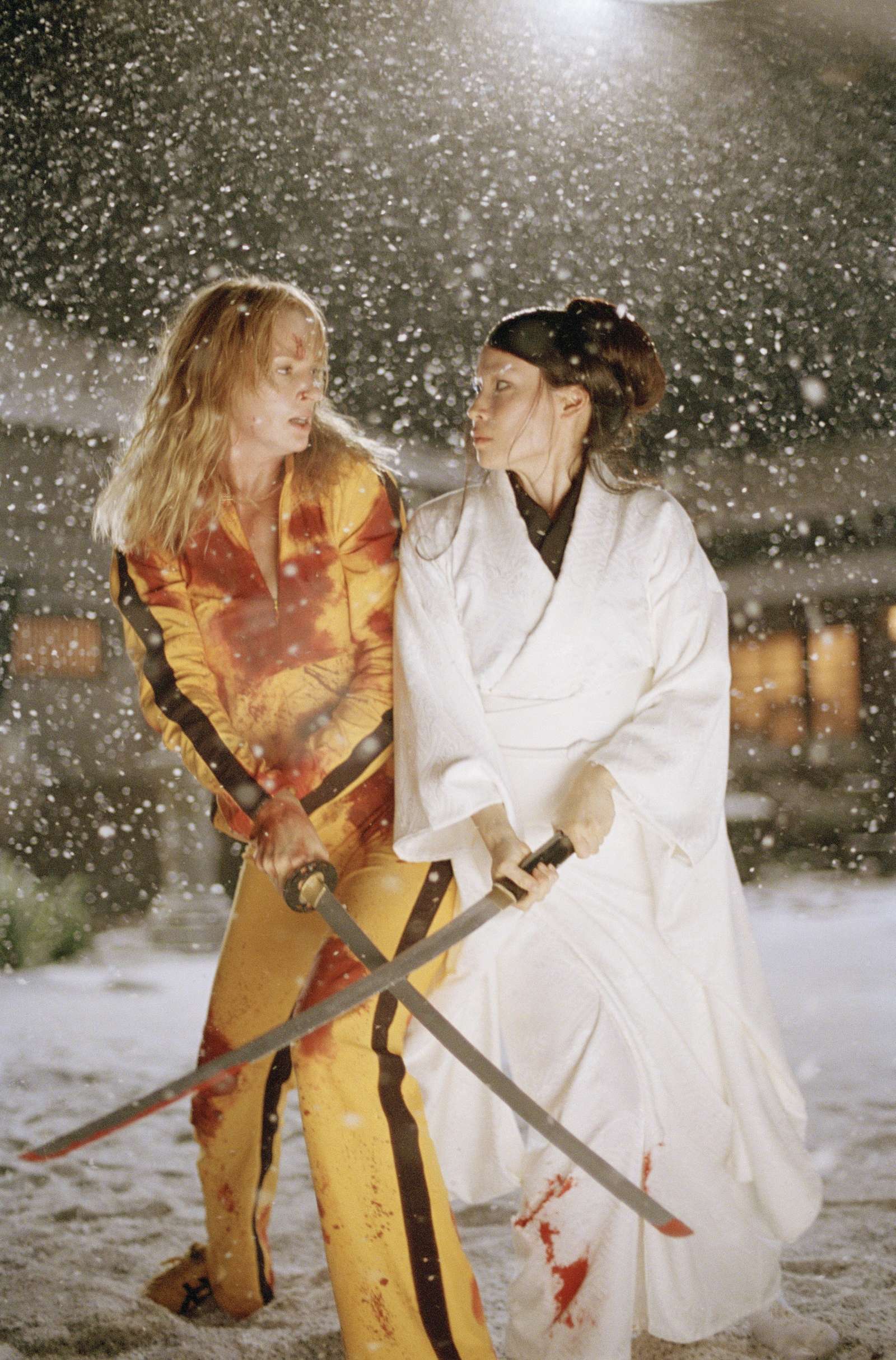
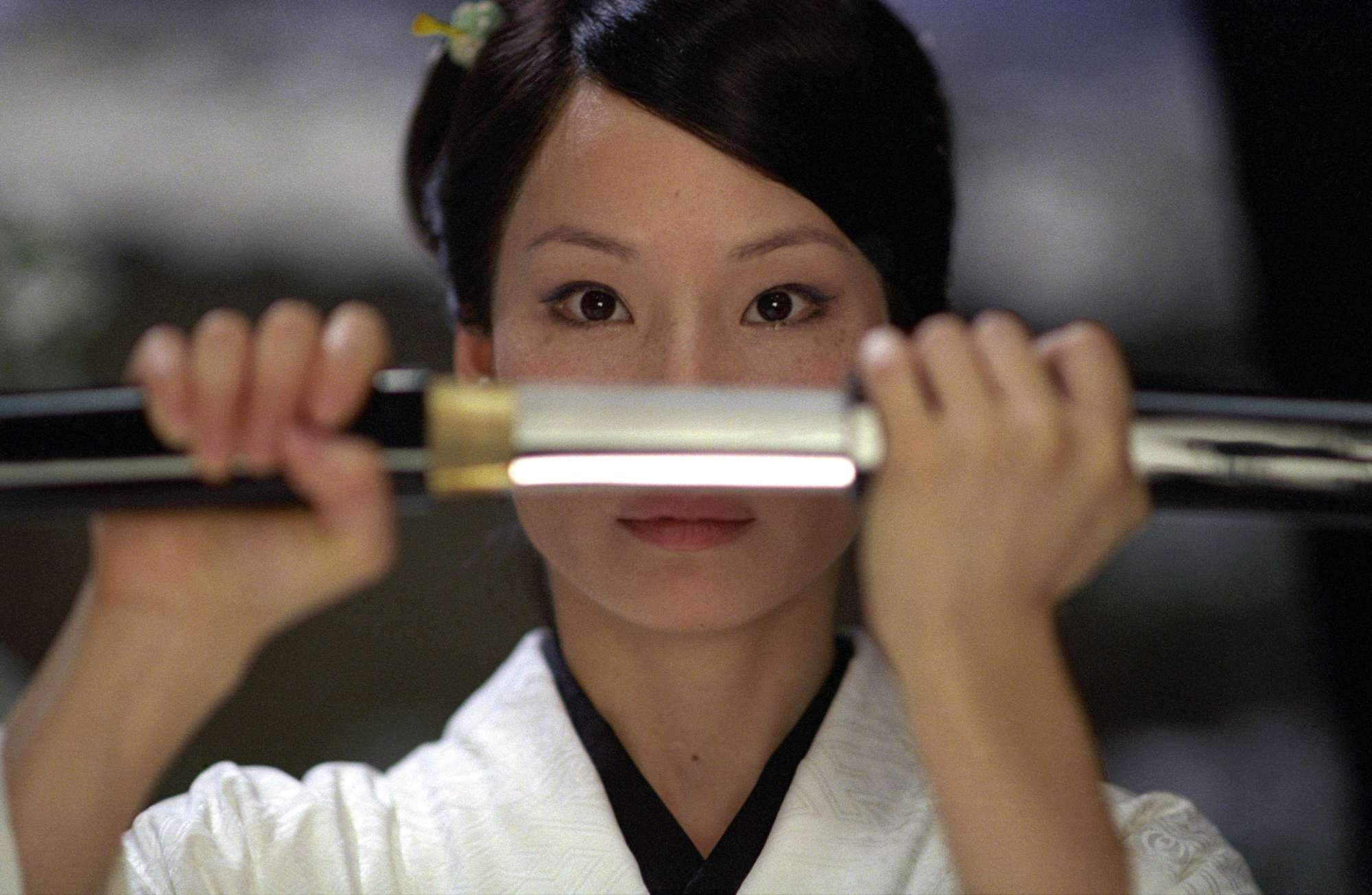
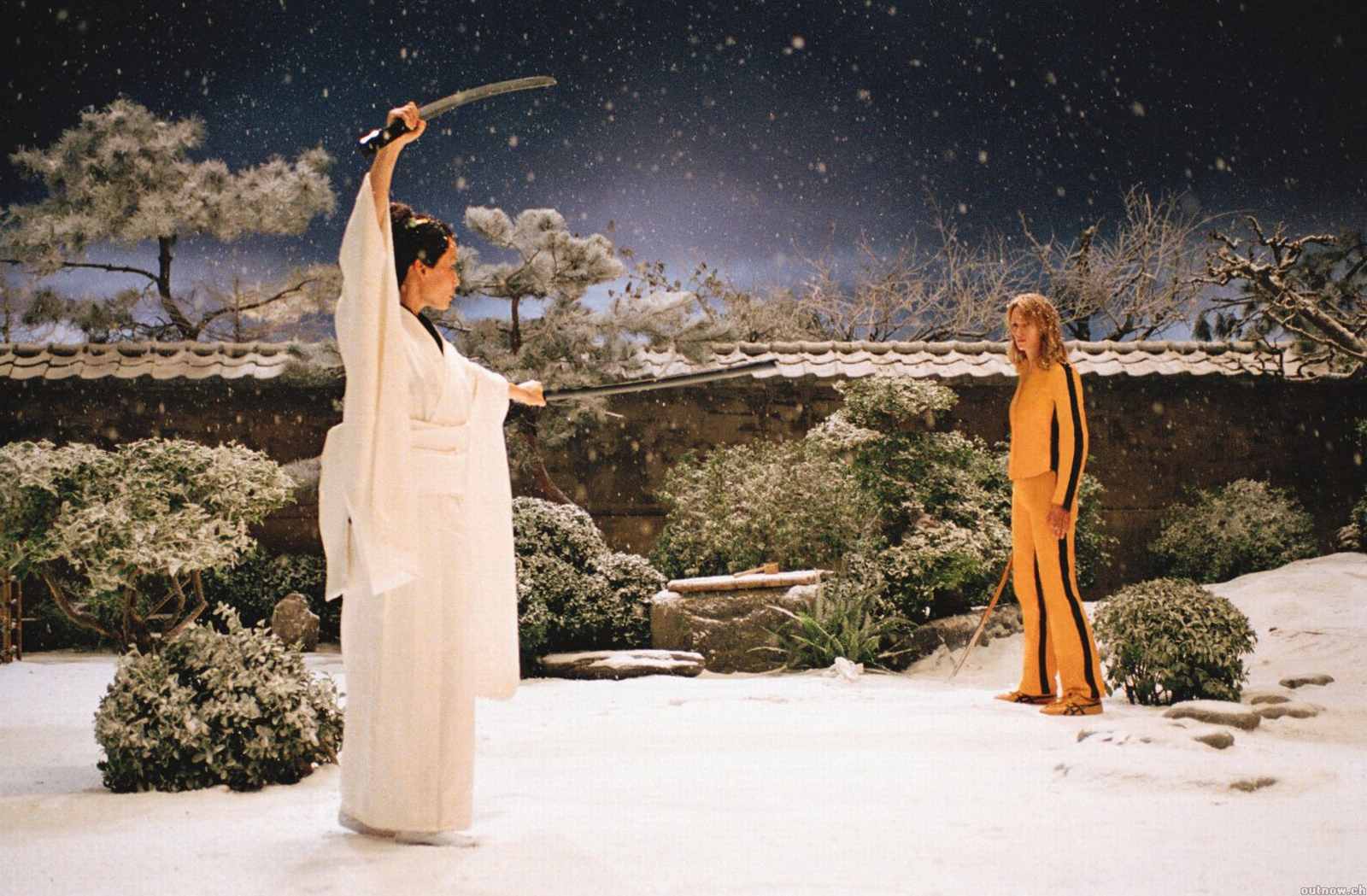
 Four years later, she wakes up in a hospital bed, with her child not to be seen. And, boy, is The Bride pissed. She vows to kill her four former colleagues, plus Bill. Volume One covers her awakening, plus the first two-fifths of her mission: Vernita Green (Vivica A. Fox), now a housewife and mother, plus O-Ren Ishii (Lucy Liu), now head of the Tokyo underworld.

She actually goes after O-Ren first; in typically maddening Tarantino style, he screws around with the timeline, and makes that the dramatic climax. Having seen her face Green, we know she survives O-Ren and returns to the States – so much for tension in the climactic battle. Okay, we know there’s another whole movie, and this is probably a moot point. But why bother? Why not just make Green her first target? That, and his tendency to go for a snigger at the most inopportune moments, is why I couldn’t let go completely, and love this as I wanted to.

Plotwise, there are certainly questions (spoiler alert!), though a second viewing might answer these:

  • How does Vernita Green, supposedly a top-rate assassin, manage to miss shooting The Bride from five feet?
  • After years in bed, The Bride’s legs are understandably weak: yet her arms are strong enough to drag her about?
  • What are the police up to for thirteen hours, while The Bride wiggles her toes in the parking lot of the hospital, after killing two people and leaving the corpses in her room?

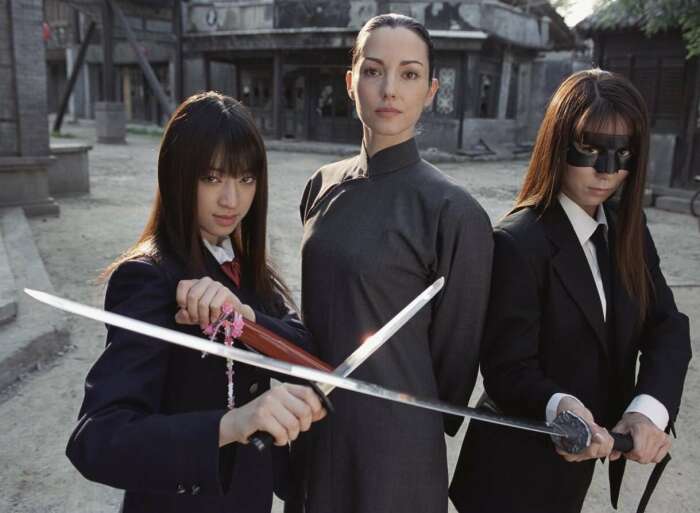
The Ladies of Kill Bill, Volume One
[Click pics to enlarge]

Uma Thurman

Lucy Liu
Chiaki Kuriyama
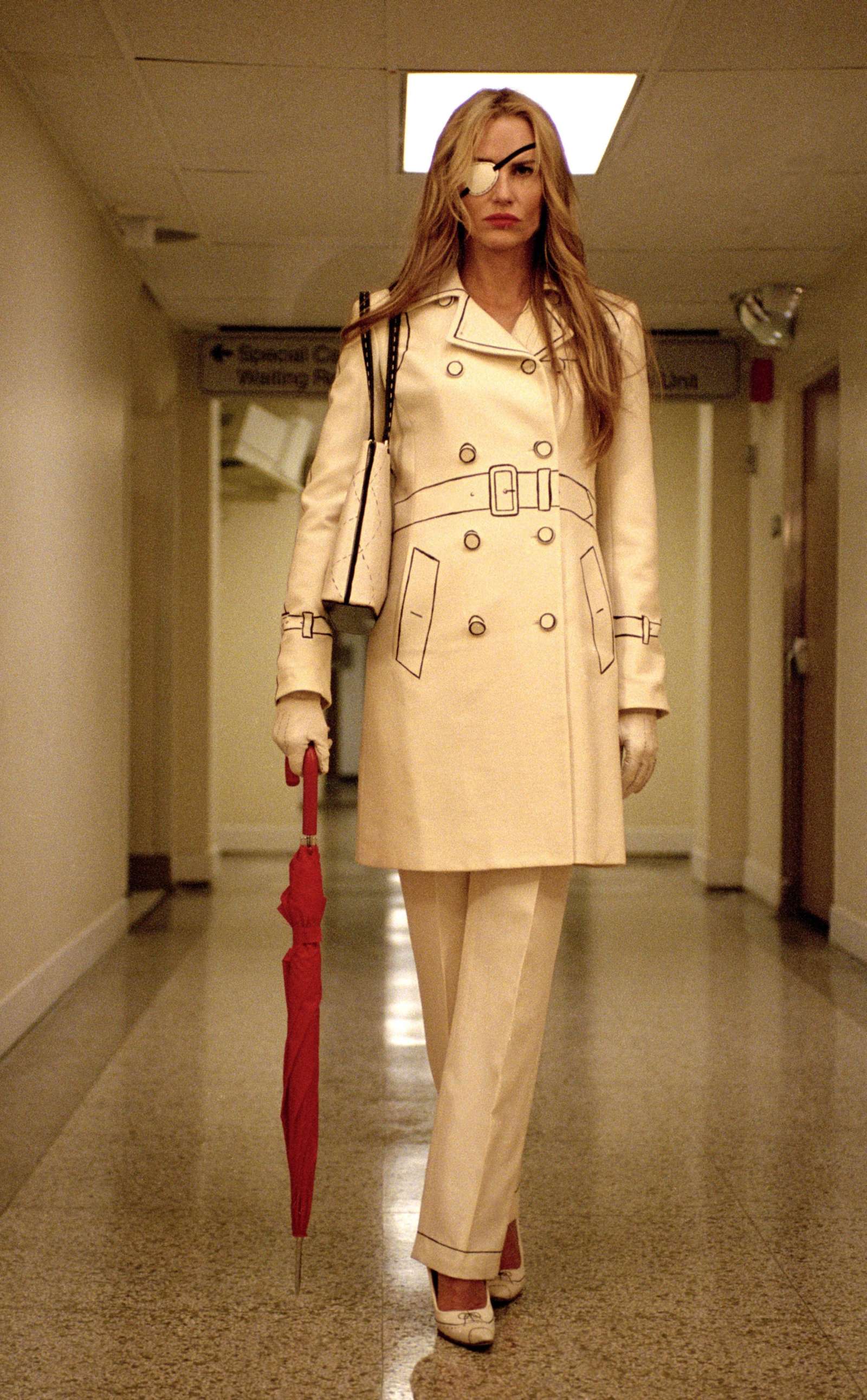
Daryl Hannah

However, there’s a beautiful, horrible animated sequence early on, depicting the early life of O-Ren, which proved so completely seductive, I gave up contemplating such trivial things as whether the plot made sense. I suddenly “got” the comic-book style the film was trying to achieve, and things like, oh, The Bride’s ability to bring a Samurai sword onto an airliner no longer bothered me. From then on, the movie became a delicious thrill-ride, albeit one of highly questionable morality – in many ways, that flashback also made O-Ren a more sympathetic figure than The Bride, who has (so far) no motivation for her career choice whatsoever. Liu also gets the best speech, after one of her underlings chooses to mention her mixed heritage. Fabulous stuff.

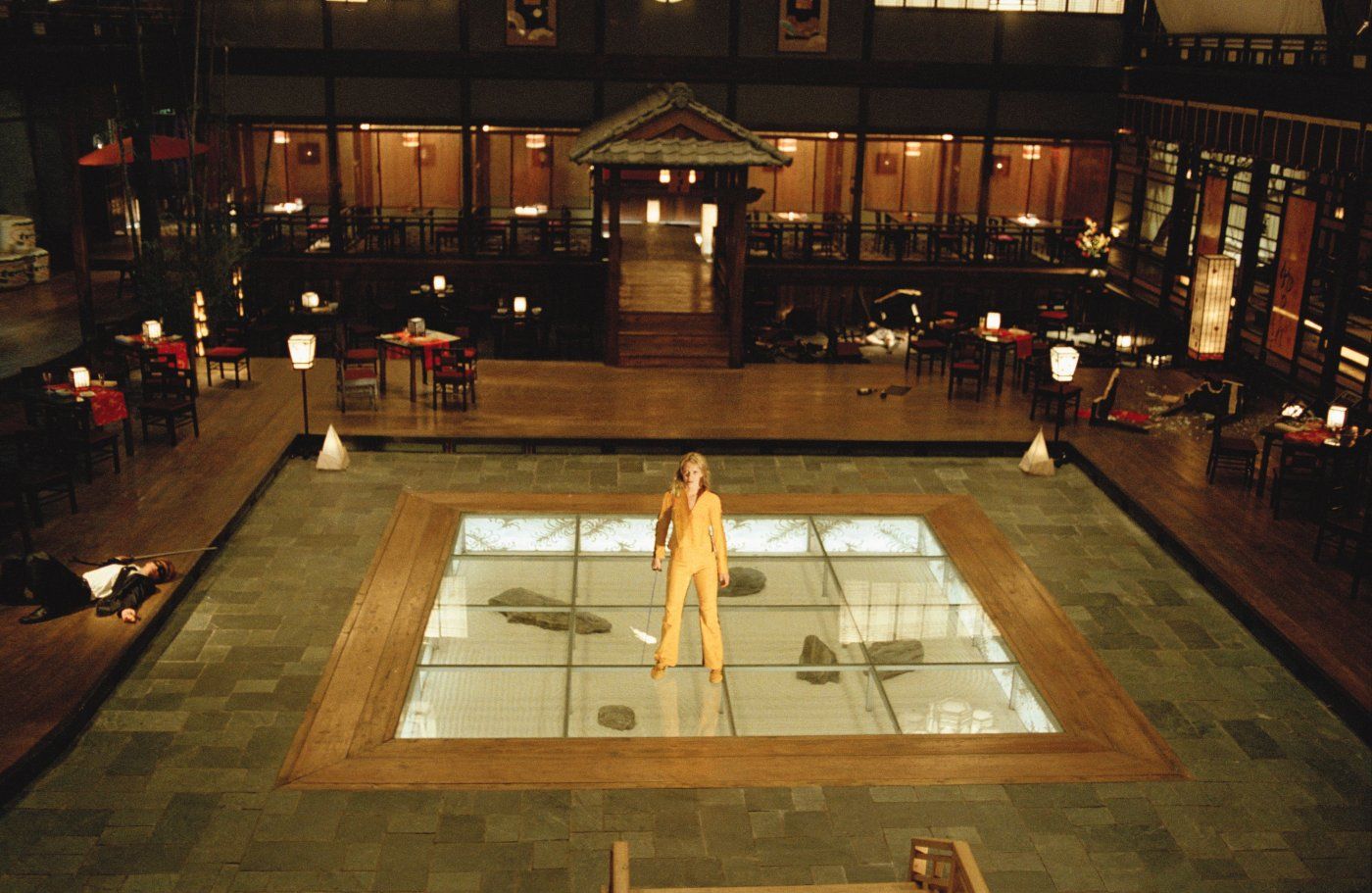
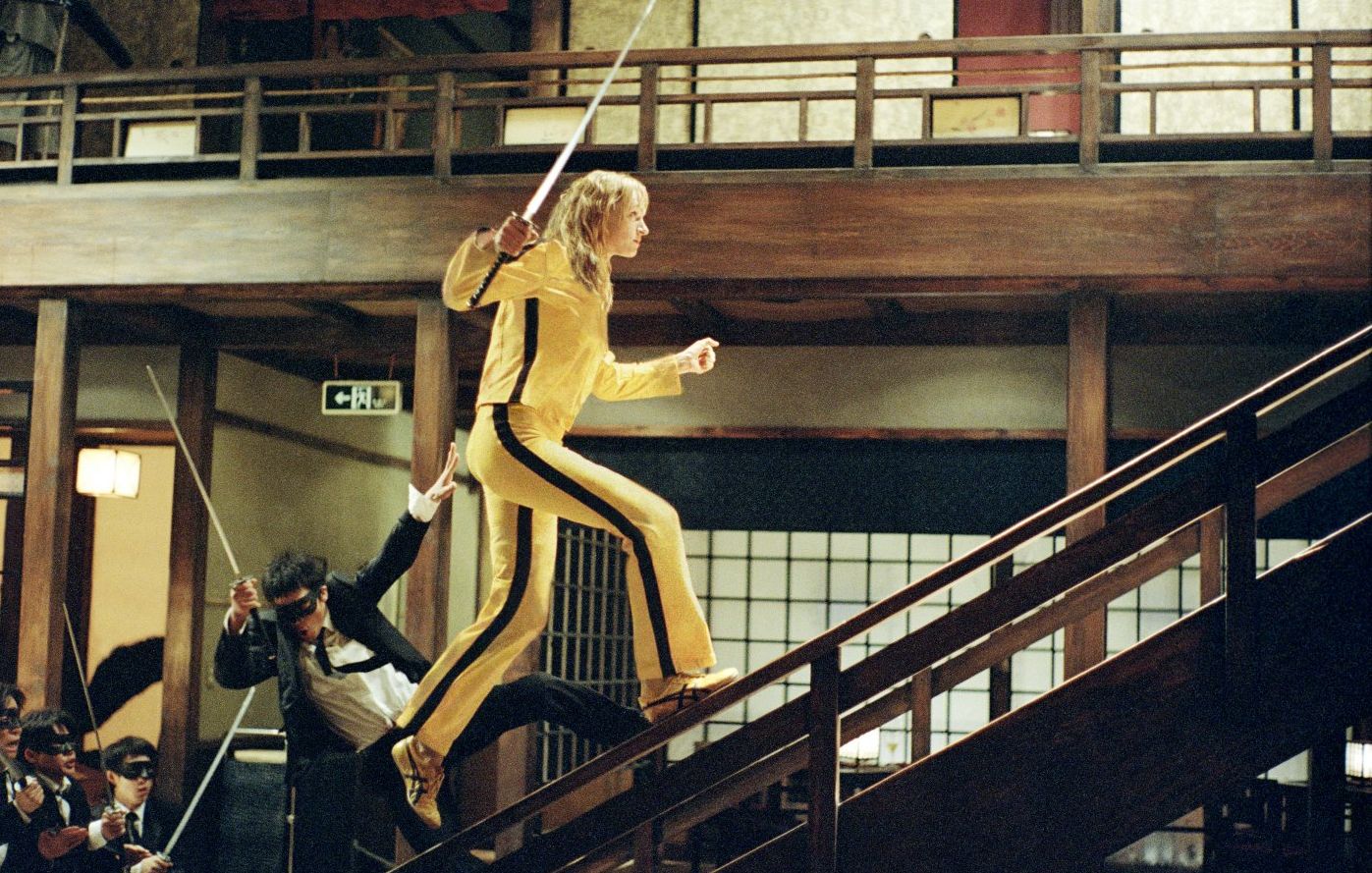
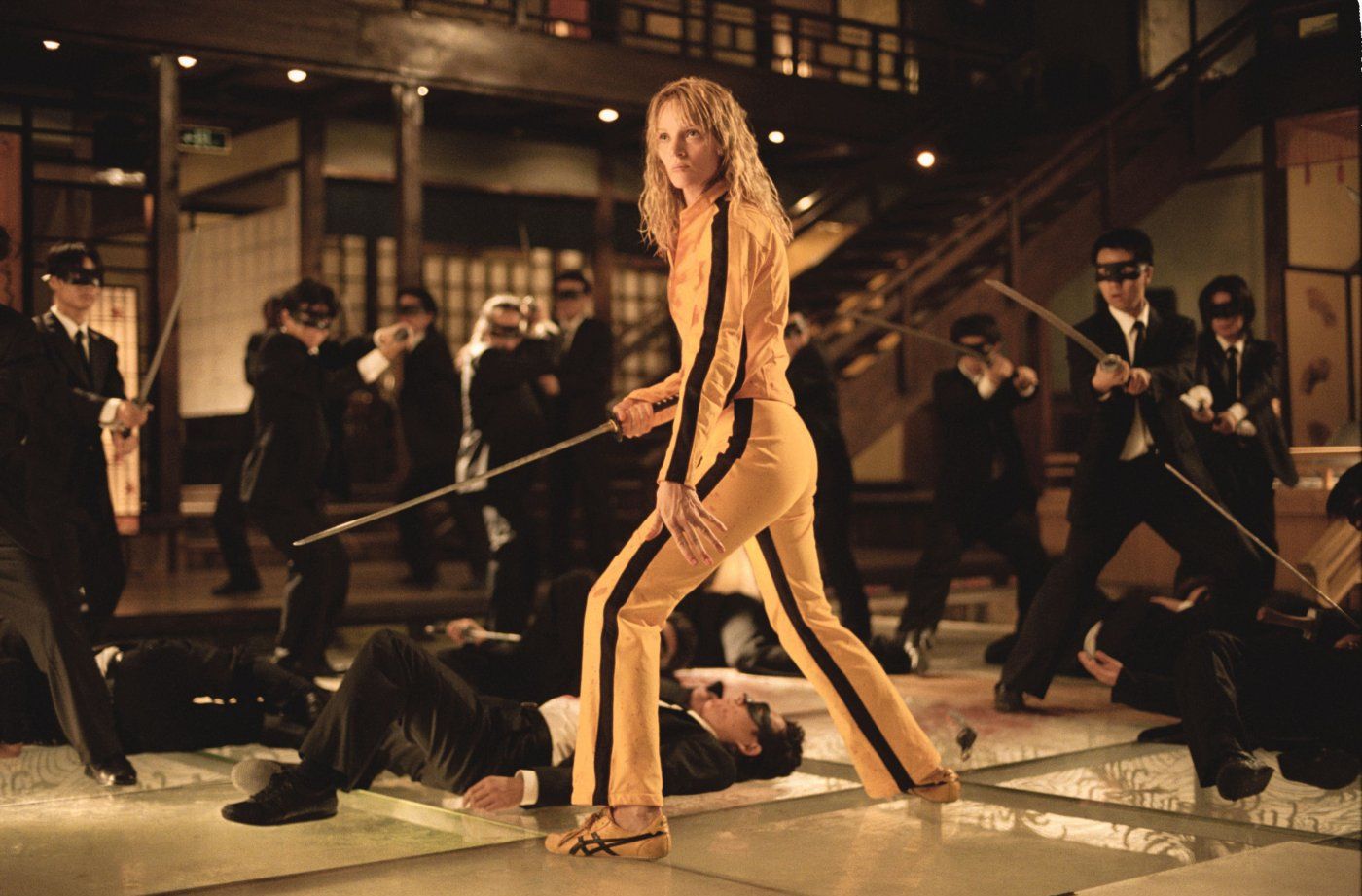
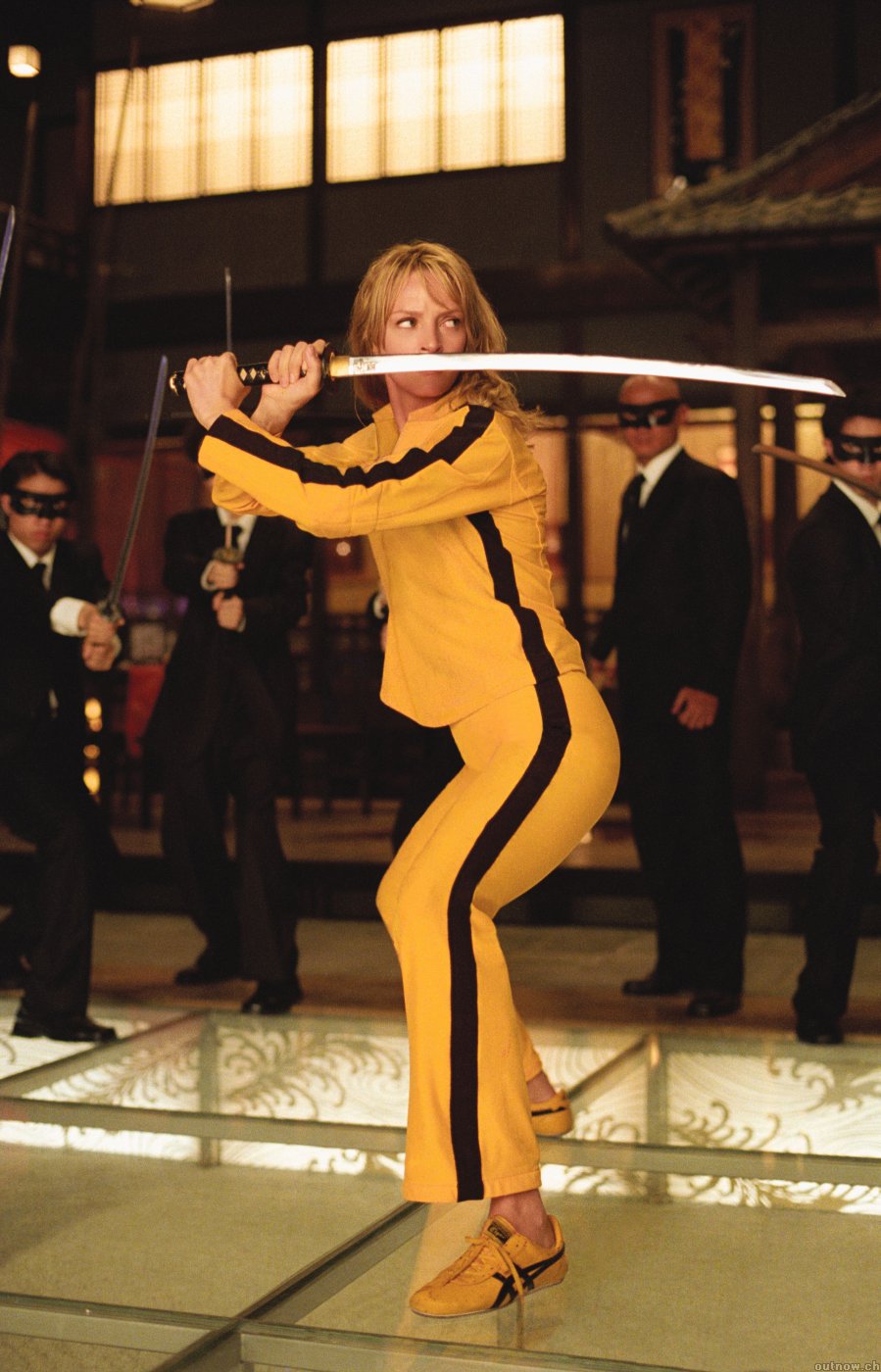
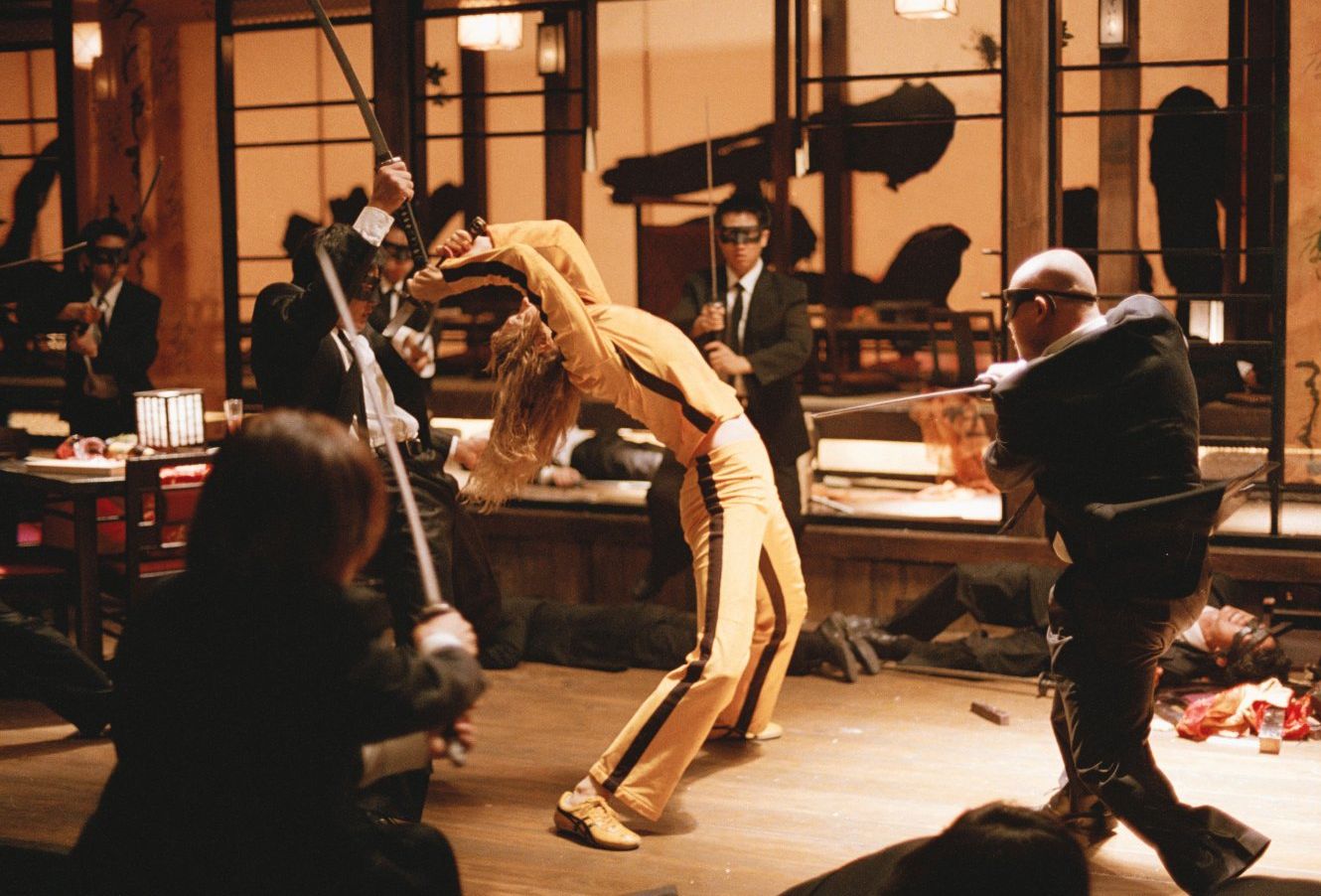
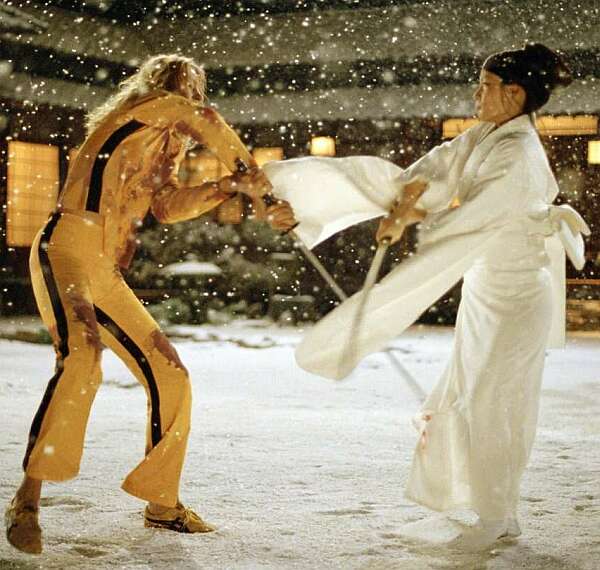
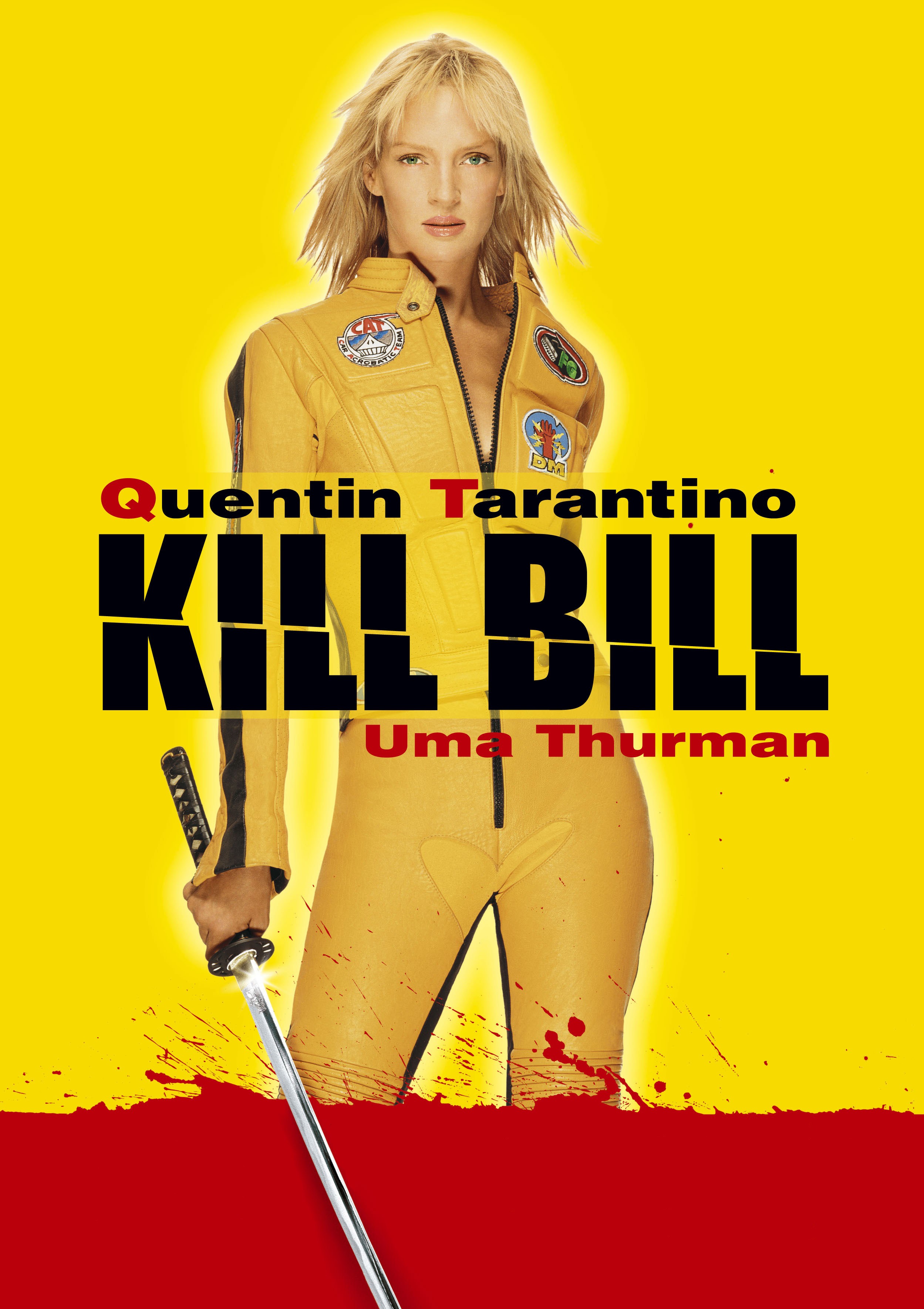
In contrast, The Bride is largely a machine for extracting revenge, particularly once she hits Japan, picks up a weapon from a master sword-maker (70’s icon Sonny Chiba, as namechecked in True Romance), then heads to O-Ren’s headquarters, where all hell breaks loose. Dressed in a Game of Death yellow jumpsuit, she takes out her enemy’s minions in ones, two, then tens and twenties, with so much arterial spray I suspect the switches to black-and-white and silhouette were as much to avoid censorship as a stylistic choice.
The trailers make this look as if it’s non-stop action, but it isn’t really – there are only a couple of proper set-pieces. The first (cinematically, if not chronologically for the characters) is between The Bride and Green, a brawl around the latter’s house. Despite imaginative use of kitchen utensils, the photography is all wrong, with way too many closeups, leaving it impossible to tell whether there’s any skill – or, indeed, what the hell is going on. I wouldn’t be surprised if this was one of the first things Tarantino shot, since it’s the kind of mistake you’d expect from someone like him, unfamiliar with shooting martial arts.

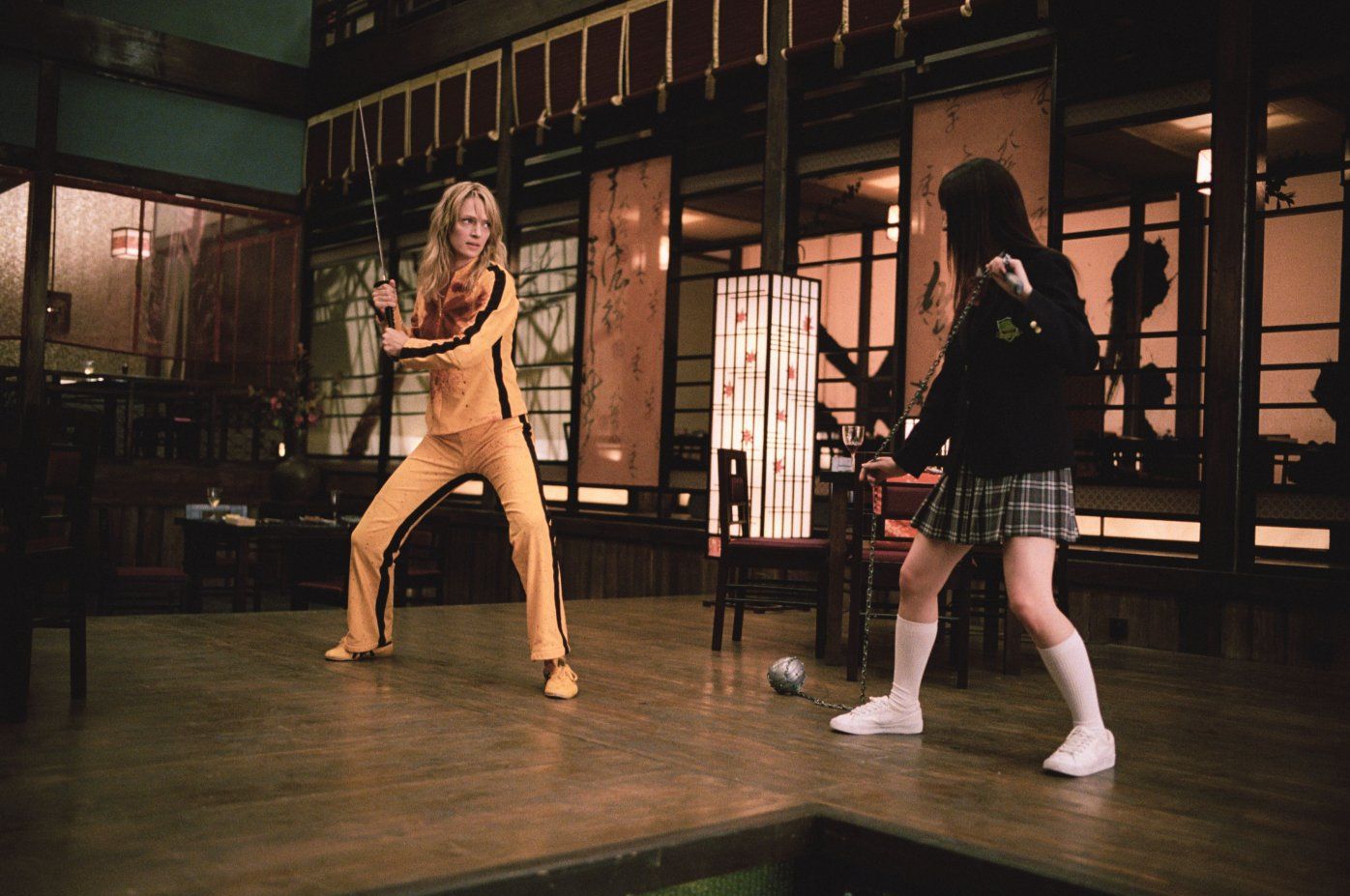
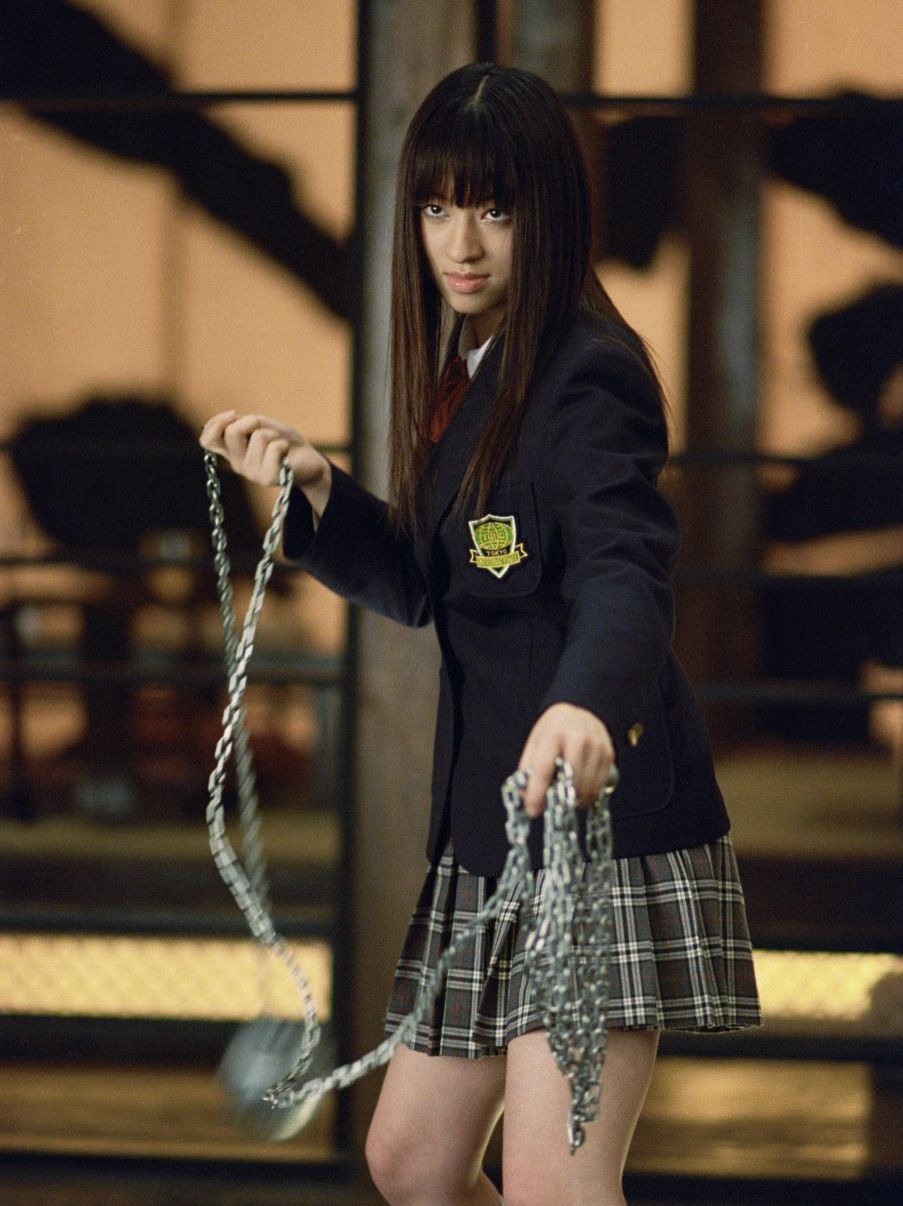
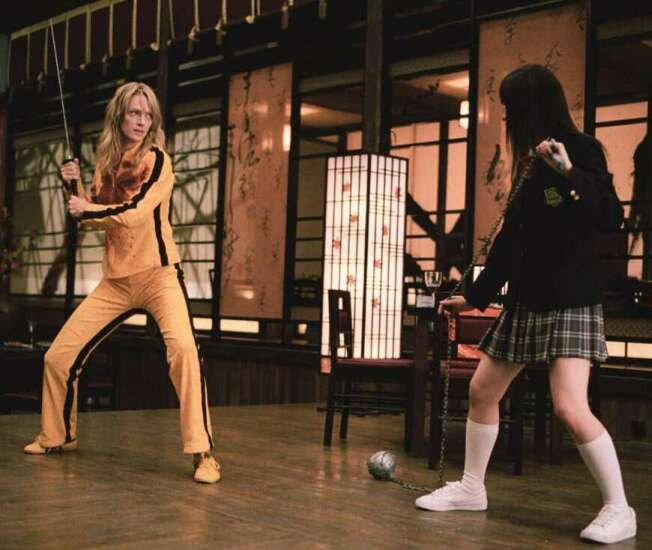
 However, this is more than made up for with the lengthy sequence in Tokyo. In particular, the battle between The Bride and GoGo Yubari (Chiaki Kuriyama), the Japanese schoolgirl who is mistress of a weapon that can kill you in a dozen different ways. It’s a pity that the excruciating Japanese band, The 5678’s, who are playing in the venue, don’t get taken out as collateral damage. [Ten seconds of them is at least nine too many – they make Shonen Knife sound like the Vienna Philharmonic Orchestra] Regardless, much credit is due to Thurman, Kuriyama and fight co-ordinator Yuen Wo Ping for creating a fight which is simultaneously hard-hitting and original, as well as being aesthetically beautiful.

It’s difficult to give a comprehensive review to a film without an ending – indeed, we’re only half way through the story so far. But what we’ve seen so far beats up 2003’s other Hollywood action heroines, the lame Tomb Raider and Charlie’s Angels sequels, without even breaking a sweat. Roll on Volume 2 early next year, and I’ve a sneaking suspicion we’ll be heading back to see this one a few more times between now and then.

[Thanks to The Reel Truth for tickets to the advance screening of this movie.]

Dir: Quentin Tarantino
Stars: Uma Thurman, Lucy Liu, Sonny Chiba, Vivica A. Fox
I Spit on Your Corpse!

★★★
“Surprisingly survivable 70’s schlock – but, oh, that soundtrack!”

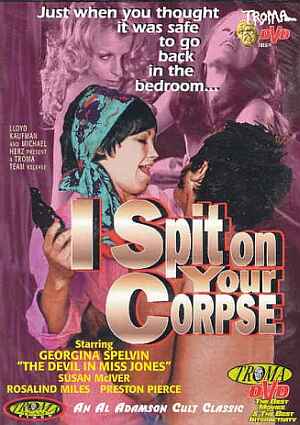
Porn stars who try to act are usually on shaky ground – see Traci Lords’ career – except, it seems, when the characters they play have something of the porn star in them. Brigitte Lahaie in Fascination is a good example, and Spelvin, best known for The Devil in Miss Jones, impresses here as Tate, a cold, animalistic killer, freed from prison by mob boss Moreno (Taylor) to kill a treacherous lawyer. Which goes fine, it’s when her unwitting accomplice Donna (McIver) realises what happened, and goes on the run, that the film really starts. The chase is on: can Tate and sidekick Erica (Miles) hunt Donna down before she reaches Mexico?
Originally Girls For Rent, the new title (presumably inspired by I Spit On Your Grave) is certainly more apt, thanks to Spelvin’s brutal character – particularly one scene involving a mentally deficient kid, that is simply nasty. Moments like that, or Erica’s sudden ‘conversion’ to Christianity, are great and will hopefully stay in my mind longer than the truly dire stock soundtrack, which alternates between being woefully inappropriate, and simply bad. I suspect Adamson, buried in concrete beneath his own hot-tub in 1995, was murdered by a music-lover.

However, Spelvin and Miles hold this together well, and at times it has the same energetic air as Faster, Pussycat! Kill! Kill! This is cheap, drive-in product, shot in only 9 days (not counting the sex scene spliced-in later), and won’t be mistaken for anything else. Don’t expect too much, however, and this will occasionally surprise pleasantly. Just bring the ear-plugs.

Dir: Al Adamson
Star: Susan McIver, Georgina Spelvin, Rosalind Miles, Kent Taylor

Confessions of a Psycho Cat

★★★½
“The Most Dangerous Game: distaff version.”

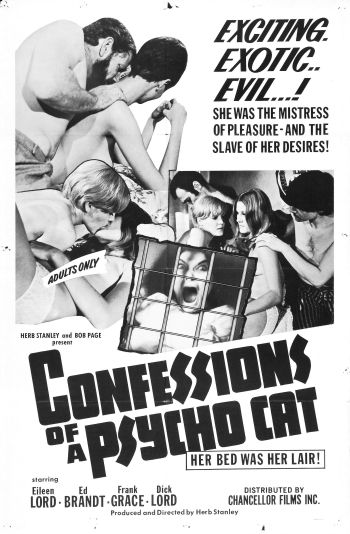
psychocatThis 1968 film is totally loony, but none the less entertaining – the subsequent addition of (extremely subdued) sex-party footage to spice it up and increase the running time, is really the film’s weakest ingredient. For the plot is intriguing enough as is: a rich but loopy socialite (Lord) offers three men $100,000 each, if they can survive her hunting them through New York for 24 hours. Easy enough to do, you’d think, but the neat thing is the way the villainess/heroine (it’s hard to say which, really!) uses her targets’ weaknesses to lure them into her sights. For example, one is a former championship wrestler and she taunts him with accusations of cowardice until he charges into her apartment. That victim is played by Jake La Motta, who was the real-life inspiration for Raging Bull, and his demise is entirely fitting, if amazingly surreal.

The acting on view is pretty basic, but does the job, and it lures the viewer in nicely. Lord chews the scenery with extreme prejudice, and there’s a fabulous flashback where we discover the origins of her character’s madness. These help tide you over the frequent and tedious nudity, though amusement can be had by seeing how crudely these scenes have been inserted. It all ends grimly, as you’d hope, and for a cheap exploitation flick, it’s really quite memorable. The DVD from Something Weird also offers other delights, including trailers for Ride the Wild Pink Horse and Olga’s House of Shame, plus an entire second-feature, Hot Blooded Woman, which is so awful as to be unwatchable. In comparison, Psycho Cat is a fine idea, ripe for a Hollywood remake – perhaps starring Liz Hurley or Angelina Jolie…

Dir: Herb Stanley
Star: Eileen Lord, Ed Brandt, Frank Grace, Jake La Motta

Big Boobs Buster

★★
“Does exactly what it says on the tin.”

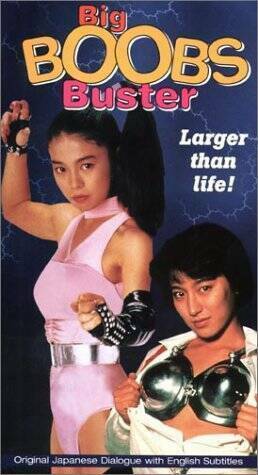
As you can probably surmise from the title, this is most emphatically not a gentle and touching saga of four women who laugh, cry and grow together. Instead, it’s about a schoolgirl, traumatised by rejection due to her small chest, who adopts a secret identity in order to make silicone moulds of her larger-bosomed schoolmates. I’m tempted to claim it’s based on an Oscar Wilde short story, but your credulity is already under enough strain.
Instead, I’ll start by pointing out to any lurking breast-fetishists that the Japanese definition of “big boobs” is, shall we say, not as expansive as ours. Still, less-demanding deviants should just about find enough to keep them entertained in lines like “Damn your raunchy bra!”, especially in a fine opening quarter. With a school full of perverts, it’s a concept with scope for Kekko Kamen-style parody – unfortunately, it peters out when mammorially-challenged heroine Masako (Harumi Kai) joins the track team instead. This is full of the usual tough training cliches, and is thus generally uninteresting.

The tape also includes ten minutes of Masako falling off her bike, plus other wondrous footage from behind the scenes. Wonder what the makers, including respected anime creator Taro Maki as executive producer, did with the rest of their weekend…?

[This review originally appeared in Manga Max]

Creator: Hisashi Watanabe
Star: Harumi Kai, Maruki Itsuki

Tokyo Blue: Case 1

★★
“Cops and robbers, Japanese style, with much T&A.”

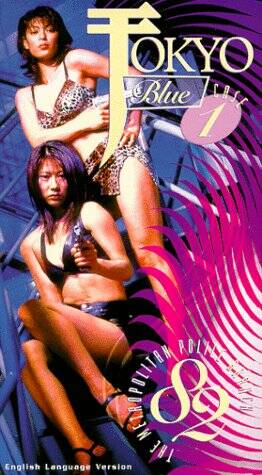
You know where you stand with this film inside five minutes, from the moment policewoman heroine Mika Hino (Shiratori) is made to strip off by bad guys hunting for a key – which she naturally is keeping in her lingerie. Mind you, this pales in comparison with where partner Rin Kakura (Kuribayashi) hides her gun… The problem with this tape is that such intimate details are far more interesting than the plot, a tired and severely uninteresting search for a master counterfeiter.
While there’s no denying the charms of the leading ladies, most of the time they’re displayed with precious little imagination, and their characters are far less appealing than their bodies. It’s also very hard to disapprove of the lecherous colleagues depicted by the movie, when the film is at almost the same mental level. Only in the last fifteen minutes, as Mika strives to rescue the captured Rin from an all-girl team of guards, do things start to perk up, with Mika becoming something of an avenging angel, slaughtering receptionists with effective skill and disturbing delight. Unfortunately, this only really goes to show up the first hour of this film, actually the third in the Metropolitan Police Branch 82 series, for the tedious waste of time it is. Best line in the enthusiastic but futile dub: “I’m a blueberry tart!”

[This review originally appeared in Manga Max]

Dir: Younosuke Koike
Star: Chieko Shiratori, Tomomi Kuribayashi, Keiji Matsuda, Hitomi Shimizu

Bury Me An Angel

★½
“Nowhere near as good as the advertising.”

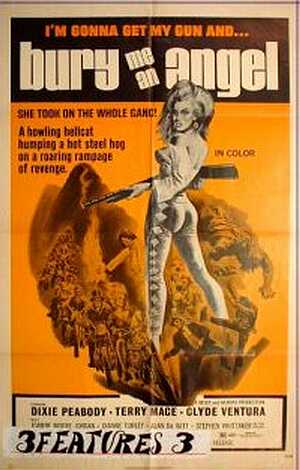
Though with a tagline of “A howling hellcat humping a hot steel hog on a roaring rampage of revenge”, how could it be? Dag (Peabody) sees her brother get blown away for stealing some guy’s motorcycle, and goes on a hunt for the killer, all the while tortured by visions of her dead sibling’s death – which is perhaps not a good move, since it lets us see how woefully inept the effects were. Accompanied by two male sidekicks, she tracks the killer down as he heads towards Canada.
This 1971 film is a rarity for an action heroine movie (and also for a biker flick), in that it was written and directed by a woman, Barbara Peeters, who’d go on to make Humanoids From the Deep. This shows itself in little touches throughout, but mostly through the heroine’s over-frequent mental anguish – the ‘roaring rampage of revenge’ never materialises much. Dag makes for an interesting heroine, determined and obstinate (she hangs on to her shotgun, even when visiting a school!), but Peabody never seems to get the tone of her performance right, under- or over-acting at random.

The best moments see the trio interacting with other people, be this taunting a midget cop, provoking a bar-brawl with locals, or being out-weirded by a witch. Apart from this, and one impressive nightmare where Dag repeatedly blasts her brother’s murderer with a shotgun, only for him to keep coming back, there’s way too much sitting around, and not enough action. Selling largely on sizzle, this is truly a classic of exploitation, and as such, deserves grudging respect – if not perhaps any further attention.

Dir: Barbara Peeters
Star: Dixie Peabody, Terry Mace, Clyde Ventura, Stephen Whittaker

‘Gator Bait

★★★½
“Swamp saga is buoyantly sleazy, but sinks at the end.”

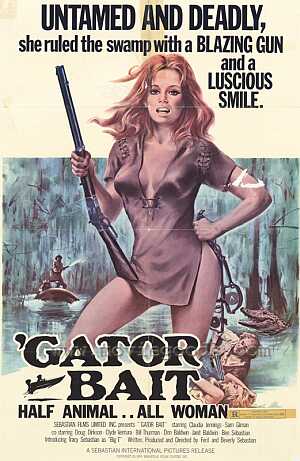
Between being Playmate of the Year in 1970, and her death in a car accident at the end of the decade, Jennings appeared in a slew of action/exploitation flicks which earned her the title “Queen of the B’s”. Despite unlikely casting as Desiree, an alligator poacher – with perfect hair and make-up, even in the Louisiana swamps – this film comes within an ace of getting our seal of approval, falling short only at the finale.

Desiree finds herself in trouble when she’s involved in the death of a local cop. His family, a bunch of half-breeds of hugely dubious morals (witness the immortal line, “What’re ya tryin’ to do, ya horny little bastard? That’s yer sister!!”), get on her trail, dragging the more or less unwilling police chief with them. But the bayous and backwoods are home turf (the title comes from her father’s habit of dragging her behind his boat as a lure!) and after her sister is murdered in truly repellent fashion, mercy is in short supply.

Rather too much speedboat footage slows the second half down, but it’s an interesting twist on the Deliverance nightmare, with rednecks being hunted rather than the hunters. Jennings doesn’t have many lines (kid bro’ is mute, so there are few chances for conversation), which is perhaps wise. However, she carries herself well, whizzing through the swamps, blazing away with her shotgun – it’s unfortunate she has to rely on assistance to finish things off, a weakness in character which is hugely disappointing.

Dir: Ferd and Beverly Sebastian
Star: Claudia Jennings, Sam Gilman, Doug Dirkson, Clyde Ventura

Barbarian Queen II

★★½
“In which our heroine learns the ropes…and the chains…and the rack…”

Much like the first, bondage fans would probably mark this a grade, possibly one and a half, higher given the amazing length of time the heroine spends tied to racks and other torture devices – or just tied in general. Not that this, per se, makes it a bad movie. No, the severely limited budget (the population of the land where this takes place appears to be about 1/10th that of San Marino) and clunky acting take care of that…

However, the writing helps, since tongue is in cheek, right from the movie’s subtitle: The Empress Strikes Back. It would be churlish to point out the total lack of any empress in the film. There’s also the mud-wrestling bout, carefully set up early on when a barrel of water is knocked over, instantly turning about two acres into the Everglades. As for the story, Clarkson plays Princess Amathea – her character has the same name as the first part, but how she became the king’s daughter is never explained – whose father’s throne has been usurped by the evil Ankaris (Bracho). She escapes and builds a band of curiously large-haired heroines to lead a revolt.

One interesting subplot is Ankaris’s daughter (Tijerina), a genuinely creepy teen with a disturbing interest in methods of torture. She has a crush on Amathea’s love interest and evokes the spirit of her dead mother to help her out. This angle adds a welcome depth, to a story that otherwise is largely what you would expect. The fighting is largely woeful: one participant holds their sword up while the other bangs their weapon off it. Yet, it’s never dull and Clarkson makes a good heroine, independent and feisty from the opening scene.

Dir: Joe Finley [probably a pseudonym for Hector Oliviera]
Star: Lana Clarkson, Greg Wrangler, Cecilia Tijerina, Alejandro Bracho

PB 82 (Police Branch 82)

★★★
“Dirty Harry with breasts. And angst. And a partner scared of roaches.”

Okay, pardon me if I’m confused. What the IMDB says is the plot for Metropolitan Police Branch 82 is actually Tokyo Blue: Case 1. However, there are multiple parts to the series, and I think that this tape from ADV may be the first. Or perhaps the second. Not that it’s important, but just so you know. :-) Mika (Inoue) is a cop with a liking for her Magnum, who loses her partner while capturing the criminal Nezu (Yamato). He then escapes, and she gets a new partner (Tayama), who is more concerned with fashion than the down and dirty world of criminal detection, and also hates cockroaches to the extent of unloading a full clip on one in the police station. Mika rolls her eyes a lot at this, but in Mika’s past lurks a dark secret when she shot first and asked questions later.
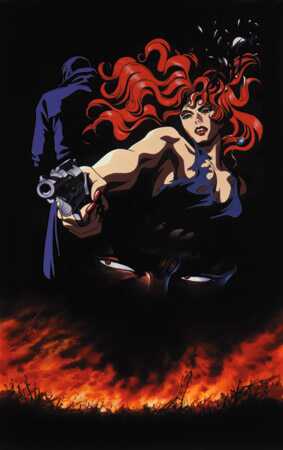
As they chase after Nezu and his accomplice (Lilico), there is a load of naked flesh, portrayed in the enthusiastic yet restrained approach typical of Japan. It probably isn’t worth your while, and you kinda wish they hadn’t bothered. In between times, there’s also a lot of the usual “mismatched cops” routine, and it’s no more fresh or interesting here, than in all the Hollywood movies which use it. However, the finale, set in a deserted amusement park, is well-staged and imaginative, with an underwater fight which makes you wish for more of the same. Inoue’s performance also lifts this one up a notch, doing a good job of the “hard case with a soft centre.” It’s still a cliche, but she brings enough life to it to deserve credit.

Dir: Daisuke Goto
Star: Harumi Inoue, Mamiko Tayama, Yukio Yamato, Lilico

Golgo 13: Queen Bee

★★★★
“A tale with plenty of sting, but too much sexual bee-haviour.”

Four stars but no seal of approval? That’s because this is about the most wildly variable animated film I’ve seen. The story and characters are great, but the frequent sex scenes are incredibly tedious and clearly put in solely for the teenage male fan (all pneumatic breasts and moaning). It’s rare for me to say this, but they are genuinely gratuitous, and the film could have coped fine without them.

Between times, there’s certainly plenty going on in terms of plot. Ultra-taciturn hitman Golgo 13 is hired to kill narco-terrorist Queen Bee, who has been sending threatening letters to a presidential candidate. From here an entire web is spun (sorry, failed to come up with a bee analogy!) of deceit, double-dealing and death. The anti-heroine comes across rather better than the anti-hero, since you see more about her background, and she’s certainly a fascinating personality, even in a grim world where no-one is innocent.

The animation uses every trick in the book to mixed effect, with some of the violence particularly well-executed. The tape I saw was dubbed, which is another reason to deny it the seal, though the voice acting here is largely painless (it helps that Golgo 13 has about five lines!). It may yet make it: I’ll likely pick up the subtitled DVD sometime, with a director’s commentary, apparently revealing that the candidate and his adviser were shown as gay lovers in a deleted scene. Frankly, I’d have been happy to trade that for one of the heterosexual encounters.

Dir: Osamu Dezaki
Star (voice, English dub): Denise Poirier, Carlos Ferro, Dwight Shultz, John Dimaggio