




 ★★★★
★★★★
“God, faith, mayhem and a lot of blood”
 To be honest, I never read Boston Teran’s novel. I wasn’t aware of the story until this movie came out here on DVD – but then the book was also never released in my country. I’ve every intention to read it and have already ordered it in English. However, I can’t make any comparisons between the book and the movie adaptation, directed by Nick Cassavetes, son of John Cassavetes.
It seems that when Teran’s novel came out in 1999, it caused quite a stir in Americas crime literature circles. Most agreed about the literary quality of the book: it won several crime novel awards and was nominated for even more. At the same time, its dark outlook on life, as well as the strong violence, were criticized. Teran’s style has been compared to that of Hunter S. Thompson, Jim Thompson and Cormac McCarthy. The author himself, who writes many different sorts of novels, is seen as some kind of mystery: few people seem to know him personally and he doesn’t give many interviews. But maybe he is just not interested in being a public personality (and why should he?), constantly standing in the limelight as some “star authors” do. The movie rights were quickly bought by Hollywood and Nick Cassavetes planned an adaptation.
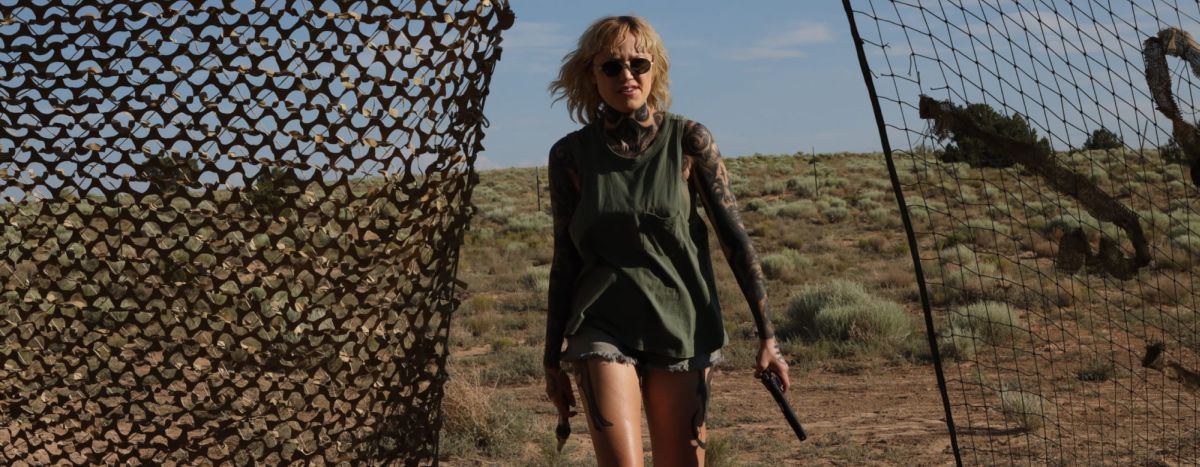
It seems to have been a passion project for him. But for whatever reason, it needed a quarter of a century until the movie, filmed in 2021 in Mexico City and New Mexico, would see the light of day. The main character is Bob Hightower (Coster-Waldau, best known as Jamie Lannister in Game of Thrones), a police officer searching for his daughter. She was abducted by a violent sect who also killed his ex-wife and her husband. A former member of the sect, Case Hardin (Monroe) declares herself ready to help him. According to her, he would never have a chance to find the gang by official means, without his daughter getting killed immediately. Bob accepts her assistance, though doesn’t know how trustworthy Case is. Does she really just want to help him rescue his daughter, from the fate that Case herself experienced 12 years ago? Or does she have other motives?
That’s the story in a nutshell. But it’s much more complicated than that, and you also shouldn’t expect this to be a non-stop action movie: it isn’t. I think you could maybe call it a road movie. The search for the young girl, while actually leading there in the end, is more a “McGuffin”, in that it moves the main protagonists forward – but under the surface, a different story is being told. There is an evaluation or discussion about faith, belief, God and values between Bob and Case. He is a believer in God and Christian convictions, while she is essentially atheist. Inevitably, they clash in the beginning until they develop an understanding. They come from two different sides of the spectrum. It’s the cruel descent into a man-made hell, where there is hardly any law except what you make for yourself, like an old-time Western, which makes them partners who rely on and save each other again and again.
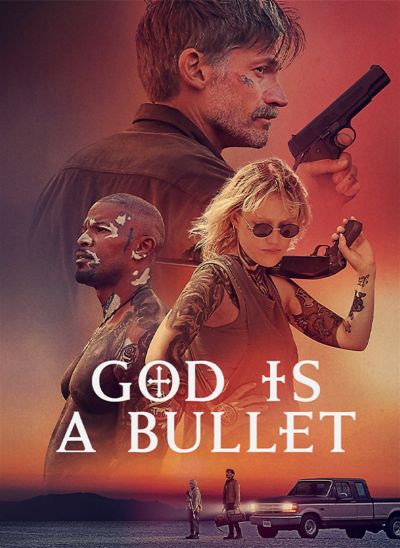 It’s the most fulfilling part of the movie. In a way, Case is Bob’s guarding angel; she knows about those people, how they behave, how to deal with them, also the danger that they embody as human life has hardly any value for them. Bob goes “undercover” to find his daughter which also means he has to look and appear like these people, so gets a full-body tattoo by “The Ferryman” (Foxx in a larger supporting role). The aim is to contact the sect, whose cult leader Cyrus (Glusman) is a specific piece of human scum, and deal with him. All of what has happened ties back to Bob’s father in law and his superior at the police office, though he doesn’t know this.
It’s an exciting and I’d even say great piece of film work, though regrettably, will probably never get the attention it deserves. As far as I can see the film never ran in German cinemas, and only I was barely aware of the movie coming out on DVD and Blu-Ray. As the movie wasn’t produced by one of the big studios, the money for marketing might not have been quite there, I assume. The film was criticized for the amount and intensity of violence and so-called misogyny, due to the fact that the movie doesn’t hold back. But bad things happen to everyone in this story, regardless if you are male or female, black or white. In that respect the film is truly democratic, mistreating everyone equally. There are no safe spaces for anyone here.
While I personally have seen worse, a little word of warning. The movie includes rapes, vicious murders, child prostitution, drug addiction, poisonous snakes, slashed throats, head-shots, and people getting killed with flame throwers or suffocated with a plastic bag. You name it, the movie has it. That said, the depiction of all the carnage listed is not gratuitous. I never had the feeling that Cassavetes indulged in violence for violence’s sake. However, if you belong to the more squeamish, this might maybe not be the movie for you.
That said, the movie feels honest in showing a different side of America: the ugly, dark side you usually don’t see in all these feel-good Hollywood movies anymore. You get the sense this is about real people experiencing real pain. Despite the violence, that is stretched over two and a half hours, giving the movie a certain kind of calmness and tranquility. Cassavetes gives his characters time to develop and it pays off handsomely. Scenes can breathe, and unlike a lot of movies today, it’s not all cut-to-the-chase. In the end, Bob and Case are just two lonely people who find each other, during their journey through backwoods towns and the desert, a trip that has something of a cathartic quality.
In the end – and that’s why it’s here – it’s in the main Case’s story. Yes, Bob hopes to find his daughter but he always appears a bit bland compared to her fascinating, broken character. The movie begins and ends with her. There are flashbacks and you start to realize that she is not just lost, she has been robbed of her childhood, that no one really cares for her. She may be on a journey to her own death as Case has no real place that she can call home. The whole depiction reminds me of characters like Revy from Black Lagoon or Lisbeth Salander. Or maybe it’s just my imagination running wild.
In any case, I was highly impressed by Maika Monroe’s performance and the movie as a whole. I personally had no problem with the depicted violence, and think this movie deserves more exposure. All told, if you want to see something different from the typical Hollywood entertainment, this might be of interest.
Dir: Nick Cassavetes
Star: Maika Monroe, Nikolaj Coster-Waldau, Jamie Foxx, Karl Glusman
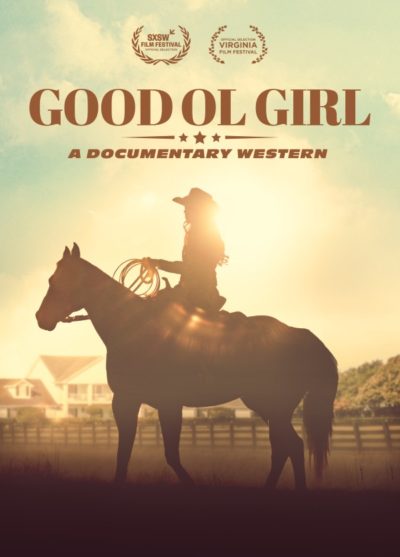 This documentary takes a look into the lives of three women in Texas, who are all operating in the male-dominated world of ranching. Some were born into it, while others came to it through choice. In particular, Mandy Dauses falls into the latter category, having left her East-coast home because she felt that Texas represented the best chance to fulfill her ambition of becoming a ranch manager. On the other hand, Sara Lemoine Knox is struggling to balance what she feels is an obligation to carry on in the family business, with her own goal of becoming a lawyer. Meanwhile, Martha Santos is looking to find work in that line, but without her own property, is finding it a challenge.
 Mildred Moyer (Chamberlain) has a problem, and it’s as plain as the nose on her face. Actually, it
 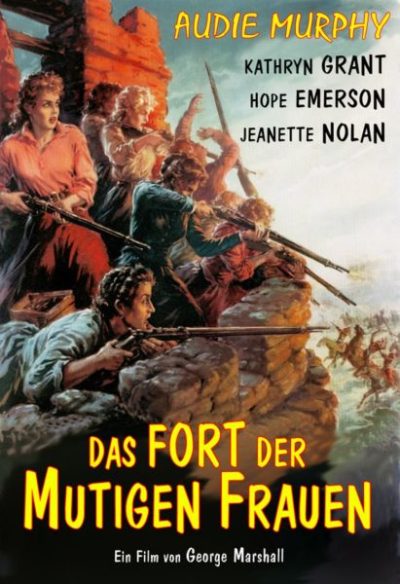 This is one where you need to take the era into account. Made in 1957, this was based on a short story from a couple of years earlier: “Petticoat Brigade” by Chester William Harrison. It’s very much an Audie Murphy movie – and understandably so, since the man was a bona fide hero, being one of the most-decorated American combat soldiers in World War II, before he became an actor. But the fifties was not a decade known for strong, independent female characters in Hollywood Westerns. We’ve covered a few:
  War correspondent
  Buffalo police officer Megan (Sadeghian) is a highly-skilled cop, but has a crisis of confidence after being involved in the accidental shooting of a colleague. To help get her out of that mindset, partner Jeremy (Johnson) invites Megan on a weekend camping getaway in upstate New York, along with another couple. This goes horribly wrong, after they stumble across the summary execution of a drug-dealer by the local sheriff, Preacher (Kennedy) and his death squad. The four campers are now a problem for Preacher, so he seals off the area, and unleashes a slew of hunters, putting a ten thousand dollar bounty on the head of each target. Of course, you don’t have to be psychic to see it won’t be easy, courtesy of Megan.
 This is based on a 34-volume manga series by Satosumi Takaguchi, which began publication in 1985. It is far from the only adaptation. There have also been two OVAs, a live-action drama series, a different feature version made in 2009, and even a pair of drama CDs. This feature, however, is the only one available in the West to date with subtitles. It takes place at an indeterminate point in the future – the year is given as 199X – when “the streets are overflowing with drugs and violence”. There’s a battle for control, which conveniently seems to be along gender lines. The unfortunately naned male “Red Nose Gods”, under boss Toki Masamune, are going up against the all-girl Hibari Group. They are named after their leader (Mikari), who speaks only through her lieutenant, or with the aid of an artificial voice-box.
 Not to be confused with the clearly different
  This isn’t the first movie I’ve seen, in which a woman escapes apparent death at the hands of a serial killer, only for them to track her down years later. However, the twist in the narrative here, which perhaps pushed it over the necessary boundary for inclusion on the site, is that the killer is also female. The victim is Christina Bowden (Johnson), who as a young girl was the sole survivor of Elizabeth Caulfield (Tuckerman) and her “child farm”, for want of a better phrase. Bowden has slowly put her life back together and is now a school teacher. She’s also looking to adopt another troubled teen, Lisa Spencer (McCarthy), and pay it forward. Then she gets a visit from local sheriff Jamie Nwosu (Iwuji).
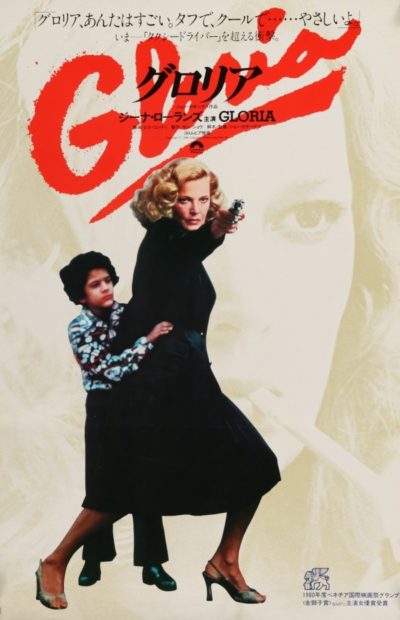 Yeah, I’ll confess to having Laura Branigan’s eighties hit running through my head on repeat almost the entire movie, even if its lyrics can only be tangentially tied to it. What also struck me is how strong of an influence this was on Luc Besson’s Leon, especially at the beginning. I mean: a criminal gang takes out an entire family in a New York tenement, except for one child, as punishment for the father having tried to steal from them. That survivor takes refuge with a very reluctant neighbour with mob ties, who then has to protect the child as they move about the city. There’s even a scene where one of the gang fires his gun at a nosy resident.