




★★★½
“The dead want women.”
 Though it may be difficult to believe such a thing, the original Japanese title for this franchise of low-budget efforts was even more politically incorrect: Rape Zombie. If ever a title change was understandable… I went into this, largely on the basis of the covers, and braced for something awful. On that basis, I was pleasantly impressed: yes, this remains staggeringly offensive. Yet it’s clearly made by people who are familiar with, and love, zombie films. There are signs of actual brains being present – and not the kind normally found in the genre, being chewed on by the shambling antagonists. Five films have been made: for now, I’m covering the first three, which are the only ones available with subtitles [because, y’know, understanding the dialogue is so important here…]
The concept is more or less the standard one: a global outbreak of some kind of illness, turning the victims into mindless creatures, who attack any non-infected person they encounter. The difference here is that the disease affects only men, and turns them into sex-crazed rapists, who will sexually assault every woman they meet. [This does an amusing job of explaining the traditional slow, shuffling gait of the zombie – here, it’s because their pants are around their ankles.] Making things worse, their semen kills their victims. Needless to say, 50% of the population is less than happy with this situation, setting up a literal war of the sexes, with the now female-led military distributing weapons to its civilian colleagues, for the battle against those pesky rape zombies.
The sex is actually the least interesting thing here – though I note, up until the very end of part 3, there is apparently no such thing as a gay zombie, who goes after other men. What is far more entertaining is the shotgun social satire at play, with the makers turning the heat up on just about everyone. Feminists. Male rights activists. The media. Politicians. Women. Men (for once, “toxic masculinity” is not hyperbole). Social networking. Idol culture. For instance, the rapidly appointed female Prime Minister proclaims, “We’re only in this situation because we allowed men to run wild with their perverted fantasies!” – then high-tails it to Hawaii, immediately she finds out North Korea has launched a nuke at Japan. When that missile flies across the skies of Tokyo, everyone just whips out their phones to take video of it.
 There are four heroines in the series: two pairs, who team up following some initial distrust. Momoko (Kobayashi) ends up in hospital as the crisis breaks, after slashing her wrists at work. There, she’s befriended by nurse Nozomi (Ozawa), and when all hell breaks loose, the pair flee the hospital, and end up taking refuge in a Shinto shrine. There, they meet Kanae (Asami) and Tomoe (Aikawa), a battered housewife and a schoolgirl who have also been trying to survive the carnage. The actresses portraying all four, incidentally, are best known for their adult work, though seem to acquit themselves credibly enough with the (admittedly, fairly limited) acting required here.
The main…ah, thrust of the trilogy is that men’s vulnerability to the virus (or whatever it is), is dependent on their pre-epidemic sexual appetite and activity. So, the jocks and pretty boys of society are pretty much toast: who inherit the earth are the otaku. That word is probably best translated as the Japanese version of nerds/fanboys, though more derogatory in connotation there, with a particular lack of social skills. When things settle down, they form the “Akiba Empire”, blaming women for the collapse of society. They hunt the remaining “3D women” with the air of domesticated zombies. On the other side are the “Amazons”, consisting of women soldiers from the Japanese Self-Defense Forces, and other survivors, including our four heroines and scientists working on a cure.
There are a couple of further wrinkles to this scenario. Momoe ended up pregnant by her husband, but is also raped by a zombie, though survives. The resulting child – born remarkably quickly – is apparently seen as some kind of saviour by the zombies and th Akiba Empitre, who won’t attack it or Momoe. She ends up apparently driven insane, a crypto-divine figure to the otaku, worshipped as an idol – in the J-pop sense at least, performing excruciatingly bad (deliberately, I sense) musical routines for them. Meanwhile, Tomoe – spoiler – dies at the end of part one, but comes back in two and three as an American combat robot, complete with laser eyes and lightning-producing fingers. She’s sent to Japan, both to gather data and carry out something called “Project Herod”. Which is what you would expect: part three ends in a cliff-hanger, with her and Momoe in a face-off.
 It would have been very easy for this to simply be a porn film with zombies in it, which I’m sure exist. As I hope the above makes clear, it isn’t. Horror fans will have fun spotting the riffs on other genre entries, such as the twist on Return of the Living Dead where a captive zombie is quizzed to its motivation: the answer here, naturally, being “More… pussy.” [As an aside, certain words are bleeped out on the Japanese soundtrack, which seems surprisingly prurient, given the nature of these films!] The second also introduces Shinji, a non-otaku seemingly unaffected by the epidemic, and his girlfriend, Maki; he becomes a key part of the scientific research, though it turns out his immunity isn’t quite what it seems. Despite the copious nudity, it all feels not dissimilar to George Romero’s Day of the Dead, located at the shadowy nexus of science and the military-industrial complex.
Overall, the trilogy manages to cram in more invention than entire later seasons of The Walking Dead. It’s especially impressive considering each film runs barely an hour – less if you discount the “Previously…” opener and closing credits. I’m not entirely convinced there needs to have been five of these films; with editing, you could likely condense them all into two, maybe two and a half, hours and lose little or no impact. There are certainly times where the intent far outstrips the available resources, to an almost painful degree, and I’m no fan of the CGI splatter which is used more often that I’d like. It remains a rare case where exploitation comes with actual smarts, and that’s a combination you just don’t see very often.
Dir: Naoyuki Tomomatsu
Star: Saya Kobayashi, Alice Ozawa, Yui Aikawa, Asami
a.k.a. Rape Zombie
 After reading some particularly scathing reviews of this, e.g. “stunningly atrocious”, I was braced for something
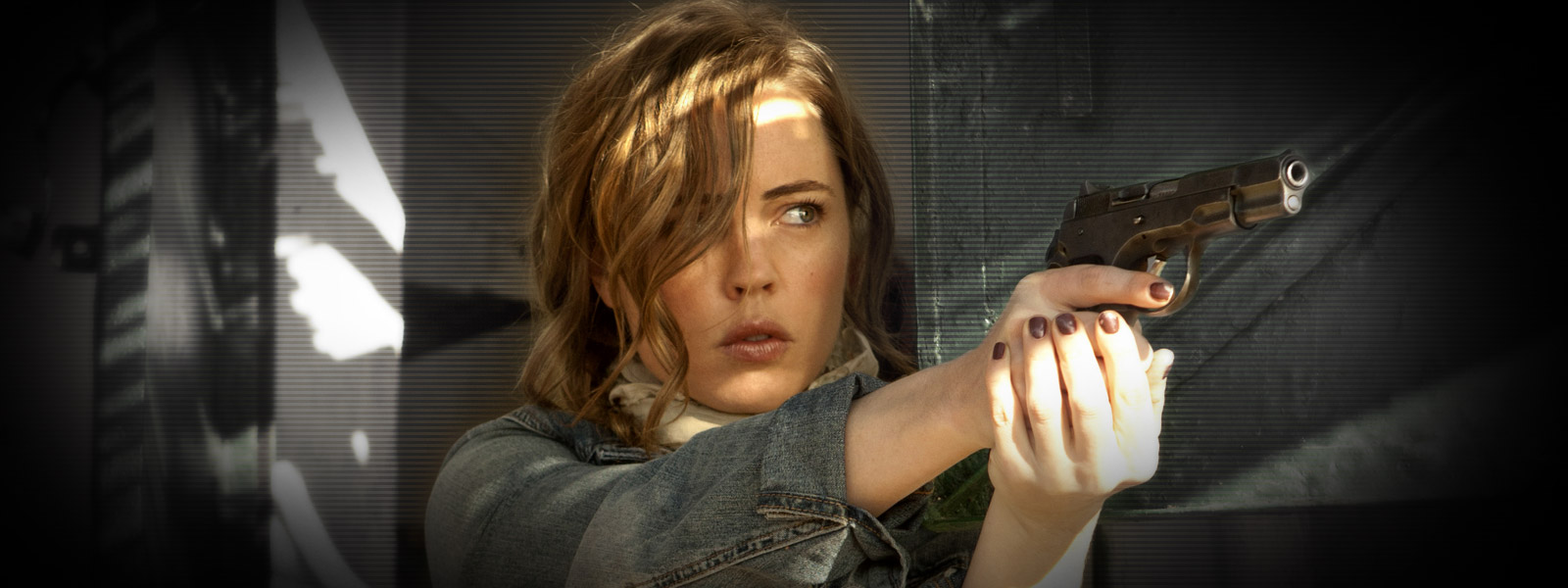
  After exposing construction company Cementec as involved in corruption, journalist Kavya Krishna (Dam) is surprised to get a call from Siddharth Dhanrajgir (Devaiya), son of the company’s owner. He ends up offering her a job at far above her previous salary, and the two eventually grow into a relationship. However, it’s all a ruse: Siddharth dumps and firing Kayva, saying, “I fuck those who fuck with me.” When she tries to strike back by telling him she’s pregnant, he has her kidnapped and forced to have an abortion, which leaves Kavya permanently unable to have children. She vows to destroy Siddharth and his company, by any means necessary, using her investigative skills – and no shortage of feminine wiles – to get the information required.
 ★★★
★★★ Originally pitched as a vehicle for Gillian Anderson – creator Spotnitz was a head writer on The X-Files – the main problem here is likely a structure which demands a second season the show never received. This seems to have come as a surprise to the creators, since they had put together a writing team and planned out storylines. Then, the show was abruptly not renewed, in response to sagging British ratings (the series lost 30% of its viewers over the eight-week run). Even after the BBC pulled the plug, there were hopes Cinemax would continue the show, as it had sustained its audience much better in the US. Those failed to come to fruition either, and the story of Sam Hunter is left frustratingly incomplete.
 Teetering on the edge of qualifying as false information, this TVM was originally released under the more relevant, yet great deal less salacious (and, let’s be honest, less appealing) title of A Nanny’s Revenge, along with a greatly subdued sleeve. Marketing works, people: for put it this way, I’d never have watched it in that presentation. I can’t feel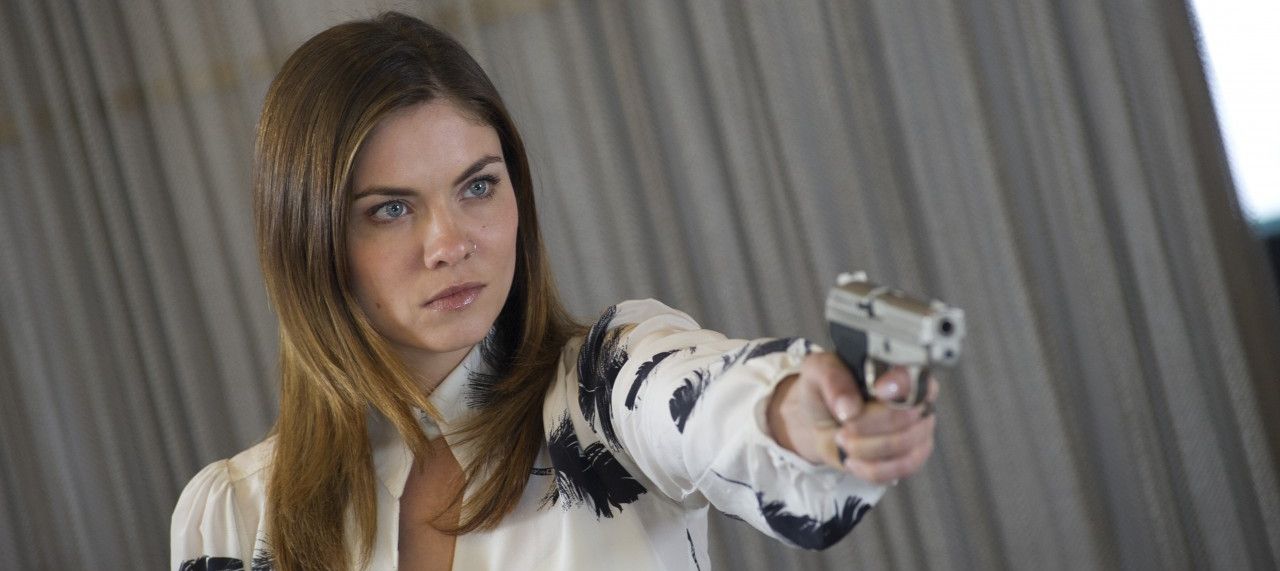
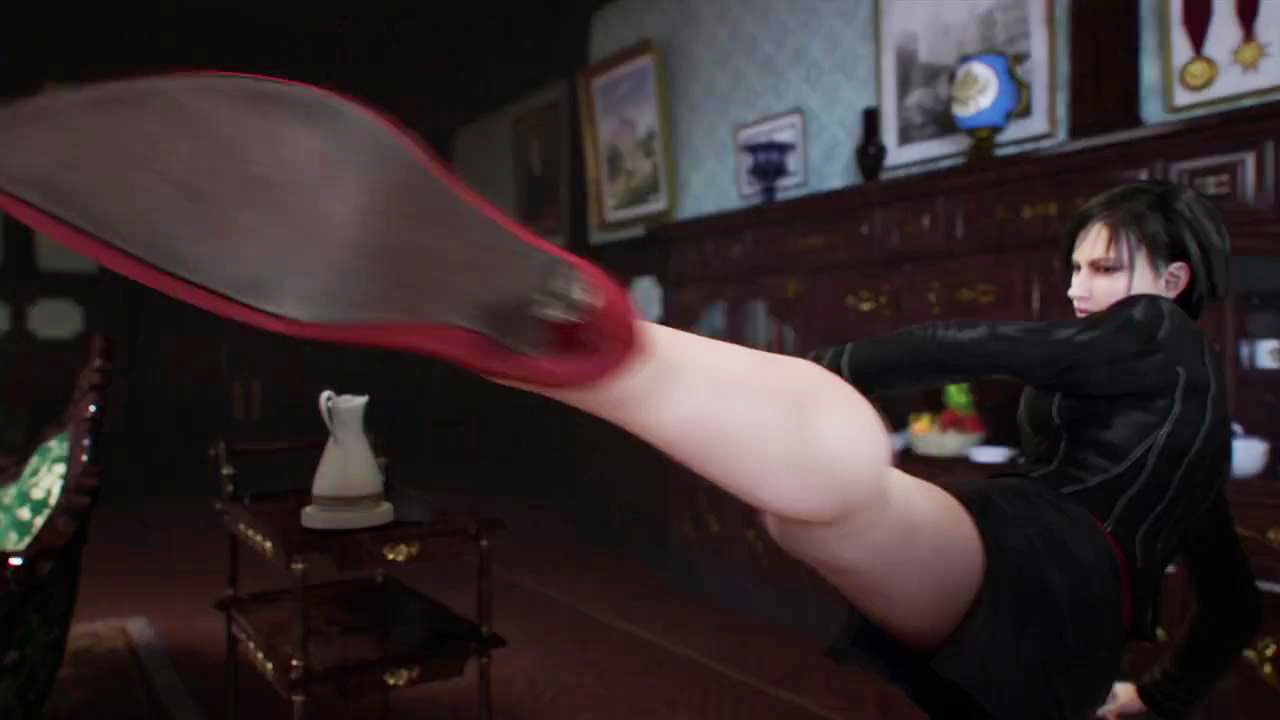 The Milla Jovovich series are not the only films set in the Resident Evil universe. There have also been two feature-length computer animated movies: Degeneration was released in 2008, and Damnation four years later. A third, Vendetta, is scheduled to be released in Japan this spring. While made in Japan, with a Japanese director and crew, the voice cast are English-speaking. As with the novels, the stories and characters are in line with the universe of the computer games, rather than the live-action features, and tend to occupy spots in the timeline between the entries in the game series. Therefore, there’s no Alice, but the animated films contain their fair share of strong heroines and, of course, action.
 There’s a new EvilCorp in town, and its name is WilPharma, as we learn during the montage of news stories which opens this. In game terms, the film takes place after the events of “Resident Evil 4”, which saw the dismantling of the Umbrella Corporation. Its assets and research naturally proved too valuable to destroy, and WilPharma has taken over, with the announced goal of developing a vaccine for the troublesome T-virus. However, some dubious medical research in India leads to the company being targeted by protestors from TerraSave. It’s one such demo, at the Harvardville Airport, that kicks things off, as a plane of infected subjects crashes into the terminal, where Senator Davis is trying to avoid the protestors. TerraSave’s Claire Redfield (Court) finds herself trapped with the Senator, before they’re rescued by a team of soldiers including Angela Miller (Bailey) and Leon S. Kennedy (Mercier).
 Included here largely for completeness, since the action heroine content likely would fall a little short of qualification on its own. Not that it’s entirely lacking, as the video at the bottom shows. But it’s definitely more a vehicle for Leon S. Kennedy (Mercer/Dorman). Which brings me to one of the odd things here: that is not a typo, it’s a double-credit for the character, because two different actors played the role, one providing the voice, the other the source for the motion-captured animation. Not sure I’ve seen that before.
 If you’re familiar with Jackie Chan’s life story, you’ll know he (along with fellow future start Sammo Hung and Yuen Biao) was basically brought up in a Peking Opera school, where he learned martial arts and acrobatics as well as theatrical skills. Discipline there was notoriously strict – the film Painted Faces gives a good idea of what it was like. But that was the sixties. Surely no such abusive educational regime exists nowadays?
 Ladies and gentlemen, we have finally found it: the Plan 9 From Outer Space of action heroine films, which manages to combine shoddy production values and pretentious nonsense to devastating effect, with the result being a completely incoherent mess. I knew I’d made a terrible, terrible mistake inside the first five minutes, which consisted of utterly overlong shots of a beach, into which a woman strolls, apparently coming directly from a clearance sale at Hot Topic, and performs an interpretive dance routine. She then wanders aimlessly round the woods, and menaces another woman, who is tied to a tree, while endlessly repeating, “Blood for blood. A life for a life. The wheel upon which we must all be broken.” It didn’t get any better, or any more comprehensible, thereafter.
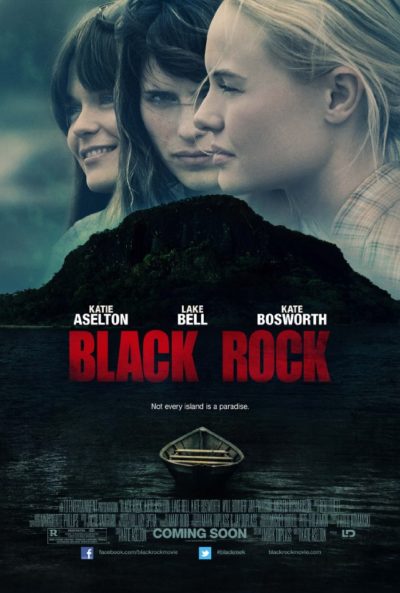 Maybe I’m getting old and deaf. Or maybe it’s just not a good idea to have dialogue that appears to consist largely of characters yelling (or whispering) over the top of each other. Either way, probably a negative the muddy audio is the main thing I remember about this survival horror film. Childhood friends Sarah (Bosworth), Abby (Aselton) and Lou (Bell) re-unite for a weekend on an island near where they grew up. There’s some reluctance here, Abby and Lou not having been on speaking terms for some years, due to the latter having slept with the former’s boyfriend years previously. The island is supposedly deserted, so they’re surprised to encounter three men hunting there, one of whom is known to Lou. A drink leads to another, and before you know it, Abby has fended off advances, in lethal fashion. The two survivors don’t take kindly to this, and begin hunting the trio to take revenge for their friend.
 Ok, that’s probably not strictly accurate, but there is more than a hint of it, in the way this manages to combine period drama with Gothic horror trappings – while also depicting the same characters in the present day. This slipping back and forth in time is somewhat distracting, and there are points where you wish they had just picked an era and stuck with it. The heroines here are a pair of mother and daughter vampires (Arterton and Ronan), who have been more or less on the run for about two centuries. For the mother, Clara, was a terminally-ill prostitute who stole the secret of vampirism from her client, Captain Ruthven (Jonny Lee Miller) in the early 19th century. She not only became immortal herself, she turned her daughter, Eleanor – an act strictly against the tenets of The Brethren, who are kinda like the vampire union, who put out a death-warrant on the pair. In the present day, this means Clara – still turning tricks to provide for Eleanor – has occasionally to decapitate people with a garrotte, should they turn out to be hunters sent by The Brethren.