




★★
“Blows a cylinder”
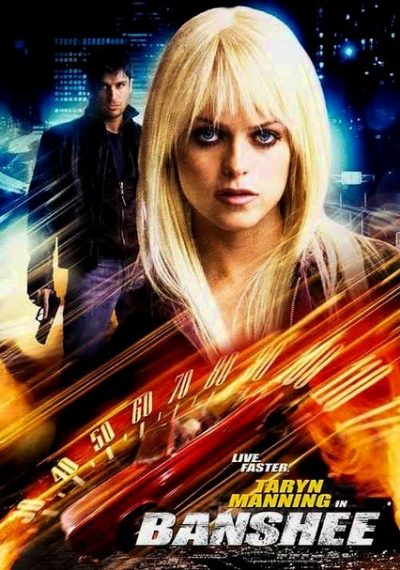 This one is slightly unusual among action-heroine films, in that it was both written and directed by women: Kirsten Elms and Kari Skogland respectively. Unfortunately, it’s not exactly an advert for their gender; after a brisk start, it falls apart, and becomes a ridiculously implausible movie, in a completely different genre from where it started. That’s a real pity, because where it started, had a lot more potential than where it ends up. It begins with Sage Rion (Manning), a young but highly-talented thief, taking a bet with her partner, as to who can boost a classic car quickest. She picks a 1966 Dodge Challenger, but inadvertently leaves her ID at the scene of the crime.
Back at her house, she finds a note telling Sage to return the car, or the owner will kill her partner, whom he has kidnapped. She does, even though this puts her in deep water with her employer, for having taken and returned the Dodge in defiance of his orders. And this is where the script goes, not just off the road, but through the crash-barrier and down an embankment into a ravine. For Sage is the recipient of a severed head, and gets framed for the murder of her partner. This forces her on the run, taking shelter in the apartment of hooker friend Brenna (Williams) as the police hunt her. However, rookie cop Fitz (Lombardi) thinks there may be more to it than that. Sage hunts down the owner of the Dodge herself, discovering in the end he is a mad DJ serial killer, who kidnaps and tortures his female victims for the sounds they make, which he incorporates into his mixes.
You may want to read that sentence again. Slowly.
What, pray tell, was wrong with the fresh idea of a young, cocky girl car thief, that it was deemed necessary to apply all this sub-Se7en nonsense to it? It was doing perfectly fine as is. She’d been established as a solid character, with some endearing quirks – for instance, she won’t sleep with any man, unless he first volunteers to cook for her. It would have been interesting enough, to see how she’d handle dealing with her irritable and prone to violence boss. Instead, that angle gets all but discarded when the movie moves on to the “lunatic disk-jockey”. It briefly re-appears, only to be ended in a largely ridiculous method of closure.
The other elements of the film are banal and by the book. You have Fitz and his grizzled partner, who suspects the worst of Sage, for no particular reason (I mean, they could easily figure out the head was severed elsewhere?). And the serial killer is little more than a walking set of cliches, who kidnaps Brenna in order to get to Sage, because… Oh, I dunno. I’d largely lost the will to live by that point in proceedings. So much potential here, only for it to be so completely wasted.
Dir: Kari Skogland
Star: Taryn Manning, Romano Orzari, Michael Lombardi, Genelle Williams
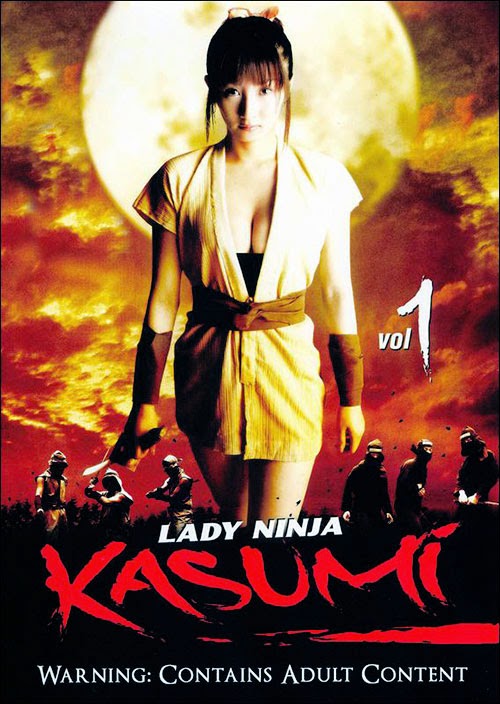
 Ninjas were famed for their mystical powers, but Tsubame (Asami), the heroine here, has… well, let’s just say, a rather different talent. And I quote her brother, Hayabusa: “The ability to store a man’s seed inside your womb for seven days after intercourse.” This raises a number of questions, not least: how did this get discovered, considering Tsubame is a virgin at this point? Anyway, this skill is needed because of… Ah, to heck with it. Hayabusa explains it as well as I could:
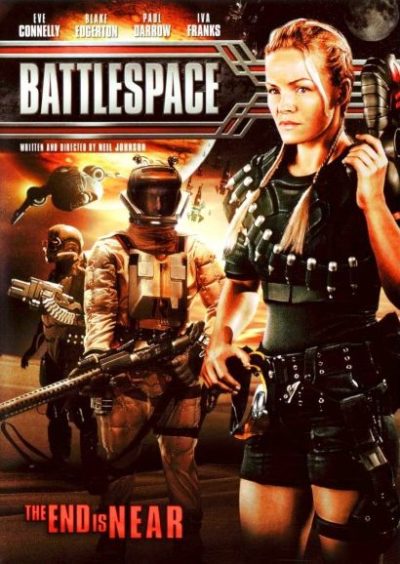 This dates back to 2006, and was somewhat groundbreaking at the time, due to the very high volume of digital effects and CGI background work – it came out was three years before Avatar, as a yardstick. The key word here, however, is “volume”. For the effects make up for in quantity what they largely lack in quality, although you have to be impressed at the sheer ambition on view, especially when you don’t have a fraction of the resources which were available to James Cameron. More problematically, also missing is the skill necessary to handle a narrative, where there is simultaneously too much and not enough going on. The former is apparent in entire universe building which has to be accomplished in hard to digest expository chunks, and the latter makes itself known, courtesy of long stretches which are as devoid of interesting features as the Arizona landscapes in which they were shot.
 ★★★½
★★★½ If she were the only candidate, this might end up being a bit of a borderline entry, but over the 24 episodes in the two series (there’s another five-episode arc I haven’t seen, Roberta’s Blood Trail, which came out in 2010), Revy is joined by a number of other, morally ambiguous women, all of whom are more than comfortable with firearms:
 Under the leadership of Bliss (Toups), whose father is serving an extended stretch in jail, four young women stage a series of convenience-store burglaries in the San Diego area, before moving up to larger schemes. This brings them to the attention of local crime-boss, Cal Wertlieb, who makes them an offer they can’t refuse. He’ll train them to carry out more lucrative jobs, by cracking safes, which will give them access to cash and other easily fungible loot, in exchange for a cut of the proceeds – and their absolute silence in the event of them ever being caught by the authorities.
 This probably seemed better than it is, simply because it had the benefit of being watched immediately after
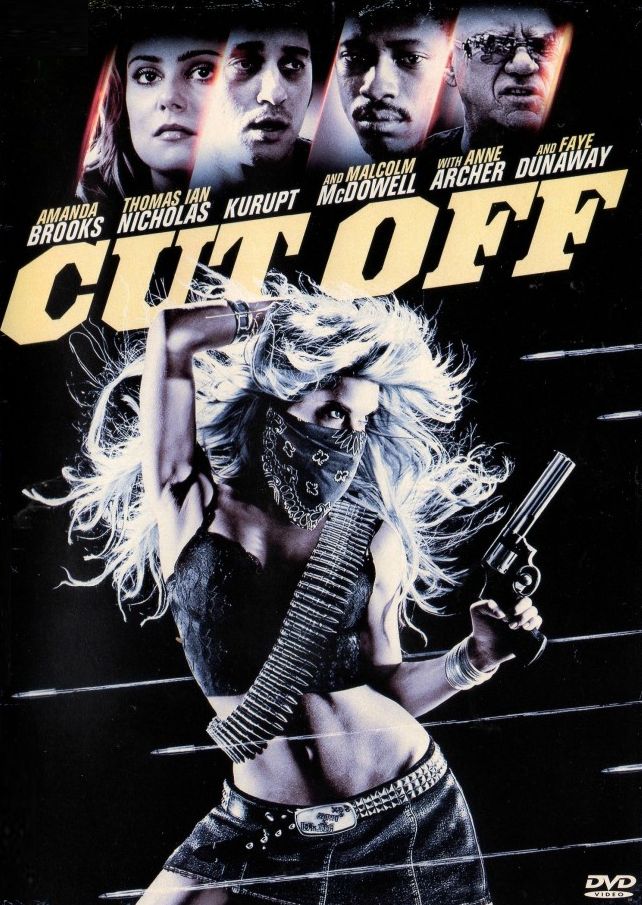
 This review is more in the nature of a warning than a critique, since it would be easy for someone to look at the cover (right) and think that this might be a movie about – oh, I dunno, boxing? It seems a reasonable expectation, given the following synopsis: