




★★★½
“Alice in Underland”
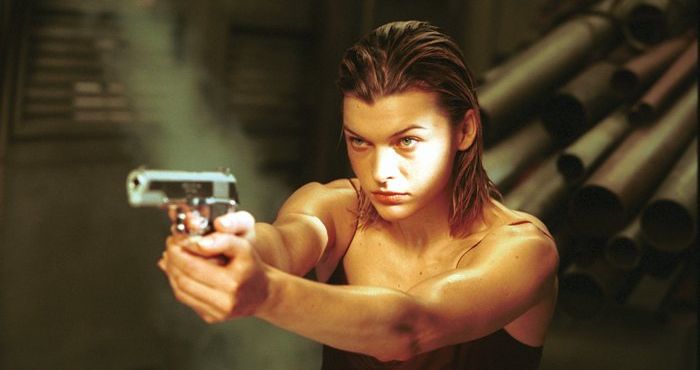
Interestingly, in the past year, all three of the computer-game to movie adaptations have had heroines: Lara Croft, Aki (Final Fantasy), and now, Resident Evil‘s Alice, who wakes up one day with a splitting headache and no memory. I’ve had mornings like that too. However, I never found myself kidnapped by a SWAT team and dragged into the Hive, an underground complex populated by the walking dead (human and canine), a peeved computer, and a mutated computer graphic monster called the Licker. My stepson somewhat gleefully informed me that, in the game, the last-named’s method of attack is to wrap its tongue round your head and pull it off. The movie doesn’t go so far – it just kinda nibbles on its victims. I felt somewhat disappointed at this display of taste and restraint, not least because it ran contrary to much of the rest of the movie. This is not a subtle movie, relying heavily on things leaping in from outside the frame, while the soundtrack goes “Boo!”.
Of course, that doesn’t make it a bad movie. Nor do the obvious plot-holes. Here are a few examples:
- Why would an assault team choose to take a pair of amnesiac security guards on the mission with them?
- Zombie humans shamble along at classic Romero speed. Zombie dogs can run like greyhounds.
- Security lasers in a corridor zip along with a variety of heights/patters, before finally switching to an inescapable grid-pattern. Why didn’t they do that to start with?
These are forgivable – the first is necessary to the plot, and Anderson (a veteran of game/movies, having done Mortal Kombat) uses the other flaws to stage satisfyingly cool sequences, with the security lasers perhaps the highpoint of the film. It’s a shame this represents about the extent of the Hive’s defenses; I’d have liked to have seen more ingenuity of this sort. The rest of the story revolves around the T-virus, being developed by the corporation that runs the Hive – when the virus is stolen and released, the Hive goes into lock-down, with the central computer (the Red Queen, personified by a little girl hologram with a nice line in not-so-idle threats) killing all the personnel inside. Bad move, for the T-virus reanimates them, turning them into hungry cannibals, which adds an extra frisson to the assault team’s mission.
 This is to…er, well, I think it was to disarm the computer, but I’m not certain about that. Mind you, I’m not certain about quite a lot in this movie. The characterisation is so woeful, I managed to combine two opposing characters into one for the entire film. And it still made sense – indeed, even after Chris enlightened me, I felt my version was better. My version would also have discarded the clock countdown, or used it as the basis for an exciting race against time through the tunnels. What’s the point of a countdown, if you don’t see it in the last ten minutes? There’s also maddeningly shallow nods to Lewis Carroll: the heroine is called Alice, who goes down a “rabbit hole”, while the computer is the Red Queen with a fondness for lopping off peoples’ heads. You should either do this stuff to the hilt, or not at all.
On the plus side, we do have Milla Jovovich as Alice, and Michelle Rodriguez as the Vasquezesque Rain, who are about the only easily identifiable characters. The former drives the plot along as her memory slowly returns at convenient intervals, along with her ability to kick butt. Most notable is the kung-fu vs. zombie Dobermann battle seen in the trailer, though she does the same neck-snap with the thighs thing that Famke Janssen did in Goldeneye. It’s a further step on for Jovovich, who showed action potential in The Fifth Element, yet there isn’t enough here to truly satisfy. Rodriguez, too, is underused, marching through her third straight film (Girlfight, Fast and the Furious) with the same expression. I thought I saw her smile once, near the start, but it was probably a digital effect added in post-production.
 So, not as good as it could have been, with even the most undemanding viewer able to imagine improvements. Yet, as an action/SF/horror film goes, it’s not bad at all, with very little slack or let-up. The virus is released in the first two minutes, and it’s pretty much non-stop from there on, with plenty going on. Jovovich looks the part, and the final shot has me anticipating the sequel, in a kind of Evil Dead 2 way, with her character getting totally medieval on the zombies’ asses. We can but hope.
Dir: Paul W.S. Anderson
Star: Milla Jovovich, Michelle Rodriguez, Eric Mabius, James Purefoy
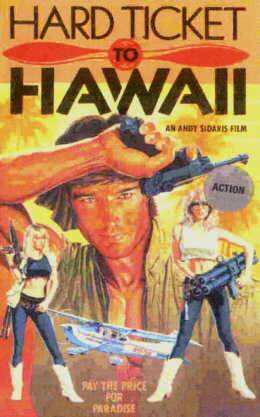 Also known as Hard Titties in Hawaii – at least in this house – it’s a big step forward as far as the evolution of Sidaris’ work goes. After the flailing around that was Malibu Express, he’s now firmly settled on Hawaii as a location, and jiggly action/adventure as the genre. However, he still unfortunately seems to want to cram lame comedy in there, such as clunky references to his previous films, while many of the actors appear not to have been chosen for their thespian ability – to their credit, Speir and Carlton aren’t particularly the worst offenders.
 Female action fans would be well advised to give this a wide berth. Actually, so should everyone else, unless they’re fans of crass sexism, extremely clunky exposition and hideous country & western. Cody Abilene (Hinton) is a PI hired by Countess Luciana (Danning) to look into the export of illegal computer technology to the Russians, centred on the home of Lady Lillian Chamberlain. Who is responsible? Oversexed chauffeur Shane? Daughters Lisa and Anita? Or the maid, Marion? [groan…]
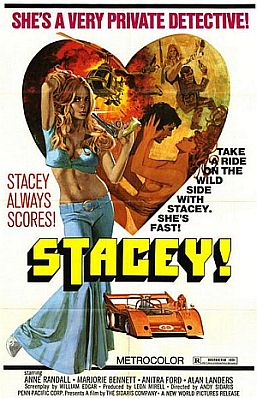 While this wasn’t Sidaris’s first feature – he’d done The Racing Scene, with James Garner in 1967 – this was likely the prototype of the BB&B (Blood, Bullets & Babes) flicks that would become his trademark. If all the elements do not quite mesh in the way they eventually would, they are all present, mostly in the shape of Anne Randall, a former Playboy playmate who plays private investigator Stacey, and looks a bit like Heather Graham.
 The above quote, from one essay in this collection of pieces on “violent women in the movies”, perhaps sums up its main problem. I cheerfully admit that my writing is skewed heavily towards the former point of view, but even so, too many of the authors here seem concerned with squeezing meanings out of films that were never intended to be there. This over-analytical approach results in the book swinging between thought-provoking and infuriating on almost every page.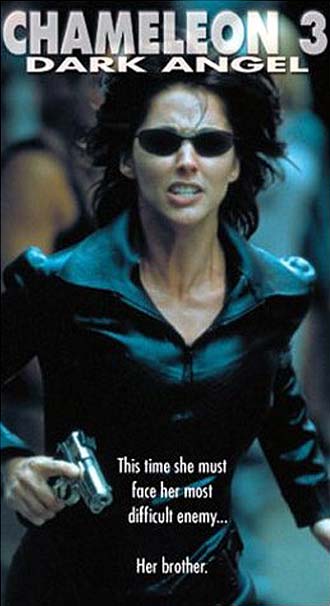
 Part three is a return to form, despite a title which might now seem suspiciously unoriginal, at first glance on the video shelves. But it actually predates James Cameron’s series, leaving his genetically-altered, motorcycle-riding loner firmly in the position of late-comer. The mathematics for this one are harder to define, since the ideas on view are…well, if in light of the first two movies, I’m reluctant to claim originality, they are at least taken from less obvious sources. There is thus an “X” factor to take in account here, where X may or may not be genuine inventiveness.
 I imagine no-one genuinely doubts the answer, but this adds a whole new plot twist, especially as the last time the Mongoose activated his weapon, its impact was pretty heavy. What happens when it’s used here is never really shown, and there is some scientific handwaving about the black hole absorbing all the energy, but it would be gratifying to think that it became necessary to destroy the city in order to save it. Not least because Cameron’s Dark Angel
  Scorpion’s Revenge is an understandable, if not really helpful, retitling of a film called Sasori in USA; as this suggests, it attempts to add an exotic flavour by setting things in an uncivilised and/or dangerous locale. Foreigners are, after all, inherently evil, and do far worse things to our women than we ever would. This isn’t new: many of Roger Corman’s 1970’s WiP movies were shot in the Philippines, albeit partly for cost reasons.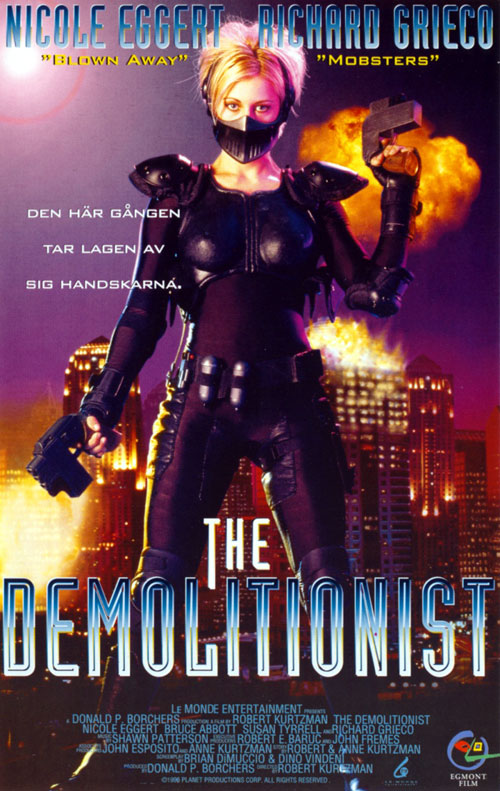
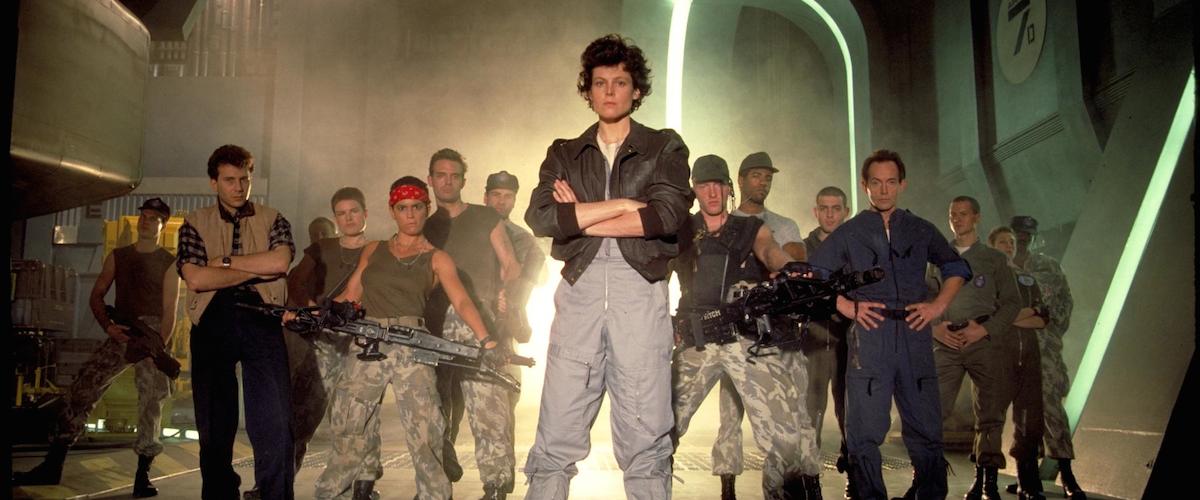 ★★★★★
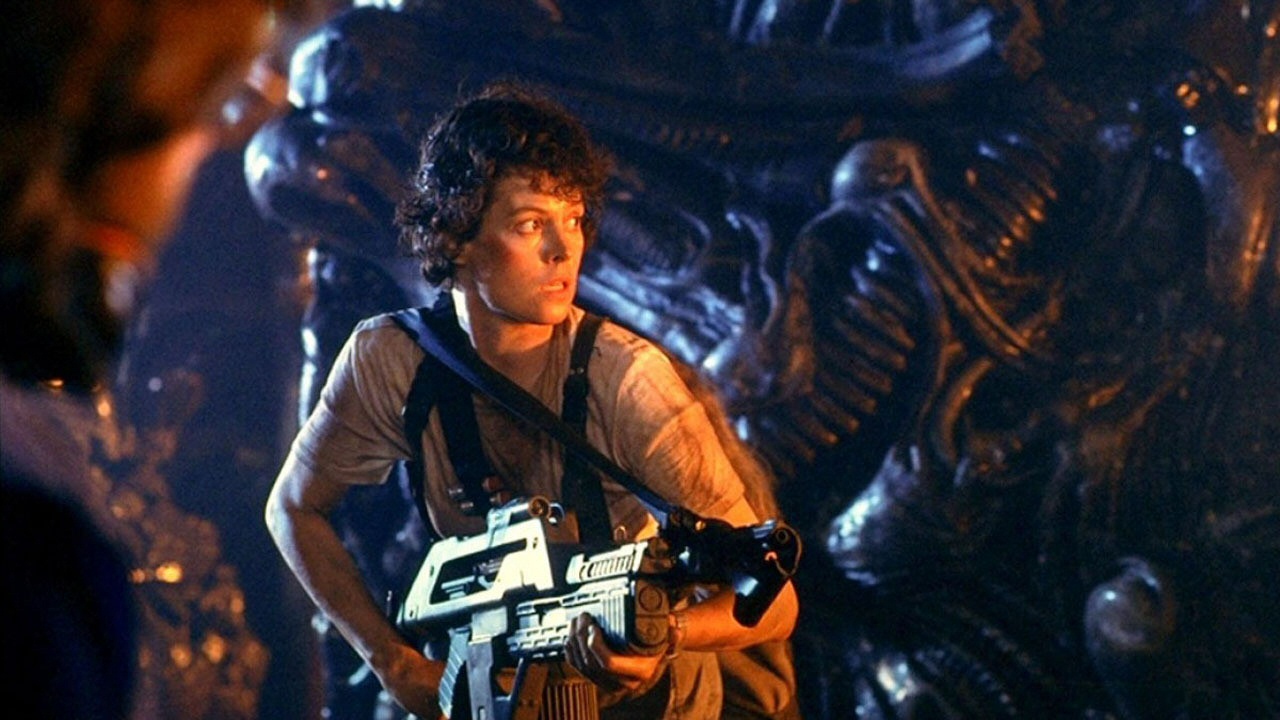
★★★★★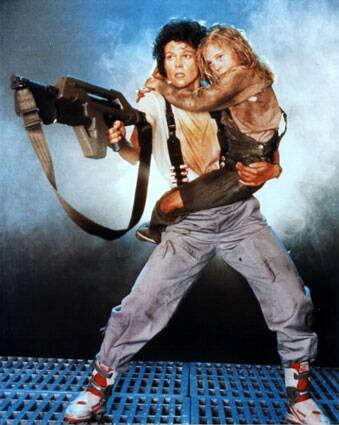 For in many ways, this is a Vietnam allegory. A technologically superior, arrogant military force lands in foreign territory…and gets its butt kicked by a ferocious enemy with no moral qualms, while the non-combatants are happy to plot their demise in pursuit of some other cause. It is likely also significant that Cameron worked on First Blood, Part II, which is perhaps why some reviewers e.g. the Philadelphia Daily News, referred to Aliens as “Rambo in space”.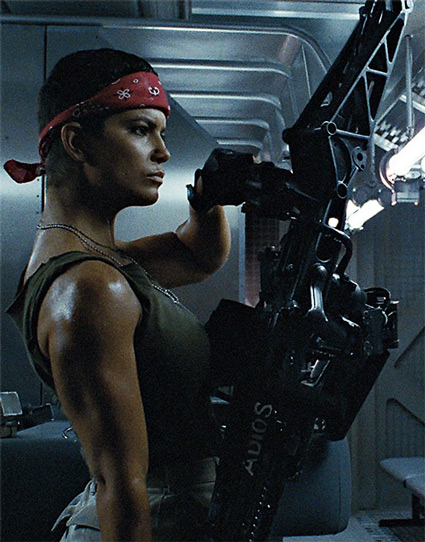
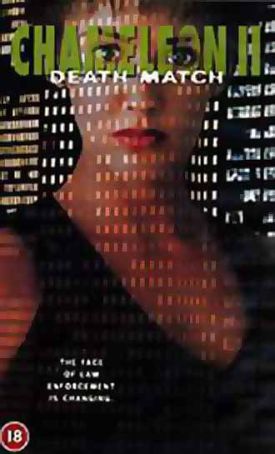
 There’s one sequence with Kam scurrying, lightning-fast, up a ventilation shaft (left) and a rather good brawl involving her that made me sit up and pay attention, offering hope for the rest of the movie. It’s a red herring. The last twenty minutes finally stop slavishly cloning Bruce Willis, with the villain not being who you’d expect (though if you think about who played the bad guys in the Die Hard trilogy, it’s not hard to work out). One good twist at the end is Kam recovering the “loot” and using it for her own ends, which extends her nicely amoral attitude. There’s also a nod to Kam’s not-entirely human origins, and how they affect her emotions, which would be a good avenue for future exploration.