




★★★★
“Memo to self: Scandinavian women were bad-ass.”

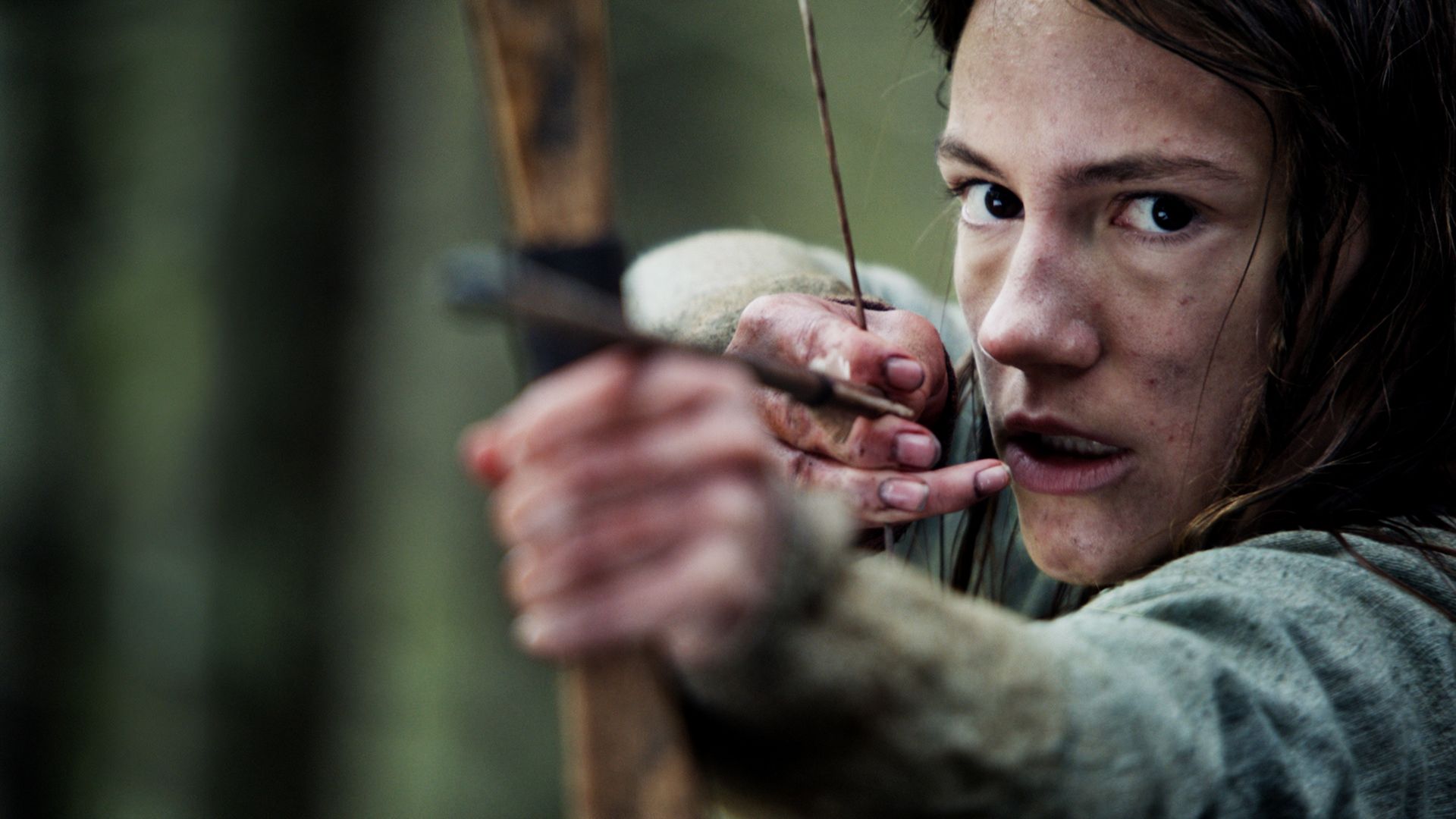
 14th-century Norway, not long after the Black Death has decimated the population. Signe (Andreasen) and her family are on the road, seeking a new life, when they are attacked by bandits. Signe is captured and taken to their camp, ruled by Dagmar (Berdal); she was expelled from the nearby town, whose inhabitants thought she was a witch. Signe isn’t the first girl abducted to give the matriarch a family; there’s also Frigg (Olin), a younger girl whom Dagmar is inducting into the ways of the clan. But Frigg is not there yet, and help Signe to escape: needless to say, an enraged Dagmar and the rest of her gang, are soon hot in pursuit, chasing them across the chilly (and beautifully-photographed) wilderness.
It’s a straightforward story, effectively told, and held together by very good performances from the two leads. It would have been easy for Signe to become some kind of teenage Rambette, but her transformation from plucky but inexperienced daughter into someone who can credibly take on a bunch of crypto-Vikings is well-handled. She hardly ever goes hand-to-hand with them, avoiding the obvious issues of size and strength, in favour of guild and wits. In the other corner, Dagmar, while being a complete bad-ass bitch, who looks like she would rip you head off for us, if she found herself short of a goblet, is given enough backstory to turn her into something of a sympathetic character, which is more than you can say for most villains in this kind of survival flick.
Of course, there are inevitably points where the characters behave in ways that are more necessary for the plot, than perhaps the most logical course of action. However, I can’t say those irritated myself or Chris too much – and she’s usually far less lenient of such things, especially in action heroine movies, where I want to give the film the benefit of any doubt. The action scenes are well-handled, and the deaths each pack more wallop than you’d expect, with the way in which they’re staged enhancing the emotional impact. It’s more than a little reminiscent of Pathfinder, another Norwegian film, made in 1987, which was also set in medieval times, and concerning a young boy abducted by a savage tribe [it was remade by Hollywood a couple of years ago, transplanting the story to North America].
However, the mother-younger daughter-older daughter triangle here adds a significant new angle, and clocking in at a brisk 82 minutes, there’s hardly an ounce of fat in the form of wasted moments, on its lean Scandinavian frame. What few such pauses there are, you can just admire the lovely Norwegian scenery.
Dir: Roar Uthaug
Star: Isabel Christine Andreasen, Ingrid Bolsø Berdal, Milla Olin, Kristian Espedal

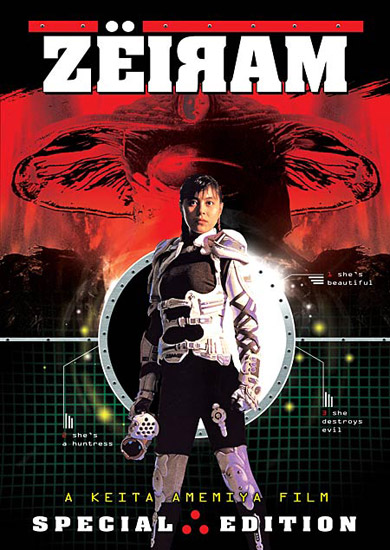 Zeiram and its sequel, Zeiram 2, both concern a creature which combines all the most unpleasant and lethal features of The Thing with The Terminator. It’s humanoid, at least in the number of functioning limbs, but its head appears almost mushroom shaped – though it’s hard to tell where Zeiram ends and its hat begins, for there’s a second face, embedded in the hat. This is capable of extending on a tentacle, to attack victims, taking in nourishment, and there’s evidence to suggest that it can absorb their DNA and use it to create monsters. Oh, and the rest of it is almost impossible to destroy.
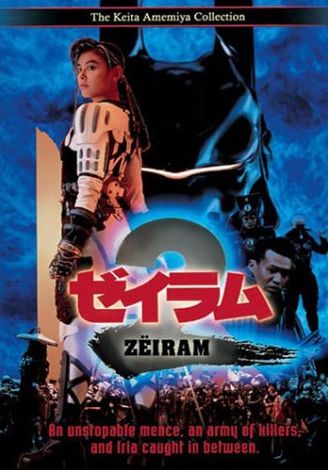 The sequel, which came out three years later, restores the “i” in the title, which was inexplicably removed from the original for it US release by Fox Lorber. This installment starts off as if it’s going to go in some radically different directions, even if all the main players are back. Iria is seeking an ancient artifact called the Carmarite, and additionally, has a new assistant, but he turns out to be untrustworthy. Meanwhile, a shadowy group has succeeded in regenerating Zeiram as a cyborg warrior (which makes a lot more sense if you’ve seen the anime, and know its origins), bending its will to their needs and turning it into a weapon. While initially successfully, this works about as well as most plans usually do, and it’s not longer before Zeiram is much more a menace than an ally.
 “Z is for Zeiram”
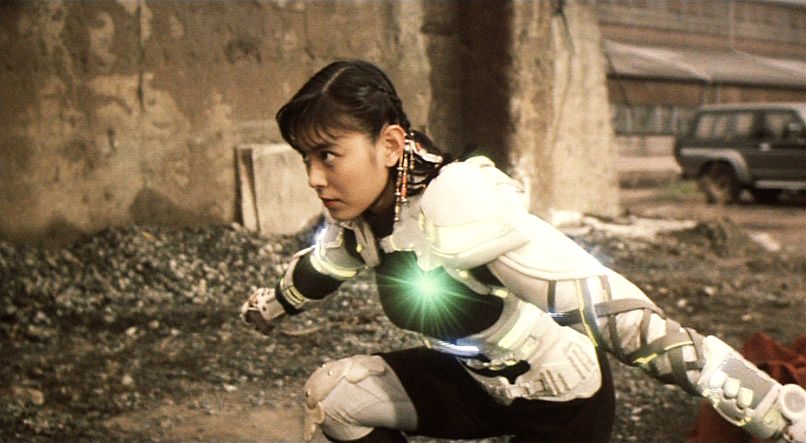
 Though released several years later, this is a prequel to the two Zeiram movies, telling the story of the first encounter between Iria (Hisakawa, who was also Sailor Mercury) and Zeiram. At the time, she was an apprentice bounty-hunter, working alongside her brother Gren. They take a mission to rescue a VIP and recover the cargo from a stranded space-ship. However, once there, they discover the “cargo” is actually the alien Zeiram, which a corporation is interested in using as a weapon. The result leaves her brother apparently dead, and Iria now the target for the corporation, who want to hush up their thoroughly-dubious plan, by any means necessary. Fortunately, as well as her own skills, our heroine has the assistance of former rival bounty-hunter, Fujikuro (Chiva), endearing urchin Kei (Kanai), and Bob (Ikeda), a colleague whose consciousness has been turned into an AI.
 According to the film’s introductory narration, Thailand now has about three women for every man. This has led to many men both having an “official” wife, while also keeping a mistress, and not exactly being secretive about it – when the wife dies, the mistress gets “promoted” to replace her, which has obvious implications for both parties. In order to protect their rights, the eives form an association, the FCWI, which stands for First Class Wives International. Not to be outdone, the mistresses do the same thing, with the ECWI (Economy Class Wives International). After two members of the former are gunned down on a stretch of highway, the two groups seem set for a fiery and murderous collision between the wives and mistresses.
 There are times when not saying too much can work for a film; Night of the Living Dead is the classic example, and it works, because you don’t