




★½
“It’s certainly an hour.”
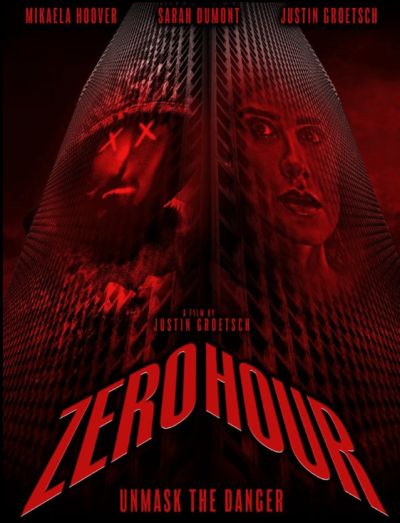 Not to be confused, in any way, with Zero Hour!, the 1957 Canadian film which was spoofed mercilessly in Airplane! This unfolds mostly over one night in a high-rise, where Ida (Hoover) is the last person left in the building, having taken over from best friend Katrina (Dumont). She finds herself being harassed by a pair of masked figures, and simultaneously receiving messages on her phone and computer from her husband, Isaac (Groetsch). Which is perhaps even more disturbing to her, because Isaac was killed in the home invasion which opens the movie. So what’s going on? Has he become a ghost in the machine? Do they have cellphones in the afterlife? Or is there a more prosaic explanation?
According to what Isaac tells her, the people hunting her through the building are also those responsible for his death. The obvious question is why, and it’s in providing the answers that the script (also by Groetsch) falls apart. After the heroine has been chased through the building, eventually ending up in a roof-top confrontation, we get the first of a number of twists, and… Put it this way: I have questions. Lots of questions. Out of respect for the film-makers, I won’t spoiler it, because this is clearly a big part of the film. However, I don’t feel it makes very much sense, because the conspiracy required would need to extend far further than the handful of people shown as involved.
While you are still going, “Hang on, what about…” there, the film lobs another twist at you, then a third as we flashback to Ida and Katrina’s earlier conversation in a bar, which brings in Allison (Durham). After the credits, there’s even another scene which could be a fourth twist, I dunno. Or it might be Groetsch simply wanting to get in another drone shot. I remember my first drone shot. It was in a movie called Berkshire County in 2014, and was amazing at the time. Now? It’s very easy to overuse them, and Groetsch does just that here. He’s clearly going for a fluid style of camera, with it always on the move. But there has to be a point to them. Here, not so much.
This barely runs an hour between opening and closing credits (or, perhaps more accurately, opening and closing drone shots). That’s likely a wise decision, considering how much of this is Ida staring at her phone – and Goetsch needs to learn how to shoot text messages. I will say, I didn’t hate Hoover, who is fairly sympathetic, and does what she can with material which feels more like a rough draft of an idea, and in great need of external critical input. According to his IMDb, Groetsch has no fewer than eleven other films in various stages of pre-production (though some haven’t been updated since 2017 or earlier). The only way to get better is to make more movies. I hope he does.
Dir: Justin Groetsch
Star: Mikaela Hoover, Sarah Dumont, Justin Groetsch, Carrington Brooke Durham
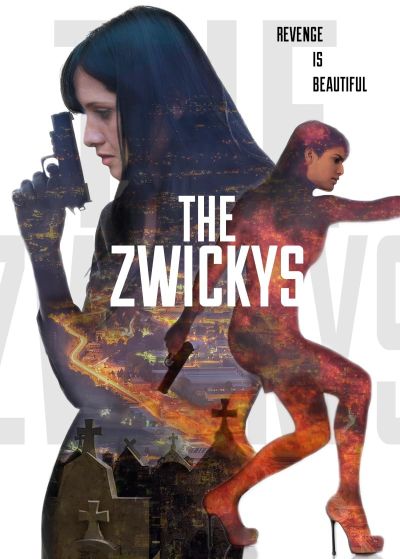 This is distinctly a film of two halves. The first is undeniably more impressive, taking the revenge motif and going in an interesting, and at least somewhat novel, direction. However, not long after the half-way point, the script decides to change direction radically. This leaves behind the grounded entity which we’ve had so far, in favour of something with distinct supernatural tendencies. I’m not averse to these per se. Yet they’re an ill fit with what has gone before, and need to be integrated considerably better. Then, things derail completely for the finale, pulling things out of nowhere to achieve a solution, in a gobbet of exposition that completely lost my interest. So, probably 3½ stars for the first half, 1½ for the second.
 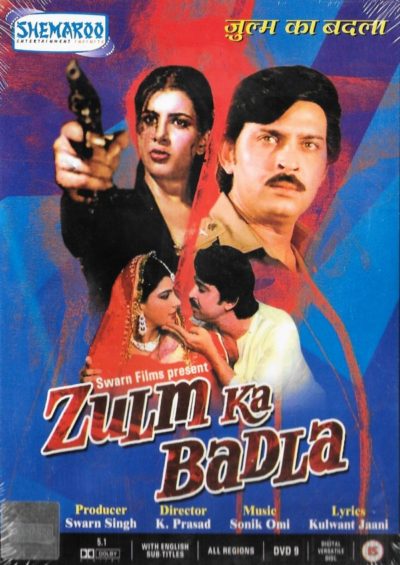 In recent years, the gap in cinema between Bollywood and Hollywood has closed dramatically. The likes of Indian blockbusters such as RRR (technically Tollywood rather than Bollywood) can stand, in terms of technical competence, beside their American equivalents. It’s mostly due to a dramatic improvement from Asia, because it wasn’t always the case, as we see when we go back to the mid-eighties for this slice of vengeance served cold. It looks pretty rough if you compare it to what Hollywood was making at the time, and in many ways feels like it’s about twenty years older than it is. I still found it more watchable than I expected, but then, I’m somewhat used to the style of Indian cinema. Newcomers might find this a bumpy ride.
 Zemlya is a gigantic closed city, in the middle of the Arctic tundra, its ten million inhabitants entirely cut off from the outside world. Indeed, there may not be an outside world: no-one knows, for the authorities hunt down and terminate anyone who tries to leave. One of their hunters is Kate
 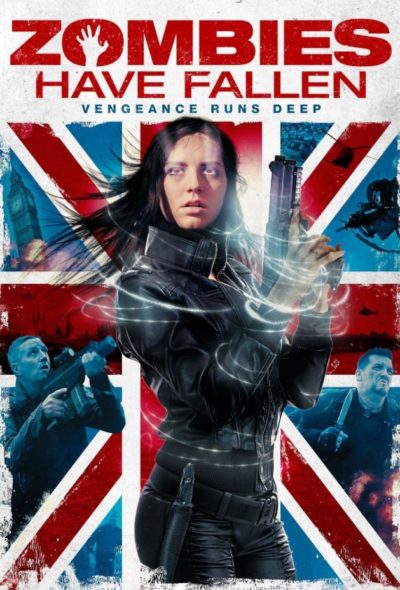 It’s not often that a film cost less to make, than the television set on which I watched it. But it appears this was the case here, with the budget reportedly coming in at five hundred pounds. No, there’s not a “thousand” missing from that. £500. What you get is probably not too far from what you would expect for that – some of the aerial photography and locations do appear to represent good value for money. Budget isn’t the real issue here though. This British film’s main problem is the drastic shift in story for the final third, when it suddenly morphs, for no reason, from a SF/thriller, into a full-on zombie apocalypse which the makers have neither the budget nor the talent to depict.
 I’m not kidding. Director Deodato is best known as the man behind one of the most notorious of all “video nasties,” a film which created such a furore, he had to produce the actors to convince the Italian courts he hadn’t killed them. But in almost fifty years of work (he’s still active today), Deodato has done everything from spaghetti Westerns to science-fiction. And more than a decade before Holocaust, back in 1968, he directed this bawdy action-comedy.
 The main mission given to Rie (Shiratori this time) is a little bit different, from her usual, straight-forward assassinations. Instead, she’s given the job of protecting a witness. Nana (Matsuda), the disgruntled mistress of an organ-trafficking ring, who has had enough and agreed to co-operate with the police. Rie is part of the protection detail, but soon finds out that the gangsters, under ever-so strange boss Kaneda (Nogami) with his transvestite tendencies, are not going to sit back and wait for Nana to take the witness stand. Oddly, the cops let Nana stay in her own apartment, perhaps figuring that’s the last place her former lover would look. but when that is unsurprisingly stormed, Rie takes the target back to the operative’s flat, where they hang out, exchanging small talk – that’s mostly Nana, of course, since Rie is about as talkative as the enormous pet fish she has in a tank, and to which she feeds goldfish.
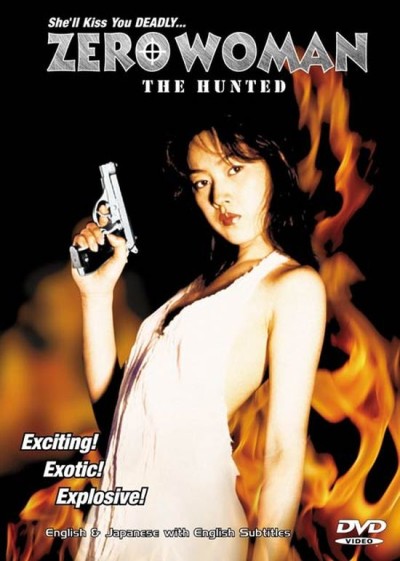 If ever I become an evil overlord, I will ensure my minions’ idea of security does not involve walking slowly in the open, towards an attacker, while firing wide of them from a range no greater than a slightly oversize dinner-table. That’s the first thing we take from this, which begins with a thoroughly implausible scene where Rei (Ono, who had been a part of 90’s J-pop group CoCo) manages to drown her target, a German industrialist, despite him being roughly twice her size, and without anyone in or around the swimming-pool noticing anything. She then climbs out, pulling a gun from who knows where, kills bodyguards who’d fail the Imperial Stormtrooper accuracy exam, and abseils down the side of the building to escape. That sets the tone for much of what follows, combining a reunion with someone from her past, a blossoming relationship with a chef, and her boss’s traditional surly reluctance to allow anything as banal as “personal happiness” to distract his #1 killer from her work.
 After the genuinely impressive bleakness of Assassin Lovers, the series comes crashing back to earth with a splat like a rotten tomato for this entry, which fizzles out early on, and then manages to lumber on for another 45 minutes. Rei (Tachihara) spends her time between missions hanging out at a gay bar, and rescues one of the rent boys, Mitsusu (Kitagawa), who ply their trade there after a vicious assault – accompanied, it has to be said, by the least appropriate music in the history of cinematic homosexual rape. He ends up moving in with her, to the latest in a series of unfurnished apartments provided by Section Zero, and the two damaged individuals start creating a life, of sorts, for themselves. However, there’s a serial killer, apparently with a deep hatred of men, operating in the area, and Rei is given the mission of tracking down and eliminating the psycho.