




Literary rating: ★½
Kick-butt quotient: ☆☆
 It’s rare that I can pin-point so exactly, the moment at which a book jumped the shark. But in this case, I can. I came across a paragraph which was so striking in its badness, I actually put the book down, to ponder what the heck I just read. It did not improve on several repeat attempts, and thereafter, I was simply unable to enjoy the book. Oh, it hadn’t been any great shakes to that point, but it became a genuine chore, and if I did not want to write this warning review, would certainly have become a DNF. Here we go:
Instead, she got out of the car, let Veronica lock up and secure the used towel in the back, in the trunk, which had a change of clothing in it, which the woman grabbed, carrying it with her. Since she still had chemicals all over her, that made sense to see to.
I am not exaggerating when I say that my eleven-year-old self would have been embarrassed to assemble those words in this order in a story. That this book is somehow rated over four stars on Goodreads makes me weep for the literacy of the population at large. The cover is what lured me in. The concept isn’t bad. But the execution is like being trapped inside the head of Kim Kardashian, and I would not wish that on my worst enemy. The heroine is Hannah de Peyser, a rich, vacuous heiress, who has had enough after the fourth time she gets kidnapped. “She might not be a hero, but she isn’t going to be anyone’s victim, not any longer. The damsel is gone, and in her place is a force to be reckoned with.”
Except… not mentioned, is that this is a bad superhero caper, with the world populated by caped crusaders with various powers. Our heroine initially has no such ability, but develops over the course of it, the ability to remote view people. If you’re thinking this could easily be used as a crutch to escape bad writing… No comment. She’s also apparently good at convincing people, including really stupid scenarios, such as that they are coated with an explosive that will blow up if they return to the United States. I feel like I lost measurable IQ points reading that chapter.
In regard to action, so far, she has spent almost all her time training in VR, with the actual action highlight being her foiling a robbery at a truck stop. There is a lot of space spent discussing thing like a “third gait,” which is apparently a better way of running. I did not sign up for a kinesiology lecture, but apparently some people did: again, four-plus stars on Goodreads. I somehow ground my way through the pages to an underwhelming ending. Do not hold your breath for any more reviews.
Author: P.S. Power
Publisher: Orange Cat Publisher, available through Amazon, both as a paperback and an e-book
Book 1 of 8 in the Damsel series.
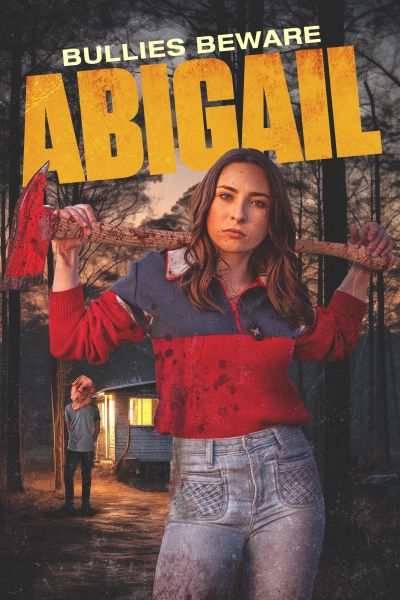 This is now the third film with the same title to be reviewed on the site: no
  This is one of those films where the same person wrote, directed and starred in it, and once again, the results illustrate the problems with such an endeavour. Almost any project will benefit from an external perspective which can offer constructive criticism, but when this is removed, the flaws typically end up multiplied. That said, this isn’t terrible. I think Riches the screenwriter comes out best, with a story which bypasses the usual cliches of urban storylines e.g. gangster rising out of the gutter, and does offer some genuine surprises. Director Riches also gets some points for restraint on the soundtrack front; it’s not comprised entirely of her mates rapping badly.
  Well, this is a spectacular mess. Except, the word “spectacular” implies something of interest, and that’s far from anything this delivers in its boring trudge towards a predictable ending. It demonstrates the perils when you, as a film-maker, decide to take your story and fragment the timeline. This only works if the script is able to maintain coherence around the jumps back and forth. This painfully fails on that count, beginning in the middle, but then bouncing back and forth to the point you know little and care less about any of the participants, or what happens to them. How bad is it? It gets the rare honour of me starting on the review, when there’s still half an hour to go.
 I’ll treat these two seasons as one entity. Indeed, there’s a case to be made that you could include
  There’s an old joke about bad movies: “This film wasn’t released, it escaped.” It seems disturbingly appropriate here, however, considering the shooting of this finished in October 2021, and it has been part of our annual previews for 2022, 2023 and 2024. Quite why Netflix sat on the end product close to three years, I don’t know. But having watched it, I can confidently say: it wasn’t long enough. This is the kind of movie that left me feeling actively more stupid by the end of it. Alba plays Parker, a soldier who returns to her hometown in rural New Mexico after her father is killed in a mile accident. Only, of course [and that whirring sound is my eyes rolling], it turns out not to be an accident.
 This starts off strong, with an attention grabbing scene where a woman gets a visit from a plumber. She offers him a glass of water, and… Things do not go as expected. For the woman is Jessie (Shay), a psychiatrist on a mission. She has made it her purpose in life to punish paedophiles whom she feels have been too lightly punished by the law. The man is one such, and it does not end well for him. Specifically, he is stabbed, and buried in a shallow grave, deep in the Australian outback. Safe to say the film has got my attention. Unfortunately, it’s more or less downhill all the way from here.
 If I was feeling mean, I’d have tagged this as “Pretty shitty Bang Bang”. But while undoubtedly amusing, that wouldn’t be 100% fair. For in the field of low-budget urban action heroines, this is actually better than most. Now, by broader standards, that’s still not exactly great. However, I’ve seen enough of the genre to appreciate and welcome mere technical proficiency. Simply by having decent audio, I was already impressed. It’s the story of Kiara Sommers (Nunno-Brown), a former soldier who is now a prosecuting attorney. During a meet with one of her informants, she is shot and left for dead, but rescued by another veteran, Ray Smith (Parrish) and nursed back to health. [I’ve vague memories of a Chow Yun-Fat film with this plot]
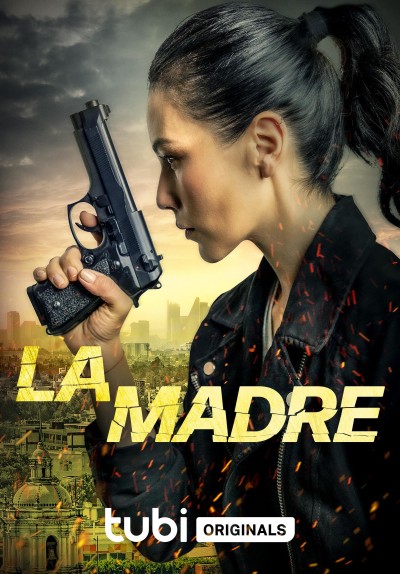 I ask, because this film, made in Mexico City and starring mostly Mexicans, seems to be trying to take place in America. It’s not doing a good job of it. The heroine is Martha (Mazarrasa), a single mother running a shop in a border American city with the help of her two daughters, Eva (Reynaud) and Raquel. Then Eva is kidnapped by evil Mexican cartel boss, El Chacal (Guerrerio), and held by him, even after Martha pays the requested ransom. However, it turns out Mom has a hidden past, which gave her a set of special skills. With the help of sympathetic cop, Juan Cinderos (Dulzaides), she sets out to bring down his organization and retrieve her daughter.
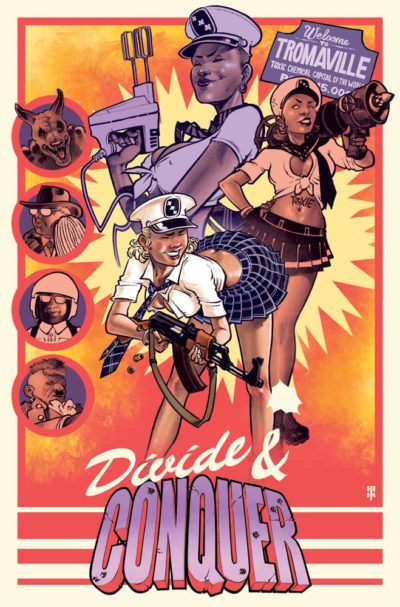 There are times where I regret my choice of pastime. It means I end up watching things for this site that I would never give the time of day, given the choice. This is one such, having endured the almost physically painful experience which was