
Ebony Hustle 2: Ballistic Protection

★★
“A slight improvement.”

There are times when I end up asking myself deep philosophical questions, like “Why am I doing this?” or “Isn’t there something else on which I can use my time?” In this case it, was “Who thought a sequel to the painful exercise which was Ebony Hustle was necessary?” To be fair though, this is an improvement. A half-star might be pushing it, to the point I did wonder about introducing a ★¾ rating. Or possibly a ★ and 11/16. It’s not good, to be clear. But it’s definitely less aggressively incompetent, with some of the most annoying rough edges smoothed down. For example, the audio this time mostly (although not entirely) lives around the same level, and there’s only one Facetime scene.
We are once more in the world of Ebony Howard (Lamb), a private eye who still doesn’t appear to be much private eye-ing. Of the three strands in this story, just one involves paying work, Ebony seeking to serve papers on a baby daddy to compel him to take a paternity test. There is also her investigation into the unexplained disappearance of Onyx, a friend from her strip-club days. This gets kicked up after she discovers Onyx’s phone with a video on it. Just do not expect closure for this thread, because the film ends in a way suggesting it will be a key element of Ebony Hustle 3: This Time We’re Semi-Competent, no doubt coming soon to a low-rent streaming service near you.

The bulk of it is, again, Ebony’ relationship drama. In this case, it’s with Mac (Howard), a promising basketball prospect who is being pressured to take performance-enhancing drugs by his manager, Bryan Calvin (Polo). This makes him become highly irritable, and causes Ebony so start digging into what’s going on, and Calvin does not take kindly to this interference with his meal ticket. With the help of her former strip-club boss, who is now a health guru, Ebony finds out the truth about what Mac is taking, and confronts Calvin. This is likely the only scene in which the film’s subtitle comes close to being relevant, as it’s the only time where the heroine wields a gun, or even gets physical.

The movie does a reasonably good job of managing the story, though the Onyx plot-line is largely ignored in the second half, until a late text message for sequel purposes. Lamb and Howard are not painful to watch, the latter being quite credible as a baller (though I notice the gender-neutral league he’s trying out for doesn’t appear to extend its equality to white women…). But there are way too many false steps, such as the lengthy scene which feels more like a presentation for a health supplement MLM, and the film remains in desperate need of more action and less dialogue.  At least you can now probably see Foxy Brown from here, though you remain in need of a telescope for that.

Dir: John Wayne S. III
Star: Michelle l Lamb, Jessica Mitchell, Jahaziel Howard, Polo

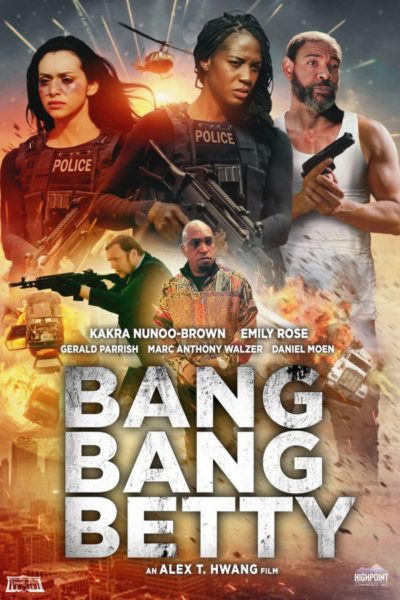
Bang Bang Betty

★★½
“Why not Kill-shot Kiara?”

If I was feeling mean, I’d have tagged this as “Pretty shitty Bang Bang”. But while undoubtedly amusing, that wouldn’t be 100% fair. For in the field of low-budget urban action heroines, this is actually better than most. Now, by broader standards, that’s still not exactly great. However, I’ve seen enough of the genre to appreciate and welcome mere technical proficiency. Simply by having decent audio, I was already impressed. It’s the story of Kiara Sommers (Nunno-Brown), a former soldier who is now a prosecuting attorney. During a meet with one of her informants, she is shot and left for dead, but rescued by another veteran, Ray Smith (Parrish) and nursed back to health. [I’ve vague memories of a Chow Yun-Fat film with this plot]
She’s then able to take revenge on the man responsible, local crime-lord Darnell (Walzer). Which is a bit awkward, because he is her boyfriend. There’s also Valerie Mendez (Hernandez), who used to be a colleague of Kiara in the army, and is now walking a dangerous line, playing for both sides, as a cop and an inside woman for Darnell. It feels as if considerably more thought has gone into this than many in this field, whose plot could typically be written on the back of a beer-mat, and leave room for your pint. Some other elements also deserve praise, such as a soundtrack which isn’t just the director’s rapper mates on shuffle (though there is still a fair bit of that).

While Nunoo-Brown and Hernandez are decent enough in their roles, there are several elements that manage to stop this reaching three stars, which would be close to an all-time high for the genre. There’s a serious question over Kiara’s complete ignorance of her boyfriend being a organized crime boss. I mean, really? Some of the supporting cast are not very good: Walzer in particular struggles with his delivery. There’s also a point where a significant character is killed in front of another. It should have a devastating impact, yet their lack of reaction is notable. A few minutes later in the film, they’re cracking wise with Kiara and Valerie. The bruising on Valerie’s face is a continuity disaster. 

My biggest issue, however, was the bad CGI. The muzzle flashes were marginally acceptable, but the explosions are poor, and the CGI blood close to the worst I’ve ever seen. Having no blood at all would have been a vast improvement. It’s a particular shame, as some of the hand-to-hand action is decent enough (again, compared to what I’ve seen previously), with both lead actresses occasionally impressing. I did laugh when Valerie attempted a lucha libre throw on Darnell’s henchman, only to be tossed aside, and told “That superhero shit doesn’t work in real life, does it?” More of this degree of self-awareness might have been welcome, yet it’s probably wise not to ask for too much. I’ll settle for competence, and there’s just enough here to leave me mildly interested in the sequel, already in post-production: Bang Bang Betty – Valerie’s Revenge.

Dir: Alexander T. Hwang
Star: Kakra Nunoo-Brown, Gerald Parrish, Emily Rose Hernandez, Marc Anthony Walzer

Dope Girls

★★
“Welcome to the dope show.”

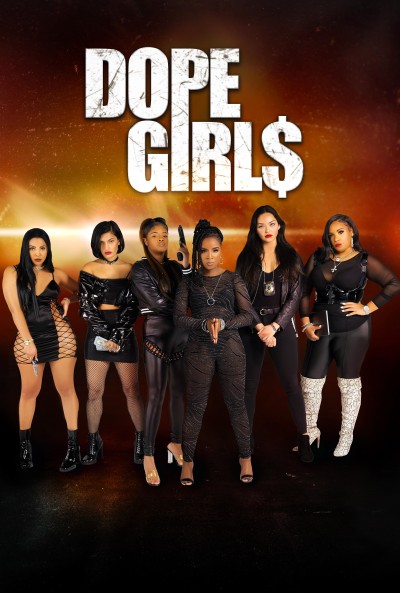
This shouldn’t be confused with the BBC series of the same name announced last year. This is very definitely American, another in the ongoing series of urban crime movies which seem to pop up, with some regularity on the likes of Tubi. I keep watching them, in the hope they’ll be good, but am usually disappointed, mostly due to cheap-jack production values and repetitive story-lines. This is at least watchable in the former department, though is definitely marked down for a startlingly abrupt “To be continued” ending. I hate cliff-hangers in books: they do not work any better on movies, and this isn’t exactly Dune Part One, shall we say. Not least because it runs only 75 minutes, including end-credits.
It’s the story of Dee (Pinckney), who comes out of jail with a grudge, and sets about trying to take over the drug trade in the city where she lives (I think it’s Philadelphia). The first obstacle standing in her way is CJ (Whitehurst); after she succeeds in facing him down, he hires an assassin to take her out. But the assassin is not a fan of CJ’s, so looks to switch sides and play for Dee. In her corner, she also has her cousin, Stephanie (Hicks), and a select group of other women with appropriate skills. The one of most note is Stasha Fields, also known as Star (Feindt), a dirty cop who is looking to make it on her own terms.

These make for an interesting set of characters. The film’s main problem is not doing nearly enough with them. Considering how short this runs, there is an awful lot of sitting around, talking about doing things, and not nearly enough actual doing of these things. Outside of the opening scene, in which Dee goes to confront CJ in his apartment, I’m hard-pushed to think of more than a couple of other significant moments of action. Although someone does get shot towards the end, it’s in a non-lethal manner, which is something of a surprise in this genre, since it usually can be depended on for a significant body-count. Here: not so much. There’s even preciously little dealing of the dope.

You’re therefore left largely to rely on the drama for interest, and that’s a bit of a mixed bag. As mentioned, there does seem to have been some thought put into the personnel. Pinckney and Feindt at least can reach convincing on some occasions, while director Deniro – and I’m wagering that is probably not his real name – knows the value of silence, rather than burying every scene in rap music, another staple of the field. In the end though, we reach the closing caption, without having moved an adequate distance from where we were after the first scene. We know a lot more people, to be sure. But to what extent do we know them? Maybe we’ll find out in Dope Girls 2. Maybe I can be bothered to watch it.

Dir: Black Deniro
Star: Kenisha Pinckney, Eva Lin Feindt, Joaquin Whitehurst, Taria Hicks

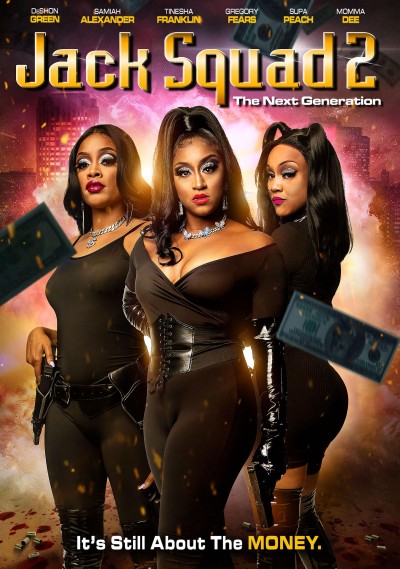
Jack Squad 2: The Next Generation

★½
“Do you know what the definition of insanity is?”

This is a question posed by the bad guy (Fears) towards the end of this, and of course, he provides the usual explanation in response: “It’s doing the same thing, expecting different results.” After watching this, I would choose to adjust it slightly. A valid definition of insanity is making the same movie, and expecting different results. Because it is, more or less, what Rankins has done here: it’s a remake of his own movie from fourteen years ago, Jack Squad. Now, there’s something to be said for that. I mean, Cecil B. DeMille did The Ten Commandants twice, while directors from Hitchcock to Michael Haneke have remade their own films. 
The difference is, they were kinda busy. For instance, Hitchcock directed twenty-five features between his two versions of The Man Who Knew Too Much. Since the original Jack Squad in 2009, Rankins has made just one feature: Angry Kelly in 2014. Did he not manage to come up with more than one original idea in a decade and a half? And that count is presuming Angry Kelly is not about a man who is annoyed because he was drugged and robbed by a trio of women. I’ve not seen it, I can’t say. Here, we get a little variation at the start, where the original Jack Squad get hunted down, and a bit at the end, where there’s dissension in the ranks over hidden money.

In the middle though? It’s a blatant re-make. Three young women decide to make money by drugging and robbing men. This goes wrong, when one of the targets is a courier for a violent drug boss, carrying a large sum of cash. They make the ill-advised decision to hold onto the money, a choice which brings them into the crosshairs of its real owner. If anything, we have even less going on this time. It’s a good half-hour before the new trio, of Cassie (Green), Nikki (Alexander) and Cam (Lynn) put their scheme into action. I guess there is at least some altruism, the goal – at least initially, before the designer shopping kicks in – being to cover the medical bills run up by one of the trio’s mother.

The overwhelming sense of deja vu here is what knocks the overall rating here down below the original. I mean, the three characters feel almost like bad photocopies of their predecessors. There’s one who has qualms about the whole concept, while another refuses to give it up at any cost. It’s likely a little more technically competent, though at basically two hours long, is still painfully over-long. There’s a weird subplot where one of the women has a mentally challenged brother, who wants to be a baseball pitcher. This does eventually show relevance, though the way it does, might have you wishing they hadn’t bothered. If we don’t get Jack Squad 3 until 2037, I am completely fine with that. 

Dir: Simuel Denell Rankins 
Star: DeShon Green, Samiah Alexander, Tinesha Lynn, Gregory J. Fears

Snatched

★★½
“Everything comes to he who waits. Eventually.”

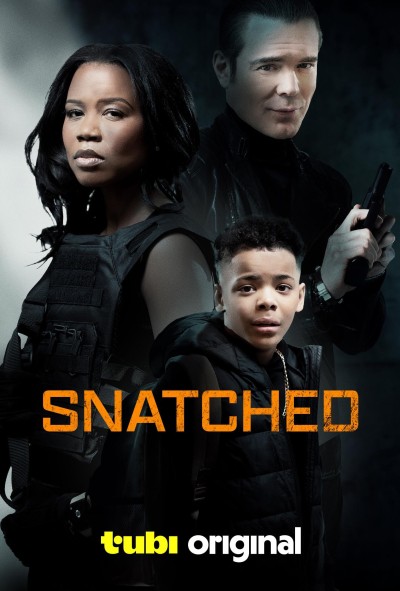
The title here seems quite deliberately a nod towards Taken, which similarly has an ex-government operative chewing up and spitting out bad guys, after they make the fatal mistake of abducting the operative’s child. In this case, it’s CIA operative Angela (Bozeman), who lost her husband Jason in murky circumstances, but subsequently put away Dmitri (Weber), the criminal mastermind responsible. Now, six years later, she can get on with living her life, bringing up son Jason Jr. (Cheatham), and hanging out with fellow agent Byron, who seems a possible husband replacement. Well, until Dmitri escapes from prison and starts killing off everyone he considers responsible for putting him behind bars.
Sooner or later – and as we’ll see, it’s not the former – that brings him into Angela’s circle, and ends up in him kidnapping Junior, with the aim of luring her into his (very well-appointed, it has to be said; I particularly liked the chandelier) lair. However, he doesn’t realize what he has done. Once this all gets going, it’s not bad. If hardly seeming an accurate portrayal of CIA practices, unless they’re utterly slipshot and incompetent, it’s kinda fun as long as you don’t ask awkward questions. Such as, where the heck does Angela get those groovy remote-controlled gun-toting little cars? Was Andy Sidaris having an estate sale? Dmitri also has a groovy bad-ass sidekick, Sophia (Camille Osborne), though her fight with Angela is disappointingly brief.

The problem is mostly the long, meandering, roundabout and largely uninteresting way in which the story gets to the amusing stuff. The first half or more is largely comprised of extremely conversational scenes of merely passing interest. In these, Angela talks to Byron about wanting to retire. Or talks to Junior about the realities of her career. Or talks to her mother, Carolyn (Hubert), about her not really a relationship with Byron. Dear lord, it’s far from the action-packed trailer, and you would certainly be forgiven if you gave up on all this soapy drama. Though I was eventually entertained by Carolyn’s ability to kick ass in a grandmotherly way, like Pam Grier on an AARP outing. At least until she encounters Sophia, anyway.

The score above is likely a composite, with two stars for the first half and three for the second, when things do reach an acceptable level of entertainment. Bozeman seems better known as a singer, but does a decent job of portraying the highly upset mother, and has a terse style of close-combat that is effective. On the plus side, it is quite gory, with a number of head-shots and other fairly graphic deaths. On the minus side, these are mostly CGI, as is apparent from the blood spray never landing on anything in the environment. You probably want to have something on hand for the sluggish early proceedings: either a good book, some snacks or an alcoholic beverage would all serve that purpose.

Dir: Chris Stokes
Star: Veronika Bozeman, Charlie Weber, Jered Cheatham, Janet Hubert

Call Her King

★★½
“Tries hard to be Trial Hard

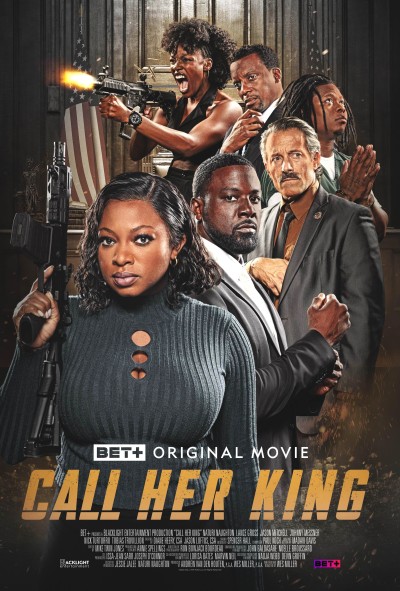
After the impressive surprise which was Jericho Ridge, I figured I should try out another BET Original movie and see how it fared. As the grade above should tell you, the answer is comparatively poorly. While technically adequate in most departments, it’s one of the more implausible Die Hard knockoffs I’ve seen. In a world where No Contest exists, that takes some doing. The high concept here is “Die Hard in a court-house” with Judge Jaeda King (Naughton) about to pronounce sentence in the trial of convicted murderer Sean Samuels (Mitchell). Barely has she said “death”, when the court is stormed by a force led by Sean’s brother Gabriel (Gross), a.k.a. “Black Caesar”.
King escapes the initial onslaught, along with Sean, his defense attorney, and Stryker (Messner), one of the courthouse guards. Gabriel, however, is not just interested in freeing his brother. He also puts the prosecuting attorney on trial in a kangaroo court, designed to prove the flaws and biases inherent in the system. Much of the film is therefore split between King and her group trying to figure out how to survive, as well as escape, and the courtroom side of things, where nasty little secrets are revealed, such as the prosecutor’s relationship to King having been more than professional. I will say, Miller does a good job of keeping both sides of the story moving forward. It would have been easy for the chattier portions to bring things to a halt: that doesn’t happen.

This aspect is certainly helped by a strong performance from Gross, who manages to avoid the obvious tropes of such a situation, and comes over as smart, well-spoken and committed. He’s no Alan Rickman of course; then again, who is? I found myself, if not quite on Gabriel’s side, at least seeing his point of view and his grounds for extreme action. The main problem is a failure to set King up as credible opposition. Before things kick off, there’s no reason to view her as an action heroine: all we see is her being easily beaten by her martial-arts teacher. Then, suddenly, she – or, rather obviously, Naughton’s stunt double – is kicking butt and spraying bullets around like a grizzled Army Ranger.

Okay, Naughton is far better than Anna Nicole Smith, though that’s a low bar for anyone to clear. She does okay with the dramatic side of things, though the script occasionally gives her little to work with. The broken relationship with her spouse feels like another element poorly lifted from Die Hard, and things like her overhearing another judge go full racist were so obvious as to trigger an eye-roll. Miller does have a nice visual eye, e.g. the shot of the attackers marching towards their target was a genuine stand-out, and there’s enough competence to stop it from being actively annoying. However, its script needed more work, and perhaps a better central concept, to succeed in an over-crowded field.

Dir: Wes Miller
Star: Naturi Naughton, Lance Gross, Jason Mitchell, Johnny Messner

Ebony Hustle

★½
“Credit where credit is due…”

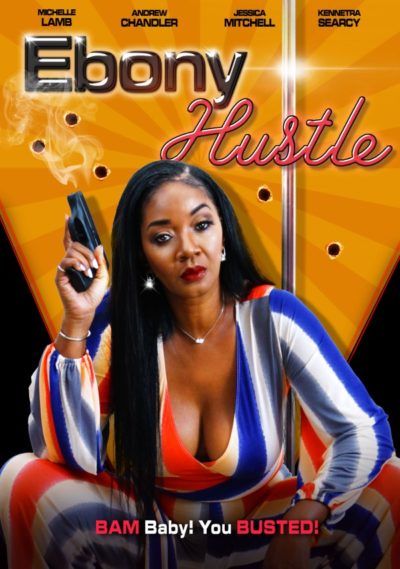
When the best part of a movie is the opening credits, we have a problem. That’s the case here, with an 007-influenced montage that feels as if it cost more than the entire rest of the film to put together. However, by that point, the movie was already on thin ice, because the volume of the music was roughly three times that of dialogue in the pre-credit scene. Lunging repeatedly for the button on the remote is always a red flag for any indie movie, and proved accurate here. The same goes for the gratuitous name-checking of much better black heroines, such as Christie Love and Cleopatra Jones. They just draw attention to the deficiencies here – not that they are hard to see.

The unusually named heroine (Lamb) is a former stripper turned insurance fraud investigator, and unwillingly accepts a case to look into the disappearance of 16-year-old girl, Ny’Kia (Elizabeth). She had become part of the retinue of former gangster turned pastor, Caleb Truth (Chandler, who looks like you ordered Snoop Dogg on wish.com). He is supposedly a reformed character, and speaks all his lines in rhyme. This is an affectation which grows steadily more annoying, every time he speaks. It seems it may even have irritated the makers, because that thread – which I’d have thought would have been the main plot – is ended, alongside Truth’s doggerel rapping, with relatively little trouble by Ebony, when there’s still half an hour to go.

The remaining time is largely filled by Ebony’s romantic entanglements. She’s a highly predatory cougar, which seems something of a double standard, considering the way she goes after Caleb Truth, for activities that aren’t really that different. There are also far too many unconvincing FaceTime conversations, though at least these are largely free of the audio issues which infect many of the face-to-face scenes. There is one which does work, between Ebony and former husband, police detective Wayne (Stevenson), both expressing regret over their shared past. Both actors are convincing, and it offers a rare moment of emotion which feels genuine here. It helps it’s understated and quiet, standing in sharp contrast to the shrill yelling and show-boating which permeates just about every other moment.

I can see where the makers were trying to go. It’s just that they managed to ignore all the elements which made black heroines of the seventies so memorable. Here’s a clue, it wasn’t flirty chat-chat with younger men over the telephone. Not to say the likes of Foxy Brown weren’t sexual creatures: it just never felt it was their main raison d’etre. Here, it feels like… well, Ebony may have left the strip-club, but the strip-club never left Ebony. Her crime-fighting trails in, a long way behind and seeming little more then an afterthought. Any time this feels like it might be achieving its ends, something happens – such as Ebony’s boss appearing, an early contender for worst actor of the year – and it all comes crashing back to earth.

Dir: Jamezz Hampton
Star: Michelle l Lamb, Andrew Chandler, Ryan Elizabeth, Joel Stevenson

Vengeance Served Cold

★½
“More like undercooked. “

At the age of fifteen, Madison Michaels saw her prostitute mother beaten and killed by Renegade (Cross), a vicious local pimp. His homicide goes unpunished. Ten years later, Madison (Linton) is a counsellor, trying to help drug addicts and hookers get off the streets. She discovers that Renegade is still abusing women, and gets no help from the police, with Detective Straker (Williams) saying he can do nothing based on her hearsay. Against the advice of her friends and sister Lydia (Jeffries), Madison hatches a plan to take the pimp down, and clean the streets of thus piece of scum. Naturally, it doesn’t initially go quite as planned, with the trap set for Renegade backfiring, followed by betrayal from an unexpected direction. 

Even at seventy-five minutes long, this somehow manages to outstay its welcome in short order. On a shallow level, I eventually understood why Renegade may not have been prosecuted, yet the explanation falls far short of being fully convincing. It is still more than we get, in terms of a reason why Madison waited ten years before deciding to take any action. It’s not like she or Renegade went anywhere. Sure, she’s learning martial arts from her (not particularly awe-inspiring) sensei. Yet the level which she has reached doesn’t seem, for example, to reach any kind of critical threshold, such as the one necessary to take down a sadistic street thug with no moral qualms. In two minutes, I came up with a better plot: Madison went away, joined the army, and is now back, armed with the skills she needs to take on Renegade.

The poverty of the production too often gets in the way. Witness, for example, the penultimate scene, which was clearly filmed on a windy street, resulting in the dialogue being inaudible over the breeze rattling across the mics. Walmart sells a variety of wind covers for microphones at a cost of less than ten dollars. That this was, apparently, beyond the movie’s resources, tells you all you need to know. Similarly, the supposedly “brutal” death of the heroine’s mother consists of not much more than the actress lying on the floor with her eyes open. As a result, this rarely manages to approach a convincing depiction of life on the streets.

Some slight credit is due to Davis for exercising restraint on the soundtrack. It actually feels like it belongs to a proper film, rather than the director’s Spotify on random, as is usually the case in these films. This is not enough to overcome a script that simply does not have enough going on, even at the short duration present. There’s no particular sense of escalation, and what should have been the climactic face-off between Madison and – let’s remember, since the movie seems all but to forget this – the man who killed her mother in front of her, falls flatter than a day-old crepe. To continue the culinary metaphor of the title, I’m sending this one back to the kitchen.

Dir: Shaan Davis
Star: Kameka Linton, Aviator Cross, Chyrod Williams, Brandy Jeffries

Panther of the Border

★½
“A load of panths.”

There are times when I can look at a failure of a movie, and kinda see how the various elements could have been arranged to better effect. That’s the case here, where a poverty-row, Spanish-language (but made in Texas) production about rape, revenge and narcos, could potentially have worked. Except, it absolutely doesn’t. It’s the story of Carla Mendoza (Verastegui), who happens to be in the wrong place at the wrong time, working for her boss, Pedro Camargo (Palomo), blissfully unaware he is a cartel leader. As a result, she’s arrested, and ends up spending seven years in prison, while daughter Nina is taken care by her grandmother.

On getting out, Carla vows to take revenge on everyone she considers responsible, which is not a short list. Beyond Camargo, who tried to have her put away for life, it also includes her previous boss (Soberón), who raped and then fired her; Camargo’s rival, La Cobra (played, according to the IMDb, by “La Cobra de Tamaulipas”, though my Internet sleuthing suggests she’s actually called Caty Gutiérrez); Camargo’s wife, who dissed Carla just before the arrest; and, quite probably, the doctor who doesn’t quite exhibit a top-tier beside manner, after Nina is shot when Camargo tries to take Carla out. Our heroine holds grudges like an elephant with a Rolodex (Kids! Ask your parents!), and has taken lessons in the necessary skills to exact payback from those on her list.

Unfortunately, the execution is terrible. The script is a complete mess, at one point repeating the entire sequence of events leading up to Carla’s arrest, which simply confused the hell out of me. Motivations for most characters are unclear, with things happening for no reason, out of thin air, or not at all, being simply described to us. For instance, Nina mounts an assault on La Cobra’s men, which we only hear about third-hand, through a report given to Camargo. This isn’t surprising, since the production values are woeful, with the “police station” and “hospital” battling it out, for the title of Least Convincing Facility. They’re still not as bad as Carla’s combat skills: my grandmother could do better, and she’s been dead for 40 years.

It feels as if the makers ran out of money or script pages, the film ending with Nina miraculously going from coma to 100% well again, followed by Verastegui giving a rousing karaoke rendition of the film’s theme song in a nightclub, before a crowd charitably numbering in double-digits. Even by the low standards of the Mexploitation films we’ve seen previously, this is bad. Yet as mentioned, arranged differently… I actually liked La Cobra, who genuinely acts like I feel a cartel leader would. If the whole film had been her against Carla, for some reason, it would have been on considerably stronger ground. Indeed, the performances in general are okay: most would not feel out of place in my narconovelas. Every other element though, ranges from poor to flat-out terrible.

Dir: Martin Palomo, Luis Antonio Rodriguez
Star: Carla Verastegui, Martin Palomo, La Cobra de Tamaulipas, Héctor Soberón
a.k.a. La Pantera de la Frontera

Gangsta Grrlz

★★
“Some things never change…”

Not to be confused with the clearly different Gangster Girls, which isn’t particularly gangster at all, or Gangsta Girls, which is Vietnamese, and especially not to be confused with the execrable Girls vs. Gangsters. Though confusion is understandable, and not helped by Tubi typoing the title to the slightly more correct spelling of Gangsta Girlz, and adding an unrelated poster. So, we all sorted on that? At first, I thought this was a remarkably accurate period piece, starting proceedings off in 1998 Philadelphia, an era of large wigs and even larger mobile phones. I kept expecting it to jump forward to the present day: never happened, and that’s because it turns out, this was actually made in 1998. All the retro trappings were actually of the time.

This does include nineties video quality, and audio that leaves room for improvement in some scenes. However, I’ve endured worse in both departments. It tells the story of Ninea Ranks (Smith), whose boyfriend brought her along on a drug deal that goes wrong, leading to her shooting a man. He takes responsibility, dies in prison, and she decides to embrace a life of crime. This is all explained in voice-over, presumably for budget purposes, and she now has an all-female organization, because she doesn’t trust men. That includes lieutenant T (Gaston), and new recruit Glitter (Jones). There’s a beef with rival leader Dion (King), who would like nothing better than to see Ninea behind bars and unable to compete. However, he faces dissension from within his own ranks, by a disgruntled henchman, Razor.

What stands out is probably how little the genre has changed in the 25 years since this came out. This offers much the same mix of unconvincing drama, guns held sideways and relentless hip-hop by the director’s pals, as any of the more recent entries in the modern Blaxploitation field. There’s no surprises at all to be found as things develop, unless you consider the abrupt conclusion, with a caption which succinctly informs the viewer, “Ninea left town to lay low in 1999. But don’t get too comfortable fellas… She’ll be back.” A quarter of a century later, we’re still waiting, and I’m beginning to wonder if we might have been ghosted by her.

The only scene which stands out is Razor chatting to his loyal friend, Curtis, about being fed-up of Dion’s leadership, and deciding to betray their boss. It’s shot and staged simply, and feels all the more authentic for it. Otherwise, what I’ll remember most is likely the spectacular selection of wigs owned by Ninea, whose last name really should have been “Business” [I’ll wait… Forever, if necessary] Characters and plot threads drift in and out without achieving even the caption level of resolution offered to the anti-heroine, such as the police officers who show up for a couple of meaningless scenes. While the performances aren’t bad, they deserve to be in the service of a script which offers the actors considerably more.

Dir: Randy Williams
Star: Keya Smith, Tamura Gaston, Tyrone King, Dawn Jones